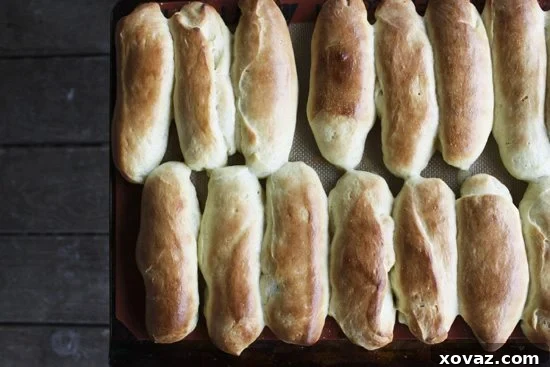
Homemade Hot Dog Buns: Elevate Your Hot Dog Experience with the Perfect Roll
Tired of flimsy, flavorless hot dog buns that crumble under pressure? Discover the secret to crafting soft, buttery, and incredibly sturdy homemade hot dog buns. This ultimate recipe will transform your next barbecue or family meal from ordinary to extraordinary, promising a superior bite that store-bought versions simply can’t match.
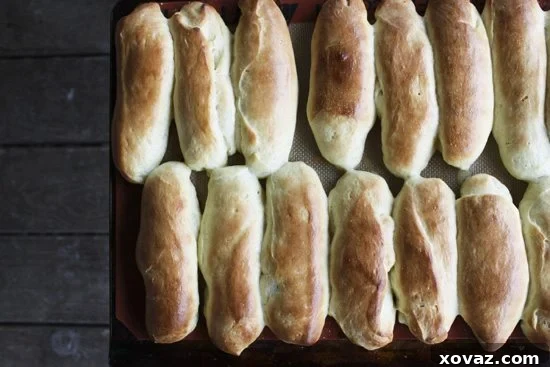
Why Homemade Hot Dog Buns Are an Absolute Game Changer
For too long, hot dog enthusiasts have unknowingly settled for mediocre buns. I confess, I used to be one of them. The idea of making hot dog buns from scratch might seem daunting, or even a little eccentric, to some. I’ve had more than a few friends tell me – in the most loving way possible, of course – that I’m ‘off my nut’ for dedicating time to baking something so readily available in supermarkets. “You can get them anywhere! You’re certifiable!” they’d exclaim.
But here’s the honest truth, and the short answer to “why in heaven’s name would I make hot dog buns?”: I have never, ever been able to buy a hot dog bun that holds a candle to these homemade beauties. The difference isn’t just noticeable; it’s monumental, transforming a simple hot dog into a gourmet delight.
The Downfall of Typical Store-Bought Buns
Most commercial hot dog buns suffer from a depressing trifecta of textural problems, making them less of a vessel and more of a liability for your precious hot dog. They’re either:
- Too Soft: They collapse instantly, unable to support even a modest amount of ketchup and mustard, let alone heartier toppings.
- Too Stale: Often dry and crumbly right out of the bag, leading to a messy, unsatisfying eating experience.
- Too Flimsy: Lacking any real structural integrity, they fall apart midway through, leaving you with toppings scattered across your plate.
More often than not, these textural shortcomings are compounded with a cocktail of funky, nasty preservatives and ingredients – hello, High Fructose Corn Syrup, I’m looking at you – that many of us conscientiously try to avoid feeding our families. These buns lack the fresh taste and wholesome feel that truly elevates a meal.
The Unrivaled Excellence of Homemade Buns
These homemade hot dog buns are nothing short of the be-all and end-all, the ne plus ultra, the “Hot-Diggity-Dog” of hot dog buns. They offer a sensory experience that pre-packaged alternatives can only dream of:
- Buttery Richness: Infused with real butter, they boast an incredibly rich, nuanced flavor that complements rather than overshadows your hot dog.
- Authentic Flavor: Unlike the bland, cardboard-like taste of store-bought rolls, these buns have a genuine, wholesome bread flavor that’s simply irresistible.
- Perfect Texture: They are wonderfully soft on the inside with a fine-textured crumb, yet they possess a subtle chewiness that provides satisfying resistance without being dense.
- Exceptional Sturdiness: Crucially, these buns are built to last. Unlike their styrofoam store-shelf cousins, my buns bravely hold up to whatever glorious avalanche of toppings you want to load onto your hot dog. Craving a truly epic chili dog, brimming with hearty chili, cheese, and onions? These are unequivocally the buns for the job.
Just look at the sheer capability of these rolls. Can you imagine a store-bought bun coming anywhere close to doing this?

I promise you, with absolute certainty, that this bun flawlessly held all those generous toppings when I proudly hoisted this chili dog to my mouth. It remained steadfast and intact, clear through the delightful ritual of sopping up every last bit of chili from the plate. That’s the kind of performance you can expect!
Converting the Skeptics, One Bite at a Time
For the record: those very friends who initially thought I was absolutely bonkers for making my own buns? They think so no longer. Every single one of them has now tasted my homemade hot dog buns, and they are, without exception, thoroughly convinced. Their skepticism has transformed into enthusiastic praise, a true testament to the undeniable superiority of homemade.
Is Making Hot Dog Buns Worth the Effort? Absolutely.
So, yes, it does take a little longer to make your own buns from scratch than to simply pick up a package at the grocery store. I’m not a nincompoop; I understand the value of time. However, I judiciously apply my time and effort where it truly makes the biggest, most impactful difference in the culinary world. And right here, with these hot dog buns, it makes an entire world of difference.
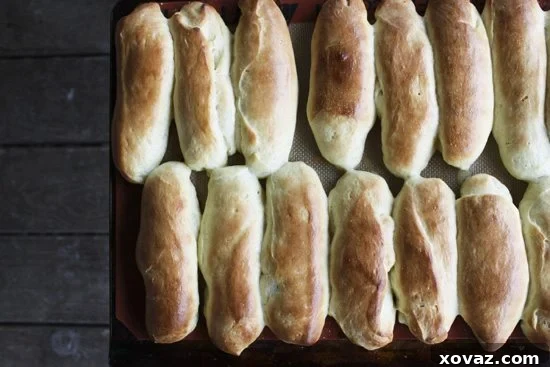
The satisfaction of pulling a tray of warm, golden-brown buns from your own oven, knowing every ingredient that went into them, and then experiencing that first, perfect bite is incomparable. It’s an investment in flavor, quality, and a superior dining experience that pays dividends in deliciousness. Don’t let the idea of homemade bread intimidate you; while it requires a bit of patience, the process itself is surprisingly straightforward and incredibly rewarding.
Crafting Your Buns: A Step-by-Step Visual Guide to Perfection
Before we dive headfirst into the full recipe, I want to guide you through the critical process of forming these beautiful rolls. If you’re an experienced bread baker who already has shaping techniques down pat, feel free to scroll to the bottom for the complete recipe. For everyone else, mastering the art of shaping is key to achieving that classic hot dog bun aesthetic and functionality.
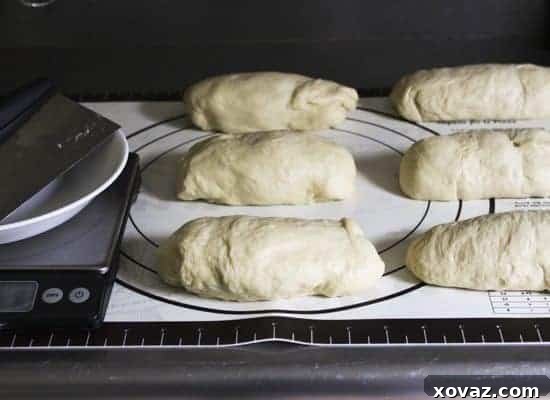
The secret to perfectly uniform hot dog buns lies in the initial stage: trying to cut your dough into (roughly) equal-sized pieces before you even begin the shaping process. This ensures consistent sizing and even baking across your entire batch.
Dough Preparation and Division
Each batch of this versatile dough yields approximately fifteen standard-sized hot dog buns. If you prefer larger, more substantial rolls, suitable for Italian sausages or hoagies, you’ll get about twelve per batch. For this visual demonstration, I’m working with a double batch of dough. I’m partial to using my kitchen scale to precisely measure and break the dough down into close-to-equal sized pieces. Is this absolutely necessary? Not strictly, but it certainly makes my little inner Obsessive Compulsive Chef sing for joy, and it contributes to a more professional, consistent result. If you don’t have a kitchen scale, or perhaps refuse to use one on moral grounds (no judgment here!), just eyeball it and do your best to break them down as equally as possible. Once divided, gently form each piece into an oblong log shape.
Shaping Each Individual Hot Dog Bun
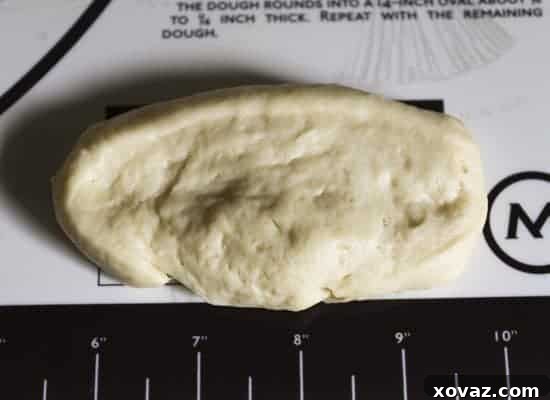
Now, take each of those logs and cut them into five equal pieces for standard-sized hot dog buns, or four equal pieces if you’re making larger Italian sausage or hoagie rolls. We’ll work with one piece at a time:
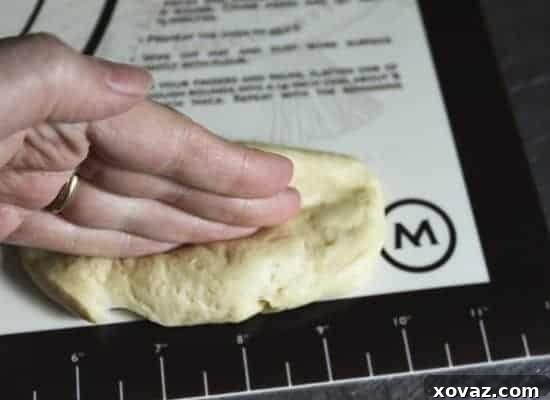
- Pat into an Oval: Gently pat each individual piece of dough into an oval shape. Aim for a consistent thickness. (You might notice inches marked on the bottom of the dough mat I used, which can be a helpful guide for size.)

- Create the Indentation: Use the firm edge of your hand (think a gentle karate chop) to press a deep indentation down the entire length of the center of the dough oval. This crucial step helps create that classic hot dog bun shape and ensures a soft interior.
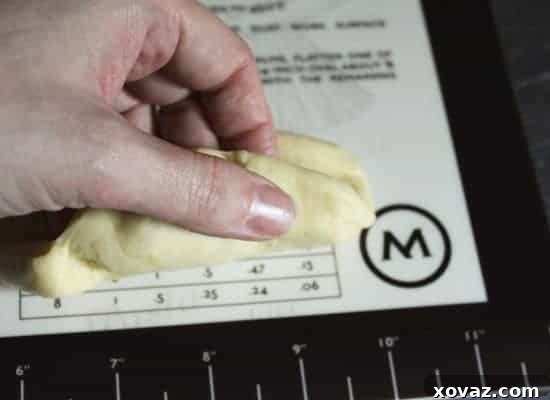
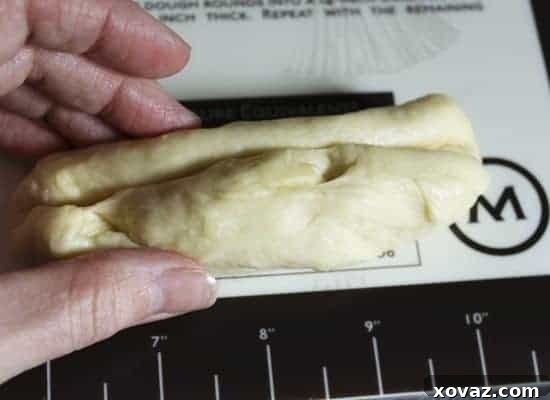
- Roll Around the Indentation: Carefully roll the dough up around the indentation you just created, starting from one long side and rolling towards the other. This forms the body of the bun.
- Pinch the Seam: Lightly but firmly pinch together the seam along the bottom of the rolled dough. A good seal here helps the bun maintain its shape during rising and baking.
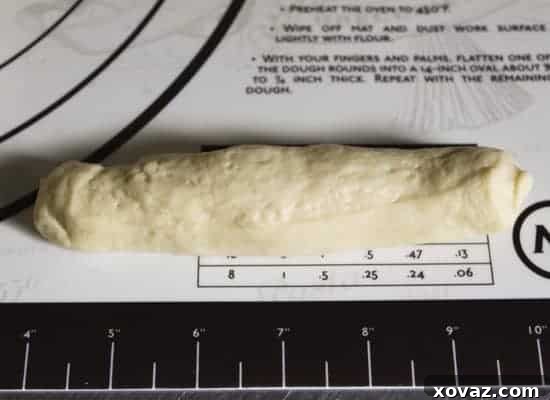
- Final Shaping: Turn the dough seam-side down onto your clean work surface. Use the flats of your hands to gently roll it back and forth until it reaches a uniform length of approximately 6 inches. Neatly tuck any funky-shaped or uneven ends underneath to create a smooth, cylindrical tube of dough with relatively flat ends.
The Buttermilk Finish: A Golden Touch
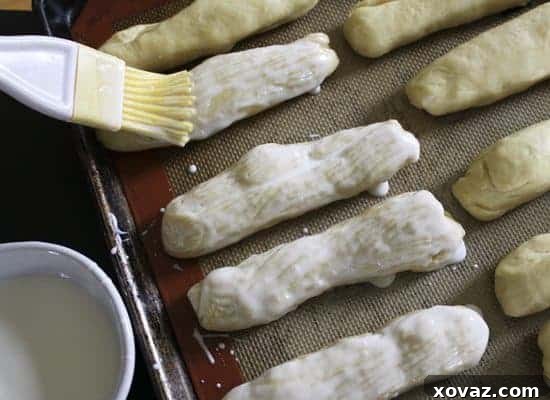
After your beautifully shaped rolls have completed their final rise and are wonderfully puffy, it’s time for a special secret weapon: a generous brushing with cultured buttermilk. This step is more than just for aesthetics; the buttermilk contributes to a gorgeously deep golden-brown crust and imparts a subtle, desirable tangy flavor that truly elevates the overall profile of these buns. (And if you don’t have buttermilk on hand, remember how incredibly easy it is to make your own with just milk and a little lemon juice or vinegar!).
The Ultimate Homemade Hot Dog Buns Recipe
Homemade Hot Dog Buns
Recipe by Rebecca Lindamood
Prep Time: 30 minutes
Cook Time: 18-22 minutes
Total Time: Approximately 2 hours 50 minutes (includes rising time)
Recipe Summary
These homemade hot dog buns are a revelation. They are soft, rich with butter, bursting with real flavor, and possess the perfect chew. Unlike any store-bought roll, they are sturdy enough to handle all your favorite toppings without falling apart, making every hot dog meal an extraordinary delight.
Ingredients (Yields 15 standard hot dog buns)
- 1 1/4 cups lukewarm milk
- 1 large egg, beaten
- 6 tablespoons unsalted butter, softened to room temperature and cut into pieces
- 3 tablespoons granulated sugar
- 4 cups bread flour (or all-purpose flour if bread flour is unavailable)
- 3 tablespoons instant potato flakes
- 1 tablespoon vital wheat gluten (optional, but highly recommended for an improved texture)
- 2 teaspoons kosher salt
- 2 teaspoons instant yeast
- 1/2 cup cultured buttermilk, for brushing (see notes for making your own if needed)
Instructions
Method 1: Mixing Dough in a Bread Machine
- Add all ingredients for the dough (everything except the buttermilk) into the bread machine pan in the order specified by your machine’s manufacturer.
- Select the “Dough” cycle on your bread machine and press start. The machine will handle all the mixing and rising.
Method 2: Mixing Dough in a Stand Mixer
- Combine all ingredients for the dough (except the buttermilk) in the bowl of a stand mixer fitted with a dough hook attachment.
- Mix on low speed for about 10 minutes. Continue mixing until the dough comes together into a smooth, elastic ball that pulls away from the sides of the bowl.
- Remove the bowl from the mixer, cover it loosely with a clean tea towel, and place it in a warm, draft-free spot. Allow the dough to rise until it has visibly doubled in bulk, which typically takes about 1 to 2 hours, depending on your room temperature.
Method 3: Mixing Dough by Hand
- In a large mixing bowl, combine all dough ingredients (excluding the buttermilk).
- Using a sturdy wooden spoon or your hands, stir the ingredients together until a shaggy, cohesive dough forms.
- Turn the dough out onto a lightly floured surface. Knead the dough vigorously for approximately 15 minutes. Continue kneading until the dough transforms into a smooth, elastic, and pliable ball.
- Lightly oil a clean bowl, then place the kneaded dough into it. Turn the dough once to coat it with oil. Cover the bowl with a tea towel and let it rise in a warm, draft-free environment until it has doubled in size (roughly 1 to 2 hours).
Forming the Hot Dog Buns
- Prepare your baking sheet: Lightly grease an 11-inch by 13-inch baking sheet, or line it with a Silpat baking mat or parchment paper. Set this aside.
- Once your dough has risen, gently deflate it and divide it into 3 equally sized pieces. For best results, use a kitchen scale for precision.
- Form each of these three pieces into a log shape.
- For standard-sized hot dog buns, cut each log into 5 equal pieces. If you prefer larger Italian sausage or hoagie rolls, cut each log into 4 equal pieces.
- Working with one piece of dough at a time, use your hands to pat it out into an oval shape.
- With the side of your hand, press a distinct indentation down the entire length of the center of the oval dough.
- Carefully roll the dough up around this indentation, starting from one long edge.
- Lightly pinch the seam together along the bottom of the roll to seal it securely.
- Turn the dough seam-side down. Using the flats of your hands, gently roll the dough back and forth until it reaches a consistent length of approximately 6 inches. Tuck any uneven or messy ends neatly underneath the roll to create a clean, finished appearance.
- Transfer the shaped rolls to your prepared baking sheet, ensuring you leave about 1 inch of space between each piece. Cover them loosely and let them rise in a warm, draft-free place until they appear visibly puffy, which typically takes about 30 minutes.
- During the final rise, preheat your oven to 375°F (190°C).
- Once the rolls are puffy and ready for baking, generously brush the tops of each one with cultured buttermilk.
- Bake in the preheated oven for 18-22 minutes, or until the buns achieve a beautiful deep golden brown color on top.
- Remove from the oven and transfer the hot dog buns to a wire rack to cool for at least 10 minutes before slicing and serving. This resting period allows the internal structure to set.
Serving Suggestions
These versatile homemade buns are perfect for a variety of delicious applications:
To serve as a hot dog or sausage roll:
- Make a clean slice down the center of the top of the roll, cutting nearly through to the bottom, creating a pocket.
- Gently pry open the bun with your fingers to snugly hold your hot dog or sausage and all your chosen toppings.
To serve as a hoagie or sandwich roll:
- Lay the roll on its side on a cutting board.
- Slice it horizontally in half, about midway up the roll, creating two even sides for your sandwich fillings.
Storing Leftovers for Lasting Freshness
To ensure your homemade hot dog buns stay fresh and delicious:
- Room Temperature: For short-term storage (up to two days), wrap the cooled buns tightly in plastic wrap or place them in an airtight container to prevent them from drying out.
- Freezing: For longer storage (up to one month), wrap individual cooled buns tightly in plastic wrap, then place them in a freezer-safe bag or airtight container. Thaw at room temperature when ready to use, or warm gently in a low oven for a few minutes to refresh them.
Estimated Nutrition Information (per serving)
Calories: 209kcal | Carbohydrates: 31g | Protein: 6g | Fat: 6g | Saturated Fat: 3g | Cholesterol: 25mg | Sodium: 376mg | Potassium: 122mg | Fiber: 1g | Sugar: 4g | Vitamin A: 200IU | Vitamin C: 2.4mg | Calcium: 42mg | Iron: 0.5mg
Please note: Nutritional information provided is an estimate and offered as a courtesy. We strongly recommend calculating the nutritional information with the actual ingredients you use in your recipe, utilizing your preferred nutrition calculator for the most accurate results.