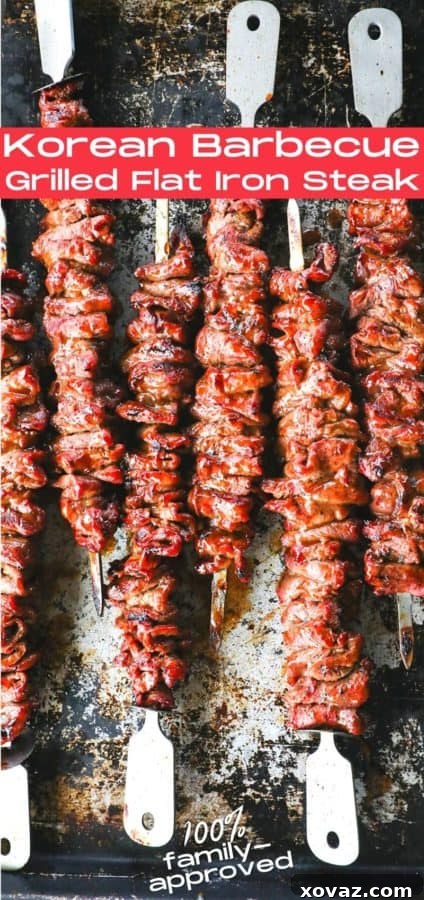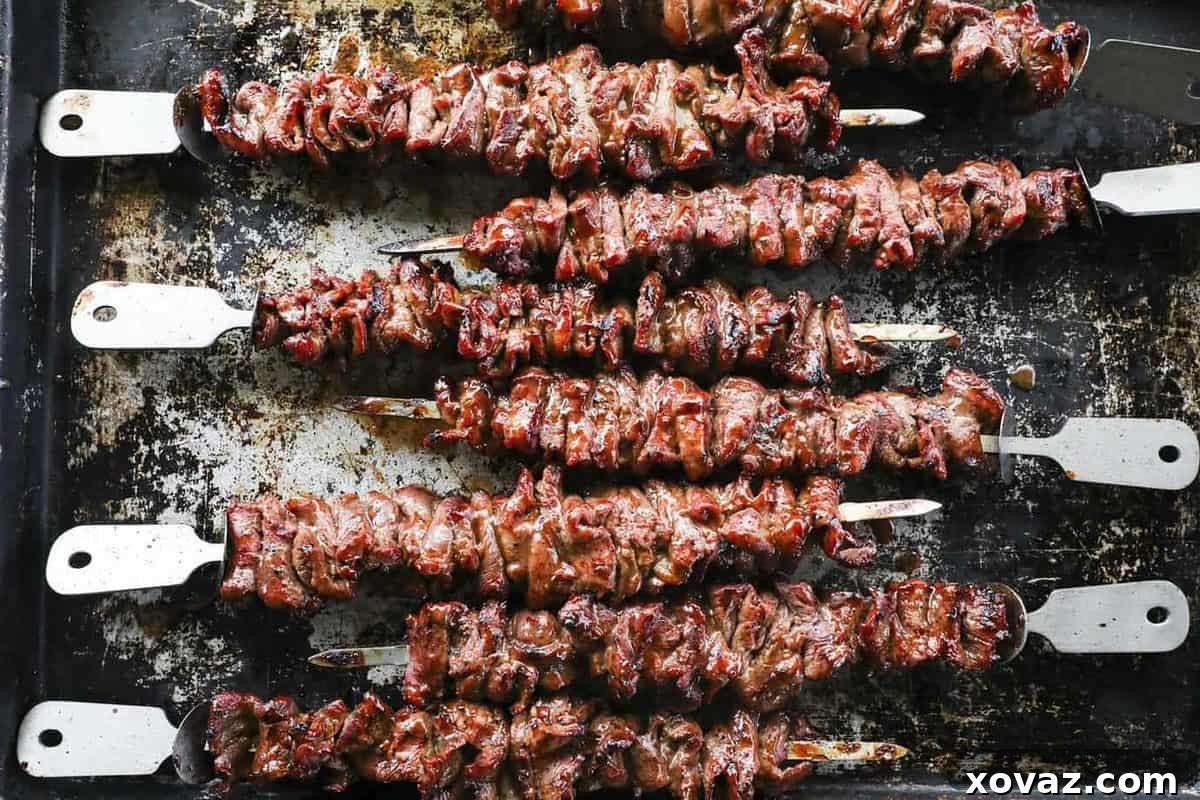
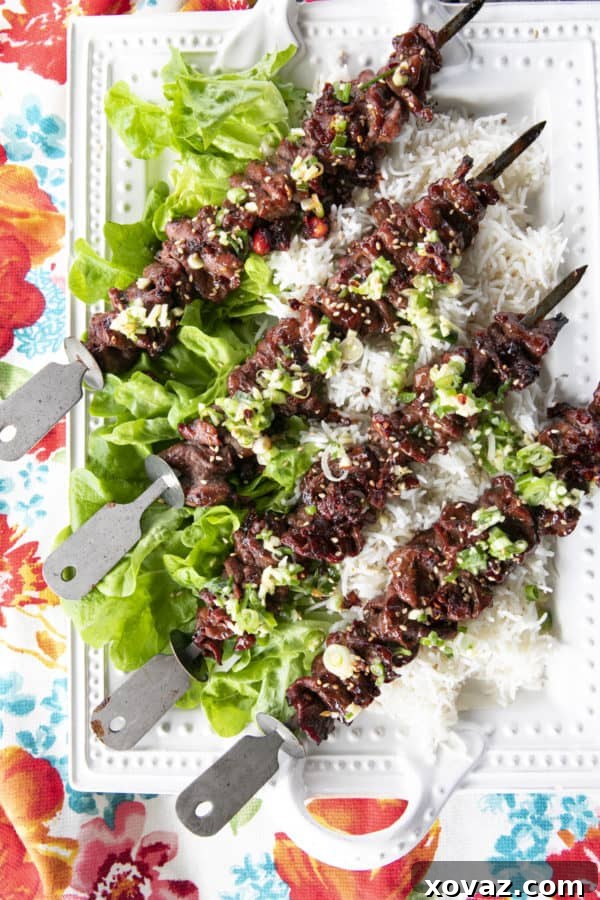
Korean Barbecue Grilled Flat Iron Steak offers an unparalleled culinary experience, boasting a smoky aroma, rich garlicky notes, and an unbelievably tender texture. This dish is not only simple to prepare but also incredibly versatile, poised to become your go-to recipe for summer grilling or a delightful year-round meal cooked under the broiler.
Prepare for a bold declaration: this Korean Barbecue Grilled Flat Iron Steak might just be the finest beef creation to ever grace your kitchen. And the best part? It’s astonishingly easy to master!
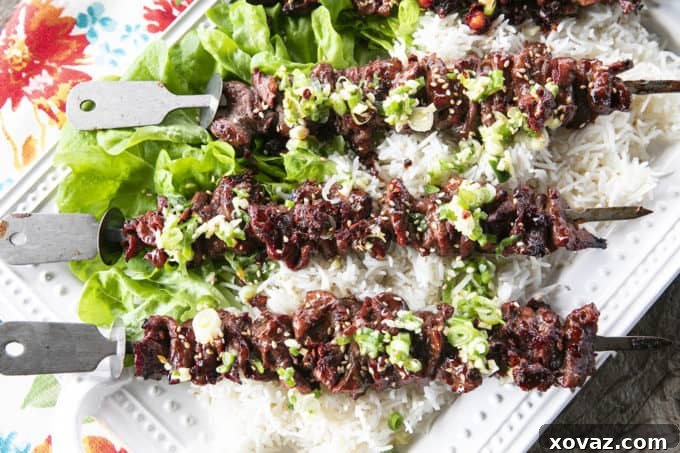
The first time my husband sampled this steak, his reaction was nothing short of enthusiastic. After savoring every last bite, he declared it among the best steaks he had ever tasted – a significant compliment from a man who has enjoyed steak around the globe. He even mistakenly thought it was tenderloin, a cut renowned for its premium tenderness, only to be surprised when I revealed it was, in fact, humble flat iron steak. Let that sink in for a moment: he hailed it as the best steak, and it wasn’t the most expensive cut.
What makes this dish truly special, beyond its incredible flavor, is its effortless preparation. My husband’s joyful exclamation, “Oh good! We can have this all the time then!” perfectly encapsulates the simple joy this recipe brings. You don’t need exotic equipment or advanced culinary skills; just a grill (or broiler), some skewers, a sharp knife, a quality flat iron steak, and a bottle of your favorite Korean Barbecue Sauce. It’s truly that straightforward to bring this restaurant-quality experience to your home.
What Is Korean BBQ? The Essence of Flavor
Korean BBQ is more than just a meal; it’s a beloved culinary tradition and a social experience, deeply ingrained in Korean culture. It typically involves grilling thinly sliced or marinated meats – most commonly beef, pork, or chicken – often at the dining table itself, using built-in gas or charcoal grills. This communal style of cooking fosters conversation and shared enjoyment, making it a favorite dining out experience.
The magic behind Korean BBQ’s irresistible allure lies in the harmonious combination of fat rendering and meat charring. As the meat cooks over high heat, the fat melts and drips onto the hot coals or grates, creating a smoky vapor that infuses the meat with incredible flavor. Simultaneously, the direct heat promotes the Maillard reaction, a chemical process responsible for the savory, caramelized crust that develops on the surface of the meat. This perfect balance of juicy tenderness from rendered fat and intense, complex flavors from charring is what makes Korean BBQ utterly delectable.
Traditionally, Korean barbecue meats are marinated for hours in a savory, sweet, and aromatic mixture. Key ingredients often include soy sauce for umami, sesame oil for its distinctive nutty aroma, sugar (or fruit juice like pear) for sweetness and caramelization, fresh ginger and garlic for pungent warmth, scallions for a fresh oniony kick, and black pepper for a subtle spice. This marinade not only imparts deep flavor but also helps to tenderize the meat, ensuring every bite is succulent.
Our Korean BBQ Grilled Flat Iron Steak recipe embraces a clever shortcut to achieve these authentic flavors with minimal fuss: quality Korean Barbecue Sauce. The beauty of a good bottled Korean BBQ sauce is that it already contains most, if not all, of these traditional ingredients. Many commercially available sauces also incorporate gochujang (Korean chili paste) for a subtle spicy depth or fruit juice for added sweetness, replicating the complex flavor profile of homemade marinades perfectly. This means you can achieve a rich, authentic Korean BBQ taste without needing to gather and chop numerous ingredients.
You can easily purchase Korean Barbecue Sauce at most Asian markets or well-stocked grocery stores, or even online. For those who love to cook from scratch, making your own sauce is a rewarding endeavor. As an avid cook, I even included a recipe for it in my canning cookbook, Not Your Mama’s Canning Cookbook, allowing you to have this versatile sauce ready whenever the craving strikes.
Korean Barbecue: Mastering the Heat
Regardless of your cooking setup, the fundamental principle for truly exceptional Korean Barbecue is consistent, intense high heat. Whether you own a sophisticated pellet-style grill like my beloved Traeger, a classic charcoal or gas grill, an oven equipped with a broiler, or even just a stovetop, all these options are perfectly valid for cooking your delectable Grilled Flat Iron Steak.
Let’s delve into the best practices for each method to ensure your steak achieves that perfect char and tenderness:
Grilling Outdoors: Charcoal, Gas, or Pellet
For outdoor grilling, the goal is to reach the highest possible temperature. If using a charcoal grill, create a robust bed of glowing coals and position your grill grate directly over the hottest section. For gas grills, preheat all burners to maximum heat for at least 10-15 minutes, ensuring the grates are searing hot. Pellet grills, like my Traeger, often have a “sear” setting that maximizes heat output, which is ideal for this recipe. High heat creates a beautiful crust and locks in the juices quickly.
Broiling Indoors: Your Year-Round Grill Substitute
The broiler is a fantastic indoor alternative, mimicking the direct, intense heat of a grill. To use your broiler effectively, position an oven rack about 4-6 inches below the heating element. It’s crucial to use a broiler pan or, alternatively, a stainless steel cooling rack set over a rimmed half-sheet pan. This setup allows air circulation and prevents the meat from stewing in its juices, promoting that desirable char. Preheat your broiler to high for at least 5-10 minutes before adding the steak to ensure it’s intensely hot.
Stovetop Searing: The Cast Iron Advantage
If you’re cooking on the stovetop, a cast-iron griddle or grill pan is your best friend. Cast iron excels at retaining and distributing high heat, which is essential for searing. Place your cast-iron pan over high heat and let it preheat thoroughly until it’s smoking lightly. A critical safety note: avoid using non-stick pans over the highest heat your cooktop can achieve, as the non-stick coating can break down and release harmful fumes at extreme temperatures. Opt for cast iron or stainless steel for safe, effective searing.
No matter which method you choose, remember that blistering high heat is the key to unlocking the smoky, charred, and tender perfection of Korean Barbecue Grilled Flat Iron Steak. Embrace the sizzle!
Grilled Flat Iron Steak: The Underrated Hero
If you’re unfamiliar with flat iron steak, you’re about to discover a true culinary gem. This cut, sourced from the shoulder of the cow, is often overlooked but boasts an impressive profile. It’s typically well-marbled, meaning it has intramuscular fat that renders beautifully during cooking, contributing to its juiciness and rich, deeply beefy flavor – a taste more intense than many other cuts.
The flat iron steak is unique because it’s cut from the top blade roast, which contains a tough connective tissue known as the fascia membrane running through its center. When this gristly membrane is expertly trimmed away by your butcher, the remaining muscle becomes incredibly tender. In fact, after proper trimming, flat iron steak is considered second only to the tenderloin in tenderness, yet it comes at a fraction of the cost. This makes it an excellent value for a premium eating experience.
Its uniform, rectangular shape makes it ideal for even cooking and slicing, particularly when prepared on the grill. It’s remarkably forgiving and easy to cook to perfection, making it a favorite among home cooks and chefs alike. When selecting a flat iron steak at your local butcher, you might also find it labeled as top blade steak, top blade filet, or shoulder top blade steak. Don’t hesitate to ask your butcher to ensure the fascia membrane has been properly removed for optimal tenderness.
Beyond Korean BBQ, flat iron steak is incredibly versatile. Its robust flavor and tender texture make it perfect for a variety of dishes, including fajitas, stir-fries, sandwiches, or simply seared and served with your favorite sides. If you struggle to find it locally, you can always order high-quality cuts through services like Butcher Box, as I often do. This link will even give you $30 off your first order, allowing you to experience the convenience and quality for yourself.
Korean Barbecue Recipe: The Art of Skewering
While traditional Korean BBQ often features meats cooked directly on an in-table grill, this recipe adapts the experience for the home cook by utilizing skewers. This smart approach makes it much easier to cook multiple pieces of beef simultaneously and handle them efficiently on your outdoor grill, under the broiler, or on a stovetop grill pan. You get all the incredible flavor and satisfying char without the hassle of constantly flipping individual strips of flat iron steak.
For convenience and durability, I highly recommend investing in stainless steel skewers. The ones I adore feature easy-to-grab tabs, which make rotating the skewers effortless, and clever discs that help slide the cooked food off smoothly. As a bonus, many stainless steel skewers are dishwasher safe, simplifying cleanup!
If you opt for bamboo or other wooden skewers, it’s essential to soak them in water for at least an hour before grilling. This prevents them from igniting or charring excessively over high heat, ensuring your focus remains on the delicious steak.
Of course, you can bypass skewers altogether and cook the flat iron steak strips individually. However, be prepared to watch them closely, as individual pieces will cook much faster due to their smaller size and direct exposure to heat. If you choose this method, reduce the cooking time significantly, aiming for about 1 to 2 minutes per side per slice, depending on your desired doneness.
While your beef is sizzling on the grill, consider pairing it with a quick and vibrant side dish. Our tutorial on How to Cook Shishito Peppers offers a fast and fabulous accompaniment that can often be cooked right alongside your steak, without even needing to heat up your kitchen. The slightly sweet, occasionally spicy shishito peppers provide a perfect contrast to the rich, savory beef.
Korean Barbecue Grilled Flat Iron Steak: Preparation, Cooking, and Serving
Crafting this incredible Korean Barbecue Grilled Flat Iron Steak is straightforward, yielding maximum flavor with minimal effort. Here’s how to bring this culinary delight to your table:
Step 1: Slice and Marinate
Begin by slicing your flat iron steak against the grain, no more than 1/4-inch thick, at a 45° angle. Slicing against the grain is crucial for tenderness, as it shortens the muscle fibers, making the cooked steak easier to chew. The 45° angle provides more surface area for the marinade to penetrate and for charring. Place the beef strips into a bowl, pour the Korean barbecue sauce generously over the top, ensuring all pieces are coated. Cover the bowl and refrigerate for at least 1 hour. While a minimum of one hour is sufficient, marinating for up to 4-6 hours can further enhance the flavor and tenderize the meat, making it an even richer experience.
Step 2: Skewer the Steak
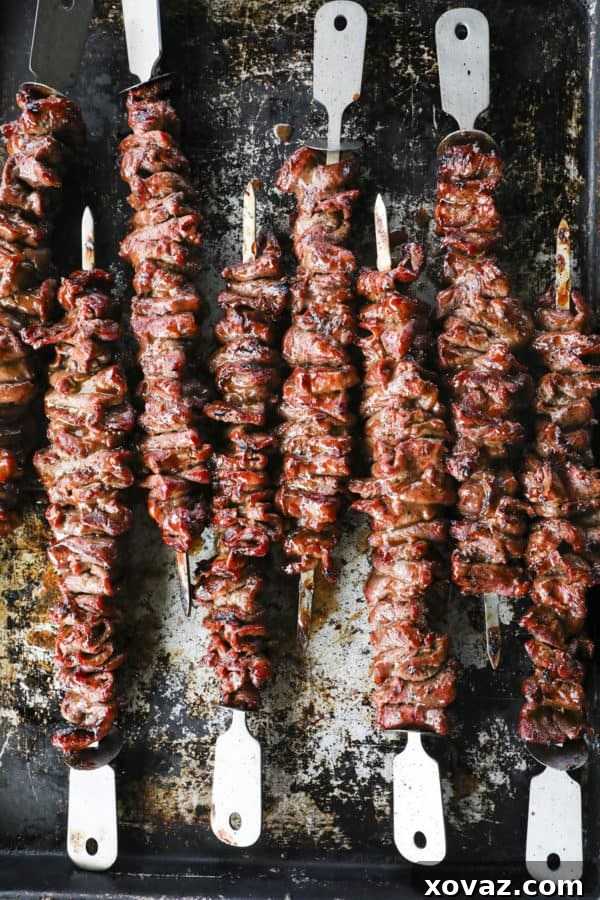
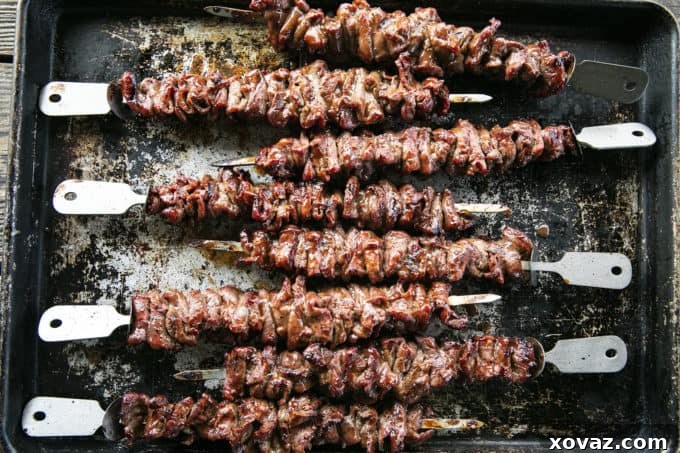
Once the beef has marinated, carefully thread the steak strips onto your skewers. Arrange them in an undulating pattern, as shown in the accompanying photos, to maximize surface area for even cooking and charring. Be mindful not to overpack the skewers, as this can lead to uneven cooking and prevent the meat from developing that desirable smoky crust.
Step 3: Choose Your Cooking Method and Cook
Regardless of your chosen cooking method, the key is to achieve and maintain very high heat.
If Using a Grill (Charcoal, Gas, or Pellet):
Preheat your grill to the highest temperature you can achieve, ideally around 500℉ (260℃). If using a charcoal grill, create a direct, hot zone with a dense bed of glowing coals. Grill the skewered flat iron steak for 3 to 5 minutes per side. The exact time will depend on your grill’s heat intensity and your preferred level of doneness. For medium-rare, aim for an internal temperature of 130-135℉ (54-57℃).
If Using a Broiler:
Turn your broiler on high and preheat it for 5-10 minutes. Arrange the skewered steak on a broiler pan (or a rack set over a rimmed baking sheet) about 4-6 inches from the heating element. Broil the skewers for 3 to 5 minutes per side, rotating once, until beautifully charred and cooked to your desired doneness.
If Using a Hot Oven (for pan roasting):
Place a cast-iron pan in your oven and preheat the oven to 450℉ to 500℉ (232-260℃). Allow the pan to preheat for at least 15-20 minutes to get screaming hot. Carefully place the skewered steak into the hot pan. Roast for 5 to 7 minutes, flipping the skewers once halfway through. This method achieves a lovely sear when the pan is adequately hot.
If Using a Grill Pan or Griddle (Stovetop):
Place your cast-iron grill pan or griddle over high heat. Let it preheat thoroughly until it’s hot enough that you can’t comfortably hold your hand over it for more than a second or two, and it might even begin to smoke lightly. Cook the skewered beef for 3 to 5 minutes per side, depending on your preferred doneness. Ensure adequate ventilation when cooking at high heat on the stovetop.
Step 4: Rest and Serve
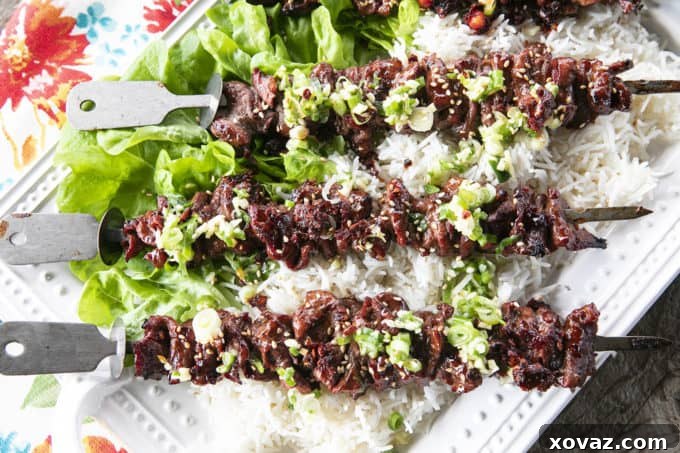
Once cooked, transfer the skewers to a cutting board and allow the meat to rest for 5-10 minutes before serving. Resting allows the juices to redistribute throughout the steak, resulting in a more tender and flavorful bite. Slide the tender beef off the skewers and serve immediately.
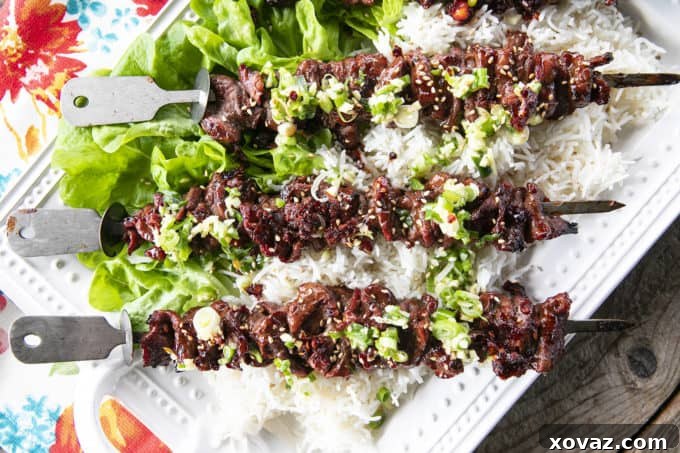
This versatile dish pairs beautifully with a variety of accompaniments. Serve with fluffy white rice to soak up the delicious juices, crisp lettuce wraps for a refreshing and interactive meal, an aromatic ginger scallion sauce for an extra layer of flavor, or traditional kimchi for a tangy, spicy kick. Feel free to explore other Korean side dishes (banchan) like pickled radishes or quick cucumber salads to complete your feast. Enjoy your sensational homemade Korean Barbecue Grilled Flat Iron Steak!
Need a cool drink to go with your Korean BBQ? Try these Berry Kombucha Margaritas!

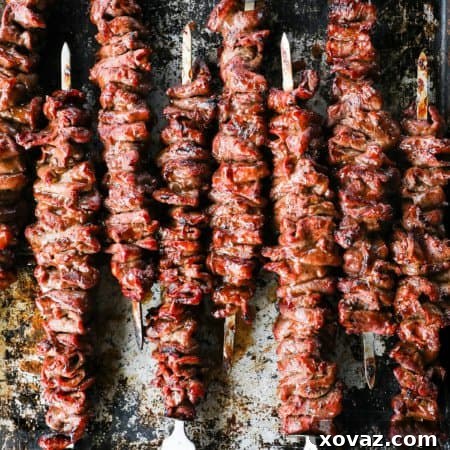
Korean Barbecue Flat Iron Steak
Rate Recipe
Rebecca Lindamood
Pin Recipe
Share on Facebook
Equipment
-
Skewers
-
Grill, Broiler, or Heavy-Bottomed Pan (e.g., Cast Iron Grill Pan)
Ingredients
1x Servings
- 1 ½ pounds flat iron steak
- 1 ½ cups Korean Barbecue Sauce plus extra for serving
Instructions
-
Slice flat iron steak no more than 1/4-inch thick at a 45° angle, slicing against the grain. Add the beef strips to a bowl, pour the Korean barbecue sauce over the top, ensuring all pieces are coated. Cover, and refrigerate for at least 1 hour (up to 6 hours for deeper flavor).
-
After the beef has marinated, thread the steak onto the skewers in an undulating pattern, as shown in the photos. Do not over pack the skewers, allowing space for even cooking.
Cooking Method Options:
-
If Using a Grill: Preheat grill to the highest temperature you can get, preferably 500℉ (260℃). If using a charcoal grill, build a bed of hot coals. Grill the skewered flat iron steak for 3 to 5 minutes per side, depending on preferred doneness (e.g., 130-135℉ for medium-rare).
-
If Using a Broiler: Turn the broiler on high. Position an oven rack about 4-6 inches from the heating element. Broil the skewers for 3 to 5 minutes per side, rotating once, until cooked to preferred doneness.
-
If Using a Hot Oven (Pan Roasting): Preheat a cast-iron pan in a 450℉ to 500℉ (232-260℃) oven for 15-20 minutes until smoking hot. Carefully place the skewered steak into the hot pan. Roast for 5 to 7 minutes, flipping once.
-
If Using a Grill Pan or Griddle (Stovetop): Place the grill pan over high heat. When the pan is hot enough (smoking lightly), cook the skewered beef for 3 to 5 minutes per side, depending on preferred doneness. Ensure proper ventilation.
-
Once cooked, remove from heat and let rest for 5-10 minutes before serving. Serve with rice, lettuce wraps, ginger scallion sauce, kimchi, or other desired accompaniments!
Nutrition
Nutritional information is an estimate and provided to you as a courtesy. You should calculate the nutritional information with the actual ingredients used in your recipe using your preferred nutrition calculator.
Did you make this recipe?
Make sure to tag @foodiewithfam on Instagram and #hashtag it #foodiewithfamily so I can check it out!
Pin Recipe
Share on Facebook