

Mastering Deviled Eggs: Your Ultimate Guide to Perfect Peeling and Creative Toppings
Deviled eggs, a timeless classic, grace countless party tables, family gatherings, and holiday buffets. Their creamy, savory filling nestled in delicate egg white halves evokes a sense of nostalgia and comfort. Yet, for many home cooks, the thought of making deviled eggs can induce a mild panic. The seemingly simple task of boiling and peeling eggs often turns into a frustrating battle, leaving behind cratered whites and shattered dreams of culinary perfection. If you’ve ever found yourself wrestling with stubborn eggshells or wondering why your deviled eggs never quite match Aunt Molly’s legendary creations, you’re not alone. This comprehensive guide is designed to transform you into a deviled egg master, equipped with the secrets to perfectly peeled hard-boiled eggs and imaginative topping ideas that will delight every palate.
The primary culprit behind deviled egg dilemmas often lies not in your skill, but in the eggs themselves. Many people rush to the store for fresh eggs or even gather them straight from the chicken coop, only to be met with immense frustration when the shells cling desperately, tearing away large chunks of the pristine egg white. It’s a common misconception that fresher eggs are always better for every culinary application. While ideal for frying or scrambling, extremely fresh eggs are notoriously difficult to peel after boiling. The reason? The albumen (egg white) in very fresh eggs has a lower pH, which causes it to bond more strongly to the inner membrane of the shell. As eggs age, their pH naturally increases, and a tiny air pocket develops between the egg and the shell membrane, making separation much easier.
So, what’s the solution? Patience is key. If you’re using farm-fresh eggs, ideally, you should wait at least seven to ten days before attempting to hard boil them. For store-bought eggs, check the expiration or “sell by” date. If it’s still three to five weeks away, those eggs might still be too fresh for easy peeling. Don’t despair, however, if you only have fresh-er eggs on hand. While aging them slightly is the best practice, there are proven techniques that can significantly improve your chances of achieving flawlessly peeled hard-boiled eggs, even with those that are just a few days old.
The Secret to Perfectly Peeled Hard-Boiled Eggs
Achieving a smooth, unblemished hard-boiled egg white is the foundation of an exquisite deviled egg. This method, while not scientifically proven in every aspect, has been tried and tested by countless home cooks and yields consistently excellent results. Say goodbye to green rings around the yolk and welcome perfectly cooked, easy-to-peel eggs every time.
-
Choose Wisely: Whenever possible, select eggs that are at least a week old. This single factor makes the biggest difference in peeling ease.
-
Single Layer Success: Arrange your eggs in a single layer at the bottom of a heavy-bottomed pot. Overcrowding the pot can lead to uneven cooking and cracks, so avoid stacking them.
-
Ample Water Coverage: Pour cool tap water over the eggs, ensuring they are covered by at least one inch, or ideally closer to two inches. This allows for even heat distribution.
-
The Vinegar Advantage: Add a generous splash (about a tablespoon) of white vinegar to the water. While the exact scientific reason is debated, many believe vinegar helps soften the shell and aids in the peeling process, creating a more acidic environment that can assist in detaching the membrane.
-
Boil, Cover, and Rest: Place the pot over high heat and bring the water to a full, rolling boil. As soon as the water reaches this vigorous boil, immediately place a tight-fitting lid on the pot and turn off the heat completely. Do not lift the lid; let the residual heat gently cook the eggs. This method prevents overcooking, which can lead to rubbery whites and that unappetizing green ring around the yolk.
-
Precision Timing: Allow the eggs to stand undisturbed in the hot water for precisely fifteen minutes. This timing ensures perfectly cooked yolks that are firm but still creamy.
-
Immediate Ice Bath (or Cold Water Shock): As soon as the fifteen minutes are up, carefully carry the pot to the sink. Using the lid to secure the eggs, pour out all the hot water. Immediately run cold tap water over the eggs for about three minutes. The sudden temperature change causes the egg to contract, further separating it from the shell membrane, making peeling significantly easier. This “shock” also stops the cooking process, preventing overcooked yolks.
-
Gentle Shell Cracking: With the lid still on, give the pan a couple of sharp, yet controlled, shakes back and forth, and up and down. This will create small cracks all over the eggshells, providing a starting point for easy peeling without damaging the egg white.
-
Spoon Peeling Technique: Working under a thin stream of cool running water (which helps wash away shell fragments and further aids separation), take one egg at a time. Use the back of a regular eating teaspoon to gently rap the egg all over, breaking the shell into tiny pieces. Then, flip the spoon over and carefully ease the tip of the spoon between the broken shell and the egg white. Use the curve of the spoon to gently pry and pull the shell away. The running water will assist in removing any stubborn, tiny shell fragments. Lay the perfectly peeled egg on a clean towel.
-
Work Quickly: Repeat this process for all remaining eggs. The longer you wait to peel them after the cold water shock, the tougher they can become to peel. This explains why my annual post-Easter Yooper Pickled Eggs often look like they’ve been peeled by a mischievous toddler without thumbs – delaying the peeling makes a huge difference!
Crafting the Irresistible Deviled Egg Filling
With the challenge of perfect hard-boiled eggs behind you, it’s time to focus on the heart of the deviled egg: the filling. While inherently simple, a few thoughtful details can elevate your deviled eggs from ordinary to extraordinary. My preference is to keep the base filling classic and a touch retro, ensuring broad appeal while leaving room for exciting customizations.
Deviled eggs may not be at the forefront of culinary innovation or avant-garde food trends. I readily acknowledge that. However, there’s an undeniable comfort and familiarity they bring to any spread. Seeing a platter of deviled eggs on a party buffet offers a reassuring anchor, a delicious constant amidst a sea of exotic or unfamiliar dishes. No matter how adventurous the other options may be, you know there’s always something beloved and reliably tasty waiting for you. That universal appeal is the true magic of the deviled egg.
Just because they embody retro charm doesn’t mean they have to be predictable. A solid, flavorful base filling allows you to cater to traditionalists while also serving as a versatile canvas for an array of vibrant and unexpected toppings. My go-to base combines creamy mayonnaise with tangy Dijon mustard. To achieve a flawlessly smooth filling – a texture that makes all the difference – I employ a simple yet ingenious tool: my “magic deviled egg wand.”

My “magic wand” is, in fact, a potato ricer. This kitchen gadget effortlessly transforms cooked egg yolks into an incredibly fine, silky powder. It achieves a smoother texture than mashing with a fork and is significantly less arduous than pushing yolks through a fine-mesh sieve – a task I’ve gladly left behind since my restaurant days. The ricer performs beautifully, requiring minimal effort and making cleanup a breeze, ensuring your filling is perfectly uniform and lump-free.
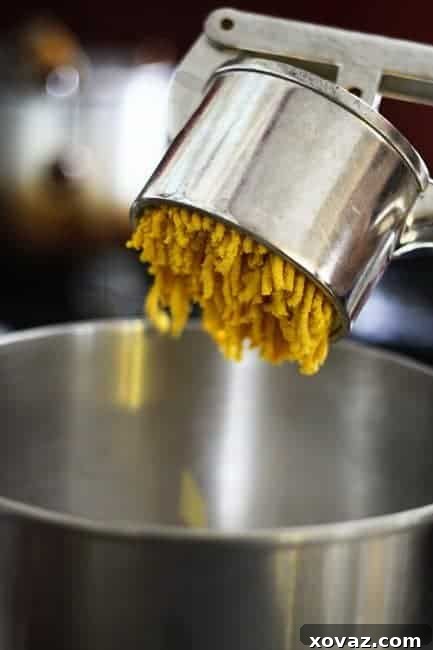
Once you’ve pressed the cooked yolks through the ricer and thoroughly blended them with mayonnaise and Dijon mustard, you have a choice for presentation: spooning or piping the mixture into the egg white halves. While spooning is perfectly acceptable and quicker, I personally prefer piping. The piped filling creates an elegant, visually appealing swirl that elevates the aesthetic of the finished deviled eggs.
Beyond the Classic: Creative Deviled Egg Toppings
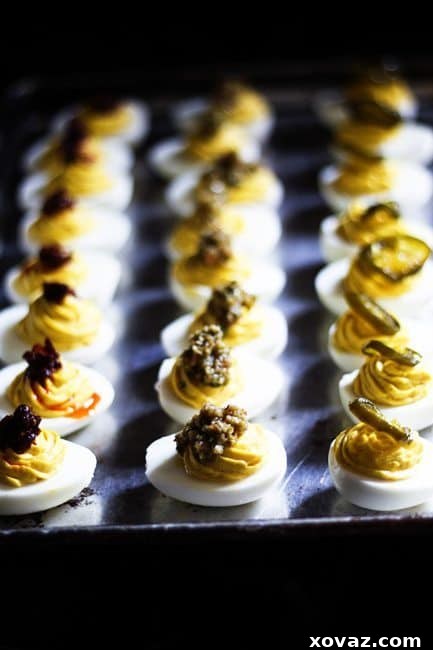
While a plain deviled egg is a delight in itself, the true fun begins with the toppings. I like to prepare some deviled eggs with just a sprinkle of paprika for the traditionalists, and then let my creativity run wild with the rest. The addition of varied toppings introduces exciting flavor dimensions and transforms a simple appetizer into a culinary showpiece. Imagine a platter boasting an array of colors and textures, each offering a unique taste experience.
Some of my absolute favorite topping ideas include:
- Green Olive Tapenade: Adds a briny, savory punch and a beautiful textural contrast.
- Spicy Chili Crisp or Chili Garlic Sauce: For those who love a kick, these provide heat and a rich, umami depth. Sriracha offers a similar vibrant spice.
- Candied Jalapeños: A fantastic sweet and spicy combination that adds a surprising burst of flavor and a touch of elegance.
- Bacon Jam: A decadent, savory-sweet topping that brings smoky, caramelized notes to the party.
- Crumbled Crispy Bacon: Simple, yet undeniably delicious, offering a satisfying crunch and salty flavor.
- Roasted Red Pepper Strips or Spread: Adds a sweet, smoky, and slightly tangy flavor profile with a beautiful pop of color.
- Minced Green Onion or Chives: Offers a fresh, subtle oniony flavor and a vibrant green garnish.
- Smoked Paprika: A classic finishing touch that enhances the egg’s flavor and adds visual appeal.
- Fresh Dill or Parsley: Provides a burst of freshness and a delicate herbaceous note.
- Capers: Tiny capers offer a briny, salty, and slightly tangy flavor that pairs wonderfully with eggs.
- Caviar or Tobiko: For a truly gourmet touch, a small dollop adds luxurious flavor and visual flair.
The possibilities are endless, allowing you to tailor your deviled eggs to any theme or personal preference. Don’t be afraid to experiment with different combinations to discover your new favorites!
Your Perfect Deviled Eggs Await!
With these tips and techniques, the days of deviled egg anxiety are behind you. You now possess the knowledge to consistently create perfectly peeled hard-boiled eggs and a creamy, customizable filling that will impress everyone. Whether you stick to the beloved classic or venture into a world of creative toppings, these deviled eggs are sure to be a hit at any gathering. So, go forth and embrace your inner deviled egg artist!
Now, I’d love to hear from you. Have these hard-boiled egg tips revolutionized your kitchen experience? Are you an existing deviled egg aficionado with your own secret techniques to share? What are your all-time favorite toppings or unique deviled egg recipes? Share your insights and inspire fellow food lovers!

Best Basic Deviled Eggs with Topping Ideas
Author: Rebecca Lindamood
Prep Time: 10 mins
Cook Time: 15 mins
The best deviled egg starts with a perfectly cooked hard-boiled egg, filled with a creamy, classic mixture, and then adorned with imaginative goodies. This recipe provides the ideal technique for boiling and peeling eggs, along with a curated list of delicious topping suggestions.
Ingredients
To Make the Deviled Eggs:
- 12 chicken eggs
- Splash of vinegar (approx. 1 tablespoon cider vinegar)
- 1/4-1/2 cup mayonnaise (start with 1/4 cup, add more for desired creaminess)
- 1-2 tablespoons Dijon mustard (adjust to taste)
- Salt and black pepper to taste
Topping Ideas:
- Green olive tapenade
- Bacon jam
- Spicy Chili Crisp or Chili Garlic Sauce
- Sriracha
- Candied Jalapeños
- Crumbled crispy bacon
- Roasted red pepper strips
- Roasted red pepper spread
- Minced green onion or chives
Instructions
- Place eggs in a single layer in a heavy pot with a tight-fitting lid. Cover the eggs with 1 to 2 inches of cool tap water. Add a splash of cider vinegar to the pan. Place the pot over high heat and bring the water to a full rolling boil. As soon as it reaches a full rolling boil, immediately clamp the lid in place and turn off the heat completely. Let the eggs stand, undisturbed, for exactly 15 minutes.
- After 15 minutes, carefully carry the pot to the sink. Using the lid to hold the eggs back, pour off all the hot water. Give the pan a couple of sharp shakes back and forth, and up and down, to gently crack the shells. Let a stream of cold tap water pour over the eggs for about 3 minutes to cool them rapidly.
- Working with one egg at a time, use the back of an eating teaspoon to gently tap the egg all over, breaking the shell into tiny pieces. Flip the spoon over, hold the egg under a thin stream of cool water, and ease the tip of the spoon between the broken shell and the egg. Use the contour of the spoon to carefully pull the shell away from the egg. The running water will help remove any leftover shell fragments. Lay the peeled egg on a clean towel.
- Repeat this peeling process with all remaining eggs.
- Slice the eggs in half lengthwise and carefully pop the yolks into a bowl (using a spoon if necessary). Either mash the yolks thoroughly with a fork or potato masher, or for the smoothest filling, force them through a potato ricer. Mix 1/4 cup of mayonnaise and 1 tablespoon of Dijon mustard into the riced or mashed yolks with a fork or whisk until completely smooth. If you desire a creamier filling, add more mayonnaise, one tablespoon at a time, whisking after each addition, and adjust with additional Dijon mustard to taste. Season with salt and black pepper to your preference.
- Pipe or scoop the filling into the egg white halves. Serve immediately, topped as desired, or cover the unfilled eggs and refrigerate until ready to serve, then add toppings just before presentation.
Nutritional information is an estimate and provided to you as a courtesy. You should calculate the nutritional information with the actual ingredients used in your recipe using your preferred nutrition calculator.
Did you make this recipe?
Make sure to tag @foodiewithfam on Instagram and hashtag it #foodiewithfamily so I can check it out!
Print Recipe
Pin Recipe
Share on Facebook