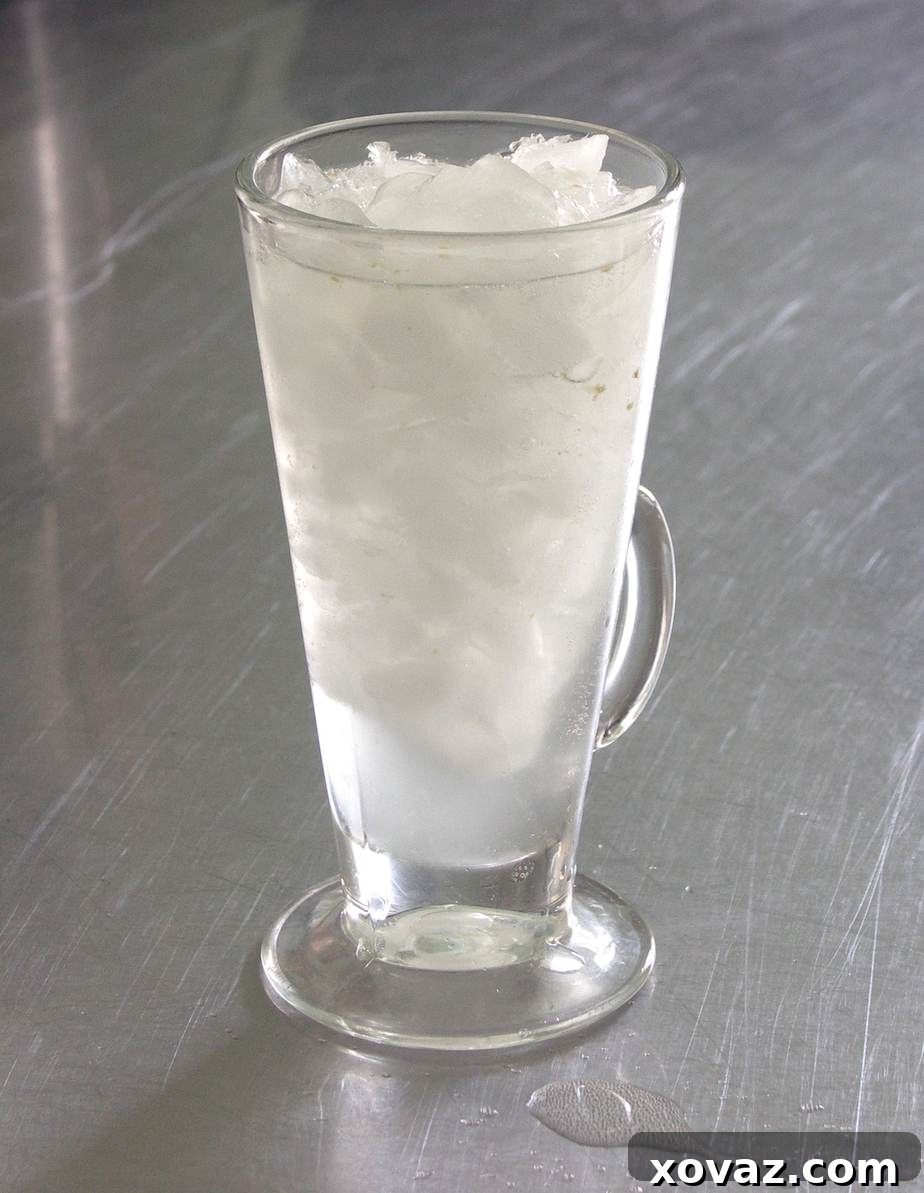
In a world saturated with highly processed, artificially sweetened beverages, the quest for truly refreshing and wholesome drinks often leads us back to the simple pleasures of homemade creations. For many, including myself, the ubiquitous commercial soda has lost its appeal. While I harbor no judgment towards those who enjoy them, the overwhelming sweetness of most mass-produced sodas has become too much for my palate. An occasional treat like a classic cola might cross my path once a year, but for daily enjoyment, my heart belongs to the invigorating taste of ginger ale. However, not just any ginger ale – I speak of the kind that awakens the senses, brimming with natural flavor and a delightful effervescence.
This journey into the superior world of homemade beverages began several years ago when my father, a man of simple tastes and an adventurous spirit, stumbled upon an intriguing ginger ale recipe online. Naturally, in our family, any new endeavor by Dad becomes an immediate source of affectionate jest. It’s our peculiar way of showing love; if we tease you, we care. What this says about our collective psyche, a psychologist might have a field day, but for us, it’s simply how we operate.
Papa’s Hooch: The Birth of a Family Legend
“Ah, home-brewing, eh Dad?” we’d playfully prod, knowing full well my father doesn’t touch alcohol. “Soooo, Papa, are you moonshining now? Making hooch?” And thus, a legend was born, christening his delightful concoction “Papa’s Hooch.” The first batch he brought to visit us was an unforgettable introduction. Ignoring his wise counsel to open it over the sink, I found myself wearing a significant portion of the highly pressurized, effervescent contents. It was a spectacular, albeit messy, initiation.
But beyond the initial fizz, the taste was nothing short of a revelation. This was REAL ginger ale. You could distinctly savor the bright zest of fresh ginger, perfectly balanced with the tang of lemon and lime juice. And the fizziness – oh, the fizziness! It wasn’t the uniform carbonation of a factory-bottled drink, but a lively, natural effervescence, complete with actual citrus pulp and finely grated ginger settled at the bottom. It was an authentic, vibrant experience, a stark contrast to anything I’d ever bought from a store.
The Unmistakable Difference: Homemade vs. Commercial Soda
Have you ever truly experienced an honest-to-goodness homemade soda? One made from scratch, with fresh, natural ingredients? If your entire soda experience is confined to the sugary, fizzy-drinks aisle of your local grocery store, then prepare yourself, because you are missing out on an entire world of flavor. Homemade ginger ale is not merely a different brand; it’s an entirely different species compared to mass-produced varieties like Canada Dry or Schweppe’s. It boasts a robust, spicy kick that often aligns more closely with what many consider a ginger beer, similar to a quality Reed’s Ginger Beer. It even shares a heritage with Vernor’s, which for us native Michiganders, is about the only bottled ginger ale truly worth buying and drinking. The difference lies in the commitment to natural ingredients, the nuanced flavors, and the genuine fermentation process.
Commercial sodas often rely on high-fructose corn syrup, artificial flavors, and preservatives to achieve a consistent but often one-dimensional taste profile. Homemade ginger ale, on the other hand, celebrates the raw, unadulterated goodness of fresh ginger, real citrus, and a touch of natural yeast. This not only results in a more complex and satisfying flavor but also offers potential health benefits. Ginger, for instance, is renowned for its digestive aid properties and anti-inflammatory compounds, while fresh citrus provides a natural dose of Vitamin C. By choosing to make your own, you gain complete control over the ingredients, ensuring a beverage free from unwanted additives and bursting with pure, wholesome goodness.
Understanding the Science of Papa’s Hooch
Natural Sediment and Pulp: A Sign of Authenticity
Papa’s Hooch is a home-fermented product, and understanding the science behind it is key to appreciating its unique qualities. As such, you will notice a little sediment at the bottom of the bottle. This is entirely normal and expected. Furthermore, because it’s brewed with real, grated ginger and fresh-squeezed citrus juice, a small amount of pulp will naturally be present in the finished product. These are not flaws, but rather hallmarks of a truly natural, unadulterated beverage. If you pour carefully, most of the sediment should remain in the bottle. For those who find pulp objectionable (though I personally find it delicious and might even fight you for yours!), you can easily strain the hooch through a fine mesh strainer into your glass for a clearer drink.
The Miniscule Alcohol Content Demystified
Another aspect of fermented beverages is the production of a minuscule amount of alcohol as a byproduct of yeast activity. The original recipe called for a full cup of sugar, but my Dad wisely reduced it to a half-cup. With less sugar available for the yeast to consume, the final alcohol content in Papa’s Hooch is even lower than in the original recipe. To give you a precise understanding of just how little alcohol is present, let me share a direct quote from the scientific page where Dad originally sourced the recipe:
“We have tested in our lab the alcoholic content which results from the fermentation of this (ginger ale) and found it to be between 0.35 and 0.5 %. Comparing this to the 6% in many beers, it would require a person to drink about a gallon and a half of this (ginger ale) to be equivalent to one 12 ounce beer. I would call this amount of alcohol negligible, but for persons with metabolic problems who cannot metabolize alcohol properly, or religious prohibition against any alcohol, consumption should be limited or avoided.”
Considering Dad’s modification, the alcohol content in Papa’s Hooch is roughly half of what’s stated above. To put this into perspective: you would need to consume approximately three gallons of Papa’s Hooch to ingest the same amount of alcohol found in a single average 12-ounce beer. This firmly places Papa’s Hooch in the category of a non-alcoholic beverage, perfectly safe for almost everyone to enjoy.
Safety First: Pressure and Bottle Selection
When embarking on your homemade ginger ale journey, one critical factor to keep in mind is the significant pressure that builds up during fermentation. This is why the choice of your fermentation vessel is paramount. It is absolutely essential to use an empty, clean, plastic two-liter seltzer or soda bottle with a tightly fitting screw top. This type of bottle is specifically designed to withstand the internal pressures generated by carbonated beverages. Under no circumstances should you use an empty milk jug, a glass bottle, or a mason jar for this project.
Glass bottles, while seemingly robust, are rigid and unforgiving under extreme pressure. There is a very real and dangerous risk of explosion, which could lead to severe injury from flying glass shards and significant property damage. While even plastic bottles carry a minimal risk of bursting if over-fermented, the consequences are far less severe. An exploding plastic bottle is more likely to create a mess requiring cleanup rather than causing physical harm. By adhering to the recommended plastic bottle and following the safety precautions outlined in the recipe, you can confidently enjoy the process and the delicious end product. This isn’t akin to filleting and eating fugu; it’s just ginger ale. The biggest potential inconvenience you’ll face is a puddle to wipe up and perhaps a wall or two needing a quick clean. A small price to pay for such unparalleled refreshment!
Crafting Your Own Papa’s Homemade Hooch: A Step-by-Step Guide
Ready to experience the magic of real, sparkling ginger ale? If you start this simple process tonight, you could be enjoying your very own batch by Sunday morning. For a photo-free, printer-friendly version of this recipe, click here!
Papa’s Homemade Hooch Recipe
Ingredients (for a 2-Liter Batch):
- 1/2 cup granulated sugar
- One lemon or one lime (or half of each for balanced flavor)
- 2 inches of fresh gingerroot
- 1/4 teaspoon of active dry yeast
- Clean drinking water
Equipment You’ll Need:
- A clean, dry, empty 2-liter plastic soda or seltzer bottle with a screw cap
- A funnel
- A measuring cup
- A grater (fine grater or microplane recommended for ginger)
- A juicer or reamer for citrus
Preparation Instructions:
1. Prepare Your Bottle: Take your clean, dry, empty 2-liter soda bottle and fit its top with a funnel. Ensure the bottle is completely dry inside to prevent any premature activation of the yeast or contamination.
2. Add Dry Ingredients: Carefully pour the granulated sugar and yeast into the bottle through the funnel. Give the bottle a gentle swirl to help distribute the yeast evenly through the sugar. Leave the funnel in place for now and set the bottle aside.
3. Prepare the Ginger: Using a fine grater or microplane, grate the 2 inches of fresh gingerroot directly into your measuring cup. You can peel the ginger first if you prefer, but leaving the skin on is also fine as the pulp will be filtered or strained later.
4. Juice the Citrus: Juice your lemon and/or lime into the same measuring cup containing the grated ginger. I personally find that a combination of half a lemon and half a lime yields the most vibrant and complex flavor. Roll the citrus on a countertop before juicing to maximize yield.
5. Combine and Pour: Gently swirl the citrus juice and grated gingerroot together in the measuring cup to mix thoroughly. Then, pour this fragrant mixture through the funnel into the 2-liter bottle. You’ll notice some ginger pulp and citrus bits will likely remain in the funnel and measuring cup.
6. Rinse for Maximum Flavor: To ensure you capture all the valuable ginger and citrus pulp, add a small amount of clean drinking water to the measuring cup. Swirl it around vigorously to loosen any remaining particles. Pour this water through the funnel into the bottle. This step effectively rinses out both the measuring cup and the funnel, ensuring every drop of flavor makes it into your hooch.
7. Fill and Dissolve: Remove the funnel from the bottle. Screw the cap on tightly. Shake the bottle vigorously to mix all the ingredients thoroughly and begin dissolving the sugar. After shaking, carefully remove the cap and fill the bottle with clean drinking water to within approximately one inch of the top – this should be where the bottle’s neck begins to narrow. Cap tightly once more and invert the bottle repeatedly to ensure the sugar is completely dissolved. This vigorous agitation ensures the yeast has readily available fuel for fermentation.
8. Initial Firmness Check: To establish a baseline, press the side of the plastic bottle firmly with your thumb. Take note of how much it yields under pressure. This will be your reference point for monitoring the fermentation process.
9. Fermenting the Hooch: Place the bottle in a warm (but not hot) spot in your home. The ideal temperature for yeast activity is typically between 70-80°F (21-27°C). Allow it to ferment for approximately 24-48 hours. During this time, the yeast will consume the sugar, producing carbon dioxide and creating the natural fizziness. Regularly check the bottle’s firmness by pressing the side with your thumb. When the bottle becomes very firm and barely yields to strong pressure, it’s time for the next crucial step.
10. Refrigeration: As soon as the bottle is firm, immediately transfer it to the refrigerator. Do not leave the bottle out for more than 48 hours, as over-fermentation significantly increases the risk of bursting due to excessive pressure. Chilling the bottle completely, preferably overnight, will halt the yeast activity and prevent further carbonation buildup, making it safe to open and enjoy.
11. Serve and Enjoy: Once thoroughly chilled, it’s time for the grand unveiling. Caaaaarefully loosen the lid, doing so slowly and steadily to release the built-up pressure. For safety and to prevent any potential mess, always perform this step over a sink or a surface that is easy to clean. Trust me on this!
Once the pressure is safely released, pour your homemade ginger ale generously over ice.
If you prefer a perfectly clear drink and find the pulp and small bits of ginger objectionable, you can strain your soda into the glass using a fine mesh sieve.
One final, invaluable piece of advice comes straight from my Dad, and it’s one you’ll want to heed carefully: “Rinse the bottle out with water immediately after pouring your last glass. Otherwise, you’ll never get the dad-burned stuff out of there.” He speaks from experience, and I can personally attest to his wisdom. I once tried to wash out an empty hooch bottle after it had sat, capped, overnight. The fermented residue had become so stubbornly adhesive that I ended up having to recycle the blasted thing. When will I ever learn to listen to my Dad the first time?
Embrace the delightful journey of making your own Papa’s Homemade Hooch. It’s more than just a drink; it’s an experience of natural flavor, playful tradition, and pure, unadulterated refreshment that you simply won’t find in a store-bought bottle.