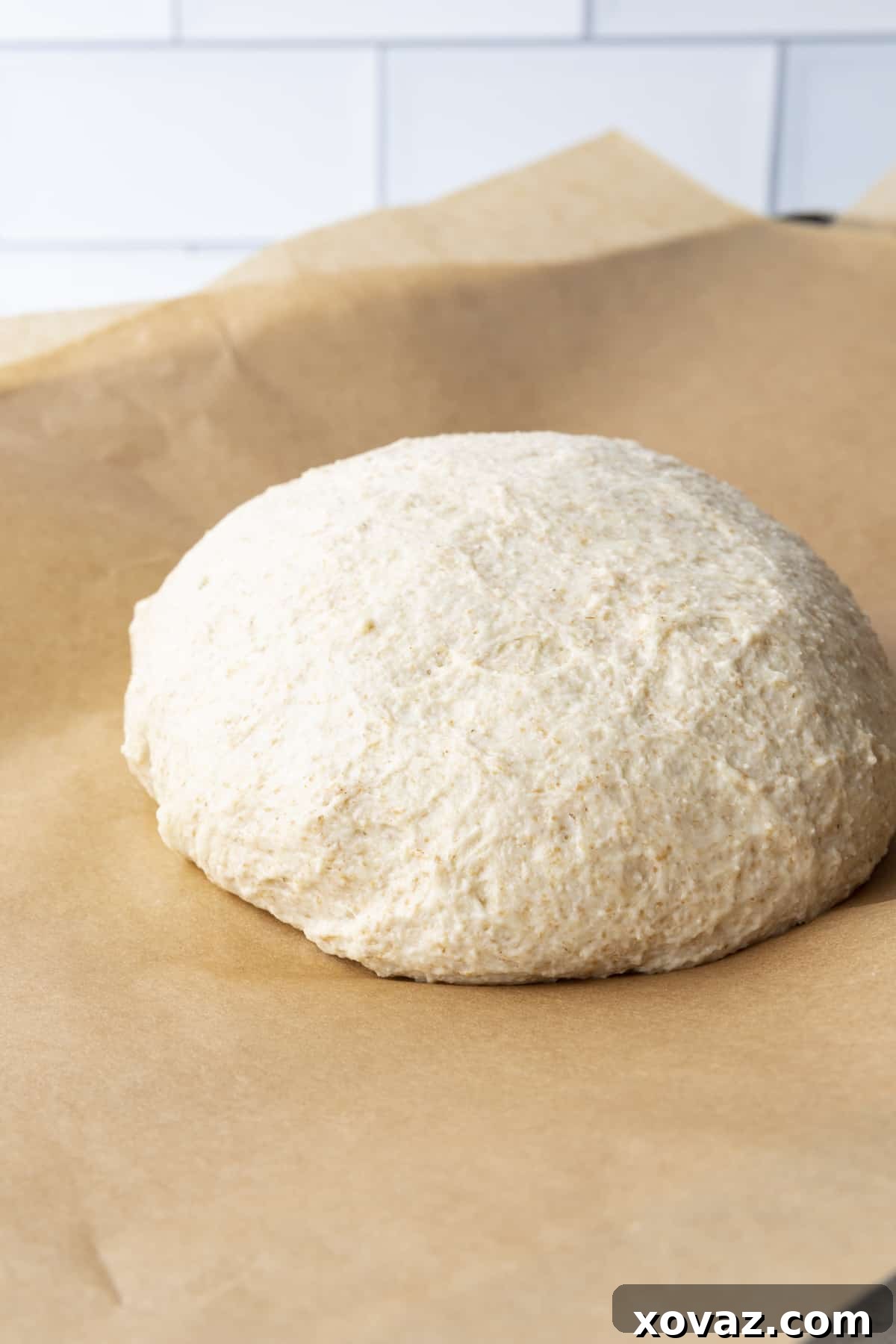
This whole wheat pizza dough is the cornerstone of our family’s favorite pizza night, delivering a truly exceptional crust that’s both crispy and chewy, bursting with flavor, and robust enough to support any topping imaginable. Forget soggy centers or bland bases – this recipe is a game-changer for homemade pizza enthusiasts.
Many home bakers wonder, “Why bother with whole wheat pizza dough?” It’s true, pizza isn’t typically categorized as health food. However, whole wheat flour offers more than just a nutritional boost, packing in extra protein, vitamins, riboflavin, folate, iron, and calcium compared to white flour. Beyond the added goodness, our whole wheat pizza dough possesses a secret weapon that elevates it far beyond a mere “healthier” option – it creates an incredibly delicious and satisfying crust that genuinely enhances the entire pizza experience.

Essential Ingredients for Your Best Whole Wheat Pizza Dough
Creating this phenomenal whole wheat pizza dough requires a thoughtful blend of ingredients, each contributing to the final perfect texture and taste. Here’s what you’ll need:
- All-Purpose Flour
- Whole Wheat Flour
- Semolina Flour (Don’t have it? We’ll provide an easy substitute!)
- High-Quality Olive Oil
- Water (room temperature is key!)
- Salt (Kosher salt is recommended)
- Sugar (raw or granulated works)
- Active Dry Yeast or Instant Yeast
The Secret Behind Our Superior Whole Wheat Pizza Crust: A Flour Trio
You might be curious why this recipe calls for three distinct types of flour. The answer lies in the unique characteristics each flour brings to the dough, working synergistically to create a crust that is far superior to one made with 100% whole wheat flour alone.
While a 100% whole wheat pizza dough is certainly possible, it often results in a dense, heavy, and somewhat “stodgy” crust that, while nutritionally virtuous, lacks the delightful chewiness and light crispness we crave in a perfect pizza. Our goal isn’t just to make a healthy pizza; it’s to make a pizza so good you’ll forget it’s made with whole wheat. By carefully combining all-purpose, semolina, and whole wheat flours, we achieve a balance that truly makes this whole wheat pizza crust a family favorite.
All-Purpose Flour: The Versatile Workhorse
All-purpose flour, as its name suggests, is incredibly versatile. It’s typically milled from a blend of hard and soft wheat, providing a medium protein and gluten content. This makes it a reliable foundation for countless baked goods, including our pizza dough. Its presence ensures a manageable, elastic dough that stretches beautifully without tearing, contributing to the overall pliability and structure of the crust. Different brands can have slightly varying protein levels, so if you find a brand you love, like King Arthur Flour, sticking with it can help ensure consistent results in your baking.
Semolina Flour: For That Irresistible Crackle and Chew
Semolina flour is a star player in achieving that signature pizza crust texture. Derived from durum wheat, it boasts a remarkably high gluten content. It’s the same flour prized in many pasta recipes and couscous, thanks to its ability to create a dough that holds its shape exceptionally well, even after cooking. In our whole wheat pizza dough, semolina flour is responsible for lending that gorgeous, subtle crackle to the exterior of the crust, while simultaneously keeping the interior tender, soft, and wonderfully chewy. It adds a depth of texture that transforms a good pizza into a truly memorable one.
It’s important not to confuse semolina flour with rice semolina or corn semolina; these are distinct products and are not interchangeable in this recipe. While semolina flour is fantastic, using it exclusively can make the dough a bit more delicate and prone to tearing if over-kneaded or over-mixed. This is precisely why we combine it with all-purpose flour – the blend mitigates these issues, giving you a robust yet pliable dough that’s a joy to work with.
If you find yourself without semolina flour, or if it’s simply not available in your area (though it’s fantastic in our braided semolina bread!), you can substitute an equal amount by volume (not weight) of all-purpose flour or high-gluten bread flour. Be aware that this substitution will slightly alter the final texture of the crust, but it will still yield a delicious homemade pizza.

Whole Wheat Flour: The Hearty Flavor Enhancer
And now, for the star of the show: whole wheat flour. This ingredient brings a rich, nutty, and distinctly hearty flavor profile to baked goods that simply cannot be replicated by white all-purpose flour. Many people mistakenly believe that whole wheat flour inevitably leads to dense results, but with a few clever techniques, you can achieve beautifully light and airy whole wheat creations.

Mastering Whole Wheat Flour in Your Pizza Dough: Essential Tips
Working with whole wheat flour is slightly different from working with white flour, but these simple tricks will ensure your dough turns out perfectly every time:
- **Hydration is Key:** Whole wheat flour absorbs significantly more liquid than white flour. Therefore, recipes utilizing whole wheat flour generally require a bit more water. As a rule of thumb, plan to add about a tablespoon of extra water for every cup of whole wheat flour used. Don’t be afraid if the dough seems a little stickier at first; it will absorb the liquid over time.
- **Embrace the Stickiness (Initially):** When you first mix your whole wheat pizza dough, it will likely feel stickier than a dough made purely with all-purpose flour. Resist the urge to add more flour! As the whole wheat flour slowly absorbs the additional liquid, the dough will become less sticky and more manageable. Trust the process.
- **Patience with the Rise:** One of the most crucial aspects of working with whole wheat dough is patience, particularly during the rising phase. While ambient room temperature and humidity will influence the exact rise time, it’s essential to let the dough tell you when it’s ready. Has it truly doubled in bulk and become very puffy? If not, allow it more time. Rushing this step can result in a denser crust.
- **Gentle Handling:** When it’s time to roll or stretch your whole wheat pizza dough, approach it with patience and a gentle touch. Whole wheat gluten develops differently, and rushing can cause the dough to snap back or tear. Work slowly and let the dough relax as you shape it.
- **Don’t Expect Maximum Loft:** This whole wheat dough may not rise quite as high as a 100% all-purpose flour dough, and that’s perfectly fine. This slightly less dramatic rise is actually part of what contributes to its desirable crisp-yet-chewy texture, giving you a crust with character and structure.
This whole wheat pizza dough isn’t just a recipe; it’s the foundation for your ultimate homemade pizza fantasy. It’s the crust upon which delicious dreams are built, consistently delivering a pizza experience that will impress even the toughest critics.
Is that hyperbole? Perhaps. But I can tell you that every single time I make this whole wheat pizza dough, my husband enthusiastically declares, “You make the best pizza dough!” That’s a testament to its consistent quality and undeniable appeal.
Delicious Pizzas to Make with Your New Favorite Whole Wheat Pizza Crust
As you might gather, I’m incredibly passionate about pizza. This recipe yields a generous amount of dough, ensuring you’ll have plenty to experiment with or freeze for future pizza nights. While this whole wheat pizza crust is absolutely phenomenal with classic pepperoni and cheese, its robust flavor and perfect texture make it a fantastic base for a myriad of creative toppings. Throughout this post, you’ve seen glimpses of some of our favorites, including the unique Trashed Up Barbecue Turkey Pizza and the creamy Ranch Cream Cheese Vegetable Pizza, as well as the savory-but-not-quite-pizza Pissaladière.
Don’t forget to try our surprising Pickle Pizza, a spectacular choice for pickle aficionados! And for those who love to venture into more experimental pizza territory, the sophisticated Smoked Salmon Cucumber Pizza is an absolute must-try. This dough is truly adaptable to all your pizza inspirations!
For a pre-baked pizza crust, simply roll out your desired portion of dough, brush it lightly with olive oil, and bake at 450ºF (232°C) until the bottom is crisp and the edges are beautifully golden to deep brown. Otherwise, treat it just like any other pizza dough: add your toppings and bake until cooked to perfection!
Whole Wheat Pizza Dough Recipe
This recipe for whole wheat pizza dough creates enough for approximately six 12-inch pizzas or three half-sheet pan sized pizzas. Yes, that’s a substantial batch! But the beauty of this dough is its versatility and excellent storage capabilities, meaning you don’t have to bake them all at once.
And if you can’t imagine eating that much pizza, don’t worry! This exceptionally versatile dough also makes incredible focaccia or flatbreads, offering even more ways to enjoy its fantastic flavor and texture!
Mixing Your Dough: No Kneading Required!
Begin by combining the yeast, salt, sugar, olive oil, and room temperature water in a large capacity bucket or mixing bowl. (This recipe can easily be halved if your container isn’t large enough for the full batch). While I personally love this dough bucket and this dough whisk for the job, a sturdy large mixing bowl and a wooden spoon will work just as well.
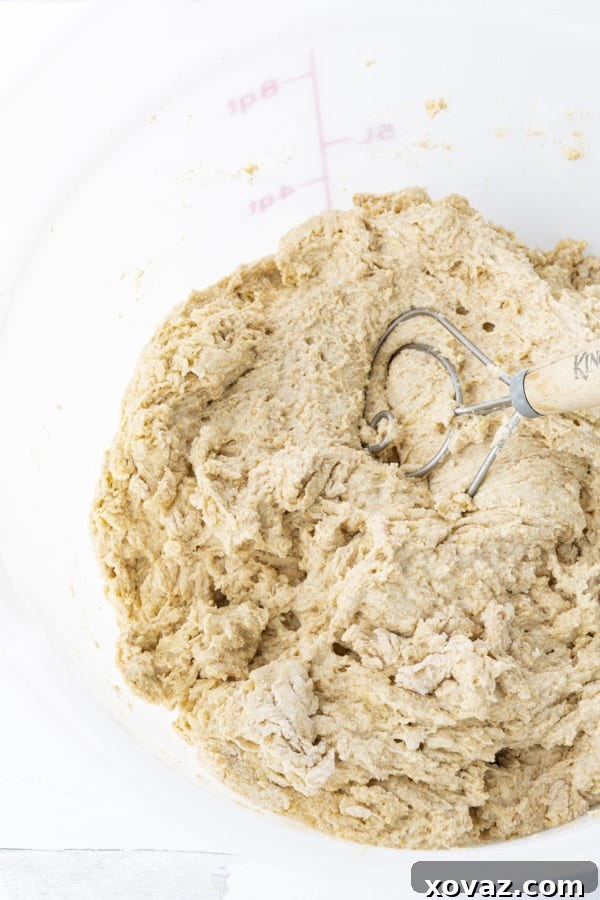
Next, gradually stir in the flours (all-purpose, whole wheat, and semolina) until no dry pockets of flour remain. There’s no need for strenuous kneading with this recipe! I find the easiest and most effective way to ensure everything is thoroughly combined is to wet one hand and forearm, then use that hand to mix the dough completely until smooth.
Rising and Resting: The Patience Factor
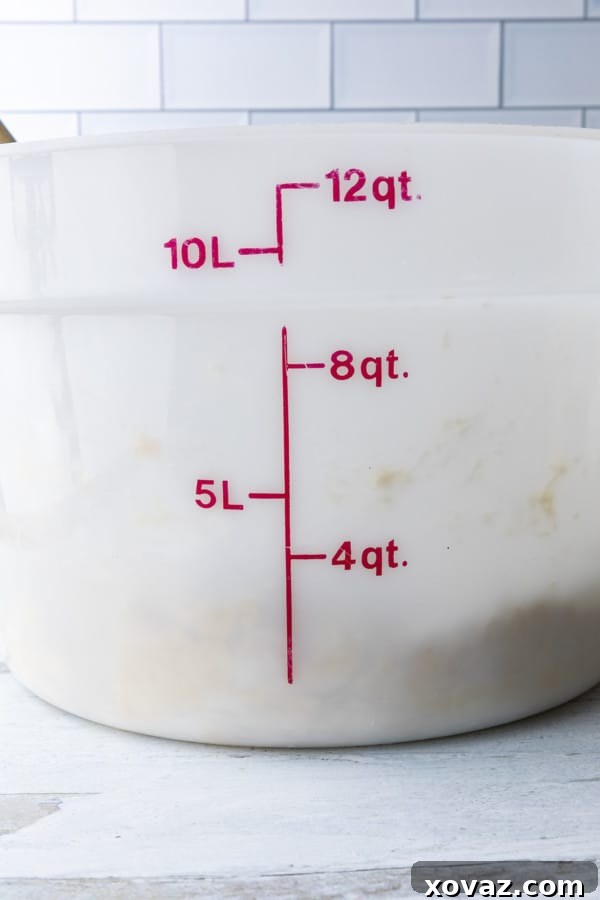
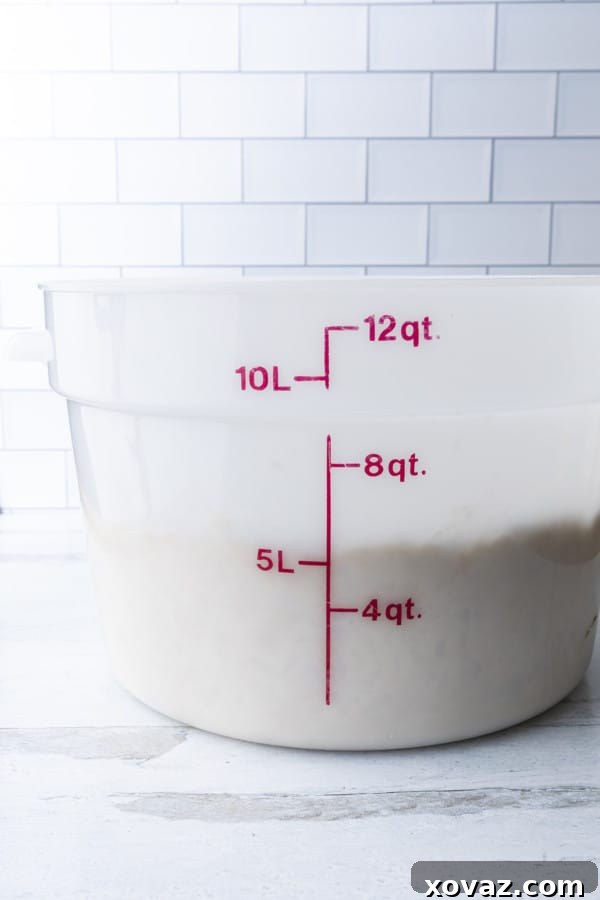
Once mixed, lightly cover your dough container. It’s crucial not to seal it with a tight lid – trust me on this! Allow the dough to rest at room temperature until it has doubled in size and then gently collapsed, or at least become very, very puffy. The exact time for this process can vary: it typically takes less than 2 hours in warmer environments and more than 2 hours in cooler temperatures. Observe the dough, not the clock, for the best results.
Shaping and Storing Your Dough
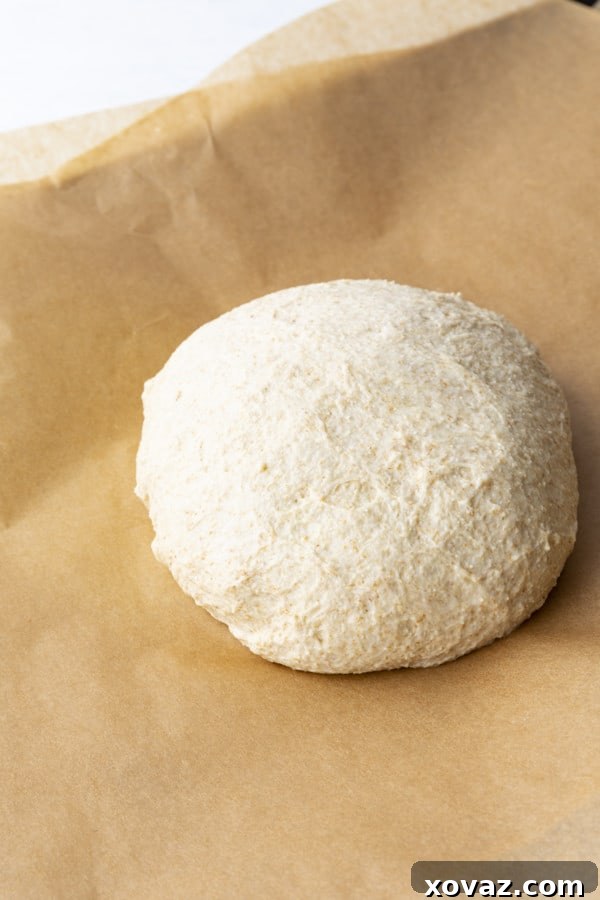
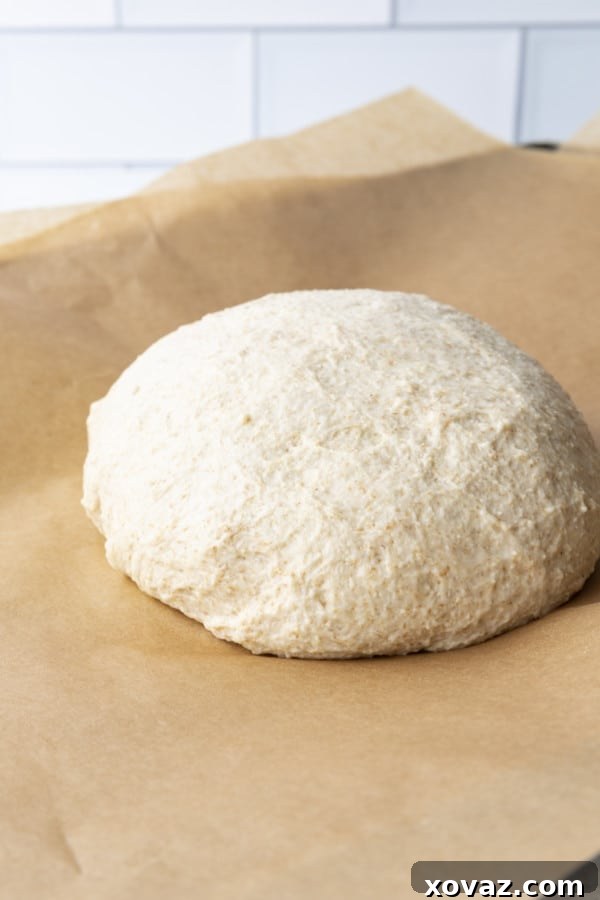
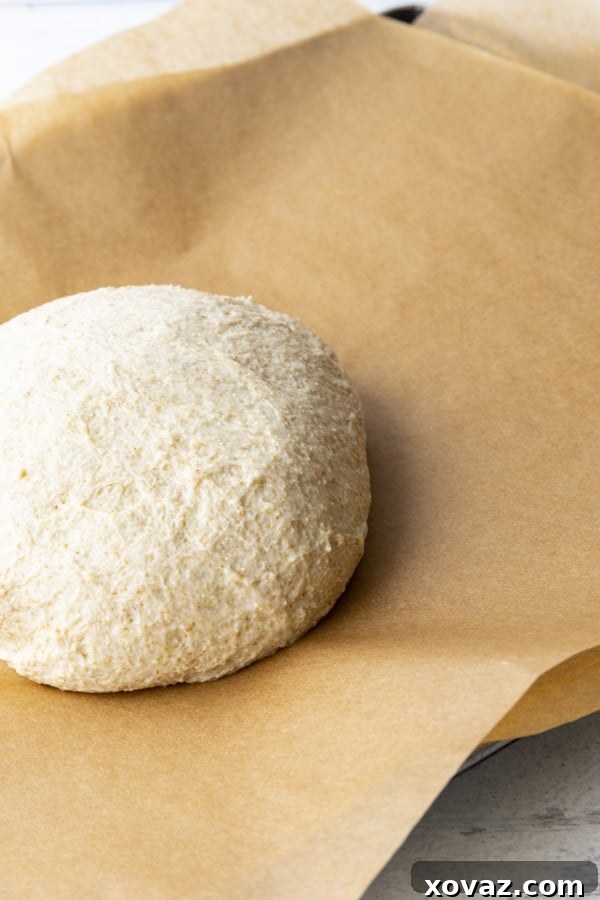
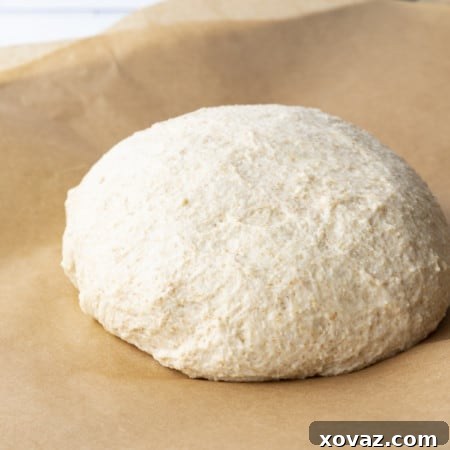
After your whole wheat pizza dough has achieved its full rise and is very puffy, wet your hands slightly to prevent sticking. Gently divide the dough into 6 approximately equal-sized balls. Take one dough ball at a time and, with wet hands, pull the sides down from the top and tuck them under the ball. Rotate the ball and repeat this process until you have a smooth, tight, and uniformly shaped ball of whole wheat pizza dough.
Set aside the dough balls you intend to use for baking tonight’s pizza. You’ll prepare these shortly.
Freezing for Future Pizza Nights
To prepare your extra pizza dough for freezing and convenient future use, grab a gallon-sized, zip-top freezer bag for each dough ball and label it with the date. Drizzle a small amount of olive oil inside each freezer bag and rub it around to coat the interior. Place one dough ball into each prepared bag, gently press out any excess air, seal the bag securely, and freeze for up to three months. This makes spontaneous pizza nights incredibly easy!
Thawing Frozen Pizza Dough
When you’re ready to enjoy pizza from your frozen stash, thawing the dough is a breeze! Simply transfer a bag of frozen dough from the freezer to the refrigerator about 8 hours before you plan to bake. This slow thaw helps maintain the dough’s texture and flavor.
Once thawed in the refrigerator, allow the dough ball to come to room temperature for at least 30 minutes before you plan to stretch or roll it out. This step is crucial, as room temperature dough is much more pliable and easier to work with. If you’re in a pinch and need to “quick thaw” the dough, you can leave it at room temperature for approximately 3 hours, though the exact time will depend on the warmth of your home.
Whole Wheat Pizza Dough
This whole wheat pizza dough yields our family’s favourite pizza crust; crispy and chewy, flavourful crust that holds up to anything you put on it.
Author: Rebecca Lindamood
Prep Time: 5 mins
Total Time: 2 hrs 5 mins
Equipment
- 1 dough bucket or large mixing bowl
- 1 dough whisk or long handled, sturdy spoon
Ingredients
- 5 3/4 cups room temperature water
- 1/2 cup extra virgin olive oil
- 3 tablespoons instant yeast
- 2 tablespoons kosher salt
- 2 tablespoons sugar (raw or granulated)
- 4 cups whole wheat flour (1 pound 1 ounce by weight)
- 7 cups all-purpose flour (1 pounds, 14 3/4 ounces by weight)
- 2 cups semolina flour (11 ounces by weight)
Instructions
- Mix the yeast, salt, sugar, olive oil, and water in a 12-quart capacity bucket or large mixing bowl.
- Stir in all the flours (whole wheat, all-purpose, and semolina) until no dry pockets remain. You do not have to knead it, but the easiest way to ensure it’s thoroughly mixed is to wet one hand and forearm and use it to combine the dough completely.
- Cover the container lightly (do not put a lid on tight) and let the dough rest at room temperature until it has doubled in volume and then gently collapsed (or at least until the dough is very, very puffy). This process takes less than 2 hours in warm weather and more than 2 hours in cool or cold temperatures.
- You can use the dough immediately for baking. If you have leftovers, you can store them in the same container, lightly covered (again, no tight lid!), for up to 10 days in the refrigerator.
- For longer storage, divide the dough into individual pizza-sized portions. Freeze each portion in a resealable plastic bag that has about a teaspoon of olive oil smeared around inside. Dough can be frozen for up to 3 months. Thaw in the refrigerator overnight before bringing to room temperature for use.
Nutrition (per serving, estimated for 24 servings)
Calories: 296kcal | Carbohydrates: 54g | Protein: 8g | Fat: 6g | Saturated Fat: 1g | Polyunsaturated Fat: 1g | Monounsaturated Fat: 3g | Sodium: 583mg | Potassium: 143mg | Fiber: 4g | Sugar: 1g | Vitamin A: 2IU | Vitamin C: 1mg | Calcium: 15mg | Iron: 3mg
Nutritional information is an estimate and provided to you as a courtesy. You should calculate the nutritional information with the actual ingredients used in your recipe using your preferred nutrition calculator.
Did you make this recipe?
Make sure to tag @foodiewithfam on Instagram and #hashtag it #foodiewithfamily so I can check it out! We love seeing your delicious creations!
This post was originally published May 7, 2012. Republished with improved information, instruction, and images in April 2022.