Visit our Bread Recipes page for more fantastic homemade breads!
The Ultimate Guide to Baking Irresistible Homemade Pretzel Bread
There are few culinary delights that rival the simple pleasure of a fresh loaf of bread, warm from the oven, filling your home with its comforting aroma. And if we’re talking about pure joy, soft pretzels stand in a league of their own. Their distinctive chewy texture, deep brown crust, and signature salt topping are simply unmatched. Now, imagine combining the best of both worlds: the comforting structure of a loaf of bread with the unique characteristics of a classic soft pretzel. The result? Our incredible homemade Pretzel Bread.
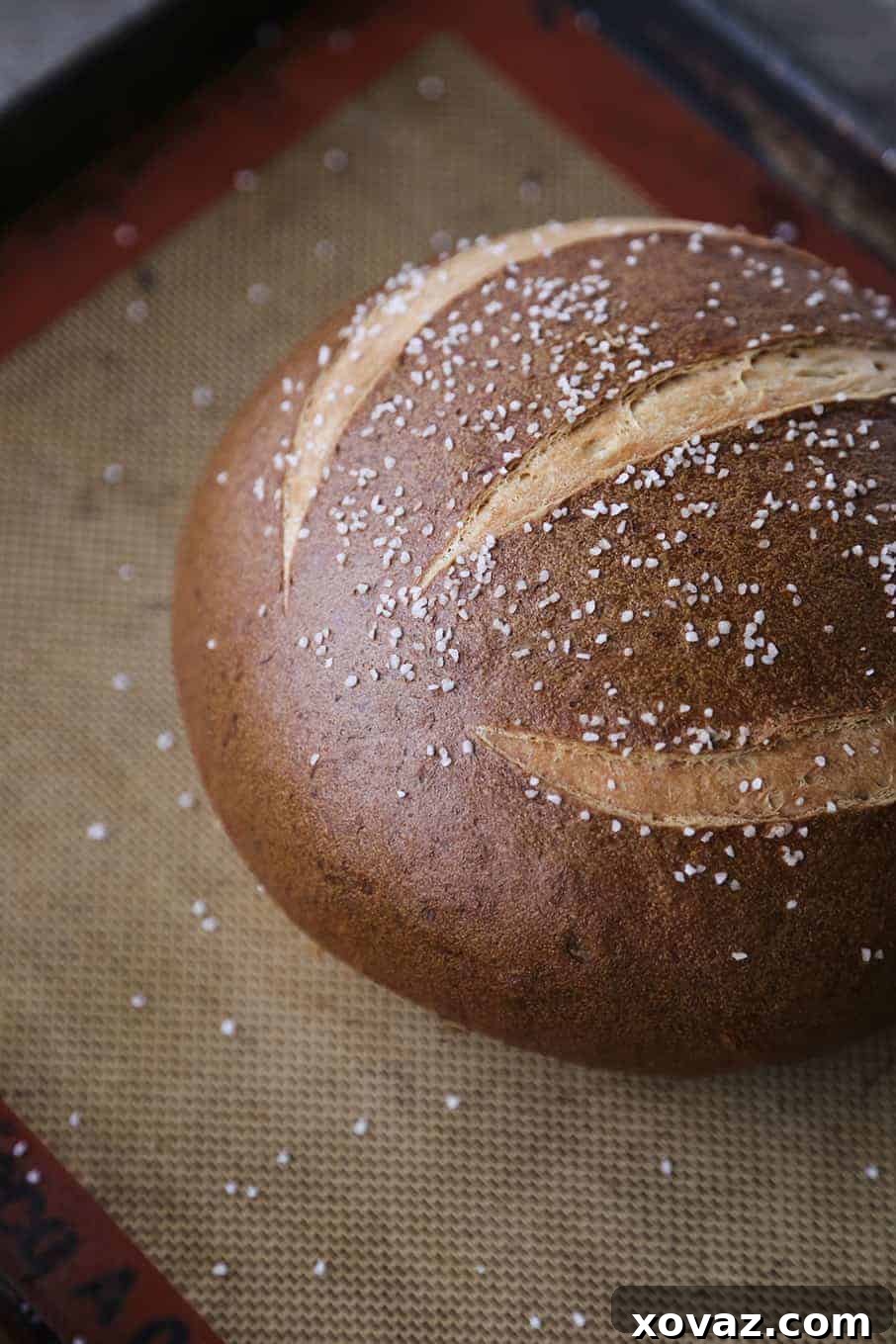
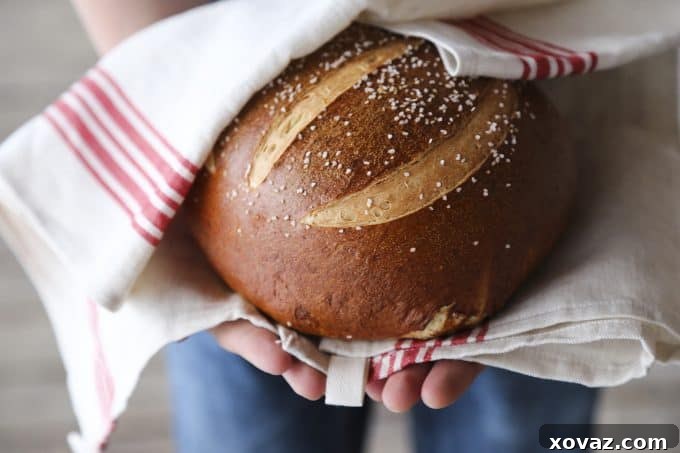
This isn’t just any bread; it’s a revelation. A tempting, deeply browned loaf, boasting a perfectly chewy yet tender interior and a crisp, coarse salt-studded crust. This soft Pretzel Bread is a culinary experience you didn’t know you needed until you take that first glorious bite. It truly is happiness in edible form.
Why Homemade Pretzel Bread is a Game Changer
Beyond the sheer delight of its flavor and texture, homemade pretzel bread offers an unparalleled versatility in the kitchen. Envision elevating your everyday meals: a fried egg sandwich or a gooey grilled cheese on toasted Pretzel Bread? Absolute perfection. How about a robust roast beef sandwich, where the savory fillings are perfectly complemented by the bread’s unique chew? For soup lovers, a hearty wedge of pretzel bread is the ideal companion for dipping into a rich broccoli cheddar soup or a slow-cooked beef stew with bacon, soaking up every last drop of deliciousness.
But let’s be honest, sometimes the simplest pleasures are the best. There’s a profound satisfaction in slicing a thick slab straight from the fresh-baked loaf, dropping it into a frying pan with a melting pat of butter, and letting it brown gently on one side. The crunch of that crispy, buttery, toasted exterior, giving way to the soft, perfect crumb of the pretzel bread, and then finding that distinct, chewy bit of crust studded with pretzel salt – that alone is reason enough to embark on this baking adventure. Everything else, as they say, is gravy.
The Secret Behind the Perfect Pretzel Crust: The Boil
What truly sets pretzel bread apart from traditional loaves is the crucial pretzel boil. This step, often overlooked by baking novices, is the cornerstone of achieving that signature deep brown color, characteristic chew, and distinct flavor. Before baking, the shaped dough is briefly submerged in a boiling solution of water, baking soda, and in our recipe, a touch of brown sugar. The baking soda creates an alkaline environment, which, when combined with the heat of the oven, promotes the Maillard reaction – the chemical process responsible for the bread’s rich color, intense flavor, and firm crust.
While some traditional pretzel recipes might stick strictly to baking soda, we’ve found that adding brown sugar to the boil enhances the crust even further. It provides a subtle boost of sugar to the exterior, aiding in a more pronounced browning and a beautiful, glossy finish without imparting excessive sweetness to the bread itself. This combination ensures a truly authentic pretzel experience in every bite of your loaf.
Essential Cook’s Notes for Pretzel Bread Success
- Forming the Loaf with Precision: Shaping this loaf is a unique and rewarding process, slightly different from typical sandwich bread. After the initial rise, gently turn the dough onto a lightly floured counter. The goal is to create a smooth, tight surface on your dough ball. To achieve this, lift a quarter of the dough, stretch it gently downwards, and tuck it under the main body of the dough. Rotate the dough a quarter turn and repeat this motion. Continue until you have a fairly smooth ball. Then, place the ball on your counter or a dough mat and, using the edges of your hands at an angle, rotate the dough ball in one continuous direction, gently easing and tightening it against the surface. This technique creates tension on the surface, resulting in a beautifully structured loaf. Once smooth and tight, transfer it to a baking sheet lined with a Silpat or non-stick foil and cover lightly with a damp tea towel for its second rise. To help visualize this, we’ve created a helpful video tutorial!
- Batch Size Considerations: Please note that the video tutorial demonstrates shaping a double batch of dough. If you are following the recipe as written for a single loaf, you will only need to shape and boil one magnificent loaf of pretzel bread.
- Prepping for the Boil: As your dough embarks on its second rise, remember to preheat your oven to 400°F (200°C) and begin preparing your pretzel boil solution. Timing is key to a perfectly baked loaf!
- The Brown Sugar Advantage: As mentioned, while brown sugar isn’t strictly traditional in every pretzel boil, its inclusion is highly recommended for achieving a deeper, shinier, and more enticing crust. It doesn’t noticeably sweeten the bread; rather, it amplifies the browning process in the oven, giving you that rich, mahogany finish that makes pretzel bread so appealing.
- Mastering Pretzel Bread Storage: Storing your cooled Pretzel Bread correctly is crucial to maintaining its unique characteristics. Avoid airtight bags at all costs. While pretzel salt is robust, it’s not entirely immune to melting from trapped moisture. Your aim is to strike a delicate balance: prevent it from staling too quickly by leaving it completely exposed, but also avoid trapping too much moisture, which can ruin that lovely crust and potentially dissolve your precious salt. Our preferred method? A simple paper grocery bag. Ensure the loaf has cooled completely to room temperature – this can take several hours, or you can confirm with an instant-read thermometer (target internal temperature below 90°F / 32°C). Once cool, place the loaf inside the paper bag and lightly fold the end of the bag underneath. This ingenious method protects your loaf from external elements (and curious counter-surfing pets!) while allowing enough air circulation to preserve that perfect crust for a day or two.
- No Pretzel Bread Left Behind: Should you find yourself with a miraculous remnant of Pretzel Bread that’s beginning to get stale (a rare occurrence!), please, whatever you do, do not discard it! Stale pretzel bread transforms into the most magnificent toast, an unbelievably flavorful grilled cheese sandwich, or crunchy, savory croutons for your salads and soups. Every last crumb is worth saving and savoring.
Pretzel Bread Recipe
Pretzel Bread
What’s better than a soft pretzel? A bigger soft pretzel… in this case, an entire loaf of soft pretzel bread.
Ingredients
- 4 cups bread flour (1 pound 1 ounce, by weight)
- 1 tablespoon sugar
- 2 teaspoons instant yeast
- 1 1/4 teaspoons kosher salt
- 1 cup whole milk
- 1/2 cup hot tap water
For the pretzel boil:
- 2 quarts water
- 3 tablespoons brown sugar
- 2 tablespoons baking soda
For topping:
- water in a spray bottle
- pretzel salt
Instructions
To Make the Dough by Hand:
-
In a large mixing bowl, whisk together the flour, salt, sugar, and yeast. Set the whisk aside and switch to a sturdy wooden spoon. Stir in the milk and tap water until a soft dough forms. Turn onto a generously floured surface and knead, adding small amounts of flour as needed to keep the dough from adhering to the counter. You do not want a firm dough; it should be fairly slack, a little tacky and soft, yet smooth. Place dough in a clean bowl, cover with a damp tea towel and set aside to rise in a warm, draft-free place until nearly doubled in bulk and puffy, about an hour or so.
To Make the Dough by Stand Mixer:
-
In the work-bowl of a stand mixer fitted with a dough hook, combine the flour, salt, sugar, and yeast. Mix on low just to combine dry ingredients. With mixer still on low, carefully pour in the milk and water. Continue mixing on low until you have a smooth, soft, slightly tacky dough. Remove bowl from the mixer, cover with a damp tea towel and set aside to rise in a warm, draft-free place until nearly doubled in bulk and puffy, about an hour or so.
To Make the Dough by Bread Machine:
-
Add the milk, water, flour, sugar, and yeast to the pan of your bread machine in the order recommended by the manufacturer. Select the “Dough” or “Dough Only” cycle and hit start. Allow the cycle to complete.
To form, boil, and bake the pretzel bread:
-
Preheat oven to 400°F (200°C). Line a baking sheet with a silicone baking mat (a Silpat) or non-stick foil.
-
Turn the dough out onto a clean surface. Lift the dough. Gently pull the edge of the dough down and tuck under. Turn the dough 1/4 turn and repeat. Do this until you’ve formed a cohesive round. Place the round on the clean surface and use your hands to gently turn and tighten the dough down over the surface. Place on the prepared pan, cover with a clean tea towel, and allow to rise while the oven preheats.
-
Bring 2 quarts of water to a boil in a stainless steel or other non-reactive pan (enameled cast-iron, tempered glass, etc…). When water boils, add the brown sugar and baking soda. Gently lift the loaf and ease the dough top side down first into the boiling water. Let simmer for about 3 minutes, flip the dough using two spatulas or slotted spoons and simmer for another 2 minutes. Use two spatulas or slotted spoons to lift the dough out of the water quite carefully and transfer back over to the Silpat or nonstick foil lined baking sheet.
-
Spritz the bread with water and sprinkle generously with coarse pretzel salt. Use a sharp knife to slice along the contours of the bread about 1/4-inch deep (this helps with expansion and creates a beautiful pattern). Place the pan in oven and bake for 35 minutes or until deep brown and at least 185°F (85°C) in the center of the loaf according to an instant-read thermometer. If you want a crustier loaf, let the internal temperature rise to 205°F (96°C).
-
Transfer the baked bread to a cooling rack and let it cool completely before slicing. This is vital for the crumb to set properly.
Nutritional information is an estimate and provided to you as a courtesy. You should calculate the nutritional information with the actual ingredients used in your recipe using your preferred nutrition calculator.
Did you make this recipe?
Make sure to tag @foodiewithfam on Instagram and #hashtag it #foodiewithfamily so I can check it out!