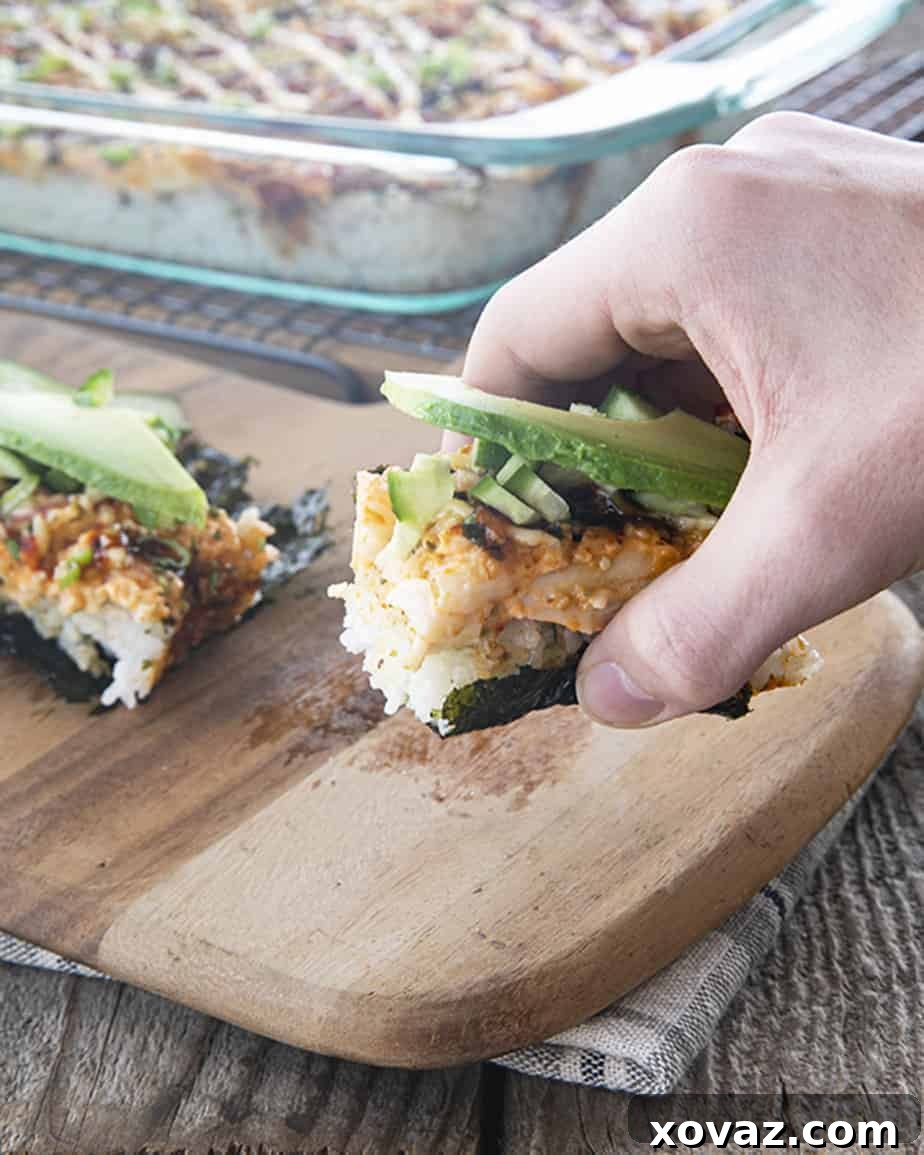
Craving the vibrant flavors of California Roll sushi without the fuss of rolling? Look no further than the incredibly popular Sushi Bake! This innovative dish takes all the delicious components of your favorite sushi roll – seasoned rice, creamy crab, fresh avocado, and crisp nori – and transforms them into a delightful, easy-to-make casserole. Perfect for a quick weeknight dinner or a crowd-pleasing party appetizer, Sushi Bake consistently disappears from the table in record time, becoming an instant favorite in any household.
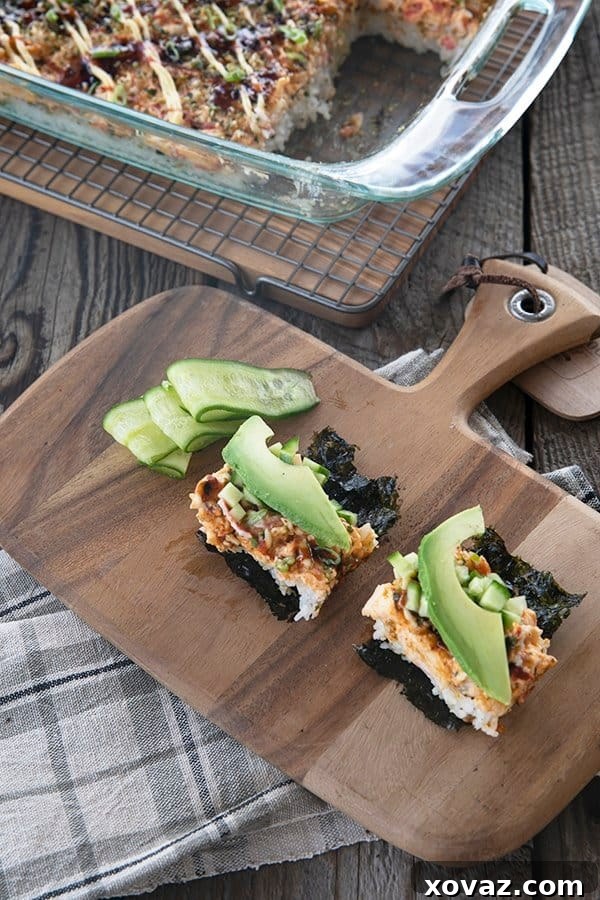
The rise of Sushi Bake gained significant traction during recent global lockdowns and quarantines, providing a much-needed sushi fix when dining out was not an option. What started as a pandemic trend, however, has firmly cemented its place in culinary hearts due to its sheer convenience, incredible taste, and adaptability. Originating from the Philippines, its popularity has rapidly spread across the globe, captivating food enthusiasts everywhere with its unique approach to deconstructed sushi.
At its core, Sushi Bake embodies simplicity and flavor harmony. While there are countless creative variations available, the classic California Roll-inspired Sushi Bake remains a timeless favorite. This recipe focuses on delivering that authentic California Roll experience with minimal effort, making it accessible even for novice home cooks. Say goodbye to sticky mats and intricate rolling techniques, and hello to a straightforward baking process that yields all the familiar tastes you love.
Traditional California Rolls typically feature seasoned sushi rice, crisp nori seaweed, rich cream cheese, savory imitation crab meat, refreshing cucumber, and creamy avocado. Our Sushi Bake recipe cleverly incorporates all these fantastic elements into a layered casserole. Instead of individually rolling dozens of pieces, you’ll prepare each component and layer them in a baking dish, creating a hearty and satisfying meal that is both fun to make and delightful to eat. It’s the ultimate shortcut to sushi satisfaction.
Mastering Sushi Rice for Your Bake
The foundation of any great sushi, whether rolled or baked, is perfectly prepared sushi rice. Making sushi rice for your bake is surprisingly easy, provided you keep a few crucial principles in mind. These steps ensure your rice achieves the ideal texture and flavor that distinguishes authentic sushi.
- **Choose the Right Rice:** Always opt for short or medium-grain rice. These varieties possess the necessary starch content to become sticky and cohesive when cooked, a hallmark of sushi rice.
- **Rinse Thoroughly:** Before cooking, rinse your rice several times until the water runs mostly clear. This step is vital for achieving the desired texture.
- **Follow Cooking Instructions:** Cook the rice according to your chosen method (stove-top, rice cooker, or Instant Pot) and the package instructions.
When it comes to selecting the right rice, I personally favor Nishiki brand medium grain rice. It consistently delivers excellent results, cooking up beautifully every time with just the right amount of stickiness and a pleasant chew. While Nishiki is a great choice, any high-quality short or medium-grain rice will work wonderfully for your sushi bake.
If short-grain rice is what you have on hand or prefer, it’s an excellent alternative. In a pinch, you can use long-grain rice, but be aware that the final texture will not be as authentically “sushi-like.” Long-grain rice tends to be less sticky and more individual, which can impact the overall mouthfeel of the bake. For those seeking a healthier twist, brown rice can also be used, though it will impart a slightly nuttier flavor and firmer texture. However, the one type of rice I strongly recommend avoiding is quick-cooking or minute rice. Its texture is simply not suitable for this recipe, failing to provide the characteristic chewiness and absorbency needed for a delicious sushi bake.
The Importance of Rinsing Rice
You might wonder why rinsing rice is such a critical step. In essence, it’s because rice, despite appearances, is quite dusty! During the milling process, rice grains are polished to remove the outer bran layer. This process inevitably leaves behind tiny, dusty particles of starch and bran clinging to each grain. If these residual particles are not washed away, they can lead to overly sticky, gummy rice and can even contribute to unpleasant aromas in the finished dish. A quick rinse takes minimal effort and is the secret to achieving perfectly separated yet cohesive, flavorful sushi rice.
To properly rinse your rice, simply place the measured rice in the pot you intend to cook it in. Cover the rice with fresh, cool water, allowing a couple of inches of water to stand above the grains. Use your hands to gently swirl and rub the rice together. You’ll notice the water becoming cloudy, indicating the release of excess starch. Carefully drain off this cloudy water. To assist with this, you can use a fine-mesh sieve to prevent any rice grains from escaping. Repeat this rinsing and draining process 3 to 4 times, or until the water runs mostly clear. This simple act will significantly improve the texture and taste of your sushi rice.
For consistent, perfect sushi rice every time, I swear by my Instant Pot. It handles the cooking process flawlessly. However, if you don’t own an Instant Pot, a dedicated rice cooker is an excellent alternative. Alternatively, a good quality, heavy-bottomed saucepan with a tight-fitting lid will also yield fantastic results on the stovetop.
Stove-Top Sushi Rice Cooking Method
If using a stovetop, here’s a reliable method for perfectly cooked sushi rice:
- **Combine & Boil:** In a medium-sized saucepan, combine your thoroughly rinsed and drained sushi rice with the appropriate amount of water (typically 1.25 to 1.5 cups of water for every 1 cup of rice, but check your package for precise ratios). Bring the water to a rapid boil over high heat, uncovered, stirring only once or twice to prevent sticking.
- **Simmer & Steam:** Once the water reaches a rolling boil, reduce the heat to its lowest setting, cover the pot tightly with a lid, and let it simmer undisturbed for 15 minutes. It’s crucial not to lift the lid during this stage, as the steam is essential for even cooking.
- **Rest & Season:** After 15 minutes, remove the pan from the heat but keep it covered. Allow the rice to rest for an additional 10 minutes. This resting period allows the steam to fully absorb, resulting in fluffy, distinct grains.
- **Season:** While the rice is resting, prepare your sushi vinegar dressing by gently heating rice vinegar, sugar, and salt until dissolved. Once the rice has rested, drizzle this dressing over the hot rice and gently toss with a wooden spoon or rice paddle to ensure every grain is evenly coated. This seasoning is what gives sushi rice its signature tangy-sweet flavor.
Unveiling Furikake: The Flavor Enhancer
Furikake is a beloved and ubiquitous Japanese dry condiment, renowned for its ability to add a burst of umami, flavor, and texture to countless dishes. It typically consists of a delightful medley of shredded nori (seaweed), crunchy toasted sesame seeds, savory bonito flakes (dried, smoked, and fermented skipjack tuna), a hint of sugar, salt, and often, MSG for that extra depth of flavor. In Japanese cuisine, it’s commonly sprinkled over plain cooked rice, vegetables, or grilled fish, transforming simple fare into something truly special.
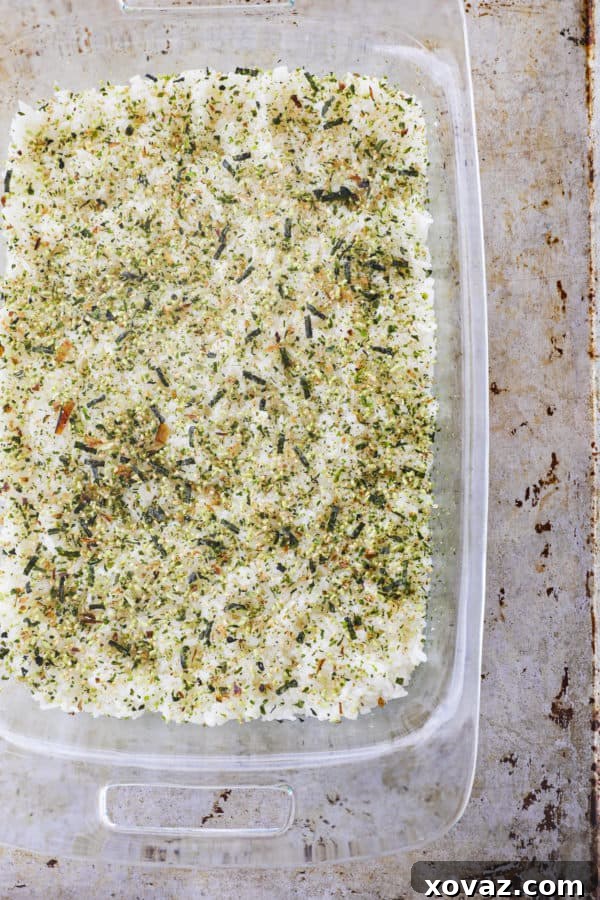
In our Sushi Bake, furikake plays a pivotal role, sprinkled generously over both the seasoned rice layer and the creamy crab layer. Its multi-faceted flavor profile and textural contrast are essential for a truly authentic and enjoyable experience. The savory notes complement the creamy filling, while the sesame seeds and nori add a delightful crunch. You can easily find furikake at most Asian grocery stores or through online retailers. For those who enjoy customizing their flavors, making your own homemade furikake is a rewarding endeavor, allowing you to tailor the ingredients and proportions to your exact preferences. Homemade versions are also wonderful on lazy scattered sushi bowls.
If, for some reason, you find yourself unable to locate furikake, don’t despair! A close approximation of its effect can be achieved by shredding a few sheets of plain nori seaweed in a food processor or by hand and combining it with some toasted sesame seeds. Sprinkle this mixture over the rice layer in your sushi bake, and you’ll still get a wonderful boost of sea flavor and crunch, albeit without the bonito flakes and other intricate flavors of traditional furikake.
Understanding Imitation Crab Meat
Imitation crab meat often receives an unfair reputation, with the word “imitation” sometimes causing apprehension. However, it’s important to clarify that, contrary to popular misconceptions, imitation crab meat is indeed made from real fish! It’s a product derived from surimi, a paste made from various types of white-fleshed fish, most commonly pollock.
The process involves de-boning, cleaning, and mincing the fish, which is then blended with starches (like tapioca or wheat starch), egg whites, sugar, salt, and other natural flavorings. This mixture is then shaped and cooked to mimic the delicate taste and flaky texture of actual crab meat. The result is a delicious, versatile, and significantly more affordable alternative to real crab, making it a staple in many dishes, especially California rolls.
For our Sushi Bake, imitation crab meat is an ideal choice, delivering that authentic California Roll flavor profile with consistent and delightful results. Its mild, slightly sweet flavor and tender texture blend perfectly with the creamy ingredients. Of course, if you prefer to indulge and are willing to splurge, you can certainly substitute an equivalent amount of cooked, flaked real crab meat for a richer experience. Both options will yield a fantastic sushi bake.
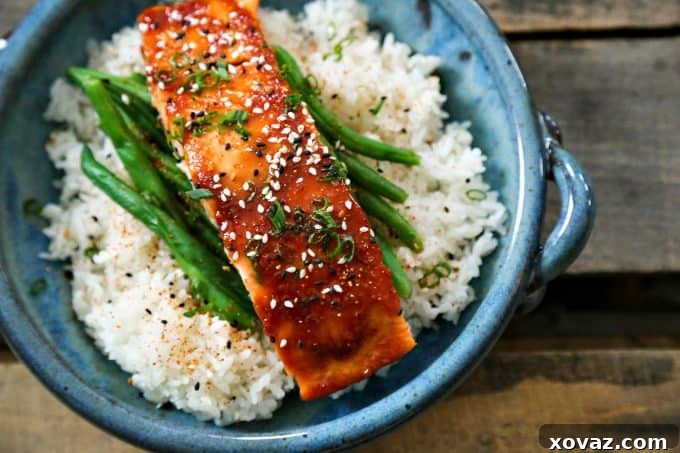
If you happen to have any leftover imitation crab meat, consider using it in other delightful recipes like Crab Rangoon for a crispy, creamy treat. And if you have any unagi sauce left, it pairs beautifully with Air Fryer Salmon, adding a sweet and savory glaze.
Essential Ingredients for Your Sushi Bake
Crafting the perfect Sushi Bake requires a harmonious blend of textures and flavors. Beyond the core components of medium-grain sushi rice, imitation crab meat, cream cheese, furikake, and nori, you’ll need a few key condiments and garnishes to elevate your dish. These include mayonnaise, sriracha for a touch of heat, aromatic sesame oil, and fresh green onions. Additionally, you might want to consider unagi (eel) sauce, oyster sauce, or a teriyaki glaze for a sweet and savory drizzle.
When it comes to mayonnaise, while any brand will work, for truly exceptional results – and for that beautifully controlled decorative drizzle – Japanese Kewpie Mayonnaise is highly recommended. Kewpie mayonnaise boasts a richer, tangier flavor and a creamier texture compared to standard mayonnaise, thanks to its use of egg yolks only (rather than whole eggs) and a blend of unique vinegars. It also comes in a convenient squeeze bottle with a very narrow tip, perfect for creating artistic drizzles on top of your sushi bake.
If Kewpie mayonnaise isn’t readily available, don’t worry! Your favorite “regular” mayonnaise will be perfectly adequate. To achieve a similar decorative drizzle, simply spoon a couple of tablespoons of mayonnaise into a small sandwich bag, snip off a tiny corner, and squeeze gently. This clever trick works wonders for creating those appealing patterns that make your sushi bake look as good as it tastes.
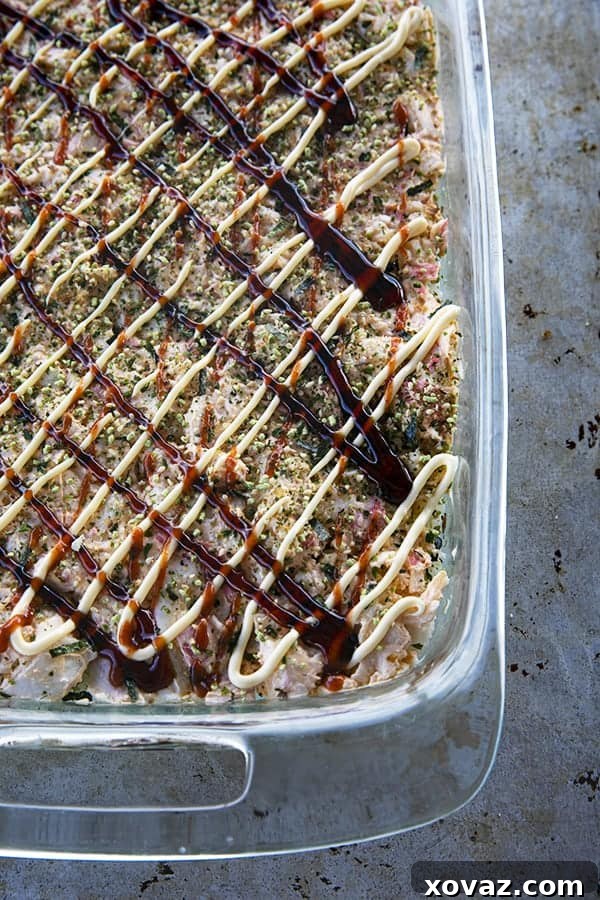
The same sandwich bag trick can be applied to your unagi sauce, oyster sauce, or teriyaki glaze if their bottles lack a fine tip for drizzling. For preparing your baking pan, toasted sesame oil is my preferred choice. Its subtle, nutty aroma infuses into the rice layer, adding a wonderful depth of flavor to the final dish. However, if sesame oil isn’t on hand, a light brushing of neutral vegetable or peanut oil will serve as an acceptable substitute, ensuring your sushi bake doesn’t stick.
The Ultimate California Roll Sushi Bake Recipe
This recipe is designed to be both forgiving and incredibly flavorful, bringing the beloved California Roll experience into a convenient baked format. We’ve fine-tuned it for ease and maximum enjoyment.
For those who appreciate a lively kick, I suggest a generous “glug” of sriracha in the creamy crab filling. The rich cream cheese effectively tempers the heat, preventing it from being overwhelming, yet still allowing a pleasant warmth to shine through. If you are particularly sensitive to spicy foods, feel free to start with the lower end of the recommended sriracha amount and adjust to your taste.
While standard cream cheese offers a wonderfully rich texture, you can opt for Neufchatel cheese (often marketed as “1/3 less fat” cream cheese) if you’re looking to reduce the fat content in your recipe without significantly compromising on creaminess. Both work well to create that luscious crab layer.
For maximum convenience, you can easily purchase pre-cut, toasted Korean nori snacks. These ready-to-eat seaweed sheets are widely available at specialty grocery stores like Wegman’s, Trader Joe’s, Whole Foods, and many Asian markets. They are perfectly crisp and sized for scooping up portions of your sushi bake.
If pre-cut nori snacks aren’t available, or if you prefer a homemade touch, making your own toasted nori strips is a simple process:
How to Make Nori Snacks at Home
- Preheat your oven to 400ºF (200ºC).
- Lightly brush four or five sheets of plain nori seaweed with toasted sesame oil on one side.
- Sprinkle a pinch of salt evenly over the oiled side.
- Place the seasoned nori sheets in a single layer on a baking sheet.
- Toast in the preheated oven for approximately 10 minutes, or until the nori is visibly crisp and slightly fragrant.
- Remove from the oven, allow to cool completely, and then cut into convenient strips or rectangles. These homemade snacks will be perfectly crunchy for serving.
California Roll Sushi Bake: Step-by-Step Guide
This recipe yields approximately 8 servings.
Ingredients
For the Sushi Rice Layer:
- 2 teaspoons toasted sesame oil
- 2 cups uncooked sushi rice, rinsed several times
- ¼ cup rice vinegar
- 1 tablespoon white sugar
- 1 teaspoon Morton’s kosher salt
- 2 tablespoons furikake
For the Creamy Crab Layer:
- 8 oz cream cheese, softened to room temperature
- ¼ cup mayonnaise, divided (preferably Kewpie Japanese mayonnaise)
- 1 tablespoon to ¼ cup sriracha, divided (adjust to your spice preference)
- 1 tablespoon pickled ginger brine, optional
- 2 ½ cups imitation crab meat, flaked
- 2 tablespoons furikake
For Garnish and Serving:
- 2 tablespoons Unagi sauce, oyster, or teriyaki glaze (for drizzling)
- 2 tablespoons Sriracha (for drizzling, optional)
- 2 tablespoons mayonnaise (for drizzling, optional, preferably Kewpie)
- 3 green onions, thinly sliced
- Korean toasted seaweed snacks or homemade nori strips
- Diced seedless cucumber
- Sliced avocado
Instructions
To Prepare the Sushi Rice Layer:
- Preheat your oven to 400ºF (200ºC). Lightly brush a 9-inch by 13-inch baking dish with toasted sesame oil to prevent sticking and set it aside.
- Cook your rinsed sushi rice according to the package instructions using your preferred method (stove-top, rice cooker, or Instant Pot). While the rice rests after cooking, combine the rice vinegar, sugar, and salt in a small saucepan or a microwave-safe bowl. Heat gently, stirring, just until the sugar and salt are completely dissolved.
- Drizzle the prepared vinegar dressing over the hot, rested rice. Using a wooden spoon or rice paddle, gently toss the rice to ensure the vinegar is evenly distributed. Be careful not to mash the rice.
- Carefully scrape the seasoned rice into your prepared baking pan. Wet your hands thoroughly with water (this prevents the rice from sticking to your hands) and use them to lightly press the rice into an even layer across the bottom of the pan. Avoid compressing the rice too much; you want it to be firm enough to hold together but not dense.
- Sprinkle the rice layer generously with 2 tablespoons of furikake, covering the entire surface. Set the pan aside.
To Assemble the Creamy Crab Layer:
- In a medium mixing bowl, combine the softened cream cheese, ¼ cup of mayonnaise, and your desired amount of sriracha (starting with 1 tablespoon and adding more to taste). If you have pickled ginger brine, add a splash (about 1 tablespoon) for an extra layer of flavor. Mash these ingredients together until the mixture is mostly smooth and well combined.
- Stir in the flaked imitation crab meat until it is evenly incorporated into the creamy mixture.
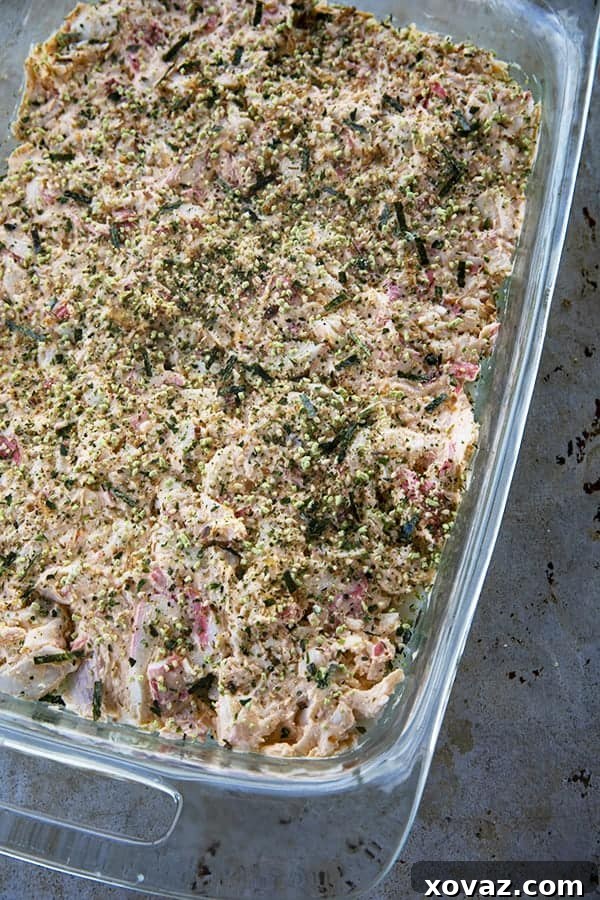
- Dollop spoonfuls of the creamy crab mixture over the seasoned rice layer in the baking dish. Using a flexible spatula or the back of a spoon, gently spread the crab mixture evenly across the entire surface of the rice, forming the second layer.
To Garnish and Bake the Sushi Bake:
- Sprinkle the creamy crab layer generously with the remaining 2 tablespoons of furikake.
- Now it’s time for the decorative drizzles! If using, load your unagi (eel) sauce, extra mayonnaise, and/or sriracha into separate small squeeze bottles or sandwich bags with a tiny corner snipped off. Drizzle these sauces in a decorative pattern over the top of the furikake-sprinkled crab layer. This adds both visual appeal and an extra burst of flavor.
- Place the baking dish in the preheated oven and bake for 10 to 12 minutes, or until the sushi bake is heated all the way through, and you can see the edges of the rice layer sizzling slightly (this is easiest to observe if you’re using a glass baking dish).
To Serve the Sushi Bake:
- Once baked, remove the sushi bake from the oven and let it stand for 5 to 10 minutes. This resting period allows the layers to set slightly, making it easier to cut and serve.
- Scatter the thinly sliced green onions over the top of the sushi bake for freshness and color. While still in the pan, use a narrow, flexible metal spatula to cut the sushi bake into individual rectangles or squares. Carefully lift each portion from the pan.
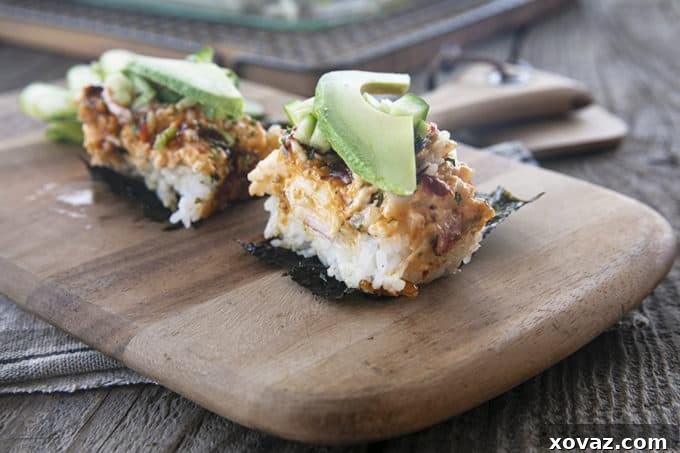
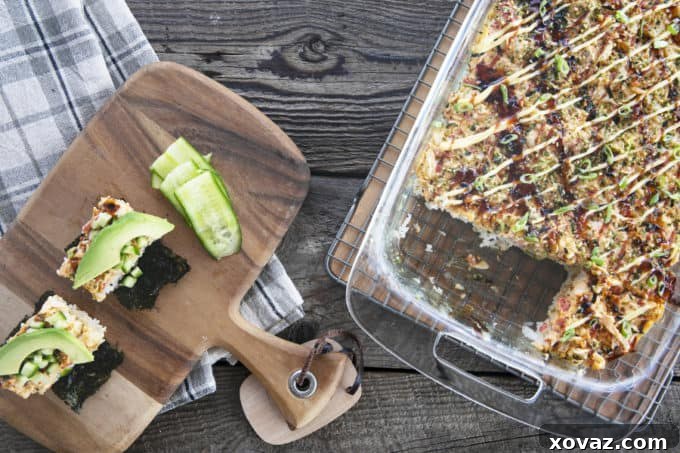
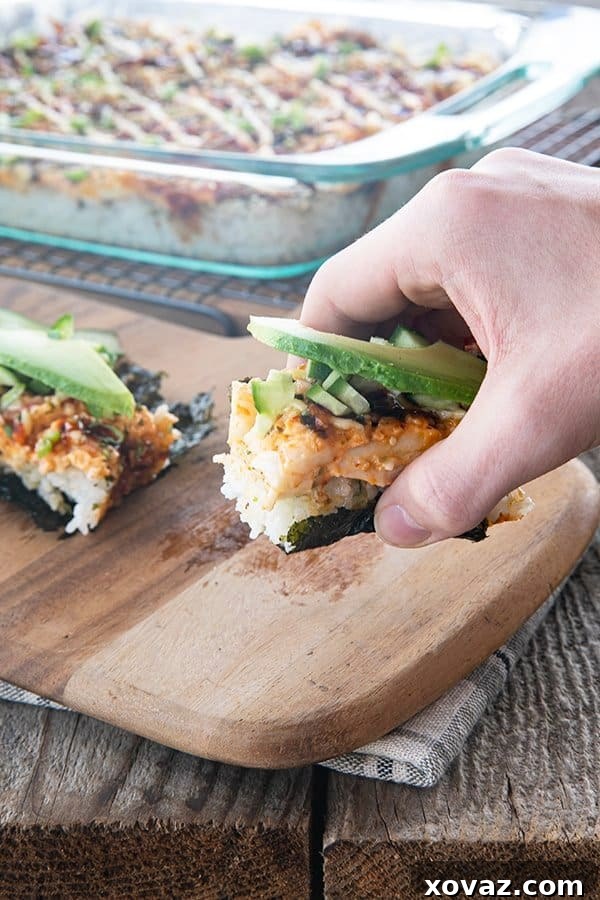
- Serve the warm sushi bake rectangles alongside a platter of Korean toasted seaweed snacks or homemade nori strips, bowls of diced seedless cucumber, and slices of fresh avocado. Encourage your diners to assemble their own bites, scooping a piece of sushi bake onto a nori sheet and topping it with cucumber and avocado for a personalized sushi experience.
This trendy Sushi Bake truly captures all the beloved flavors of California Roll sushi with a fraction of the traditional preparation effort. Its impressive presentation and irresistible taste make it the ideal party food or a fantastic family dinner that never lasts long!
If this delightful recipe has whetted your appetite, explore these other fantastic Japanese-inspired recipes right here on Foodie with Family:

Sushi Bake – Nutritional Information
Nutritional information is an estimate and provided to you as a courtesy. You should calculate the nutritional information with the actual ingredients used in your recipe using your preferred nutrition calculator.
- Calories: 479 kcal
- Carbohydrates: 61g
- Protein: 10g
- Fat: 21g
- Saturated Fat: 7g
- Trans Fat: 1g
- Cholesterol: 42mg
- Sodium: 1018mg
- Potassium: 127mg
- Fiber: 3g
- Sugar: 5g
- Vitamin A: 441 IU
- Vitamin C: 4mg
- Calcium: 75mg
- Iron: 3mg
Did you make this recipe?
Make sure to tag @foodiewithfam on Instagram and #hashtag it #foodiewithfamily so I can check it out!