Experience the Taste of the Mediterranean: The Ultimate Homemade Greek Salad Dressing
There’s an undeniable allure to a fresh, crisp salad, often elevating a simple meal into a vibrant culinary experience. My lifelong appreciation for salads is largely inherited from my wonderful mother, who instilled in me a profound love for wholesome, green goodness. While many might dread turning into their parents, I wholeheartedly embrace this particular inheritance. My mom is truly exceptional—a selfless nurse dedicated to assisting developmentally disabled adults, helping them secure meaningful employment. Her generosity knows no bounds; she’s genuinely the most giving person I’ve ever encountered. Beyond her altruism, she possesses a fantastic sense of humor, creates legendary homemade pizzas and lumpia, whips up the most comforting hot chocolate, climbs trees with her grandchildren, and is an incredibly talented pianist and writer. And, might I add, she’s quite beautiful too.
There’s just one tiny quirk that sets us apart: her unwavering devotion to patchouli, and in rather generous quantities. She’s been consistent for years, to the point where I once witnessed a bank teller identify currency as “from your mom!” purely by its scent. Our town was small, but not *that* small. While I admire her steadfastness, patchouli isn’t quite my preferred aroma. When it comes to scents, my palate leans towards the edible—those tantalizing fragrances that instantly inspire a craving. And this, my friends, is where our paths diverge and where this spectacular Greek Salad Dressing steps into the spotlight.
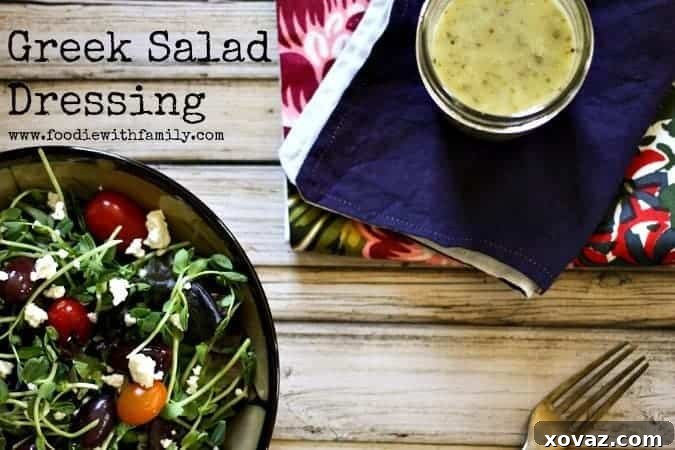
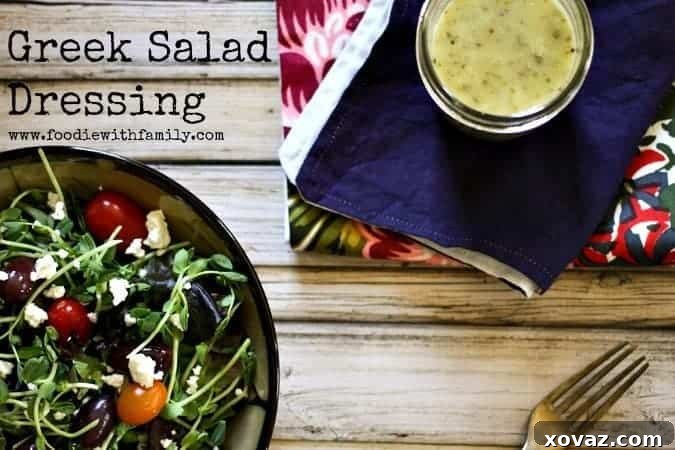
Oh, the aroma of this dressing! It’s utterly intoxicating, the kind that makes your senses swim with delight. It’s a harmonious blend of classic Greek flavors: bright, pure, and fresh lemon juice, pungent garlic, earthy oregano, and rich extra virgin olive oil, all brought together with just a touch of Dijon mustard for balance and body. This isn’t just a dressing; it’s a fragrant symphony that could easily double as a delectable perfume oil, if one were so inclined! The vibrant, zesty notes combined with the savory herbs create an irresistible invitation to a truly Mediterranean feast.
Why Homemade Greek Salad Dressing Reigns Supreme
In a world overflowing with convenience, the simple act of making your own salad dressing might seem like an extra step. However, the benefits of crafting this Greek Salad Dressing from scratch far outweigh any perceived effort. For starters, you gain complete control over the ingredients, ensuring that only the freshest and highest-quality components make it into your meal. This means no artificial preservatives, unhealthy additives, or excessive sugars often found in store-bought alternatives. By opting for homemade, you’re choosing a healthier, cleaner option for yourself and your family.
Beyond health, the flavor profile of a freshly made dressing is simply incomparable. The brightness of real lemon juice, the sharp kick of fresh garlic, and the aromatic depth of dried oregano create a taste that is impossible to replicate with pre-packaged versions. Each ingredient sings, contributing to a vibrant, authentic Greek experience that transforms even the simplest salad into a gourmet delight. Moreover, creating your own dressing is surprisingly cost-effective. Pantry staples like olive oil, lemons, and herbs are far more economical in their raw form than purchasing specialty bottled dressings.
This homemade Greek dressing isn’t just an ingredient; it’s an investment in better health, superior flavor, and smart eating. It’s a testament to the fact that sometimes, the simplest things are truly the best, especially when they’re made with care and quality ingredients.
The Versatile Powerhouse: Beyond the Salad Bowl
While this dressing is an absolute dream for any BIG GREEN SALAD, its culinary applications extend far beyond. Its robust and zesty flavor profile makes it an incredibly versatile component in countless dishes, infusing them with a taste of the Mediterranean. Think of it as your secret weapon for elevating everyday meals.
Consider it a fantastic marinade for grilled meats. The acidity from the lemon juice tenderizes chicken, lamb, pork, or beef, while the olive oil, garlic, and oregano permeate the proteins with rich, savory notes. Imagine succulent chicken souvlaki or perfectly seared lamb chops, their flavors deepened by a generous soak in this dressing. It’s equally magnificent with grilled or baked fish, enhancing the natural sweetness of salmon, cod, or snapper without overpowering it. The dressing’s bright character complements the delicate texture of seafood beautifully, making for a light yet incredibly flavorful main course.
Beyond main proteins, this Greek Salad Dressing shines when drizzled over roasted or steamed vegetables. Asparagus, broccoli, zucchini, bell peppers, or even simple roasted potatoes take on a whole new dimension of flavor. It can also transform grain bowls into exciting culinary creations, adding a zesty kick to quinoa, couscous, or farro with roasted chickpeas and fresh herbs. For a quick appetizer, simply serve it as a dip with warm, crusty bread or fresh pita. And don’t forget its stellar performance in classic Greek dishes like gyros, where it complements the savory meat and fresh vegetables perfectly. Truly, the possibilities are endless for this kitchen essential.
Expert Tips for Crafting Your Perfect Greek Dressing
Achieving the best possible flavor in this simple dressing hinges on the quality and freshness of your core ingredients. Here are some essential cook’s notes to guide you:
-
The Unnegotiable Freshness of Lemon Juice
When it comes to lemon juice, there is absolutely no substitute for fresh. While bottled lemon juice can serve adequately in many recipes, this is not one of them. The delicate balance of flavors in this Greek dressing means that every ingredient stands out, and the brightness and acidity of freshly squeezed lemon juice are paramount. Bottled versions often contain preservatives and lack the vibrant, zesty aroma and crisp taste that fresh lemons provide. For the best results, use a citrus juicer to extract the juice from whole lemons. A good tip for maximizing juice yield is to roll the lemon firmly on a countertop before slicing and juicing.
-
The Power of Fresh Garlic
Much like lemon juice, fresh garlic is non-negotiable here. Jarred minced garlic, while convenient, typically has a milder, sometimes metallic, flavor profile due to processing and added acids. Fresh garlic, on the other hand, offers a pungent, robust aroma and a depth of flavor that is critical to this dressing’s character. Take the time to peel and mince or press two to three large cloves. The effort is minimal but the impact on taste is monumental. This ensures that every drop of dressing carries the authentic, bold essence of traditional Greek flavors.
-
Embracing Dried Oregano: A Culinary Preference
Now, I’m going to make a 180-degree turn from the previous two points. While fresh is often best, I actually have a deep affection for dried oregano in this particular dressing. Perhaps it’s a nod to classic, comforting flavors, but dried oregano truly shines here. Its concentrated, earthy notes unfold slowly in the dressing, developing a more profound and enduring flavor that holds up exceptionally well during refrigeration. If you prefer to use fresh oregano, you certainly can, but be sure to reduce the amount by two-thirds to avoid an overpowering herbal taste. Fresh oregano typically offers a brighter, more subtle flavor that might not have the same “retro” depth I appreciate in this recipe.
-
Dijon Mustard: The Unsung Hero of Emulsification
Dijon mustard plays a crucial role in this dressing beyond just flavor; it acts as an emulsifier. In culinary terms, an emulsifier helps combine ingredients that would naturally separate, like oil and vinegar. Mustard seeds contain mucilage, a gummy substance that helps stabilize the mixture, allowing the oil and lemon juice to come together more smoothly. While it’s not a permanent solution—you’ll still need to give the dressing a good shake each time you take it from the refrigerator—it significantly helps maintain its consistency while you’re enjoying your salad. This ensures a beautifully blended dressing that adheres perfectly to your greens, rather than pooling into separate layers of oil and lemon juice. It’s a small addition with a big impact on the dressing’s texture and overall enjoyment.
Greek Salad Dressing
Rate Recipe
Rebecca Lindamood
Pin Recipe
Ingredients
- The juice of 2 whole lemons
- 1 cup extra virgin olive oil
- 2-3 large clove garlic, peeled and minced or pressed
- 1 tablespoon dried oregano
- 1 teaspoon smooth Dijon mustard
- 1 teaspoon kosher or sea salt
- 1/2 teaspoon cracked black pepper
Instructions
- Add all of the ingredients to a jar with a tight-fitting lid and shake vigorously. Alternatively, you can add the ingredients to a bowl and whisk thoroughly until combined. Refrigerate, tightly covered, until ready to use. When properly stored, this dressing is good for up to 3 weeks in the refrigerator.
Important Note:
- The extra virgin olive oil in the dressing will quite likely solidify in the refrigerator, especially if stored for an extended period. This is a natural occurrence and not a problem. To remedy this, simply remove the dressing from the refrigerator about 30 minutes before you intend to use it, allowing it to come to room temperature. Alternatively, you can run the sealed jar under warm tap water until the oil loosens back up and returns to its liquid state. Once liquefied, give it another good shake to re-emulsify all the ingredients, and then serve!
Nutrition
Calories: 36kcal
Carbohydrates: 1g
Protein: 1g
Fat: 4g
Saturated Fat: 1g
Sodium: 398mg
Potassium: 11mg
Fiber: 1g
Sugar: 1g
Vitamin A: 14IU
Vitamin C: 1mg
Calcium: 15mg
Iron: 1mg
Nutritional information is an estimate and provided to you as a courtesy. You should calculate the nutritional information with the actual ingredients used in your recipe using your preferred nutrition calculator.
Did you make this recipe?
Make sure to tag @foodiewithfam on Instagram and #hashtag it #foodiewithfamily so I can check it out!
Pin Recipe
Share on Facebook