The Ultimate Tuscan Braised Beef: Mastering Peposo
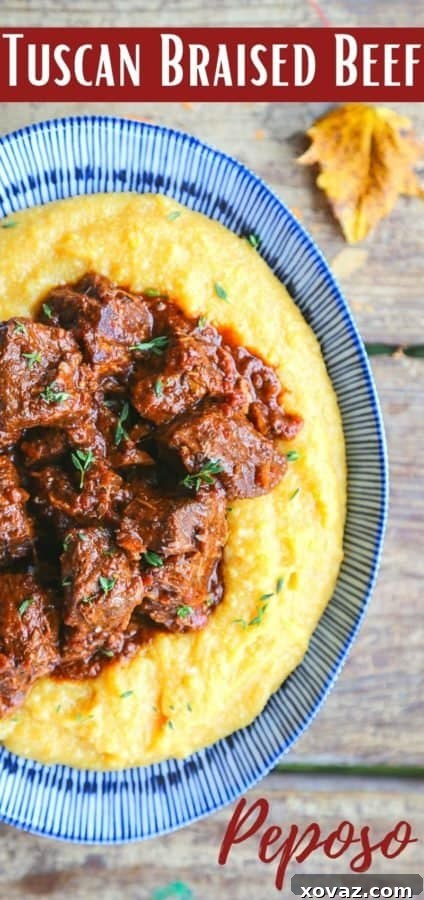
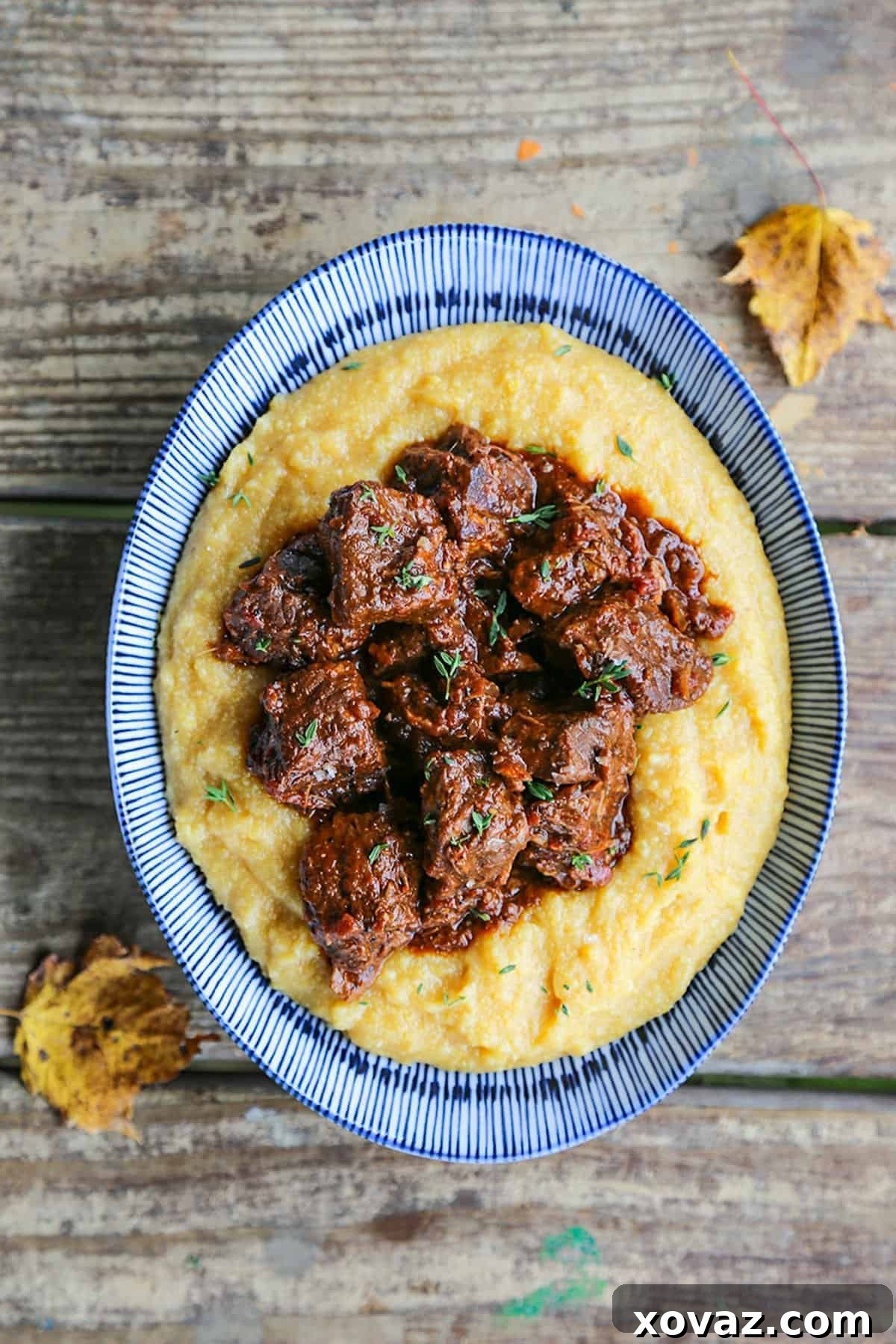
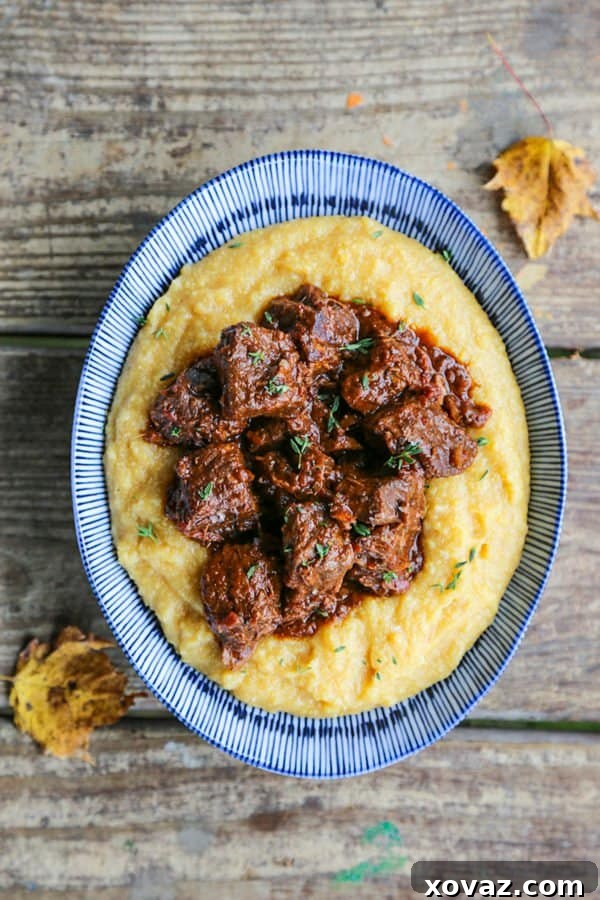
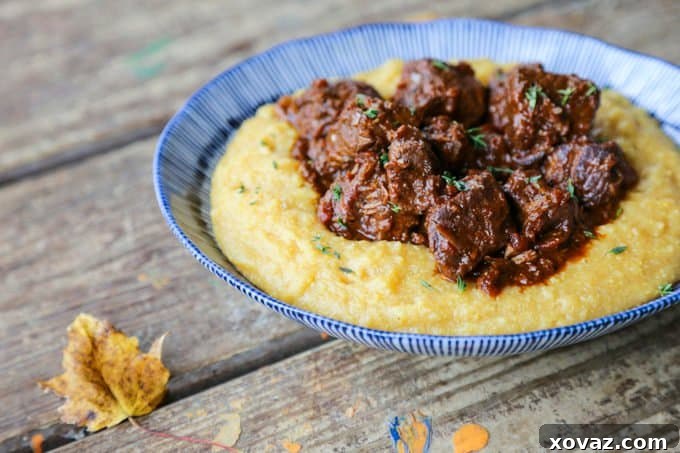
Fall-apart tender cubes of beef, bathed in a rich, gently garlicky, bold red wine and black pepper sauce, define Peposo—a truly traditional Tuscan beef dish. This rustic yet refined stew captures the heart of Italian comfort food, offering a deeply satisfying culinary experience that transports you straight to the rolling hills of Tuscany.
My journey to discover the authentic taste of Peposo began several years ago during a memorable trip to Tuscany as a DaVinci Storyteller. While Italy is renowned for its incredible cuisine, one particular dish stood out above all others, becoming the most magnificent and cherished bite of my entire trip. This unforgettable experience was courtesy of the kind and exceptionally talented wife of a local butcher and prosciutto maker.
She hosted us on the sun-drenched back terrace of the butcher shop, serving a lunch she had meticulously prepared herself. It wasn’t just a meal; it was a culinary masterpiece, a transcendent expression of Tuscan heritage: Peposo, a traditional Tuscan braised beef stew.
The dish featured perfectly tender, bite-sized pieces of beef, enveloped in a luscious, velvety, and thick gravy. Its distinctive brick-red hue, derived from a robust red wine base, promised a depth of flavor that instantly captivated me. Each spoonful was a revelation, leaving me utterly awestruck by its simplicity and profound taste.
The perfection of Signora Falaschi’s braised beef recipe was such that I couldn’t resist. I implored our translator to ask her for the secrets behind such an extraordinary dish. To my immense delight, Signora Falaschi’s generosity matched her culinary skill, and she graciously shared her methods, imparting a few invaluable cooking tricks that forever changed my approach to braising.
Unlocking the Secrets: Signora Falaschi’s Authentic Peposo
My initial attempts at making Peposo were inspired by Bill Buford’s wonderful book, “Heat: An Amateur’s Adventures as Kitchen Slave, Line Cook, Pasta-Maker, and Apprentice to a Dante-Quoting Butcher in Tuscany.” Buford’s advice — using a cheap cut of beef, a good drinking Chianti, and plenty of fresh, coarsely ground black pepper — laid a decent foundation. However, while the results were acceptable, they never quite reached the magnificent heights of Signora Falaschi’s version.
It was Signora Falaschi’s subtle yet crucial modifications that transformed a merely good dish into a truly incredible and memorable one. Her wisdom revealed that sometimes, the slightest adjustments make the most profound difference in flavor and texture.
Optimized Cooking Time for Perfect Texture
One of the most significant changes Signora Falaschi introduced was the cooking duration. Instead of an overnight braise, she opted for a precise 2.5-hour cooking time. This shorter, controlled braise proved to be a game-changer for the beef’s texture. The cubes maintained their structural integrity beautifully, preventing them from disintegrating and making the dish far more appealing visually. More importantly, this optimized cooking period ensured the beef remained incredibly succulent and moist, a stark contrast to the slightly drier results often achieved with longer braising methods.
The Art of Layered Wine Addition
Another pivotal technique involved the addition of wine. Signora Falaschi used slightly less wine than Buford suggested, but more strategically. She added the Chianti in two distinct installments, rather than all at once. The first batch, introduced after searing, served to deglaze the pan, lifting all the caramelized, flavorful bits from the bottom. This initial reduction concentrated its essence, building a robust foundation. The second addition, closer to the end of the cooking process, preserved the vibrant fruit and peppery notes of the Chianti, preventing them from becoming muddled during a prolonged simmer. This layered approach adds serious depth and complexity to the sauce, making it truly captivating.
Garlic: The Soul of Peposo
Perhaps the most impactful departure from Buford’s method was the inclusion of garlic. Buford’s recipe surprisingly omitted garlic, a common staple in Tuscan cuisine. Signora Falaschi, however, understood that garlic is absolutely essential to Peposo. Her genius lay not just in adding it, but in *how* it was added. She used whole cloves, lightly smashed but still encased in their papery skins (after removing any excess paper). This technique protects the garlic from burning at high heat while searing the beef, allowing its flavor to gently infuse the oil. By the end of the simmering process, the garlic cloves have been roasted and stewed, becoming incredibly mellow and sweet. Squeezing the soft garlic pulp into the sauce delivers a well-rounded, subtle garlicky undertone that simply cannot be replicated by chopping garlic and adding it at a different stage. Trust me, garlic absolutely, positively makes this dish sing.
Aromatic Herbs and Tomatoes: Elevating the Profile
Furthermore, Signora Falaschi’s recipe incorporated bay leaves, tomatoes, and thyme. These seemingly minor additions create a lovely complexity and balance in the finished braised beef. The bay leaves contribute a subtle, almost woodsy aroma, while thyme adds an earthy, savory note. The petite diced tomatoes introduce a touch of acidity and sweetness, cutting through the richness of the beef and wine and adding a desirable brightness to the sauce. Without these aromatic elements, the dish would be merely a combination of wine and beef; with them, it transforms into a symphony of flavors that truly makes this Peposo sing.
These crucial, yet simple, changes collectively elevate Signora Falaschi’s Peposo from merely “alright” to truly “transcendent.” Every single person who has had the pleasure of tasting this version of braised beef invariably begs for the recipe.
Mastering the Braise: Essential Techniques for Incredible Peposo
Braising is an ancient cooking method that transforms tougher cuts of meat into incredibly tender, flavorful dishes. For Peposo, understanding and applying a few key techniques is vital to achieving that signature fall-apart tenderness and rich, deeply flavored sauce.
The Power of Searing: Building Flavor Foundations
Never, ever skip searing the meat. This step is absolutely non-negotiable for an exceptional braise. Searing creates a beautiful brown crust on the beef cubes through the Maillard reaction, a chemical process that produces hundreds of new flavor compounds. This intense browning concentrates the beef’s natural flavors, making the final dish taste significantly “beefier” and adding an incredible depth that cannot be achieved any other way. Sear the meat in batches to avoid overcrowding the pan, allowing each piece to develop that crucial caramelized crust.
Choosing Your Vessel: The Right Pan Makes a Difference
The choice of cooking vessel plays a critical role in successful braising. The ideal pan for braised beef is a heavy-bottomed pan with a tight-fitting lid, like a 12-inch everyday pan or a Dutch oven. The heavy bottom ensures even heat distribution, preventing hot spots that could scorch the meat or sauce. A tight-fitting lid is essential for trapping steam and moisture, creating a humid environment that tenderizes the beef while preventing the liquid from evaporating too quickly. If you don’t have an “everyday pan,” a 12-inch cast-iron skillet with a lid or a high-sided stainless steel skillet would also work wonderfully.
The Slow Cooker Debate: Why Traditional Braising Reigns Supreme
Many home cooks wonder if braised beef can be made in a slow cooker. The short answer is, probably. However, I haven’t personally tested this method for Peposo, primarily because I am so exceptionally pleased with the results yielded by the stovetop-to-oven braising method. My main reservation with a slow cooker stems from the final, crucial step: reducing the sauce. A slow cooker’s gentle, constant heat often struggles to achieve the vigorous boil necessary for effectively reducing and thickening a sauce to that desirable velvety, mahogany consistency. The open-kettle simmer, which is integral to developing the deep flavor and perfect texture of Peposo’s sauce, is difficult to replicate in a slow cooker. If you do attempt this in a slow cooker, I would love to hear about your results!
Crafting Your Own Tuscan Masterpiece: A Step-by-Step Guide to Peposo
Bringing Signora Falaschi’s Peposo to your table is a rewarding experience. Here are some critical tips to ensure your Tuscan braised beef is nothing short of spectacular.
The Art of Searing and Garlic Infusion
As mentioned, don’t skip searing the meat. It builds foundational flavor. And when you do, please, PLEASE use Signora Falaschi’s ingenious trick of slightly smashing the garlic cloves while they remain in their papery skin (making sure to remove any excess paper). This technique protects the garlic from the high heat during the searing process, preventing it from burning and turning bitter, while still allowing its aromatic oils to infuse the cooking fat. By the time the braise is complete, the garlic will be beautifully roasted and stewed, incredibly mellow, and easily squeezable from its skin directly into the sauce. This method imparts a nuanced, well-rounded garlic essence that cannot be achieved by simply chopping and adding raw garlic at another point.
Layering Flavors with Wine
Resist the temptation to add all the wine at once. The initial cup of Chianti, added after searing, is crucial for deglazing the pan. It helps lift and dissolve all those delicious browned bits of beef and concentrated flavors stuck to the bottom, incorporating them into the nascent sauce. As this first batch of wine boils and reduces slightly, its flavor intensifies, forming a rich base. The remaining two-thirds cup of Chianti, introduced towards the end of the cooking process, serves a different but equally important purpose. It adds another layer of fresh fruit and peppery notes characteristic of Chianti. While it will still simmer down and its alcohol will evaporate, this later addition keeps the overall taste bright, vibrant, and interesting, preventing it from becoming heavy or “muddy.”
The Crucial Second Simmer and Pepper Boldness
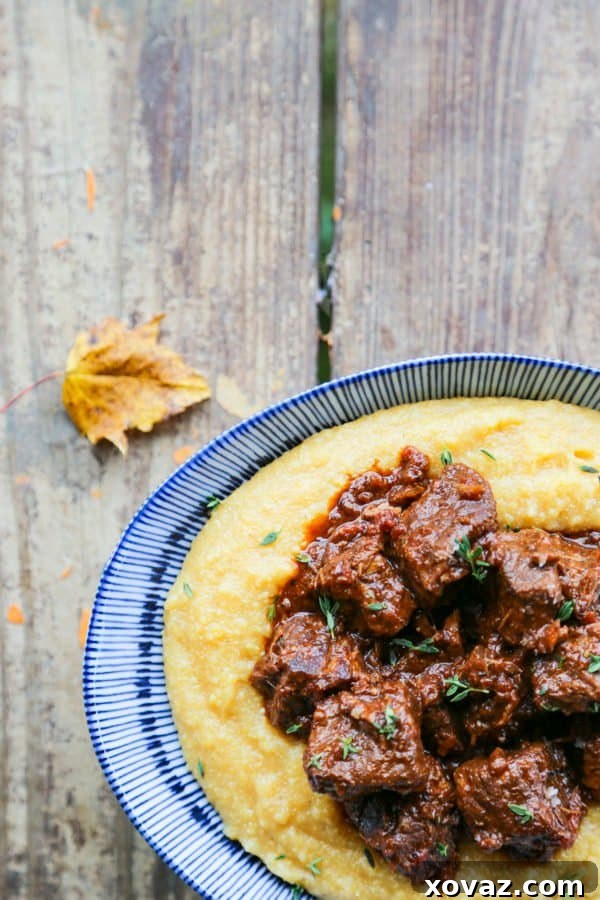
The second simmer, where you remove the lid, stir in the final dose of wine and freshly ground black pepper, and raise the heat to medium, is equally critical. This is the stage where the magic truly happens: the sauce actively reduces to a velvety thick, glossy, and gorgeous brick-red color that beautifully enrobes every tender piece of beef. This vigorous, open-kettle simmer is precisely why I have doubts about achieving the same depth and texture in a slow cooker, where a full, consistent boil is often elusive.
I understand that this recipe calls for a generous amount of black pepper, potentially more than you might typically use in a dish. However, please trust the process and stick with the recommended quantity. The pepper won’t overpower the dish; rather, it provides a bold, earthy warmth that is intrinsic to Peposo. If, by chance, you find the pepper intensity slightly overwhelming on the first day, simply stash the Peposo in the refrigerator for a day or two. The flavors will meld and mellow immensely, resulting in an even more harmonious and sublime experience.
The Magic of Time: Why Peposo is Better the Next Day
While you can absolutely serve and enjoy this Peposo braised beef recipe immediately after it’s cooked, I cannot over-emphasize how dramatically this dish improves with a bit of rest. Allowing it to sit tightly covered in the refrigerator for 24 to 48 hours allows all the magnificent flavors to meld, deepen, and mature. The sauce thickens further, the beef becomes even more infused with the aromatic wine and spices, and the overall complexity reaches a new level. Two-day-old Peposo Braised Beef is, without a doubt, even more magical and profoundly delicious than its freshly made counterpart.
Authentic Tuscan Peposo Recipe
Experience the rustic elegance of Peposo, a traditional Tuscan braised beef dish featuring fall-apart tender beef in a rich, garlicky red wine and black pepper sauce.
Author: Rebecca Lindamood
Prep Time: 20 mins
Cook Time: 3 hrs
Total Time: 3 hrs 20 mins
Yields: 10 servings
Equipment
- 12-inch heavy-bottomed pan with a tight-fitting lid (or high-sided skillet, or Dutch oven)
- Pepper Grinder
- Tongs
- Sturdy Spoon
Ingredients
- 2 tablespoons pure olive oil, plus extra if needed
- 3 to 4 pounds lean beef, such as top round, trimmed of excess fat and cut into 2-inch cubes
- 4 cloves garlic, still in their peel, lightly smashed
- 1 2/3 cups Chianti, divided
- 3 cups beef broth or stock
- 14.5 ounce can petite diced tomatoes
- 2 tablespoons tomato paste
- 2 teaspoons dried thyme or a large bunch of fresh thyme (tied with cooking twine)
- 2 bay leaves
- 2 tablespoons freshly ground black pepper
- Kosher salt and additional black pepper, to taste
Instructions
- Heat 2 tablespoons of oil over high heat in your 12-inch heavy-bottomed pan with a tight-fitting lid. Generously season the beef cubes with salt and pepper.
- Add about one-third of the beef cubes to the hot oil. Do not move them immediately; allow them to sear well on the first side for approximately 3 minutes until deeply browned.
- Add the lightly smashed garlic cloves (in their peels) to the pan. Use tongs to turn the beef cubes and sear each of the other sides. Once browned, transfer the seared beef to a rimmed plate. Add more oil if needed and repeat the searing process with the remaining beef in two more batches. Return all the seared beef and the garlic to the pan, maintaining high heat.
- Pour 1 cup of Chianti into the pan. Bring it to a boil, scraping the bottom of the pan with a sturdy spoon to loosen any flavorful stuck-on bits. Let the wine boil for about 2 minutes, or until it has reduced slightly.
- Stir in the beef broth or stock, petite diced tomatoes, and tomato paste until well combined. Nestle the thyme (fresh bouquet or dried) and bay leaves into the sauce. Bring the mixture back to a boil.
- As soon as it boils, reduce the heat to its lowest setting, cover the pan tightly with the lid, and let it simmer gently for 2 hours, or until the beef is fork-tender.
- Remove the lid. Stir in the remaining 2/3 cup of Chianti and the freshly ground black pepper. Increase the heat to medium and continue to simmer, uncovered, for about 20 to 30 minutes, or until the sauce has thickened considerably and achieved a deep mahogany color.
- Carefully remove and discard the thyme bouquet (if used), garlic peels, and bay leaves.
To Reheat:
- Reheat in a covered saucepan over medium-low heat, stirring frequently, until warmed through.
To Serve:
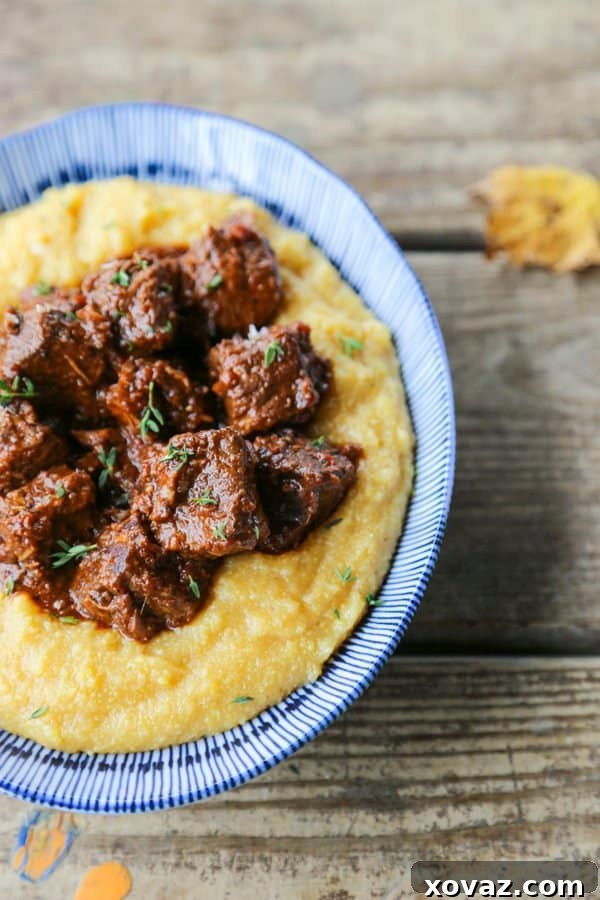
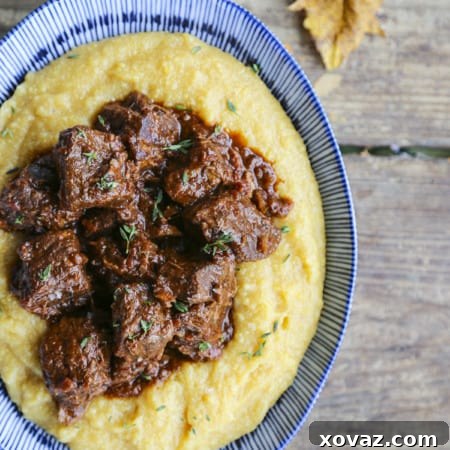
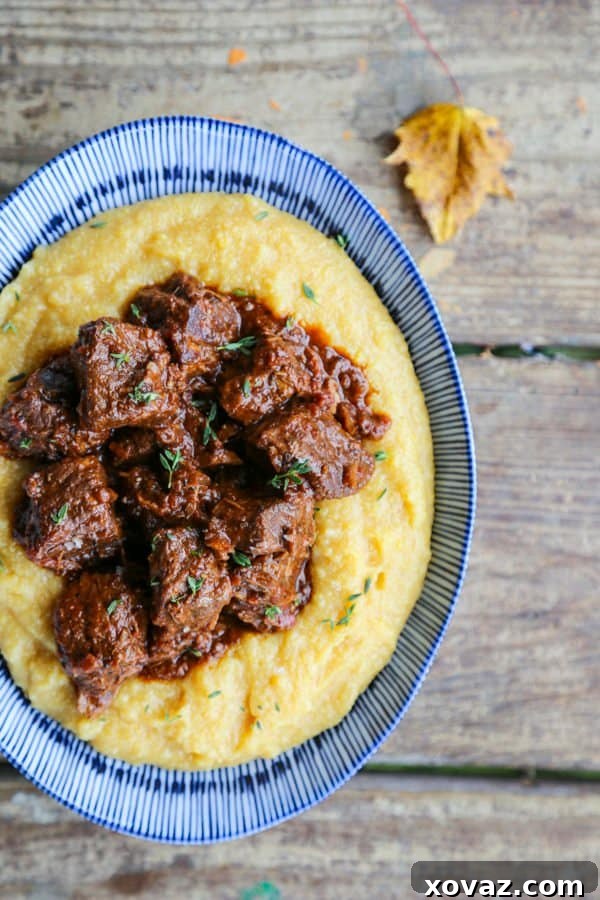
- Peposo can be enjoyed on its own as a hearty stew, or served traditionally over creamy polenta. It also pairs wonderfully with hot noodles, rice, or mashed potatoes.
Nutrition Information (Estimate per serving):
- Calories: 254kcal
- Carbohydrates: 4g
- Protein: 33g
- Fat: 7g
- Saturated Fat: 2g
- Cholesterol: 83mg
- Sodium: 439mg
- Potassium: 676mg
- Sugar: 1g
- Vitamin A: 110IU
- Vitamin C: 5mg
- Calcium: 59mg
- Iron: 3.7mg
Nutritional information is an estimate and provided to you as a courtesy. You should calculate the nutritional information with the actual ingredients used in your recipe using your preferred nutrition calculator.
Complementary Dishes & Further Culinary Adventures
If you’ve fallen in love with the rich, comforting flavors of Peposo, you’ll be delighted to explore other hearty beef and stew recipes that offer similar satisfaction. Expand your culinary repertoire with these delicious suggestions:
- Curried Beef Oven Stew: A fragrant and flavorful twist on a classic stew.
- Easy Spicy Broccoli Beef: Quick, vibrant, and packed with Asian-inspired flavors.
- Beef and Lentil Stew: A wholesome and robust stew, perfect for chilly evenings.
- Asian Steak Bites: Succulent pieces of steak, marinated and seared to perfection.
- Easy Instant Pot Beef Stroganoff: A creamy, classic dish made simple with modern convenience.
- 15 Minute Korean Style Beef: A speedy, flavorful weeknight meal that’s sure to impress.