
Delve deeper into the world of baking with our extensive collection of Homemade Bread Recipes!

Bake Your Own: Irresistible Black Olive Sandwich Rolls
There’s a ritual I’ve cultivated, a small act of self-indulgence that marks the end of every significant grocery run. Not the quick dash for milk and eggs, but the full-scale expedition, the kind that demands strategic planning and a clear-headed approach. This is when my wonderful husband takes charge of the boys, allowing me to navigate the supermarket aisles unburdened by requests for everything from exotic rice crackers to vibrant, sugar-laden cereals. This solo journey culminates in a moment of tranquility and a well-deserved reward.
My typical route begins at Aldi, where I stock up on essentials, likely appearing as if preparing for a minor apocalypse with my trolley laden with tuna and chili beans (yes, my children curiously enjoy chili beans as a snack – a quirk we’ve come to embrace!). Next, it’s off to the larger Wal-Mart, where the sheer volume of toilet tissue I procure might suggest I’m bracing for a lengthy siege. Once these utilitarian tasks are complete, I finally arrive at Wegman’s, a sanctuary of culinary delights. Here, amidst the vibrant produce, premium meats, and gallon jugs of olive oil, I seek out my personal prize: a single, crusty roll from the bakery section. More often than not, it’s a perfectly baked olive roll.
Having skillfully crammed every last item into our compact, fuel-efficient “clown car” – chosen for its agility when I’m driving solo, unlike our spacious family van – I settle into the driver’s seat. With classical music gently playing on the radio, I savor my crusty olive roll. It’s my quiet moment of triumph, a delicious reward for resisting the urge to fill my entire cart with nothing but avocados and dark chocolate.
The Quest for the Perfect Sandwich Roll
While I thoroughly enjoy those bakery-bought crusty rolls, their formidable exterior presents a delightful challenge. The intense crunch, while satisfying on its own, makes crafting a sandwich on them a rather ambitious endeavor. I often find myself wishing for steel-reinforced teeth to truly bite through layers of fillings without a significant workout for my jaw. My ideal sandwich is a towering masterpiece, generously piled high with delectable ingredients, and for that, I need a roll that offers a softer, more yielding embrace.
This persistent thought of a truly exceptional sandwich bread, one generously studded with those intensely briny, wonderfully aromatic olives, became an obsession. The path forward was clear: I had to bake it myself. The vision was of a roll with all the profound olive flavor I adored, but with a texture that would cradle rather than conquer a hearty filling. And so, the culinary adventure began.
The outcome was nothing short of a culinary revelation. Each roll emerged from the oven with a beautifully chewy outer crust, giving way to an interior that was remarkably yielding and soft. The crumb was tender, infused with the rich essence of oil-cured olives – a quantity ample enough to make any olive enthusiast’s heart sing. This was precisely the balance I had been dreaming of: robust flavor paired with a texture perfectly suited for the most ambitious sandwich creations.
Mastering the Art of Shaping: Key to Bakery-Quality Rolls
The secret to achieving these bakery-perfect Black Olive Sandwich Rolls, with their smooth, taut tops and subtly peeking olives, lies significantly in the shaping technique. It’s not just about mixing and baking; it’s about how you handle the dough to create that professional finish. The original recipe featured a quick, impromptu video captured on my iPhone by my eldest son, demonstrating this crucial step. While the video provided a visual guide, understanding the principles behind the shaping will elevate your baking.
The goal is to create a tight, round ball with a smooth surface that stretches gently during baking, preventing tears and ensuring an even texture. This involves a specific method of folding and tucking the dough, building tension on the surface while creating a sealed bottom. Imagine gently persuading the dough into a perfect sphere, where all the seams are neatly tucked underneath. This technique not only contributes to the aesthetic appeal but also ensures an even rise and a consistent crumb structure throughout the roll.
Beyond the simple act of shaping, understanding the role of each ingredient in this recipe is crucial for success. The combination of all-purpose flour and semolina flour is deliberate. All-purpose flour provides the necessary structure and softness, while semolina flour contributes to the rolls’ characteristic chewy texture and golden hue, reminiscent of traditional artisan breads. The choice of SAF or instant yeast ensures a reliable and active rise, giving the rolls their desired airy structure. Kosher salt not only enhances flavor but also controls the yeast’s activity, contributing to a balanced fermentation. Sugar feeds the yeast, promoting a vigorous rise and adding a hint of sweetness that complements the savory olives. Finally, a generous amount of extra virgin olive oil enriches the dough, making it supple, flavorful, and contributing to that desirable soft interior.
Beyond the Recipe: Enjoying Your Olive Rolls
You’re truly going to want to make these Black Olive Sandwich Rolls. Not just because they are an unparalleled vehicle for any sandwich filling you can dream of, but because their versatility makes them a staple in any kitchen. Imagine the sheer delight of having these on hand, ready to transform a simple meal into something extraordinary. Moreover, these rolls are a fantastic foundation for other exciting culinary creations. I’m especially excited about a recipe I plan to share soon, featuring feta cheese, roasted garlic, and many, many happy sighs – and these rolls will be the perfect accompaniment!
In the meantime, I urge you to whip up a batch of these rolls to create some truly marvelous sandwiches. My sister immediately envisioned them piled high with fresh garden vegetables, a clear sign that we’re both eagerly dreaming of spring’s bounty. Beyond sandwiches, consider them for mopping up rich pasta sauces, their hearty crumb soaking up every last drop of flavor. They would be absolutely fabulous stuffed with succulent roasted turkey or chicken, layered with melting cheese, and abundant fresh lettuce. The possibilities are endless. How will you serve these incredibly flavorful rolls?
These rolls are more than just bread; they are an experience. The aroma of freshly baked olive bread filling your home is a reward in itself. The satisfaction of pulling a warm, golden roll from the oven, knowing you created something so delicious from scratch, is immeasurable. They elevate a humble sandwich to gourmet status and transform any meal into a special occasion. Whether served warm with a drizzle of olive oil, alongside a vibrant salad, or as the star of your lunch, these Black Olive Sandwich Rolls promise a culinary delight.
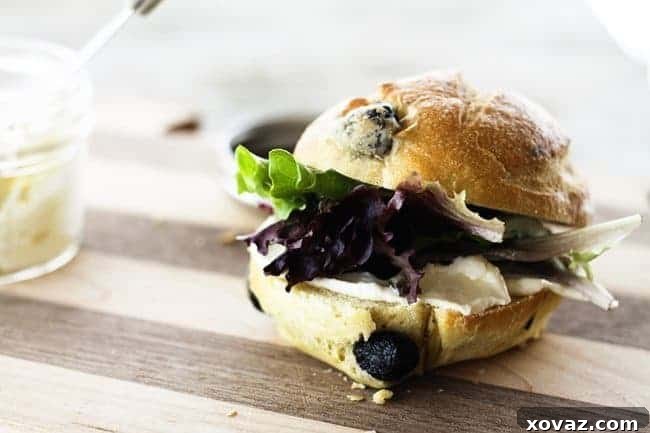
Black Olive Sandwich Rolls
Rate Recipe
Rebecca Lindamood
Pin Recipe
Share on Facebook
These fabulous Black Olive Sandwich Rolls boast a perfectly chewy outer crust, a wonderfully yielding and soft inner crumb, and are generously studded with flavorful oil-cured olives, guaranteed to delight any olive enthusiast.
Ingredients
- 4 cups all-purpose flour (approximately 1 pound, 1 ounce by weight, providing structure and tenderness)
- 2 cups semolina flour (approximately 11½ ounces by weight, for a lovely chew and golden color)
- 3 teaspoons SAF or instant yeast (ensures a reliable and active rise for fluffy rolls)
- 3 teaspoons kosher salt (enhances flavor and helps control yeast activity)
- 2 tablespoons sugar (to feed the yeast and add a subtle sweetness)
- 4 tablespoons extra virgin olive oil (for richness, flavor, and a tender crumb)
- 2 cups lukewarm water (approximately 16 ounces by weight or volume, ideal for activating yeast)
- 1 1/2 cups pitted oil-cured or kalamata olives (broken up coarsely with your hands, providing bursts of briny flavor)
- 1/2 cup water (for the cornstarch glaze)
- 1/2 teaspoon cornstarch (for the glossy crust)
Instructions
To Mix Dough By Hand:
-
Combine all ingredients, except for the olives, cornstarch, and the 1/2 cup of additional water, in a large mixing bowl. Stir vigorously with a sturdy wooden spoon until the ingredients come together to form a shaggy but cohesive dough. This means the mixture will still look a bit rough, but all the flour should be hydrated. Cover the bowl with a clean towel and let the dough rest for 30 minutes. This resting period, known as autolyse, allows the flour to fully hydrate, making the dough easier to knead and improving its elasticity. After resting, turn the dough out onto a lightly floured countertop and knead until it becomes smooth and elastic, typically about 10 minutes. You’ll feel the dough transform from sticky to supple. Transfer the kneaded dough to a clean bowl, cover it with a damp towel, and place it in a warm, draft-free spot. Allow it to rise until it has visibly doubled in size, which usually takes about 2 hours, depending on your room temperature.
To Mix Dough By Stand Mixer:
-
Place all ingredients, excluding the olives, cornstarch, and the 1/2 cup of additional water, into the work bowl of your stand mixer. Attach the dough hook. Turn the mixer to the lowest setting and mix until a shiny, elastic dough forms. This process usually takes 7-10 minutes. The dough should pull away from the sides of the bowl and be smooth to the touch. Once kneaded, remove the bowl from the mixer, cover it with a damp towel, and let the dough rise in a warm, draft-free place until it has doubled in size, approximately 2 hours.
To Mix Dough By Bread Machine:
-
Add all ingredients, with the exception of the olives, cornstarch, and the 1/2 cup of additional water, to the pan of your bread machine, ensuring the dough paddle(s) are correctly installed. Select the “dough” setting on your bread machine and press start. The machine will handle all the mixing and the first rise. Once the cycle is completed, the dough will be ready for shaping.
To Shape the Rolls:
-
Prepare two baking sheets by lining them with either Silpat baking mats or parchment paper. Set them aside; these will be ready for your perfectly shaped rolls.
-
Gently turn the risen dough out onto a clean surface that has been very lightly floured or onto a silicone mat. Roll the dough into a rectangular shape, aiming for dimensions of about 12-inches by 18-inches. Distribute the coarsely broken olives evenly over the entire surface of the dough, making sure to leave about an inch of dough clear of olives along the side farthest from you. This will help with sealing the roll later.
-

Beginning from the edge closest to you, gently lift the dough and fold it away from yourself, carefully rolling it over the scattered olives. Continue this rolling motion.
-
Keep carefully lifting and rolling the dough away from you until you’ve formed a long, cylindrical tube. Once rolled, firmly pinch the seam closed along the length of the dough to ensure the olives remain securely inside during baking. Use a bench knife or a sharp serrated knife to cut the dough tube into 16 equally-sized pieces. Aim for uniform pieces to ensure even baking.
-
-
Now, for the crucial shaping technique to achieve those perfectly smooth, round rolls. Take one piece of dough and hold it so the cut sides are facing out. Using your thumbs, gently pull the top edges of the dough over the cut sides towards the bottom. Then, push and tuck that gathered dough up underneath the roll towards its center. Rotate the dough ball a half turn and repeat this pulling and tucking motion. This process creates surface tension on the top of the roll and seals the dough underneath. Once you’ve done this, place the dough ball on your countertop and cup your hand around it, rotating it in one continuous, gentle direction. This action further tightens the top surface, creating a beautifully taut and smooth finish. (Refer to the video in the blog post for a clear visual demonstration of this technique.) Place each shaped roll onto your prepared baking sheets, ensuring you leave ample space between them to allow for expansion during both the second rise and baking.
-
Once all the rolls are shaped and on the baking sheets, cover them loosely with a clean tea towel. Allow them to rise in a warm, draft-free place for about 30 minutes, or until they appear noticeably puffy and slightly increased in size. This is their final proof before baking.
-
While the rolls are undergoing their final rise, prepare the cornstarch glaze. In a microwave-safe container or a small saucepan, whisk a small amount of the 1/2 cup water into the cornstarch to form a smooth paste. This prevents lumps. Then, whisk in the remaining water. Cook this mixture either in the microwave on HIGH for 30-60 seconds, or bring it to a boil on the stovetop, stirring constantly, until it becomes clear and glassy. This glaze is key to achieving that desirable glossy, slightly crusty exterior.
-
Preheat your oven to 400°F (200°C). Once the oven is preheated and the rolls are puffy, gently brush the risen rolls with the prepared cornstarch glaze. Then, using a very sharp knife or a razor blade (lame), make three to four shallow cuts, about 1/8-inch deep, across the top of each roll. I prefer a decorative scallop pattern, but a tic-tac-toe design also works beautifully. These cuts, known as scoring, allow the rolls to expand gracefully in the oven without tearing that perfectly taut top you meticulously created during shaping. It also adds to their artisanal appearance.
-
Bake the rolls for 23-26 minutes, or until they achieve a deep, golden-brown color. The cornstarch glaze will give them a lovely sheen. Carefully remove the baking sheets from the oven and immediately transfer the hot rolls to a wire rack to cool completely. Allowing them to cool fully is important for the crust to set and the interior to finish baking properly. These delicious Black Olive Sandwich Rolls are best enjoyed within three days, though they seldom last that long!


Nutritional information provided is an estimate and offered as a courtesy. For precise dietary calculations, it is recommended to calculate the nutritional information using the actual ingredients in your recipe and your preferred nutrition calculator.
Did you make this recipe?
We’d love to see your creations! Make sure to tag @foodiewithfam on Instagram and use the hashtag #foodiewithfamily so we can admire your delicious Black Olive Sandwich Rolls!
Pin Recipe
Share on Facebook