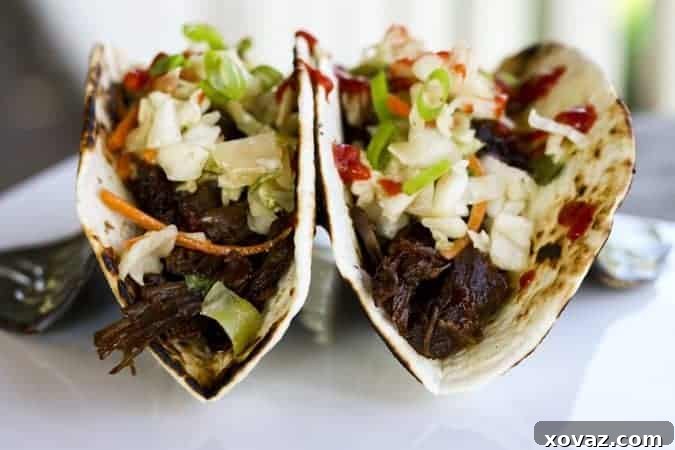
Looking for more culinary adventures? Explore our other sensational Korean Food Recipes after mastering these Slow Cooker Korean Beef Tacos!
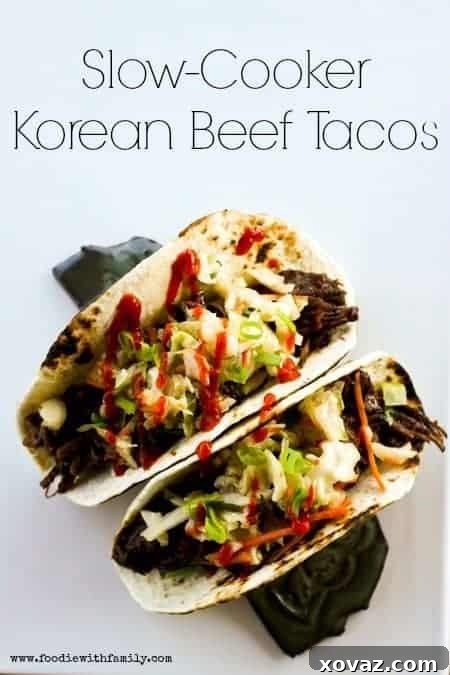
Tender Slow Cooker Korean Beef Tacos: Your Ultimate Make-Ahead Meal
There’s something truly special about the flavors of Korea, and few dishes capture that essence quite like succulent Korean Beef. Imagine it, slow-cooked to perfection, then nestled into warm tortillas with your favorite toppings. These Slow Cooker Korean Beef Tacos are more than just a meal; they’re a testament to how easy and incredibly satisfying Korean-inspired cuisine can be right in your own kitchen. Perfect for a busy weeknight or a lively gathering, this recipe simplifies complex flavors into a delightful, make-ahead dish that everyone will adore.
My Journey into Korean Cuisine: A Family Affair
My connection to Korean food deepened significantly when my brother moved to Korea to teach English. Little did we know, he’d find his wonderful wife there, enriching our family with an incredible sister-in-law and a vibrant new cultural appreciation. While we dearly miss him, the silver lining (beyond gaining such a kind family member) is the treasure trove of authentic Korean food goodies they bring when they visit. These aren’t just snacks; they’re a connection to their life abroad, and yes, he absolutely expects me to share with the entire family!
Before their first visit back home, I immersed myself in learning Korean cooking, hoping to create a taste of home for them. What started as a thoughtful gesture quickly blossomed into a full-blown obsession. Korean cuisine, to me, is the epitome of comfort food among Asian culinary traditions. It’s wonderfully hearty, bursting with diverse flavors, and always delivers that characteristic ‘kick’ thanks to the ever-present gochujang. The best part? It’s surprisingly simple to master at home. Once you stock your pantry with a few key Korean ingredients, you’re just a few steps away from creating tantalizing, restaurant-quality meals.
Gochujang: The Heart of Korean Flavor
No discussion of Korean food is complete without highlighting Gochujang. This thick, brick-red, fermented hot pepper paste is a true game-changer. It’s a delicious blend of spicy and salty, an umami bomb that adds incredible depth and complexity to dishes. It’s what gives many Korean recipes their signature warmth and irresistible flavor profile. Don’t be intimidated by it; it’s a versatile ingredient that once you start using, you won’t want to live without!
For those new to Gochujang, you can easily find it in most Asian grocery stores or online. It comes in various spice levels, so you can choose one that suits your palate. A little goes a long way, but it’s essential for achieving that authentic Korean taste. Trust me, it’s worth seeking out!
(The image below is an affiliate link. If you click on it and purchase, I may receive a small commission at no extra cost to you. Thank you for your support!)
Korean Tacos: A Delightful Fusion
Today’s recipe perfectly illustrates two fundamental truths: first, Korean food is simply phenomenal, and second, it’s remarkably accessible for home cooks. Now, if you’re thinking, “Are tortillas authentically Korean?”, you’re absolutely right to question it! This dish is a fantastic example of culinary fusion, blending the vibrant flavors of Korea with the beloved format of a taco. While traditionally, this tender beef might be served over sticky rice or in ssam (lettuce wraps), I’ve found that soft, charred tortillas are my absolute favorite way to deliver this specific beef to my mouth. And honestly, the “delivery device” doesn’t detract from the experience at all; it still tastes wonderfully Korean to me!
This fusion concept has gained immense popularity, especially with the rise of Korean BBQ taco trucks, demonstrating how well these flavors adapt to new presentations. So, whether you opt for tortillas, a bowl of fluffy rice, or crisp lettuce wraps, the star of the show remains the incredibly flavorful beef.
Mastering the Slow Cooker Korean Beef: Simple Steps for Sublime Flavor
When you glance at the ingredient list, don’t be alarmed by its length. Many items are pantry staples, and the actual work involved is minimal. We’re talking about a “set it and forget it” kind of magic with your slow cooker, but with a crucial upfront step that makes all the difference.
You’ll start with some beautiful boneless beef short ribs. And seriously, can I just pause for a moment to declare my profound love for beef short ribs? Their marbling and rich flavor are simply unmatched, making them ideal for slow cooking into tender perfection. Generously season these ribs with salt and freshly ground black pepper. This initial seasoning is key to building flavor from the inside out.
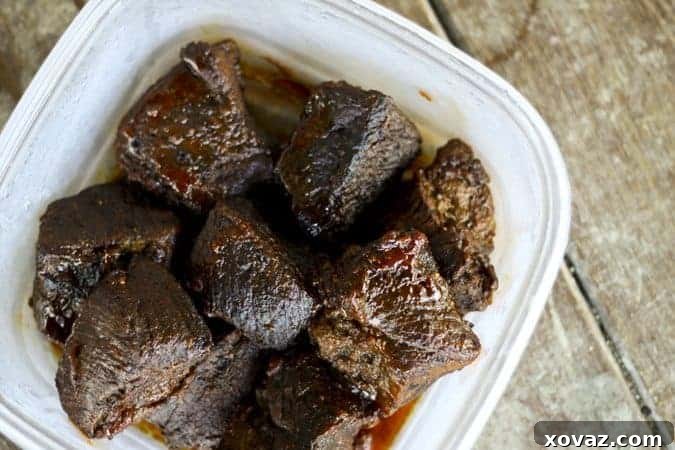
Next, those seasoned beef short ribs get a quick sear in a screaming hot pan. Please, for the love of all that is delicious, do not skip this browning step! While the slow cooker excels at long, gentle braising, flavor development happens primarily on the stovetop. Searing the beef creates a beautiful, deep brown crust through the Maillard reaction, locking in juices and adding layers of rich, savory taste that simply cannot be achieved by merely placing raw meat in the slow cooker. Brown all available surfaces of these soon-to-be succulent short ribs until they’re deeply caramelized.
While the beef is browning, turn your attention to the braising liquid – the heart of our Korean flavor profile. Don’t panic; this is just a matter of stirring ingredients together! Into your slow cooker, grate a ripe pear (peeled, cored, and stem removed). The pear adds a subtle sweetness and natural tenderizing enzymes. To this, add freshly grated ginger, minced garlic, soy sauce, that indispensable gochujang, nutty sesame oil, mirin (or rice wine vinegar for a similar tang), a splash of pear or apple juice, and a touch of brown sugar for balance. Stir this aromatic mixture until well combined. Once your short ribs are beautifully browned, nestle them gently into this incredible sauce, ensuring they are mostly submerged. Cover your slow cooker and let it work its magic for several hours until the beef is so tender it practically falls apart with the slightest nudge of a fork.
Make Ahead Magic: Preparing and Serving
Once the beef is fall-apart tender, carefully transfer it to a container with a tight-fitting lid and place it in the refrigerator. A little secret: I always “test” a piece at this stage for quality control – it’s practically mandatory! This refrigeration step isn’t just for cooling; it allows the flavors to deepen and makes the next step, fat removal, much easier.
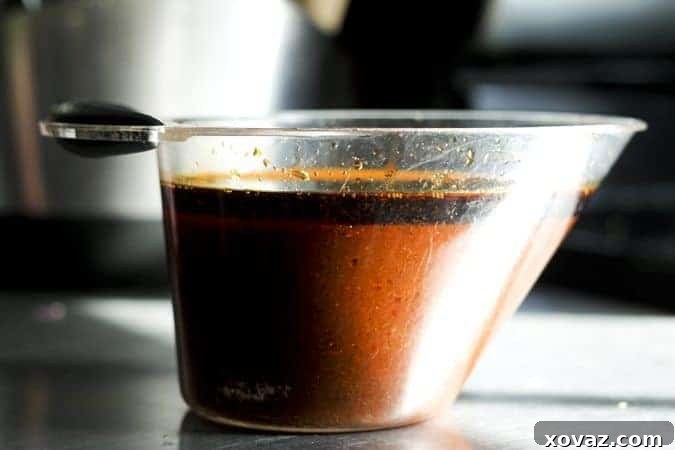
Next, pour the flavorful braising liquid from the slow cooker into a large, heat-safe bowl or measuring cup. Cover it with plastic wrap and refrigerate alongside the beef. As the sauce chills, the fat will separate and rise to the top, solidifying into an easily skimmable layer. Discard this fat, leaving you with a rich, unctuous sauce that is pure gold. There’s a good chance you’ll have more sauce than you need for the tacos, but don’t waste it! This beautiful, beefy, spicy sauce is excellent drizzled over bowls of hot rice for a quick snack or side dish.
With the sauce skimmed and the beef chilled, dinner is mere moments away. Reheat the beef slightly if necessary (a quick zap in the microwave works wonders), then grab two forks and shred it into tender, mouth-watering strands. Toss the shredded beef with just enough of the skimmed sauce to make it wonderfully flavorful and moist, but not overly wet or “sloppy.” The goal is perfectly coated, juicy beef that holds its own.
Now for the fun part: serving! Pile this incredible Korean beef onto charred flour tortillas. You can char tortillas directly over an open flame on your stovetop for a few seconds per side, or wrap them in foil and warm them in a moderate oven. Top your tacos with crunchy kimchi, a refreshing Asian-style slaw, or tangy Asian pickled carrots. For an extra kick, a drizzle of Sriracha is highly recommended. While cilantro isn’t traditionally found in Korean cuisine, I personally love a few fresh leaves on my tacos, so if the spirit moves you, go for it!
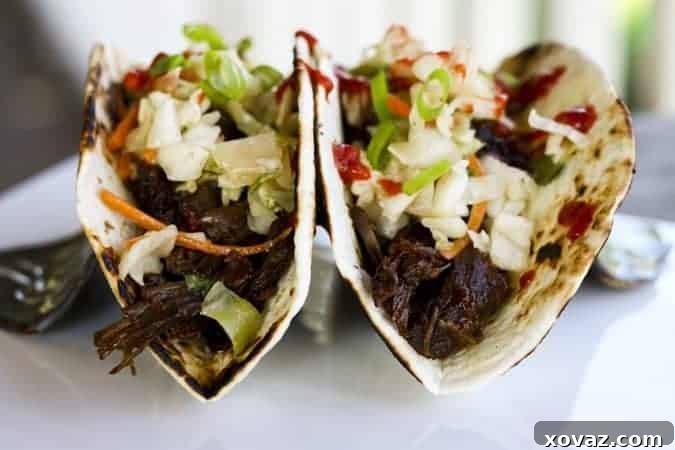
This recipe is an ideal addition to your “Make Ahead Mondays” rotation. You can freeze any leftover shredded beef in single-meal portions to thaw and reheat later for a lightning-fast dinner. In fact, it’s so good, you might want to double the recipe just to ensure you have some to freeze! For entertaining, consider tripling the recipe; bringing these incredible Korean Beef Tacos to a football party or potluck will earn you a legendary reputation as a top-tier host.
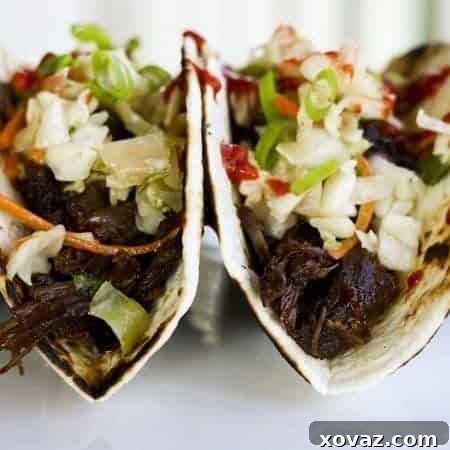
Slow-Cooker Korean Beef Tacos | Make Ahead Mondays Recipe
Slow-Cooker Korean Beef Tacos | Make Ahead Mondays
Author: Rebecca Lindamood
Korean tacos are a big deal in the food world right now. Discover why when you put your slow cooker to work on flavorful, tender Korean beef short ribs and serve them on charred tortillas topped with kimchi or Asian slaw. Double the recipe and freeze leftovers in meal-sized portions so you can enjoy whenever the urge strikes!
Prep Time: 15 mins
Cook Time: 4 hrs 40 mins
Total Time: 4 hrs 55 mins
Print Recipe
Pin Recipe
Ingredients
- 4 pounds boneless beef short ribs
- Salt and freshly ground black pepper
- 1 teaspoon vegetable or peanut oil
- 1 cup pear juice (or unsweetened apple juice)
- 3 tablespoons minced garlic
- 3-4 inches of fresh ginger root, grated
- 1/2 cup light brown sugar
- 1/2 cup gochujang
- 1/4 cup mirin or rice wine vinegar
- 2 tablespoons sesame oil
- 1 tablespoon soy sauce
- 1 pear, peeled, cored, and stem removed
To Serve:
- Flour tortillas, charred over an open flame on the stovetop, or wrapped in foil and heated in a moderate oven.
- Kimchi or Asian Style Slaw and Asian Pickled Carrots
- Fresh leaves of cilantro (if the spirit moves you)
- Sriracha
Instructions
- Generously salt and pepper the beef short ribs and set aside.
- Put a cast-iron or other heavy-bottomed skillet over high heat and let it heat while dry for at least 2 minutes, up to 5 minutes. While the skillet heats, stir together the garlic, ginger, light brown sugar, gochujang, mirin or rice wine vinegar, sesame oil, and soy sauce in the crock of your slow cooker. Grate the pear over the sauce.
- Drizzle the oil into the hot cast-iron pan, swirl to coat, and place as many short ribs into the pan as you can without crowding them. They should not touch in the pan. Let them cook about 2-3 minutes per side, or until the short ribs have developed a deep brown crust. Continue until all four sides of the short rib are well browned. Transfer the browned ribs to the sauce in the slow cooker. Repeat until all of the short ribs are well browned.
- When all the ribs are in the slow cooker, return the hot pan to the high burner and carefully pour in the pear or apple juice. It should bubble up almost immediately. Scrape all of the caramelized bits off of the pan then pour this flavorful liquid into the slow cooker with the ribs and sauce.
- Cover the slow cooker and cook on HIGH for 4 hours, or until the beef ribs come apart easily when pulled at with a fork.
- Use tongs to transfer the cooked beef to a container with a tight-fitting lid and place it in the refrigerator.
- Pour the cooking liquid from the crock into a large, heat-proof container or measuring cup. Cover with plastic wrap and refrigerate until the fat separates from the rest of the sauce and rises to the top, about 30 minutes to an hour. Spoon off the fat and discard it.
- If necessary, reheat the beef slightly in the microwave then shred with two forks or your hands. Toss with only as much of the skimmed sauce as is necessary to keep it moist and flavorful, but avoid making it sloppy wet.
- Serve on charred tortillas with Kimchi or Asian style slaw and Asian Pickled Carrots with a drizzle of Sriracha over the top.
Nutrition
Calories: 461 kcal |
Carbohydrates: 25g |
Protein: 14g |
Fat: 33g |
Saturated Fat: 13g |
Cholesterol: 62mg |
Sodium: 295mg |
Potassium: 300mg |
Fiber: 1g |
Sugar: 8g |
Vitamin A: 10IU |
Vitamin C: 5.5mg |
Calcium: 49mg |
Iron: 2.4mg
Nutritional information is an estimate and provided to you as a courtesy. You should calculate the nutritional information with the actual ingredients used in your recipe using your preferred nutrition calculator.
Did you make this recipe?
Make sure to tag @foodiewithfam on Instagram and #hashtag it #foodiewithfamily so I can check it out!
Pin Recipe
Share on Facebook