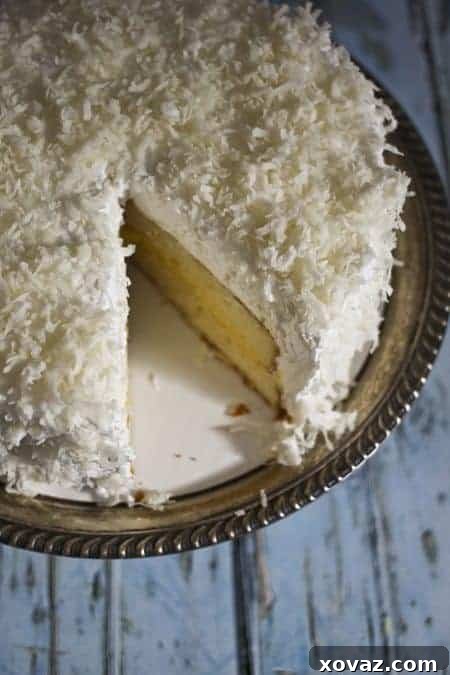
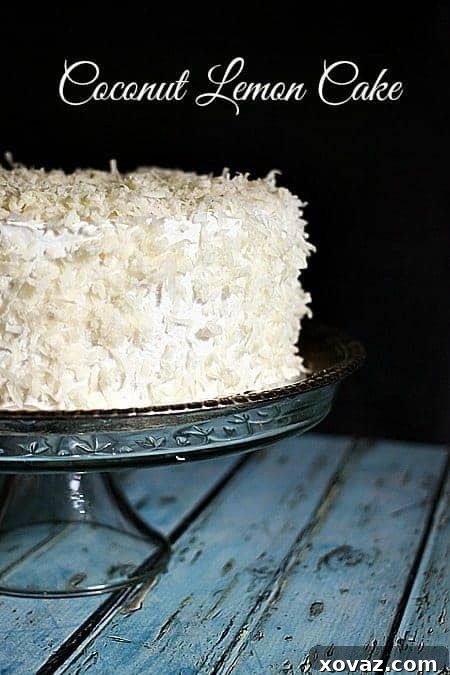
The Quintessential Coconut Lemon Cake: A Southern Celebration
Indulge in the irresistible charm of a truly classic Southern dessert – a majestic Coconut Lemon Cake. This masterpiece features tender vanilla butter cake layers, a vibrant homemade lemon curd, and a cloud-like boiled marshmallow frosting, all lavishly coated in sweet, flaked coconut. It’s a show-stopping cake that promises to be the star of any gathering, embodying the warmth and generosity of Southern hospitality.
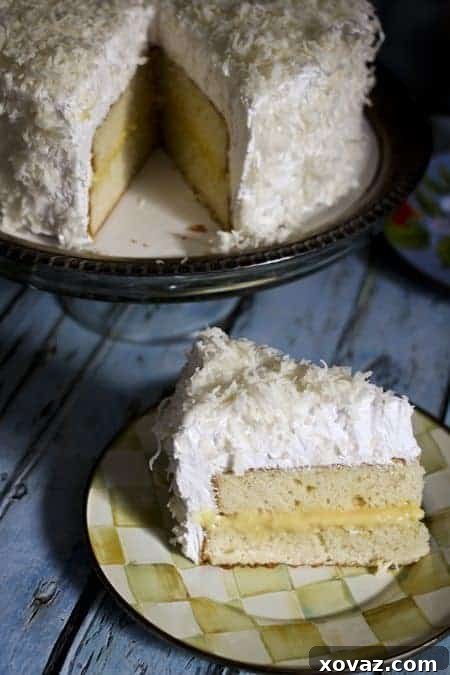
A Cherished Request: The Southern Coconut Cake Challenge
Baking for loved ones is often an act of profound joy, especially when a special occasion calls for a truly memorable dessert. It might seem audacious to post two dessert recipes in quick succession, but sometimes, life demands it! Such was the case for my second son’s fourteenth birthday. His singular request was a nod to his Southern heritage, inspired by his daddy: a proper “coconut cake.” Not just any coconut cake, mind you, but the genuine article – a grand, white, fluffy Southern Coconut Cake, the kind steeped in tradition and legendary for its decadent flavor.
Admittedly, despite years of baking experience, this particular cake filled me with a touch of trepidation. This isn’t merely a cake; it’s a “CLASSIC” in the grandest sense, often gracing Southern tables during Christmas and other significant celebrations. Its reputation precedes it, synonymous with a sweetness as profound as the tea brewed south of the Mason-Dixon line. With both Southern grandparents and a husband hailing from Virginia, I felt an almost sacred obligation to honor this culinary institution. The weight of tradition was upon my shoulders; I felt a need to prove myself worthy of crafting such a revered dessert.
The Culinary Compass: Southern Living and My Lemon Passion
To navigate the intricacies of this iconic dessert, I turned to the undeniable authority in Southern cuisine: the “1995 Best of Southern Living Cookbook.” This revered text guided me meticulously through the classic vanilla butter cake layers and the delicate art of the boiled frosting. However, when it came to the filling, I confidently charted my own course. My heart belongs to lemon, and when discussing lemon filling, I am absolutely on home turf.
I am, through and through, a lemon curd enthusiast, and I simply would not compromise. For this magnificent cake, nothing less than a real-deal, pure, intensely flavorful lemon curd would suffice between those lovely vanilla butter cake layers. The bright, tangy zest of homemade lemon curd provides a perfect counterpoint to the rich sweetness of the cake and its marshmallow-like frosting. This vibrant, puckery layer transforms the entire dessert, adding a complexity and freshness that elevates it beyond the ordinary and truly embodies the essence of a remarkable Southern Coconut Lemon Cake.
The Unsung Hero: Mastering the Cake with a Stand Mixer
Once the cake layers were in the oven, a wave of confidence washed over me, and my baking rhythm returned in full swing. This project underscored an undeniable truth: crafting such a magnificent cake absolutely necessitates the use of a reliable stand mixer. My trusty Kitchen Aid stand mixer proved to be an indispensable companion, transforming what could have been an exhausting endeavor into a smooth and incredibly fun process. It effortlessly whipped the egg whites into perfect, stiff peaks, which were then gently folded into the cake batter, ensuring a light, airy crumb that is characteristic of a truly exceptional vanilla butter cake. Without the tireless power of the mixer, my arm would undoubtedly have succumbed to the arduous task of manual whipping.
The stand mixer’s utility was equally paramount in creating the iconic boiled frosting. Achieving that ethereal, marshmallow-y perfection requires precise temperature control and sustained, vigorous beating. The Kitchen Aid stand mixer flawlessly whipped the egg whites to soft peaks, and then, with unwavering consistency, gradually incorporated the hot sugar syrup. The continuous, high-speed whipping transformed these simple ingredients into a glossy, stable, and wonderfully fluffy frosting. This critical piece of equipment is not just a convenience; it’s a fundamental tool that ensures the success and signature texture of both the cake and its extraordinary topping, making the entire Coconut Lemon Cake experience truly seamless and rewarding.
The Decadent Reveal: A Snowball of Joy and Southern Pride
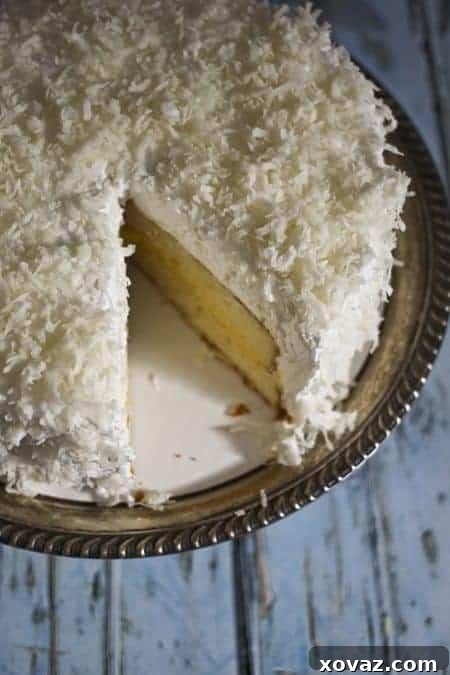
Upon completing the cake, I stepped back, admiring its towering, pristine white form, a veritable snowball of coconut love. A surge of pride swelled within me. “DANG!” I thought, “I did my grandma proud!” The anticipation of slicing into such a magnificent, decadent creation was almost as enjoyable as the baking itself. I confess, I briefly pondered the impending sugar rush my children would experience, but for a birthday celebration, such joyful indulgence is entirely warranted. A clever bribe—the very first slice—was all it took to convince the birthday boy to let me unveil the cake’s beautifully layered interior. He, ever the eager participant, graciously accepted his sweet payment.
His reaction was truly priceless, confirming his undeniable lineage to those esteemed DAR ladies and their gentlemen from generations past. He “ooooed” and “aaaahed,” uttering exclamations of youthful delight over the pristine white confection placed before him. The genuine joy on his face was the ultimate affirmation of the hours spent in the kitchen, a testament to the magic of homemade birthday cakes. This Coconut Lemon Cake transcended mere dessert; it was a moment, a memory etched in the sweet tapestry of family celebrations.
Energized by his substantial wedge of cake, he transformed into a jet-powered blur, racing out to conquer our most formidable and intense snowy hill for a full hour of sledding. His ultimate verdict on the recently fallen twelve inches of fresh snow? “Almost as pretty as the cake!” A compliment of the highest order, particularly from a discerning fourteen-year-old. And truly, who wouldn’t relish the thought of sledding down a hill draped in that divine, cloud-like boiled frosting?
Essential Tips for Baking Your Perfect Coconut Lemon Cake
While the recipe for this Southern Coconut Lemon Cake is meticulously detailed, a few key insights can elevate your baking experience and ensure a flawless result every time:
- Achieve Room Temperature: For the most harmonious and emulsified cake batter, ensure that your butter, eggs, and milk are at true room temperature. This allows ingredients to blend seamlessly, contributing to a wonderfully tender and consistent crumb.
- Precision in Measuring Flour: Over-measuring flour is a common pitfall that can lead to a dry, dense cake. Always spoon flour lightly into your measuring cup and level it off with a straight edge, rather than scooping directly from the container.
- Gentle Mixing is Key: Once you’ve introduced the dry ingredients to the wet, mix only until they are just combined. Overmixing the batter develops gluten, which can result in a tough, chewy cake rather than the desired soft, melt-in-your-mouth texture.
- Trust Your Candy Thermometer for Frosting: The success of boiled frosting hinges on reaching the precise syrup temperature of 240°F (soft ball stage). A reliable candy thermometer is your best friend here; do not attempt to eyeball this critical step, as it directly impacts the frosting’s stability and texture.
- Complete Cooling for Cake Layers: Patience is a virtue when it comes to cooling cake layers. They must be absolutely, entirely cool before you begin assembly and frosting. Even residual warmth will cause your meticulously prepared frosting to melt, slide, and compromise the cake’s structure.
- Homemade Lemon Curd: While high-quality store-bought lemon curd can be used, crafting your own homemade lemon curd truly makes a difference. Its intense, fresh, and zesty flavor perfectly cuts through the richness of the cake and frosting, providing a bright, refreshing contrast. Ensure your lemon curd is thoroughly chilled and firm before spreading between the layers to prevent a messy assembly.
Following these professional tips will guide you towards baking a Southern Coconut Lemon Cake that is not only visually stunning but also exquisitely delicious, a true testament to classic Southern baking.
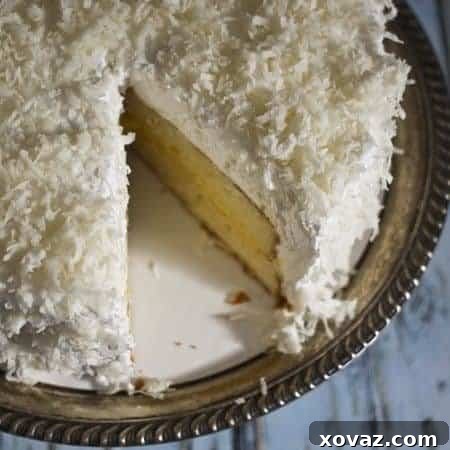
Classic Southern Coconut Lemon Cake Recipe
Rate Recipe
By Rebecca Lindamood
Pin Recipe
Ingredients
For the Vanilla Butter Cake:
- 1 cup unsalted butter softened
- 2 cups sugar
- 4 large eggs separated
- 3 cups all-purpose flour
- 1 tablespoon baking powder
- 1 cup milk
- 1/2 teaspoon kosher salt
- 1 teaspoon vanilla extract
For the Boiled Frosting:
- 1 cup sugar
- 1 1/2 cups water
- 2 tablespoons light corn syrup
- 4 egg whites
- 1/4 teaspoon cream of tartar
To Garnish and Fill:
- 2-3 cups flaked coconut sweetened or unsweetened
- 1 batch Homemade Lemon Curd (approx. 1 ½ cups, chilled until firm)
Instructions
To Make the Vanilla Butter Cake:
-
1. Prepare Pans. Preheat your oven to 350°F (175°C). Thoroughly butter and flour two 9-inch round cake pans. Ensure an even coating and tap out any excess flour. Set aside.
-
2. Cream Butter and Sugar. In the bowl of a stand mixer (or using a hand mixer) fitted with the paddle attachment, beat the softened unsalted butter at medium speed until it’s light and fluffy, about 2 to 3 minutes. Gradually add the sugar, continuing to beat for another 3-5 minutes until the mixture is pale and well combined, scraping down the sides of the bowl as needed to ensure even mixing.
-
3. Incorporate Egg Yolks. Add the egg yolks one at a time to the butter-sugar mixture, beating thoroughly after each addition until fully incorporated. This creates a rich, smooth base for your cake.
-
4. Alternate Dry and Wet Ingredients. In a separate medium bowl, whisk together the all-purpose flour and baking powder until well combined. In a small bowl, whisk together the milk and vanilla extract. With the mixer on low speed, add one-third of the flour mixture to the butter mixture, beating just until combined. Next, add half of the milk mixture, beating until incorporated. Repeat this process: add another third of the flour mixture, then the remaining half of the milk, and finally the last third of the flour mixture. Beat well after each addition, stopping to scrape down the sides of the bowl frequently. Be careful not to overmix the batter.
-
5. Fold in Egg Whites. In a clean, dry bowl of your stand mixer (using the whisk attachment) or with a hand mixer, beat the egg whites and kosher salt on medium-high speed until they form stiff, glossy peaks. Gently stir about one-third of the beaten egg whites into the cake batter to lighten it. Then, carefully fold in the remaining egg whites in two additions, using a spatula, until no white streaks remain. This step is crucial for an airy cake, so avoid deflating the egg whites.
-
6. Bake Cake Layers. Divide the cake batter evenly between the two prepared cake pans. Smooth the tops with an offset spatula. Bake for 30-38 minutes, or until a wooden skewer or toothpick inserted into the center of the cake comes out clean and the cakes gently spring back when lightly pressed in the center with your fingertip.
-
7. Cool Completely. Allow the baked cakes to cool in their pans on a wire rack for 10 minutes. After 10 minutes, carefully invert the cakes onto the wire rack to finish cooling completely. It is absolutely essential that the cake layers are thoroughly cooled before proceeding to assembly and frosting.
-
8. Prepare for Assembly. Once the cakes are completely cold, use a long serrated knife to level the tops of the cakes, if necessary, to create flat surfaces for stacking. To protect your serving plate or cake stand during frosting, place three or four strips of parchment or waxed paper around the perimeter, just under where the cake will sit. Carefully place one trimmed, level cake layer in the center of your prepared cake plate.
-
9. Add Lemon Curd Filling. Spoon the chilled, firm lemon curd onto the center of the first cake layer and spread it evenly with an offset spatula, leaving a clear 3/4-inch border around the edges. Carefully place the second trimmed, leveled cake layer directly over the first. Gently cover the layered cake with plastic wrap and chill in the refrigerator for at least one hour. This allows the lemon curd to set firmly, preventing the cake from shifting during the frosting process.
To Make the Boiled Frosting:
-
1. Prepare Sugar Syrup. In a heavy-bottomed saucepan, combine the sugar, water, and light corn syrup. Stir this mixture constantly over medium heat until all the sugar has dissolved and the syrup appears clear. Once clear, remove your spoon from the pan and increase the heat to bring the mixture to a rolling boil. Continue boiling without stirring, monitoring the temperature with a candy thermometer or instant-read thermometer, until it reaches exactly 240°F (115°C). This is the soft ball stage, critical for the frosting’s texture.
-
2. Whip Egg Whites. While your sugar syrup is heating and approaching the target temperature, begin whipping the egg whites and cream of tartar in the clean bowl of your stand mixer (fitted with the whisk attachment) or with a hand mixer. Beat on medium speed until they reach soft, foamy peaks. Do not overbeat to stiff peaks at this stage.
-
3. Combine Syrup and Egg Whites. As soon as the sugar syrup reaches 240°F, immediately remove it from the heat. With your mixer running on low speed, slowly and very carefully drizzle the hot sugar syrup in a thin, steady stream into the whipping egg whites. Be precise and avoid pouring the hot syrup directly onto the whisk, directing it down the side of the bowl instead. Once all the syrup has been added, increase the mixer speed to high and continue whipping vigorously until the frosting becomes very thick, glossy, and forms firm, stiff peaks. This process typically takes about 5-7 minutes. The bottom of the mixing bowl should feel cool to the touch when the frosting is ready.
To Frost and Garnish the Cake:
-
1. Frost the Cake. Remove the chilled cake (with its lemon curd filling now set) from the refrigerator and discard the plastic wrap. Pile a generous amount of the freshly prepared boiled frosting onto the top of the cake. Using an offset spatula, begin to spread the frosting evenly over the top, then down the sides of the cake. Take your time to smooth the icing, rotating the cake plate as you work, to achieve a beautifully even and cloud-like coating.
-
2. Apply Coconut. With clean hands, gently but firmly press handfuls of flaked coconut against the sides of the cake until it is fully coated. Then, sprinkle the remaining coconut evenly over the top of the cake, creating a pristine, snowy finish. Carefully slide out the parchment or waxed paper strips from underneath the cake, leaving your serving plate perfectly clean.
-
3. Serve or Chill. Your magnificent Coconut Lemon Cake is now ready to be sliced and served immediately for the freshest experience. If you are preparing it in advance or have leftovers, lightly cover the cake and refrigerate it. For optimal texture and flavor, allow the cake to come closer to room temperature for about 30 minutes before serving. Enjoy this truly unforgettable Southern dessert!
Nutritional information is an estimate and provided to you as a courtesy. You should calculate the nutritional information with the actual ingredients used in your recipe using your preferred nutrition calculator.
Did you make this recipe?
We’d love to see your culinary masterpiece! Make sure to tag @foodiewithfam on Instagram and hashtag it #foodiewithfamily so we can admire your delicious creation and share in your success!
Pin Recipe
Share on Facebook