How to Roast Garlic in the Oven: A Comprehensive Guide to Sweet, Mellow Flavor
Unlock the incredible potential of garlic by transforming it into a sweet, caramelized, and incredibly soft spread with this simple guide on “How to Roast Garlic in the Oven.” Whether you’re a seasoned garlic enthusiast or just beginning to explore its culinary depths, this method will arm you with luxurious, buttery cloves that melt in your mouth. Roast a small batch for tonight’s dinner or prepare a generous quantity to stash in your freezer, ensuring quick and easy access to gourmet flavor all year long!
Fair warning: once you discover how effortless it is to achieve the rich, mellow flavor of oven-roasted garlic, you’ll be tempted to add it to almost everything. This guide will make it an indispensable part of your culinary repertoire.
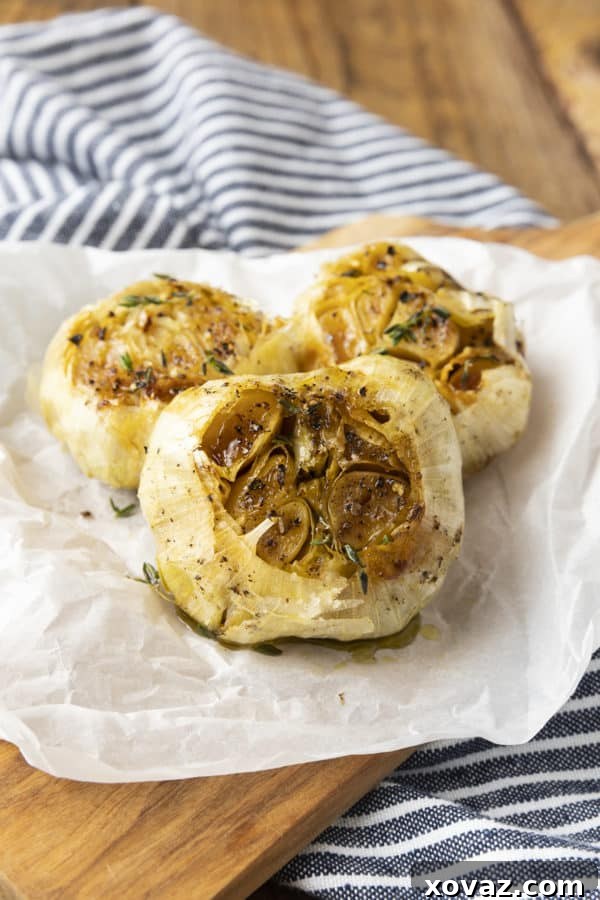
The Magic of Oven Roasted Garlic: Sweet, Savory, and Irresistible
Oven roasting garlic is a culinary revelation. It takes the sharp, pungent bite of raw garlic and mellows it into a creamy, spreadable delicacy. The high heat of the oven, combined with a touch of olive oil, coaxes out the natural sugars in the garlic, leading to a profound caramelization. This process transforms its flavor profile, making it less intense and far sweeter, with a nutty undertone that enhances a myriad of dishes without overpowering them.
Beyond its incredible taste, roasted garlic also offers health benefits similar to its raw counterpart, including antioxidant and anti-inflammatory properties, but often with less digestive discomfort for those sensitive to raw garlic. It’s an easy way to elevate everyday meals into something extraordinary, making it a staple for home cooks looking to add depth and complexity to their cooking.
Essential Ingredients and Equipment for Roasting Garlic
You don’t need a pantry full of exotic items to create this simple yet impactful ingredient. Here’s a concise list of what you’ll need to make exquisite oven-roasted garlic:
- Fresh Whole Garlic Bulbs: The star of our show. Quantity can range from two heads to fifty, depending on your needs.
- Extra Virgin Olive Oil: A good quality olive oil adds richness and helps the garlic caramelize beautifully.
- Salt and Pepper: Basic seasonings to enhance the garlic’s natural flavor. Kosher salt is recommended for its texture and even seasoning.
- Aluminum Foil with a Baking Dish/Sheet: Essential for creating a steamy environment that softens the garlic without drying it out. Alternatively, a small, high-sided baking dish with a tight-fitting lid works perfectly.
- Optional Fresh Herbs: Sprigs of fresh rosemary or thyme can infuse the garlic with an aromatic complexity, though they are not strictly necessary for delicious roasted garlic.
How to Choose the Best Fresh Garlic Bulbs
The quality of your roasted garlic begins with the quality of your fresh garlic. When selecting garlic bulbs from your grocery store’s bulk bins or a local farmer’s market, take a moment to examine each head carefully. Look for these indicators of freshness and quality:
- Firmness: Gently squeeze the bulb. It should feel firm and solid, not soft, hollow, or squishy. Soft spots can indicate spoilage or dehydration.
- Tight Paper Skin: The papery outer layers should be tight around the bulb and its individual cloves. Loose, discolored, or falling-off skins can suggest older garlic or improper handling.
- Weight for Size: A good head of garlic will feel heavy for its size. This indicates a higher moisture content, which is desirable for juicy, soft cloves.
- Intact Cloves: Ensure all cloves are held tightly within the bulb and none are missing or separated. Separation can be a sign of aging or damage.
- Absence of Sprouts or Mold: Avoid any garlic with green sprouts emerging from the top or any visible signs of mold or dark spots. These are clear indicators of past-its-prime garlic.
By taking these few moments to choose wisely, you set the stage for truly exceptional roasted garlic. I often buy garlic in bulk from local farmers, especially in late summer, as it’s an economical way to ensure a steady supply of high-quality garlic for months.
Mastering Fresh Garlic Storage for Extended Shelf Life
Proper storage is key to making your fresh garlic last, preventing premature sprouting, and maintaining its pungent flavor. Contrary to common belief, garlic is one of the easiest pantry staples to store for an extended period, second only to perhaps blueberries in terms of simplicity. Here’s how to keep garlic fresh for months, creating ideal storage conditions:
- Cool, Dry, Dark Place: This is the golden rule. A pantry, cellar, or even a dark cabinet away from heat and light sources is perfect.
- Good Air Circulation: Garlic needs to breathe. Avoid airtight containers, which can trap moisture and encourage mold growth or sprouting.
- Mesh Bags or Baskets: Storing whole garlic heads in mesh bags, netted produce bags, or breathable baskets allows for optimal air circulation. Hanging them from a hook in a cool pantry or basement is an excellent method.
- Pantyhose Trick: For bulk storage, a classic method involves dropping a head of garlic into the foot of a cheap pair of pantyhose, tying a knot or cinching it with a twist tie, and repeating up the leg. Hang this “garlic chain” in a cool, dark, well-ventilated area.
- Under an Overturned Clay Pot: Place garlic in a mesh bowl and cover with an overturned clay pot in a cool spot. The clay naturally absorbs some moisture, maintaining a stable environment.
Crucial Storage Mistakes to Avoid:
- The Refrigerator: Storing fresh, raw garlic in the fridge is a common mistake. The cold temperature can confuse the garlic, signaling it to sprout prematurely and can alter its flavor profile, making it taste less potent. If you’ve chopped more than you need for a recipe, wrap it tightly in plastic wrap and use it within 24 hours, accepting a slight loss of flavor.
- The Freezer (for raw garlic): While roasted garlic excels in the freezer, raw garlic does not. Freezing raw garlic cloves will ruin their delicate texture, turning them mushy upon thawing, and often diminishes their flavor significantly. Don’t be tempted to freeze raw garlic!
- Airtight Containers: As mentioned, airtight containers deprive garlic of necessary air circulation, trapping humidity and accelerating spoilage.
How Long Can You Keep Fresh Garlic?
When stored under the ideal conditions described above (unpeeled, whole bulbs in a cool, dry, dark place with good air circulation), fresh garlic can last an impressive up to 6 months. This makes bulk buying in season a smart and economical choice for any home cook. Imagine having fresh, quality garlic on hand for half the year!
And as if the convenience of readily available fresh garlic isn’t enough, remember this: you can roast a large batch of garlic heads and freeze the roasted garlic. This is where the true magic begins for long-term flavor preservation.
*The earlier caution about freezers and garlic does NOT apply to lovely roasted garlic. In fact, freezing roasted garlic is an excellent strategy!
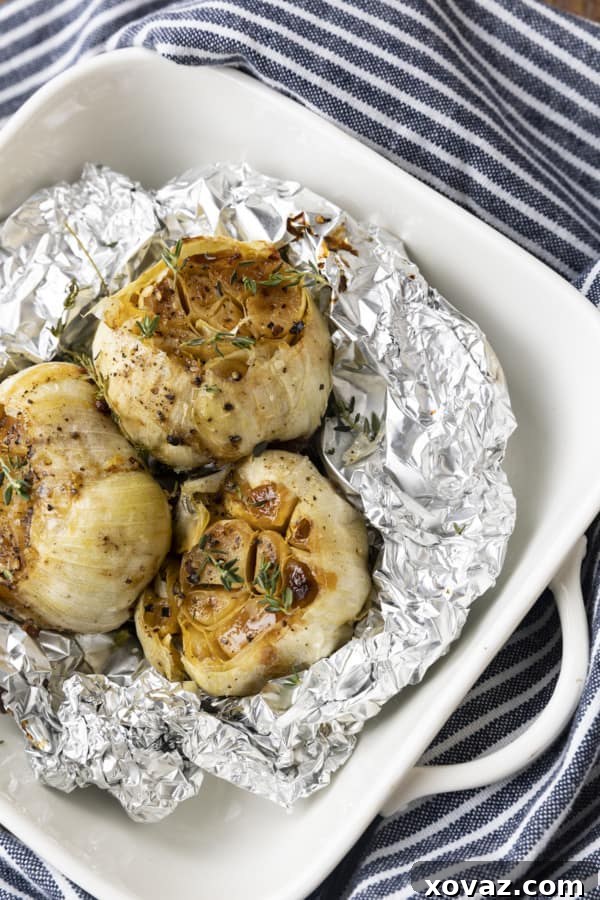
The Sublime Transformation: Why Roasted Garlic is a Game Changer
The beauty of roasted garlic lies in its profound transformation. Raw garlic, with its sharp, often aggressive aroma and flavor, can be polarizing. Roasting, however, mellows these characteristics dramatically, converting the allicin (the compound responsible for raw garlic’s pungency) into softer, sweeter compounds. The result is a creamy, almost buttery paste that boasts a delicate sweetness and a subtle, nutty flavor, completely devoid of the harshness that can sometimes accompany raw garlic. It’s truly garlic gone mild, making it enjoyable for even those who typically shy away from strong garlic flavors.
Unlocking Culinary Potential: Delicious Ways to Use Roasted Garlic
Once you have a batch of this golden goodness, the culinary possibilities are virtually endless. Roasted garlic is incredibly versatile and can elevate countless dishes. Here are some delicious ideas and easy recipes for future use, demonstrating just a fraction of its potential:
- Spreads and Dips:
- Roasted Garlic Whipped Feta
- Mix with softened butter for the ultimate garlic bread spread.
- Mash into hummus or guacamole for an extra layer of flavor.
- Stir into cream cheese for a savory bagel spread.
- Sauces and Dressings:
- Puree into salad dressings for a sweet, garlicky base.
- Incorporate into pasta sauces like marinara or Alfredo, such as in Roasted Garlic Spinach Alfredo Lasagna.
- Whisk into vinaigrettes for a gourmet touch.
- Sides and Soups:
- Fold into mashed potatoes or Roasted Garlic Cauliflower Puree.
- Add to roasted vegetables (asparagus, broccoli, carrots) for enhanced flavor.
- Stir into soups and stews just before serving for a rich, aromatic finish.
- Breads and Pastries:
- Spread directly onto crusty bread, toasted baguette slices, or soft, warm rolls.
- Knead into dough for homemade bread, like a Roasted Garlic Rustic Sourdough Boule.
- Add to savory scones or muffins.
- Mains and Appetizers:
- Smear on chicken, fish, or steak before roasting or grilling.
- An essential ingredient in dishes like Roasted Garlic Artichoke Goat Cheese Fondue.
- Mix into meatballs or meatloaf for added moisture and flavor.
What are you waiting for? Get roasting and transform your cooking!
🧄 Your Step-by-Step Guide to Perfect Oven-Roasted Garlic
Roasting garlic is incredibly straightforward, requiring minimal effort for maximum flavor. Follow these basic steps to create exquisitely soft and sweet oven-roasted garlic.
- Preheat Your Oven: Begin by preheating your oven to 350ºF (175ºC). This ensures even cooking from the moment the garlic enters the oven.
- Prepare the Garlic Bulbs:
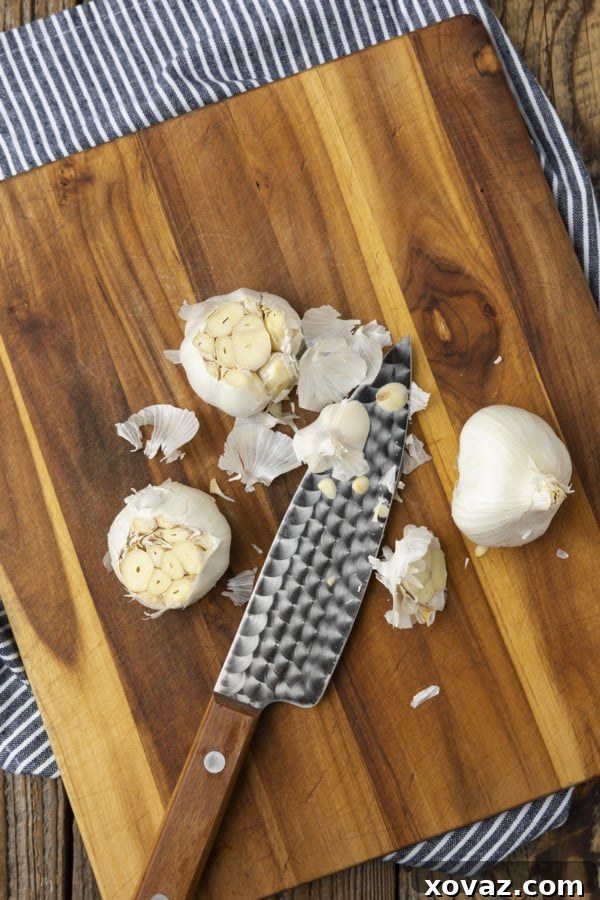
- Inspect your garlic bulbs. Trim off any loose, papery outer layers and any scraggly root ends that might be present. Be careful not to separate the individual cloves from the bulb at this stage, as the skin helps hold everything together and retain moisture.
- The goal is for the bulb to sit stably.
- Using a sharp knife, lay the garlic bulb on its side on a cutting board. Carefully slice off about 1/4 to 1/2 inch from the very top (the flower end) of each garlic bulb. This cut should expose the tips of the individual cloves, allowing the oil and seasonings to penetrate.
- Prepare the Baking Vessel:
- Choose a small baking dish or a sheet pan. Line it with a piece of aluminum foil that is roughly twice the size of the dish itself. This extra foil will be used to create a sealed packet around the garlic.
- Alternatively, if you prefer not to use foil or don’t have it, select a very small, high-sided baking dish with a tight-fitting lid. The dish should be just large enough to hold your garlic bulbs snugly, ensuring that moisture is trapped during roasting.
- Place the prepared garlic heads, cut-side up, into your chosen baking dish or onto the foil-lined pan.
- Season and Flavor:
- Drizzle a generous amount of extra virgin olive oil evenly over the exposed tops of the garlic cloves. Make sure each exposed clove gets a good coating.
- Lightly sprinkle with kosher salt and freshly cracked black pepper.
- If using, place a small sprig of fresh rosemary or thyme on top of each garlic head for an added layer of aromatic flavor.
- Seal and Roast:
- If using foil, gather the edges of the aluminum foil up around the garlic bulbs and crimp them tightly closed to form a sealed packet. This creates a steamy environment that tenderizes the garlic.
- If using a lidded baking dish, simply place the tight-fitting lid securely on top.
- Transfer the baking dish to your preheated oven.
- Roast for approximately 45 minutes to 1 hour and 15 minutes. The exact time will depend on the size and moisture content of your garlic, as well as your oven’s calibration.
- The garlic is perfectly roasted when the cloves are deep golden brown, incredibly soft to the touch, and easily squeezed from their skins.
- Cool and Extract:
- Once roasted, carefully remove the garlic from the oven. Let it rest for several minutes, or until it’s cool enough to handle comfortably. This brief resting period helps the garlic reabsorb its juices.
- To extract the soft cloves, gently flip a slightly cooled garlic head upside down. Squeeze firmly from the root end towards the blossom end, much like you would squeeze a tube of toothpaste. The tender, caramelized cloves should easily pop right out into a bowl or onto a plate.
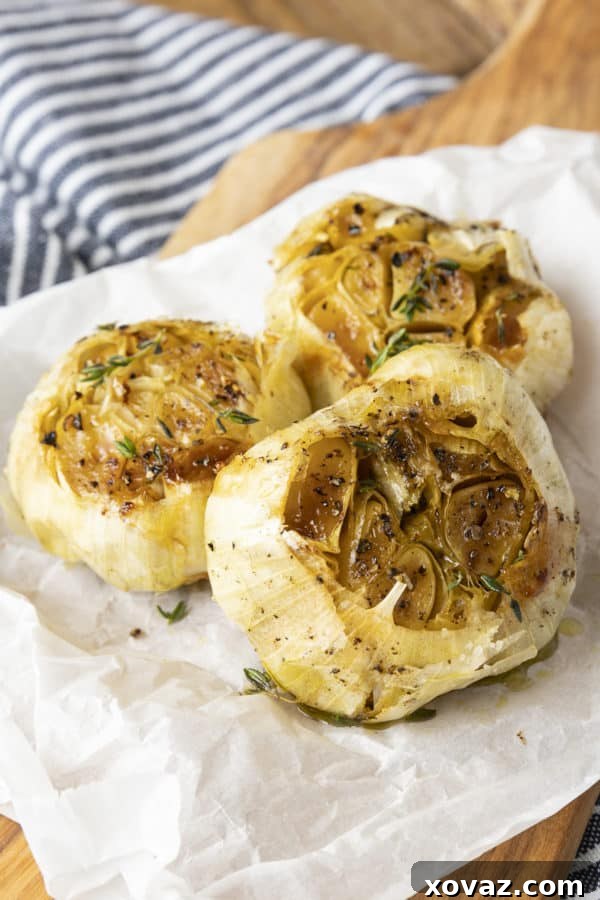
Recipe: How to Roast Garlic in the Oven
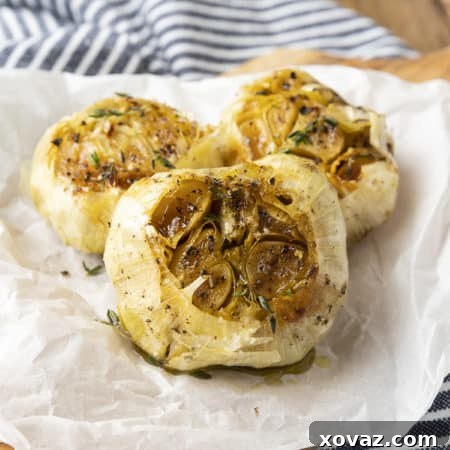
How to Roast Garlic in the Oven
Author: Rebecca Lindamood
5 mins
45-75 mins
Learn how to roast garlic in the oven with this simple, scalable tutorial that can handle any amount from 2 heads of garlic to 50 heads all at once. This recipe will make it easy for you to have delicious roasted garlic on hand at all times!
Equipment
- Aluminum foil or a tight-fitting lid for a baking dish
- 1 small baking dish or sheet pan
- Oven
- Sharp knife and cutting board
Ingredients (Yields 4 servings from 2 heads)
- 2 heads Fresh Garlic (any quantity can be used, scale accordingly)
- 2 tablespoons extra virgin olive oil
- 1/2 teaspoon kosher salt
- 1/4 teaspoon cracked or ground black pepper
Optional:
- 2 sprigs of fresh thyme or rosemary
Instructions
- Preheat oven to 350ºF (175ºC).
- Trim any loose paper and root ends from the garlic bulbs, ensuring they stand stably. Do not separate cloves.
- Lay each bulb on its side and, using a sharp knife, trim about 1/4 to 1/2 inch off the flower end to expose the tips of the cloves.
- Line a small baking dish (just large enough to hold your garlic) or a sheet pan with a piece of aluminum foil roughly twice the size of the dish. Place the garlic heads, cut side up, into the prepared dish.
- If not using foil, use a very small, high-sided baking dish with a tight-fitting lid. Ensure the dish is snug around the garlic to trap steam.
- Drizzle the olive oil evenly over the exposed garlic cloves and sprinkle with salt and pepper. Top each garlic head with a sprig of rosemary or thyme, if desired.
- Bring the foil up around the garlic and crimp it closed to form a sealed packet, or place the lid on your baking dish. Transfer to the oven.
- Roast for 45 minutes to 1 hour and 15 minutes, or until the garlic is deep golden brown and exceptionally soft.
- Let the garlic rest for several minutes until it’s comfortable to handle.
- To extract the roasted garlic, flip the slightly cooled heads upside down and squeeze from the root end towards the blossom end. The soft, sweet cloves will easily pop out.
- Use immediately, or store in the refrigerator (tightly covered) for up to one week.
- For longer-term storage, freeze the roasted garlic cloves whole in an airtight container. Alternatively, mash them, portion into desired sizes (e.g., teaspoons or tablespoons), and freeze. Once frozen solid, transfer to a labeled freezer-safe zipper-top bag.
- Frozen roasted garlic is best used within 6 months of freezing for optimal flavor and texture.
Notes
This recipe is highly scalable. You can roast as many heads of garlic as your baking dishes and oven can accommodate. Remember that larger quantities may require slightly longer roasting times to achieve the desired softness and caramelization.
For an even richer flavor, you can submerge peeled roasted garlic cloves in olive oil and store them in a tightly sealed jar in the refrigerator for up to a week. Important: Never store garlic in oil at room temperature, as this creates an anaerobic environment that can promote the growth of botulism bacteria. Always refrigerate.
Nutrition (per serving, estimated)
Carbohydrates: 5 g
Protein: 1 g
Fat: 7 g
Saturated Fat: 1 g
Polyunsaturated Fat: 1 g
Monounsaturated Fat: 5 g
Sodium: 293 mg
Potassium: 58 mg
Fiber: 0.3 g
Sugar: 0.1 g
Vitamin A: 2 IU
Vitamin C: 4 mg
Calcium: 26 mg
Iron: 0.3 mg
Nutritional information is an estimate and provided to you as a courtesy. You should calculate the nutritional information with the actual ingredients used in your recipe using your preferred nutrition calculator.
Storing Your Roasted Garlic Harvest
Once you’ve mastered the art of roasting, you’ll want to ensure your precious garlic lasts. Proper storage is crucial for preserving its flavor and texture, especially if you’ve made a large batch.
- Refrigeration: For immediate use, roasted garlic cloves can be stored in an airtight container in the refrigerator for up to one week. You can store them whole or mashed. For an extra layer of flavor and preservation, consider submerging the cloves in a clean, airtight jar filled with good quality olive oil. However, always ensure this mixture is kept refrigerated and consumed within a week to prevent the risk of botulism.
- Freezing Whole Cloves: This is an excellent long-term storage solution. Once the roasted garlic has cooled completely, carefully transfer the whole, soft cloves into an airtight, freezer-safe container or a heavy-duty freezer bag. They can be frozen for up to 6 months. When ready to use, simply thaw and incorporate into your recipes.
- Freezing as a Paste/Puree: For ultimate convenience, mash or puree the roasted garlic cloves with a fork or in a food processor. You can add a little olive oil to achieve a smoother consistency. Spoon this paste into ice cube trays for perfectly portioned servings. Once frozen solid, transfer the garlic cubes to a labeled freezer-safe zipper-top bag. These cubes can be easily popped out and added directly to hot dishes like soups, sauces, or sautéed vegetables. This method also keeps well for up to 6 months.
Remember to label and date your frozen roasted garlic to keep track of its freshness.
Troubleshooting Common Roasted Garlic Questions
- My garlic isn’t soft after 45 minutes. What should I do?
- Garlic heads vary in size and moisture content. If your garlic isn’t soft and golden, simply crimp the foil (or replace the lid) and return it to the oven for another 15-20 minutes. Continue roasting until it’s tender and easily squeezed out.
- Why did my garlic burn?
- Burning usually occurs if the garlic isn’t adequately covered, allowing too much direct heat, or if the oven temperature is too high. Ensure the foil packet is tightly sealed or the baking dish lid fits snugly. Also, check your oven temperature with an oven thermometer if you suspect it runs hot.
- Can I use peeled garlic cloves for roasting?
- While you technically can, it’s not recommended. The papery skin helps protect the cloves from burning and locks in moisture, resulting in a creamier texture. Roasting whole heads is the best method for optimal results.
- Is there a difference in flavor if I use different types of olive oil?
- Yes, a higher quality extra virgin olive oil will impart a richer, more nuanced flavor. However, any olive oil will work. You can also experiment with other neutral oils like avocado oil, but olive oil is traditional and complements garlic beautifully.
Did you make this recipe?
We’d love to see your creations! Make sure to tag @foodiewithfam on Instagram and #hashtag it #foodiewithfamily so we can check it out!
You can also share this recipe:
Print Recipe
Pin Recipe