Looking for more delicious homemade bread ideas? Be sure to explore our extensive Bread Recipes page for a treasure trove of baking inspiration!
If you’ve been following along, especially after our recent post on Spreadable Ranch Cream Cheese, then today’s revelation might not come as a shock. Yes, we’re diving headfirst into the world of PRETZEL BAGELS! It might seem like a predictable culinary journey – from a creamy spread to the perfect vessel for it – but trust me, these Pretzel Bagels are far too extraordinary to keep under wraps any longer. After all, with that delectable savory cream cheese at your disposal, you absolutely need an equally fantastic base upon which to spread it, don’t you?
My adoration for soft pretzels is well-documented, a passion evident in recipes like Everything Soft Pretzels, Giant Garlic Butter Soft Pretzel Rods, Ham and Cheddar Stuffed Pretzels, Cinnamon Sugar Soft Pretzel Bites, and even Pretzel Wrapped Smoked Sausages & Cranberry Mustard. Simultaneously, I’ve consistently championed the simplicity of making homemade bagels, often stressing that the process is far less intimidating than many perceive it to be. Let me reiterate: there’s absolutely no need to fear baking bagels from scratch! If you possess even a moderate level of comfort working with yeast, this recipe will be a breeze. For those who still harbor a slight apprehension about yeast, please, stay with me. I’m going to guide you through every step with the meticulous detail only a truly obsessed home baker can provide, ensuring your journey to perfect pretzel bagels is both enjoyable and successful.
Mastering the Bagel Dough: A Step-by-Step Guide to Perfect Texture
The foundation of any exceptional bagel, and especially our unique pretzel bagels, lies in its dough. Creating this dough is surprisingly straightforward. You can begin by combining all the ingredients in a large mixing bowl and stirring with a sturdy spoon until a shaggy, somewhat stiff dough forms. This initial mixing helps to bring everything together before the serious work of kneading begins. The preferred method for achieving a smooth, elastic, and perfectly developed dough is often with a stand mixer. Fitted with a dough hook, your stand mixer can do the hard work for you. Remember to keep the speed on low, as bagel dough is notoriously stiff and can strain your mixer’s motor if you try to rush it at higher speeds. Kneading slowly allows the gluten to develop properly, resulting in that signature chewy bagel texture.
However, if a stand mixer isn’t part of your kitchen arsenal, or if you’re keen on an invigorating upper body workout, kneading by hand is a perfectly viable and rewarding alternative. Manual kneading provides a direct connection to your dough, allowing you to feel its transformation from a rough mass to a pliable, smooth ball. Once kneaded to perfection, the dough needs a warm, draft-free environment to rise. If using a stand mixer, you can simply let the dough rise in the mixer’s work bowl. If kneading by hand, transfer the dough to a large, clean mixing bowl that has been lightly greased to prevent sticking. In either case, cover the bowl with a damp towel or plastic wrap. This helps to maintain humidity and prevents the dough from drying out, which is crucial for a successful rise. Allow the dough to rest in this cozy spot until it has approximately doubled in bulk. While not an exact science, you’re looking for two key visual cues:
- **Significant Volume Increase:** The dough should visibly expand to about double its original size after mixing.
- **Puffy Appearance:** Observe a general puffiness across the dough’s surface. It shouldn’t be riddled with large, irregular air pockets, but rather show a uniform, soft swell, indicating the yeast is actively working and producing gas.
Proper gluten development and a successful first rise are critical steps that contribute significantly to the final taste and texture of your pretzel bagels, ensuring they achieve that delightful chewiness and structure. Don’t rush this stage; patience here will be amply rewarded.
The Easiest Way to Shape Perfect Pretzel Bagels
Bagel shaping can often intimidate home bakers, with various intricate methods described. However, I’m here to share my absolute favorite and most straightforward approach, which simplifies the process without compromising the classic bagel form. After your dough has completed its first rise and has beautifully doubled in size, gently turn it out onto a lightly floured work surface. The next crucial step is to divide the dough into evenly sized portions. Consistency in size is important for uniform baking, ensuring all your bagels cook through at the same rate. Once divided, roll each piece of dough into a smooth, tight ball. This can be most easily achieved by gently cupping your hand over a piece of dough on the countertop and moving it in a repetitive circular motion, allowing the dough to firm up and become perfectly round. After forming these dough balls, arrange them on your work surface, cover them with a clean towel, and let them rest for a crucial 20 to 30 minutes. This resting period is not optional; it allows the gluten to relax, making the dough much easier to handle and stretch without tearing, which is essential for creating the characteristic bagel hole.
Once rested, the dough is ready for shaping into the iconic bagel form. The video below demonstrates the technique for creating the central hole and preparing the bagels for their final stages. It’s a visual guide that makes the process incredibly clear and easy to follow.
As you watch the video and prepare to shape your bagels, keep these essential points in mind:
- **Gentle Stretching is Key:** When forming the center hole, gently stretch the dough, rotating it a quarter turn after each stretch. It’s imperative not to squeeze or deflate the dough excessively. The goal is to gradually enlarge the center hole while maintaining the dough’s internal structure and airiness. Be as delicate as possible while still effectively widening the opening. Avoid aggressive pulling, which can tear the dough or cause uneven thickness.
- **Mindful Spacing:** After shaping, when you place the bagels onto your sheet tray, ensure there is ample space between each one. These positions are significant because the bagels will expand slightly during the boiling process and will maintain these positions during baking. Adequate spacing allows for proper air circulation around each bagel, promoting even browning and preventing them from sticking together as they grow. This foresight in placement guarantees beautiful, distinct bagels straight from the oven.
Following these simple yet critical steps will ensure your pretzel bagels are beautifully shaped and ready for their signature pretzel bath, setting the stage for their unique texture and flavor.
Expert Tips from the Kitchen: Cook’s Notes for Perfect Pretzel Bagels
Achieving bakery-quality pretzel bagels at home is entirely within reach, especially when armed with a few tried-and-true techniques and tools. Here are some invaluable cook’s notes to guide you:
- **The Magic of Silpats:** Your bagel-making experience will be dramatically improved if you invest in a couple of silpat baking mats. These silicone mats, even affordable off-brand options, act as an invaluable insurance policy. They prevent your delicate, risen bagel dough from sticking to the pan before its crucial boil and, equally important, stop your boiled bagels from adhering stubbornly to the baking sheet during their oven transformation. There’s something about the unique surface of a boiled bagel that makes it particularly prone to sticking to parchment paper or standard greased pans. While you could heavily grease a pan and dust it generously with cornmeal, I find silpats to be a less fussy and far more effective solution, ensuring effortless release every time.
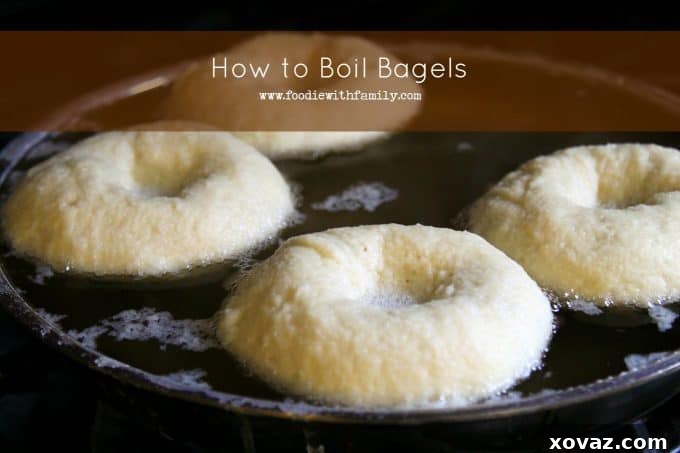
- **The Essential Baking Soda Bath:** The inclusion of **2/3 cup of baking soda** in your boiling water is absolutely NOT a typo. This substantial amount is deliberate and critical. By drastically altering the pH level of your boiling water, you’re creating the ideal environment to promote the deep, rich browning and characteristic chewiness of the outer layer that defines both pretzels and pretzel bagels. Without this specific, high-alkaline bath, you simply cannot achieve that iconic, deeply bronzed soft pretzel crust. It’s the secret ingredient that gives these bagels their distinctive pretzel personality.

- **Choosing Your Boiling Pan:** The wider your pan, the easier your boiling process will be. A broader surface area allows for comfortable maneuvering when easing the bagels into the simmering water, flipping them precisely when the time comes, and carefully removing them without crowding or damage. I personally favor using my Everyday Pan for its generous dimensions, but any spacious, deep stainless steel skillet or a wide stockpot will serve admirably. The goal is to give your bagels enough room to swim without bumping into each other, ensuring an even boil.
- **The Versatility of a Fish Turner Spatula:** For transferring and flipping the simmering bagels, I’ve found my fish turner spatula to be an indispensable tool. Its thin, wide, and slightly angled design allows water to drain away from the bagels more effectively than a standard slotted spoon or spatula. Furthermore, the subtle curved lip on the edge of the spatula provides just enough support to prevent the boiled bagel from splashing back into the water, making for cleaner and more controlled handling.
- **Ensuring Salt Adhesion:** To ensure your coarse salt adheres beautifully to the pretzel bagels, I prefer to brush them with a beaten egg white. The egg white creates a sticky surface that helps the salt cling securely throughout the baking process. If you follow an egg-free diet, excellent alternatives include brushing the bagels with plain water or a flax egg mixture. Both options will help the salt stick, though the egg white often provides a slightly glossier finish.
- **The Right Salt Makes a Difference:** When it comes to seasoning your pretzel bagels, pretzel salt is the gold standard if you can source it. This special salt doesn’t just deliver that characteristic, satisfying CRUNCH we associate with soft pretzels; its larger, coarser granules are also specifically designed to resist melting during the baking process. This is particularly advantageous when applied to wet, boiled bagels. If pretzel salt isn’t readily available or you prefer not to make a special purchase, coarse kosher salt or flaky sea salt are excellent substitutes that will still provide a good textural contrast and flavor.
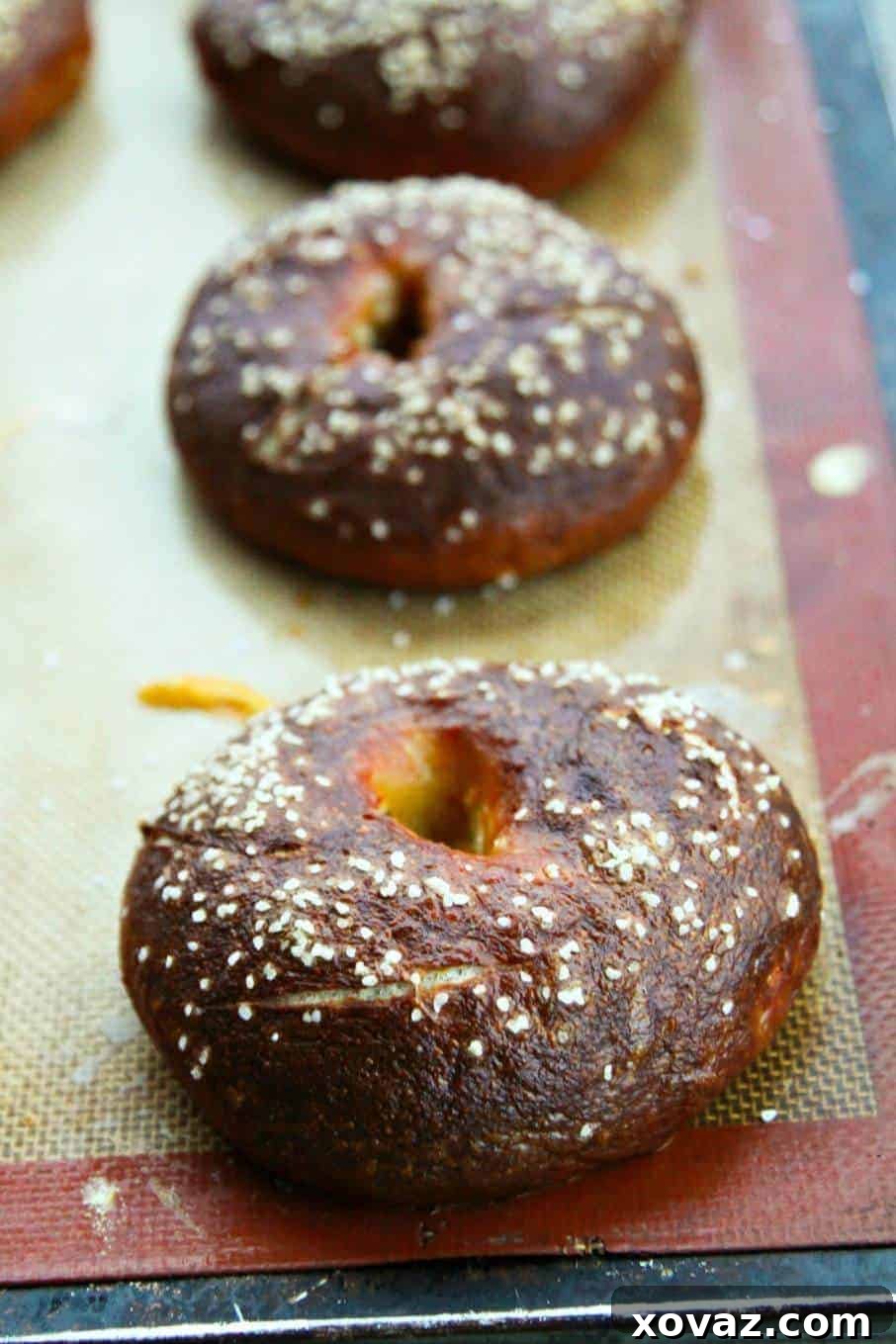
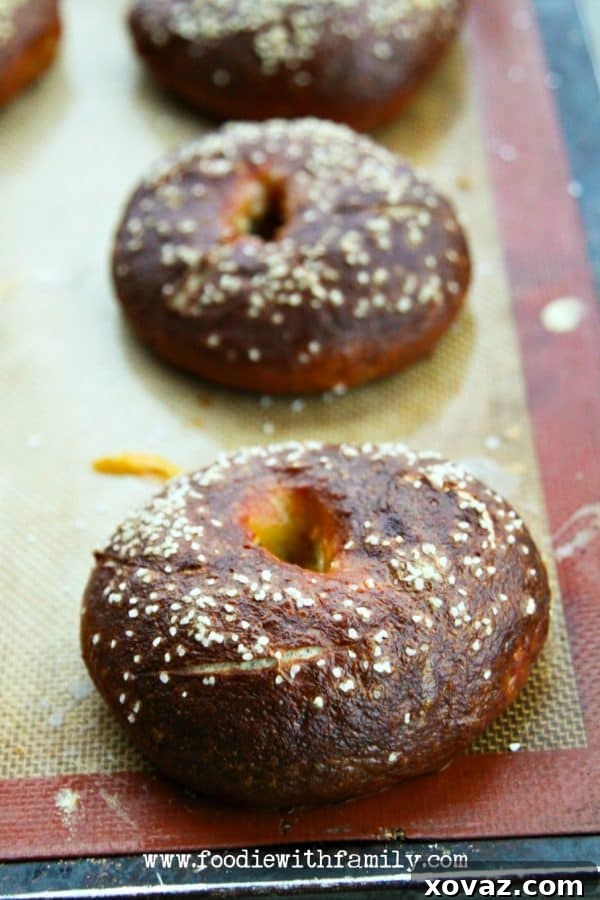
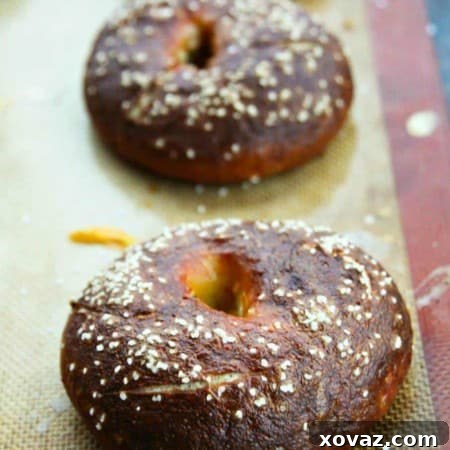
- **The Art of Slashing:** Before your bagels enter the oven, I recommend taking a sharp knife and making several shallow slashes across the top of the dough. These should be about 1/2-inch intervals and approximately 1/8-inch deep. This simple step serves a dual purpose: it allows steam to escape from the interior of the bagel during baking, preventing the crust from bursting unevenly, and it adds an attractive, professional finish. While optional, I find the visual appeal of a properly slashed bagel adds to its homemade charm.
By integrating these cook’s notes into your bagel-making routine, you’ll elevate your homemade pretzel bagels from good to truly exceptional, mastering the nuances that distinguish a truly memorable baked good.

Connect with Foodie with Family
facebook| pinterest| instagram
twitter| G+
Pretzel Bagels
Rate Recipe
Rebecca Lindamood
Pin Recipe
Ingredients
For the Bagel Dough:
- 22 ounces by weight all-purpose flour that’s 4 1/2 cups by volume
- 1 1/2 cups water
- 1 tablespoon brown sugar
- 2 teaspoons kosher salt
- 2 1/4 teaspoons yeast 1 packet
For the Bagel Boil:
- 10 cups water
- 2/3 cup baking soda
- 3 tablespoons brown sugar
To Top the Bagels:
- beaten egg white but you can use a flax egg here
- coarse salt
Instructions
To Make the Dough:
-
Combine all the ingredients for the dough in a big mixing bowl and stir with a sturdy spoon until a shaggy dough comes together (alternately you can use a stand mixer with a dough hook if one is available to you.) Turn out onto a clean surface and knead until smooth and elastic. The dough should be quite a stiff dough, that’s okay. Place in a greased bowl, cover with a damp towel or plastic wrap, and let rise in a warm, draft-free place until doubled in bulk.
-
Turn the dough out onto a work surface and divide into 8 equally sized pieces. Roll each piece into a smooth ball. This is easiest to do if you roll it around on the countertop in a repetitive circular pattern with your hand cupped gently over it. Let the dough balls rest, covered with a clean towel, for 30 minutes.
To Form and Bake the Bagels:
-
Preheat oven to 450°F.
-
Make the bagel boil by combining the water, baking soda, and brown sugar in a wide, deep pan. Bring to a boil and lower the heat to a simmer.
-
Poke your index finger down through the center of each dough ball to the counter. Pick the dough ball up and gently stretch the hole you made until it is about 2 inches in diameter. Take care not to deflate the dough too much. Place it back on the counter and repeat with the remaining dough.
-
Once they’re all done, lower one bagel at a time into the water (lowering the side that was facing up on the countertop into the water first.) Do not overcrowd the pan. Each batch for boiling should be no larger than 4 bagels. Boil those 4 bagels for 2 minutes on the first side, carefully flip the bagels and boil the second side for 2 minutes. Use a slotted spoon to transfer the bagels to a silpat lined baking sheet (this will keep it from adhering to the pan as they bake). They will not expand greatly while they bake, but should still have a little space between them to allow heat to circulate well. Repeat with the remaining bagels.
-
Brush with the beaten egg or flax egg mixture, sprinkle generously with salt, slash the tops with a sharp knife a couple of times to a depth of about 1/8-inch. Bake the bagels until they are a deep brown colour, about 18 minutes. If you have leftovers, they store best in a paper bag that is not completely sealed. They’re best eaten the day they’re made, but good toasted the day after!
Nutritional information is an estimate and provided to you as a courtesy. You should calculate the nutritional information with the actual ingredients used in your recipe using your preferred nutrition calculator.
did you make this recipe?
Make sure to tag @foodiewithfam on Instagram and #hashtag it #foodiewithfamily so I can check it out!
Pin Recipe
Share on Facebook