The Ultimate Guide to Perfect Baked Potatoes: Crispy Skin, Fluffy Inside Every Time
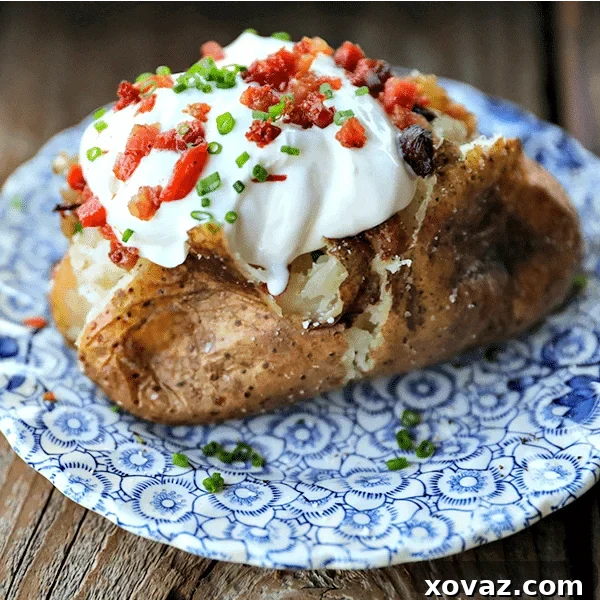
There’s an undeniable satisfaction in biting into a perfectly cooked baked potato. Imagine a skin that’s delightfully crisp and salty, giving way to an interior so light, fluffy, and steamy it practically melts in your mouth. This isn’t just a side dish; it’s an experience. Our method promises this ideal texture every single time, making it truly foolproof – unless, of course, you forget them in the oven for two hours, a mistake I can personally attest to!
Growing up, baked potatoes were a staple in our home. My dad often jokes that his biggest parenting blunder was teaching us to love the crispy skins, as it meant less for him to enjoy! This simple indulgence holds a special place in my heart, a testament to the comforting power of good food.
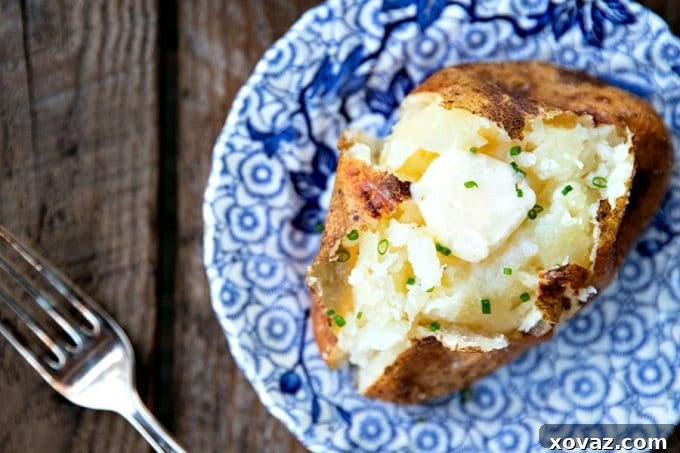
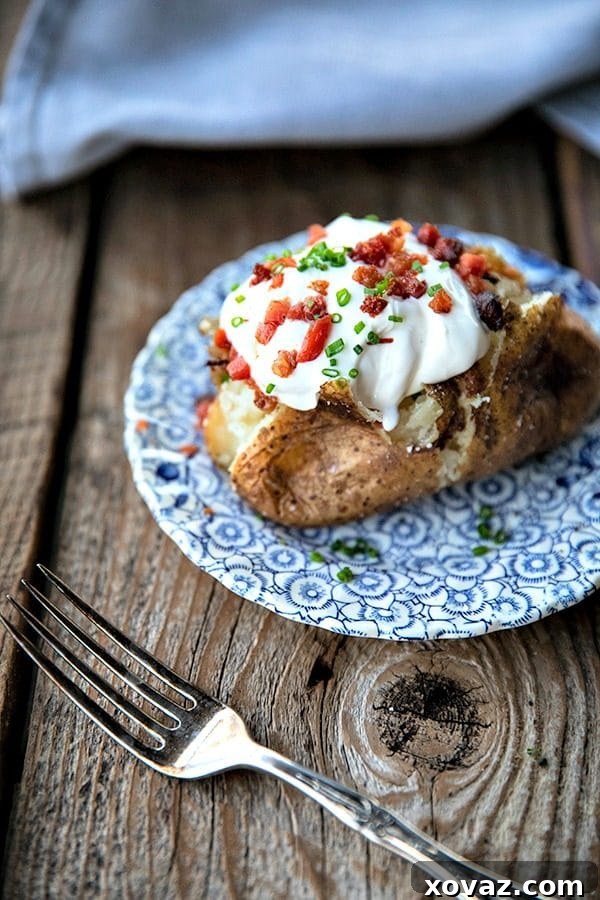
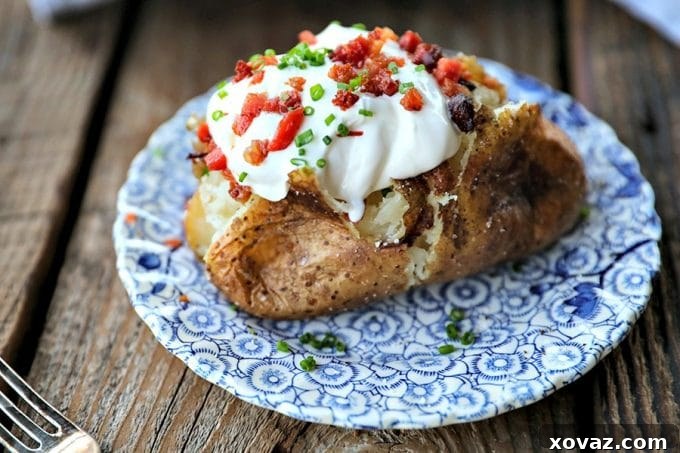
Whether you prefer to keep it classic with a dollop of butter, a sprinkle of salt, and a dash of pepper, or go all out with a lavish spread of sour cream, crumbled bacon, fresh chives, and sharp cheddar, a pile of perfectly baked potatoes on your table is an invitation to culinary joy. Their versatility makes them an enduring favorite.
Baked potato bars have long been a go-to for family gatherings and parties, and for good reason. They effortlessly accommodate a wide range of food allergies, preferences, and aversions, ensuring everyone finds something they love. Just last week, when my son had friends over for a bonfire and my meal planning fell short, a baked potato bar came to the rescue! It was an instant crowd-pleaser.
As several pounds of potatoes baked to golden perfection, I quickly assembled a vibrant array of toppings from whatever I could find in the refrigerator. Crisped pancetta and speck, creamy sour cream, finely grated Cheddar cheese, rich smoked salmon, tangy goat cheese, and freshly chopped green onions transformed simple potatoes into a gourmet feast. Not only was there more than enough for everyone to eat their fill, but we also had delicious leftovers, leaving everyone happy and satisfied.
How to Make the Best Baked Potato: A Step-by-Step Guide
Achieving that coveted crispy skin and fluffy interior is remarkably easy when you adhere to a few fundamental techniques. These simple steps will elevate your baked potato game from good to extraordinary.
1. Prepare Your Potatoes: Wash and Dry Thoroughly
Begin by meticulously washing your Russet potatoes to remove any dirt. The crucial next step is to dry them completely. While towel drying helps, allow them additional time to air dry on a cooling rack. This can take a while, so plan ahead! Sometimes, I wash them in the morning and let them air dry throughout the day. This meticulous drying process is absolutely essential for achieving that irresistibly crisp skin; any residual moisture will steam the potato rather than roast its exterior.
2. Oil and Season Generously
Once your potatoes are bone-dry, rub them with a light coating of oil. I typically oil my hands and evenly coat each potato, then generously sprinkle them with kosher salt and freshly ground black pepper. The oil helps conduct heat, promoting a crispy exterior, while the salt not only seasons the skin but also aids in drawing out moisture, contributing to its crunch. Don’t be shy with the salt; it makes a huge difference!
3. The Pricking Secret: Jab Your Potatoes with a Fork
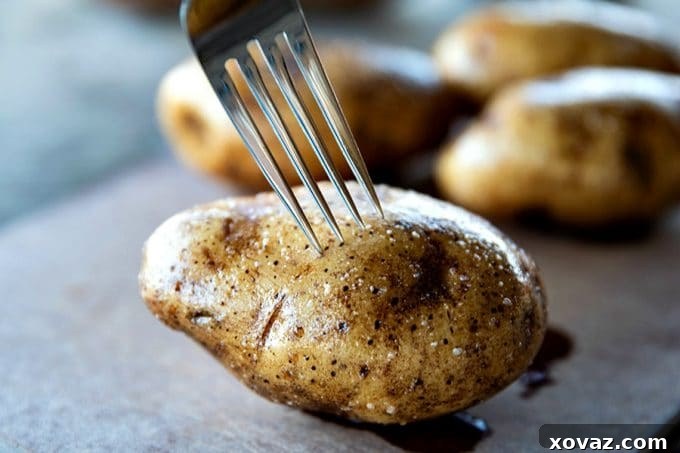
Before baking, take a fork and thoroughly prick each potato about 8-10 times all around its surface. Ensure the fork penetrates at least 1/8-inch deep. This simple step is vital. It allows steam to escape from the potato as it bakes, preventing it from bursting and ensuring the interior becomes wonderfully light and fluffy rather than dense or waterlogged. It’s a small effort with a big impact on the final texture.
4. Preheat Your Oven to Perfection
A hot oven is non-negotiable for the best baked potatoes. Make sure your oven is fully preheated to the recommended temperature *before* you place the potatoes inside. Introducing potatoes to a perfectly hot oven instantly kick-starts the cooking process, sealing the exterior and contributing to that desirable crispy skin. Don’t be tempted to put them in a cold oven; patience here pays off.
5. Bake Directly on the Rack: Maximize Air Circulation
This is a critical step for skin perfection. Place your prepared potatoes directly onto the oven rack, ensuring there’s ample space around each one for air to circulate freely. Avoid placing them on a baking sheet, as this hinders air flow and can lead to a softer, less crispy bottom. If you’re concerned about drips, simply place a rimmed baking sheet on the rack below the potatoes to catch any stray oil or moisture, keeping your oven clean without sacrificing crispness.
Choosing the Right Oil for Baked Potatoes
The type of oil you use plays a role in achieving that perfect crispy skin. The key is to select an oil with a high smoke point, meaning it can withstand high temperatures without burning or imparting off-flavors. Excellent choices include grapeseed oil, pure olive oil (not extra virgin), canola oil, vegetable oil, or peanut oil. While extra virgin olive oil has a wonderful flavor, its lower smoke point means it’s more likely to smoke at the high temperatures required for baked potatoes, so it’s generally best avoided for this application.
What Kind of Potatoes Are Best for Baking?
For an unparalleled baked potato experience, look no further than Russet potatoes. They are the undisputed champions of the baked potato world for two primary reasons: their high starch content and their thick skin.
- High Starch Content: Russets are incredibly starchy. This characteristic is crucial because as the potato bakes, the starch granules swell and separate, creating an incredibly light, airy, and fluffy interior. This fluffy texture is ideal for soaking up all your delicious butter, sour cream, and other toppings. Pure heaven!
- Thick Skin: Their robust skin holds up beautifully to high heat, allowing it to become wonderfully crisp and deeply flavorful without becoming brittle or tough.
I strongly advise against using waxy potato varieties like white, golden, or red potatoes for baking. Their denser, closer texture simply doesn’t undergo the same magical transformation that Russets do, resulting in a less airy and less satisfying baked potato.
Optimal Baking Time and Temperature for Baked Potatoes
For the ultimate baked potato – one with a crisp, roasted, flavorful skin and an interior that is utterly, absolutely perfect and fluffy – a temperature of 425°F (220°C) is ideal. This high temperature prevents the formation of that undesirable weird, thick, gummy layer just beneath the skin as the potato bakes, ensuring consistent texture throughout.
Baking at 425°F typically takes about 40-50 minutes, depending on the size of your potatoes. However, life happens, and sometimes you’re already roasting something else at a different temperature. The good news is, you can adjust your baking time to match your oven’s current temperature while still achieving excellent results!
Use the same preparation method (wash, dry, oil, salt, jab, bake on rack) and consult this handy guideline for adjusting the baking time:
- 350°F (175°C): approximately 75-85 minutes
- 375°F (190°C): approximately 60-70 minutes
- 400°F (200°C): approximately 50-60 minutes
- 425°F (220°C): approximately 40-50 minutes (our preferred method)
How to Tell When Your Baked Potato is Perfectly Done
Knowing exactly when your baked potato is ready is key to avoiding an undercooked center or an overcooked, dry interior. There are two reliable methods:
- The Squeeze Test: While wearing an oven mitt (seriously, trust me on this – they’re hot!), gently squeeze the potato. A perfectly done baked potato will yield to gentle pressure and feel slightly soft all over.
- Internal Temperature: For absolute precision, use an instant-read thermometer. Insert it into the thickest part of the potato. The ideal internal temperature for a perfectly fluffy baked potato is 205°F (96°C). This ensures the starches have fully cooked and transformed into that delightful texture.
The Steakhouse Secret: Opening Your Baked Potato Like a Pro
After going to all the trouble to bake your potato perfectly, it would be a shame to simply slice it in half and flatten it. Here’s a pro tip for opening your baked potato like they do in the best steakhouses, creating a beautiful presentation and ideal “canyons” for your toppings:
Use a fork to poke an “X” pattern across the top of the potato. Then, holding the potato gently, squeeze inwards from the ends. This causes the “X” to burst open, creating a natural, fluffy cavity. If you want even more nooks and crannies for butter to melt into, you can gently fluff the interior with a fork. I won’t judge!
Why Say No to Foil for Baked Potatoes?
You might have seen recipes that suggest wrapping potatoes in foil before baking. While this method does cook the potato, it actually steams it. When wrapped in foil, the moisture released by the potato during baking gets trapped, preventing the skin from drying out and crisping up. If you’re aiming for that deeply flavorful, wonderfully crispy skin – the hallmark of a truly great baked potato – then foil is your foe.
Can I Bake a Potato in the Microwave?
Technically, no. While you can certainly cook a potato in the microwave, it’s more accurately described as steaming it. A microwave-cooked potato will never achieve the same fluffy interior and, most importantly, the crispy, salty skin that an oven-baked potato boasts. It can be a tasty and quick alternative when you’re short on time, but it’s fundamentally a different experience.
If you choose to cook your potato in the microwave:
- Scrub the potatoes clean and poke them thoroughly with a fork, just as you would for oven baking.
- Place the potato in a microwave-safe bowl or on a plate.
- Microwave on HIGH for 5 minutes.
- Flip the potato over and microwave for an additional 3-5 minutes on HIGH, or until it feels tender when gently squeezed.
Creative Topping Ideas for Your Ultimate Baked Potato Bar
The beauty of a baked potato lies in its endless versatility. From classic comforts to gourmet delights, there’s a topping combination for every palate. Here are some ideas to inspire your next baked potato feast:
Classic & Comforting Toppings:
- Butter, sour cream, shredded cheddar cheese
- Crispy bacon bits, fresh chives, green onions
- Salt and freshly ground black pepper
Gourmet & Elevated Options:
- Smoked salmon with dill and cream cheese
- Crumbled goat cheese and caramelized onions
- Crispy pancetta or speck
- Sautéed mushrooms and herbs
Hearty Meal Toppers:
Transform your baked potato into a complete meal by piling on savory stews and shredded meats:
- Curried Beef Oven Stew
- Ropa Vieja
- Peposo
- Instant Pot Garlic Beef Stroganoff
- Chimichurri Chicken
- Slow Cooker Italian Shredded Beef
- Slow Cooker Honey Mustard Pulled Pork
- Slow Cooker Italian Pork
Unique & Fun Combinations:
- Buffalo Chicken Baked Potatoes
- Midwestern Tacos (taco-topped baked potatoes)
- Colcannon Stuffed Twice Baked Potatoes
The video accompanying this recipe, which features my son’s hilarious take on potato-making born from three weeks of rain-induced boredom, demonstrates many of these techniques. He gave me permission to share it, especially because it includes the simple hack to open your perfect baked potato just like they do in steakhouses!
Essential Tools for Baked Potato Success:
While you don’t need fancy equipment, a couple of basic tools will ensure your baked potato journey is smooth and successful:
- Oven gloves or silicone oven mitts: Indispensable for handling hot potatoes and performing the squeeze test safely.
- Instant-read thermometer: For precise internal temperature checks, ensuring perfect doneness every time.
Best Baked Potato Recipe
Yields: 8 servings
Prep Time: 10 mins
Cook Time: 45 mins
Total Time: 55 mins

Ingredients
- 8 Russet potatoes, washed and completely dried
- 2 tablespoons grapeseed oil (or pure olive oil, canola oil, vegetable oil, or peanut oil)
- 1 teaspoon kosher salt
- 1 teaspoon freshly ground black pepper
Instructions
- Preheat oven to 425°F (220°C).
- Rub the potatoes thoroughly with the oil, then evenly coat with salt and pepper.
- Use a fork to poke each potato at least 8 times all over, ensuring the fork penetrates at least 1/8-inch into the potato each time.
- Place the potatoes directly on the preheated oven racks and bake for 40-50 minutes, or until the potatoes yield slightly when gently squeezed or reach an internal temperature of 205°F (96°C) when checked with an instant-read thermometer.
- Jab an “x” into the top of the potato with a fork, and press down at the four corners to burst the potato open.
Notes
The perfect doneness temperature for the interior of the best baked potato is 205°F (96°C). If you have an instant-read thermometer and don’t fully trust the squeeze test, use it to verify the temperature of your thickest potato.
Nutrition (Estimated per serving)
Calories: 199kcal | Carbohydrates: 38g | Protein: 4g | Fat: 3g | Sodium: 301mg | Potassium: 888mg | Fiber: 2g | Sugar: 1g | Vitamin C: 12.1mg | Calcium: 28mg | Iron: 1.9mg
Nutritional information is an estimate and provided to you as a courtesy. You should calculate the nutritional information with the actual ingredients used in your recipe using your preferred nutrition calculator.
We hope this comprehensive guide inspires you to bake the best potatoes you’ve ever tasted. With their crispy skins and cloud-like interiors, they are sure to become a beloved staple in your kitchen. Happy baking!

This post was originally published in November 2018 and has been updated in October 2019 and January 2021 with revised cook’s notes, additional information, and enhanced tips for the ultimate baked potato experience.