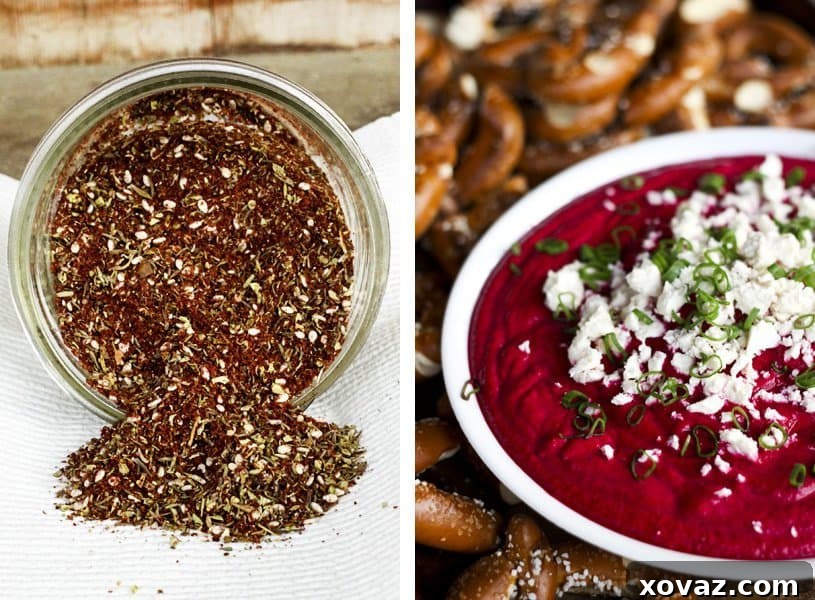
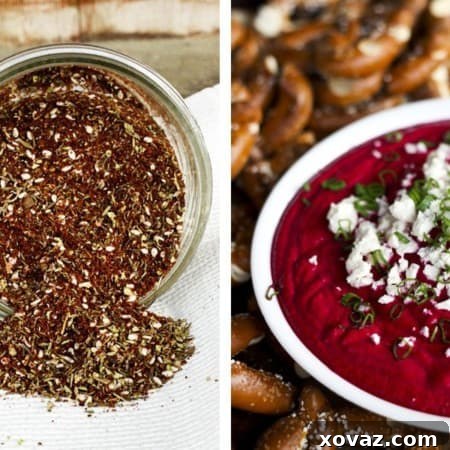
Roasted beets and the aromatic allure of Za’atar – a pairing you might not have initially envisioned for your culinary journey, but one that promises an unforgettable burst of flavor and a vibrant splash of color. Get ready to embark on a delicious adventure with this hot pink, healthy, and incredibly satisfying dip.
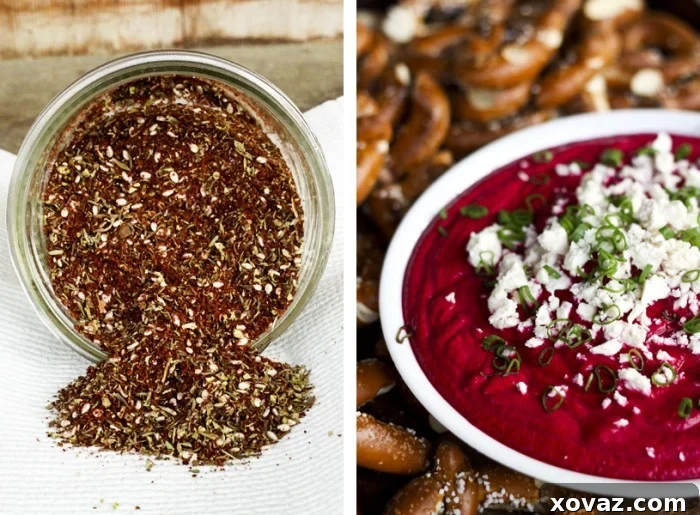
When I gaze upon these pictures, my mind immediately conjures the delightful flavors I’ve savored in generous quantities. This dip presents an unapologetically vibrant shade of magenta, a hue that some may instantly find appealing. Others, perhaps unaccustomed to food that radiates brighter than a neon sign, might approach with a touch of skepticism. As someone who rarely uses artificial food dyes outside of festive occasions, I confess a natural wariness towards overly “day-glo” foods. You won’t find red velvet cakes made with artificial coloring here on Foodie with Family; instead, we embrace the natural vibrancy offered by ingredients like (and here’s the perfect tie-in) beet powder.
I’ve previously showcased beet powder for its remarkable ability to impart natural pink and red tones in recipes, such as our Chinese Barbecued Pork (Char Siu) and Tocino (Filipino Cured Pork). However, a full-fledged beet recipe has been a rare occurrence on these pages, with one notable exception: this ancient creation (in internet years) from 2008. Oh, the early days of blogging, with its quaint formatting and photography! We’ll graciously attribute those to youthful inexperience, shall we? Yet, I still stand firmly by that original recipe. My confession for the scarcity of beet recipes is simple: for many years, I believed I disliked beets. It turns out, my aversion was specifically to canned beets, which, until a few years ago, were my sole experience with this root vegetable.
My beet epiphany occurred at a friend’s house. Presented with a roasted beet on a salad (and I simply cannot decline food offered by a friend!), I was utterly astonished to discover I loved it. The revelation was immediate. She generously shared her roasting method, and from that moment on, it has been a full-blown beet love affair. Today, I find myself craving sweet, earthy, and tender roasted beets, incorporating them into various dishes. This delightful dip is a testament to that newfound passion, showcasing the beet’s natural beauty and flavor in a truly spectacular way. Beyond their captivating color, beets are a nutritional powerhouse, rich in vitamins, minerals, and powerful antioxidants, making this dip not just delicious but incredibly wholesome.
So, that radiant magenta color you see in this dip? It’s entirely natural, purely from the beets themselves. Not a single drop of artificial food coloring is used. The secret lies in slow-roasting the beets in a moderate oven (350°F), then peeling them post-roasting. Why wait to peel? This simple trick is a game-changer. The skins effortlessly slip off the tender, cooked beets, saving you from the laborious task of peeling raw beets, which often results in stained hands, countertops, and even floors. Moreover, leaving the skins on during roasting provides an additional layer of insurance against drying out. While drizzling with olive oil and wrapping in foil certainly help retain moisture and enhance flavor, the skin acts as a natural barrier, ensuring the beets emerge perfectly tender and juicy. This method locks in their natural sweetness and earthy notes, which are then amplified in the dip.
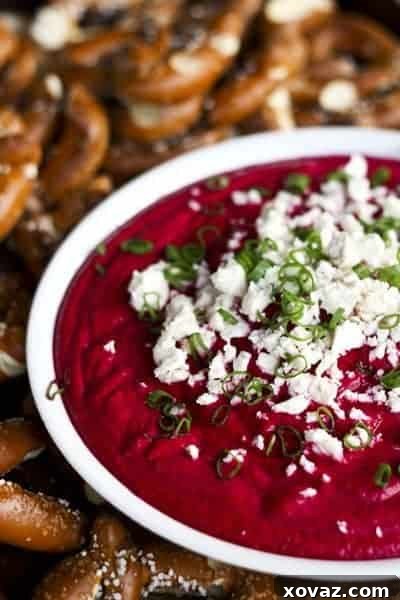
Once cooled and peeled, the roasted beets are cut into convenient wedges and transferred to a food processor. To this vibrant base, we add two to four cloves of fresh garlic – I personally lean towards the higher end of the spectrum, convinced it keeps vampires at bay! A touch of cayenne pepper introduces a subtle warmth, perfectly balancing the sweetness of the beets, while a cup of creamy plain Greek yogurt adds tanginess and luxurious smoothness. These ingredients are then whirled together until they achieve a perfectly smooth, almost velvety consistency. Finally, a generous pour of extra virgin olive oil, a pinch of salt, and a generous measure of Za’atar are incorporated and blended. The result is an exquisite dip: velvety, savory, subtly sweet, deeply earthy, with just a whisper of spice, and brimming with flavor. It’s an ideal companion for crusty bread, crisp pita chips, savory sourdough pretzels, or a medley of fresh vegetable sticks. My husband, affectionately known as The Evil Genius, even enjoys a thick dollop of this dip swirled into his cottage cheese, proving its remarkable versatility.
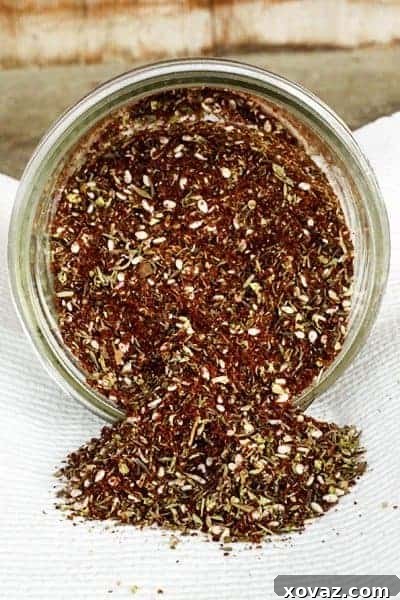
For those new to this culinary gem, you might find yourself asking, “Za’what?” And I enthusiastically respond, “Za’atar!” This exotic-sounding herb blend is a cornerstone of Middle Eastern cuisine, celebrated for its unique and compelling flavor profile. It’s also the reason this recipe proudly earns its place as a “Make Ahead Monday” contribution. While its name might evoke images of far-off lands, its taste is surprisingly comforting and familiar. The blend typically combines dried thyme, oregano, marjoram, toasted sesame seeds, salt, and the singular ingredient that might be new to some: dried sumac*. Sumac is a dried, ground berry that contributes a distinct citrusy, slightly tart flavor, which wonderfully brightens and elevates the other herbs in the mix. This vibrant blend makes Za’atar one of my absolute go-to flavor enhancers for a wide array of dishes. I use it generously on broiled or grilled fish, sprinkle it over freshly popped popcorn, whisk it into salad dressings, and stir it into hearty soups. Honestly, sometimes I even dust a little over my pizza before diving in. If you haven’t yet experienced the magic of Za’atar, I implore you to give it a try. I’m confident you’ll soon become a fervent admirer!
Making your own Za’atar blend is incredibly simple and surprisingly quick, yet it transforms everything it touches into something truly special. For this reason, I highly recommend keeping a jar of homemade Za’atar in a cool, dark pantry at all times. Like most herb blends, its potency can mellow over time, so start with a batch the size of the recipe provided below. If, like me, you find yourself sprinkling it on and in everything imaginable, don’t hesitate to double the batch next time! The freshness and quality of homemade Za’atar far surpass most store-bought varieties, ensuring the most aromatic and flavorful results in all your culinary endeavors. The subtle warmth of the toasted sesame seeds, combined with the earthy herbs and the bright tang of sumac, creates a symphony of flavors that is truly captivating.
*A more detailed explanation of sumac and its delightful taste can be found in this post about Fattoush. While you could gather your own staghorn sumac when it’s in season, for convenience, I recommend you purchase a bag of sumac from Amazon.com (affiliate link), as I did some time ago to ensure I always have it on hand.
Do you enjoy beets, or did you, like me, grow up with the misconception that you disliked them? And what about Za’atar? Have you tried this incredible spice blend, or are you already a devoted fan? Share your thoughts and experiences with me in the comments below!
XO Rebecca
P.S. This dip is incredibly healthy! A delightful bonus for a flavorful treat!
P.P.S. I once convinced my children to try this dip by telling them it would turn their pee pink. They ate it. A parenting win!
Recipe: Roasted Beet Dip and Homemade Za’atar | Make Ahead Mondays
By Rebecca Lindamood
Craft your own Homemade Za’atar blend for a fraction of the cost of store-bought versions (if you can even find it locally!). This incredibly flavorful herb and salt blend elevates everything it touches, from simple dips and hearty soups to grilled chicken and fish. Speaking of dips, combine the vibrant Za’atar, fresh garlic, creamy Greek yogurt, and rich olive oil with slow-roasted beets for a velvety smooth, savory-sweet, earthy, and strikingly magenta dip. It’s perfectly suited for dipping with crusty artisan bread, crunchy pita chips, tangy sourdough pretzels, or fresh vegetable sticks. It also makes an excellent accompaniment to grilled meats, adding a refreshing burst of flavor. This Roasted Beet Dip recipe is lovingly adapted from, and with grateful acknowledgment to, Food and Wine.
Ingredients
For the Homemade Za’atar:
- 4 tablespoons dried ground sumac
- 2 tablespoons dried thyme leaves (not ground thyme)
- 2 tablespoons dried oregano leaves (not ground oregano)
- 2 tablespoons dried marjoram leaves (not ground marjoram)
- 1 tablespoon toasted sesame seeds (*See Notes)
- 1 1/2 teaspoons coarse kosher salt (or other coarse salt)
For the Roasted Beet Dip:
- 1 1/2 pounds fresh beets (scrubbed clean)
- 2 tablespoons plus 4 tablespoons extra virgin olive oil (divided)
- 1 teaspoon kosher salt (plus more for the dip, to taste)
- 1/2 teaspoon black pepper
- 1 cup plain Greek yogurt (can substitute regular plain yogurt, if desired)
- 2 to 4 cloves garlic (peeled)
- 1/2 teaspoon ground cayenne pepper (**See Notes)
- 1 to 2 tablespoons Za’atar (to taste)
- 1 tablespoon honey (***See Notes, optional)
- 4 tablespoons feta cheese (crumbled)
- 3 green onions (green part only, thinly sliced)
Instructions
To Make the Za’atar:
- Add all of the ingredients (sumac, thyme, oregano, marjoram, toasted sesame seeds, and salt) to a blender, a food processor fitted with a blade, or a traditional mortar and pestle. Pulse several times until the ingredients are well blended and slightly broken up, but not pulverized. The goal is to retain the distinct texture of the sesame seeds within the blend. Transfer your freshly made Za’atar to an airtight jar and store it in a cool, dark place for up to three months to maintain its freshness and potency.
To Make the Roasted Beet Dip:
- Preheat your oven to 350°F (175°C). Line a rimmed baking sheet with aluminum foil. If your fresh beets still have their greens attached, trim them off, leaving approximately 1-inch of the stem on each beet. This stem portion provides a convenient handle for easier manipulation after roasting. Neatly trim off any small ‘tails’ from the beets. For medium to large-sized beets (roughly the size of a peach or larger), consider cutting them in half lengthwise to facilitate quicker and more even roasting. Arrange any halved beets cut-side down on the foil-lined baking sheet. Drizzle the beets with 2 tablespoons of extra virgin olive oil, then sprinkle evenly with 1 teaspoon of kosher salt and the black pepper. Using your hands, gently toss the beets to ensure they are thoroughly coated in the oil and seasonings. Place another sheet of foil over the beets, then bring up the edges of the bottom piece of foil and crimp it tightly with the top piece all around, forming a sealed packet. This packet design is crucial for trapping moisture, allowing the beets to steam and roast tenderly. Roast in the preheated oven, checking for doneness every 20 minutes or so. The beets are ready when you can effortlessly insert a fork or butter knife into their thickest part with minimal resistance. If you notice any beets starting to dry out before they are tender, drizzle a tablespoon of water over each dry beet before re-sealing the foil and continuing to roast. You can also remove any fully cooked beets and continue roasting those that require more time until all are perfectly tender.
- Once the beets are cooked, remove the foil packet from the oven and allow them to rest in a covered bowl until they are cool enough to handle comfortably. When sufficiently cooled, use a paper towel to gently wipe off and remove the beet skins; they should slip off with ease. Trim off the remaining stem tops of the beets, then cut the peeled beets into wedges. Transfer these beet wedges to the bowl of a food processor fitted with a metal blade, along with the peeled garlic cloves, plain Greek yogurt, and ground cayenne pepper. Process the mixture until it is completely smooth and creamy. Stop the food processor, scrape down the sides of the bowl to ensure all ingredients are incorporated, then add the remaining 4 tablespoons of extra virgin olive oil and 1 1/2 tablespoons of the homemade Za’atar. Blend the dip again until everything is thoroughly combined and smooth. Taste the dip and adjust the seasoning as needed, adding more salt or additional Za’atar to suit your preference. If your beets are not particularly sweet (often the case with more mature or larger beets), you may opt to add the optional tablespoon of honey for a touch of natural sweetness. Blend one final time to incorporate any added seasonings. Scrape the finished dip into a serving dish; shallow dishes tend to display its vibrant color most beautifully. Sprinkle generously with crumbled feta cheese and garnish with the thinly sliced green parts of the green onions. For an extra touch of aromatic flair, you can scatter a little additional Za’atar over the dip just before serving.
- This versatile dip can be served slightly warm, at room temperature, or chilled, depending on your preference. Leftovers keep exceptionally well when tightly wrapped and stored in the refrigerator for up to one week, making it a perfect make-ahead option for entertaining or meal prepping.
Notes
- *Toasted Sesame Seeds: If you don’t have or cannot find pre-toasted sesame seeds, you can easily toast raw sesame seeds yourself. Place them in a dry, clean pan over medium heat. Shake the pan back and forth continuously until the sesame seeds become fragrant; they do not necessarily need to take on a significant amount of color. Immediately pour the toasted sesame seeds from the hot pan onto a plate to prevent them from scorching.
- **Cayenne Pepper: This ingredient adds a pleasant warmth to the dip. If you are sensitive to spicy foods, you may wish to omit it entirely. Conversely, if you enjoy a fiery kick, feel free to increase the amount. I have personally used up to 1 teaspoon of cayenne pepper in my dip and found it delightful. I believe 1/2 teaspoon offers a happy medium that most palates will appreciate. It’s best to start with 1/2 teaspoon (if you’re not spice-sensitive) and then adjust to taste after blending.
- ***Honey (Optional Sweetener): Most younger, smaller beets are naturally sweet enough and won’t require any added sweetener. However, if you are using more mature or particularly large beets, their natural sweetness tends to diminish, and a little augmentation can be beneficial. I prefer using honey as it’s readily available and complements the earthy notes of beets beautifully. Please do yourself a favor and refrain from adding any sweetener until the dip is otherwise complete and you’ve had a chance to taste it. I’m quite confident that at this time of year, many beets will be perfectly sweet on their own!
Nutritional information provided is an estimate and offered as a courtesy. It is recommended to calculate the nutritional information using the actual ingredients in your recipe with your preferred nutrition calculator.
Did you make this recipe?
We’d love to see your creations! Make sure to tag @foodiewithfam on Instagram and use the hashtag #foodiewithfamily so I can check it out and share your delicious results!
Pin Recipe
Share on Facebook
Disclosure: This post contains an Amazon.com affiliate link for dried sumac. Should you choose to purchase this or any other item after clicking through the link, I may receive a small commission from Amazon.com. Please note that this commission does not affect the price you pay for the item. Thank you for supporting Foodie with Family!