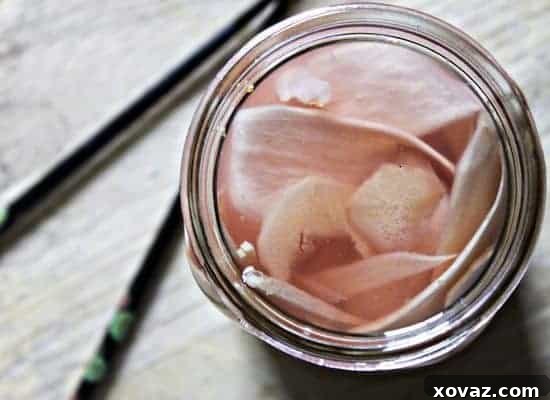
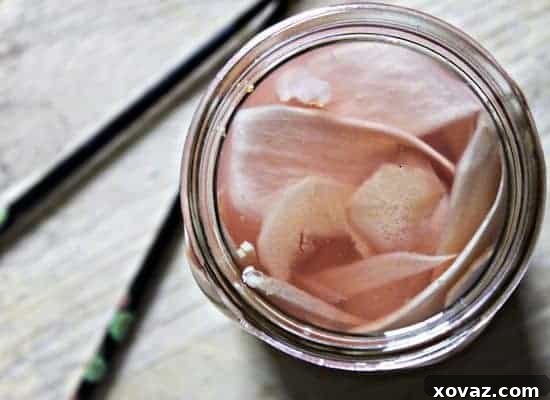
The Irresistible Allure of Pickled Ginger (Gari): A Homemade Delight
For lovers of Japanese cuisine, particularly sushi, there’s an undeniable star that often goes uncelebrated: pickled ginger, known as gari. More than just a garnish, this vibrant condiment is a crucial component of the sushi experience, serving as a crisp, spicy, sweet, and sour palate cleanser between bites of various fish or rolls. Its refreshing bite resets the taste buds, allowing each piece of sushi to be savored individually, enhancing the intricate flavors of the raw fish and seasoned rice. While many appreciate its contribution, few realize the simple joy and superior quality of making this delightful staple at home.
My adoration for sushi runs deep – from the pristine cuts of fish to the perfectly seasoned rice and the subtle embrace of nori. Yet, among all these exquisite elements, it is the pickled ginger that truly captures my heart. Its unique blend of flavors – a harmonious dance of sweetness, tanginess, and a gentle spicy kick – combined with its snappy texture and often beautiful pink hue, makes it an indispensable part of my dining ritual. It’s a tiny package that delivers an enormous punch, elevating the entire meal.
My Personal Journey to Crafting Homemade Gari
Sushi nights, especially those rare child-free excursions with my husband, have always been a cherished tradition. We’ve developed a predictable, yet deeply satisfying, routine. Our sushi adventures invariably begin with an ambitious order – far more than two people should comfortably consume – rationalized by the promise of leftovers for the kids. Once the feast arrives, our individual approaches to enjoying it diverge quite dramatically.
He, the purist, drenches his plate in soy sauce, dunks an entire roll piece, piles on a hefty dollop of wasabi, and expertly maneuvers the ensemble to his mouth with chopsticks. My method, however, is a little different, perhaps even unconventional to some. I begin with a piece of pickled ginger, allowing its zesty freshness to awaken my palate. Then, a modest touch of wasabi on my roll, a corner dipped in soy sauce, and I’m ready to dive in. This cycle repeats until we inevitably find ourselves requesting more pickled ginger and wasabi from our waitress, often accompanied by a knowing glance or even a slight “stink eye” – a testament to our insatiable appetite for these condiments. The evening concludes with a small box housing the solitary California roll we managed to rescue for our children, followed by a contented waddle out of the restaurant and a much-needed nap in the car before heading home, bellies gloriously full. It’s not glamorous, but it’s ours, and it’s delightful.
This deep affection for pickled ginger intensified dramatically during each of my pregnancies. While others craved ice cream or pickles, I yearned for gari. It found its way onto everything from simple rice bowls to deli sandwiches. My husband became a regular at the local Asian market, tasked with replenishing our supply almost weekly. But one day, as I mindlessly scanned the ingredient list on a jar, I was dismayed to find two unwelcome guests: aspartame and artificial food dye.
The discovery was a letdown. I promptly sent my husband back for a different brand, hoping for a healthier alternative. He returned with a white pickled ginger, but alas, the aspartame persisted. My enthusiasm for store-bought gari waned considerably. It wasn’t until a lightbulb moment illuminated my culinary consciousness that a new path emerged. “Me! The Kitchen DIY Queen! Why hadn’t I considered making my own?” The answer was embarrassingly simple – I just hadn’t. A mental face-palm ensued.
The Secret Behind the Pink: Young Ginger vs. Mature Ginger
A quick dive into the vast ocean of online recipes revealed a plethora of methods for crafting homemade pickled ginger. More importantly, it uncovered an intriguing fact about the gari’s signature pink hue. I learned that young ginger, the ideal variety for pickling, naturally transforms into a delicate, soft pink color when exposed to the pickling liquid. This happens due to anthocyanins, natural pigments present in the ginger’s skin and around its shoots, which react with the acidic vinegar.
Mature, older ginger, on the other hand, typically lacks these pigments in sufficient quantities to achieve the same vibrant pink. It tends to remain a pale yellow or beige when pickled. This revelation led me to question the prevalence of artificial food dyes in commercial pickled ginger. If young ginger naturally produces that lovely pink, why are so many brands adding artificial coloring? The answer, unfortunately, often lies in cost-cutting. Young ginger is seasonal and more expensive, so some manufacturers use older, cheaper ginger and simply dye it pink to meet consumer expectations for the traditional appearance.
Armed with this newfound knowledge, my mission to create authentic, natural pickled ginger gained even more purpose. After experimenting with several recipes, I discovered that the simplest approach often yielded the most superior results. The key, it turned out, lay not in complex ingredients or elaborate techniques, but in a few fundamental principles and the quality of the ginger itself.
Essential Tips for Crafting Perfect Homemade Pickled Ginger
Achieving restaurant-quality pickled ginger at home is entirely within reach, and with a few insider tips, you can elevate your gari to perfection:
- Choose Your Ginger Wisely: Young vs. Old: While young ginger undeniably offers the best texture and a milder, more delicate flavor, older ginger can still make a charming pickled treat. Young ginger is characterized by its thin, smooth skin that is easy to scrape off, and it feels heavy for its size. Its flesh is less fibrous and naturally develops that appealing pink hue when pickled. Older ginger, with its thicker, tougher skin and more fibrous texture, will have a stronger, spicier flavor and may not turn pink. For an authentic, tender gari, seek out the youngest ginger available.
- The Art of Thin Slicing: This is arguably the most crucial step for achieving the perfect gari texture. The thinner the slices, the more delicate and pleasant the mouthfeel. Aim for paper-thin slices, almost translucent. A mandoline slicer is an invaluable tool for this purpose, ensuring uniform, wafer-thin pieces. If you don’t have one, a very sharp knife and a generous dose of patience will also work wonders.
- Slice Across the Grain: Always slice the ginger across the grain, not lengthwise. Slicing with the grain can result in long, stringy, fibrous pieces that are less enjoyable to chew. Slicing across cuts through the fibers, yielding tender, easy-to-eat pieces.
- Effortless Peeling with a Spoon: Forget the peeler! The easiest way to peel ginger, especially young ginger, is to gently scrape the edge of a regular spoon against the skin. It should peel away effortlessly. If you find yourself needing to dig or struggle, it’s a good indicator that you’re working with older, more fibrous ginger.
- Salt for Texture: Don’t skip the salting step. Tossing the ginger slices with coarse salt and letting them sit helps draw out excess moisture. This not only concentrates the ginger’s flavor but also ensures a crisper, snappier texture in the finished gari.
- Sterilization is Key: Ensure your heat-proof jar or container is thoroughly sterilized before adding the ginger and pickling liquid. This helps prevent spoilage and ensures your homemade gari remains fresh and safe to consume for longer periods.
Don’t be daunted by the quantity this recipe yields. Homemade pickled ginger keeps exceptionally well in the refrigerator for months, if not indefinitely, retaining its vibrant flavor and crisp texture. Furthermore, if you have friends who share a passion for Japanese cuisine or unique culinary gifts, a beautifully jarred batch of your homemade gari makes a thoughtful and truly special present.
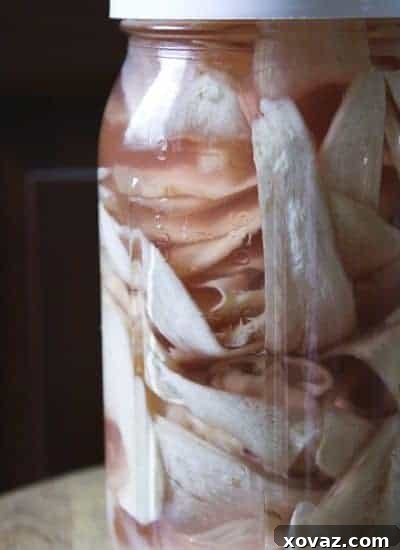
Homemade Pickled Ginger (Gari)
Snappy, spicy, sweet, and sour, homemade pickled ginger is a versatile condiment. Perfect with sushi, rice bowls, or as a vibrant palate cleanser for seafood dishes. You’ll be amazed at how simple it is to create this classic Japanese accompaniment from scratch.
Recipe by: Rebecca Lindamood
Cook Time: 10 mins
Total Time: 20 mins
Ingredients
- 1 1/2 pounds young fresh ginger *see notes on choosing ginger
- 2 1/2 teaspoons coarse kosher salt (if using fine sea salt, reduce quantity by half)
- 3 cups unseasoned rice vinegar
- 2 cups granulated sugar **see notes on sugar choice
Instructions
- Wash the ginger thoroughly. Using the edge of a spoon, gently scrape away the skin. Discard the skin.
- Slice the peeled ginger as thinly as possible across the knob (against the grain, not lengthwise!) using a mandoline or a very sharp knife. Uniformity is key for even pickling.
- Place the thinly sliced ginger into a colander. Toss the slices with the coarse kosher salt. Let the ginger sit in the colander over a bowl or sink for at least one hour, tossing occasionally. This step draws out excess moisture and softens the ginger.
- After one hour, lay the ginger slices out on a clean tea towel or several layers of paper towels. Gently blot them dry to remove any remaining excess moisture. This ensures a crispier finished product.
- Pack the dried ginger slices into a clean, heat-proof jar or container with a tight-fitting lid. Ensure the jar is sterilized.
- In a small saucepan, combine the unseasoned rice vinegar and granulated sugar. Bring the mixture to a rolling boil over medium-high heat, stirring until the sugar is completely dissolved.
- Immediately and carefully pour the hot pickling liquid over the ginger slices in the jar, ensuring all the ginger is fully submerged.
- Place the lid on the jar tightly. Allow the jar to cool completely to room temperature on your counter.
- Once cool, transfer the jar to the refrigerator. Refrigerate for at least one week before serving to allow the flavors to meld and deepen.
- Store indefinitely in the refrigerator. The flavors will continue to develop over time.
Notes
*Choosing Young Ginger: To identify young ginger at the store, look for smooth, tight, and thin skin that feels heavy for its size. When gently scraped with a thumbnail, the skin should peel away with minimal effort. This type of ginger will be less fibrous and naturally turn a beautiful pink when pickled. While older ginger can be pickled, it will likely be chewier and won’t develop the same natural pink color.
**Sugar Choice: For the most visually appealing pickled ginger with the brightest pink hue, use granulated white sugar. If you opt for raw sugar, be aware that the pink color may be less pronounced, and it might impart a subtle caramel flavor to your gari.
Nutrition
Carbohydrates: 32g
Sodium: 370mg
Potassium: 176mg
Sugar: 25g
Vitamin C: 2.1mg
Calcium: 10mg
Iron: 0.3mg
Nutritional information is an estimate and provided to you as a courtesy. You should calculate the nutritional information with the actual ingredients used in your recipe using your preferred nutrition calculator.
Did you make this recipe?
We’d love to see your creations! Make sure to tag @foodiewithfam on Instagram and use the hashtag #foodiewithfamily so we can check it out!
Beyond Sushi: Creative Ways to Enjoy Your Homemade Gari
While pickled ginger is synonymous with sushi, its bright, piquant flavor makes it incredibly versatile and a fantastic addition to many other dishes. Don’t relegate your homemade gari solely to sushi nights; explore its potential to enhance a wide array of meals. Crumble it into a fresh green salad for an unexpected burst of flavor and crunch. Pair it with grilled fish or chicken to cut through richness and add a zesty counterpoint. It’s excellent alongside rich, fatty meats like pork belly or duck, offering a refreshing cleanse. Consider adding finely chopped gari to marinades for an intriguing Asian-inspired twist. It can also be a delightful topping for stir-fries, noodle bowls, or even a simple bowl of steamed rice, transforming everyday meals into something special.
The Enduring Appeal of Homemade
Making your own pickled ginger is more than just a culinary task; it’s an act of mindful eating and a step towards healthier choices. By crafting gari at home, you gain complete control over the ingredients, eliminating artificial sweeteners, dyes, and unnecessary preservatives often found in commercial versions. The result is a fresher, cleaner, and ultimately more delicious product that truly captures the essence of this traditional Japanese condiment.
The satisfaction of serving a dish accompanied by your very own homemade gari is immense. The vibrant color, the crisp texture, and the perfectly balanced sweet-sour-spicy flavor profile will not only impress your guests but also elevate your personal dining experience. So, next time you’re planning a sushi night or simply looking for a new flavor adventure, I wholeheartedly encourage you to try your hand at making this irresistible homemade pickled ginger. It’s a simple endeavor with profoundly delicious rewards.