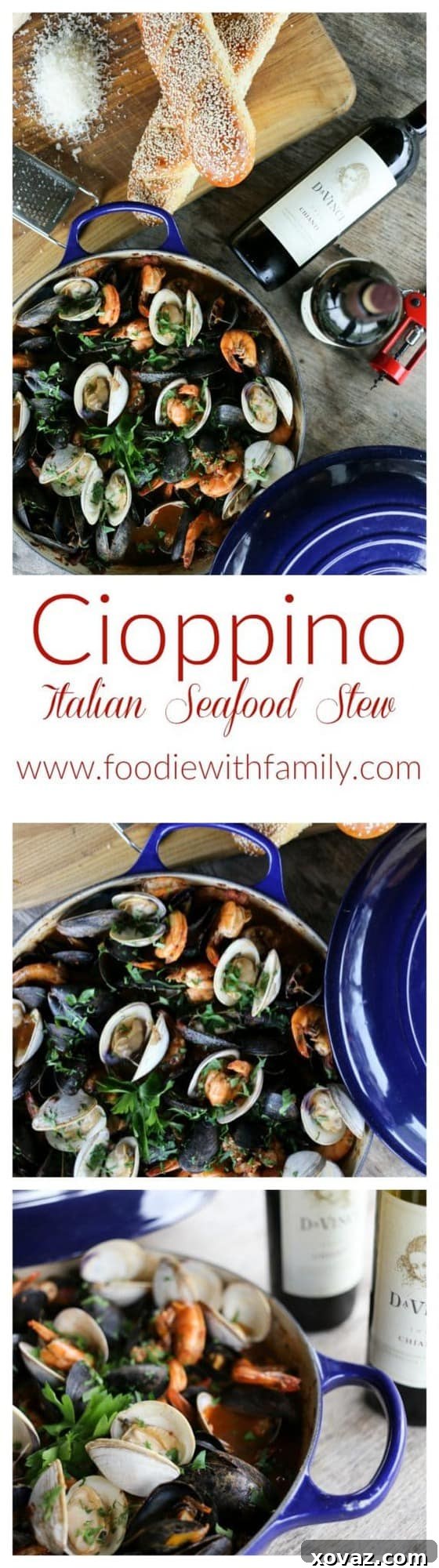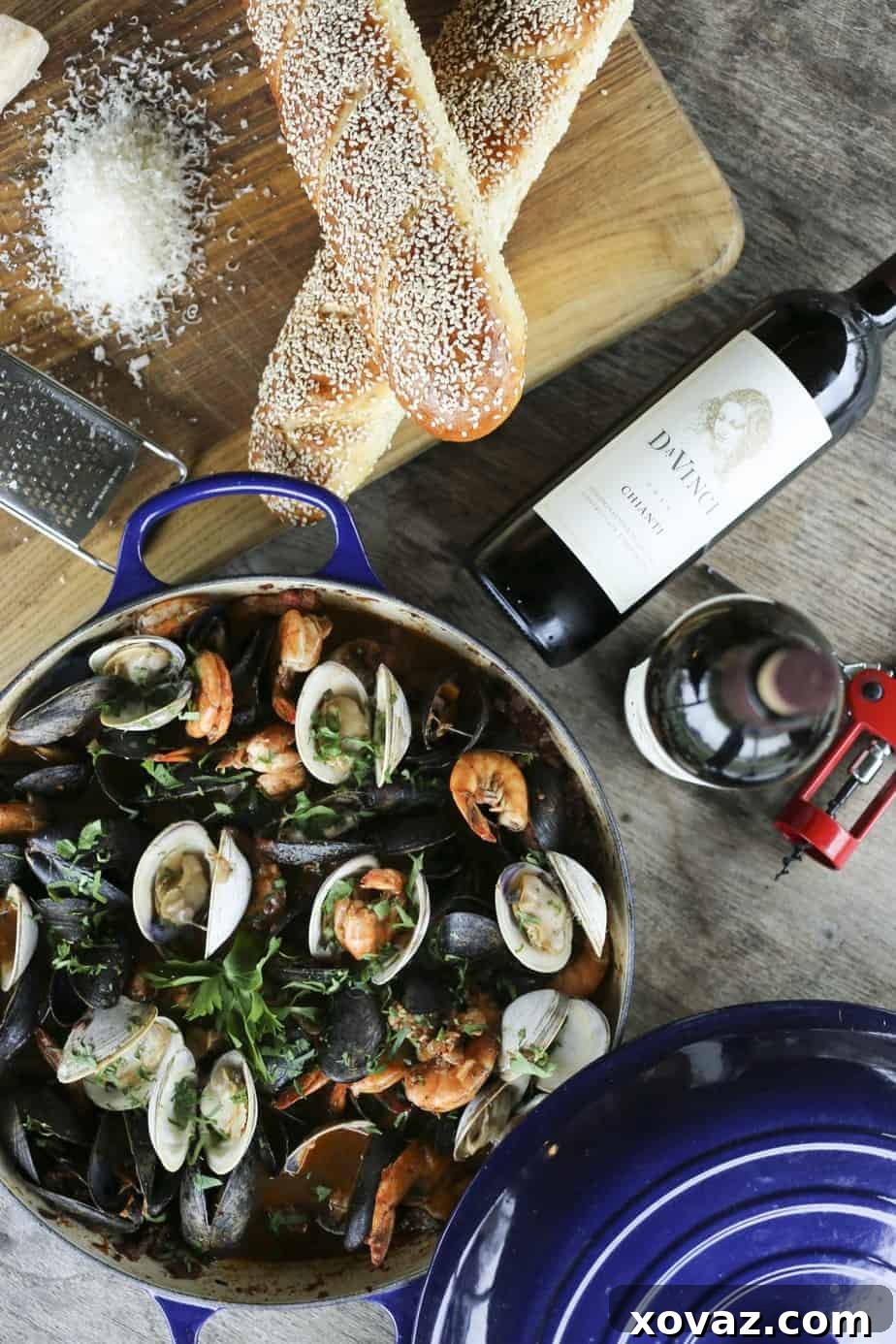
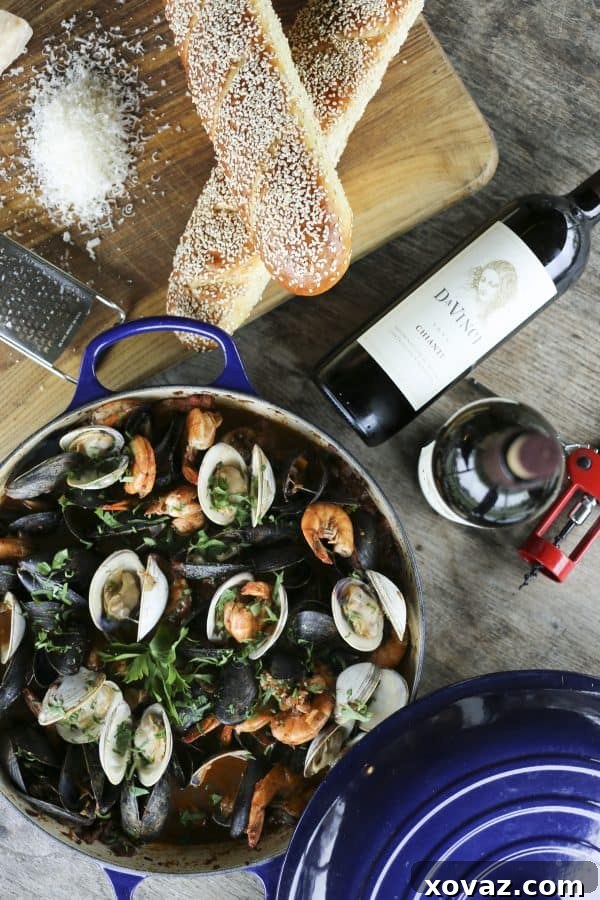
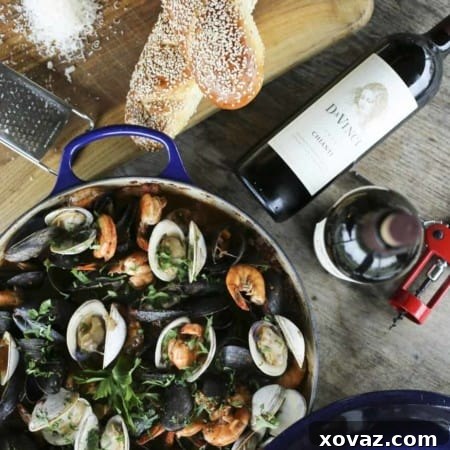
We are thrilled to present this classic Italian seafood stew, Cioppino, a truly showstopping main dish that promises to be the centerpiece of any Feast of the Seven Fishes celebration. This exquisite recipe, brimming with a generous variety of fresh clams, succulent mussels, tender shrimp, and flaky salmon, is proudly sponsored by DaVinci Wine. Designed for gathering friends and family around the table, this hearty stew is best served with ample crusty bread, essential for sopping up every last drop of its delicious, fragrant, and deeply flavored broth. This post is a celebration of culinary tradition and shared moments, brought to you in partnership with DaVinci Wine for the Feast of the Seven Fishes. As always, all recipes, opinions, and photographs are entirely my own.
The Unlikely Inspiration: A Seafood Skeptic’s Endorsement of Cioppino
Imagine this: your best friend of over two decades, someone who has famously despised seafood for her entire life, passionately insists that you *must* make a particular Italian seafood stew. This isn’t just any stew; it’s the legendary Cioppino, as perfected by her Italian-American husband. When Ali, a Scottish Canadian hailing from Prince Edward Island – a place steeped in a rich fishing culture – married her wonderful Italian-American husband, Brian, their lives became a beautiful fusion of two distinct culinary worlds. Last year, during a visit to the island, Brian took command of the kitchen and prepared a Cioppino that, by all accounts, transcended all previous versions. It was so exceptionally good that Ali, the lifelong seafood adversary, conceded its magnificence, declaring it utterly delicious.
The moment I shared with Ali and Brian that I was embarking on a Feast of the Seven Fishes project for DaVinci Wine, Ali’s immediate response was an emphatic, “You absolutely need to make Brian’s Cioppino!” My jaw may have figuratively hit the floor at her uncharacteristic enthusiasm, but I quickly recovered and seized the opportunity. I peppered Brian with endless questions, meticulously gathering every detail of his masterful recipe. It became clear that this wasn’t just a dish; it was a testament to the power of authentic flavors and the joy of shared culinary experiences, a dish so compelling it could convert even the most ardent seafood skeptic.
Understanding the Feast of the Seven Fishes: A Cherished Italian-American Tradition
The Feast of the Seven Fishes, or “La Vigilia” (The Vigil), is a culinary tradition that holds a special place in the hearts and homes of Italian-Americans, particularly on Christmas Eve. While its roots can be traced back to Southern Italy, where it was customary to abstain from meat on the eve of a holy day, the elaborate, multi-course seafood spread we recognize today largely blossomed within the Italian immigrant communities of North America. It’s a beautiful example of how traditions evolve, adapting to new environments while retaining their core spirit.
For Catholics, Christmas Eve is traditionally a “fast night,” meaning meat is to be avoided. However, in the grand, festive spirit that defines Italian-American celebrations, this abstinence from meat doesn’t translate into a meager meal. Instead, it transforms into an abundant, joyous seafood spectacular. The Feast of the Seven Fishes meticulously adheres to the meat-free requirement while delivering an unforgettable culinary experience that is anything but fasting. Indeed, I’ve never once left an Italian-American friend’s house on Christmas Eve feeling anything less than completely satisfied and utterly nourished.
The “seven” in the Feast of the Seven Fishes is often a point of curiosity, with various theories attempting to explain its significance. Some believe it symbolizes the seven sacraments of the Catholic Church, while others link it to the seven virtues, or even the seven hills of Rome. Regardless of its precise origin, the number has become synonymous with an impressive array of seafood dishes, from fried baccalà (salted cod) and marinated anchovies to baked oysters, fried calamari, and, of course, a hearty seafood stew like Cioppino. It’s a testament to the richness of the ocean and the ingenuity of Italian cooking, transforming a religious observance into a vibrant family gathering filled with laughter, love, and extraordinary food.
Crafting the Heart of Cioppino: The Flavorful, Meat-Free Broth
It turns out that Brian’s secret to his truly masterful Cioppino lay in his ingenious use of a sausage-based Sunday sauce, which formed the rich tomato and Chianti foundation of his stew. While that sounded absolutely delectable, for the purposes of the Feast of the Seven Fishes, which strictly adheres to a meat-free Christmas Eve, I needed an equally flavorful but pescetarian-friendly approach. My adaptation involved a clever culinary hack: I used the core spices that define traditional Italian sausage – aromatic fennel seeds, a kick of crushed red pepper flakes, fragrant garlic, and sweet onions and shallots – to replicate that luscious, spiced depth without a single trace of meat. And friends, the results are nothing short of spectacular! This method ensures that the broth carries all the robust, savory notes characteristic of a deeply simmered Italian sauce, making it the perfect canvas for our exquisite seafood.
When it comes to the heart of any great Cioppino, it’s the rich, aromatic broth that truly sets the stage. My recipe begins with a generous swirl of extra virgin olive oil, gently heated to coax out the full fragrance of whole fennel seeds and crushed red pepper flakes. These initial aromatics are crucial, building a foundational layer of warmth and spice that will permeate the entire stew. Diced white onion, shallots, and lightly smashed garlic cloves are then sautéed until beautifully translucent, creating a sweet and savory base. The addition of DaVinci Chianti is not just for deglazing; it imparts a sophisticated depth and subtle fruitiness that elevates the broth, boiling down to concentrate its complex flavors. Tomato paste provides umami and body, while canned petite diced tomatoes burst with fresh tomato flavor. Finally, good quality fish stock, fresh parsley, basil, and a bay leaf are added, simmering gently to create a broth that is both vibrant and profoundly comforting. This carefully constructed base is the soul of our Cioppino, promising a truly authentic Italian experience.
The Star of the Show: Abundant and Fresh Seafood in Every Spoonful
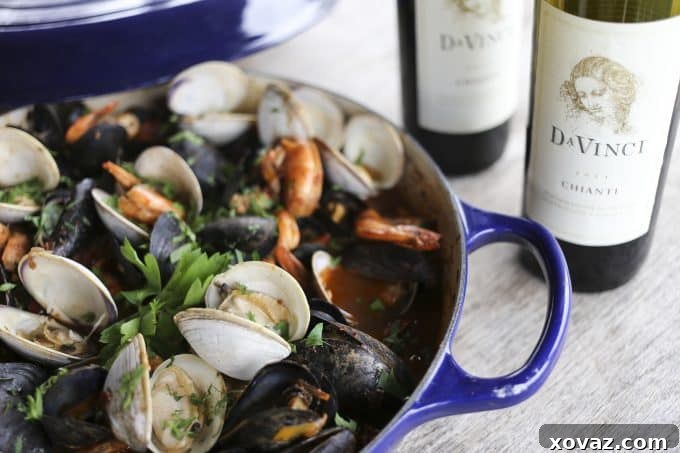
This Cioppino isn’t just a stew; it’s a vibrant, interactive culinary event designed for joyous communal dining. We’re talking about a lush, vibrant seafood and tomato broth absolutely brimming with a delectable variety of fresh catches: plump clams, tender mussels, succulent shrimp, and delicate, flaky fish like salmon. The beauty of this dish lies in its unpretentious elegance and its ability to bring people together. It’s an interactive journey, encouraging conversation and shared moments as you navigate the bounty within your bowl.
Picture this: you laugh, you chat, you hug, all while eagerly plucking whole clams and mussels from the simmering broth. With a fork, you expertly extricate the tender meat from its shell, savoring the briny burst of flavor, then casually discard the empty shell into a giant communal bowl placed at the center of the table – a silent testament to shared enjoyment. A tail-on shrimp is nabbed next, bitten off with relish, and its tail tossed into the same growing pile. Then, switching to a spoon, you delve into the rich, savory sauce, seeking out every last succulent morsel of the tender salmon, which has absorbed the exquisite flavors of the broth. And finally, the glorious conclusion: using generous pieces of crusty, artisanal bread to sop up every single precious drop of the fragrant, savory broth. This is more than just a meal; it’s a shared experience, a ritual where memories are forged around a table filled with love and exquisite flavors. This Cioppino is truly a dish on which lasting memories are made.
Expert Tips for Crafting Your Perfect Cioppino
While the ingredient list for this Italian Seafood Stew might appear lengthy at first glance, please don’t let it intimidate you. Each component plays a crucial role in building the stew’s complex flavor profile, and the cooking process itself is straightforward and highly rewarding. By following these instructions carefully, you’ll unlock a depth of flavor that truly justifies the effort. Here are some essential cook’s notes to ensure your Cioppino is nothing short of magnificent:
- The Flavorful Base is Key: For the absolute best and most intensely flavorful results, allow the tomato soup base to rest in the refrigerator for at least 24 hours (and up to 3 days) before reheating and adding the seafood. This crucial resting period gives all those deep, rich, and aromatic flavors ample time to meld and develop without the meat, creating an incredibly robust foundation that will elevate your Cioppino to extraordinary heights. Think of it as allowing the flavors to truly get acquainted and become a harmonious symphony.
- Preparing Mussels with Care: Whether your mussels are marketed as “de-bearded” or not, it’s always wise to give them a thorough inspection. You’ll often find fuzzy little fibrous strands, known as beards, sticking out from between the shells. To remove them, firmly grip the beard, pull it back toward the hinged part of the shell, and then pull outwards, detaching it completely. If you find them slippery or difficult to grip, a paper towel can provide the extra traction you need for a secure hold. This step is vital for a clean eating experience.
- Thorough Cleaning for All Shellfish: Similarly, it is absolutely imperative that you meticulously scrub the exterior shells of both your clams and mussels. Use a stiff brush under cold running water to remove any dirt, sand, or grit that might cling to the shells. This ensures that every bite of your Cioppino is pure, unadulterated pleasure, free from any unpleasant textures. Properly cleaned shellfish are a hallmark of a truly excellent seafood stew.
- Sourcing the Freshest Seafood: The success of your Cioppino hinges on the quality of your ingredients. Prioritize purchasing the freshest possible seafood from a reputable fishmonger. Clams and mussels should be tightly closed; discard any that are open or don’t close when tapped. Shrimp should be firm and translucent, and salmon fillets should have a bright, vibrant color. Freshness is paramount for taste and texture in a dish where seafood is the star.
- The Perfect Wine Pairing: While DaVinci Chianti is an excellent choice to incorporate into the stew itself, it also makes for a superb accompaniment for drinking alongside your finished Cioppino. Its balanced acidity and subtle red fruit notes complement the rich tomato base and diverse seafood beautifully, enhancing the entire dining experience. Consider serving an extra bottle chilled and ready for your guests.
Connect with Foodie with Family
facebook | pinterest | instagram
twitter | Google+
Cioppino – Italian Seafood Stew
Rebecca Lindamood
This classic Italian seafood stew is the perfect, showstopping main dish for a Feast of the Seven Fishes. Brimming with a generous variety of clams, mussels, shrimp, and salmon, this hearty stew is meant for congregating over with friends and family.
Print Recipe | Pin Recipe | Share on Facebook
Ingredients
- ¼ cup extra virgin olive oil
- ¾ teaspoon whole fennel seeds
- ¾ teaspoon crushed red pepper flakes
- 4 cloves garlic (in their peels, lightly smashed)
- 1 small white onion (peeled and diced)
- 2 shallots (peeled and diced)
- 2 teaspoons kosher salt
- 1 ½ cups DaVinci Chianti
- ¼ cup tomato paste
- 2 cans of petite diced tomatoes in juices (14.5 ounce each)
- 4 cups fish stock (homemade or purchased)
- 2 stems fresh parsley (plus extra for serving)
- 2 stems fresh basil (plus extra for serving)
- 1 bay leaf
- 1 pound Littleneck Clams (scrubbed)
- 1 pound mussels (scrubbed and debeared)
- 1 pound large shrimp (32 count per pound, peeled and deveined)
- 1 ½ pounds fresh boneless, skinless salmon filets (cut into 2-inch chunks)
Instructions
- Heat the olive oil in a large pot or braiser over medium heat. Add the crushed red pepper flakes and whole fennel seeds, toasting them gently until fragrant, about 1-2 minutes. Add the lightly smashed garlic cloves, diced onions, diced shallots, and kosher salt to the pan. Sauté gently, stirring frequently, until the onions become semi-translucent and release their sweet aroma, which typically takes about 4 minutes. Raise the heat to high and pour in the DaVinci Chianti. Bring the wine to a vigorous boil and boil hard for 1 to 2 minutes, or until the wine has reduced slightly, concentrating its flavors. Stir in the tomato paste, followed by the petite diced tomatoes with their juices, and the fish stock. Drop the fresh parsley stems, fresh basil stems, and the bay leaf into the pot. Return the contents of the pot to a boil, then immediately reduce the heat to low, cover the pot, and let it simmer gently for about 30 minutes, allowing all the flavors to meld beautifully.
- At this stage, you have successfully prepared the robust soup base. For optimal flavor development, you can remove the soup base from the heat and allow it to cool completely before transferring it to an airtight container. Refrigerate for up to 3 days. This resting period significantly enhances the depth and complexity of the broth, mimicking the slow development of traditional Sunday sauces.
- Approximately 30 to 45 minutes before you plan to serve your exquisite Cioppino, bring the refrigerated soup base back to a gentle simmer over medium heat. Once simmering, carefully add the scrubbed clams and mussels to the soup base and stir them in gently. Cover the pot and cook until the clams and mussels begin to open, indicating they are cooked through (usually 5-7 minutes). Next, add the peeled and deveined shrimp and the 2-inch chunks of salmon to the pot. Continue to simmer gently, uncovered, until the shrimp are pink and opaque and the fish is just barely cooked through and flakes easily, typically another 3-5 minutes. Inspect the pot and pick out any mussels or clams that did not open during cooking; these should be discarded for safety. Taste the finished Cioppino and adjust the seasoning if desired, adding more salt or a pinch more crushed red pepper flakes for an extra kick. Serve this magnificent stew immediately with generous portions of crusty bread, perfect for dipping and savoring every last drop of the rich, aromatic broth.
Nutritional information is an estimate and provided to you as a courtesy. You should calculate the nutritional information with the actual ingredients used in your recipe using your preferred nutrition calculator.
Did you make this recipe?
Make sure to tag @foodiewithfam on Instagram and #hashtag it #foodiewithfamily so I can check it out!
Pin Recipe
Share on Facebook
We invite you to regularly check back to DaVinci Wine’s Facebook page and their official website, as well as here on Foodie with Family, for the remainder of the delightful Feast of the Seven Fishes recipes developed in collaboration with DaVinci. Each of these exquisite dishes is wonderful on its own, but they are thoughtfully designed to be served together, creating a truly spectacular and memorable feast in its entirety! Buon Appetito!