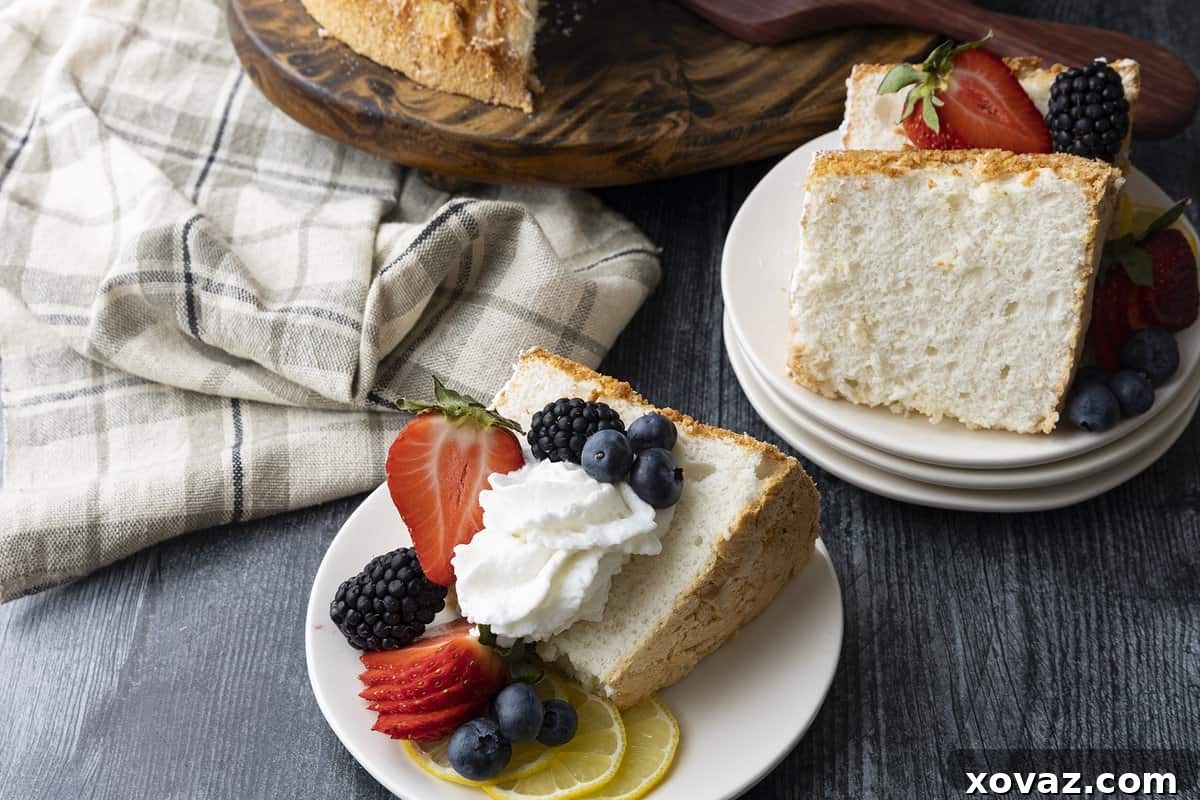
Delicate, light as a cloud, and utterly fluffy, Angel Food Cake stands as the quintessential canvas for the vibrant flavors of summer berries, zesty fruit curds, or even just a simple dusting of powdered sugar or a dollop of fresh whipped cream. This ethereal dessert, renowned for its airy texture and subtle sweetness, transforms any occasion into something truly special.
While many reach for a box mix out of convenience, no pre-packaged alternative can ever truly replicate the sublime perfection of a homemade Angel Food Cake. The good news? Crafting this magnificent cake from scratch is far easier than its elegant appearance suggests. It simply requires a keen eye for detail, a willingness to follow instructions carefully, and a few handy tips to guide you toward bakery-worthy results.
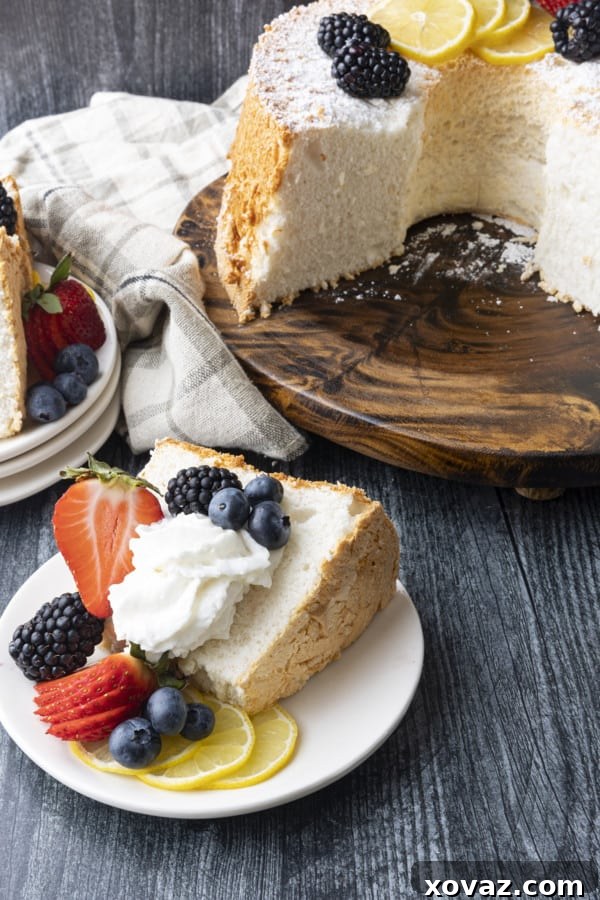
Invest a little extra attention, and you will be richly rewarded with the tallest, most pillowy, and diaphanous Angel Food Cake you’ve ever tasted. Despite its reputation for being a bit “fiddly” or challenging, I promise you that creating a delicious and visually stunning Angel Food Cake is well within your grasp. I’m here to demystify the process and share all the essential secrets for achieving unparalleled loftiness and an irresistibly delicate crumb.
The core philosophy behind every step of an Angel Food Cake recipe revolves around one crucial goal: preserving the maximum amount of air in your egg whites. This singular focus on airy egg whites is what ultimately yields the incredibly light and airy cake we all adore. Let’s dive into everything you need to know to bake your best Angel Food Cake yet.
Understanding Angel Food Cake: A Celestial Delight
Angel Food Cake is a type of sponge cake made with stiffly beaten egg whites, flour, and sugar. Unlike most cakes, it contains no egg yolks, butter, or other fats, which contributes to its signature light, fat-free, and airy texture. This heavenly dessert is thought to have originated in the United States in the 19th century, quickly gaining popularity for its delicate structure and ability to be dressed up with various toppings.
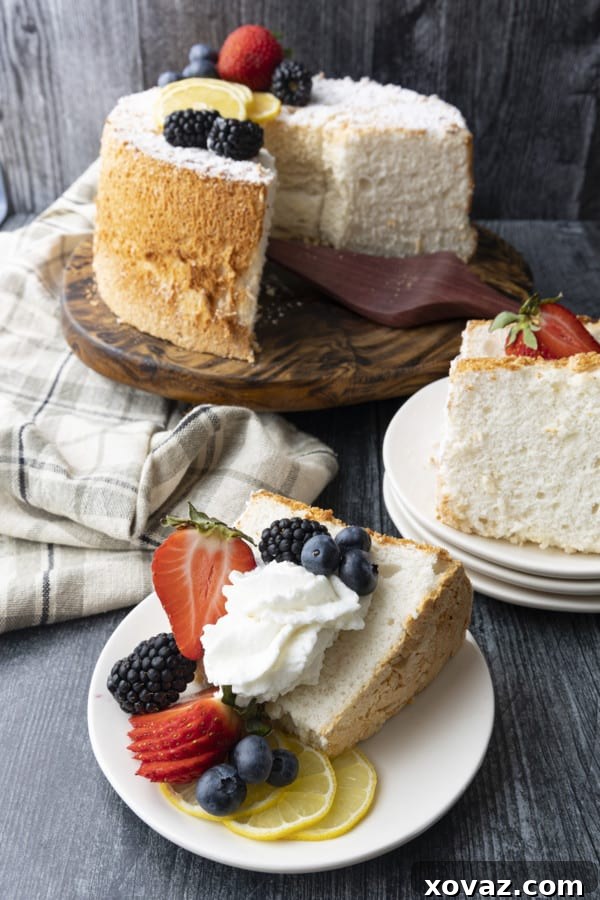
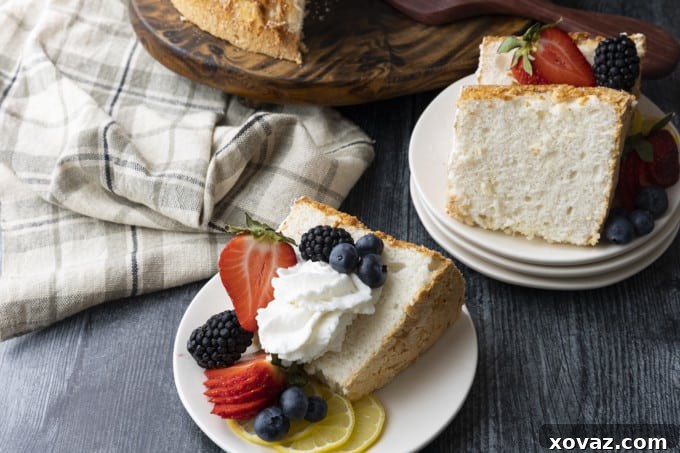
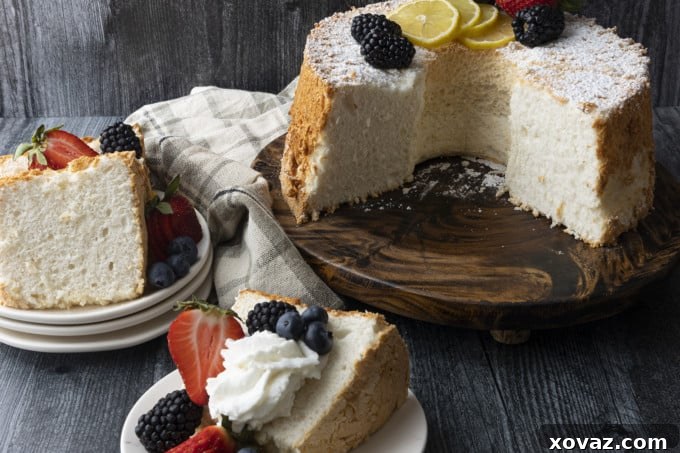
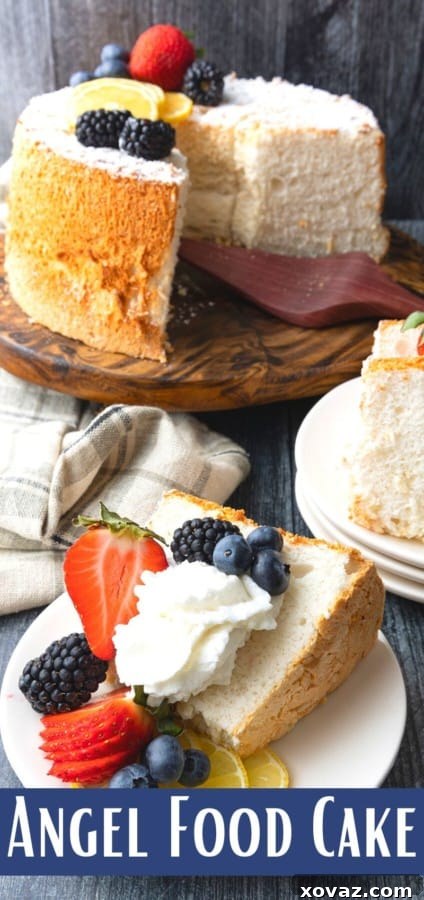
The name “Angel Food” itself speaks to its divine lightness, suggesting a cake so airy it might be food for angels. Its unique composition makes it a healthier alternative to many richer desserts, yet it doesn’t compromise on flavor or satisfaction. A perfectly baked Angel Food Cake should be tall, pure white inside, and have a soft, springy texture that practically melts in your mouth.
Essential Ingredients for Angel Food Cake Perfection
Before you begin your baking adventure, it’s wise to gather all your ingredients. While the list is relatively short, the quality and preparation of each component play a vital role in the final outcome. Here’s what you’ll need, along with a brief explanation of why each is important:
- Cake Flour: This is non-negotiable for true Angel Food Cake. Cake flour has a lower protein content than all-purpose flour, resulting in a finer, softer crumb that is crucial for the cake’s delicate structure. Using all-purpose flour will lead to a tougher, denser cake. Always sift your cake flour for best results.
- Granulated Sugar: Not just for sweetness, sugar also stabilizes the egg whites and contributes to the cake’s tender texture. For Angel Food Cake, it’s often recommended to process granulated sugar into a finer powder using a blender or food processor. This ensures it dissolves completely into the egg whites without weighing them down or leaving a gritty texture. Do not substitute with powdered (confectioners’) sugar, as it contains cornstarch, which can negatively affect the texture.
- Egg Whites: The star of the show! These provide the cake’s structure and lift. You’ll need a significant amount, typically from a dozen large eggs. The egg whites must be perfectly separated from the yolks (even a tiny speck of yolk can prevent them from whipping properly) and ideally at room temperature for maximum volume.
- Cream of Tartar: This acidic powder is a crucial stabilizer for egg whites. It helps them whip up faster, achieve greater volume, and maintain their stiff peaks, preventing them from collapsing. Without it, your egg whites may be less stable and produce a flatter cake.
- Salt: A pinch of salt enhances the overall flavor of the cake, balancing the sweetness and bringing out the subtle vanilla notes.
- Vanilla Extract and/or Almond Extract: These flavorings add depth and warmth to the otherwise simple cake. Pure vanilla extract is always preferred, and almond extract complements it beautifully, giving the cake a classic, delicate aroma.
Essential Equipment for Success
While you might manage with basic kitchen tools, having the right equipment can significantly simplify the process and improve your results. Here’s a rundown of helpful (and sometimes necessary) items:
- Tube Pan (9.5 to 10-inch): Absolutely essential for Angel Food Cake. A tube pan is a deep, straight-sided pan with a hollow tube in the center. This design allows heat to penetrate the center of the cake, ensuring even baking and supporting its dramatic rise. Look for an aluminum pan that is *not* non-stick coated, as the cake needs to cling to the sides to climb. Some non-stick pans with specific designs for Angel Food Cake can work, but a standard ungreased aluminum one is ideal. If a tube pan isn’t available, two standard loaf pans can be a temporary substitute (more on this below).
- Egg Separator: Optional, but highly recommended. This small gadget makes quick and clean work of separating yolks from whites, minimizing the risk of contamination which is crucial for successful egg white whipping.
- Stand Mixer or Hand Mixer: Whipping a dozen egg whites by hand is a serious workout! An electric mixer, whether a stand mixer with a whisk attachment or a powerful hand mixer, is invaluable for achieving the necessary volume and consistency of egg whites without exhausting yourself.
- Food Processor or Blender: Used to finely process granulated sugar, ensuring it dissolves smoothly into the egg whites and contributes to a tender, not gritty, cake.
- Fine Mesh Strainer or Sifter: Crucial for sifting cake flour and gently incorporating it into the egg whites without deflating them. Sifting aerates the flour and removes any lumps.
- Silicone or Rubber Spatula: Essential for gently folding the flour mixture into the whipped egg whites, preserving the precious air. It’s also useful for smoothing the batter into the pan.
- Cooling Rack or Wire Rack: While some tube pans have “feet” for inverted cooling, a sturdy cooling rack provides better air circulation, allowing the cake to cool thoroughly and prevent it from collapsing under its own weight.
- Flexible or Offset Spatula or Butter Knife: Needed for cleanly loosening the cooled cake from the pan walls. A serrated knife is also critical for cutting the delicate cake.
With your ingredients measured and equipment at the ready, you’re prepared to embark on the journey to baking the perfect Angel Food Cake. Let’s explore the nuances of each step.
The Angel Food Cake Pan: Your Foundation for Loftiness
The choice of pan is one of the most critical factors in achieving a tall, fluffy Angel Food Cake. For unparalleled results, a tube pan is your best friend. This specialized pan is not just a suggestion; it’s designed specifically for cakes like Angel Food, which rely heavily on structure and even heat distribution.
A tube pan features straight, tall sides and a central core, or “tube.” This inner tube isn’t just for aesthetics; it plays a vital role in baking. It exposes the cake batter to heat from the center as well as the sides and bottom, ensuring that the cake bakes evenly throughout. Without this central heat source, the exterior of such a tall cake might overbake before the center is cooked, leading to a dense or undercooked middle.
It’s important to differentiate a tube pan from a Bundt pan. While both have a central hole, a Bundt pan typically has decorative fluted sides and often a non-stick coating. A Bundt pan is *not* a suitable substitute for an Angel Food Cake. The cake needs to cling to the pan’s straight, ungreased sides to climb and achieve its signature height. If the pan walls are slippery, the cake won’t be able to rise as high, resulting in a flatter texture.
Ideally, your tube pan should be made of aluminum and completely ungreased. This lack of a non-stick surface or any added grease provides the necessary friction for the delicate egg white batter to “climb” the sides, creating that impossibly fluffy and tall structure. Some modern tube pans are advertised as non-stick, but are specifically designed for Angel Food Cakes, often with a slightly textured surface or a finish that still allows for adequate clinging. If you have such a pan and it yields great results, stick with it! The tube pan I use, for example, is technically non-stick but consistently produces high-rising cakes and features handy little feet for upside-down cooling.
If a tube pan is absolutely out of reach, don’t despair! You can use two standard loaf pans as an alternative. When using loaf pans, you’ll still want to avoid greasing the sides. Instead, line the bottom of each loaf pan with a small rectangle of parchment paper. This parchment will aid in removing the delicate cake from the pan later, as loaf pans typically don’t have removable bottoms. You’ll be grateful for that little assist when it comes time to gently extract your perfectly baked cakes.
Mastering the Art of Angel Food Cake: Key Techniques
The success of your Angel Food Cake hinges on a few fundamental techniques, primarily focused on handling egg whites and flour correctly. Let’s delve into these critical steps.
Perfect Egg Separation and Whipping
The very first step to an airy Angel Food Cake is impeccable egg separation. Any trace of egg yolk in the whites will introduce fat, which inhibits the egg whites from whipping up to their full potential volume and stability. An egg separator makes this job quick and clean, but you can also carefully crack eggs into your hand and let the whites slip through your fingers into a bowl.
I recommend separating cold eggs, as the yolks are firmer and less likely to break. Once separated, transfer the whites to a large, clean, and dry mixing bowl (preferably of a stand mixer). Allow the egg whites to come to room temperature, which usually takes about 30 minutes to an hour. Room temperature egg whites whip to a greater volume and more stable foam than cold ones. Save those precious egg yolks for another delicious creation, like a rich lemon-lime curd!
When it comes to whipping, an electric mixer is your best friend. While a strong arm can technically whip a dozen egg whites, it’s an arduous task that can lead to uneven results. A stand mixer with a whisk attachment or a powerful hand mixer will achieve the desired soft peaks much more efficiently and consistently. Ensure your mixing bowl and whisk attachment are spotlessly clean and free of any grease residue.
Begin by beating the room temperature egg whites and cream of tartar on medium-low speed until they become foamy. Then, gradually add the finely processed granulated sugar while the mixer is running, increasing the speed to medium-high. Continue beating until the egg whites reach the “soft peaks” stage. This means that when you lift the whisk, a peak forms, but its tip gently curls over. Over-whipping can lead to dry, brittle egg whites that won’t incorporate well, while under-whipping won’t provide enough structure. Aim for soft, glossy, and pliable peaks.
Preparing and Incorporating Dry Ingredients
Another key to Angel Food Cake’s delicate texture lies in the preparation of the sugar and flour. As mentioned, processing granulated sugar in a food processor or blender until it’s a finer powder is vital. This allows it to dissolve seamlessly into the egg whites, preventing a gritty texture and ensuring the whites maintain their airiness. Remember, regular powdered sugar (confectioners’ sugar) is not a substitute because it contains cornstarch, which can alter the cake’s chemistry and texture.
After processing, set aside a portion of the sugar to be added to the egg whites during whipping. Combine the remaining processed sugar with the cake flour and salt. Pulse this mixture a few times in the food processor or blender to ensure it’s thoroughly combined and aerated. The goal here is to create a light, uniform dry mixture.
When it’s time to add the flour mixture to your whipped egg whites, the fine mesh strainer or sifter becomes indispensable. This technique, known as “sifting in,” prevents clumps and allows the flour to fall gently onto the delicate egg whites, minimizing deflation. Add the flour mixture in three small installments, sifting each portion over the whites. After each addition, use a silicone or rubber spatula to gently fold the flour into the egg whites using an up-and-over motion, rotating the bowl as you go. Fold just until no streaks of flour remain; over-mixing will deflate the egg whites and result in a dense cake.
Baking, Cooling, and Serving Your Cake
Once your batter is gently folded, spoon it into your ungreased tube pan. Gently shake and shimmy the pan from side to side to help the batter settle and create a mostly even surface. Don’t worry about perfection; just aim for an even distribution.
Bake the cake until it’s lofty, golden brown, and springs back when lightly touched. A toothpick inserted near the center should come out clean. The cooling process for Angel Food Cake is just as crucial as the baking. Immediately after removing the cake from the oven, invert the tube pan over the neck of a glass soda bottle or onto the feet of the pan (if it has them), or over a sturdy cooling rack. This upside-down cooling prevents the delicate cake from collapsing under its own weight as it cools, maintaining its airy structure and impressive height. Allow it to cool completely for at least three hours.
Once thoroughly cooled, run a thin, flexible spatula or a butter knife around the edges of the pan and the central tube to loosen the cake. If your pan has a removable bottom, push it up from the bottom. For loaf pans, the parchment paper at the bottom, combined with loosened sides, should make removal easy.
Finally, for serving, remember this golden rule: always use a serrated knife, like a bread knife, to cut Angel Food Cake. A chef’s knife or butter knife will tear and crush the delicate, airy structure of the cake. A gentle sawing motion with a serrated blade will give you clean, beautiful slices.
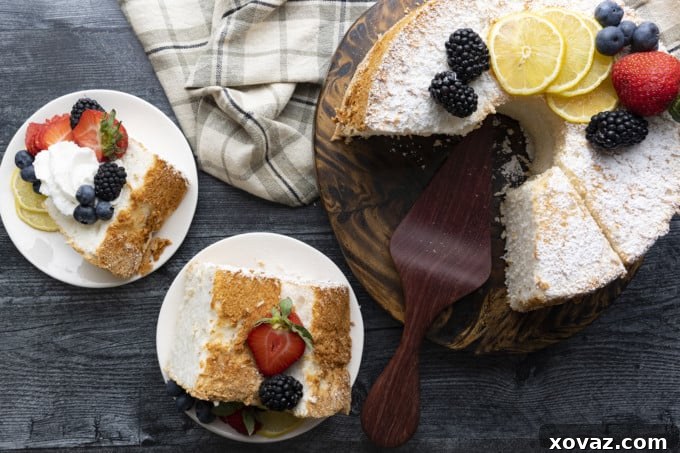
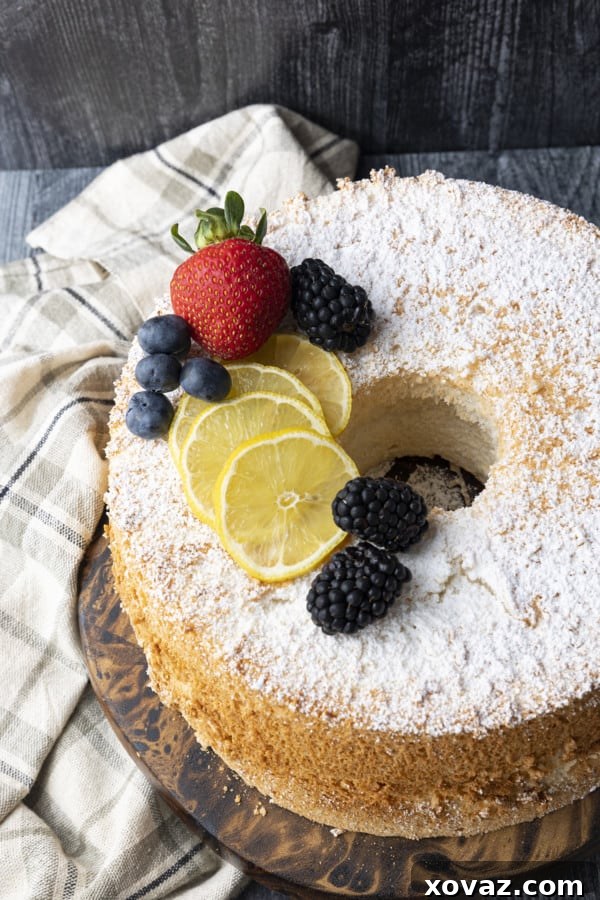
Your homemade Angel Food Cake will store beautifully, wrapped thoroughly but gently, in the refrigerator for up to a week. Serve it simply with a dusting of powdered sugar, fresh berries tossed in a little granulated sugar, your favorite jam, or a dollop of vibrant lemon or lime curd. The possibilities are endless for this versatile and exquisite dessert.
Troubleshooting Common Angel Food Cake Issues
Even with the best intentions, baking can sometimes present challenges. Here are some common problems with Angel Food Cake and how to avoid them:
- Cake Didn’t Rise High Enough:
- Cause: Yolk contamination in egg whites, under-whipping egg whites, over-folding flour (deflating egg whites), or greasing the pan.
- Solution: Be meticulous with egg separation. Whip egg whites to firm soft peaks. Fold flour gently and minimally. Never grease your tube pan.
- Cake is Dense or Chewy:
- Cause: Using all-purpose flour instead of cake flour, over-mixing the batter, or under-baking.
- Solution: Always use cake flour. Fold ingredients just until combined. Ensure the cake is fully baked (springs back, clean toothpick).
- Cake Stuck to the Pan:
- Cause: Pan was greased (counter-intuitive, but true for Angel Food Cake) or cake was removed before it was completely cool.
- Solution: Never grease your Angel Food Cake pan. Always let it cool completely upside down for at least 3 hours. Use a thin, flexible spatula to loosen.
- Cake has Large Air Pockets:
- Cause: Batter not evenly distributed in the pan, or air bubbles not gently tapped out before baking.
- Solution: Gently shake and shimmy the pan after spooning in the batter to help it settle and release large air pockets.
Homemade Angel Food Cake Recipe
Ready to bake? Here’s the detailed recipe to guide you through creating your own exquisite Angel Food Cake.
Homemade Angel Food Cake
Homemade Angel Food Cake is ethereal perfection, and thankfully it is easy to make with just a few handy tips and tricks!
Author: Rebecca Lindamood
Prep Time: 25 mins
Cook Time: 45 mins
Servings: 10
Equipment
- 1 (9.5 or 10-inch) tube pan (or 2 (8.5” by 4.5”) loaf pans)
- 1 blender or food processor fitted with a metal blade
- 1 Cooling Rack
- 1 silicone or rubber spatula
- 1 offset spatula or thin, flexible spatula
Ingredients
- 1 ¾ cup granulated sugar (see notes)
- 18 tablespoons cake flour (1 cup plus 2 tablespoons or 133 grams)
- ¼ teaspoon kosher salt
- 12 egg whites (room temperature, save yolks for other uses, or 1 cup liquid egg whites)
- 1 ½ teaspoons cream of tartar
- 1 ¼ teaspoons pure vanilla extract
- ¼ teaspoon almond extract
Instructions
- Preheat the oven to 325ºF (160ºC).
- Add the granulated sugar to your blender carafe or food processor bowl. Pulse about 20 times, or until the sugar is powdery and fine. Let it rest in the blender or bowl until the powder settles down.
- Use a spoon to transfer 1 cup of the processed sugar to a separate measuring cup and set it aside. This will be added to the egg whites.
- To the sugar remaining in the blender or food processor, add the cake flour and salt. Pulse 10 times to thoroughly combine and aerate the mixture. Set this aside.
- Add the room temperature egg whites and the cream of tartar to the clean work bowl of a stand mixer fitted with a whisk attachment. If you do not have a stand mixer, you can use a large mixing bowl with a hand mixer.
- Beat the egg whites on medium-low speed until they’re foamy. With the mixer running, slowly add the reserved 1 cup of processed sugar completely, then raise the speed to medium-high. Beat until the egg white mixture reaches soft peaks. When you lift the whisk from the egg whites, it should raise up a little mountain of egg white that slumps over at the top and slowly sinks down. This is the soft peaks stage. (If you accidentally whip to medium or firm peaks, your cake may not rise quite as high, but it won’t be disastrous.)
- Add the vanilla and almond extracts and whisk in just until incorporated.
- Position a fine mesh sieve over the top of the bowl or use a sifter and sift about ⅓ of the flour mixture over the whipped egg whites. Fold in gently using a silicone spatula, using an up-and-over motion, rotating the bowl.
- Repeat this twice more, sifting in the remaining flour mixture in two equal installments, folding just until the flour is combined and no dry streaks remain. Be careful not to overmix, as this will deflate the egg whites.
- Spoon the delicate batter into your ungreased tube pan. Gently shake the pan side to side to help smooth out the surface of the cake batter and release any large air bubbles. It does not need to be perfectly smooth, just mostly even.
- Bake for 40 to 45 minutes, or until the cake is lofty and golden brown, and a toothpick inserted near the center of the cake comes out clean. The top should also spring back when gently pressed.
- Immediately invert the tube pan over a cooling rack, or over the neck of a glass soda bottle, and let the cake cool completely; this will take about 3 hours. If cooled upright, the cake will collapse under its own weight. Cooling upside down keeps it lofty, airy, and delicate!
- When the cake is completely cool, run a thin, flexible spatula or butter knife around the outer edge of the cake and around the inner tube. Invert the cake onto a serving plate.
- Use a serrated knife, like a bread knife, to cut the cake. It is too delicate to hold up to being cut by a chef’s knife or butter knife; doing so will crush its delicate structure.
- This cake will store well, wrapped thoroughly but gently, in the refrigerator for up to a week.
- Serve with a dusting of powdered sugar, fresh berries tossed in granulated sugar, your favorite jam, a dollop of lemon or lime curd, or any delightful combination of these goodies!
Notes
- If you have superfine sugar, you can substitute it for the granulated sugar. You’ll just reduce the quantity to 1 ½ cups instead of the 1 ¾ cups you would use of granulated sugar, and you won’t need to process it.
- Do NOT grease your cake pan! The little bit of resistance provided by the ungreased pan helps the cake rise to glorious heights by allowing the batter to cling to the sides.
- When separating the whites from the yolks, using an egg separator is not strictly necessary, but it does make a potentially messy job much tidier and helps ensure no yolk accidentally contaminates the whites.
Nutrition
Nutritional information is an estimate and provided to you as a courtesy. You should calculate the nutritional information with the actual ingredients used in your recipe using your preferred nutrition calculator.
- Calories: 202kcal
- Carbohydrates: 45g
- Protein: 5g
- Fat: 0.4g
- Saturated Fat: 0.03g
- Polyunsaturated Fat: 0.1g
- Monounsaturated Fat: 0.02g
- Sodium: 119mg
- Potassium: 147mg
- Fiber: 0.3g
- Sugar: 35g
- Vitamin A: 0.3IU
- Calcium: 5mg
- Iron: 0.2mg
With these detailed steps and helpful tips, you are now equipped to create a homemade Angel Food Cake that will impress and delight. Enjoy the process of baking this classic dessert, and savor every light, airy bite!
Did you make this recipe?
We’d love to see your creations! Tag @foodiewithfam on Instagram and use the hashtag #foodiewithfamily so we can admire your beautiful Angel Food Cake!