Visit our Bread Recipes page for more wonderful homemade bread recipes! Discover the joy of baking from scratch with our curated collection.
The Secret to the Ultimate Cinnamon Swirl Bread: A Baker’s Triumph!
A triumphant cheer echoes through the kitchen! Not a quiet sigh of relief, but a full-blown, evil-genius-level laugh that would make any supervillain proud. Why such villainous glee, you ask? Because I’ve cracked the code to making the most incredibly moist, deeply flavorful cinnamon swirl bread, and in doing so, I’ve outsmarted the pickiest eaters in my household. This isn’t just about baking; it’s about culinary espionage and a sweet victory!
My joyous cackle stems from three glorious revelations:
- I’ve uncovered the secret to a super moist cinnamon swirl, a method so brilliant it eliminates the need for any special, pricey cinnamon spread. Credit for this genius goes to the baking masters at King Arthur Flour.
- I successfully introduced (and disguised) raisins to two children who vehemently despise them, and they devoured every last bite, completely unaware.
- And here’s the kicker: these first two reasons are intrinsically linked, forming the perfect storm of baking success!
The Culinary Conundrum: Seeking the Perfect Cinnamon Schmear
Allow me to elaborate on the backstory, much like a meticulous villain unveiling their master plan. It all began when a dear friend expressed her yearning for bakery-style cinnamon rolls and bread. She described that distinctive, moist, almost gooey filling that makes commercial cinnamon treats so irresistible. She was on a quest for a “cinnamon schmear” recipe – the term often used by professional bakeries for their luscious fillings. I delved into research, sifting through countless recipes, but each one seemed to miss that crucial element, that tender, melt-in-your-mouth quality. Frustrated, I put the search on hold, but the desire for that perfect cinnamon core lingered in the back of my mind.
The Raisin Rebellion: A Mother’s Desperate Plea for Moisture
Simultaneously, I faced another formidable challenge in my kitchen: my two children, staunch members of the anti-raisin brigade. While I can empathize – dried grapes aren’t exactly my favorite snack straight from the box – I’m far more agreeable to them, especially when baked into a chewy oatmeal cookie. My kids, however, operate with a highly sophisticated “raisin-radar.” The mere suspicion of a shriveled fruit in their vicinity would transform my normally cheerful children into resolute objectors, digging in their heels and steadfastly refusing to even sample the offending item. What’s the big deal, you might wonder? Well, these are the same children who generally treat all fruit with suspicion, making raisin cinnamon bread a double-whammy of disdain for them. This presented a significant bind, as the rest of our family, myself included, couldn’t get enough of a good raisin-studded cinnamon loaf.
Every time I contemplated making my cherished raisin cinnamon bread, I envisioned those big, sad saucer eyes staring up at me, accusing me of intentionally crafting something that looked delicious “except for those shrunken bits there.” I could almost hear their silent plea, “Why can’t you just make a plain old cinnamon swirl bread, Mama?” My internal monologue would furiously retort, “Because of the invaluable moisture the raisins bring to the bread!” Indeed, the natural sugars and plumpness of raisins are key to a truly tender crumb and a moist swirl in many traditional recipes.
This internal debate intensified when, of all things, one of my raisin-averse duo specifically requested cinnamon swirl bread. The pressure was on. How could I deliver the moist, flavorful bread they craved without triggering their vigilant raisin alarms?
The King Arthur Revelation: A Game-Changing Discovery
Just when my culinary dilemma seemed insurmountable, a knight in shining armor rode gallantly to my rescue, in the form of a King Arthur Flour cookbook. As any seasoned baker knows, King Arthur Flour is synonymous with quality and innovation, their recipes often yielding exceptional results. I eagerly thumbed through the index, my eyes scanning for a ray of hope. There it was: ‘Cinnamon Swirl Bread’. A surge of optimism. No mention of raisins anywhere in the title, a promising sign!
I flipped to the designated page, my heart pounding with anticipation. My eyes immediately darted to the ingredient list, and then, a familiar sight that nearly deflated my hope: raisins. Oh, dear. My initial reaction was to close the book, another promising lead gone sour. But something compelled me to read the accompanying blurb, a brief description of the recipe. And oh, how profoundly grateful I am that I did.
This was the passage that changed everything, the pivotal moment of my baking journey:
“First, for a deep-dark, moist cinnamon swirl inside the bread, whirl sugar, cinnamon and raisins or currants together in a blender or food processor until smooth. The fruit adds moistness as well as subtle flavor to the filling.”
Well, hello there, brilliant idea! This wasn’t just a recipe note; it was the solution to all my problems, neatly packaged in a single sentence. With the raisins utterly obliterated in a food processor, their flavor and, more importantly, their moisture would be seamlessly integrated into the filling, bypassing the dreaded “no-raisin-radar.” A smooth, moist, deep-dark cinnamon swirl? This sounded remarkably like the elusive “cinnamon schmear” my friend had been longing for, and the perfect way to make delicious homemade cinnamon bread for the entire family.
A Sweet Victory: The Triumph of the Hidden Raisin
I wasted no time. I gave King Arthur’s ingenious method a whirl, and the results were nothing short of spectacular. (Cue that evil laugh once more, louder this time!) The raisin-hating duo didn’t just like it; they absolutely adored it. They luh-uh-uh-huhved it, to be precise. I had made a double batch, expecting leftovers, but to my astonishment, it vanished completely after breakfast. My once raisin-resistant children couldn’t get enough of this glorious bread, eagerly requesting more. Not only had I satisfied my picky eaters, but I had also delighted everyone else, including my friend, to whom I excitedly texted that I had found her “holy grail of cinnamon swirliness.” I was truly on a roll, a cinnamon-infused, streusel-topped roll, no less.
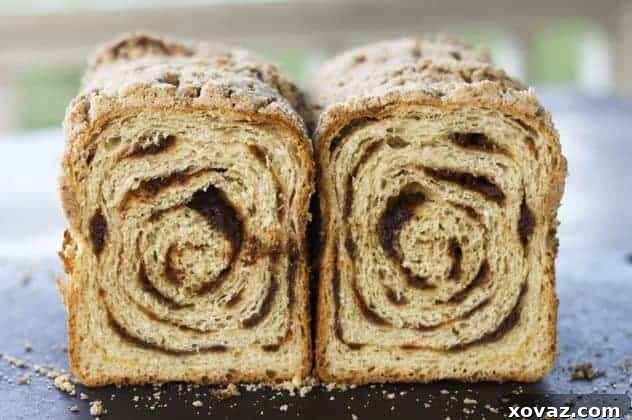
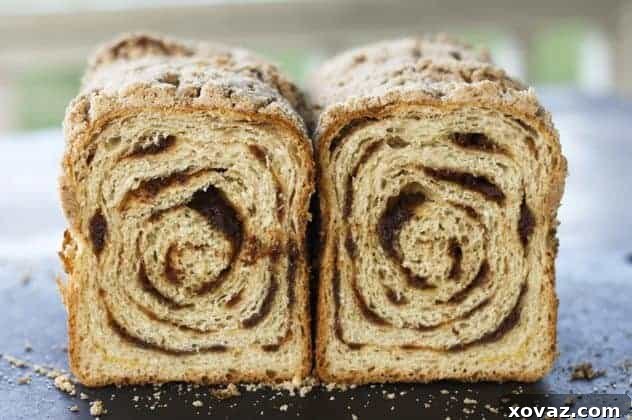
This isn’t just any cinnamon swirl bread; it’s an experience. The tender, soft white bread dough, infused with a subtle hint of cinnamon, forms the perfect canvas. It’s then meticulously rolled around the most deep, dark, and utterly moist cinnamon filling you could ever imagine. The beauty of this bread extends to its structural integrity; it holds together flawlessly when sliced, a testament to another clever tip from the King Arthur Flour Bakers Team: using an egg wash instead of butter to seal the dough. If you, like me, are prone to dismantling your cinnamon bread along the swirl lines as you eat it, you’ll find that this bread de-swirls beautifully with just a little encouragement from your fingers and teeth, yielding perfect ribbons of cinnamon-sugar delight.
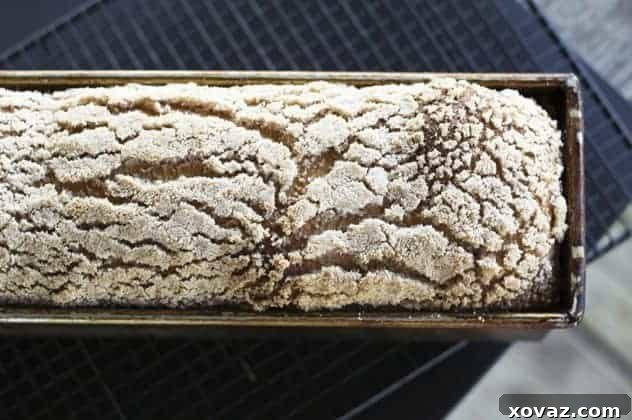
But the brilliance doesn’t stop there. These clever Arthurians crowned the loaf with a delightful streusel topping. Some might call it gilding the lily, an unnecessary embellishment. I, however, wholeheartedly disagree. It’s the kind of extra touch that elevates this homemade cinnamon swirl bread from wonderful to truly unforgettable. The crisp, sweet streusel adds another layer of texture and flavor, making each bite a symphony of sweet, comforting spices. This bread is not just a breakfast item; it’s a statement, a heartwarming start to any day, proving that homemade baking, especially with a few smart tricks, can conquer even the toughest critics.
Why Homemade Cinnamon Swirl Bread is a Must-Try
There’s an undeniable magic to homemade bread, and this Cinnamon Swirl Bread perfectly encapsulates it. The aroma alone, a comforting blend of warm cinnamon and freshly baked yeast, is enough to draw everyone to the kitchen. Beyond the delightful scent, baking your own bread offers unparalleled freshness and flavor that store-bought versions simply cannot match. You control the ingredients, ensuring a wholesome and delicious loaf every time.
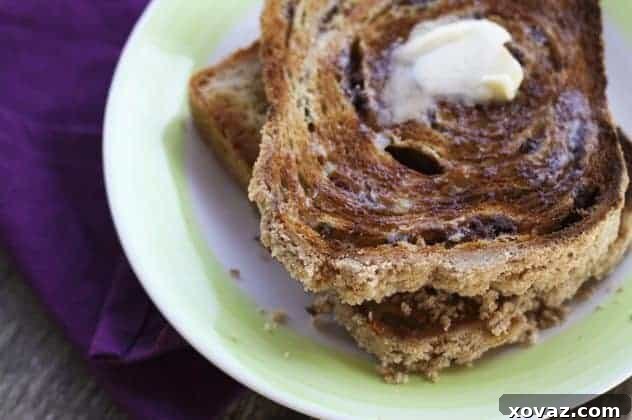
This particular recipe, with its clever raisin secret, is a game-changer for families with diverse palates. It’s a wonderful way to introduce natural fruit moisture and subtle depth of flavor without a direct confrontation with disliked ingredients. The soft, tender crumb combined with the rich, moist cinnamon swirl and the crunchy streusel topping creates a textural and taste experience that is utterly divine. It’s fantastic on its own, toasted with a pat of butter, or even as the base for the most incredible cinnamon toast you’ve ever had.
Baking this bread is also a deeply satisfying process. From the kneading of the smooth, elastic dough to watching it gracefully rise, and finally pulling a golden-brown, fragrant loaf from the oven, each step is rewarding. It’s a project that brings warmth and joy to your home, a perfect activity for a cozy weekend, and a treat that fosters happy memories around the breakfast table. So, next time you’re craving that comforting taste of cinnamon, embrace the challenge, try this ingenious recipe, and prepare for your own triumphant culinary moment!
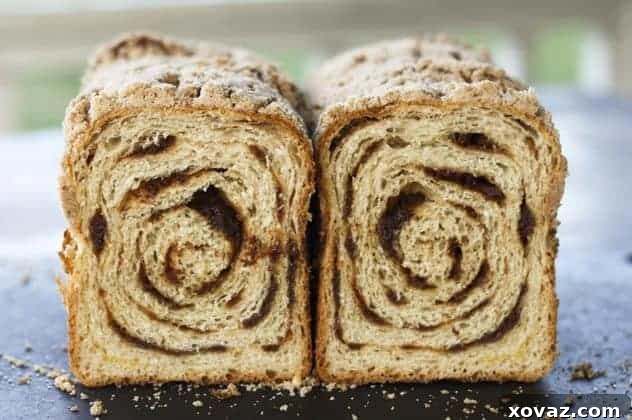
Cinnamon Swirl Bread
Rate Recipe
Rebecca Lindamood
Pin Recipe
Share on Facebook
Ingredients
- For the dough:
- 3 cups (12 3/4 ounces) all-purpose flour
- 1/3 cup (3/4 ounce) instant potato flakes or 1/4 cup (1 1/2 ounces) potato flour
- 1/4 cup (1 1/4 ounces) nonfat dry milk
- 1 1/4 teaspoons salt
- 1/2 teaspoon cinnamon
- 3 tablespoons (1 1/4 ounces) granulated sugar
- 2 1/2 teaspoons instant yeast
- 4 tablespoons (1/2 stick or 2 ounces) butter, softened to room temperature
- 1 cup (8 ounces) water
- For the Filling:
- 1/4 cup (2 ounces) raw sugar
- 2 1/2 teaspoons cinnamon divided
- 1/4 cup (1 1/2 ounces) raisins or currants
- 2 teaspoons all-purpose flour
- 2 tablespoons granulated sugar
- 1 large egg beaten with 1 tablespoon of water until smooth (for egg wash)
- For Topping:
- 2 tablespoons (1 ounce) cold butter
- 2 tablespoons (7/8 ounce) granulated sugar
- 1/4 teaspoon cinnamon
- 1/4 cup all-purpose flour
Instructions
For the Dough:
-
Combine all of the dough ingredients in a large mixing bowl (or the work bowl of a stand mixer), mixing until the dough comes away from the sides of the bowl and forms a shaggy mass.
-
Knead the dough thoroughly until it is smooth and satiny, indicating proper gluten development. By hand, this will typically take about 10 minutes. With a stand mixer, expect it to take between 5 and 7 minutes on medium speed.
-
Lightly oil a large mixing bowl or a specialized proofing bucket. Transfer the kneaded dough to this oiled container, turning it once to coat all sides, then cover lightly with plastic wrap to prevent a skin from forming.
-
Set the dough aside in a warm, draft-free place to rise until it is noticeably puffy and has nearly doubled in bulk. This process usually takes 1 to 1.5 hours, depending on your room temperature.
For the Filling:
-
In a food processor, pulse together the raisins (or currants), raw sugar, 1 1/2 teaspoons of the cinnamon, and all-purpose flour. Continue pulsing until the raisins are completely obliterated and the sugar forms small, moist clumps, creating a dark, paste-like mixture.
-
In a separate small bowl, stir together the remaining cinnamon and granulated sugar. Set this aside for later use.
To Assemble:
-
Lightly oil your work surface (a large clean countertop or pastry mat works well) and gently transfer the risen dough to it.
-
Using a rolling pin, gently roll the dough into an even rectangle, approximately 16 inches long by 8 inches wide.
-
Brush the entire surface of the rolled dough with about half of the prepared egg wash. Next, scatter the raisin/cinnamon mixture evenly over the top, spreading it almost to the edges. Then, sprinkle the reserved cinnamon sugar mixture evenly over everything else.
-
Starting from one of the short ends of the rectangle, begin rolling the dough up tightly, log-roll style. Aim for a tight roll to minimize air pockets, but avoid stretching the dough excessively. A tight roll ensures a beautiful, compact swirl when sliced.
-
Once rolled, firmly pinch the seam along the entire length of the log to seal it closed. Also, pinch the ends closed to contain the filling.
-
Tuck the sealed ends under the log and carefully move the prepared dough into a greased 8 1/2″ x 4 1/2″ standard loaf pan.
-
Cover the loaf pan with lightly greased plastic wrap or parchment paper. Allow it to rise at room temperature for approximately an hour, or until the dough has risen just above the edge of the bread pan.
To Top and Bake:
-
Preheat your oven to 350°F (175°C).
-
To prepare the streusel topping, combine the cold butter, granulated sugar, cinnamon, and all-purpose flour in a small bowl. Use a pastry blender (or pulse briefly in a food processor) to cut the butter into the dry ingredients until a crumbly mixture forms.
-
Gently brush the top surface of the risen loaf with the remaining egg wash. Immediately sprinkle all of the streusel topping evenly over the egg wash. Very gently press the topping into an even coating to help it adhere during baking.
-
Bake the bread for about 45 minutes. Keep an eye on it; if the top begins to brown too quickly, you can loosely tent it with aluminum foil during the last 15 minutes of baking to prevent over-browning.
-
Once baked, remove the bread pan from the oven and place it on a wire cooling rack for five minutes. After this brief resting period, run a butterknife around the edges of the loaf to ensure it’s loosened from the pan.
-
Carefully turn the pan on its side and gently slide the loaf out onto the cooling rack. This method helps to minimize any streusel topping from falling off. Turn the loaf upright and allow it to cool completely on the rack before attempting to slice it. Cooling completely is crucial for the internal structure and moisture of the bread.
Nutritional information is an estimate and provided to you as a courtesy. You should calculate the nutritional information with the actual ingredients used in your recipe using your preferred nutrition calculator.
Did you make this recipe?
We’d love to see your delicious creation! Make sure to tag @foodiewithfam on Instagram and #hashtag it #foodiewithfamily so I can admire your baking success!
Pin Recipe
Share on Facebook