
Welcome to the enchanting world of Pain au Chocolat, those glorious French pastries that promise a symphony of buttery, flaky layers cradling rich, melted chocolate. Known in some regions as “Chocolatines,” these exquisite treats are more than just a breakfast item; they are a culinary experience, a taste of French patisserie right in your home. While often considered a challenge, mastering this classic is incredibly rewarding, transforming simple ingredients into a masterpiece of texture and flavor that truly shines when homemade.
For those who love the art of baking, especially the magic of yeast and flour, be sure to explore our extensive collection of Bread Recipes for more delightful homemade creations!
The Irresistible Allure of Homemade Pain au Chocolat
Many of my most cherished memories are inextricably linked to food. From my grandmother’s Thanksgiving dinner rolls, carefully set aside just for me, to the clandestine (yet approved) pudding pops my siblings and I would “steal” from the freezer, these culinary moments are etched deep in my memory. The taste of my mother’s lumpia, my dad’s zucchini burgers, or my stepmom’s comforting oatmeal bread – they are all so profoundly imprinted that a moment of quiet reflection can almost bring their flavors back to life.
Among these treasured recollections, one stands out with particular vividness: the Pain au Chocolat I savored daily near my school in France. Oh, those Pain au Chocolat. They weren’t the most flamboyant pastries in the display case, but their allure was undeniable. Glossy, deeply browned, with layers that shattered with each bite, encasing two perfect rods of dark chocolate, they captured my heart instantly. They possessed a rustic charm, a less formal elegance than a tapered croissant, yet they were utterly perfect.
Imagine: a simple rectangle of rich, buttery puff pastry, meticulously wrapped around quality dark chocolate, baked until gleaming and caramelized to a deep, almost rosewood brown. And this was a standard breakfast for school children? It’s no wonder I fell in love with France.

Returning home, it took time to build the culinary courage to attempt such a quintessential French pastry. But once I did, I was left wondering why I had waited so long. The truth is, while it might seem easier to grab a “chocolate croissant” from a coffee shop, the homemade version is a world apart. Firstly, let’s address the nomenclature: while delicious, many establishments incorrectly label them as chocolate croissants when the pastry itself is definitively Pain au Chocolat. But more importantly, homemade Pain au Chocolat are superior in every conceivable way – from the crispiness of the exterior to the molten chocolate within. Don’t believe me? Try it yourself, and you’ll understand the profound difference. I’ll be here, enjoying my own glorious, homemade Pain au Chocolat.
Understanding Pain au Chocolat: A Brief Overview
At its core, Pain au Chocolat is a viennoiserie, a category of baked goods that originated in Vienna but became popularized in France. These pastries are typically made with a leavened dough similar to bread, but enriched with layers of butter, resulting in a light, airy, and flaky texture reminiscent of puff pastry or croissants. The distinctive feature of Pain au Chocolat is the inclusion of one or two “batons de chocolat” (chocolate sticks) within the rolled dough, creating pockets of melted chocolate in the center. The lamination process—folding butter into dough multiple times—is what gives these pastries their characteristic many-layered structure and incredible shatteringly crisp exterior.
The Art of Crafting Pain au Chocolat: A Step-by-Step Guide
Let’s be clear: making Pain au Chocolat is not inherently difficult. It simply requires patience, precision, and adherence to instructions. While the process involves several steps, each one is straightforward, and I’ve broken them down into manageable, digestible stages to guide you through this rewarding baking journey.
Essential Ingredients for Authentic Pain au Chocolat
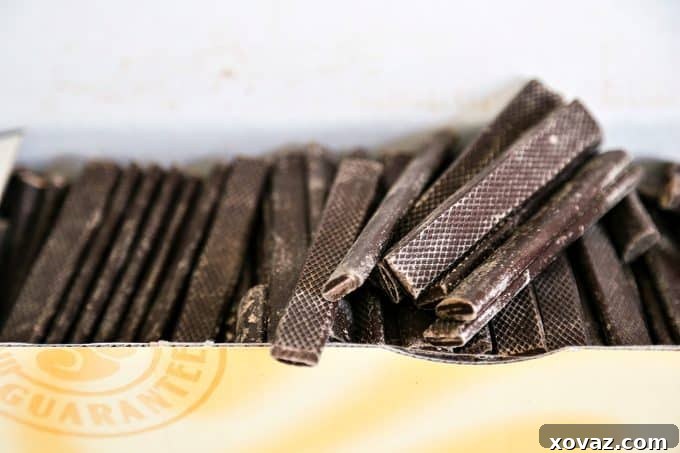
Before we dive into the method, let’s talk ingredients. While those beautiful chocolate batons are the traditional way to achieve the perfect veins of molten chocolate, don’t despair if you can’t find them locally. You can absolutely use good quality dark chocolate bars, broken into segments. A word of caution: using chocolate bars can be significantly more expensive in the long run compared to specialized batons. (For convenience, you can often find chocolate batons for Pain au Chocolat on Amazon.)
The most crucial ingredient, however, is butter. And let me state this unequivocally: **there is NO substitute for butter.** None. Nada. Zero. Avoid shortening, coconut oil, or tub margarine. While some bakers claim success with vegan butter sticks, I haven’t personally tested this, so I cannot recommend it for traditional French pastry. We are aiming for authentic, from-scratch results, and the French, as we know, revere their butter.
Speaking of butter – and there’s a generous amount in this recipe – please use **unsalted butter**. Controlling the salt content is key to achieving the perfect flavor balance in your Pain au Chocolat, which is impossible if you start with salted butter. Trust me on this. Finally, remember that almost every step of this recipe involves working with **cold butter** and dough, maintaining that chill is paramount until the final proofing and baking stage.
Step 1: Preparing the Enriched Yeast Dough
The foundation of our Pain au Chocolat is a simple yet enriched yeast dough. This dough provides the structure and a subtle bread-like quality that perfectly complements the buttery layers.
- Begin by mixing the softened unsalted butter with the yeast, warm milk, granulated sugar, salt, and about half of the unbleached all-purpose flour. This initial blend ensures the butter is evenly dispersed throughout the dough, which is crucial for consistency.
- A stand mixer with a dough hook makes this step effortless, but traditional hand mixing on a clean counter is equally effective. Continue mixing until a cohesive dough forms that pulls cleanly away from the sides of the bowl. If kneading by hand, work the dough until it is smooth and elastic.
- Lightly grease a bowl (or the stand mixer’s bowl if using) and place the dough inside. Cover it with a clean tea towel and allow it to rise in a warm spot for about an hour, or until it looks visibly puffy. In a cooler room, this may take up to two hours.
- Once risen, gently turn the dough out onto a lightly floured surface. Flatten it carefully with your palms and fold it into thirds, like a letter. This initial fold helps develop its structure.
- Lightly spray the inside of a gallon-sized zipper-top bag with cooking spray. Transfer the folded dough into the bag, seal it, and refrigerate for at least 2 hours, or up to 24 hours. This chilling period is vital for firming the dough and making it easier to work with in the next steps.
Step 2: Crafting the Butter Block (Beurrage)
While your dough is chilling, it’s time to prepare the butter block, often called “beurrage” in French patisserie. This step is critical for achieving the distinct layers of your pastry.
- Take two half-cup sticks of cold unsalted butter and cut them in half lengthwise. This will give you four long, even rectangles of butter.
- Lay a 12-inch (or longer) piece of waxed paper or plastic wrap on your counter. Sprinkle it generously with all-purpose flour.
- Arrange the four butter sticks side by side, touching, on the floured wrap. Sprinkle them with more flour, then cover with another piece of waxed paper or plastic wrap.
- Using a rolling pin, gently yet firmly smack the butter until it becomes malleable and starts to flatten. Then, roll it out until it forms a uniform rectangle, approximately 6-inches by 9-inches. The goal is to create a flat, even slab of butter.
- Once shaped, wrap the butter block tightly in the waxed paper or plastic wrap and return it to the refrigerator for at least an hour, or until you are ready to laminate the dough. It needs to be firm and cold, but not brittle.
Step 3: The Lamination Process: Building Flaky Layers
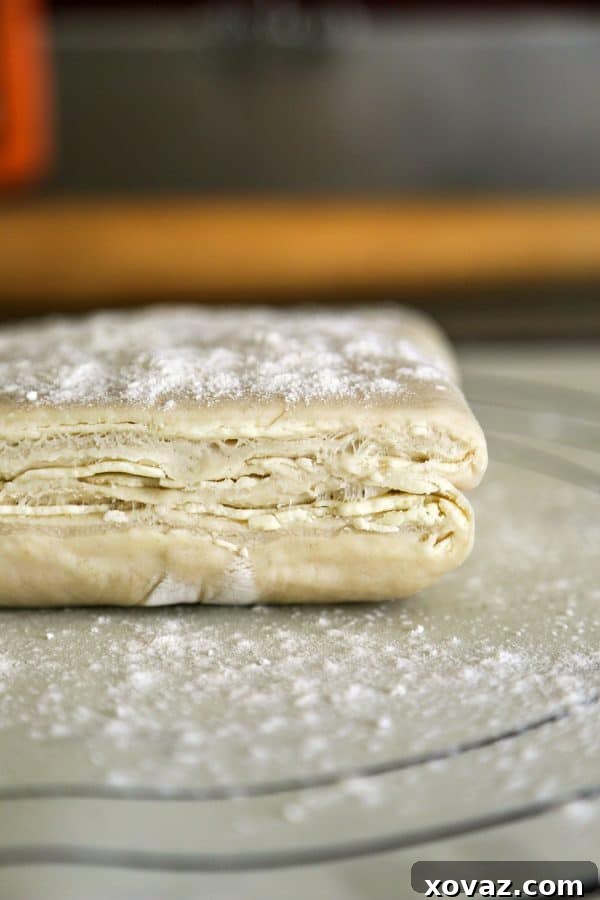
This is where the magic of lamination happens, creating hundreds of delicate, buttery layers that define a perfect Pain au Chocolat. Precision and keeping things cold are your best friends here.
- Remove the chilled dough from the refrigerator and place it on a lightly floured counter. Roll it out evenly into a rectangle approximately 10-inches by 20-inches.
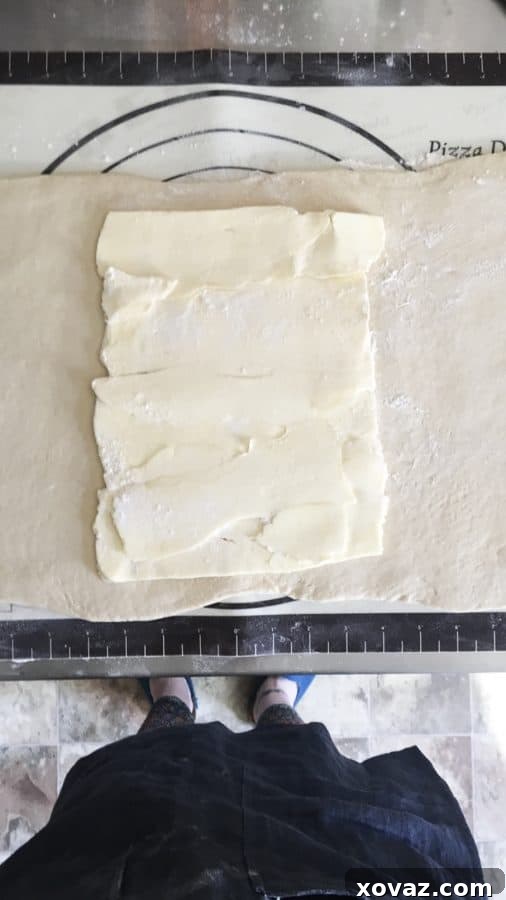
- Unwrap your prepared butter block and carefully center it on one half of the dough. This should leave about one-third of the dough exposed on one side, one-third covered by butter, and another one-third of exposed dough on the other side.
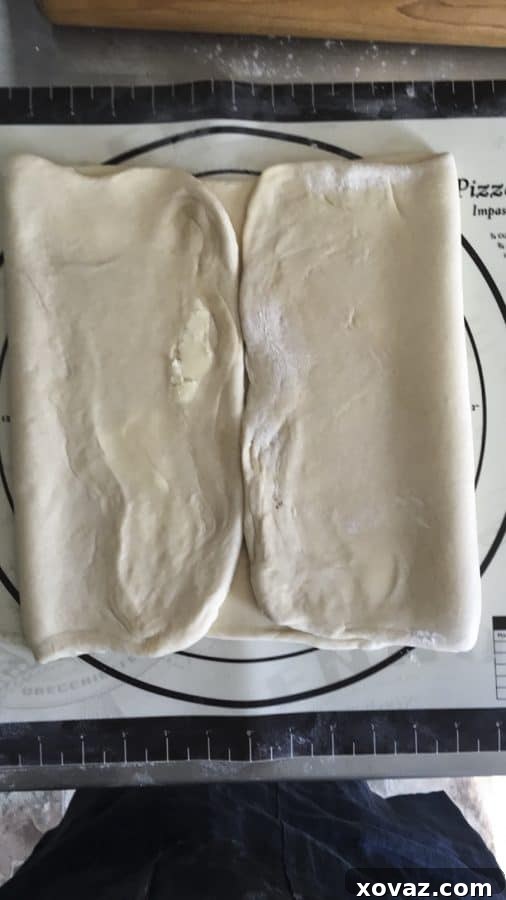
- Fold the uncovered side of the dough over the butter. Then, fold the remaining exposed dough over the previously folded section, creating a neat, three-layered package, much like folding a letter. Carefully pinch all the edges together to completely seal the butter inside the dough. This is your first “turn.”
- Gently roll the folded dough out again into a 10-inch by 24-inch rectangle. For this “book fold” or “double turn,” fold both ends of the dough in towards the center so they meet precisely in the middle. Then, fold the entire dough in half, as if closing a book. This creates four layers of butter and five layers of dough.
- Wrap the folded dough tightly in floured plastic wrap and return it to the refrigerator for at least 2 hours, but it can be stored for up to 7 days. This chilling period allows the gluten to relax and the butter to firm up, preventing it from melting or tearing through the dough during subsequent rolling.
Step 4: Shaping, Proofing, and Baking Your Chocolatines
The final stage brings your Pain au Chocolat to life, transforming the layered dough into beautiful, golden pastries.
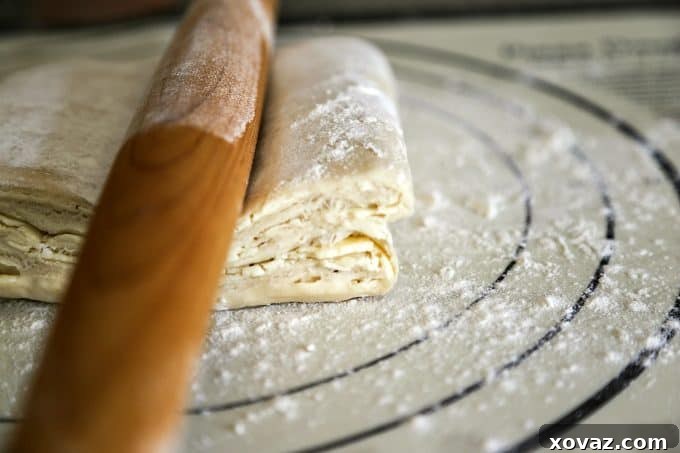
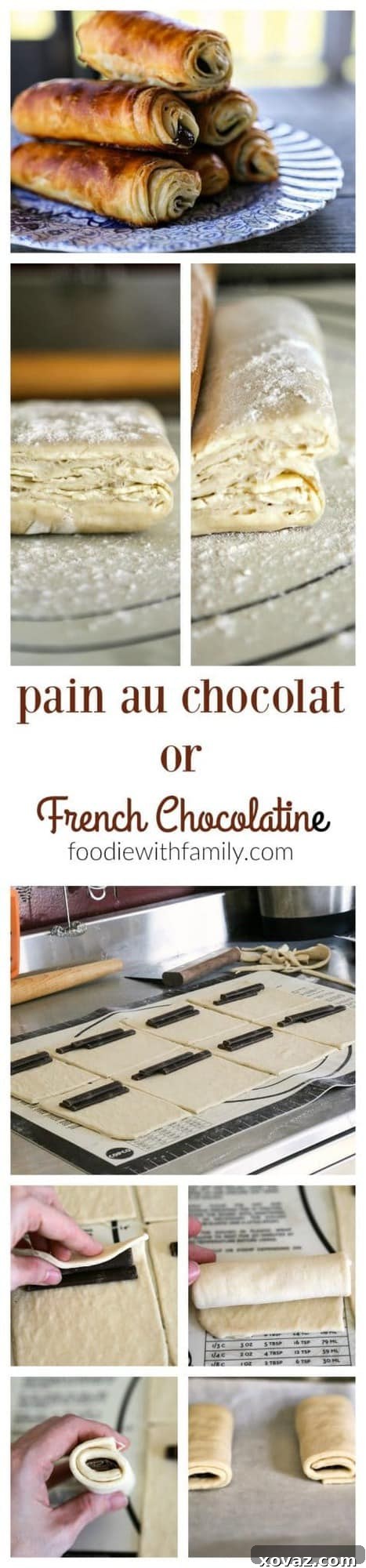
- Remove the laminated dough from the refrigerator. Unwrap it, cut it in half, re-wrap one half, and return it to the fridge. This allows you to work with a smaller, more manageable piece of dough and keeps the other half cold.
- On a lightly floured surface, roll out the working half of the dough into a rectangle roughly 9-inches by 25-inches.
- Using a pizza cutter, bench knife, or a very sharp paring knife, carefully trim the sides to create a neat 8-inch by 24-inch rectangle. **Important:** press straight down with the knife; do not drag it through the pastry, as this can seal the layers and prevent flakiness.
- Cut the dough in half lengthwise, again pressing straight down. Then, cut each long quarter crosswise into four equal pieces, yielding a total of 8 rectangles, each approximately 4-inches by 6-inches.
- Position 2 to 3 chocolate batons (or chocolate bar segments) near one end of each dough rectangle. Carefully roll the dough around the chocolate batons, creating a neat cylinder.
- Place the rolled pastries, seam-side down, on a parchment paper or Silpat-lined half-sheet pan, ensuring at least 2 to 3 inches of space around each one to allow for expansion. Gently press each pastry tube to flatten it slightly. A standard half-sheet pan should comfortably accommodate 8 unbaked Pain au Chocolat.
- Cover the pan with a clean tea towel and let the pastries rest at room temperature for about 30 minutes, or until they appear slightly puffy. This is the final proofing stage, allowing the yeast to activate and develop flavor and texture.
- While the pastries are proofing, preheat your oven to 425°F (220°C).
- In a small bowl, whisk together a large egg with a tiny pinch of kosher salt until the color is even. This is your egg wash.
- Carefully brush the tops of the Pain au Chocolat with the egg wash. This provides that beautiful golden-brown, glossy finish.
- Bake for 15 to 18 minutes, or until the pastries are wonderfully puffed, set, visibly flaky, and caramelized to a deep, rosewood brown.
- Once baked, let the pastries rest on the pan for 5 minutes before transferring them to a wire cooling rack. Pain au Chocolat are always at their absolute best when eaten slightly warm on the day they are made. However, in the unlikely event there are any leftovers, I can personally attest they are still incredibly delicious the next day.
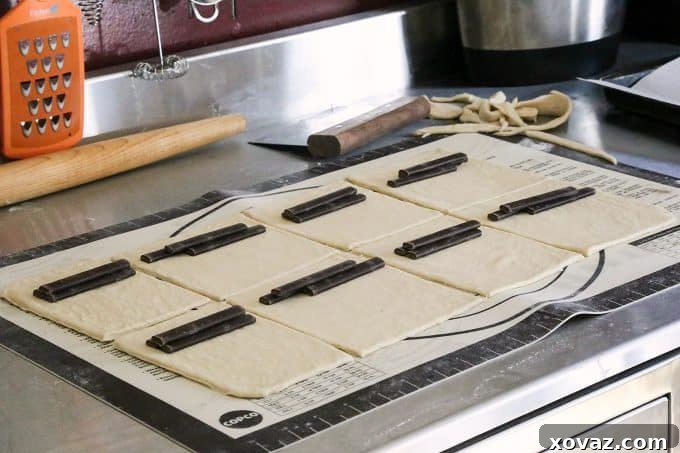
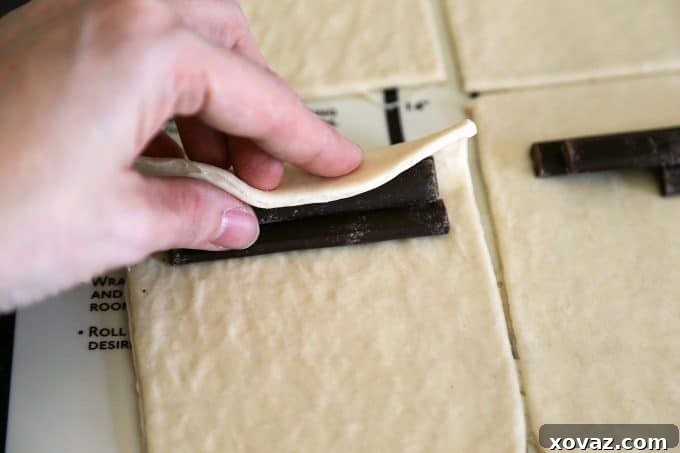
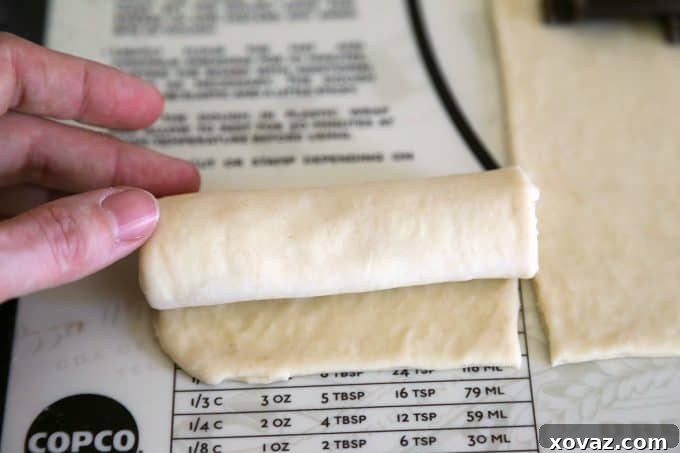
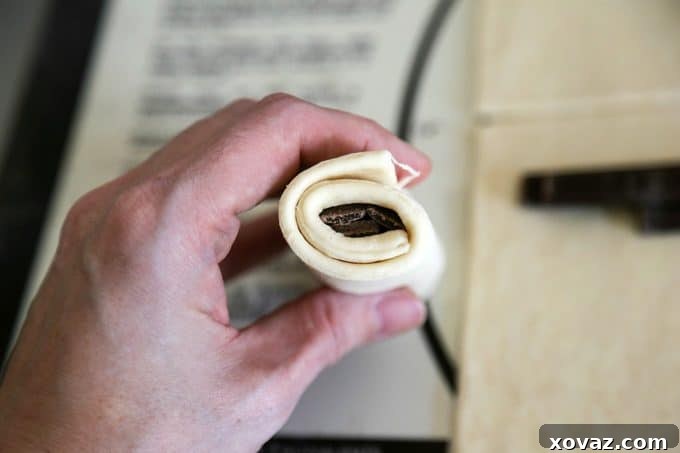
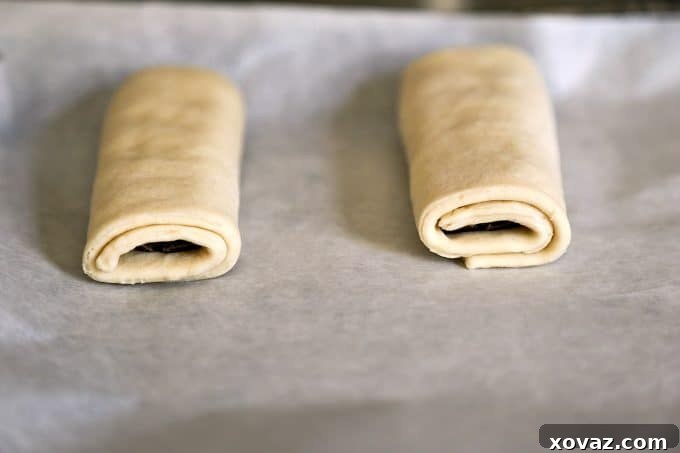
For a visual aid, watch this quick video demonstrating the process of rolling out, cutting, and forming the Pain au Chocolat:

Mastering the Timing: A Flexible Schedule for Pain au Chocolat
One of the beauties of making Pain au Chocolat is the inherent flexibility in its timing. This recipe includes several “resting” periods that can be extended, allowing you to fit the baking process into even the busiest schedules. This makes it an ideal project for spreading out over a few days or preparing in advance for a special occasion.
You’ll notice two main points where you can significantly extend the waiting time between steps:
- **After making and initially rising the dough:** Once your enriched yeast dough has risen and been folded into thirds, you refrigerate it in a greased bag. This chilling period needs to be at least 2 hours but can comfortably extend up to 24 hours. This means you can prepare the dough one day and laminate the butter the next.
- **After the lamination process (creating the pastry):** After you’ve incorporated the butter into the dough, rolled it out, performed the “book fold,” and returned it to the refrigerator, you have another lengthy window. This rest period should be at least 2 hours but can stretch for an impressive **up to 7 days**. This incredible flexibility means you can do the bulk of the intensive work nearly a week before you plan to bake and enjoy your pastries!
This accommodating nature means you can break down the process into smaller, less daunting tasks, making homemade Pain au Chocolat an achievable dream for any home baker. You can do the foundational work up to 8 days in advance of when you wish to serve them.
Here is a sample timeline for making Pain au Chocolat in the **shortest possible amount of time**:
8:00 AM Tuesday: Prepare the yeast dough.
9:15 AM Tuesday: Refrigerate the dough. Simultaneously, prepare and refrigerate the butter block.
11:30 AM Tuesday: Remove dough and butter from the fridge. Perform the first lamination (letter fold), roll out, perform the second lamination (book fold), and return to the refrigerator.
1:30 PM Tuesday: Remove half of the dough from the refrigerator, roll it out, shape the Pain au Chocolat, and allow them to proof at room temperature.
2:00 PM Tuesday: Preheat oven and bake the Pain au Chocolat.
3:00 PM Tuesday: Indulge and EAT!
And here is a sample timeline illustrating how you might make Pain au Chocolat over the **longest possible period**:
8:00 AM Tuesday (Day 1): Prepare the yeast dough.
9:15 AM Tuesday (Day 1): Refrigerate the dough. Simultaneously, prepare and refrigerate the butter block.
9:15 AM Wednesday (Day 2): Remove dough and butter from the fridge. Perform the first lamination (letter fold), roll out, perform the second lamination (book fold), and return to the refrigerator.
9:15 AM Wednesday (Day 9, the following week): Remove half of the dough from the refrigerator, roll it out, shape the Pain au Chocolat, and allow them to proof at room temperature.
9:45 AM Wednesday (Day 9): Preheat oven and bake the Pain au Chocolat.
10:00 AM Wednesday (Day 9): Savor your perfectly timed and baked pastries!
Tips for Pain au Chocolat Perfection
Achieving those coveted flaky layers and molten chocolate pockets requires a few key considerations:
- **Maintain Cold Temperatures:** This cannot be stressed enough. Keep your dough and butter as cold as possible throughout the lamination process. If the butter becomes too warm, it will melt into the dough instead of creating distinct layers, resulting in a less flaky pastry. If you notice the butter softening too much or tearing through the dough, return it to the refrigerator immediately for 15-30 minutes before continuing.
- **Flour Judiciously:** Use just enough flour on your work surface and rolling pin to prevent sticking, but avoid excessive flour. Too much flour can toughen the dough and alter its texture. Brush off any excess flour from the dough before folding.
- **Gentle and Even Rolling:** Roll the dough with even pressure to avoid thin spots or holes that could cause the butter to break through. Use gentle, steady strokes. If the dough resists, let it rest for a few minutes to allow the gluten to relax before continuing.
- **The Importance of Resting:** The resting periods in the refrigerator are not optional. They are crucial for allowing the gluten in the dough to relax, making it easier to roll, and for chilling the butter, which is essential for proper lamination. Do not rush these steps.
- **Quality Chocolate Matters:** Since the chocolate is a star ingredient, choose a high-quality semi-sweet or dark chocolate that you enjoy eating on its own. It will significantly impact the flavor of your Pain au Chocolat.
- **Don’t Over-Proof:** While proofing is necessary for the pastries to rise, over-proofing can lead to a dense texture and loss of definition in the layers. Aim for “slightly puffy” rather than doubled in size during the final room temperature proof.
- **Oven Temperature:** Ensure your oven is fully preheated to the specified temperature. A hot oven helps create that initial puff and sets the layers quickly, contributing to flakiness.
Serving Suggestions and Storage
Pain au Chocolat are truly magnificent when served warm, straight from the oven, allowing the chocolate to be perfectly molten. They pair wonderfully with a strong cup of coffee, a creamy latte, or a delicate cup of tea for a quintessential French breakfast or an elegant afternoon treat. For an extra touch, a light dusting of powdered sugar can be added, though it’s often unnecessary given their inherent deliciousness.
If you happen to have any leftovers, store them in an airtight container at room temperature for up to 2 days, or in the refrigerator for up to 3-4 days. To recapture some of their initial magic, gently reheat them in a toaster oven or a regular oven at a low temperature (around 300°F/150°C) for a few minutes until warmed through and slightly re-crisped.
Pain au Chocolat – French Chocolatine
Recipe largely from King Arthur Flour with instructional clarifications from Rebecca Lindamood, Foodie with Family.
Ingredients
For the Dough:
- 1 1/2 cups whole milk
- 1/4 cup granulated sugar
- 4 1/2 cups unbleached all-purpose flour
- 2 teaspoons instant or active dry yeast
- 2 teaspoons kosher salt
- 2 tablespoons unsalted butter, softened
For the Butter:
- 2 sticks cold unsalted butter (one cup total)
- All-purpose flour, for dusting
Additional Ingredients for the Pastry:
- Between 32 and 48 dark chocolate batons (or good quality dark chocolate bars)
- 1 large egg, beaten
- A pinch of kosher salt
Instructions
To Make the Dough:
- Mix the softened butter with the yeast, milk, sugar, salt, and about half of the flour in the bowl of a stand mixer fitted with a batter blade (or by hand). Once you have a homogenous mixture, add in the rest of the flour and mix until a dough forms that pulls away from the edges of the bowl.
- Lightly grease the stand-mixer’s bowl (or a separate bowl), form a tight round of dough, return the dough to the bowl, and cover with a clean tea towel. Let rise for about an hour, or until puffy. If your room is cool, this may take up to another hour longer.
- Use cooking spray to lightly grease the inside of a gallon-sized zipper-top bag. Turn the dough out onto the counter, flatten it gently with the palms of your hands, and fold in thirds like a letter. Slide the dough into the prepared bag, zip the bag shut, and place into the refrigerator for at least 2 hours, but up to 24 hours.
Prepare the Butter:
- While the dough is chilling, prepare your butter. This can be done as soon as you’ve placed the dough in the refrigerator. Cut 2 half-cup sticks of cold unsalted butter in half lengthwise to create four long rectangles. Set aside.
- Lay a 12-inch or longer piece of waxed paper or plastic wrap. Sprinkle thoroughly with flour. Lay the sticks of butter side by side (touching), sprinkle with more flour, and lay another piece of waxed paper or plastic wrap over the top.
- Gently smack with a rolling pin until the butter becomes malleable, then roll it out until it is approximately 6-inches by 9-inches. Wrap well with the waxed paper or plastic wrap and return it to the refrigerator for at least an hour or until you’re ready to deal with the dough.
Creating the Puff Pastry (Lamination):
- Take the refrigerated dough from the bag and place onto your lightly floured counter. Roll out until it forms a rectangle that is approximately 10-inches by 20-inches.
- Take the refrigerated butter from its wrapper and center the butter on top of the dough. This will leave about 1/3 of the dough open, followed by 1/3 covered by butter, followed by another open 1/3 of dough.
- Fold an open side of dough over the butter, then fold the other open side of dough over the previously folded side of dough, much like you’re folding a letter into thirds. Pinch the edges together thoroughly, sealing the butter into the dough completely.
- Roll the dough out into a 10-inch by 24-inch rectangle. This time, fold both ends in toward the center to meet in the middle, then fold that in half like closing a book.
- Wrap this up with floured plastic wrap and return the whole thing to the refrigerator for at least 2 hours but up to 7 days.
Putting it All Together and Baking:
- Remove the dough from the refrigerator, unwrap, cut in half, re-wrap half and return it to the refrigerator. Roll out the remaining half of the dough into a rectangle that is roughly 9-inches by 25-inches.
- Use a pizza cutter, bench knife, or sharp paring knife to trim the sides neatly to an 8-inch by 24-inch rectangle, pressing straight down with the knife. Do not drag the knife through the pastry.
- Cut the dough in half lengthwise (again, cutting straight down), then crosswise. Cut the long rectangle quarters into half again, yielding 8 rectangles that are about 4-inches by 6 inches each.
- Lay 2 to 3 chocolate batons near the end of each rectangle and roll the dough around them.
- Lay the pastry tube, seam side down, on a parchment or Silpat-lined half-sheet pan, leaving at least 2 to 3 inches of free space all the way around. Gently press the tube to flatten. A half sheet pan should comfortably fit 8 unbaked Pain au Chocolat.
- Lay a clean tea towel over the pan and let rest at room temperature for 30 minutes, or until slightly puffy.
- Preheat the oven to 425°F (220°C). Whisk together a large egg with a pinch of salt until even in color for an egg wash.
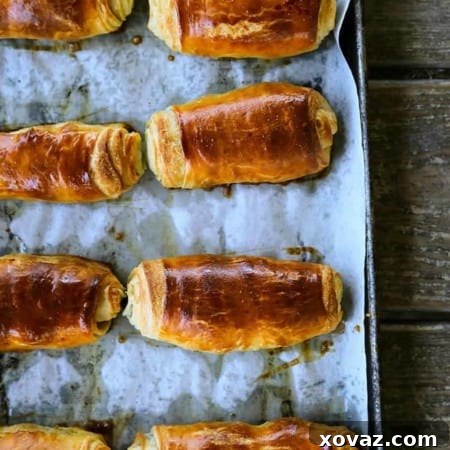
- Brush the tops of the Pain au Chocolat with the egg wash. Bake for 15 to 18 minutes, or until the pastry is puffed, set, flaky, and caramelized to a deep rosewood brown.
- Let the pastries rest on the pan for 5 minutes before transferring to a cooling rack. These are always best when eaten slightly warm on the day they were made, but if there are any leftovers, they are still wonderful the day after.
Nutritional information is an estimate and provided to you as a courtesy. You should calculate the nutritional information with the actual ingredients used in your recipe using your preferred nutrition calculator.
Did you make this recipe?
Make sure to tag @foodiewithfam on Instagram and #hashtag it #foodiewithfamily so I can check it out!
Looking to Buy Chocolate Batons?
If you’re ready to get started and need the authentic chocolate batons, you can purchase them conveniently here!