Craving more incredible flavors from Korea? Explore our diverse collection of Korean Food Recipes!
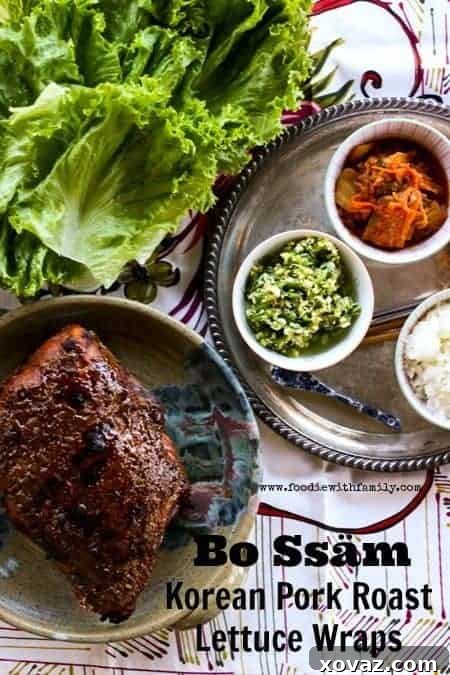
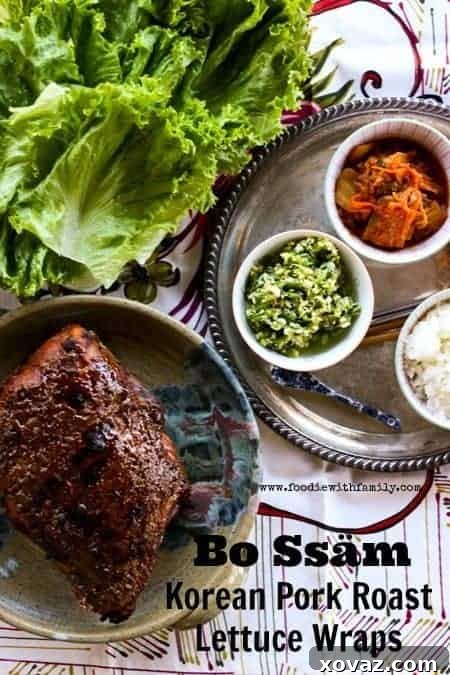
Bo Ssam: The Ultimate Korean Pork Roast Lettuce Wraps
Embark on a culinary journey to Korea right from your kitchen with Bo Ssam, a spectacular dish that’s deceptively simple to prepare yet delivers an explosion of flavor. Often, the biggest hurdle to recreating popular international cuisines at home is tracking down elusive ingredients. But fear not! This classic Korean pork roast, traditionally served in crisp lettuce wraps, relies on a handful of readily available staples. Even if you reside far from bustling city markets, you can craft this masterpiece for under $20, proving that extraordinary food doesn’t require an extraordinary budget or a long drive.
The Magic of Bo Ssam: Simple Ingredients, Sublime Taste
At its heart, Bo Ssam is a celebration of humble ingredients elevated to gastronomic heights. The star of the show is a pork shoulder or pork butt roast, slow-cooked to tender perfection. While the mention of “pork butt” might elicit a chuckle, its marbling is absolutely crucial to the dish’s succulence. Alongside the pork, you’ll need just sugar and salt – simple, right? These core components, combined with a generous amount of time, lay the foundation for a dish that tastes like a million bucks.
You might be thinking, “Time? I don’t have all day!” And you’d be correct in noting that Bo Ssam demands a significant commitment to passive cooking time, roughly seven hours from start to finish. However, don’t let that intimidate you. The hands-on preparation is incredibly minimal, amounting to a mere ten minutes spread across the entire process. This means you can easily integrate Bo Ssam into a busy weekend, leaving the oven to work its magic while you tackle chores, enjoy a hike, read a book, or simply relax. The intoxicating aroma filling your home will be ample reward for your patience.
Why Pork Shoulder or Butt is Essential for Authentic Bo Ssam
When selecting your cut of meat for Bo Ssam, resist the urge to substitute leaner options like pork loin or tenderloin. This is a crucial point: the fat content in a bone-in pork shoulder or butt roast is absolutely non-negotiable. It renders down during the long cooking process, infusing the meat with unparalleled moisture and flavor, creating that signature melt-in-your-mouth texture that defines an authentic Bo Ssam. This dish is meant to be an indulgence, so embrace the fat; it’s what makes it so incredibly delicious.
Selecting the Perfect Roasting Pan
The right roasting vessel plays a small but important role. Avoid using an overly large pan, like one you’d use for a Thanksgiving turkey, unless you’re cooking a massive roast. The pork needs to fit snugly into the pan. This closeness allows the meat to “cuddle” into its own juices and seasonings, promoting even cooking and caramelization. A deep casserole dish often works wonderfully. The primary consideration is ensuring the pan has sufficiently high sides to contain the copious amounts of flavorful cooking juices and rendered fat that accumulate throughout the slow roast.
The Bo Ssam Experience: A Symphony of Flavors and Textures
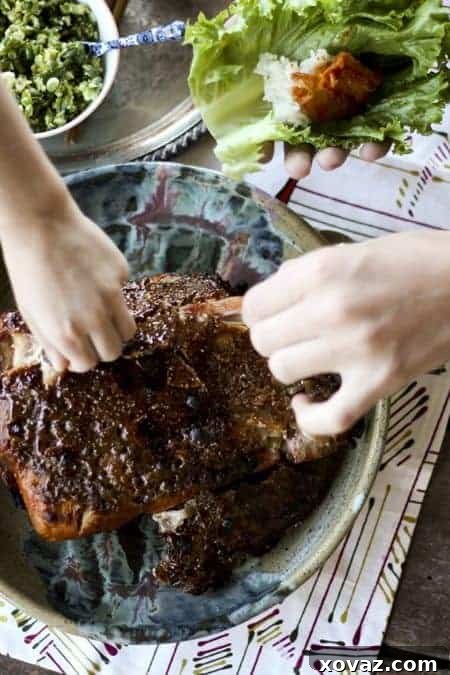
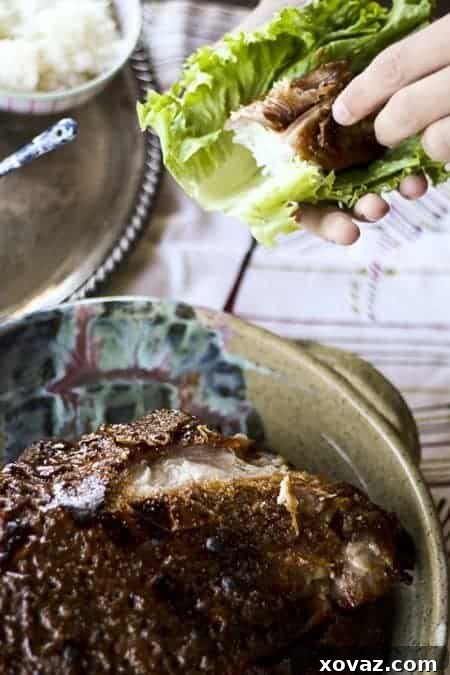
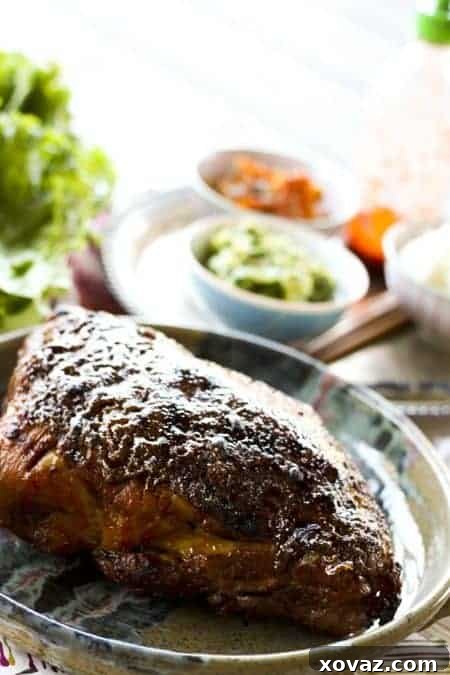
Describing the experience of eating Bo Ssam is almost as challenging as resisting it. Imagine pulling off a succulent piece of pork, its outer layer a tantalizing blend of sweet, salty, and caramelized crust – almost like savory pork candy. This tender meat is then nestled into a crisp lettuce leaf, piled high with steaming short-grain rice, a dollop of vibrant kimchi (which, yes, we’ll cover in a future post!), a generous spoonful of our incredible Ginger Scallion Sauce (recipe included below!), and a touch of fiery Sriracha. It’s a harmonious blend of textures and tastes: crunchy, chewy, sweet, salty, spicy, and savory.
The first bite is often met with wide-eyed wonder. When my family first tried it, it was an instant hit. We gathered around the counter, foregoing the dining table in our eagerness, grabbing, piling, drizzling, and devouring until our faces were plastered with permanent grins and our arms sticky with delicious juices. It wasn’t just a meal; it was a memorable event, sealing Bo Ssam’s fate as a family favorite. Requests for “this again, soon, please, often” became the norm, solidifying its place for birthday celebrations, annual feasts, and even to impress discerning guests like my father-in-law.
For those curious about the rich history and cultural significance of this beloved dish, you can delve deeper into its origins by visiting the Wikipedia page for Bossam.
Mastering the Flavor Balance: A Crucial Note on Saltiness
Before you serve, you might be tempted to taste a piece of the roast after its initial long cook, but prior to applying the final brown sugar crust. If you do, don’t be alarmed if it tastes intensely salty, almost like a “pork salt-lick.” This is perfectly normal and by design! The overnight salt and raw sugar rub acts as a cure, creating a wonderfully seasoned outer layer. Like many traditional Korean meat dishes, Bo Ssam is intended to be salty on its own because it’s always served with unsalted accompaniments. The crisp, unsalted lettuce leaves, plain steamed rice, tangy kimchi, and savory Ginger Scallion Sauce all work in concert to dramatically balance the overall saltiness, creating a perfectly harmonious bite.
My husband often reminds me to emphasize that while the outer crust is boldly seasoned, the inner meat, beyond that incredible salty-sweet exterior, is quite mild and succulent. The brilliance of Bo Ssam lies in combining a bit of that crispy, caramelized outer crust with the tender, juicy inner meat. This interplay of textures and flavors is pure perfection. The initial salt treatment not only creates a unique taste but also historically helped preserve the meat, and (theoretically, at least!) might even prevent overeating by providing such a satisfying burst of flavor. When all elements are brought together in a single wrap, the result is absolutely, unequivocally perfect.
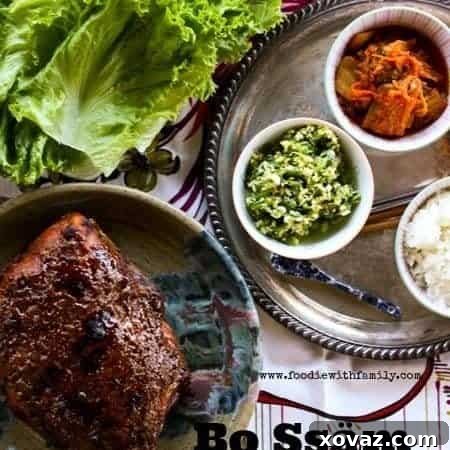
Bo Ssäm {Korean Pork Roast Lettuce Wraps} and Ginger Scallion Sauce
There is something truly remarkable in transforming such simple ingredients into a dish as sublime as Bo Ssäm. This salty, sweet, and incredibly succulent roast pork, crowned with a caramelized crust that’s akin to pork candy, is a revelation. Serve generous hunks of the pork on fresh lettuce leaves with hot cooked rice, kimchi, and the accompanying Ginger Scallion Sauce. It is, in every sense of the word, perfection. This recipe is gently adapted from, and with immense gratitude to, David Chang of Momofuku Ssäm Bar.
Ingredients
For the Bo Ssäm:
- Bone-in Pork Shoulder or Butt Roast: Between 4-11 pounds (*See Notes below regarding cut choice).
- 1 cup plus 1 tablespoon kosher salt: Divided.
- 1 cup raw sugar or sucanat
- 1/2 cup brown sugar
For the Ginger Scallion Sauce:
- 3 bunches green onions (scallions): Root ends trimmed, then sliced thinly.
- 5-inch piece of fresh ginger root: Peeled and minced or finely grated.
- 1/2 cup canola or grapeseed oil
- 1 teaspoon white wine vinegar or rice vinegar
- 1/2 teaspoon soy sauce
To Serve:
- Red or Green Leaf Lettuce: Leaves removed from core, washed, and dried thoroughly.
- Hot, fresh, cooked short or medium grain rice
- Kimchi: Store-bought or homemade.
- Ginger Scallion Sauce
- Sriracha (optional)
Instructions
The Night Before Cooking:
- Combine 1 cup of kosher salt with the 1 cup of raw sugar or sucanat. Rub this mixture thoroughly over the entire pork roast. Place the seasoned roast in a snug-fitting, high-sided roasting pan. Cover the pan tightly with plastic wrap and refrigerate overnight.
To Make the Ginger Scallion Sauce:
- In a medium bowl, mix all ingredients for the Ginger Scallion Sauce together. Cover the bowl and refrigerate the sauce for at least 30 minutes to allow the flavors to meld. It can be made up to 4 days in advance.
To Cook the Bo Ssäm:
- Preheat your oven to 300°F (150°C) with an oven rack positioned in the center.
- Remove the pork roast from the refrigerator. Pour off any accumulated liquid and excess salt/sugar mixture that has pooled under and around the pork in the roasting pan. Ensure the pork roast is fat side up in the pan. Place the uncovered pan in the preheated oven and roast for 4 to 7 hours. Baste the roast with the rendered fat and juices approximately every hour. Don’t worry if you miss a basting cycle; the roast will still be delicious. The cooking time will vary depending on the size of your roast: smaller roasts will cook faster, larger ones will take longer. The goal is for the pork to become incredibly tender, almost falling apart when gently moved with tongs.
- Once the pork reaches this desired tenderness, carefully remove the pan from the oven. Transfer the roast to a rimmed, small baking sheet and tent it lightly with aluminum foil. Allow it to rest at room temperature for 30 to 60 minutes. Alternatively, if you’re preparing this in advance, wrap the roast tightly with plastic wrap and refrigerate it at this point. The cooked roast can be refrigerated for up to 3 days after this primary cooking stage.
About an Hour Before Serving:
- If you refrigerated the roast, take it out about 30 minutes before this stage to allow it to come closer to room temperature.
- Preheat your oven to 500°F (260°C). If your oven does not reach this temperature, preheat your broiler to HIGH. In a small bowl, use a fork to mix together the brown sugar and the remaining tablespoon of kosher salt. Uncover the rested roast, sprinkle this brown sugar and salt mixture evenly over the top surface of the pork, and gently press it into the meat with your hands.
- Place the roast back into the very hot oven (or under the broiler). Watch it very carefully, as the sugar can burn quickly at high temperatures. Remove the roast from the oven when the sugar has melted and caramelized into a sticky, dark, and glossy crust on top of the pork. Some charred areas are not only acceptable but desirable, contributing to the flavor complexity.
- Let the caramelized pork roast rest on the baking sheet for about 10 minutes before transferring it to a serving platter.
- Serve the Bo Ssäm hot, warm, or at room temperature, with as many of the suggested accompaniments as you can provide for the ultimate Korean feast!
Chef’s Notes:
*If your pork roast comes with the skin on (consider yourself lucky!), use a sharp knife to carefully cut the skin away from the fat layer, ensuring the fat remains intact on the roast.
Nutritional information provided is an estimate and should be calculated with the actual ingredients used in your specific recipe using your preferred nutrition calculator.
Did you make this recipe?
We absolutely love seeing your culinary creations! Be sure to tag @foodiewithfam on Instagram and use the hashtag #foodiewithfamily so we can admire your delicious Bo Ssam!