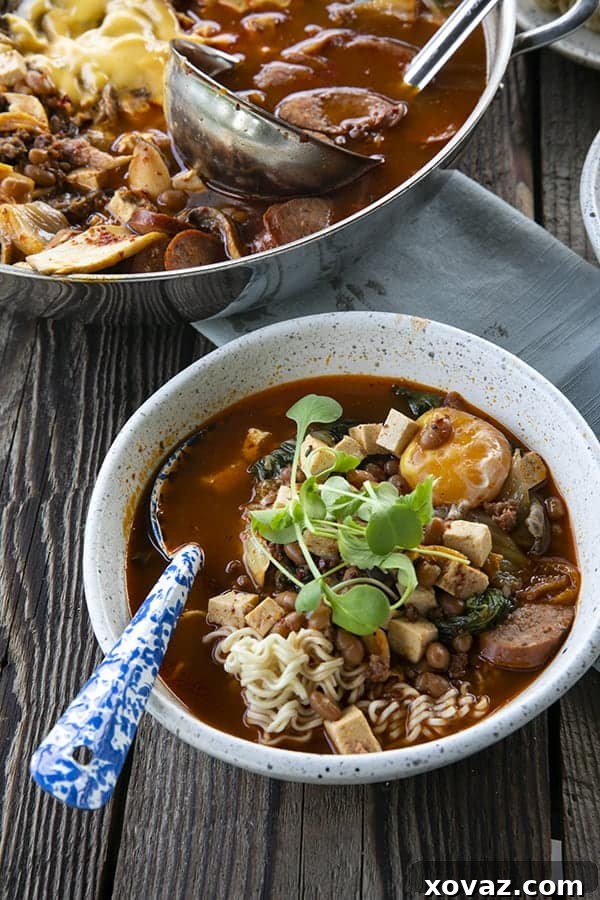
Korean Army Stew, famously known as Budae Jjigae or Spicy Sausage Stew, is a truly iconic and deeply comforting one-pot meal that has captured the hearts and palates of many. This hearty fusion dish combines a rich, spicy broth with an exciting array of ingredients, including ground meat, various sausages, fresh vegetables, and satisfying noodles. Prepare to discover why this flavorful stew is more than just a recipe; it’s a delicious journey through Korean culinary history and a perfect dish for any chilly evening.
My fascination with Korean cuisine began nearly two decades ago when my younger brother moved to Korea. Immersing myself in a country’s food culture is my preferred way to understand its essence, and Korea offered a vibrant tapestry of flavors and stories. Among the many fascinating dishes I encountered, Budae Jjigae stood out. Its unique origins immediately piqued my curiosity.
The Intriguing History of Budae Jjigae
Budae Jjigae is not just a stew; it’s a testament to resilience and culinary ingenuity born out of necessity. Emerging in the aftermath of the Korean War, it’s a dish that perfectly encapsulates a period of profound hardship and resourcefulness. With local resources scarce, Koreans ingeniously combined readily available surplus foods from U.S. army bases, such as hot dogs, smoked sausage, and the infamous Spam, with traditional Korean staples like kimchi and gochujang (Korean chili paste).
The very idea of a savory, spicy kimchi broth mingling with processed meats like hot dogs and Spam initially seemed unusual to my Western palate. However, its enduring popularity in Korea spoke volumes, compelling me to experience it firsthand. I decided to dive in wholeheartedly, making a generously sized pot. And I am incredibly glad I did. The first spoonful was a revelation – a perfectly balanced blend of savory depth, invigorating spice, and hearty satisfaction. It was simple to prepare, endlessly customizable, and above all, utterly delicious.
Why Budae Jjigae Deserves a Spot in Your Kitchen
Beyond its intriguing history, Budae Jjigae offers several compelling reasons to become a regular in your meal rotation. It’s a remarkably adaptable dish, allowing for personalization based on available ingredients and dietary preferences. Its one-pot nature makes for an easy clean-up, and its comforting warmth is ideal for those crisp autumn evenings or frosty winter nights. You’ll be hard-pressed to find a quicker-to-make stew that delivers such profound comfort.
Essential Ingredients for an Authentic Korean Army Stew
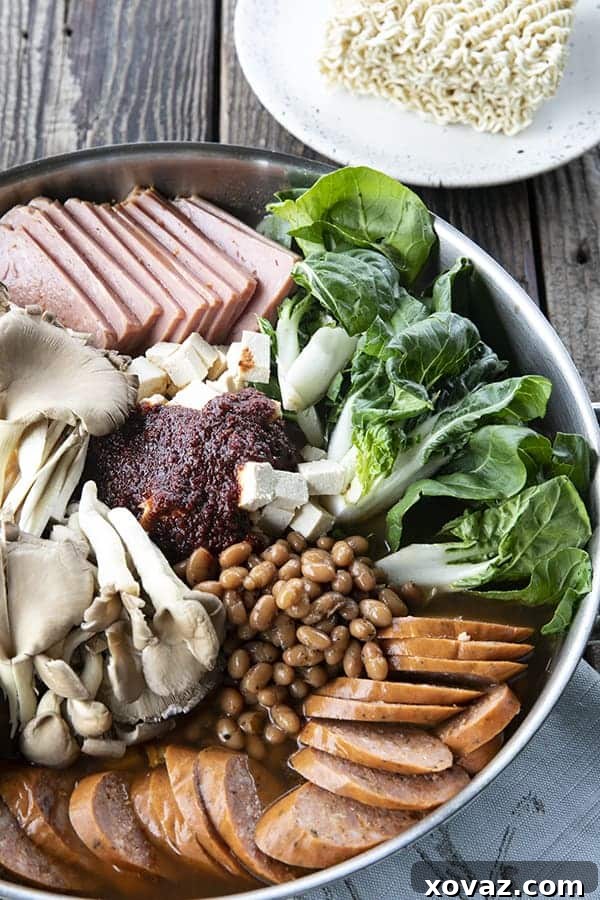
While Budae Jjigae is incredibly versatile, a few core ingredients are crucial for capturing its authentic flavor profile. Don’t be intimidated by the list; it’s mostly about gathering a diverse assortment of delicious components.
1. Kimchi: The Heart of the Stew
Kimchi is truly non-negotiable for Budae Jjigae. Its fermented tang, spicy kick, and satisfying crunch provide an unparalleled depth of flavor and texture that forms the very foundation of the broth. You can use either homemade kimchi (which I highly recommend trying!) or store-bought varieties. Ensure your kimchi is cut into bite-sized pieces for easy eating.
2. Flavorful Broth: Building the Base
Traditionally, a delicate anchovy and kelp broth is used in Korean Army Stew, offering a deep umami base. However, if this is difficult to source, a low-sodium chicken or vegetable broth makes an excellent and accessible substitute. Opting for low-sodium allows you to control the seasoning and spice level more precisely.
3. Meats: A Medley of Savory Goodness
The meat component of Budae Jjigae is where the “army” aspect truly shines. My personal preference includes a touch of ground beef for richness, but ground pork, turkey, or chicken work equally well. Smoked sausage and Spam are classic additions, integral to the stew’s historical context. Don’t be shy about adding Spam here; it contributes a unique savory saltiness that authentically belongs to this dish, despite any preconceived notions. Other delicious options include sliced hot dogs, canned Vienna sausages, bacon, or even leftover cooked ham.
4. Aromatics: The Flavor Enhancers
Never skimp on the aromatics! Fresh garlic, ginger, and green onions are vital for deepening the flavors and elevating the entire dish. They provide a fragrant base that complements the rich broth and spicy elements.
5. Noodles: The Ultimate Comfort Component
Instant ramen noodles are the most common and authentic noodle choice for Korean Army Stew. Embrace the humble packet (discarding or saving the seasoning for another use) for its chewy texture and ability to soak up the delicious broth. For a gluten-free option, sweet potato starch noodles, also known as glass noodles, are a fantastic alternative. A key tip: always cook the noodles separately and add them to individual servings just before eating. This prevents them from absorbing too much broth and turning mushy, ensuring perfect texture every time, especially for leftovers.
Customizing Your Budae Jjigae: Delightful Optional Additions
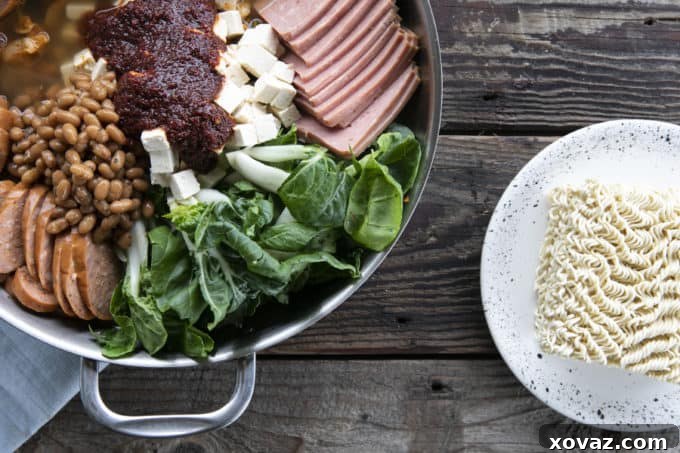
This is where Budae Jjigae truly becomes a canvas for creativity and adventurous eating. Many of these additions might sound unconventional, but trust me, they work harmoniously within the stew’s vibrant flavor profile.
Vegetables for Freshness and Texture
- Leafy Greens: Baby bok choy is a favorite for its mild flavor and tender-crisp texture. Thinly sliced savoy cabbage, Napa cabbage, or even fresh spinach are also excellent choices, adding a touch of freshness.
- Mushrooms: Almost any mushroom variety works wonderfully. Small enoki mushrooms can be separated at the base, while larger ones like king oyster, shiitake, or white button mushrooms should be sliced into bite-sized pieces. There’s no need to pre-cook them; they’ll soften perfectly in the stew.
- Other Vegetables: Thinly sliced red bell peppers add a touch of sweetness and color. Feel free to experiment with other vegetables you enjoy, such as zucchini, onions, or carrots.
Tofu: A Delightful Addition
Firm tofu, diced into ½-inch cubes, pairs surprisingly well with the meats and helps to stretch the dish further, adding a lovely textural contrast and absorbing the rich flavors of the broth. While not strictly traditional for all versions, it’s a popular and welcome inclusion.
Baked Beans: The Unexpected Sweetness
Before trying Budae Jjigae, I would never have considered adding baked beans to a stew. However, this is one of those surprisingly delicious additions that truly elevates the dish. The subtle sweetness and creamy texture of regular baked beans complement the savory and spicy elements beautifully, adding another layer of complexity. Don’t knock it ’til you try it!
American Cheese: A Creamy Twist
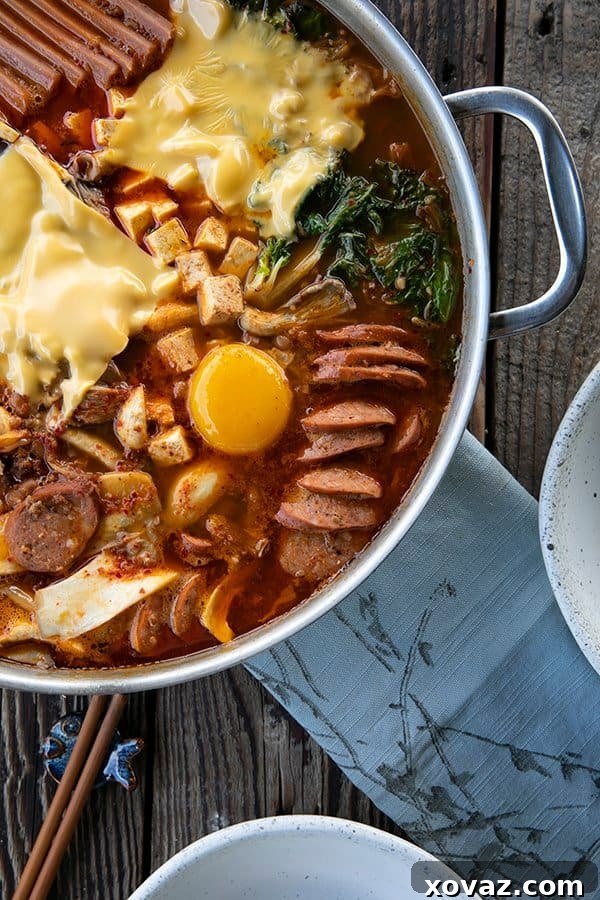
Yes, you read that right: American cheese. While I generally reserve American cheese for burgers or queso, its inclusion in Budae Jjigae is a common practice in Korea. It melts into the broth, adding an unexpected, subtle richness and creaminess that is truly delightful and surprisingly authentic. It’s a controversial ingredient for some, but a beloved one for many Budae Jjigae enthusiasts.
Egg Yolks: Enhancing Richness
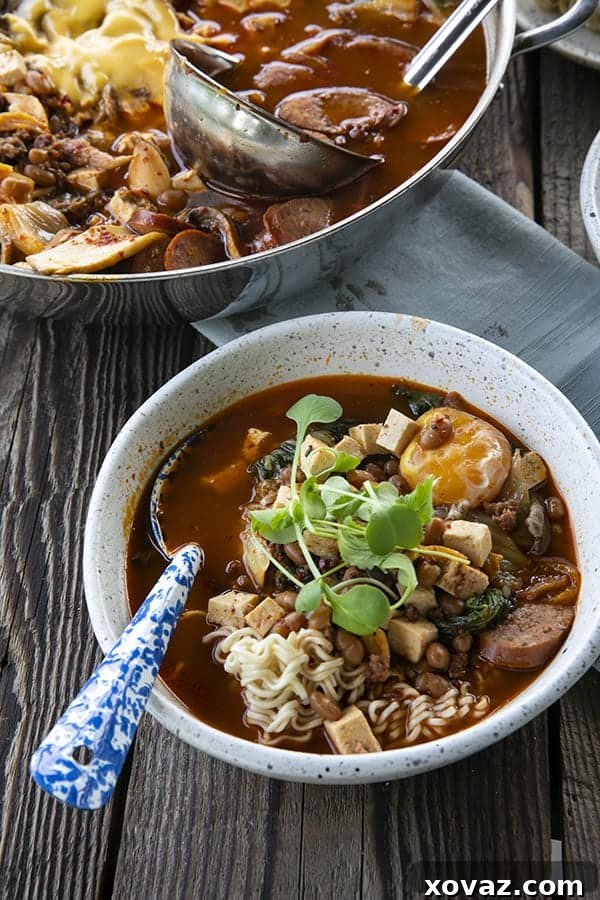
Adding a couple of egg yolks towards the end of cooking is another fantastic way to boost the stew’s richness. A runny yolk swirled into the hot broth offers a luxurious texture, but you can also simmer it slightly longer if you prefer a more cooked yolk.
Crafting Your Perfect Korean Army Stew: A Simple Guide
You’ll be delighted by how straightforward it is to bring this flavorful stew to life. A deep-sided 12-inch everyday pan, skillet, or a shallow Dutch oven works perfectly for this recipe. Traditionally, Budae Jjigae is cooked directly at the table on a hot plate, served family-style, bubbling hot, allowing everyone to help themselves. However, it’s just as easily and deliciously prepared on a stovetop.
Preparation Steps:
- Prepare the Seasoning Sauce: In a small bowl, combine rice wine (mirin or dry sherry), Gochugaru (Korean chili flakes), soy sauce, sugar, gochujang (Korean chili paste), and freshly ground black pepper. Mix well and set aside. This flavorful sauce is the backbone of your stew.
- Brown the Ground Meat (Optional but Recommended): In your pan, brown the ground beef (or your chosen ground meat) over medium-high heat, breaking it apart as it cooks. Allow it to develop some crispy edges for an extra layer of umami. While not strictly traditional, this step, inspired by some modern recipes, adds wonderful depth. If omitting ground meat, skip this step.
- Infuse with Aromatics and Kimchi: If you browned meat, add the kimchi, minced garlic, and minced ginger to the pan. Stir over high heat for about 3 minutes, scraping up any browned bits from the bottom of the pan to deglaze and incorporate all the delicious flavors.
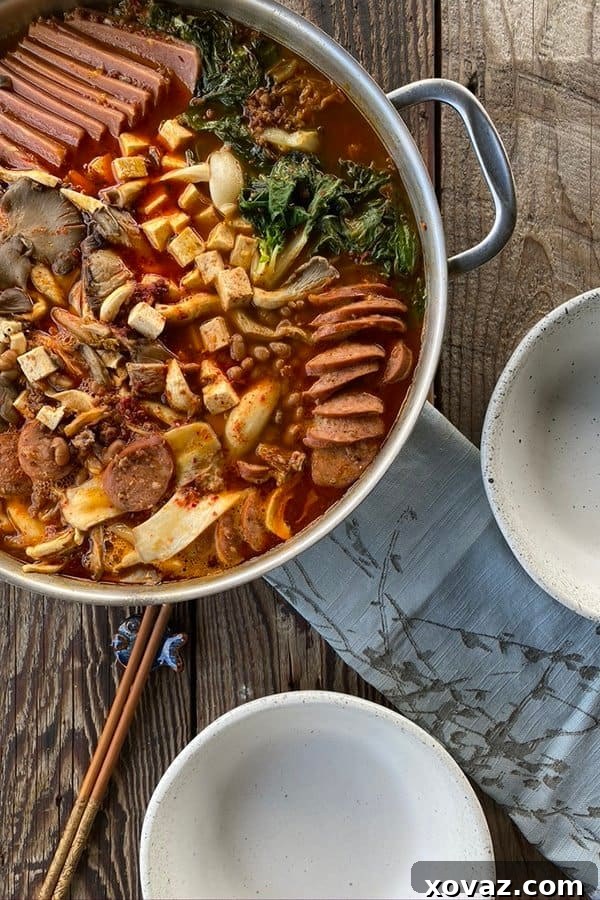
- Assemble the Stew: Reduce the heat to medium. Artfully arrange the remaining ingredients around the pan: sliced sausage, Spam, mushrooms, diced tofu, baked beans, and quartered bok choy (or other chosen greens). Pour the prepared seasoning sauce into the center of the pan.
- Add Broth and Simmer: Carefully pour the low-sodium chicken or anchovy kelp broth along the side of the pan. Increase the heat to medium, cover the pan, and bring the stew to a boil. Cook until the bok choy is crisp-tender, typically about 8 minutes. Stir in the thinly sliced green onions.
- Optional Finishers: If you’re using American cheese and/or egg yolks, gently place them over the stew. Simmer uncovered for another 1 to 2 minutes, or until the cheese is melted and the bottoms of the yolks are just barely set. For more cooked yolks, spoon some hot broth over them.
- Serve with Noodles: Separately cook your instant ramen noodles according to package directions. Ladle the hot stew into individual bowls. For an extra rich experience, break the egg yolks (if used) and swirl them into the soup as you serve. Add cooked ramen noodles to each serving and garnish with radish sprouts or baby arugula, if desired.
And there you have it – a wonderfully satisfying Korean Army Stew, simple to make and bursting with complex flavors!
Tips for the Best Budae Jjigae Experience
- Ingredient Quality: While Budae Jjigae embraces processed meats, using high-quality kimchi and fresh vegetables will significantly enhance the overall flavor.
- Spice Level: Adjust the amount of Gochugaru (Korean chili flakes) to your preference. Start with less if you’re sensitive to spice and add more to taste.
- Serving Temperature: For the most authentic experience, serve the stew immediately, piping hot. If you’re serving family-style at the table, a portable induction burner keeps it perfectly warm and bubbling.
- Leftovers: Store leftover stew and cooked noodles separately. Reheat the stew gently and cook fresh noodles for the best texture.
Budae Jjigae: More Than Just a Meal
Korean Army Stew is a celebration of flavor, history, and communal dining. It’s a dish that tells a story, offering both incredible taste and a warm sense of tradition. Whether you’re gathering with family or seeking a comforting solo meal, Budae Jjigae delivers a satisfying experience that will leave you feeling nourished and content.
Korean Army Stew – Spicy Sausage Stew – Budae Jjigae
By Rebecca Lindamood
Prep Time: 10 mins | Cook Time: 15 mins
Ingredients
Sauce Ingredients
- 2 tablespoons rice wine (mirin or dry sherry)
- 1 tablespoon Gochugaru (Korean chili flakes, or more if you like it spicier)
- 1 tablespoon soy sauce
- 1 ½ teaspoons sugar
- 1 ½ teaspoons gochujang (Korean chili paste)
- ½ teaspoon freshly ground black pepper
Stew Ingredients
- ½ pound ground beef (pork, turkey, or chicken)
- 1 cup kimchi (in bite-sized pieces)
- 1 tablespoon minced ginger
- 1 tablespoon minced garlic
- 1 pound assorted mushrooms (sliced or cut into bite-sized pieces)
- 8 ounces smoked sausage (sliced)
- 6 ounces Spam (thinly sliced, half a can)
- ½ cup firm tofu (diced into ½-inch cubes)
- 2 heads baby bok choy (quartered, or 2 cups thinly sliced savoy or Nappa cabbage or spinach)
- ½ cup baked beans
- 2 packages instant ramen noodles (seasoning packets discarded or reserved for another recipe)
- 3 green onions (thinly sliced)
- 4 cups low sodium chicken broth (or anchovy kelp broth)
Optional Additions:
- 2 slices American cheese
- 2 egg yolks
- ½ cup radish sprouts (or baby arugula)
Instructions
- Mix together your seasoning sauce ingredients and set aside.
- Add the ground beef to your 12-inch, deep-sided everyday pan or skillet. Brown over medium-high heat, breaking the beef up as it cooks. When it is quite brown and has some crispy edges, add the kimchi, garlic, and ginger.
- Over high heat, stir the mixture, scraping the browned bits up from the bottom of the pan, for 3 minutes.
- Reduce the heat to medium, then add the sausage, Spam, mushrooms, tofu, beans, and bok choy to the pan. Pour the seasoning sauce into the center of the pan.
- Add the stock or broth to the pan by pouring it along the side. Raise the heat to medium, cover, and bring to a boil. Cook until the bok choy is crisp-tender, about 8 minutes. Stir in the green onions.
- If using American cheese and/or egg yolks, add them over the stew and simmer -uncovered- for another 1 to 2 minutes, or until the cheese is melted and/or the bottoms of the yolks are barely set. If you’d like the yolks more done, you can spoon some of the simmering broth over them.
- Cook the ramen noodles separately. Ladle the stew into bowls, breaking the egg yolks and swirling them into the soup as you serve. Add ramen to each serving, and garnish with radish greens, if desired.
Nutrition (Estimate per serving)
- Calories: 880 kcal
- Carbohydrates: 54g
- Protein: 45g
- Fat: 54g
- Saturated Fat: 21g
- Cholesterol: 221mg
- Sodium: 2712mg
- Potassium: 1385mg
- Fiber: 7g
- Sugar: 5g
- Vitamin A: 3499 IU
- Vitamin C: 30mg
- Calcium: 295mg
- Iron: 8mg
Nutritional information is an estimate and provided to you as a courtesy. You should calculate the nutritional information with the actual ingredients used in your recipe using your preferred nutrition calculator.
Did you make this recipe?
Make sure to tag @foodiewithfam on Instagram and #hashtag it #foodiewithfamily so I can check it out!
Explore More Delicious Korean Inspired Recipes!
If you’ve enjoyed the vibrant flavors of Budae Jjigae, you’ll love exploring other delightful Korean dishes. Expand your culinary repertoire with these fantastic recipes:
Homemade Easy Mak Kimchi
Master the art of making your own authentic kimchi with this simple and fast recipe. It’s surprisingly easy and incredibly rewarding!
Jangsanjeok – Korean Simmered Teriyaki Style Beef Patties
Indulge in these wonderful Korean glazed beef patties, simmered in a savory teriyaki-style sauce – a perfect dish for any occasion.
Kimchijeon – Savoury Kimchi Pancakes
These irresistible savory kimchi pancakes, or Kimchijeon, are crispy, flavorful, and make a fantastic snack or appetizer.
Korean Inspired Miso and Honey Glazed Cod
For something a little lighter yet equally flavorful, try this quick 20-minute Korean-inspired miso and honey glazed cod recipe.
Korean BBQ Steak Rice Bowls
A personal favorite, these fragrant, garlicky, and quick Korean BBQ steak rice bowls are a winning dinner solution!
15 Minute Korean Beef
This sweet and slightly spicy 15-minute Korean beef is a total crowd-pleaser, reminiscent of delicious bulgogi!
Ssamjang Sauce – Korean Spicy Dipping Sauce
Perfect for slathering on everything, this easy and delicious Ssamjang sauce is a must-have spicy dipping sauce for Korean barbecue, lettuce wraps, and more!