The Ultimate Guide to Crafting the Best Corned Beef Hash
There’s something uniquely comforting and utterly satisfying about a plate of crispy potatoes, savory corned beef, and tender vegetables, all fried to perfection in a skillet. Does it get any better than Corned Beef Hash? For many, including myself, the answer is a resounding no.
This isn’t just a meal; it’s an experience. It’s the kind of dish that makes the “what would you eat for your final meal?” question an easy one. If you find yourself with leftover corned beef from St. Patrick’s Day festivities, or any other occasion, making corned beef hash should jump to the top of your culinary to-do list. In fact, this dish is so good, it’s worth preparing a corned beef brisket specifically for the joy of transforming it into hash the very next day. Consider making a delicious Ultimate Glazed Corned Beef and intentionally setting aside a generous portion for this incredible hash recipe.
What Exactly is Corned Beef Hash? A Culinary Journey
At its heart, corned beef hash is a testament to the power of resourceful cooking. It’s the delightful outcome of frying up leftover corned beef with potatoes, often augmented by onions and other vegetables, in a hot pan with butter or oil. While various forms of “hash” – a term derived from the French “hacher,” meaning to chop – have graced tables worldwide for centuries, corned beef hash has a distinct lineage, originating from the resourceful kitchens of New England.
Like many of the world’s most beloved “peasant foods,” hash began as an ingenious method to utilize every last scrap, ensuring that nothing went to waste. This “waste not, want not” philosophy has inspired countless culinary masterpieces, and corned beef hash is no exception. It elegantly transforms the remnants of a traditional beef, potato, and onion dinner into something entirely new and equally delicious. The beauty of such dishes lies in their inherent simplicity and resilience; it’s genuinely challenging to completely mess up a dish born from such practical origins.
Over the years, this humble dish has been elevated and perfected by home cooks and chefs alike. My personal favorite version, which I’ve refined over time, includes a vibrant mix of onions and carrots, generously seasoned with salt and freshly ground pepper to complement the rich corned beef and starchy potatoes. Whether served as a hearty breakfast, a satisfying lunch, or a quick, fuss-free dinner, this hash never fails to bring a smile to my face and joy to my taste buds.
Why This Corned Beef Hash Recipe Stands Out
Making corned beef hash isn’t inherently difficult. The combination of savory corned beef, hearty potatoes, sweet carrots, pungent onions, and simple seasonings like salt and pepper is nearly impossible to get wrong. However, there’s a significant difference between an “edible” hash and a truly “sublime” one. Why settle for merely edible when you can create something utterly incredible with the very same basic ingredients?
The Magic of Crispy Potatoes
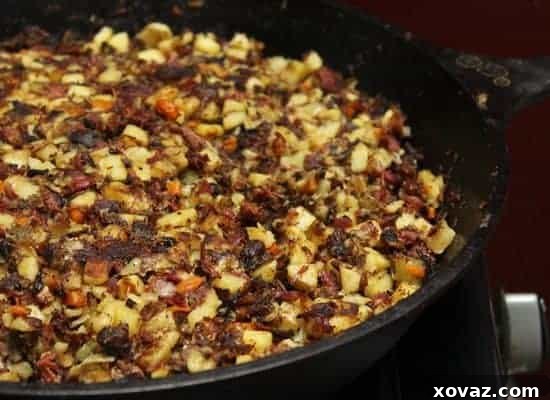
The foundation of any great hash lies in its potatoes. They are destined for crispiness – a culinary truth written in the stars since the dawn of cooking. Envision a crackling, fat-crisped exterior, studded with little caramelized nubs of onion, giving way to a soft, creamy interior. This isn’t just my definition of the perfect potato; it’s my idea of perfect food, period. Achieving this delicate balance of textures is key to an outstanding hash.
Unlocking the Richness of Corned Beef
When done correctly, the corned beef in this hash undergoes a remarkable transformation. It develops a concentrated, meaty, savory, salty, and wonderfully chewy intensity. This deep flavor and texture cannot be achieved without a proper spell in a very hot pan, ideally with a generous dose of butter. The high heat coaxes out the rich flavors and creates those irresistible browned bits that make each mouthful a delight.
The Unsung Heroes: Carrots and Onions
While the spotlight often falls on the beef and potatoes, the carrots and onions play an indispensable supporting role. They might seem like minor additions, but their contribution is crucial. The carrots offer a subtle, lightly sweet counterpoint that perfectly balances the inherent saltiness and starchiness of the other ingredients, adding depth and complexity to the overall flavor profile. Meanwhile, the onions caramelize in the hot butter, releasing their sweet aromas and enhancing the savory notes of the dish.
Beyond the flavors and textures, there’s a psychological component to this dish that is hard to beat. The aroma of onions and carrots sweetening in butter, mingling with the scent of frying potatoes and spiced beef, is akin to a transcendental meditation session for the senses. My mind often goes blank, focusing solely on the sizzle and scent of the fat caressing the edges of the diced ingredients. No medication or drug can replicate the full-body anticipation and pure joy experienced while frying up a pan of this glorious Corned Beef Hash.
Mastering the Art: How to Make Perfect Homemade Corned Beef Hash
Crafting the perfect corned beef hash is an accessible culinary endeavor that yields incredibly rewarding results. Follow these steps to transform simple ingredients into a breakfast, lunch, or dinner masterpiece.
Essential Ingredients for Your Skillet Hash
- Leftover Fully Cooked Corned Beef Brisket: 1 ½ – 3 cups, diced into ¼-inch cubes. The exact amount depends on your preference for a meatier hash.
- Yukon Gold Potatoes: 8 medium to large potatoes, scrubbed. Peeling is optional; some prefer the rustic charm and added nutrients of the skin.
- Large Yellow Onion: 1, diced into ¼-inch pieces.
- Large Carrot: 1, scrubbed and peeled (optional), diced into ¼-inch cubes.
- Butter: ½ cup (1 stick, 4 ounces), plus extra as needed for frying. Butter adds unparalleled flavor and promotes crispiness.
- Salt and Freshly Ground Black Pepper: To taste. Essential for seasoning each component and bringing out the best flavors.
- Optional for Serving: Stir-fried kimchi, fried eggs, hot sauce, sour cream, or shredded cheese.
Preparation: Precision for Perfection
- Begin by placing a large pot of water over high heat and bringing it to a rolling boil while you prepare the remaining ingredients.
- Heat a large, heavy, well-seasoned cast-iron skillet over low heat. Add the butter and allow it to melt slowly. While the butter is melting, dice your onion into pieces no larger than ¼ inch.
- Prepare the carrot: Lop off the root end, then slice it in half crosswise, then lengthwise. Lay the carrot quarters cut-sides down on your cutting board and slice into ¼-inch thick strips lengthwise. Turn the strips perpendicular to your knife and chop them roughly into ¼-inch cubes.
- Once the butter is fully melted in the skillet, add the diced carrots and onions. Sprinkle with a generous pinch of salt and stir to combine. Raise the heat to medium-low and allow the carrots and onions to cook for approximately 8-10 minutes, stirring occasionally to prevent scorching. They should soften and begin to turn golden around the edges.
- For the potatoes: First, slice each potato in half lengthwise. Lay them cut-side down on your cutting board and slice into ¼-inch thick ‘cards’. Stack these potato ‘cards’ cut-sides down and slice into ¼-inch strips. Finally, turn these strips perpendicular to your knife and chop roughly into ¼-inch cubes. Don’t stress over absolute uniformity; the goal is simply pieces that are approximately the same size to ensure even cooking.
- Generously salt the now boiling water with a hearty pinch of kosher salt, then carefully add the diced potatoes. Return the water to a simmer. The potatoes should become mostly tender within 3-5 minutes. It’s crucial not to overcook them to the point of mushiness. Once tender, drain the potatoes thoroughly and set them aside.
- To dice the corned beef: Cut across the grain into ¼-inch thick slices. Stack these slices and cut them into ¼-inch strips. Turn the strips perpendicular to your knife and chop roughly into ¼-inch cubes.
The Frying Process: Building Layers of Flavor
- By this stage, your carrots and onions in the skillet should be softened and beginning to show golden edges (around the 8-10 minute mark). Increase the heat to medium. Add the boiled potatoes and diced corned beef to the pan. Toss everything gently to evenly distribute the onions, carrots, potatoes, corned beef, and the melted fat. If the mixture appears dry, feel free to add a little more butter or canola oil.
- Using a sturdy metal spatula or wooden spoon, press the hash mixture down firmly toward the bottom of the pan. This crucial step maximizes the contact points between the hash and the hot surface, promoting the development of more caramelized bits and crispy goodness. Grind black pepper generously over the mixture, to taste.
- Do not stir at this point! Allow the hash to cook undisturbed.
- Listen for sizzling and popping sounds – these are indicators that your hash is developing that coveted crust. If you don’t hear these satisfying sounds, slightly increase the heat. If still no sizzling, add a bit more fat (butter or canola oil) to the pan, which should kickstart the browning process.
- After about 5-8 minutes, when the hash begins to smell toasty and aromatic, carefully slide a metal spatula underneath a section and lift it slightly to check its progress. If golden brown bits are forming, use your spatula to slide underneath and flip over sections of the hash. Again, resist the urge to stir! Stirring will break up those beautiful crisp parts that you’ve worked so hard to create.
- Press the flipped hash down firmly once more, ensuring fresh surface areas come into contact with the hot pan. This technique is vital for achieving uniform coloring and the best possible texture. Continue to cook for another 5 minutes, then lift and flip sections again. Repeat this process until your hash reaches your desired degree of caramelization and crispiness.
- Once the hash achieves the perfect color and texture, remove the pan from the heat. Be warned: the irresistible aroma might attract eager taste-testers! Since cast-iron skillets retain heat exceptionally well, if you wish to halt the cooking process immediately, transfer the hash to a serving dish without delay.
- Serve hot and enjoy!
Expert Tips for Your Best Corned Beef Hash
Achieving a truly outstanding corned beef hash involves a few key techniques. These expert tips will help you consistently produce a dish with perfect texture and flavor.
- Pre-boil Your Potatoes: Don’t Skip This Step! Lightly boiling your diced potatoes before frying is a non-negotiable step for the ideal hash. This pre-cooking ensures that the potato interiors become wonderfully tender and creamy, while the subsequent frying allows their exteriors to crisp up beautifully. Whether you leave the skins on or peel them is entirely a matter of personal preference. I only remove the skins if they appear a bit green, indicating solanine, which can be bitter.
- Press the Hash Down Firmly: During the frying process, use a sturdy metal spatula or wooden spoon to press the hash mixture firmly against the bottom of the pan. This action significantly increases the surface area of the potato, carrot, and corned beef that comes into direct contact with the super-hot cooking surface. The result? A much higher ratio of those highly coveted, deeply caramelized, and crispy bits that make hash so irresistible.
- Resist the Urge to Stir: I understand the impulse – it’s like an itch you want to scratch. But when making hash, stirring is the enemy of crispiness. Remember that allowing the hash to sit undisturbed, pressed against the hot pan, is what creates that glorious crunchy goodness. You will be turning and flipping sections of the hash periodically, but a continuous stirring motion will prevent the formation of that desirable crust.
- Potatoes Love Black Pepper: Do not skimp on the black pepper! Potatoes have a special affinity for this spice, and a generous grinding of fresh black pepper adds a crucial layer of flavor and aroma to your hash. A lack of pepper will leave your hash feeling flat and, dare I say, a little sad.
- Use Caution with Salt (But Don’t Fear It): Corned beef is inherently salty, and you also salt the water for boiling the potatoes and add a pinch to the onions and carrots. Because the flavors (and saltiness) will concentrate as the hash cooks, it’s wise to be conservative when adding salt directly to the hash mixture. You can always adjust the seasoning at the table, adding more salt as desired. It’s much easier to add salt than to remove it!
- Make More Than You Think You’ll Need: This hash is so delicious that leftovers are always a welcome sight. It stores beautifully in an airtight container in the refrigerator for up to 3-4 days, or in the freezer for longer. It also reheats wonderfully, often tasting even better the next day. I almost invariably find myself wishing I had made a larger batch.
Serving Suggestions: Elevate Your Corned Beef Hash Experience
A plate of Corned Beef Hash is a satisfying and hearty meal that can easily stand on its own. Its versatility makes it suitable for any meal of the day, from a robust breakfast to a comforting dinner. Here are some popular ways to enjoy it:
- Classic Toppings: A fried egg, with its runny yolk mingling with the hash, is a timeless accompaniment. Alongside, a slice of buttered toast provides a perfect vehicle for soaking up all the deliciousness.
- Spice It Up: My kids particularly love their hash topped with a generous dash of their favorite hot sauce, adding a kick that complements the savory flavors.
- Asian-Inspired Twist: For a more adventurous pairing, I highly recommend serving mine with stir-fried kimchi and a fried egg. The tangy, spicy kimchi adds a fantastic counterpoint to the rich hash.
- Creamy Additions: A dollop of sour cream or a sprinkle of shredded cheddar cheese can add a creamy richness that many find irresistible.
- For Any Meal: While ideal for a leisurely weekend breakfast or brunch, we frequently enjoy this recipe for dinner, often as a quick and satisfying weeknight meal.
Storing and Reheating Leftovers
Leftover corned beef hash is a true culinary treasure. Store any cooled leftovers in a tightly covered container in the refrigerator for up to 3-4 days. For longer storage, it freezes well for up to 3 months.
To reheat, you have a couple of excellent options:
- Skillet: Reheating in a skillet over medium heat with a little butter or oil is my preferred method, as it helps to re-crisp the potatoes and beef, bringing back that fresh-cooked texture.
- Microwave: For a quicker reheat, the microwave works perfectly, though you might lose some of the crispiness.
Beyond the Hash: More Leftover Corned Beef Ideas
If you have even more leftover corned beef after satisfying your hash cravings, don’t let it go to waste! Corned beef is incredibly versatile. Consider turning it into other delicious meals. For an amazing appetizer or light meal, check out these Reuben Egg Rolls with Thousand Island Dipping Sauce next!
Classic Corned Beef Hash Recipe
Corned Beef Hash
Author: Rebecca Lindamood
When corned beef hash is done right, you get concentrated meaty, savory, salty, chewy intensity that can’t be achieved without a very hot pan and butter.
Ingredients
- 1 ½ – 3 cups leftover fully cooked corned beef brisket (depending on how much you have and how much you want in the finished product)
- 8 largish Yukon Gold potatoes (scrubbed and peeled if preferred)
- 1 large yellow onion, diced
- 1 large carrot (scrubbed and peeled if preferred), diced
- ½ cup butter (1 stick, 4 ounces, plus extra if needed)
- Salt and freshly ground pepper, to taste
- Optional for serving:
- Stir-fried kimchi
- Fried eggs
- Hot sauce
Instructions
- Place a large pot of water over high heat and allow it to come to a boil while preparing other ingredients.
- Place a heavy, well-seasoned cast-iron skillet over low heat and allow the butter to melt slowly. Dice your onions into ¼-inch pieces. Prepare the carrot by dicing into ¼-inch cubes. When the butter is fully melted, add the carrots and onions to the pan, sprinkle with a pinch of salt, then stir. Raise the heat to medium-low and let cook for about 8-10 minutes while you prepare the potatoes and corned beef, stirring occasionally to prevent scorching. The carrots and onions should soften and begin to turn golden around the edges.
- To dice the potatoes, first slice them in half lengthwise. Lay cut-side down on the cutting board and cut into ¼-inch thick ‘cards’. Stack these ‘cards’ and slice into ¼-inch strips. Turn the strips perpendicular to your knife and chop roughly into ¼-inch cubes.
- Salt the now boiling water with a hearty pinch of kosher salt and carefully add the diced potatoes. Return to a simmer. The potatoes should be mostly tender within 3-5 minutes. Do not cook them until they’re mushy. Drain and set aside.
- To dice the corned beef, cut across the grain into ¼-inch thick slices. Stack the slices and cut into ¼-inch strips. Turn the strips perpendicular to your knife and chop roughly into ¼-inch cubes.
- By this time, your carrots and onions should have softened and the onions should be beginning to turn golden around the edges. Turn the heat to medium. Add the boiled potatoes and diced corned beef to the pan and toss to evenly distribute the ingredients and fat. If it looks dry, you can add a little more butter or canola oil. Use a sturdy metal spatula or wooden spoon to press the mixture down toward the bottom of the pan to promote caramelization. Grind black pepper over the mixture, to taste.
- Do not stir at this point!
- If you hear sizzling and popping, you are on the right track. If you don’t hear it, raise the heat a bit and see if that sets the sizzling in motion. If you still don’t hear good things happening, add a bit more fat (either butter or canola oil). After about 5-8 minutes, when things start smelling toasty, slide a metal spatula under the hash and lift a bit to examine the progress. If it is starting to get golden brown bits, use your spatula to slide underneath and flip over the hash in sections. Don’t stir it, or you’ll break up all those lovely crisp parts! Press the hash down again to bring more surface area in contact with the pan. Cook for about 5 minutes, then lift and flip sections again. Carry on doing this until you get the degree of caramelization you prefer. When it is the color you desire, remove the pan from the heat. Cast-iron retains heat, so if you do not want it to cook any further, transfer it to a serving dish immediately.
- Serve hot.
- I prefer mine with stir-fried kimchi and a fried egg on top, but most of my kids love it straight up with hot sauce. Leftovers can be stored in a tightly covered container in the refrigerator and reheated in a skillet or in the microwave.
Nutrition
Calories: 543 kcal
Carbohydrates: 23 g
Protein: 29 g
Fat: 36 g
Saturated Fat: 15 g
Cholesterol: 121 mg
Sodium: 2177 mg
Potassium: 1247 mg
Fiber: 4 g
Vitamin A: 1630 IU
Vitamin C: 66.4 mg
Calcium: 72 mg
Iron: 8.4 mg
Nutritional information is an estimate and provided to you as a courtesy. You should calculate the nutritional information with the actual ingredients used in your recipe using your preferred nutrition calculator.