The enchanting aroma of fresh oranges is an absolute delight. Their vibrant flavor and zest are indispensable in my kitchen, whether I’m crafting a delicate dessert, infusing a warm beverage, or brightening a savory dish. While a simple squeeze of juice often suffices, there are moments when a more profound, sophisticated orange essence is required – times that call for the timeless elegance of Grand Marnier.
Grand Marnier, a revered French liqueur, masterfully blends the rich, deep notes of cognac with the bright, aromatic essence of bitter oranges. This exquisite combination isn’t just about taste; it’s about unlocking hidden depths of flavor. Alcohol acts as a powerful solvent, essential for extracting and amplifying certain volatile aromatic compounds that would otherwise remain dormant in fruits like peaches, strawberries, and blueberries. A judicious splash of this potent elixir can elevate a dish from merely ‘great’ to truly ‘spectacular,’ unleashing a symphony of flavors that dry ingredients simply cannot achieve.
A few weeks ago, I shared my recipe for Blueberry Tiramisu, and the feedback was clear: many of you were eager to learn how to create a Homemade Grand Marnier Clone. This desire typically stems from one of two compelling reasons:
- You might have generously shared your last bottle making margaritas for friends and family and now need a cost-effective, high-quality refill.
- Or, like me, you harbor a playful desire to outdo “the man” – that is, the illustrious Grand Marnier producers. Picturing them in their luxurious chateaus in Les Alpes, sipping their aperitifs and perhaps chuckling at the thought of consumers paying premium prices for something that can be so easily and delightfully replicated at home. A little DIY defiance, if you will.
Regardless of your motivation, you’ve come to the right place. Crafting your own Grand Marnier is surprisingly straightforward, with one significant catch: patience. For the most authentic, refined flavor that truly rivals the original, you’ll need to allow it to age for 2 to 6 months. However, if your immediate plan involves blending it into a vibrant cocktail with ice, sugar syrup, lime juice, and tequila, then feel free to shorten that waiting period. Honestly, when it’s part of a refreshing concoction, the subtle nuances of a fully aged liqueur might not be the primary focus.
But for those moments when you want to savor it neat, incorporate it into a decadent cheesecake, soak ladyfingers for a classic tiramisu, enrich a pastry cream, or drizzle it over crepes before a dramatic flambé, the extended aging period is an absolute game-changer. Trust me, that extra waiting time is an investment in unparalleled flavor.
Want to truly impress a discerning food, wine, or cocktail enthusiast? Decant your finished homemade liqueur into an elegant bottle with a cork stopper, adorn it with a luxurious ribbon, and watch their expressions shift from curiosity to sheer amazement when you reveal its origin. I once presented a batch to a self-proclaimed wine snob (her words, not mine) friend and asked for her honest opinion. Her response was immediate and emphatic: “This is absolutely amazing! It’s even BETTER than Grand Marnier! Grand Marnier wishes it tasted like this!” Such a reaction truly speaks volumes about the quality and satisfaction of a homemade creation.
For a clean, printer-friendly version of this recipe without any extra commentary, click here!
Crafting Your Own Exquisite Orange Liqueur: The Homemade Grand Marnier Clone
Embarking on this project requires minimal effort but significant foresight. While the process itself is simple, the magic truly happens over time. At a minimum, this delightful liqueur requires two months of aging to mature. While it will certainly be delicious at that two-month mark, if you commit to the full six months of patient aging, you will be rewarded with an extraordinary depth of flavor and an unparalleled smoothness that truly elevates the experience. If your patience, like mine, is sometimes in short supply, consider dividing your batch into two containers – one for enjoying sooner and one for long-term aging. Or, better yet, double or even quadruple the recipe! You can produce a substantially larger quantity for roughly the same cost as a single 750ml bottle of the commercial version. I’m confident you’ll discover that your homemade rendition is not only comparable to the ‘benchmark’ but often surpasses it in quality and character.
Ingredients for Your Signature Orange Liqueur:
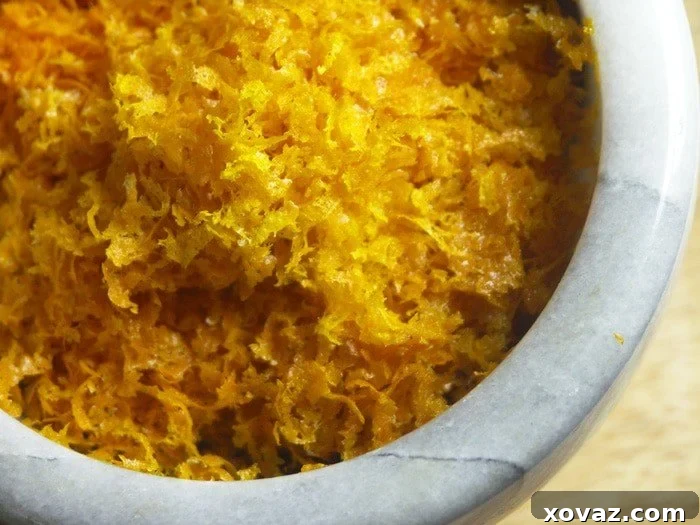
- The zest of 8 large, fresh oranges. Ensure they are gently washed and thoroughly dried beforehand. Take extreme care to only remove the vibrant orange zest, avoiding any of the bitter white pith.
- 1 cup granulated white sugar. This sugar helps to extract the essential oils from the orange zest and contributes to the liqueur’s body.
- 4 cups quality brandy or cognac. The choice of your base spirit is crucial here. Opting for a better quality brandy or cognac will undeniably result in a much smoother, more refined finished product, particularly if you intend to sip it neat.
- Optional: 1 teaspoon liquid vegetable glycerine. This ingredient, while not essential, imparts a noticeably more velvety mouthfeel to the finished liqueur, enhancing its luxurious texture.
Step-by-Step Guide to Your Homemade Grand Marnier:
1. Infusing the Sugar with Orange Essence:
Begin by sprinkling approximately 1/4 cup of the granulated sugar over the prepared orange zest in a mid-sized bowl or a traditional mortar. Using a pestle or the back of a heavy spoon, gently but firmly ‘smoosh’ and press the sugar and zest together. This crucial step helps to bruise the zest, releasing its fragrant essential oils into the sugar, creating a vibrant, aromatic paste.
2. Building the Aromatic Paste:
Continue this process, adding the remaining sugar incrementally, about 1/4 cup at a time. With each addition, continue to ‘smoosh’ the mixture until the sugar and orange zest have combined to form a fragrant, almost paste-like consistency. You should notice the sugar beginning to take on a beautiful orange hue and a potent citrus aroma filling the air.
3. Combining with the Spirit:
Carefully transfer this aromatic orange-sugar paste into a large, clean glass jar equipped with a tight-fitting lid. Precision and cleanliness are key here to ensure no impurities affect the aging process. Once the paste is transferred, pour the entire 4 cups of brandy or cognac over the mixture. Stir thoroughly to ensure the paste is fully incorporated into the spirit.
~At this point, my current visual documentation stops, primarily because my last batch of perfectly aged Homemade Grand Marnier Clone was tragically (but deliciously!) used in that incredible Blueberry Tiramisu. Rest assured, the journey from here is straightforward and visually appealing, even without photos. Trust in the process; I’ve made this many times, and the results are consistently stunning. If you start your batch now, we can toast to our homemade creations around the same time!~
4. The Initial Aging Process:
Securely cap the jar with its tight-fitting lid. Place the jar in a cool, dark place – a basement or a quiet pantry corner is often ideal. Allow the mixture to age for an initial period of 1 to 3 months. During this time, the alcohol will continue its work, drawing out and marrying the complex flavors of the orange zest. Make sure to gently shake the jar weekly to ensure all the components remain well-integrated and that the flavor extraction is even.
5. Straining and Refining:
After at least 4 weeks (remember, the longer it ages, the better the final product!), give the jar another good shake. Carefully pour the entire mixture through a fine-mesh stainless-steel strainer into a clean bowl or a large measuring cup with a spout. This step removes the solid orange zest, leaving you with the infused liquid. Rinse both the strainer and the original aging jar to prepare them for the next stage.
6. The Second Filtration and Optional Velvety Touch:
Line the now-clean fine-mesh strainer with several layers of cheesecloth or a clean, lint-free tea towel. Pour the strained liqueur back into the original, clean aging jar, allowing it to pass through this second, finer filtration. This step ensures a beautifully clear, smooth liqueur. If you choose to use the liquid vegetable glycerine for that luxurious velvety mouthfeel, stir it in thoroughly at this point. This addition significantly enhances the texture without altering the flavor profile.
7. The Final Maturation:
Cap the jar tightly once more. Return it to your cool, dark aging spot. Continue to age the liqueur for an additional 1 to 3 months. This extended aging period is where the flavors truly meld, soften, and develop their full complexity and smoothness. While it’s tempting to taste it sooner, the patience exercised during these final weeks will be amply rewarded with a truly exceptional homemade orange liqueur that will impress even the most discerning palates.
Enjoy your handcrafted masterpiece!