Are you a passionate home baker or eager to embark on a delicious journey into the world of homemade bread? Explore our Bread Recipes page for an array of delightful creations. And for those ready to dive deep into the art of sourdough, our comprehensive guide on how to make your own sourdough starter is your perfect starting point!
Don’t forget the star ingredient for this recipe: roasted garlic! Head over to our How to Roast Garlic in the Oven guide to prepare those intensely flavorful cloves. Trust us, this crucial step makes all the difference!
Roasted Garlic Rustic Sourdough Boule: A Journey into Artisan Bread
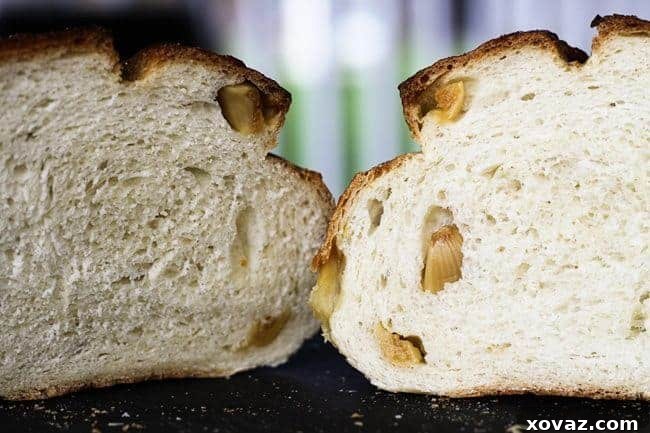
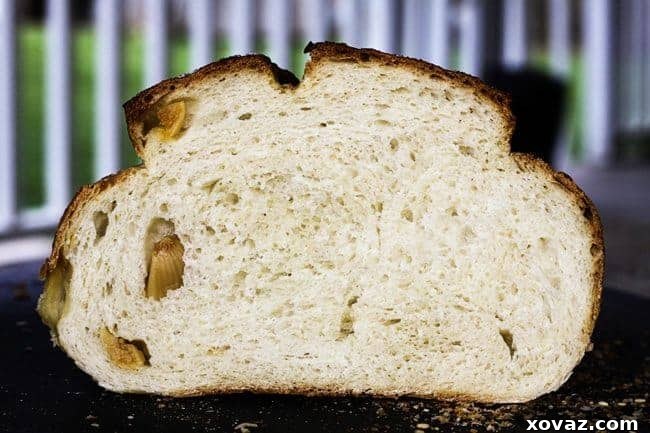
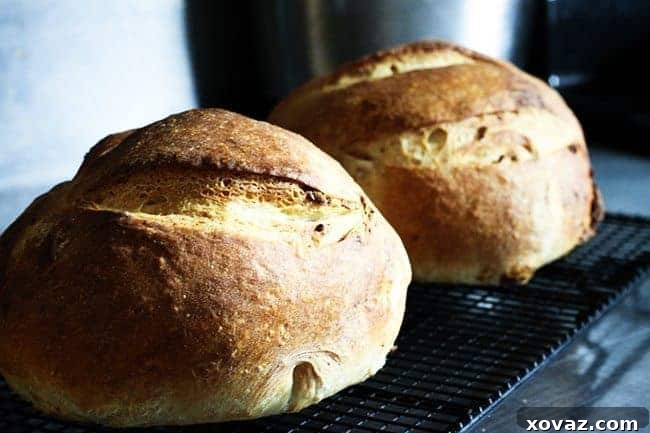
My recent visit to King Arthur Flour’s Blog & Bake™ event left me utterly inspired and ready to transform my kitchen into a flour-dusted haven. The sheer joy of working with dough, the aroma of yeast, and the promise of a golden, crusty loaf filled me with an unparalleled enthusiasm for baking. If only the physical exertion of baking translated directly into a calorie deficit! Alas, the irresistible allure of a freshly baked loaf, like the magnificent Roasted Garlic Rustic Sourdough Boule pictured above, often leads to an expansion of the waistline rather than a reduction. This particular bread is a testament to what makes me weak in willpower and utterly wobbly in the knees – and I wouldn’t have it any other way.
This exquisite Roasted Garlic Rustic Sourdough Boule isn’t a creation we specifically tackled at Blog & Bake, but it draws heavily on the techniques and quality ingredients championed by King Arthur Flour. It ingeniously combines their rustic sourdough bread principles with a sourdough starter that boasts an impressive lineage, tracing its roots back to the mid-1700s. To me, this heritage elevates the baking experience beyond mere ingredients; it’s a blend of culinary art and living history, resulting in a doubly wonderful loaf that is rich in flavor and tradition.
Conquering Breadphobia: Your Guide to Yeast Baking Confidence
Over my years sharing recipes and tips here at Foodie with Family, I’ve noticed a common thread: many aspiring bakers harbor a significant amount of anxiety, sometimes bordering on outright phobia, when it comes to baking with yeast. For those of you who confidently tackle yeast baking, feel free to skip ahead. But for anyone who feels that familiar trepidation, please allow me to offer some heartfelt encouragement and practical advice.
Baking with yeast, while it might seem daunting, is far more forgiving than you might imagine. When you meticulously measure your ingredients (a kitchen scale is your best friend!) and diligently follow the instructions, homemade bread rarely turns out inedible. It might not be a picture-perfect masterpiece worthy of a magazine cover, and it might not precisely match your initial vision, but truly disastrous, inedible outcomes are exceptionally rare. Even in those rare instances, there’s always a silver lining: perhaps you’ve made a new, furry friend in the neighborhood or provided a feast for the local birds. Nothing is ever truly lost; every bake is a learning experience. Take a moment to review your process, identify potential missteps, and then, crucially, try again.
I firmly believe that anyone with the desire and a little dedicated time can become a successful bread baker. I am always here to answer your baking questions, no matter how simple or complex they may seem. Furthermore, the experts at King Arthur Flour offer an invaluable FREE Baker’s Hotline. You can reach them at 802-649-3717 or engage in a live online chat. Their baking specialists are incredibly knowledgeable and unfailingly patient, ready to assist with any baking dilemma without judgment. Seriously, don’t be shy! We’ll have you confidently baking delicious yeast breads in no time at all, transforming that breadphobia into pure bread-baking joy.
Elevating Your Loaf: The Art of Shaping a Rustic Sourdough Boule with Roasted Garlic
I initially prepared the rustic sourdough according to the standard instructions provided with my King Arthur Flour sourdough starter. However, after making four glorious loaves using their classic method (yes, I admit, I’m a little obsessed!), I was eager to introduce a slight variation. The idea struck me one evening, spurred by the delightful prospect of dipping something new into our dinner soup. A jar of beautifully roasted garlic cloves in the refrigerator seemed to call my name, and thus, this roasted garlic infused boule was born.
When preparing this truly magnificent, crusty, and wonderfully chewy roasted garlic-studded sourdough bread, there are a few key techniques that will prove immensely helpful:
Rather than simply incorporating the roasted garlic cloves directly into the dough during the initial mixing or kneading, we employ a specific technique that ensures the garlic remains beautifully visible and flavorful within the finished product. After the first rise, gently turn the dough out onto a lightly floured surface. Carefully pat the dough into a rough rectangle or oval, aiming for about a half-inch thickness. This provides the perfect canvas for your roasted garlic. Generously distribute the roughly chopped roasted garlic cloves evenly across the surface of the flattened dough.
Now, meticulously roll the dough tightly into a long tube, starting from one of the shorter sides. This action effectively encases the garlic within the layers of dough. Once you have your dough log, the next crucial step is to form the ‘boule’ or a round dough ball. This shaping technique builds essential surface tension, which is vital for a good rise and a beautiful crust. Begin by pulling one end of the long dough tube gently toward the center. Tuck it securely into place. Rotate the dough approximately 45 degrees, then gently pull another section of the dough and fold it toward the center. Continue this rotation and tucking process, moving around the entire circumference of the dough, until you achieve a cohesive, roughly round wad of dough.
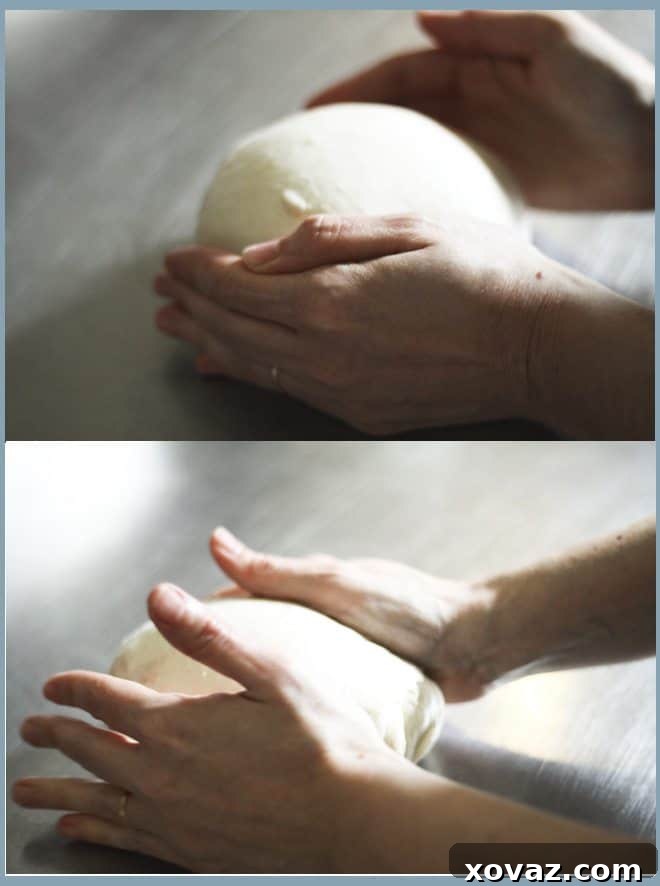
Once your dough is bunched up into a preliminary ball, flip it upside down so that the smooth, untucked side is now facing upwards. Cup your hands around the base of the dough ball, positioning your hands like blades at a 45-degree angle to your countertop. Now, rotate the dough ball, simultaneously pushing with one hand and pulling back toward you with the other. This motion, executed correctly, will allow you to feel the dough ball firming up and observe the ‘skin’ of the dough tightening noticeably. This process creates the necessary surface tension for a strong, well-structured loaf.
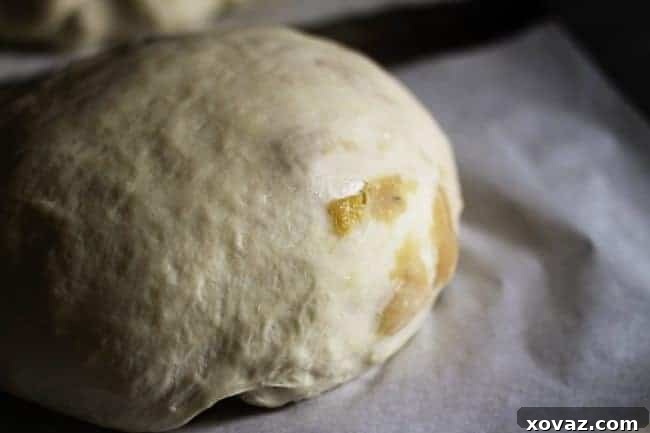
Be mindful not to overdo this final tightening step, as excessive rolling could cause the delicate roasted garlic cloves to burst through the taut surface of the dough. A few minor garlic protrusions here and there are perfectly acceptable and add to the rustic charm, but you want to maintain a relatively smooth surface for the best crust development.
Baking to Perfection: The Final Steps to a Flawless Loaf
Before baking, I always score the tops of my loaves. This isn’t just for aesthetic appeal, though it certainly does make the finished product painfully pretty to behold! Scoring serves a crucial practical purpose: it provides controlled vents, allowing the bread to expand freely and dramatically in the hot oven (this phenomenon is known as “oven spring”) without tearing haphazardly. A simple ‘X’ or a more intricate scallop pattern works beautifully.
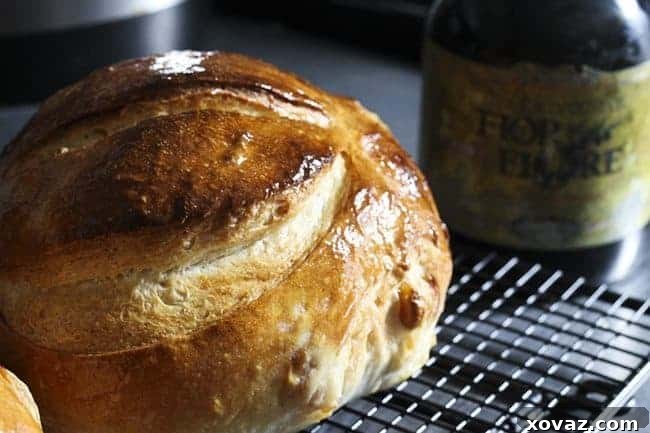
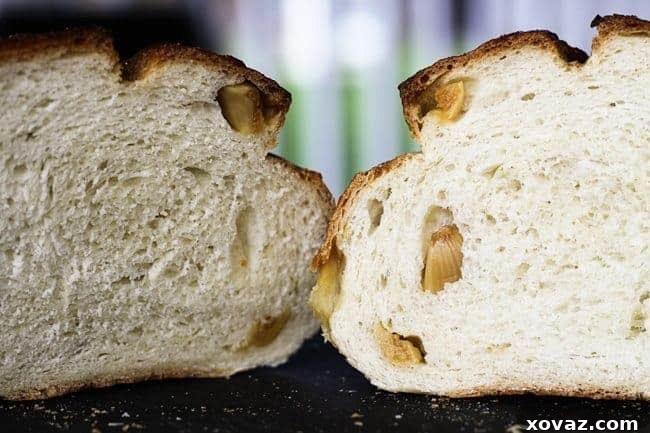
When baked as described, you’ll be rewarded with hearty, classic sourdough loaves: a delightfully chewy interior flecked with tender cloves of roasted garlic, all encased in a shatteringly crisp crust. While this is a sublime experience on its own, I often like to “gild the lily” with an extra step. Immediately after removing the loaves from the oven, I generously brush them with high-quality extra virgin olive oil and sprinkle them with super-fine sea salt. This finishing touch transforms the super-crunchy crust, imparting a slightly softer, more yielding chewiness. If you prefer an intensely crunchy crust, you can certainly skip this step. However, I find the slightly softened crust ideal for crafting sandwiches, and honestly, any excuse to get garlicky olive oil and flaky sea salt on my fingers, ready for a delightful lick afterward, is a win in my book!
What can I say? Simple pleasures make me happy.
Serving Suggestions: Enjoying Your Roasted Garlic Sourdough Boule
This bread is remarkably versatile and robust, making it a perfect companion for a myriad of meals. Its sturdy crumb stands up beautifully to all kinds of sandwich fillings, from deli meats and cheeses to roasted vegetables and creamy spreads. It also makes an exceptional toast, especially when topped with a perfectly fried egg, a sprinkle of fresh herbs, or a dollop of avocado. Serve it alongside hearty soups and stews – its robust crust and chewy interior are ideal for soaking up every last delicious drop from your bowl. Imagine it with a rich French onion soup or a rustic lentil stew!
And for those rare instances where you might have leftovers starting to lean towards the stale side, fear not! Transform them into the world’s most enviable croutons. Simply cube the bread, toss with a little more olive oil, garlic powder, and herbs, then toast in the oven until golden and crisp. They’ll elevate any salad or soup to gourmet status.
Now, I have to know! How will you choose to serve this extraordinary roasted garlic sourdough bread? Share your delicious ideas!
XO
Rebecca
Roasted Garlic Rustic Sourdough Boule
Rate Recipe
Rebecca Lindamood
Prep Time 2hrs
Cook Time 30mins
Total Time 2hrs30mins
Print Recipe
Pin Recipe
A classic, chewy, full-flavoured, rustic sourdough bread gets a little dressed up with roasted garlic cloves that are rolled into the dough when it is shaped. After baking, the loaves are brushed in extra virgin olive oil and sprinkled with super-fine sea salt.
Recipe adapted from and with thanks to King Arthur Flour
Ingredients
1cupripe sourdough starter(8 1/2 ounces by weight)
1 1/2cupsbody temperature water(12 ounces by weight)
2 1/2teaspoonssalt
1tablespoonsugar
2teaspoonsinstant or active dry yeast(no need to dissolve either in water first)
5cupsKing Arthur All-Purpose Flour(1 pound, 5 1/4 ounces by weight)
1cuproasted garlic cloves(roughly chopped)
Optional:
extra virgin olive oil for brushing and super-fine sea salt for sprinkling over finished loaves
Instructions
In a large mixing bowl (or the bowl of a stand mixer fitted with a dough hook), whisk together the flour, yeast, salt, and sugar. Add the sourdough starter and body-temperature water. Mix with a bowl scraper, sturdy spoon, or dough hook until a shaggy, cohesive dough forms.
Turn the dough out onto a lightly floured surface, flour your hands, and knead until the dough becomes smooth and elastic, which typically takes about 8 minutes. Alternatively, if using a stand mixer, continue with the dough hook until the desired consistency is achieved. Place the kneaded dough into a lightly greased mixing bowl, cover it with a clean tea towel or plastic wrap, and let it rise in a warm, draft-free place. Allow it to rise until it appears puffy and marshmallow-like in texture. A gentle poke with a finger should leave an indentation that remains when your finger is removed.
Once risen, turn the dough out onto a clean, lightly floured counter. Using a bench knife or a sharp knife, carefully cut the dough in half (avoid tearing it). Pat each half into a rough rectangle or oval, approximately 1/2-inch thick. Divide the roughly chopped roasted garlic evenly between the two dough shapes and spread it over the surface of each. Starting with a short side, roll each piece of dough tightly into a log.
To form each log into a boule or round ball, gently tug and pull one coiled end of the log toward its center. Tuck it firmly into place. Rotate the dough approximately 45°, then gently pull and fold the next section toward the center. Continue this rotating, pulling, and tucking process until you have gone all the way around, and your dough is roughly in a ball shape. Flip it over so the smooth side is up. Nestling your hands around the dough ball with your hands at a 45° angle to the counter, roll the dough between your cupped hands, alternating between pulling with one hand and pushing with the other, progressively tightening the dough ball as you go. When the surface feels taut, carefully lift the dough ball and place it smooth-side up on one side of a parchment-lined baking sheet. Repeat this process with the remaining dough log, positioning the finished ball so that there are at least 6 to 8 inches of space between the two. Lightly cover them with a tea towel and let them rise in a warm, draft-free place for 30 minutes for their final proof.
While the dough balls are undergoing their final rise, preheat your oven to 425°F (218°C). Place an empty cast-iron skillet or another heavy, oven-safe frying pan on the floor of the oven during preheating. Simultaneously, bring a pot of water to a boil on your stovetop.
Immediately before transferring the boules to the oven, use a sharp knife or a razor blade to score an ‘X’ or a decorative scallop shape about 1/4-inch deep into the surface of each bread dough. This scoring is essential as it allows the bread to expand without tearing as it cooks, ensuring a beautiful oven spring.
Working quickly and carefully, slide the parchment-lined baking sheet with the boules into the preheated oven. Immediately and cautiously pour about 1 cup of the boiling water into the empty hot pan on the oven floor. Be extremely careful, as this will generate a significant amount of steam very quickly! Close the oven door immediately and set your timer for 20 minutes. After 20 minutes, carefully remove the water pan from the oven, close the oven door, and reset the timer for an additional 10 minutes.
The bread should emerge from the oven a deep, golden-brown color, feel very firm to the touch, and register at least 195°F (90°C) at the center of the loaf when checked with an instant-read thermometer. Transfer the finished loaves to a wire cooling rack. If desired, brush generously with extra virgin olive oil and sprinkle the surface with super-fine sea salt while they are still warm. Allow the loaves to cool completely before slicing to ensure the internal crumb sets properly.
Store any leftover bread at room temperature, wrapped in a clean tea towel to maintain its freshness.
Nutritional information is an estimate and provided to you as a courtesy. You should calculate the nutritional information with the actual ingredients used in your recipe using your preferred nutrition calculator.
Did you make this recipe?
Make sure to tag @foodiewithfam on Instagram and #hashtag it #foodiewithfamily so I can check it out!