Extra Crispy Fried Chicken Tenders: Your Ultimate Guide to Golden Perfection
There’s something uniquely comforting and irresistibly delicious about a plate of homemade fried chicken tenders. The mere thought conjures images of golden-brown perfection, an audible crunch with every bite, and tender, juicy chicken bursting with flavor. Recently, my very own “Evil Genius” (who possesses a heart of gold, I assure you) took pity on my fried chicken cravings and prepared what I consider to be the ultimate comfort meal: these incredibly crispy, flavorful fried chicken tenders. And let me tell you, they were nothing short of spectacular.
Now, at the risk of drawing a collective gasp from the “dark meat has more flavor” enthusiasts, I must proudly declare my unwavering love for white meat chicken. I absolutely adore white meat! There’s a particular satisfaction in a perfectly cooked chicken breast tender – its lean texture and ability to absorb flavors make it a versatile canvas for culinary magic. My Evil Genius, knowing this well, presented me with a decadent, gorgeous pile of crispy, crunchy, salty, breaded, fried chicken tenders. Truly, what a man!
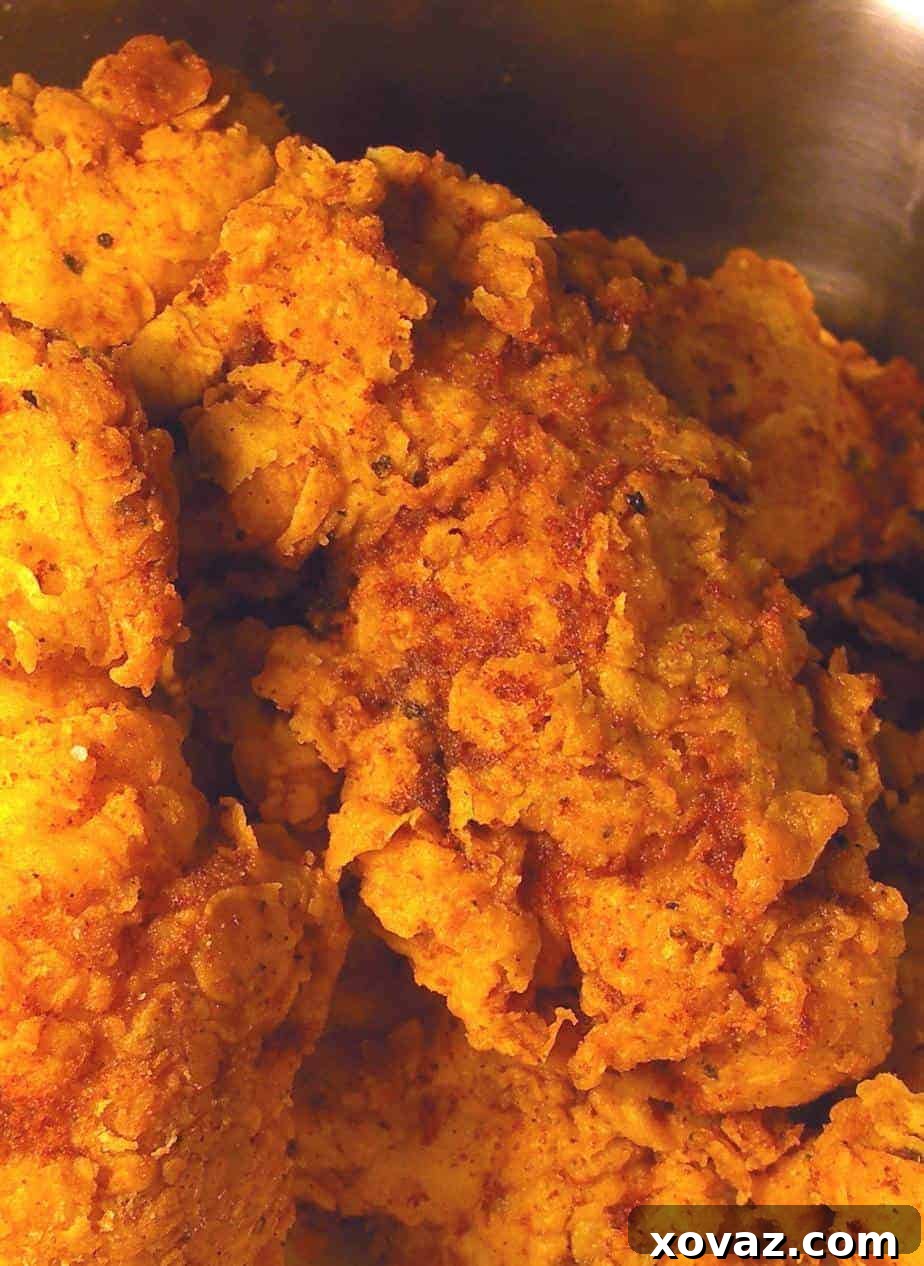
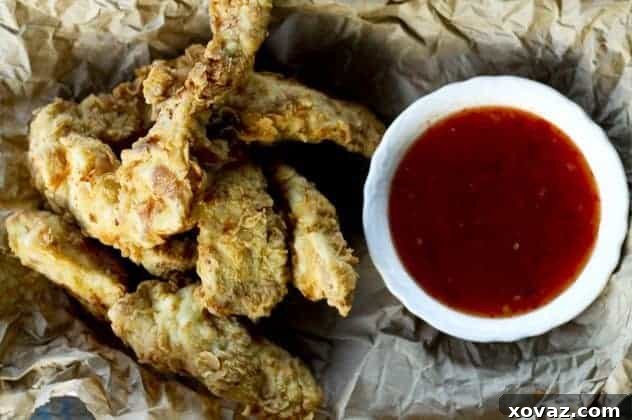
Since he was the chef that day, and I was under strict orders to “sit down and relax,” the only photos we managed to capture were of the chicken cooling briefly before we descended upon it like a swarm of ravenous locusts. My apologies, dear readers, but no amount of dedication to photography could outweigh the primal urge to devour hot, freshly fried chicken!
Why These Fried Chicken Tenders Stand Out
What makes this particular recipe for extra crispy fried chicken tenders truly exceptional? It all comes down to a few key elements that ensure a memorable eating experience. Firstly, the breading isn’t just a simple coating; it’s a meticulously crafted blend infused with garlic and onion powder. This subtle addition elevates the flavor profile, ensuring that every crispy morsel delivers a punch of savory goodness that complements the chicken perfectly. It’s a secret weapon against blandness, guaranteeing serious taste with every crunch.
Secondly, the breading method itself is engineered for maximum crispness and juiciness. We employ a technique that creates a robust, shaggy crust, forming a protective barrier that seals in all those wonderful chicken juices. This means you get a tender, succulent interior contrasting beautifully with an audibly crunchy exterior – the hallmark of truly great fried chicken. Forget dry, overcooked chicken; this recipe promises a tender, moist experience every single time.
The Magic of Buttermilk: Secret to Tender Perfection
One of the true stars of this recipe, and a non-negotiable for achieving tender, moist chicken, is buttermilk. If you’ve never used homemade cultured buttermilk in your fried chicken, you’re in for a revelation. Buttermilk, with its slightly acidic nature, acts as a tenderizer without toughening the meat. It gently breaks down the protein fibers in the chicken, resulting in an incredibly tender texture that practically melts in your mouth.
Beyond its tenderizing capabilities, buttermilk also contributes to the overall flavor of the chicken, imparting a subtle tang that balances the richness of the frying process and the savory spices in the breading. It’s also crucial for the adherence of the flour coating, creating a sticky surface that allows the breading to cling beautifully, contributing to that desired craggy, crispy texture. While regular milk can be substituted in a pinch, for the best flavor and texture, buttermilk is highly recommended.
Deep Frying 101: Essential Tips for Crispy Success
Deep frying can seem intimidating, but with a few simple guidelines, you can achieve professional-level results in your own kitchen. Firstly, choosing the right oil is paramount. Canola or peanut oil are excellent choices due to their high smoke points, which means they can withstand the high temperatures required for frying without breaking down or imparting off-flavors to your food. You’ll need about 6-8 cups of oil, depending on the size of your frying vessel.
Speaking of oil, if you’ve recently made my favorite tortilla chips and carefully strained the oil, this is the perfect opportunity to reuse it! Just add as much additional fresh oil as needed to reach the required 6 cups. For a quick primer in deep frying techniques and safety, you can refer to this guide.
One of the most critical aspects of successful deep frying is maintaining the correct oil temperature. Ideally, you’re aiming for 350°F (175°C). A good deep-fry thermometer is an invaluable tool here, but if you don’t have one, don’t fret! You can test the oil by dipping the tip of a breaded chicken finger into it. If it’s hot enough, you’ll see many enthusiastic bubbles rapidly forming around the chicken. This visual cue is a reliable indicator that your oil is ready.
Remember this essential rule of thumb for stovetop deep frying: “Never fill your pan more than halfway full of oil.” Liquids rise as they boil, and adding food will further displace the oil (the ‘Law of Displacement’ for the physics-minded among us). As the Evil Genius sagely puts it, “You can’t argue with physics. It is or it isn’t.” Overfilling can lead to dangerous spills and potential fires. Always prioritize safety in the kitchen.
Beyond the Fryer: Serving Suggestions & Dips
These extra crispy fried chicken tenders are delicious enough to stand on their own, but they also pair wonderfully with a variety of sides and dips. For an unexpected yet divine sweet and savory combination, look no further than our homemade brown sugar pancake syrup. Its rich, nuanced sweetness perfectly complements the savory, crispy chicken.
Beyond that unique pairing, classic options abound. Serve them alongside creamy mashed potatoes, tangy coleslaw, sweet corn on the cob, or a fresh green salad for a complete meal. For dipping, consider traditional favorites like honey mustard, barbecue sauce, ranch dressing, or a spicy sriracha mayo. Don’t hesitate to experiment with your favorite sauces to find your perfect match. A squeeze of fresh lemon juice over the hot chicken can also add a bright, zesty contrast.
Recipe: Extra Crispy Fried Chicken Tenders
Ingredients
- 1 1/2 pounds boneless, skinless chicken breasts or thighs
- 6-8 cups canola or peanut oil, for frying
- 1 large egg
- 1 cup buttermilk (for best flavor) or milk
- 2 cups all-purpose flour
- 1 Tablespoon Montreal Steak Seasoning (or generic version)
- 1 teaspoon kosher salt
- 1 teaspoon fresh coarse ground black pepper
- 3/4 teaspoon MSG (strictly optional; omit if you have an aversion or sensitivity)
- 1/2 teaspoon paprika
- 1/2 teaspoon garlic powder (preferably granulated garlic)
- 1/2 teaspoon onion powder (preferably granulated onion)
Instructions
- In a large bowl, combine the flour, Montreal Steak Seasoning, kosher salt, black pepper, MSG (if using), paprika, granulated garlic, and granulated onion powder. Mix thoroughly with a fork or whisk until all ingredients are well incorporated. Divide this seasoned flour mixture evenly between two separate pie plates or shallow cake pans. Prepare a cooling rack by lining it with a few layers of paper towels or newspapers and set it aside. This will be where your cooked chicken tenders drain and cool.
- Pour the canola or peanut oil into a large, deep, heavy-bottomed pan, a Dutch oven, or your preferred deep-frying apparatus (such as a fryolator or fry-daddy). Place the pan over medium to medium-high heat. Remember the crucial deep-frying safety rule: never fill your pan more than halfway with oil, allowing ample space for displacement when food is added and for the oil to bubble safely. If you have a deep-fry thermometer, heat the oil to 350°F (175°C). If you don’t, test the oil by carefully dipping a small piece of breaded chicken into it; if it’s hot enough, it will immediately create many enthusiastic bubbles around the chicken.
- In a medium-sized mixing bowl, whisk together the egg and buttermilk until thoroughly combined and smooth. Set this liquid mixture aside alongside your seasoned flour.
- Prepare your chicken: Trim any excess fat from the boneless, skinless chicken breasts or thighs. Slice them lengthwise into strips approximately 1-inch thick. For larger breasts, aim for about 3 largish strips per breast. For smaller pieces, two strips might be sufficient.
- Set up your dredging station for frying. Assuming you have counter space near your stove and your oil is at the correct temperature, arrange your components in this order, starting closest to the stove: the first bowl of seasoned flour, followed by the bowl with the buttermilk/egg mixture, then the second bowl of seasoned flour, and finally, your cutting board with the chicken strips. This setup facilitates a smooth, single-handed coating process. Designate one hand (e.g., your left hand) as your “dry hand” for handling flour, and the other (e.g., your right hand) as your “wet hand” for the buttermilk mixture and placing chicken into the oil.
- Working with one piece of chicken at a time: Use your “dry hand” to pick up a chicken strip and dredge it through the first bowl of seasoned flour, ensuring it’s evenly coated. Shake off any excess flour. Next, use your “wet hand” to transfer the floured chicken into the buttermilk/egg mixture, making sure it’s fully coated. Let any excess liquid drip off. Then, use your “wet hand” again to transfer the gooey chicken into the second bowl of seasoned flour, using your “dry hand” to help fully coat it. Gently shake off the excess flour to create that signature craggy crust.
- Finally, using your “wet hand” (which is now likely quite coated), gently slide the fully breaded chicken strip into the hot oil. It is imperative that you DO NOT THROW the chicken into the oil, as this can cause dangerous splattering and burns. Carefully allow the chicken to slide from your hand near the surface of the oil. The thick coating on your “wet hand” provides a layer of protection from the hot oil during this brief moment.
- Continue coating and frying chicken strips one at a time, being careful not to overcrowd the pan. Frying one piece at a time ensures that each piece has enough space to cook evenly and develop its crust without sticking to others. Overcrowding will lower the oil temperature and lead to soggy chicken.
- Cook the chicken for approximately 8-15 minutes, stirring gently with tongs occasionally to ensure even browning. The cooking time will vary depending on the thickness of your chicken strips and the exact oil temperature. If the chicken is browning too quickly, slightly reduce the heat. To check for doneness, remove a thick piece of chicken to a cutting board and slice into its thickest part. The chicken is done when the juices run clear and the interior is no longer pink.
- Once cooked, transfer the hot, crispy chicken tenders to the towel-lined cooling rack. Allow them to cool for at least 5 minutes before serving. This resting period is crucial, as the chicken is incredibly hot directly out of the fryer, and biting into it too soon could result in burns to your mouth. These little beauties are screaming hot, so exercise patience for the best and safest eating experience!
Nutritional information provided is an estimate and offered as a courtesy. You should calculate the nutritional information with the actual ingredients used in your recipe using your preferred nutrition calculator.
Pro Tips for the Crispiest Fried Chicken Tenders Every Time
- Maintain Oil Temperature: This is the golden rule of frying. Too low, and your chicken will be greasy and soggy. Too high, and it will burn on the outside before cooking through. Invest in a good thermometer.
- Don’t Overcrowd the Pan: Fry in batches. Adding too much chicken at once drastically lowers the oil temperature, leading to less crispy results. Give each tender room to swim and crisp up.
- The “Wet Hand, Dry Hand” Method: As detailed in the instructions, dedicating one hand for the wet ingredients and another for the dry flour keeps your hands cleaner and prevents clumpy breading.
- Rest Your Chicken: After frying, always transfer the chicken to a wire rack set over a baking sheet (not directly on paper towels for too long, as this can steam them). This allows excess oil to drain and keeps air circulating, preventing sogginess. A short rest also allows the juices to redistribute, ensuring maximum tenderness.
- Slice Evenly: Uniformly sized chicken tenders will cook at roughly the same rate, preventing some pieces from being undercooked or overcooked.
Storage and Reheating for Maximum Crispness
While these fried chicken tenders are best enjoyed fresh, you can store leftovers for a few days and reheat them to retain much of their crispness. Store cooled tenders in an airtight container in the refrigerator for up to 3-4 days.
To reheat, avoid the microwave, which will make them soggy. The best methods for reheating are:
- Oven: Preheat your oven to 375°F (190°C). Place the chicken tenders on a wire rack set over a baking sheet. Heat for 10-15 minutes, or until heated through and crispy.
- Air Fryer: Preheat your air fryer to 350°F (175°C). Place the tenders in a single layer in the air fryer basket. Cook for 5-8 minutes, flipping halfway through, until hot and crispy.
Frequently Asked Questions (FAQs) About Fried Chicken
- Q: Can I use boneless, skinless chicken thighs instead of breasts?
- A: Absolutely! Chicken thighs are an excellent alternative. They tend to be more forgiving and stay incredibly juicy even when fried, offering a slightly richer flavor. Simply follow the same slicing and frying instructions.
- Q: What if my chicken isn’t getting crispy?
- A: The most common culprits for non-crispy chicken are insufficient oil temperature or overcrowding the pan. Ensure your oil is consistently at 350°F (175°C) and fry in small batches to prevent the temperature from dropping too low. Also, make sure your breading is thorough and has a good “shaggy” texture from the double dredging.
- Q: Is MSG necessary for this recipe?
- A: MSG (monosodium glutamate) is strictly optional. It’s used as a flavor enhancer to boost the umami taste, and many commercial fried chicken recipes use it. If you have an aversion or sensitivity, or simply prefer not to use it, feel free to omit it. The chicken will still be incredibly flavorful thanks to the other seasonings.
Final Thoughts on Your Homemade Fried Chicken Journey
Mastering the art of homemade extra crispy fried chicken tenders is a truly rewarding culinary achievement. It’s a dish that brings smiles to faces, evokes feelings of nostalgia, and satisfies even the deepest comfort food cravings. With this recipe and these detailed tips, you’re well-equipped to create fried chicken that rivals your favorite takeout spot, right in your own kitchen. The combination of tender, juicy chicken, infused with savory seasonings, and encased in a shatteringly crispy crust, is simply unbeatable.
So, gather your ingredients, fire up that fryer (safely, of course!), and prepare to impress your family and friends with these magnificent, golden-brown beauties. Happy frying!
Did you make this recipe?
We’d love to see your creations! Make sure to tag @foodiewithfam on Instagram and use the hashtag #foodiewithfamily so we can check it out!