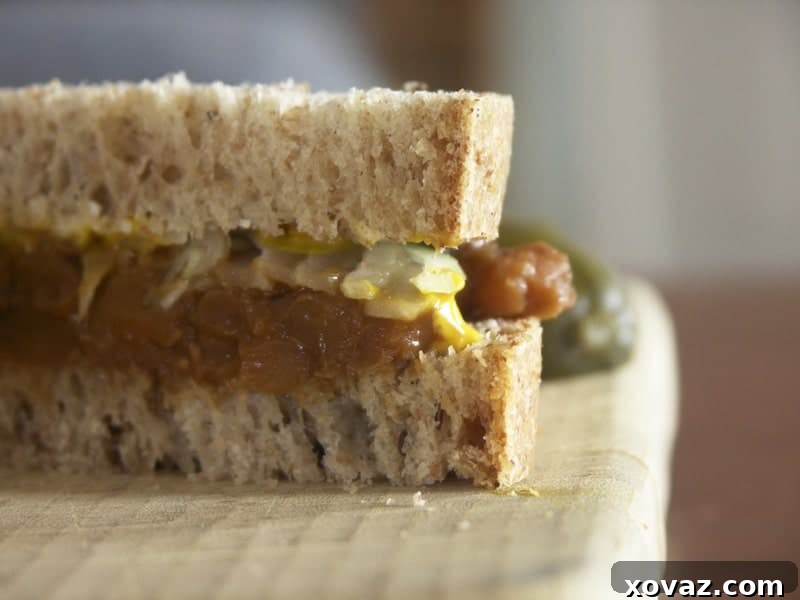
Grandpa’s Legendary Baked Bean Sandwich: An Unforgettable Taste of American Comfort
In the expansive world of home cooking, few dishes possess the nostalgic charm and heartwarming satisfaction of a truly exceptional baked bean sandwich. This isn’t just any sandwich; it’s a culinary masterpiece that celebrates simplicity, tradition, and the profound understanding that the most memorable flavors often spring from humble beginnings. Today, we are delighted to share more than just a recipe; we’re unveiling a cherished family legacy – my Grandpa’s legendary baked bean sandwich. This iconic creation is built upon a foundation of homemade baked beans so incredibly delicious, they promise to redefine your perception of what truly budget-friendly food can be.
I’ve often championed the virtues of frugal eating and the strategic planning of meals. And while it’s undeniably true that beans stand out as one of the most economical, nutritious, and versatile ingredients available, the real impetus behind sharing this particular recipe transcends mere cost-effectiveness. This dish, encompassing both the succulent baked beans themselves and the remarkable sandwich they inspire, is, quite simply, STINKIN’ AWESOME! It perfectly embodies everything wonderful about resourceful cooking: extraordinary flavor, deeply satisfying textures, and a price point that will make your grocery budget sing. Prepare to have your taste buds thoroughly captivated.
The Enduring Legacy of Grandpa’s Bean Sandwich: A Symphony of Simple Flavors
My Grandpa was a man of remarkable character and diverse talents. A former construction worker, a professional musician, and an ordained Methodist minister, he lived a life rich with varied experiences. Yet, among all his notable achievements, this unassuming sandwich proudly stands as one of his finest culinary contributions. It serves as a beautiful testament to his innate ability to transform everyday ingredients into something truly extraordinary, showcasing how genuine craftsmanship can elevate the simplest fare.
At first glance, the concept of a sandwich constructed from baked beans, delicate slivers of onion, and a generous layer of yellow mustard might not immediately spark your culinary curiosity. However, I earnestly urge you to envision the subtle alchemy that occurs with each bite. The very soul of this sandwich resides in the homemade baked beans – rich, lusciously saucy, and perfectly balanced with a subtle sweetness and a deep, comforting molasses flavor. These are not the ordinary canned beans you might be accustomed to; they are the result of slow-cooked perfection, meticulously infused with nuanced flavors that create the bedrock of this exceptional culinary experience.
Complementing the beans are paper-thin slices of sweet onion, which introduce a delicate crunch and a delightful hint of pungency, expertly cutting through the richness of the beans. The quintessential yellow mustard, with its unmistakable tang, savory saltiness, and vinegary bite, acts as the perfect counterpoint, harmonizing the beans’ inherent sweetness and adding a vibrant, zesty dimension. All these exquisite components are lovingly nestled between two slices of lightly buttered, robust homemade rye bread – a critical element that contributes essential texture, satisfying substance, and a subtle, earthy flavor profile.
The cumulative effect is an extraordinarily balanced sandwich, bursting with an umami richness that is profoundly satisfying. It represents a remarkable culinary achievement for a dish that, by all conventional standards, should be anything but refined. Yet, it effortlessly tantalizes the taste buds in a manner that many much fussier, high-cuisine dishes aspire to but rarely achieve. This profound deliciousness is not mere coincidence; it is the direct outcome of a fundamental culinary principle deeply rooted in history and resourcefulness.
The Art of Frugal Cuisine: Where Necessity Inspires Culinary Genius
A significant portion of the world’s most cherished and comforting foods are a direct consequence of necessity, economic hardship, and creative resourcefulness. From the aromatic bowls of Vietnamese Pho, born from utilizing every part of the animal, to hearty English pasties, the robust French Coq au Vin, or the universally loved American fried rice, countless iconic dishes emerged from a fundamental desire to make the most of every available ingredient and prevent waste. These are not merely survival foods; they are vibrant expressions of human ingenuity, profound resourcefulness, and a deep, inherent respect for the ingredients at hand, ultimately transforming scarcity into an abundance of flavor.
Consider the origins: rich stocks derived from chicken feet, delicate dumplings crafted from leftover scraps, or the careful preparation of nutrient-dense marrow bones. These culinary practices exemplify a global tradition of maximizing both flavor and nutrition from every possible edible part. Even beef jerky, a rugged staple for adventurers and a snack I personally champion with unbridled enthusiasm (seriously, I’ll take on anyone who claims beef jerky isn’t great food; my relationship with it is that strong), originated as an ingenious method for meat preservation. And while haggis, often celebrated on Robert Burns’ birthday, also emerged from the crucible of poverty, it’s humorously observed that people’s enthusiasm for it can be inversely proportional to their involvement in its preparation! Regardless of the specific dish, the overarching theme remains clear: the most truly great food often arises from the innovative spirit of making the absolute best with what you have.
Beans: The Original All-American Food and A Culinary Cornerstone
It is by no means an exaggeration to assert that beans have played a profoundly pivotal role in shaping the very fabric of our nation’s culinary identity. Indigenous populations flourished on diverse varieties of beans long before the arrival of European settlers. Early colonists, confronting often brutal conditions, frequently relied upon bean-rich diets for their very survival, a powerful testament to the legume’s exceptional nutritional value, versatility, and sheer resilience. As successive waves of immigrants arrived on American shores, they each brought with them their unique bean varieties, preparation methods, and cherished recipes, further enriching and diversifying our already vibrant culinary landscape.
From the hearty black beans of Latin American traditions to the creamy pinto beans of the Southwest, the robust kidney beans, or the delicate cannellini, each immigrant group contributed distinct flavors and techniques to a burgeoning tapestry of bean-based dishes. This continuous integration of diverse culinary heritage firmly establishes baked beans, in their myriad forms, as the quintessential All-American Food. They symbolize not just endurance and adaptability, but also the dynamic cultural melting pot that defines the United States. And when it comes to crafting classic American baked beans, I can confidently, yet humbly, declare that my recipe produces a dish that is truly out of this world.
Crafting the Perfect Baked Beans: My Signature Sausage Baked Beans Recipe
These are not just any baked beans; they are the fundamental cornerstone upon which the legendary Grandpa’s Bean Sandwiches are constructed. While one could certainly use canned baked beans for a decent, quick sandwich, to truly achieve the sandwich that – in my Grandpa’s own vivid words – “would make your tongue slap your brain silly,” you absolutely must commit to making these beans from scratch. It all begins here, with a recipe that masterfully transforms humble navy beans into a dish worthy of profound celebration.
My baked beans possess a little something extra, a secret ingredient that elevates them to a level capable of evoking deep sentiment (at least, it would have surely brought tears of joy to my Grandpa’s eyes; he adored sausage!). I meticulously incorporate savory, spicy sausage chunks directly into the beans as they gently slow-bubble away in the oven. As the beans cook over several hours, the sausage gradually infuses the entire dish with an incredible depth of flavor, a rich smokiness, and a subtle warmth of spice that is utterly irresistible. Each spoonful offers a harmonious blend of sweet, savory, and spicy notes, creating a truly unforgettable experience.
For those who prefer a plant-based option, this recipe is remarkably adaptable and yields an equally delicious result. Simply omit the sausage and, in its place, add two tablespoons of high-quality olive oil and a generous handful of finely chopped mushrooms. The mushrooms will contribute a wonderful earthy umami, while the olive oil ensures a rich mouthfeel, guaranteeing a vegetarian dish that is every bit as flavorful and satisfying without the meat.
And let’s not overlook the remarkable cost-effectiveness! Including the sausage, the entire dish typically costs no more than five dollars to prepare and provides an abundance of deliciousness sufficient to feed you for several days. This makes it an absolutely ideal choice for efficient meal prepping, economical family dinners, or for anyone seeking to maximize exquisite flavor on a minimal budget without compromising on quality or taste.
For a photo-free, printer-friendly version of this recipe, click here!
Sausage Baked Beans Recipe: The Heart of the Sandwich
Prep Time:
15 minutes active (plus a vital overnight soaking period)
Cook Time:
Approximately 4 to 5 hours
Yields:
Generously serves 8-10 individuals
Ingredients:
- 1 pound dried Navy beans, thoroughly rinsed under cold water and meticulously picked over to remove any small stones, debris, or shriveled beans
- 12 cups fresh, cold water for the initial soaking process, plus additional boiling water for the subsequent cooking stages
- 1 whole bay leaf
- 1 large cooking onion, peeled and quartered for maximum flavor extraction
- 1/4 pound spicy link sausage (such as Italian sausage, chorizo, or a flavorful breakfast sausage), carefully cut into uniform 1/2-inch chunks
- 1/2 cup robust molasses (preferably dark or unsulphured for the deepest, most authentic flavor)
- 1 Tablespoon packed light brown sugar
- 1 teaspoon dried mustard powder (Alternatively, 1 Tablespoon prepared yellow mustard can be used for a slightly milder kick and smoother texture)
- Salt and freshly ground black pepper, adjusted precisely to taste
Instructions:
- Soak the Beans (The Essential Overnight Method): Place the thoroughly rinsed and picked-over Navy beans into a large Dutch oven or another robust, stove-top and oven-safe, deep-sided heavy pan equipped with a tight-fitting cover. Pour 12 cups of fresh, cold water over the beans, ensuring they are fully submerged. Cover the pot securely and place it over high heat. Bring the water to a vigorous, rolling boil and allow the beans to cook at this intense heat for precisely 2 minutes. Immediately remove the pot from the heat and allow it to sit, still covered, at room temperature overnight (aim for at least 8-12 hours). This critical soaking step not only significantly softens the beans but also drastically reduces their subsequent cooking time and aids in digestibility.
- Initial Simmer and Aromatic Infusion: The next morning, uncover the pot. Gently stir the beans. Now, add the whole bay leaf and the quartered large onion to the pot. Return the pot to high heat and bring the beans back to a full boil. Once boiling vigorously, reduce the heat to a gentle medium-low simmer and allow the beans to cook for approximately 30 minutes, or until they are just beginning to become tender. They should still possess a slight firmness but no longer be hard or raw. Add more boiling water during this stage if necessary to ensure the beans remain consistently submerged. Crucially, you are not aiming for fully tender beans at this point; they will complete their cooking process during the extended bake in the oven.
- Drain and Prepare for Flavor Integration: Remove the beans from the heat once again. Carefully pour the beans into a colander positioned in the sink to thoroughly drain the soaking water. At this point, retrieve and discard the bay leaf and the onion quarters, as their flavor has been fully extracted.
- Preheat Oven & Prepare Pan: While the beans are efficiently draining, preheat your oven to 300°F (150°C). Return the Dutch oven (or the same heavy pan you used for soaking and simmering – there’s no need to rinse it between steps!) to your workstation. Evenly scatter the 1/2-inch chunks of spicy link sausage over the bottom of the pan, forming a delicious base.
- Craft the Molasses Mixture: In a separate, large mixing bowl, whisk together the molasses, brown sugar, and dried mustard powder until the mixture is thoroughly combined and boasts a smooth, uniform consistency.
- Combine Beans and Sauce: Pour the hot, drained beans directly over the molasses mixture in the mixing bowl. Using a wooden spoon or silicone spatula, gently fold the beans and molasses mixture together. Exercise care not to mash or beat the beans; the goal is simply to ensure they are evenly coated with the rich sauce.
- Layer, Pour, and Begin the Bake: Carefully scrape the molasses-coated beans over the sausage pieces in the bottom of your Dutch oven. Pour additional boiling water over the beans until they are covered by approximately an inch. Place the pan, uncovered, into the preheated 300°F (150°C) oven. Allow them to bake undisturbed for about three hours.
- Monitor, Stir, and Adjust for Tenderness: During the extensive baking process, periodically check the beans (every hour or so) to ensure they are not becoming dry. If the liquid level drops noticeably, add a small amount of additional boiling water to maintain adequate coverage. As soon as the beans reach a tender consistency (this timing can vary slightly – it could be less or more than three hours, depending on the age and specific variety of the beans; frequent taste testing is recommended!), remove the pot from the oven. Stir the beans thoroughly so that those from the bottom are brought to the top and vice versa, ensuring consistent cooking and an even distribution of the luscious sauce.
- Thicken the Sauce for Perfection: Increase the oven’s temperature to 400°F (200°C). Return the pot to the oven, still uncovered, and continue to cook for approximately another hour, or until the sauce surrounding the beans has thickened to your desired consistency and is visibly bubbling and glossy. This higher heat helps caramelize the top layer and create that rich, sticky texture.
- Final Seasoning and Serving Suggestions: Remove the pot from the oven. Stir in salt and freshly ground black pepper to taste, adjusting until the flavor is perfectly balanced. Cover the pot and allow the beans to cool slightly until they reach a comfortable eating temperature. These incredible beans are remarkably versatile – they are fantastic hot, delightfully warm, perfectly palatable at room temperature, or even surprisingly delicious cold. They make an exceptional side dish for roasted meats, grilled sausages, hot dogs, hamburgers, or simply served on thick toast with a fried egg for a truly hearty breakfast. Feel free to sneak them from the refrigerator for a midnight snack; your secret is absolutely safe with me!
- Storage Guidelines: Store any leftover baked beans tightly covered in the refrigerator for up to a week. They also freeze exceptionally well for extended storage (up to 3 months) and reheat beautifully, making them ideal for future quick meals.
The Grand Finale: Assembling Grandpa’s Baked Bean Sandwich – A Culinary Masterpiece
While these sausage baked beans are undoubtedly a magnificent dish in their own right, their ultimate destiny, as far as my Grandpa was concerned, was to be gloriously transformed into his signature sandwich. This seemingly simple assembly takes the already phenomenal beans and elevates them into a lunch or dinner experience that is truly unparalleled. It stands as compelling proof that, sometimes, the fewest ingredients, when chosen with discernment and prepared with loving care, generate the most impactful and memorable flavors.
For a printer-friendly version of this recipe, click here!
Grandpa’s Baked Bean Sandwiches Recipe: Quick & Delicious
Prep Time:
A mere 5 minutes
Yields:
1 incredibly satisfying sandwich
Ingredients:
- 2 slices of hearty bread (Rye bread is my steadfast preference for its robust texture and distinct, complementary flavor, but a good quality sourdough or a substantial whole wheat bread works beautifully as well.)
- 1 cup slightly reheated homemade baked beans (serving them warm is absolutely key to ensuring the flavors meld together perfectly)
- Thinly sliced sweet onions (Varieties like Vidalia or Walla Walla onions are ideal for their mildness and crisp texture)
- Prepared yellow mustard (The classic American yellow mustard is absolutely essential for delivering that perfect, tangy, and slightly piquant bite that completes the sandwich)
- Softened butter (for effortlessly spreading on the bread, adding richness and a subtle barrier)
Instructions:
- Butter the Bread: Lightly spread a thin, even layer of softened butter on one side of each of your two slices of hearty bread. The butter not only imparts a subtle richness but also helps to create a gentle barrier against the moisture from the beans, preventing the bread from becoming soggy.
- Assemble the Flavorful Base: On one slice of the buttered bread, generously spread the slightly reheated homemade baked beans. Ensure you create an even layer that extends from edge to edge for consistent flavor in every bite.
- Layer the Essential Toppings: Carefully arrange a layer of paper-thin slices of sweet onion over the beans. The thinner the slices, the better the texture and the more seamlessly the onion flavor integrates with the beans. Finish this layer with a delicate drizzle or a generous squeeze of prepared yellow mustard over the onions. Do not be shy with the mustard; its tangy acidity is absolutely crucial for balancing the inherent sweetness of the baked beans.
- Complete the Sandwich: Gently place the second slice of bread, butter-side down, over the bean and onion mixture, completing your masterpiece.
- Serve and Savor: Slice the sandwich in half, either diagonally or straight down the middle, according to your preference. Serve immediately with classic, comforting accompaniments such as crispy dill pickles and a handful of your favorite potato chips for that ultimate nostalgic diner-style experience. Take a moment to sit back, savor each incredible bite, and remember that truly great food doesn’t demand a hefty price tag or overly elaborate preparation. More often than not, it simply requires a touch of cherished tradition, a dash of genuine love, and a whole lot of authentic, well-developed flavor. Enjoy!