As the vibrant sweet corn season unfolds, an incredible opportunity arises not just to enjoy those golden kernels but to transform the often-discarded cobs into a liquid gold: homemade corn stock. This isn’t just about reducing food waste; it’s about crafting a secret ingredient that breathes the very essence of summer into your cooking, long after the last cornfield has been harvested. Whether you’re freezing corn kernels for winter meals or whipping up a batch of Zesty Corn Relish, those leftover cobs are your ticket to an unparalleled depth of flavor you simply can’t find in any store-bought broth. This culinary marvel is truly one of the most rewarding preparations you can undertake each year.
Unleash Summer Flavor: The Essential Guide to Homemade Corn Stock
Imagine a rich, savory broth infused with the unmistakable sweetness of fresh corn – that’s precisely what homemade corn stock delivers. It’s a frugal cook’s dream come true, turning what would otherwise be kitchen waste into a foundational ingredient that elevates countless dishes. Beyond its economic benefits, corn stock offers a unique flavor profile that no other broth can replicate. It imparts a delicate, sweet, and comforting undertone, especially vital during the colder months when fresh sweet corn is a distant memory. For those of us who endure long winters, the mere thought of a bowl of creamy corn and potato chowder, brimming with the warmth and taste of summer, is enough to send a shiver of pure anticipation up the spine. It’s a culinary bridge from the sun-drenched days of August to the cozy evenings of December, promising a burst of sunshine in every spoonful.
Picture this: a steaming bowl of hearty chowder, featuring tender corn kernels (which you thoughtfully cut from the cob and froze, like the smart food preservationist you are!), soft cubes of potato with a hint of their rustic red skins, all swimming in a fragrant broth that smells exactly like a summer cornfield. Doesn’t that evoke a sense of warmth and comfort? This golden liquid is your secret weapon for transforming ordinary meals into extraordinary culinary experiences.
Why Corn Stock Is a Culinary Game-Changer
The beauty of corn stock lies in its subtle yet profound impact on your cooking. Unlike more assertive beef or chicken stocks, corn stock provides a gentle, sweet backdrop that enhances, rather than overwhelms, other flavors. It’s a natural enhancer for vegetarian dishes, adding body and a delicate richness without meat products. This versatile broth is indispensable for a variety of recipes, from warming Fish Chowder made with Cod and Dill, perhaps topped with a handful of Seasoned Oyster Crackers, to robust Beef Curry Stew, a comforting Mushroom Stew, or even a creamy polenta. Once you have a stash of this precious liquid, you’ll find yourself reaching for a jar of corn stock far more often than you could ever imagine, eager to infuse its unique taste into your culinary creations.
The culinary applications extend far beyond traditional soups and stews. Imagine using corn stock as the liquid base for a creamy risotto, where its sweetness can beautifully complement earthy mushrooms or vibrant asparagus. It can be used to braise chicken or pork, adding an unexpected layer of flavor that will have your guests asking for your secret. For vegetarian stir-fries, a splash of corn stock can deepen the umami and tie all the vegetable flavors together. Even simple rice can be cooked in corn stock for a more aromatic and flavorful side dish. The possibilities are truly endless, limited only by your imagination.
The Joy of No-Waste Cooking and Frugal Living
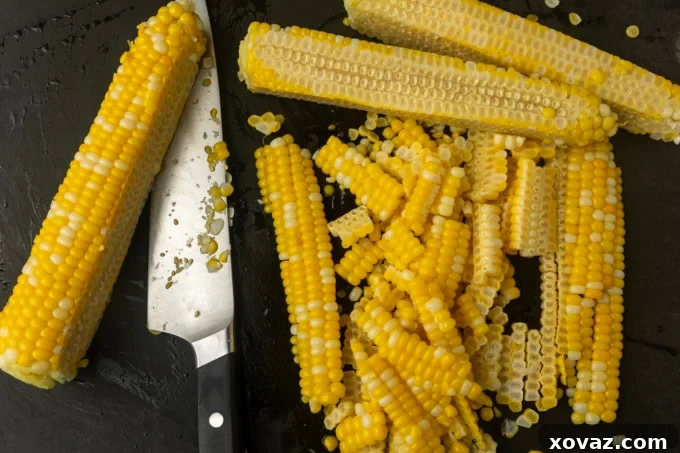
There’s immense satisfaction in using every part of the food we bring into our kitchens, and this corn broth recipe is a shining example of “no food waste” principles at their best. Even if saving money weren’t a consideration, I would still make this corn stock for its sheer flavor power. Why? Because corn cobs, even after the kernels have been carefully scraped away for freezing, canning, or recipes like Fried Corn, retain an incredible amount of flavor. So much of that sweet, milky essence of corn clings to the cob, waiting to be extracted! And goodness knows, sweet corn season is fleeting; capturing every last drop of its deliciousness is a culinary imperative.
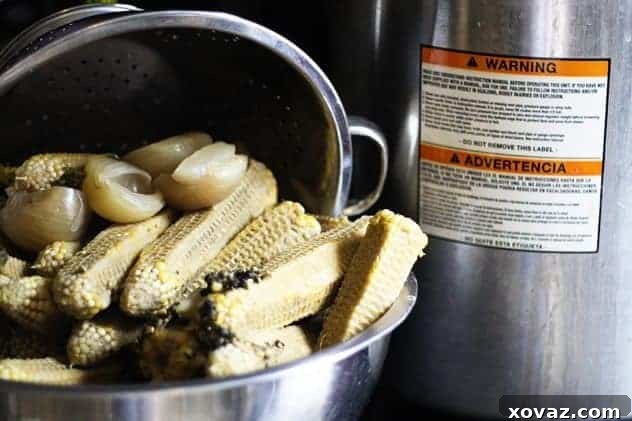
Making corn stock is remarkably simple, yet its impact on recipes is powerfully transformative. The process involves merely boiling the cobs with a selection of aromatics for an hour or two, then straining the resulting liquid. Voila! You’ve created a flavorful, versatile corn stock from what many consider mere scraps. This simple act not only enriches your cooking but also fosters a deeper connection to your food and a more sustainable approach to kitchen practices. It’s a testament to the idea that some of the best flavors come from the most unexpected places.
Mastering the Art of Corn Stock Making
The secret to a truly outstanding corn stock lies in starting with quality ingredients and allowing them ample time to release their flavors. While the primary component is, of course, the corn cobs, the addition of a few key aromatics significantly enhances the broth’s complexity and depth. Think of it as building a symphony of subtle flavors, each playing a crucial role in the final composition. The goal is a clear, golden liquid that sings with the pure, sweet taste of corn, ready to lend its magic to your favorite dishes.
Choosing the Best Cobs and Aromatics
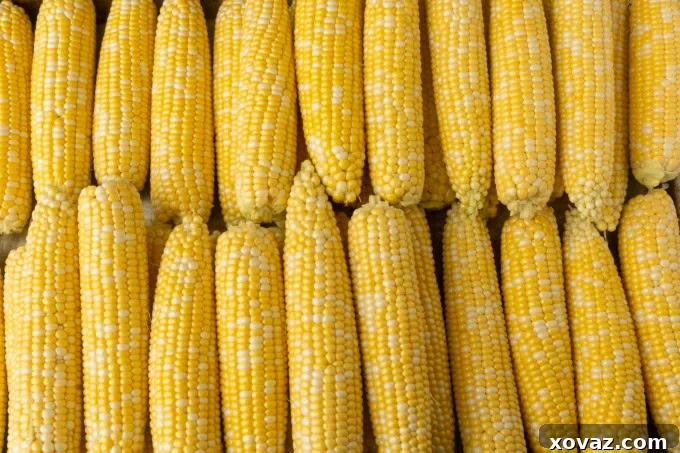
For the best corn stock, always start with fresh corn cobs from sweet, flavorful corn. If you’ve just enjoyed a bountiful harvest, those cobs are perfect. You can also save and freeze cobs throughout the season until you have enough for a large batch. When it comes to aromatics, simple is often best. Onions provide a foundational savory note, while parsley stems and bay leaves add herbaceous freshness. Thyme contributes a delicate earthiness, and black peppercorns offer a subtle hint of spice. While not strictly necessary, adding carrots and celery (the classic mirepoix base) will give your stock a more rounded, traditional vegetable broth flavor, complementing the sweetness of the corn beautifully. Don’t worry about peeling vegetables if you’re straining the stock anyway; the skins often add valuable flavor and color.
The Simple Steps to Perfect Corn Broth
Once you’ve gathered your corn cobs and chosen your aromatics, the process of making corn stock is incredibly straightforward. It’s a hands-off affair for the most part, allowing you to focus on other tasks while your kitchen fills with an enticing aroma. The key is a long, slow simmer, which gently extracts all the wonderful flavors from the cobs without allowing the stock to become cloudy or bitter. This patient approach is what truly unlocks the full potential of your ingredients, yielding a broth that is both vibrant and deeply satisfying. This humble broth can then be used immediately to elevate your current culinary endeavors, or it can be preserved for future enjoyment, extending the taste of summer into every season.
Homemade Corn Stock Recipe: Capturing the Taste of Summer
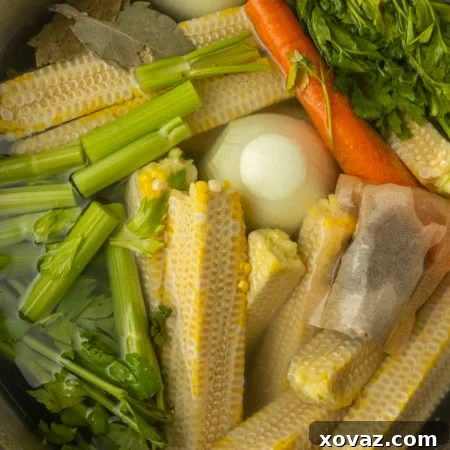
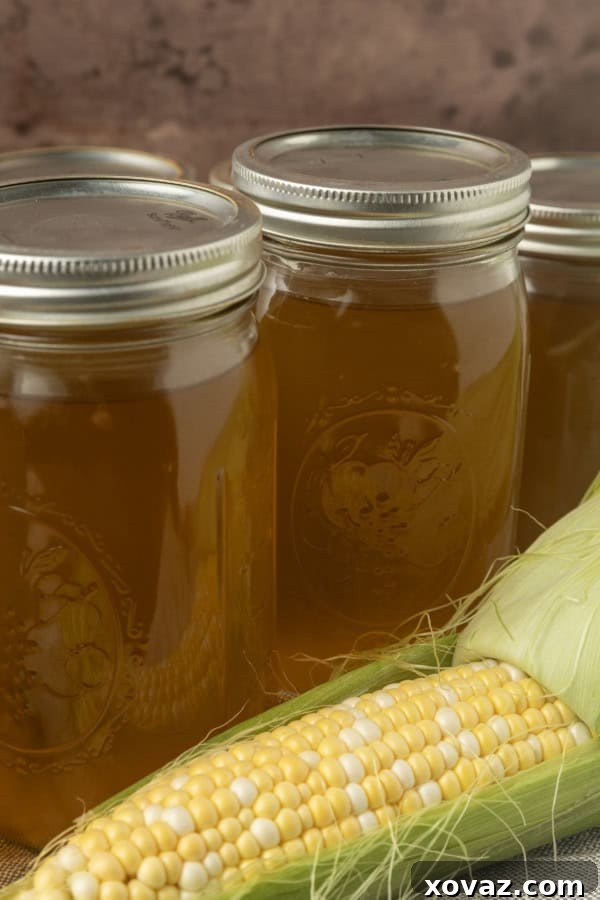
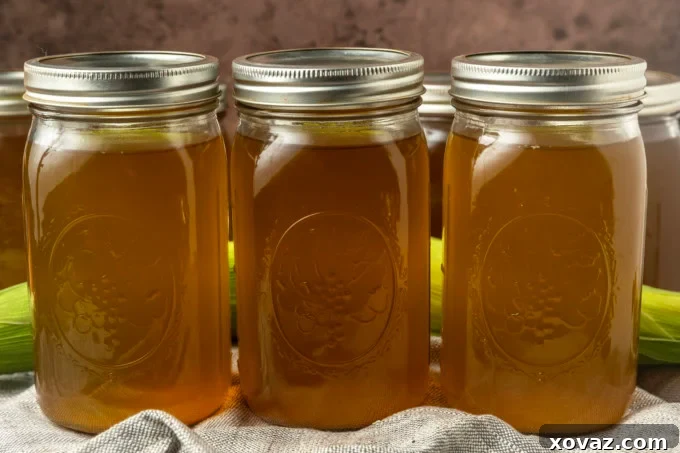
This simple yet profoundly flavorful corn stock is a must-make during sweet corn season. It turns discarded cobs into a rich, golden broth that will add an unparalleled depth to your soups, stews, risottos, and more throughout the year. Yields approximately 12 servings.
Equipment
- 1 large (8-12 quart) stock pot or an electric countertop roaster oven
- 1 fine mesh sieve
- Tongs
- Optional: Pressure canner
- Optional: Canning jars with new, two-piece lids (quart size recommended)
- Optional: Freezer bags or freezer-safe containers
Ingredients
For the Corn Stock:
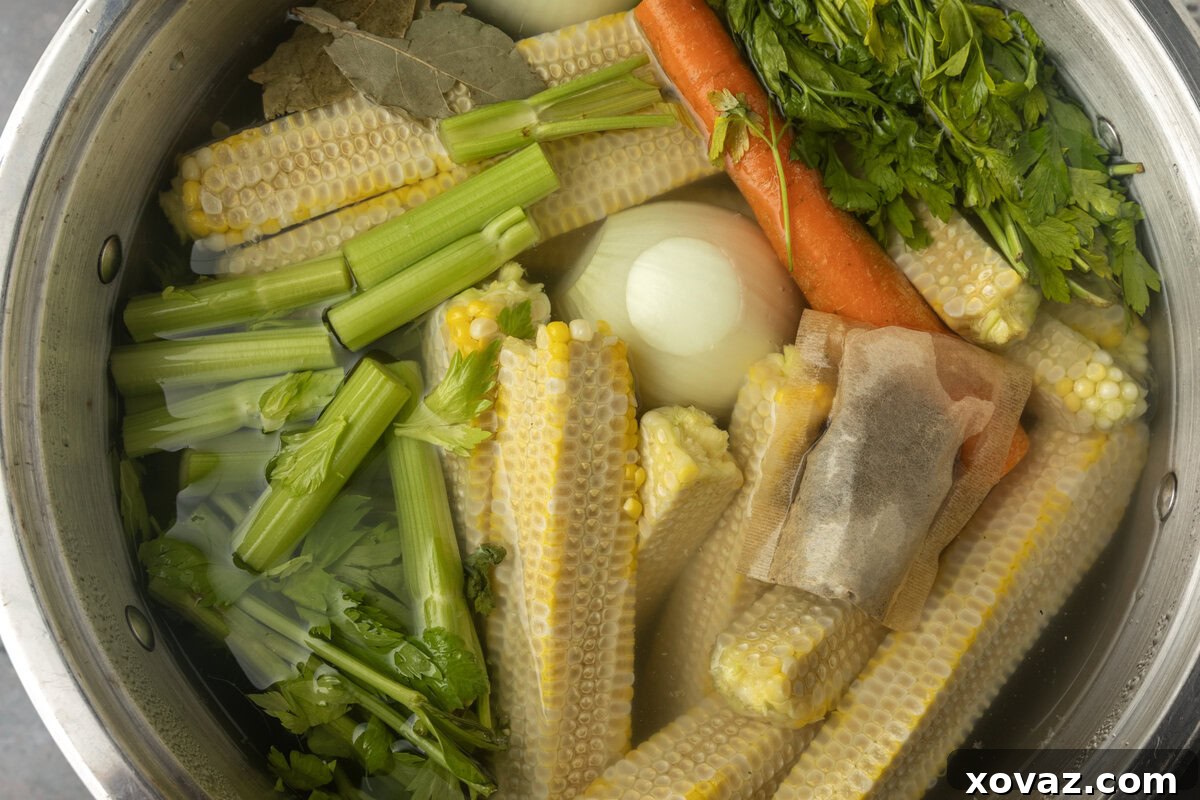
- 2 dozen corn cobs, from which the kernels have already been cut
- 2 large onions, halved (papery skins removed but roots left intact for flavor)
- 1 generous handful of fresh or frozen parsley stems (not leaves)
- 2 bay leaves
- 2 sprigs fresh thyme or 2 teaspoons of dried thyme leaves
- 1 tablespoon whole black peppercorns
- 2 gallons fresh cold water
Optional additions for deeper, more complex flavor:
- 2 carrots, scrubbed, trimmed of both ends, and broken into 2-3 inch pieces
- 2 stalks celery, scrubbed clean and broken into 2-3 inch pieces
Instructions
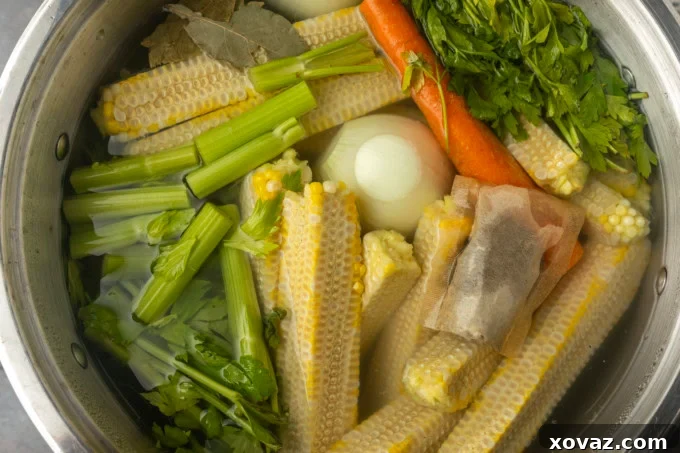
- Combine Ingredients: Carefully place all the corn stock ingredients – the corn cobs, halved onions, parsley stems, bay leaves, thyme, black peppercorns, and any optional carrots or celery – into your large stockpot or electric roaster oven.
- Add Water and Bring to a Boil: Pour 2 gallons of fresh, cold water over all the ingredients. Ensure that the water largely covers the solids. Place the lid on the pot and bring the contents to a strong boil over high heat.
- Simmer to Extract Flavor: Once the water is vigorously boiling, reduce the heat to low. The goal is a gentle, steady simmer, not a rolling boil. Allow the stock to cook at this low simmer for a minimum of 1 1/2 hours, and up to 3 hours. The longer simmering time will result in a more concentrated and intensely flavored stock.
- Remove Solids: Once the simmering is complete, use tongs or a large slotted spoon to carefully remove and discard all the boiled corn cobs and other vegetable solids from the pot. (If you have chickens, they might enjoy the cooled cobs as a treat!)
- Strain and Filter: Place a fine mesh sieve over another large, clean pot or a heat-safe pitcher. Carefully pour the hot liquid through the sieve to remove any remaining small particles or sediment, ensuring your corn stock is clear and clean.
- Cool the Stock: Allow the strained corn stock to cool completely to room temperature before proceeding with storage. This is a crucial step for both safety and quality, especially if you plan to freeze or can it.
Storage Instructions:
To Can the Corn Stock (for long-term, shelf-stable preservation):
- Reheat Stock: Bring the cooled corn stock back to a simmer on the stovetop.
- Prepare Jars: While the stock is heating, ensure your quart-sized canning jars are clean and hot.
- Fill Jars: Ladle the hot stock into the hot jars, leaving exactly 1 inch of headspace at the top.
- Seal Jars: Wipe the jar rims clean with a damp cloth, center new, two-piece canning lids on the jars, and screw the bands on until they are fingertip-tight.
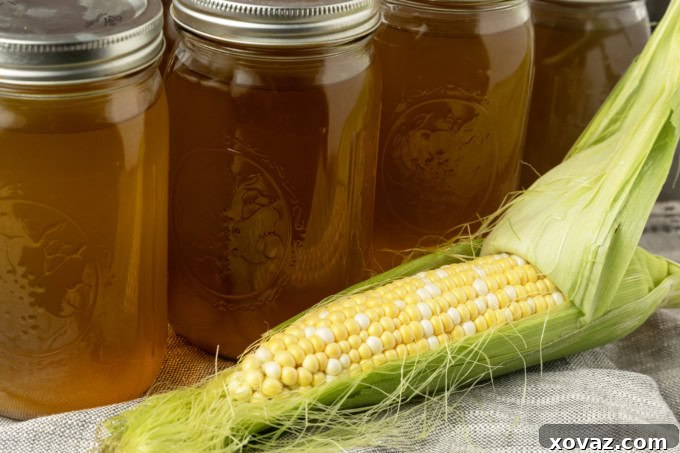
- Pressure Can: Process the jars in a preheated pressure canner at 15 pounds of pressure for 35 minutes. Always refer to your pressure canner’s manual and adjust pressure for your altitude.
- Cool and Store: Once processing is complete, turn off the heat and allow the canner to depressurize naturally before opening. Remove the jars and let them cool undisturbed on a towel-lined counter for 12-24 hours. Check for proper seals (lids should be concave and not flex when pressed). Properly sealed jars can be stored in a cool, dark pantry for up to two years.
To Freeze the Corn Stock (for convenient, shorter-term storage):
- Ensure Full Cooling: Verify that the corn stock is completely cold before freezing. Freezing warm liquid can affect texture and flavor.
- Portion into Containers: Pour the cooled stock into robust freezer-safe containers or sturdy zipper-top freezer bags. For maximum convenience, portion the stock into single-use amounts (e.g., 1-cup, 2-cup, or 4-cup servings), which makes thawing for recipes much easier.
- Efficient Freezing: If using freezer bags, lay them flat on a baking sheet in the freezer until they are frozen solid. This allows for easy stacking and saves freezer space.
- Storage Duration: Freeze the corn stock for up to 6 months for optimal flavor and quality. While it will remain safe beyond this period, its flavor might gradually diminish.
- Important Note on Jars: We strongly advise against freezing stock in standard glass jars. Glass is prone to breaking as liquids expand during freezing, creating a safety hazard and a mess. If you absolutely must use glass, choose wide-mouthed, freezer-safe jars designed for this purpose and leave at least 2 inches of headspace to accommodate expansion.
Nutrition Information (Estimate per serving):
The following nutritional values are estimated per serving and can vary based on specific ingredients and preparation methods:
- Calories: 28 kcal
- Carbohydrates: 6g
- Protein: 1g
- Fat: 0.3g
- Saturated Fat: 0.1g
- Polyunsaturated Fat: 0.1g
- Monounsaturated Fat: 0.1g
- Trans Fat: 0.001g
- Sodium: 16mg
- Potassium: 129mg
- Fiber: 1g
- Sugar: 2g
- Vitamin A: 1770 IU
- Vitamin C: 3mg
- Calcium: 15mg
- Iron: 0.3mg
Nutritional information is an estimate and provided to you as a courtesy. For precise dietary planning, you should calculate the nutritional information with the actual ingredients used in your recipe using your preferred nutrition calculator.
Did you make this recipe?
We’d love to see your culinary creations! Make sure to tag @foodiewithfam on Instagram and use the hashtag #foodiewithfamily so we can admire your homemade corn stock!
Pin Recipe
Share on Facebook
Unlocking Culinary Potential: Versatile Uses for Your Corn Stock
Once you have a batch of homemade corn stock, a world of culinary possibilities opens up. Its delicate sweetness and comforting aroma make it an ideal base for any dish where you want to evoke the feeling of summer. Use it as the liquid in a creamy corn chowder, providing an extra layer of corn flavor that is truly remarkable. Beyond chowders, it excels in vegetarian soups, giving them a depth and body often missing from water-based broths. Try using it in a vegetable risotto, particularly one featuring mushrooms or asparagus, where its subtle sweetness will enhance the other ingredients beautifully. It also makes a fantastic poaching liquid for delicate fish or chicken, imparting a gentle, appealing flavor.
Consider replacing chicken or vegetable broth with corn stock in recipes for steamed vegetables, sauces, or even to cook grains like couscous or quinoa. It adds a nuanced flavor to gravies and pan sauces, especially those accompanying roasted poultry. For a simple yet elegant side, cook polenta or grits in corn stock for an unexpectedly rich and flavorful dish. In stir-fries, a splash of corn stock can deglaze the pan and create a more cohesive sauce. Its versatility is truly impressive, ensuring that no drop of that summery goodness goes to waste.
Harvesting the Essence of Sweet Corn: A Seasonal Ritual
Making corn stock is more than just a recipe; it’s a seasonal ritual, a delightful way to extend the fleeting joy of sweet corn season. It embodies the spirit of food preservation and mindful cooking, transforming a seemingly humble byproduct into a culinary treasure. As you gather your cobs, you’re not just preparing for future meals; you’re actively participating in a tradition of making the most of nature’s bounty. The process itself is a simple pleasure, filling your home with the comforting scent of simmering corn and vegetables. This act of creating something so flavorful from so little is incredibly satisfying and rewarding.
By investing a little time during peak corn season, you equip your pantry with a versatile ingredient that will brighten your cooking for months to come. It’s a smart, sustainable, and undeniably delicious way to capture and enjoy the sweet essence of summer, ensuring that even on the chilliest winter day, a taste of sunshine is always within reach. So next time you shuck and strip those corn kernels, remember: the real magic of summer might just be hiding in the cobs.
This article was originally published on September 10, 2012, and has been comprehensively rewritten and updated in August 2025 to include improved instructions, enhanced information, and expanded culinary applications for homemade corn stock.