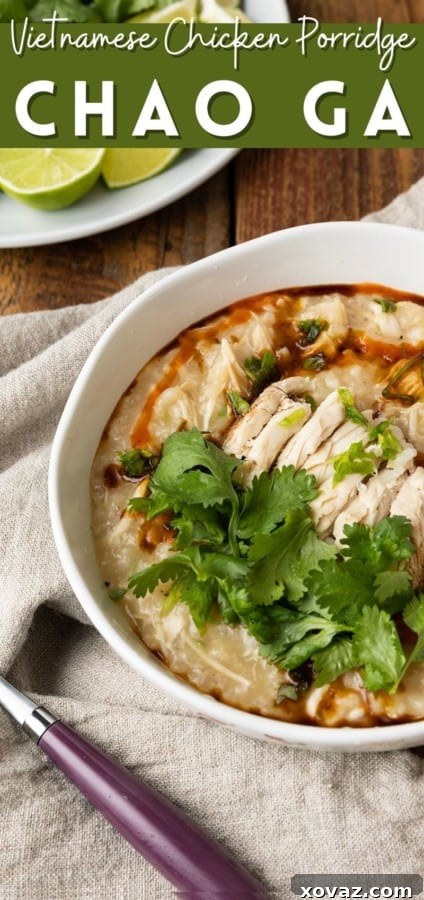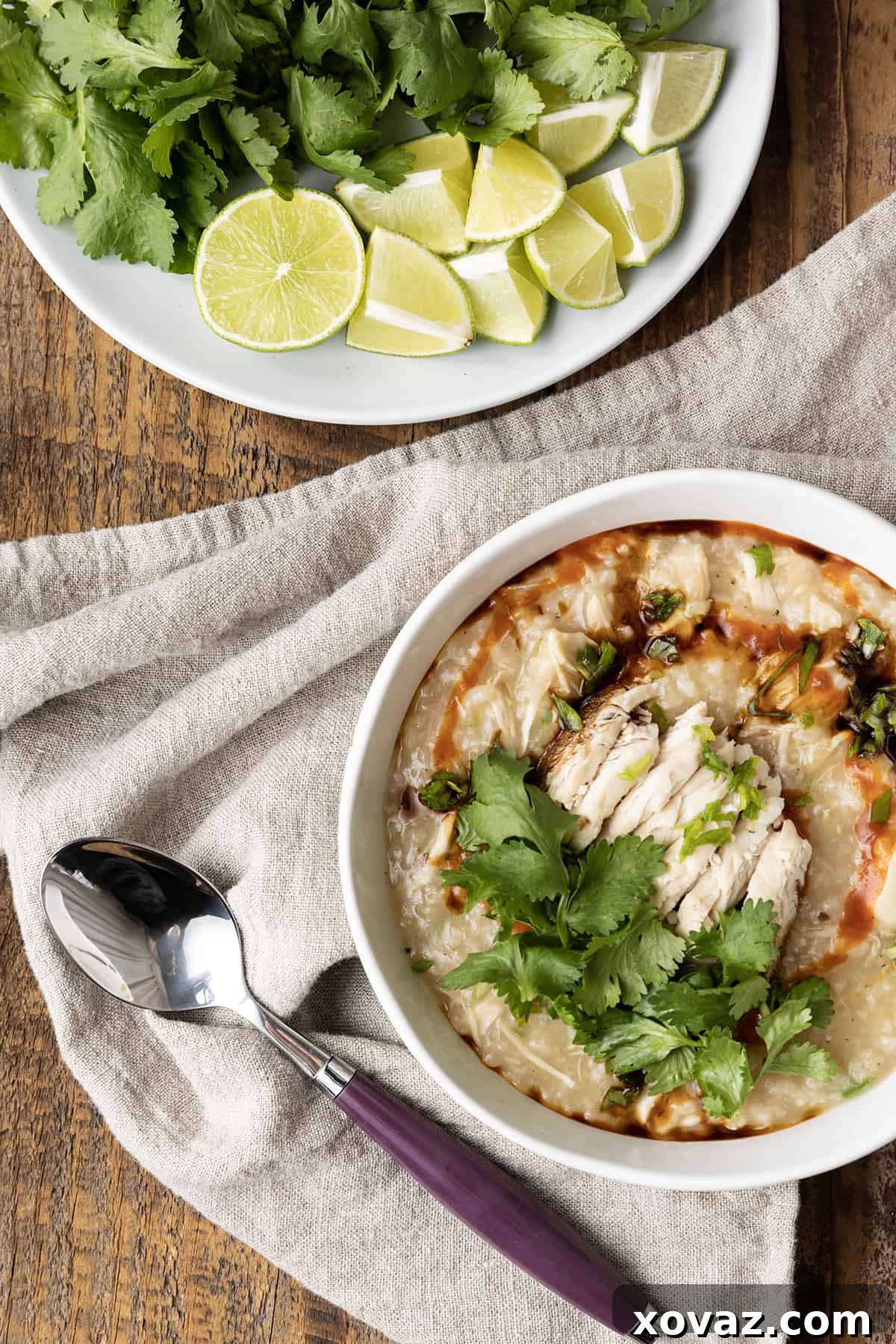
Embark on a culinary journey to Vietnam with Chao Ga, a dish that transcends mere soup to become a symbol of comfort, nourishment, and vibrant flavor. This Vietnamese chicken and rice porridge, often referred to as chicken congee, is a savory, silky, and thick concoction that promises both deep satisfaction and a light, wholesome feeling. It’s an effortlessly easy and incredibly budget-friendly meal, perfect for any time of day – be it a warming breakfast, a hearty lunch, or a soothing dinner. Prepare to fall in love with the fresh, aromatic Vietnamese essence infused into every spoonful of this fast, fabulous, and utterly delicious dish.
Beyond its delightful taste, Chao Ga is remarkably simple to prepare, making it accessible even for novice cooks. Despite its ease, it delivers an aromatic experience that truly bursts with flavor. It’s a dish that will undoubtedly fill you up, yet it does so economically and without leaving you feeling weighed down. Its profound comfort and nutritional value have made it a staple in Vietnamese households and communities around the globe for generations.
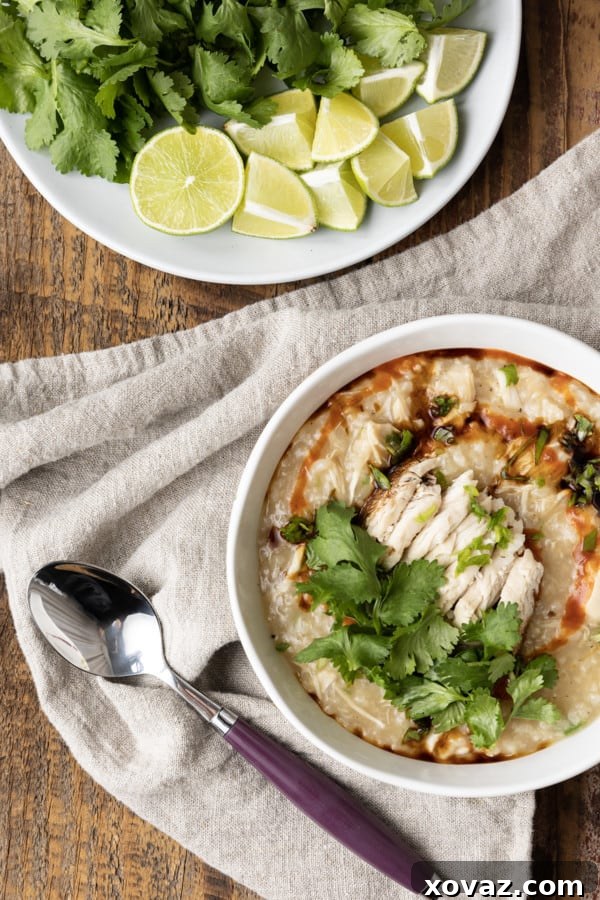
Chao Ga holds a special place in Vietnamese culture. It’s often one of the first solid foods introduced to children, cherished for its gentle texture and easily digestible nature. This inherent quality also makes it the go-to remedy for anyone feeling under the weather, offering a restorative warmth that soothes from the inside out. Its versatility extends to its presentation; you can enjoy it in its simple, unadorned glory, allowing the pure chicken and rice flavors to shine, or you can embrace the traditional Vietnamese way by lavishly topping your bowl with a medley of fresh and crispy garnishes.
My personal preference leans towards an abundance of toppings, transforming each serving into a vibrant mosaic of textures and tastes. Fresh cilantro, crisp bean sprouts, and thinly sliced green onions provide a refreshing counterpoint. These are beautifully complemented by the crunch of crispy fried shallots and garlic, the creamy richness of soft-boiled eggs, a dash of fiery hot sauce, and the subtle tang of black garlic vinegar. The contrast between the hot, silky chicken and rice porridge and the cool, crunchy herbs and fried aromatics is nothing short of swoon-worthy, creating a dynamic culinary experience that engages all the senses.
Chao Ga: The Heart of Vietnamese Chicken Congee
At its core, Chao Ga is Vietnam’s beloved interpretation of a rice porridge dish that is celebrated across Asia and throughout the Asian diaspora. This foundational dish goes by many names depending on the region – congee in China, juk or jook in Korea, okayu in Japan, kanji in South India, zosui in Japan, lugaw in the Philippines, and many more. Each culture imbues its version with unique ingredients and culinary traditions, creating a rich tapestry of variations that are all rooted in the comforting simplicity of rice cooked to perfection.
Just as its name shifts with geography, the ideal consistency of rice porridge, including Chao Ga, varies significantly from town to town and even from one family kitchen to another. Some prefer it thinner, almost soup-like, while others favor a denser, more cohesive texture. Our particular rendition of Cháo Gà strikes a delightful balance: it’s thick enough to cling to your spoon without running off, yet still possesses a delightful fluidity that allows for an enjoyable slurp if the mood strikes. This perfect consistency is a hallmark of a well-made congee, offering a satisfying mouthfeel that is both substantial and smooth.
What unites all these diverse variations of rice porridge is a fundamental cooking technique: the rice grains are simmered long and slow enough to essentially “dissolve” into the water or stock. This extended cooking process breaks down the starch in the rice, creating an incredibly silky, almost creamy texture that is profoundly comforting. The resulting porridge is surprisingly filling yet feels light on the stomach, offering a meltingly soft consistency while still retaining a subtle, pleasing chew from the partially intact rice particles. This unique texture is what makes congee such a beloved and distinctive dish worldwide.
Unbeatable Value: Budget-Friendly and Incredibly Filling
As if its comforting qualities, delicious flavor, and simple preparation weren’t enough to commend it, let’s turn our attention to the remarkable economics of Chao Ga. This dish stands out as one of the most frugal yet incredibly filling meals you can possibly imagine. It’s a testament to how simple, wholesome ingredients can be transformed into a nourishing feast that stretches to feed many.
Consider this: our recipe utilizes just one cup of uncooked rice combined with ten cups of stock. From these humble beginnings, it yields a generous quantity, enough to comfortably satisfy five adults. That’s not a typo – a single batch of Chao Ga offers substantial servings for a small crowd, making it an ideal choice for family meals, gatherings, or simply stocking up on delicious leftovers. Its cost-effectiveness makes it a standout option for savvy home cooks looking to maximize flavor and satisfaction without breaking the bank.
The Allure of Vietnamese Chicken Porridge
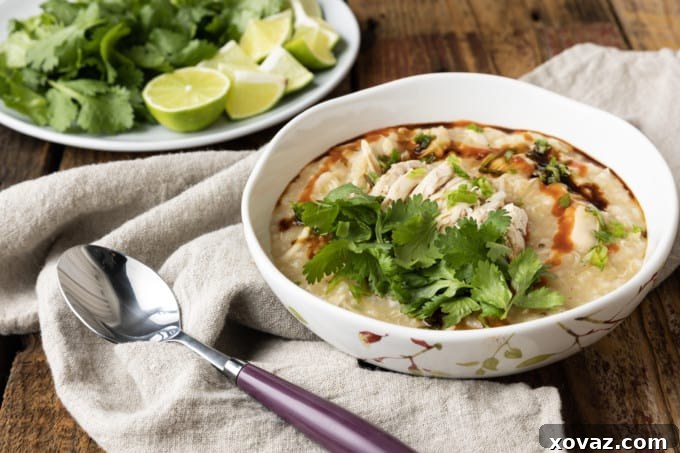
Before the vibrant array of garnishes are added, this comforting porridge presents a rather unassuming appearance. Its color is typically an off-white or beige, and its texture is thick yet translucent, a visual cue to its inherent creaminess. However, as the saying goes, you shouldn’t judge a book by its cover, and the same holds true for Chao Ga.
While visually modest, your nose will instantly confirm that this is a dish you absolutely want to eat. The aroma of Chao Ga is simply irresistible – a complex and enticing blend of savory chicken, earthy ginger, pungent garlic, and the subtle sweetness of rice. This delightful scent will draw you in, making it impossible to resist the urge to immediately dig in and experience its comforting embrace.
…A word of caution, though, despite how incredibly good that Chao Ga smells, you might want to exercise a little patience and let it cool longer than you might instinctively think necessary. This thick, luscious porridge has an uncanny ability to retain heat, much like molten lava! Trust me when I say that I’ve regretted a hasty, eager spoonful more times than I care to count, leading to a scorched tongue and a temporary setback in enjoying its full deliciousness. A little wait ensures a much more pleasurable eating experience.
Once you’ve given it a moment to cool to a perfectly edible temperature, the transformation truly begins. A squeeze of fresh lime juice over the top adds a bright, zesty note, awakening the flavors. Then, adorn your bowl abundantly with all sorts of delectable goodies – from vibrant herbs to crispy fried bits. This final step elevates the simple porridge into a true feast for the eyes, a colorful and texturally rich masterpiece that tastes even better than it looks.
Crafting Your Bowl of Comfort: How to Make Vietnamese Chicken Porridge
Making your own delicious Vietnamese chicken rice porridge at home is a straightforward process that requires minimal specialized equipment. Here’s a quick overview of the essential ingredients and tools you’ll need to create this deeply satisfying dish.
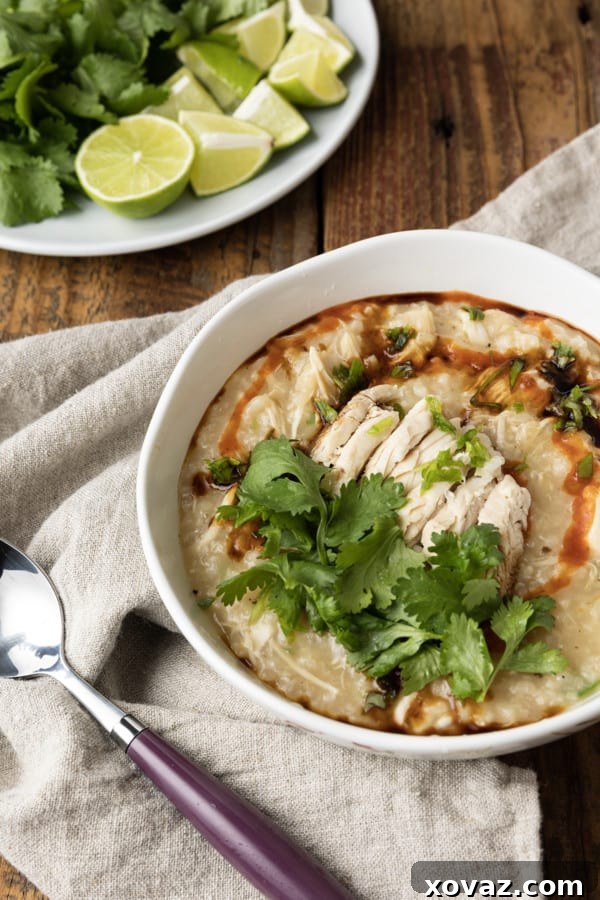
Key Ingredients
- Broth: High-quality chicken broth, chicken stock, or even a savory mushroom stock forms the flavorful base.
- Rice: Short or medium-grain rice is preferred, with glutinous rice (also known as sweet rice) offering the silkiest texture. Remember to rinse it thoroughly!
- Green Onions: Also known as spring onions, both the white and green parts are used, with the greens typically reserved for garnish.
- Fresh Ginger: Essential for its aromatic and slightly pungent flavor. A hot tip: freeze it first for easy grating!
- Garlic Cloves: Minced or grated, garlic adds a foundational aromatic layer.
- Salt: To season the porridge to perfection.
- Pepper: Freshly ground black pepper or the milder white pepper, depending on preference.
- Chicken: Boneless chicken breast or thighs are excellent choices for their lean protein and tender texture when shredded.
- Fish Sauce: A cornerstone of Vietnamese cuisine, providing a unique umami depth. (See notes for alternatives if needed.)
- Lime Wedges: For a crucial bright, acidic finish when serving.
- Cilantro: Fresh herbs like cilantro are indispensable for adding a burst of freshness as a garnish.
- Optional but Highly Recommended Garnishes: Soft or medium-boiled chicken or duck eggs, cubes of fried tofu, a dollop of chili crisp, a drizzle of sesame oil or soy sauce, extra fish sauce, potent black garlic sauce, a dash of your favorite hot sauce, crispy fried garlic and shallots, savory pork floss, fresh bean sprouts, or any other toppings that bring you joy!
For the broth, I often opt for a low-sodium chicken broth or, ideally, a rich homemade chicken stock, which truly elevates the depth of flavor. However, I’ve also had fantastic results using a good quality mushroom stock, especially if serving vegetarian guests or simply craving a different flavor profile. The key is to use a broth that you genuinely enjoy the taste of, as it forms the backbone of the porridge.
The type of rice used in Chao Ga can indeed vary considerably from one household to another. Over the years, I’ve experimented with almost every type of rice available, depending on what I had in my pantry at the moment. Without a doubt, my absolute favorite results, yielding the most incredibly silky Vietnamese chicken porridge, come from using glutinous (also known as sweet) short-grain rice. It’s important to clarify, despite its name, “glutinous rice” contains no gluten whatsoever; it earned its name because it becomes wonderfully glue-like and sticky when cooked, a quality that lends itself perfectly to the creamy texture of congee. Like all varieties of rice, it is naturally gluten-free.
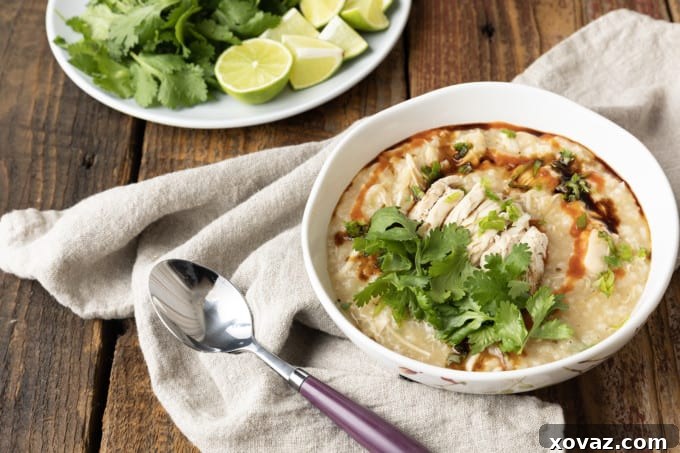
If sweet/glutinous rice isn’t readily available, don’t fret! You can certainly achieve excellent results using short-grain sushi rice, medium-grain rice, or even fragrant jasmine rice. In a pinch, I’ve even made a decent congee with basmati rice, although I do find that shorter grain varieties contribute more significantly to the desired super silky texture of the porridge. Therefore, basmati typically only gets the nod when I’m truly low on other rice options. You can also experiment with brown rice, but be prepared for a longer cooking time as it takes more effort for the grains to “explode” and create that signature silkiness within the broth.
For those who are not fond of fish sauce, an equal quantity of soy sauce or liquid aminos can be used as a substitute. While this substitution will alter the classic Vietnamese flavor profile slightly, the dish will still be delicious and deeply savory. It’s all about finding what works best for your palate!
I typically use boneless chicken breasts and boneless, skinless chicken thighs in this recipe, primarily for their economical value and ease of preparation. However, you have several flexible options. You could alternately add shredded leftover rotisserie chicken as a garnish at the very end, simply warming it through with the hot porridge. While this specific Chao Ga recipe is designed for boneless chicken pieces, you are absolutely welcome to simmer a whole chicken in three quarts of water with your favorite aromatics to create a rich homemade chicken broth for this recipe. If you choose this method, be sure to shred all the tender chicken meat from the bones and incorporate it back into your rice and chicken soup. We’ve also successfully made this comforting porridge with shredded or chopped leftover turkey, especially on the day after Thanksgiving, or with succulent leftover chicken from the grill, giving new life to previous meals!
Genius Kitchen Hack: The Frozen Ginger Tip!
You might wonder why I specifically suggest freezing the ginger in this recipe. Get ready, because I’m about to share a game-changing kitchen tip that will make your life so much easier!
When you freeze fresh ginger root, it undergoes a magical transformation that simplifies the grating process immensely. You can grate it directly into your recipe without the tedious step of peeling it first. Any tough, fibrous peel will naturally peel away as you sweep the frozen ginger over a microplane or fine grater. What you’re left with is beautifully fluffy, finely grated ginger, completely free of any stringy bits. This method not only saves time but also ensures a smoother, more integrated ginger flavor in your dish without any unwanted textures. It’s a trick you’ll use again and again!
The Art of Topping: What to Serve with Chicken Rice Porridge
The garnish game for your Chao Ga can be incredibly strong and creative! The beauty of this dish lies in its versatile and inviting canvas, ready to be adorned with a variety of textures and flavors. From the creamy richness of soft-boiled eggs (chicken or duck eggs both work wonderfully) to the savory depth of fried tofu, a spicy kick from chili crisp, the delightful crunch of fried garlic and shallots, or the unique umami of pork floss – Chao Ga is truly ripe for customization with a wide array of toppings.
The overarching aim here is to create a harmonious contrast: to complement the silky smooth texture and the comforting hot temperature of the porridge with elements that offer a delightful crunch, a refreshing coolness, or an exciting burst of flavor. Because the porridge itself has a mild, subtly savory base, it provides the perfect foundation to really dial up the spice, acidity, or richness with your chosen condiments. Don’t be shy – experiment and discover your favorite combinations to truly make this dish your own!
Simple Equipment for a Savory Creation
While traditional congee preparations can sometimes demand hours of simmering on the stovetop, our streamlined version allows you to achieve that same comforting texture much more quickly, typically in about 45 minutes of active cooking time. Furthermore, this recipe doesn’t require constant attention, needing only occasional stirring to prevent sticking. The best part? It can be whipped up using basic kitchen equipment you likely already have!
- Cutting board
- Chef’s knife
- Measuring cup
- Measuring spoons
- Microplane or other fine grater (for ginger and garlic)
- Long handled spoon (for stirring)
- 4 quart capacity stock pot or soup pot
As you can see, that list is pretty self-explanatory and basic, proving that you don’t need fancy gadgets to create something truly delicious. And here’s some even better news for those who appreciate set-it-and-forget-it cooking:
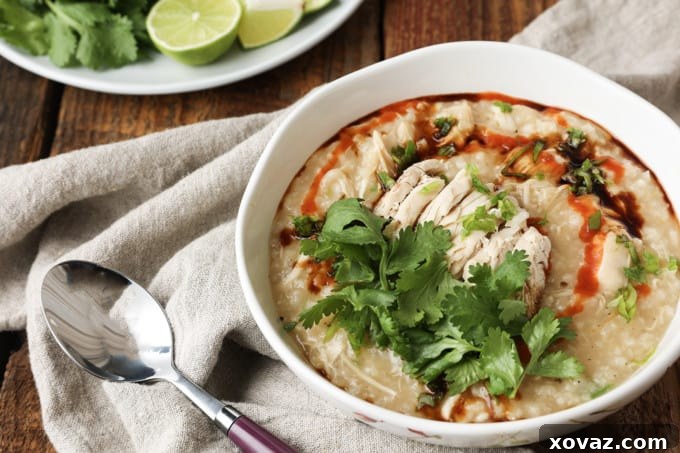
You can easily combine all the main ingredients (everything but the fresh garnishes) into a slow cooker and let it cook on a low setting overnight. The results are fantastic, offering the same deeply comforting flavors with even less hands-on time! Just imagine the pure delight of waking up to a bubbling slow cooker, filling your home with the inviting aroma of wonderfully savory Vietnamese rice porridge, ready to kickstart your day. It’s a truly effortless way to enjoy a warm, nourishing breakfast.
Chao Ga (or its many other congee variations) is consistently one of the most requested breakfasts in our household, a true testament to its universal appeal. It’s certainly not just reserved for those days when you’re feeling a bit under the weather; it’s a beloved staple that brings warmth and happiness to any meal at Chez Lindamood!
Chao Ga: The Recipe
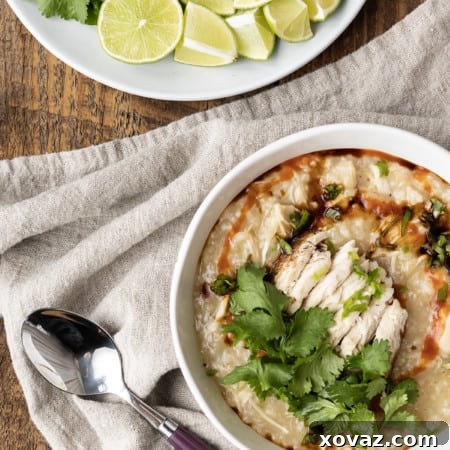
Recipe for Vietnamese Chicken Porridge (Chao Ga)
This recipe yields approximately 6 servings of comforting Vietnamese Chicken Porridge.
Prep Time: 15 minutes
Cook Time: 40 minutes
Total Time: 55 minutes
Ingredients
- 2 quarts chicken broth or stock
- 1 cup short or medium grain rice, preferably glutinous rice, rinsed well under cold running water
- 1 bunch green onions, whites thinly sliced, greens thinly sliced and reserved separately for garnish
- 2-inch piece of ginger, frozen and grated
- 3 very large garlic cloves, minced or grated
- 1 teaspoon kosher salt
- ½ teaspoon black pepper
- 4 boneless, skinless chicken breasts or 5 boneless, skinless chicken thighs
- 3 tablespoons fish sauce (see notes below for substitutes)
For Serving (Optional but Highly Recommended Garnishes)
- Lime wedges
- Fresh cilantro
- Soft or medium-boiled chicken or duck eggs
- Tofu (fried or silken)
- Chili crisp or garlic chili sauce
- Thinly sliced red onion
- Sesame oil
- Soy sauce
- More fish sauce (to taste)
- Black garlic sauce
- Hot sauce
- Crispy fried garlic and shallots
- Pork floss
- Fresh bean sprouts
- Any other toppings you love!
Instructions
- Combine the broth, thoroughly rinsed rice, the thinly sliced white parts of the green onions, grated ginger, minced garlic, kosher salt, and black pepper in a large pot. Bring the mixture to a rolling boil over medium-high heat, stirring frequently to prevent the rice from sticking to the bottom of the pot.
- Once boiling, add the chicken pieces to the rice mixture and stir them in well. Cover the pot with a lid, reduce the heat to low, and let it simmer gently for 20-25 minutes.
- After the initial simmer, remove the lid, add the fish sauce, and continue to simmer uncovered for an additional 10 minutes. At this point, the rice grains should have “exploded,” becoming soft and no longer sinking to the bottom, and the chicken should shred easily with a fork or tongs.
- Using tongs or a spoon, gently break the cooked chicken into smaller, bite-sized pieces directly in the pot. The pieces don’t need to be perfectly uniform; a rustic, shredded texture is ideal.
- Ladle the warm Chao Ga into individual bowls. Serve immediately with fresh lime wedges and a generous scattering of fresh cilantro, along with any other desired garnishes you love.
Notes
- If fish sauce is not available or preferred, you can substitute an equal quantity of soy sauce or liquid aminos. While the flavor profile will differ slightly from traditional Vietnamese Chao Ga, it will still be a delicious and satisfying dish.
- Leftover Chao Ga reheats beautifully. You can warm it in the microwave or gently in a small saucepan on the stovetop. If reheating on the stovetop, remember to stir frequently to prevent scorching and ensure even heating. If the porridge has thickened too much overnight, you can add a splash of water or broth to loosen it to your desired consistency.
Nutrition
Calories: 318 kcal
Carbohydrates: 29 g
Protein: 37 g
Fat: 5 g
Saturated Fat: 1 g
Polyunsaturated Fat: 1 g
Monounsaturated Fat: 1 g
Trans Fat: 0.02 g
Cholesterol: 103 mg
Sodium: 2440 mg
Potassium: 689 mg
Fiber: 1 g
Sugar: 2 g
Vitamin A: 74 IU
Vitamin C: 3 mg
Calcium: 31 mg
Iron: 2 mg
Nutritional information provided is an estimate and serves as a courtesy. It is highly recommended to calculate the nutritional information using the actual ingredients you use in your recipe with your preferred nutrition calculator for the most accurate values.
Did You Make This Recipe?
We’d love to see your creations! Make sure to tag @foodiewithfam on Instagram and use the hashtag #foodiewithfamily so we can admire your delicious Chao Ga!