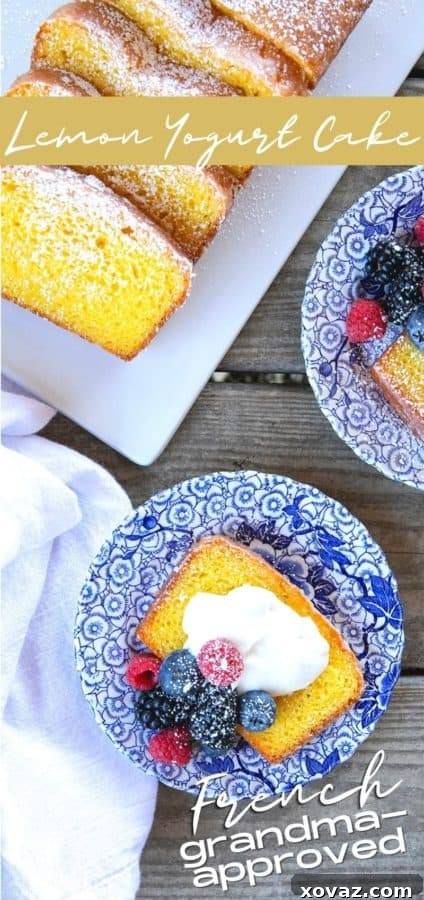
Mastering the Classic French Lemon Yogurt Cake: A Gâteaux de Mamie Recipe
There’s a special place in the heart of French home baking for a cake that embodies simplicity, sunshine, and a comforting tenderness that feels like a warm embrace. This is the French Lemon Yogurt Cake, affectionately known across generations as “Gâteaux de Mamie” or “Grandma’s Cake.” It’s a culinary treasure passed down through families, offering a taste of pure joy in every bite. This humble yet exquisite cake is beautifully crowned with a delicate lemon glaze that, once set, creates a subtly sugary, shatter-thin crust – a delightful contrast to the moist crumb beneath. Its universal appeal lies in its bright, refreshing lemon notes, the perfect amount of sweetness, and an unbelievably tender texture that makes it a perennial favorite.
Despite its elegant simplicity and irresistible charm, preparing a French Lemon Yogurt Cake is remarkably straightforward. This isn’t a dessert reserved for expert bakers; it’s an accessible recipe that promises delicious results even for novices. It’s the kind of cake that, from the very first attempt, secures its spot as your go-to treat for any occasion – be it an afternoon snack, a light breakfast, or a delightful dessert after dinner. Its ease of preparation has certainly never stopped me from sharing this recipe with anyone who expresses even a passing interest, and it quickly becomes a beloved staple in their repertoire, too.
The Enduring Appeal of Gâteaux de Mamie
The Lemon Yogurt Cake, or Gâteaux de Mamie, truly never fades from popularity. For those who grew up with its comforting presence, it evokes powerful nostalgia and a deep craving. Newcomers who taste it for the first time instantly understand its timeless allure. It’s a cake that transcends trends, offering an authentic taste of French home baking tradition.
I recently shared a photo of a freshly baked lemon yogurt cake with my wonderful daughter-in-law, who hails from France. Her immediate recognition and enthusiastic reaction spoke volumes; she instantly knew what it was and jokingly accused me of torturing her with its delicious image, expressing a desperate desire for a slice. Naturally, I promised my son would bake one for her. He’s an exceptional cook, and I suspect that’s just one of the many reasons my daughter-in-law adores me.
Yogurt: The Heart of the French Lemon Cake
It goes without saying that yogurt plays a pivotal role in this cake, contributing to its signature moistness and delicate tang. Traditionally, many French grandmothers, or “gra-mères” and “mémés” (as in “granny”), have a charming, almost intuitive method for measuring the ingredients for their yogurt cakes. They famously use an empty yogurt pot as their measuring cup: one pot of yogurt, one pot of oil, two pots of sugar, and three pots of flour, along with three eggs, a pinch of salt, and a dash of baking powder. This simple, hands-on approach makes Gâteaux de Mamie an ideal baking project to enjoy with children or grandchildren, introducing them to the magic of baking in a fun, accessible way.
However, as someone who typically purchases larger containers of yogurt, and not yet a full-fledged “gra-mère” myself, I’ve translated today’s lemon yogurt cake recipe into standard measurements for convenience. Happily, most smaller yogurt pots correspond to roughly a half-cup volume, making the conversion from the traditional method quite simple for anyone curious enough to try it both ways.
Crafting Your Perfect French Lemon Yogurt Cake
Before diving into the baking process, let’s ensure you have everything you need. Both the ingredient and equipment lists for this cake are remarkably manageable, featuring no exotic, expensive, or hard-to-find items. This is a cake designed for accessibility and delightful results.
Essential Ingredients
- Non-stick cooking spray (for pan preparation)
- All-Purpose Flour (for structure)
- Baking Powder (for lift)
- Kosher Salt (to balance flavors)
- Plain Greek Yogurt (the star for moisture and tang)
- Granulated Sugar (for sweetness and tenderizing)
- Large Eggs (for binding and richness)
- Whole Lemon (for vibrant zest and juice)
- Pure Olive Oil or another Neutral Oil (for moisture and flavor)
- Confectioner’s Sugar (for the delicate glaze)
When selecting the yogurt for your French Lemon Yogurt Cake, you’re presented with a variety of excellent options. My personal preference leans towards plain, whole milk Greek yogurt. This choice consistently delivers an incredibly tender cake with a slightly richer, more luxurious texture that truly enhances the overall experience.
If you prefer a lower-fat Greek yogurt, rest assured it will still produce a wonderfully delicious cake, perhaps only negligibly less tender. I’ve thoroughly tested this recipe with several types of yogurt: plain low-fat Greek yogurt, regular plain yogurt in both whole milk and low-fat varieties, and even lemon-flavored Greek and plain yogurts. In every instance, the cakes turned out beautifully, consistently receiving rave reviews. While I haven’t experimented with dairy-alternative yogurts, I imagine they would work perfectly well. If you decide to try this recipe with a plant-based yogurt, please share your results – I’d love to hear how it turns out!
You also have flexibility when it comes to the oil. I particularly favor pure olive oil for the subtle depth and richness it contributes to the cake’s flavor profile. However, I’ve successfully made this yogurt cake using canola, grapeseed, sunflower, and other neutral vegetable oils, and they have all yielded fantastic results. Any liquid, neutral-flavored oil should work perfectly in this recipe.
In keeping with the cake’s simple perfection, no additional extracts are required to enhance its flavor. The significant “lemon oomph” – and there is indeed a great deal of it – comes exclusively from the zest and juice of just one whole lemon. The tangy notes from the yogurt beautifully amplify the bright, sunny presence of the lemon, infusing the entire cake with its aromatic essence. You’ll find that the delightful scent of lemon permeates the room as soon as you walk in!
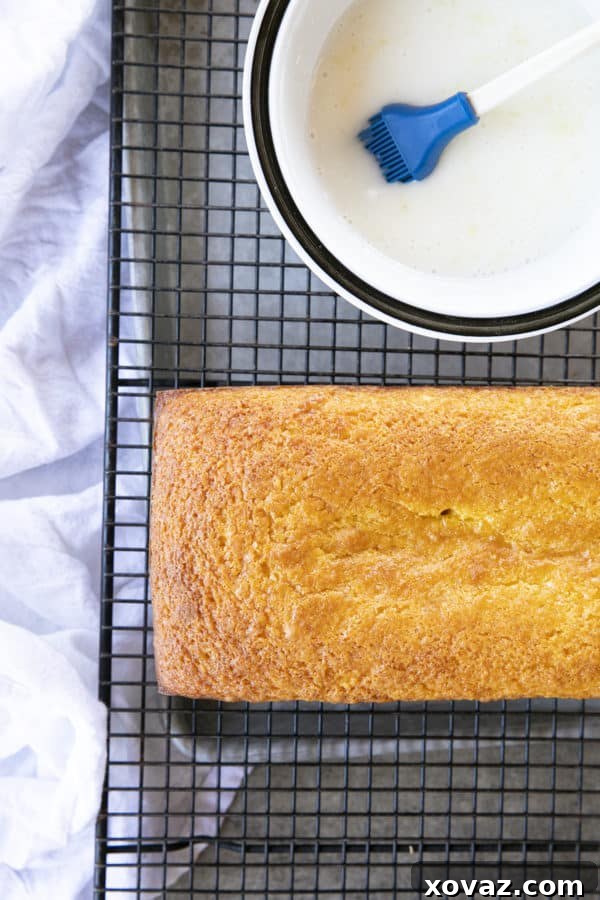
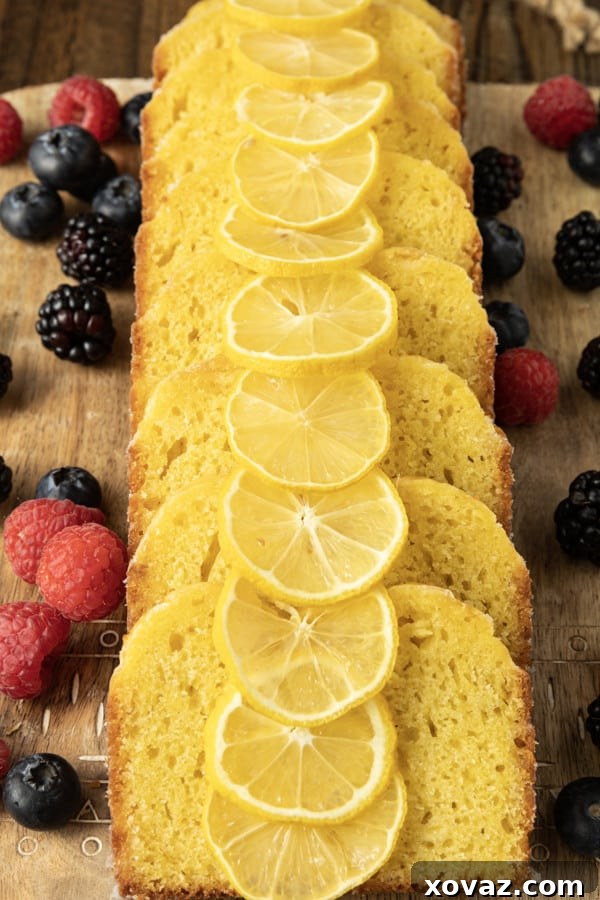
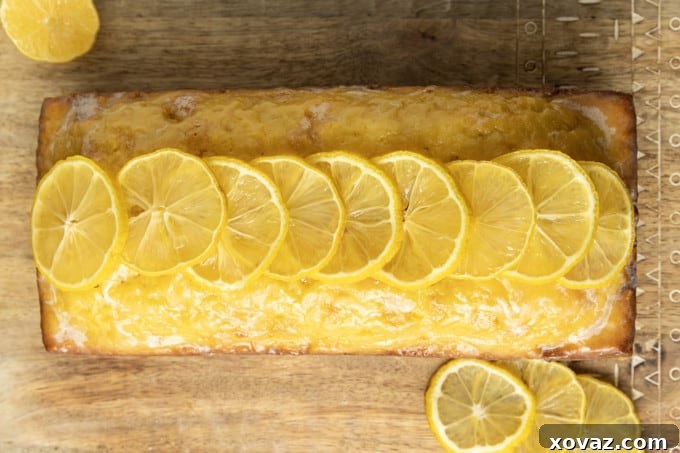
The vibrant lemon zest is carefully baked directly into the cake batter, ensuring every bite is bursting with citrus flavor. Meanwhile, the fresh lemon juice forms a key component of the elegant two-ingredient glaze. This simple yet effective glaze is brushed generously over the cake while it’s still warm, allowing it to melt slightly and seep into the top layer before firming up into that characteristic sweet, sugary crust on the outside. Can you imagine a more delightful moment than settling down with a slice of this magnificent cake, accompanied by a steaming cup of coffee or a comforting mug of tea? Whether enjoyed in quiet solitude with a good book or shared with loved ones, perhaps even with your own “mamie,” each slice offers a moment of divine, sunshiny happiness.
Choosing the Right Baking Pan for Your Yogurt Cake
One of the many forgiving qualities of our French Lemon Yogurt Cake, as my sister Christina often says, is its adaptability to various baking pans. You can achieve fantastic results using a standard loaf pan, a decorative Bundt pan, an 8-inch round cake pan, or even an 8-inch square cake pan. The choice is yours, depending on the presentation you desire and what you have on hand.
Regardless of the pan you choose, the preparation method remains consistent to ensure your cake releases perfectly. Begin by generously spraying your chosen pan with non-stick cooking spray. If you’re using a loaf pan, or either a round or square cake pan, it’s a smart idea to further line the bottom with parchment paper. This extra step guarantees easy removal of the baked cake, preventing any sticking or breakage. For a Bundt pan, which has more intricate designs, simply ensure you spray it thoroughly with non-stick spray or brush it meticulously with a baking release agent, making sure to get into all the nooks and crannies.
On a personal note, I’m a huge advocate for USA Pan bakeware. While this isn’t a sponsored endorsement, I genuinely appreciate their products for their exceptional sturdiness, ability to cook food evenly, and superior non-stick properties that make food release effortlessly. Their loaf pans, cake pans, and Bundt pans are truly excellent investments for any home baker.
Serving Your French Lemon Yogurt Cake
Once your exquisite French Lemon Yogurt Cake is baked, glazed, and cooled, the delightful question arises: how best to serve this bright and happy treat? You have an array of wonderful options, my friends, each promising a memorable experience.
At its core, a slice of this cake stands beautifully on its own. Its inherent tenderness, balanced sweetness, and vibrant lemon flavor are so complete that it doesn’t really need anything else to shine. It’s perfect as is.
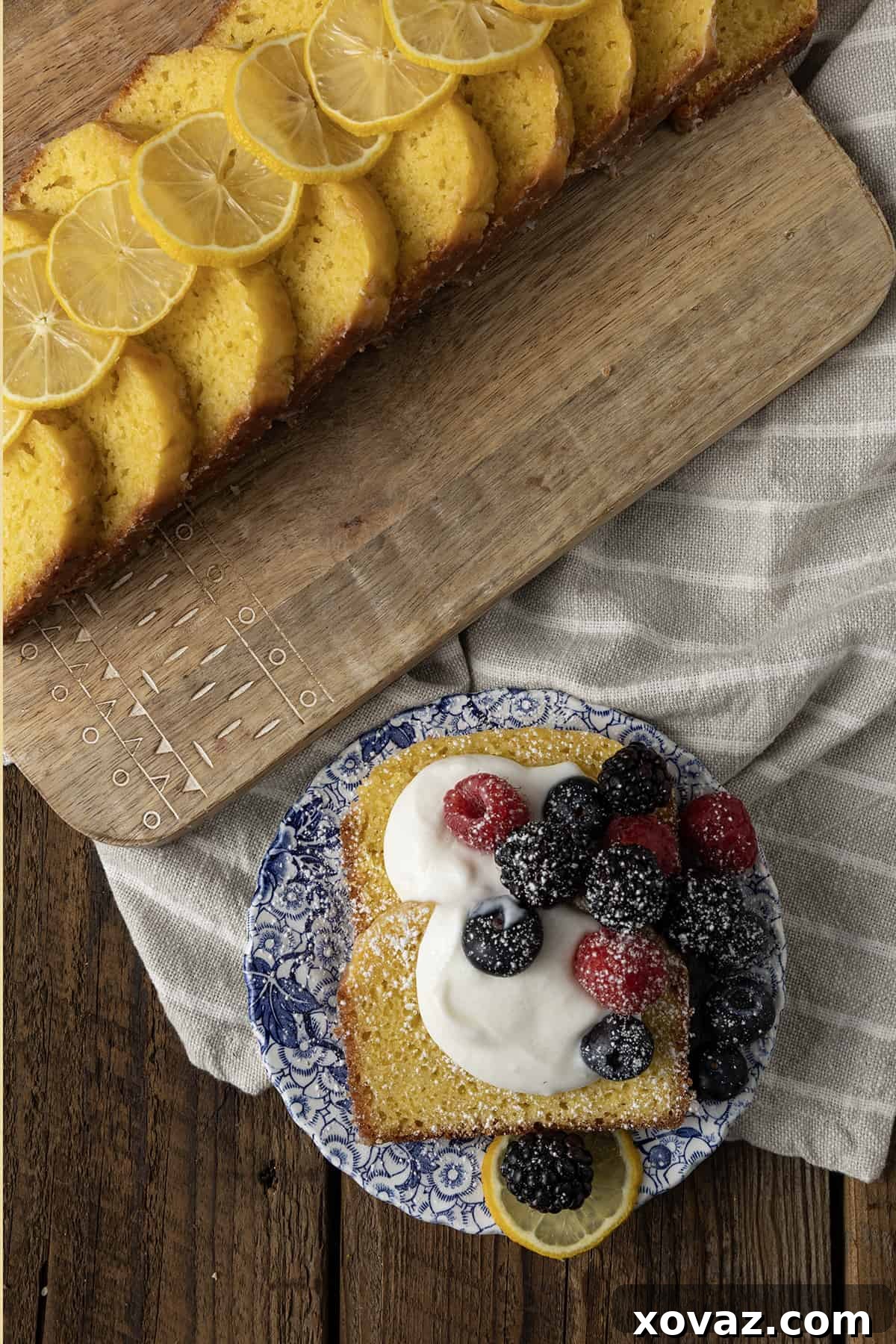
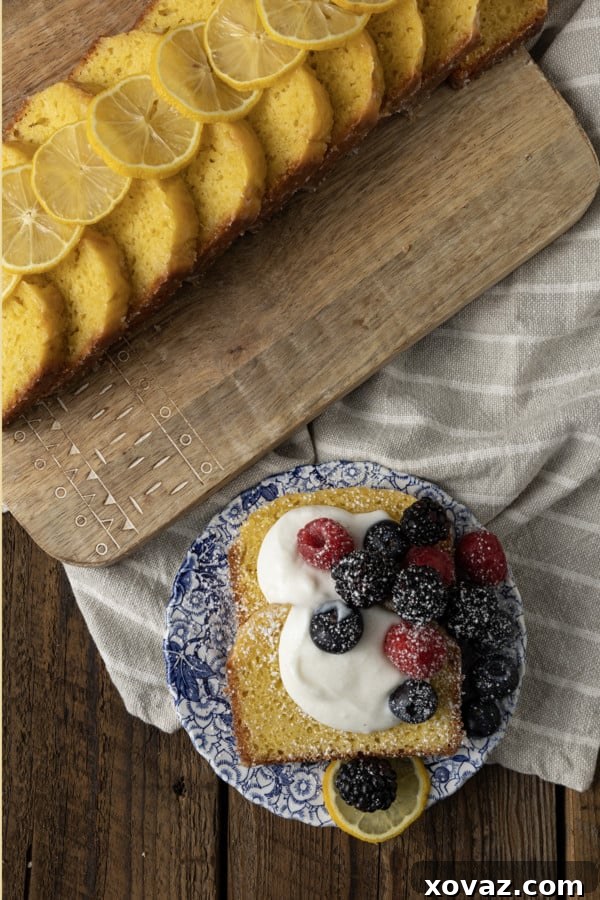
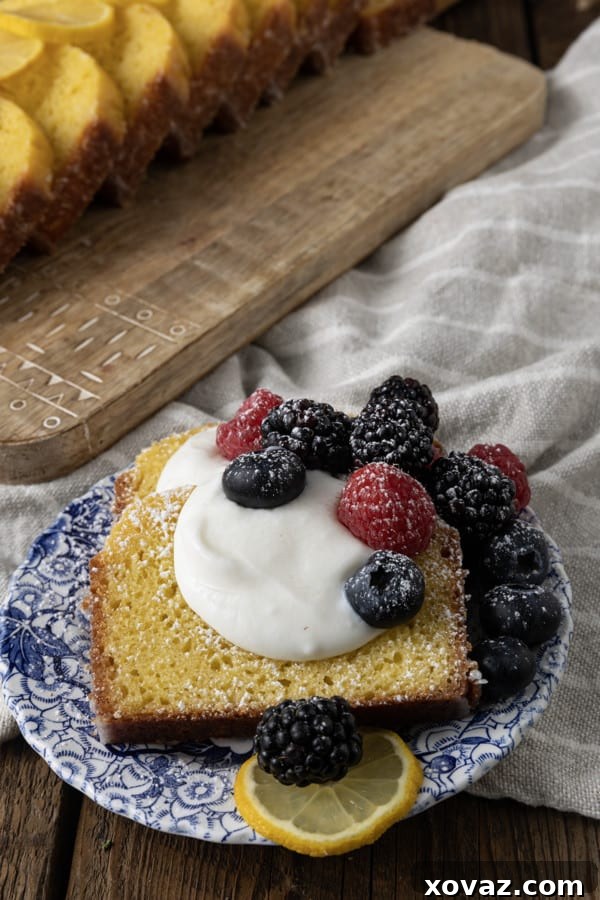
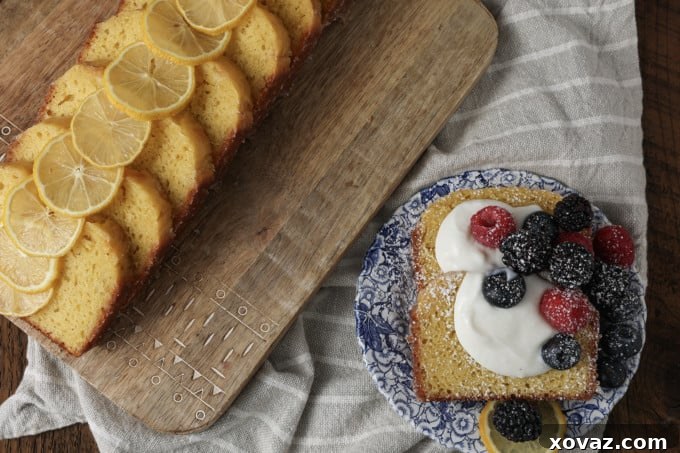
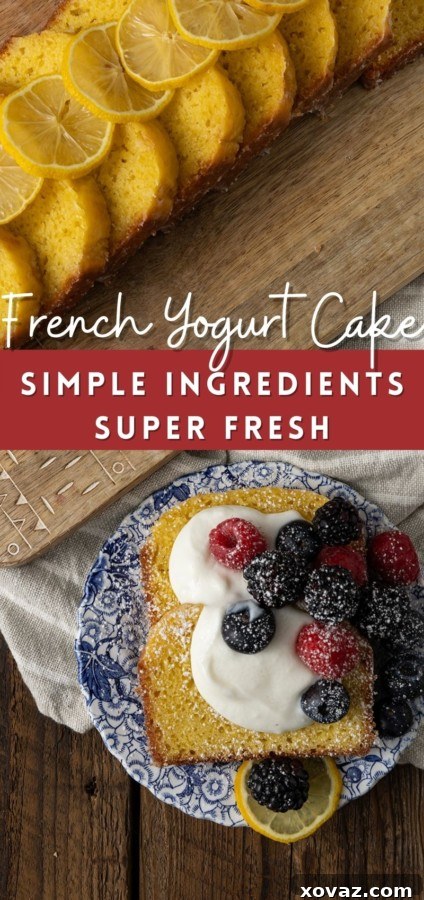
However, it is quite traditional and utterly charming to dust a little powdered sugar over the top. Since the cake is not overly sweet, this delicate touch adds just another whisper of sweetness and an elegant finish that is always appreciated. For those moments when you wish to elevate it further into the realm of the divine, consider serving a slice with a generous dollop of creamy Greek yogurt, rich crème fraîche, or freshly whipped cream. A handful of seasonal fresh berries – raspberries, blueberries, or sliced strawberries – alongside adds a burst of complementary color and tartness, creating a truly spectacular dessert experience.
French Lemon Yogurt Cake Recipe
Yields: 10 servings
Prep Time: 10 mins
Cook Time: 45-50 mins
Ingredients
For the Yogurt Cake:
- Non-stick cooking spray
- 1 ½ cups (6.75 ounces by weight) all-purpose flour
- 2 teaspoons baking powder
- ½ teaspoon kosher salt
- ½ cup plain Greek yogurt
- 1 cup granulated sugar
- 3 large eggs
- 1 lemon, zested
- ½ cup pure olive oil or another neutral oil
For the Glaze:
- 1 lemon, juiced
- ¾ cup confectioner’s sugar
Optional for Serving:
- A dusting of confectioner’s sugar
- Fresh berries
- Additional yogurt or crème fraîche
Instructions
To Make the Cake:
- Preheat the oven to 350˚F (175˚C). Prepare your chosen baking pan: spray a loaf or cake pan generously with nonstick cooking spray and line the bottom with parchment paper for easier removal. Alternatively, if using a Bundt pan, spray it thoroughly with nonstick cooking spray, ensuring all crevices are coated. Set the prepared pan aside.
- In a medium-sized bowl, whisk together the all-purpose flour, baking powder, and kosher salt until well combined. Set this dry mixture aside.
- In a separate, larger mixing bowl, add the plain Greek yogurt, granulated sugar, large eggs, and the bright zest of one lemon. Whisk these wet ingredients together until the mixture is smooth, uniform in color, and well emulsified.
- Switch from a whisk to a rubber spatula. Gradually add the reserved flour mixture to the wet ingredients, stirring gently until the flour is just moistened and no dry streaks remain. Be careful not to overmix the batter.
- Pour in the pure olive oil (or your chosen neutral oil) and continue to stir with the spatula until the mixture comes back together and is completely even. Scrape the batter into your prepared pan, spreading it out evenly.
- Bake for 45-50 minutes, or until a wooden toothpick or thin skewer inserted into the center of the cake comes out clean, indicating it is fully cooked.
- Once baked, remove the cake from the oven and allow it to rest in the pan for 10 minutes. This resting period helps the cake set and prevents it from crumbling.
- After 10 minutes, gently invert the cake onto a cooling rack. Place the cooling rack over a sheet pan to catch any excess glaze later.
To Make the Glaze and Glaze the Cake:
- While the cake is cooling slightly, prepare the glaze. In a small bowl, whisk together the fresh lemon juice and confectioner’s sugar until a smooth, pourable glaze forms.
- Brush the glaze generously all over the top and sides of the still-warm cake. Repeat this process, using up all of the glaze, allowing each layer to absorb and set slightly before applying the next.
- Allow the glazed yogurt cake to cool completely on the rack. As it cools, the lemon glaze will firm up, forming a lovely, sweet crust.
To Serve:
- Serve the French Lemon Yogurt Cake in slices, either plain for its intrinsic deliciousness, dusted lightly with additional confectioner’s sugar for extra elegance, or accompanied by fresh berries and a dollop of extra yogurt or rich crème fraîche for a truly indulgent experience.
Nutrition Information (Estimate Per Serving):
- Calories: 308 kcal
- Carbohydrates: 46g
- Protein: 5g
- Fat: 12g
- Saturated Fat: 2g
- Trans Fat: 1g
- Cholesterol: 50mg
- Sodium: 141mg
- Potassium: 164mg
- Fiber: 1g
- Sugar: 30g
- Vitamin A: 77 IU
- Vitamin C: 11mg
- Calcium: 62mg
- Iron: 1mg
Nutritional information provided is an estimate and offered as a courtesy. For precise values, it is recommended to calculate the nutritional information using the actual ingredients and quantities in your recipe with a trusted nutrition calculator.
Tips for a Flawless French Lemon Yogurt Cake
- Do Not Overmix: Overmixing the batter can lead to a tough cake. Stir the flour in until just combined, and stop as soon as there are no dry streaks.
- Room Temperature Ingredients: Ensure your eggs and yogurt are at room temperature. This helps them incorporate more easily into the batter, leading to a smoother consistency and better rise.
- Accurate Zesting: When zesting your lemon, be careful to only get the bright yellow part of the rind, avoiding the white pith underneath. The pith can be bitter and negatively affect the cake’s flavor.
- Check for Doneness: Ovens can vary. Always rely on the toothpick test rather than just the clock. If the toothpick comes out with moist crumbs, bake for a few more minutes. If it comes out clean, it’s ready!
- Cooling is Key for Glaze: Allow the cake to cool for at least 10 minutes in the pan before inverting. For the glaze to set properly into that wonderful crust, the cake should still be warm, but not piping hot, when applied.
Storage and Make-Ahead Tips
This French Lemon Yogurt Cake is at its absolute best on the day it’s baked, especially with the glaze freshly set. However, it stores beautifully and can be enjoyed for several days.
- At Room Temperature: Store any leftover cake wrapped tightly in plastic wrap or in an airtight container at room temperature for up to 3 days.
- Refrigeration: While not strictly necessary for short-term storage, if you live in a very warm climate or prefer your cake chilled, you can refrigerate it for up to 5 days. Be aware that refrigeration can slightly alter the texture, making it a little denser.
- Freezing: For longer storage, this cake freezes wonderfully. Once completely cooled and glazed, wrap individual slices or the entire cake tightly in plastic wrap, then an additional layer of aluminum foil. Freeze for up to 2-3 months. Thaw at room temperature before serving.
Delicious Variations to Explore
While the classic lemon version is undeniably perfect, the versatility of the French Yogurt Cake base allows for wonderful experimentation:
- Orange Yogurt Cake: Substitute the lemon zest and juice with fresh orange zest and juice for a sweeter, equally vibrant citrus flavor.
- Berry Swirl Yogurt Cake: Gently fold in a cup of fresh blueberries, raspberries, or chopped strawberries into the batter before baking.
- Almond Yogurt Cake: Add a teaspoon of almond extract to the batter and top with a sprinkle of sliced almonds before baking for a nutty twist.
- Spice-Infused Cake: Introduce warm spices like a teaspoon of cinnamon or a half teaspoon of cardamom for a cozy, autumnal variation.
- Brown Sugar Peach French Yogurt Cake: Discover this delightful recipe for a sweet, fruity twist.
Whether you’re new to the world of French baking or simply seeking a reliable, crowd-pleasing recipe, this French Lemon Yogurt Cake promises to deliver. Its understated elegance, ease of preparation, and utterly delicious flavor profile make it a truly special treat that will be cherished by all who taste it. Happy baking!
Looking for more cake inspiration? You might enjoy these other fantastic recipes:
- Snickerdoodle Mug Cake {single serve cinnamon vanilla butter cake}
- Maple Apple Upside Down Cake
- Orange Olive Oil Cake with Candied Oranges
- Berry Skillet Cake