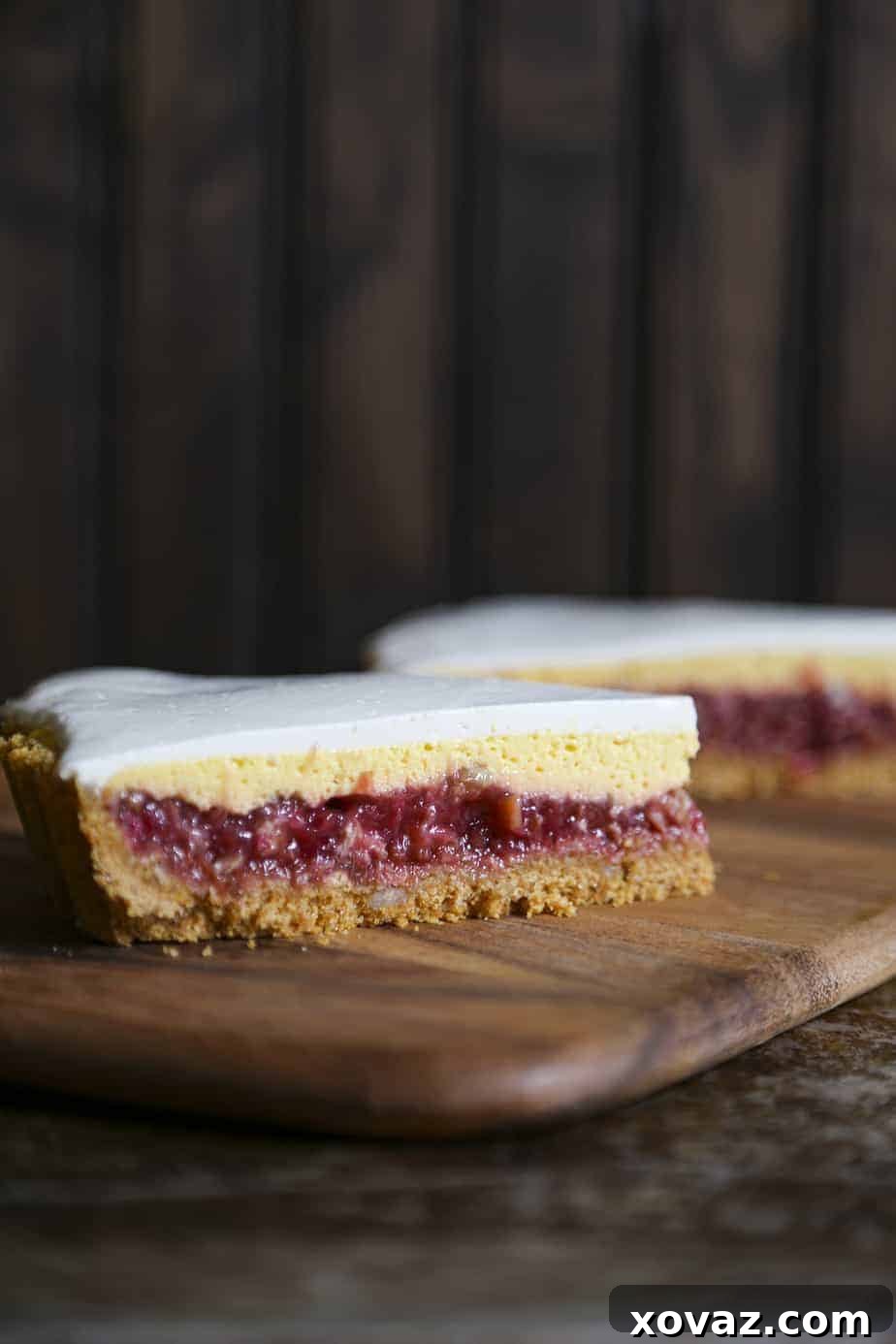
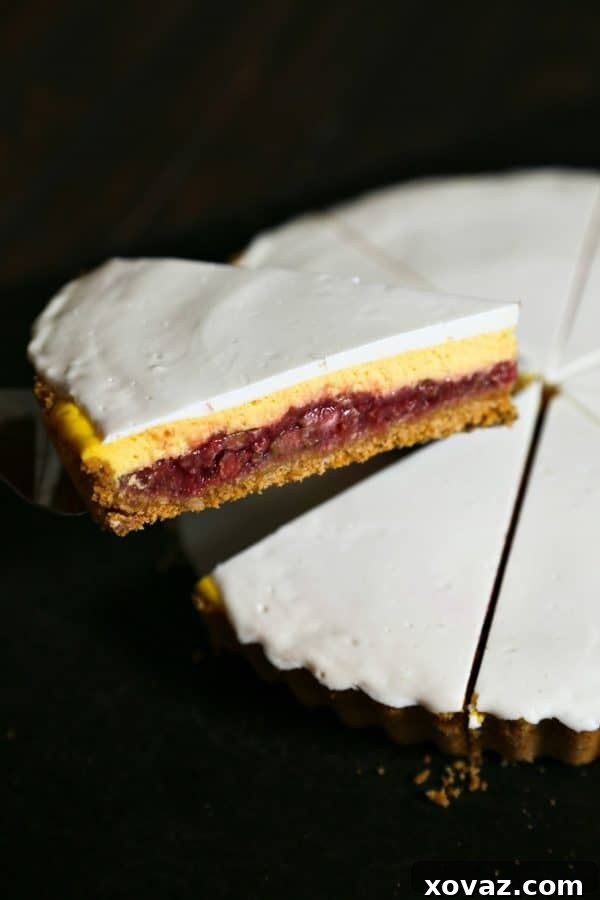
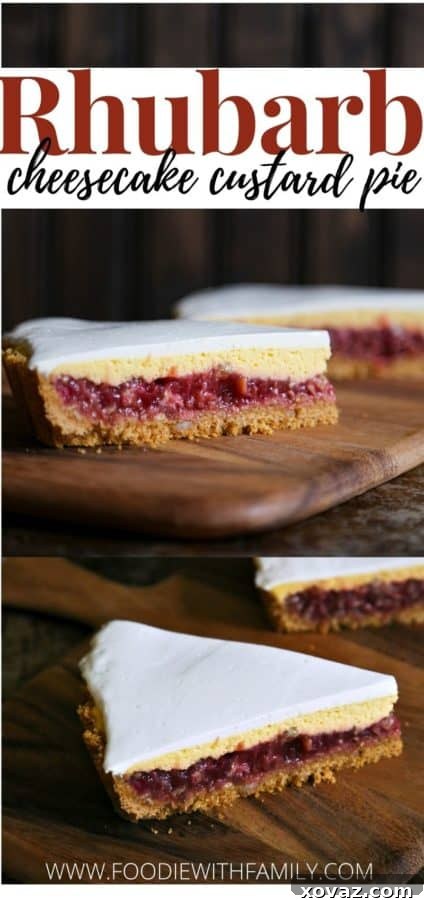
Rhubarb Custard Pie starts with a simple crumb crust that is filled with a tart and sweet rhubarb vanilla filling, elegantly covered by a thin layer of cheesecake custard, and finished with a smooth, tangy yogurt layer. This exquisite dessert is the epitome of spring and summertime perfection, offering a delightful fusion of textures and flavors.
Disclosure: We are delighted to share this recipe in partnership with the American Dairy Association and Dairy Council. The recipe and all opinions expressed remain our own.
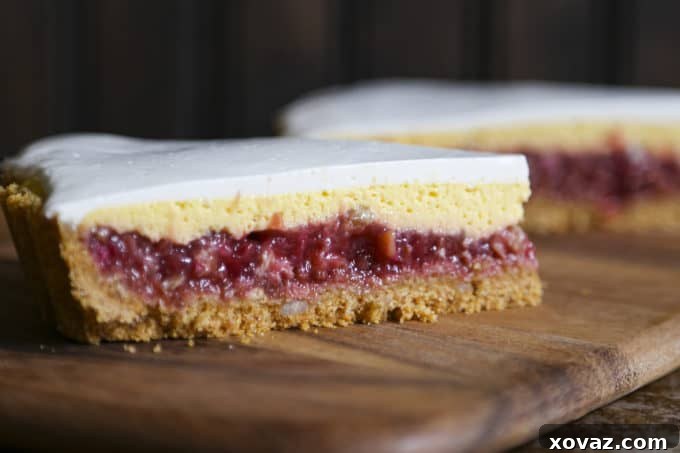
The Ultimate Rhubarb Custard Cheesecake Pie: A Symphony of Spring Flavors
Is it a rich, decadent cheesecake? Or perhaps a rustic, fruit-laden pie? Could it be a delicate, creamy custard pie? The answer is a resounding yes to all three! Our Rhubarb Custard Cheesecake Pie is a culinary marvel, masterfully blending the best elements of these beloved desserts into one harmonious, irresistible creation.
This recipe brilliantly marries two of my favorite dessert obsessions – the comforting warmth of fruit pie and the luxurious creaminess of cheesecake. The result is a dessert that is not only perfectly balanced in flavor and exquisitely creamy but also visually stunning. It’s no wonder this pie has been my husband’s absolute favorite for over a decade, a testament to its enduring appeal and delightful taste.
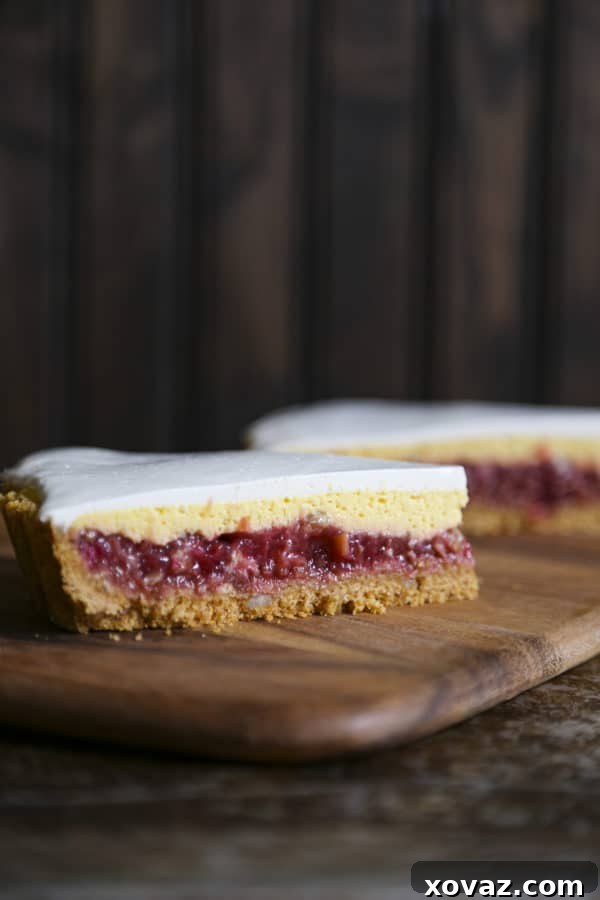
A Celebration of Spring: Fresh Rhubarb in Every Bite
Our Rhubarb Custard Cheesecake Pie is truly the ultimate dessert for celebrating the arrival of vibrant spring rhubarb, bursting with fresh, tart flavor. But its allure extends beyond just the star ingredient. This pie features a rich cheesecake custard layer that adds an incredible depth of creaminess, and an innovative sweet and tangy yogurt layer that provides a refreshing finish to every slice.
Did you know that New York leads the nation in yogurt production? As someone who lives near a dairy farm, this fact, though logical, still came as a pleasant surprise. This pie truly highlights the versatility and deliciousness of dairy products, especially in a dessert context. While you might not typically consider topping a cheesecake with yogurt, we’re confident that after experiencing this Rhubarb Custard Pie, you’ll be incorporating this delightful touch into many of your future baking endeavors.
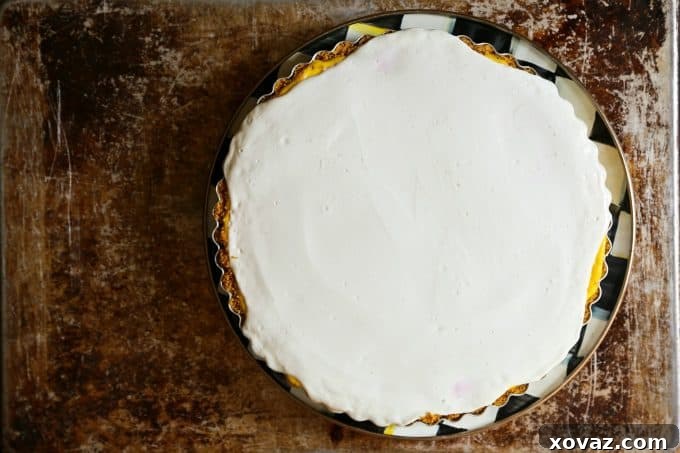
Beyond its incredible taste and texture, this pie offers a surprising nutritional bonus. If you follow standard dietary guidelines and slice this generous Rhubarb Cheesecake Custard Pie into eight portions, each slice can provide a full serving of dairy. It’s a delightful way to enjoy a wholesome dessert while incorporating essential nutrients. We like to think of it as “pie for life” – a truly winning proposition!
Spotlight on Rhubarb: The Quintessential Spring Delicacy
Rhubarb, often celebrated as a harbinger of spring, is much more than just a brightly colored stalk. Botanically, rhubarb refers to the fleshy, edible petiole (stalk) of the perennial plant *Rheum rhabarbarum*. The entire plant, including its distinctive large leaves, is often referred to simply as rhubarb.
What Exactly is Rhubarb?
This unique plant is characterized by its long, vibrant stalks, which can range in color from striking crimson to subtle pinks and even pale green. While its appearance might suggest a fruit, it’s actually classified as a vegetable. Rhubarb stalks are prized for their intensely tart flavor, which mellows beautifully when cooked and is often paired with sweeteners and other fruits, most notably strawberries. The texture is crisp when raw, becoming tender and somewhat stringy when cooked, making it ideal for pies, crumbles, sauces, and jams. Its distinct tang adds a wonderful counterpoint to sweet desserts, preventing them from becoming overly cloying.
Is Rhubarb Safe to Eat? Debunking the Myths
A common question surrounding rhubarb is its safety due to its oxalic acid content. It’s important to differentiate between the edible stalks and the inedible leaves. The stalks themselves are completely harmless, whether cooked or raw. While raw rhubarb stalks can be incredibly tart and unpalatable for some, they pose no toxic threat. You might find them too sour to enjoy uncooked, but they won’t cause you harm.
The concern stems from rhubarb leaves, which contain significantly high levels of oxalic acid. In large quantities, oxalic acid can be toxic and cause illness. However, reaching a toxic level would typically require consuming several pounds of the leaves. For everyday cooking, the risk is minimal, but it is always best practice to trim and discard the leaves entirely before using the stalks. If a tiny piece of leaf accidentally gets into your dish, there’s no need to discard the entire batch, but intentionally eating whole rhubarb leaves is strongly advised against, as it could lead to discomfort or illness. Focus on enjoying the delicious stalks and leave the leaves for composting.
Fruit or Vegetable? A Culinary vs. Botanical Debate
This is where rhubarb often sparks a friendly debate! Botanically speaking, rhubarb is undeniably a vegetable. The part we consume – the stalk – is actually a petiole, which is the stem that attaches a leaf blade to the main stem of a plant. It’s not a fruit, which is botanically defined as the mature ovary of a flowering plant, containing seeds (like apples, berries, or even tomatoes and cucumbers).
However, in the culinary world, rhubarb is almost exclusively treated as a fruit. Its tart flavor and common use in sweet dishes such as pies, crumbles, jams, and sauces lead most people to categorize it with fruits. This culinary classification isn’t unique to rhubarb; consider tomatoes, avocados, and bell peppers, which are botanically fruits but are used as vegetables in cooking. The way we prepare and consume rhubarb in desserts solidified its place in the fruit category for many cooks and eaters, regardless of its botanical truth.
The Magic Behind the Layers: Why This Pie Shines
What sets this Rhubarb Custard Cheesecake Pie apart is its thoughtful construction of complementary layers, each contributing to a symphony of flavors and textures.
The Perfect Crumb Crust
Forget the fuss of traditional pie pastry; this pie begins with an incredibly simple yet satisfying crumb crust. Made from crushed graham crackers, melted butter, and a touch of sugar, it bakes up into a firm, subtly sweet foundation that perfectly cradles the fillings. The simplicity of this crust allows the vibrant flavors of the rhubarb and creamy dairy layers to truly shine.
Tart Rhubarb Vanilla Filling
The heart of this pie is its luscious rhubarb filling. Diced rhubarb is gently cooked with sugar, orange juice, and vanilla until it thickens into a sweet-tart compote. The orange juice brightens the rhubarb’s flavor, while vanilla adds a layer of sophisticated warmth. Using a vanilla bean, with its tiny speckled seeds, infuses the filling with an unparalleled aroma and visual appeal, though vanilla extract is a perfectly acceptable substitute.
Creamy Cheesecake Custard Layer
Nestled above the rhubarb, a smooth and rich cheesecake custard layer adds a decadent counterpoint. Made with softened cream cheese, eggs, vanilla, and a hint of sugar, this layer bakes into a delicate, custardy cheesecake that is less dense than a traditional cheesecake, allowing it to blend seamlessly with the other components. Its subtle tang and creamy texture provide a comforting richness.
Smooth, Tangy Yogurt Topping
The final, inspired touch is a silky-smooth layer of tangy Greek yogurt. Lightly sweetened, this topping is spread gently over the baked cheesecake custard, adding a refreshing, slightly sour note that perfectly cuts through the richness of the other layers. It’s an unexpected but incredibly delicious addition that elevates the entire pie, making each bite feel fresh and balanced.
Crafting Your Own Rhubarb Custard Cheesecake Pie: Essential Tips for Success
While this pie is remarkably straightforward, a few key tips will ensure your baking experience is smooth and your final product is absolutely perfect.
Choosing Your Baking Pan
You have several excellent options for baking this rhubarb custard pie, each offering a slightly different aesthetic and ease of serving. I personally favor a 9-inch removable bottom tart pan. Its fluted edge creates a beautiful presentation, and the removable bottom simplifies serving slices without damaging the delicate structure of the pie. Alternatively, a standard 9-inch pie plate works wonderfully, yielding a more traditional look. A springform pan is also a great choice, particularly if you want straight, high sides, similar to a classic cheesecake. All these options will result in an equally delicious dessert, so choose what you have on hand or what best suits your presentation preference.
Mastering the Crumb Crust
Do not be tempted to replace the homemade crumb crust with a store-bought alternative. This simple crust is incredibly easy to prepare and crucial for the pie’s overall success. You’ll pre-bake it for a few minutes before adding the fillings, and a store-bought crust might not behave predictably under these circumstances. If crushing graham crackers feels like a chore, many grocery stores offer pre-crushed graham cracker crumbs in the baking aisle, making this step even quicker.
Achieving Silky Smooth Fillings
For the rhubarb filling, whisking the sugar and cornstarch together before adding the rhubarb helps prevent lumps and ensures even thickening. For the cheesecake custard, using a food processor or blender ensures a super smooth, uniform batter. If using a stand or hand mixer, make sure your cream cheese is thoroughly softened to room temperature to avoid any unmixed lumps.
The Crucial Chill Time
I cannot stress this enough: wait until this pie is thoroughly chilled before slicing and serving. While some pies are delightful warm, this particular Rhubarb Custard Cheesecake Pie truly reaches its peak perfection when cold. Chilling allows all the layers to fully set, making for clean, beautiful slices and a much more enjoyable texture. Hyperbole? Perhaps. But trust me, your patience will be richly rewarded with an exquisite dessert experience. Plan ahead, make it in advance, and let it chill for at least six hours, or even overnight, for the best results. This pie holds up beautifully in the refrigerator for up to three days, making it an ideal make-ahead option for entertaining.
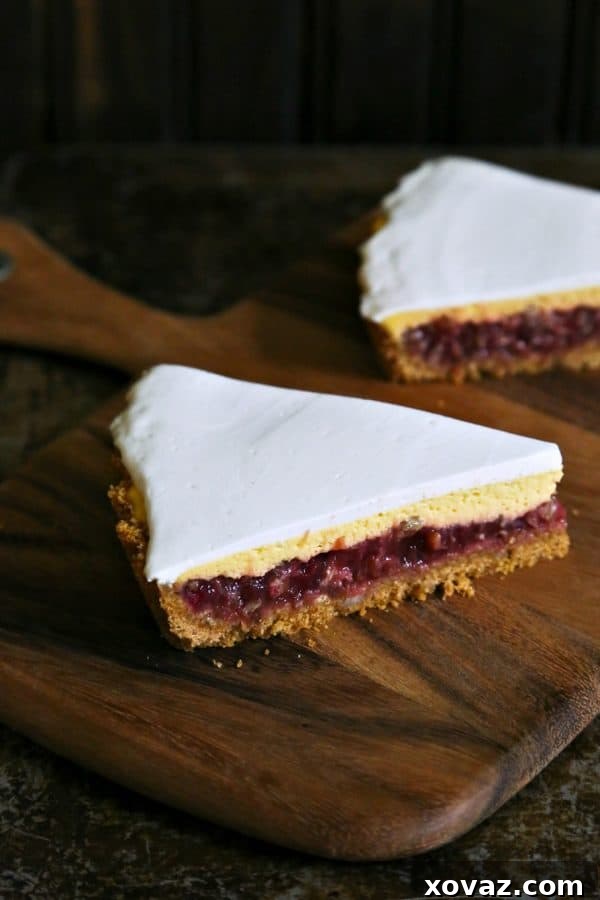
Rhubarb Custard Pie – Cheesecake Style: The Full Recipe
Yield: 8 generous slices
Prep time: 30 minutes
Cook time: 38 minutes
Chill time: 6+ hours
Ingredients
For the Rhubarb Filling:
- 3/4 cup sugar
- 3 tablespoons cornstarch
- 1 tablespoon orange juice
- 4 cups diced rhubarb (about 1 pound, roughly 3-4 stalks)
- 1/2 of a vanilla bean, split lengthwise with seeds scraped (or 1 teaspoon vanilla extract)
For the Crumb Crust:
- 1/4 cup melted unsalted butter
- 1/4 cup sugar
- 1 1/4 cups fine graham cracker crumbs
For the Cheesecake Custard Layer:
- 1 package cream cheese (8 ounces, regular or 1/3 less fat, softened to room temperature)
- 2 large eggs
- 1 teaspoon pure vanilla extract
- 2 tablespoons sugar
For the Yogurt Layer:
- 1 cup plain Greek yogurt
- 2 tablespoons sugar
Instructions
- Preheat your oven to 350°F (175°C).
-
Prepare the Rhubarb Filling:
Whisk the sugar and cornstarch together thoroughly in a 2-quart saucepan until the cornstarch is evenly distributed throughout the sugar, preventing any lumps. Add the diced rhubarb and orange juice, tossing gently until everything is evenly combined and there are no dry pockets of the sugar mixture. Place the pan over medium heat, stirring constantly until the sugar dissolves and forms a syrup. Continue cooking and stirring for several minutes until the mixture reaches a boil and becomes quite thick. Stir in the vanilla bean seeds (or vanilla extract if using). Cover the pan and set it aside to cool slightly.
-
Prepare the Crumb Crust:
In a medium bowl, toss together all of the ingredients for the crumb crust: melted butter, sugar, and graham cracker crumbs. Mix until well combined and the crumbs are moistened. Press the mixture evenly across the bottom and up the sides of a standard 9-inch pie plate or a removable bottom 9-inch tart pan. Set the pie plate or tart pan on a rimmed baking sheet (this helps catch any potential drips and makes transferring easier). Bake for 8 minutes until lightly golden and set.
-
Prepare the Cheesecake Custard Layer:
While the crumb crust bakes, add the softened cream cheese, eggs, vanilla extract, and 2 tablespoons of sugar to the bowl of a food processor fitted with a metal blade. Process until the mixture is completely smooth, scraping down the sides of the bowl as needed to ensure no lumps remain. If you do not have a food processor, you can achieve a similar smoothness using a blender, a stand mixer with a paddle attachment, or a mixing bowl with a hand mixer.
-
Prepare the Yogurt Layer:
In a small bowl, whisk or use a fork to blend together the plain Greek yogurt and 2 tablespoons of sugar until smooth. Set aside.
-
To Make the Rhubarb Cheesecake Custard Pie:
Carefully remove the vanilla bean halves from the cooled rhubarb filling (if using a vanilla bean). Gently spread the rhubarb filling evenly over the bottom of the pre-baked crumb crust. Next, slowly pour the cheesecake filling over the rhubarb layer, ensuring it spreads evenly. Carefully transfer the baking sheet with the pie pan to the preheated oven. Bake for 20 minutes, or until the cheesecake layer appears to be set in the center (it should have a slight jiggle, but not be liquid). Take the pie from the oven and, working gently, spread the prepared yogurt filling evenly over the top of the cheesecake layer, reaching to the edges. Return the pie to the oven and bake for an additional 10 minutes. Remove the pan from the oven and place it on a cooling rack to cool at room temperature for at least 30 minutes. Once partially cooled, transfer the pie to the refrigerator and chill for a minimum of 6 hours, or ideally until the pie is completely cold all the way through. This pie is wonderful when made in advance and holds up well for up to 3 days in the refrigerator.
Nutritional information provided is an estimate and offered as a courtesy. For precise dietary details, please calculate the nutritional information using the actual ingredients in your recipe with your preferred nutrition calculator.
Explore More Rhubarb & Strawberry Delights
Looking to pair strawberry with its best friend, rhubarb, or simply seeking more fresh and delicious spring recipes? Check out these fantastic ideas:
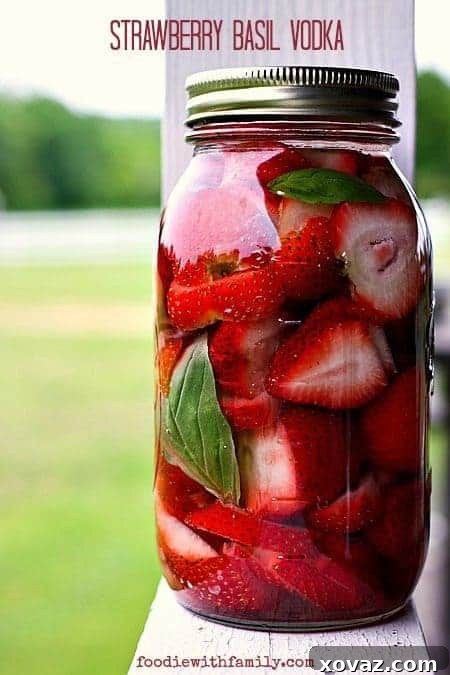
Strawberry Basil Vodka
Brown Sugar Strawberry and Cream Mini Tarts
Strawberry Balsamic Thyme Freezer Jam
Connect with Foodie with Family
facebook| pinterest| instagram | twitter
This post was originally published on June 11, 2015, and has been updated for clarity, expanded content, and enhanced readability in May 2021.