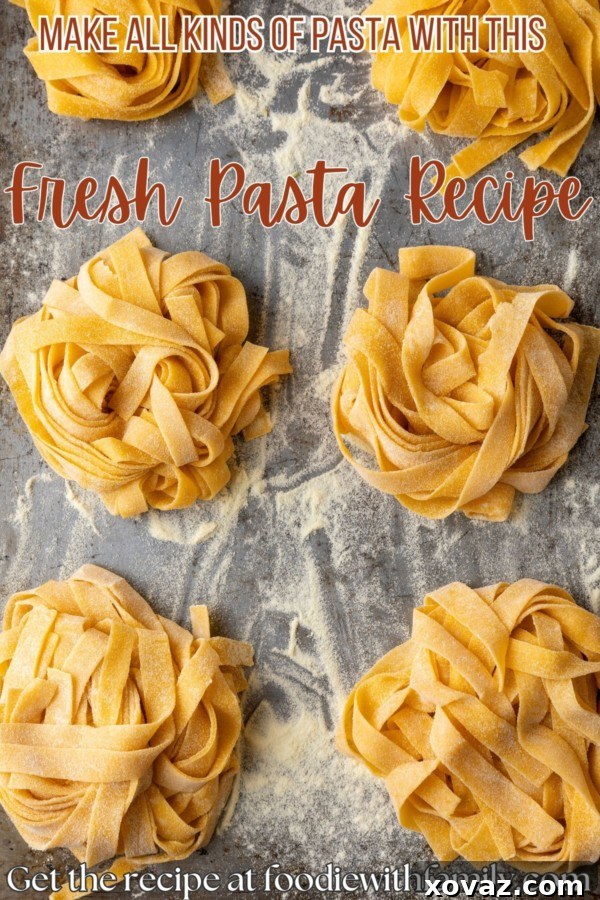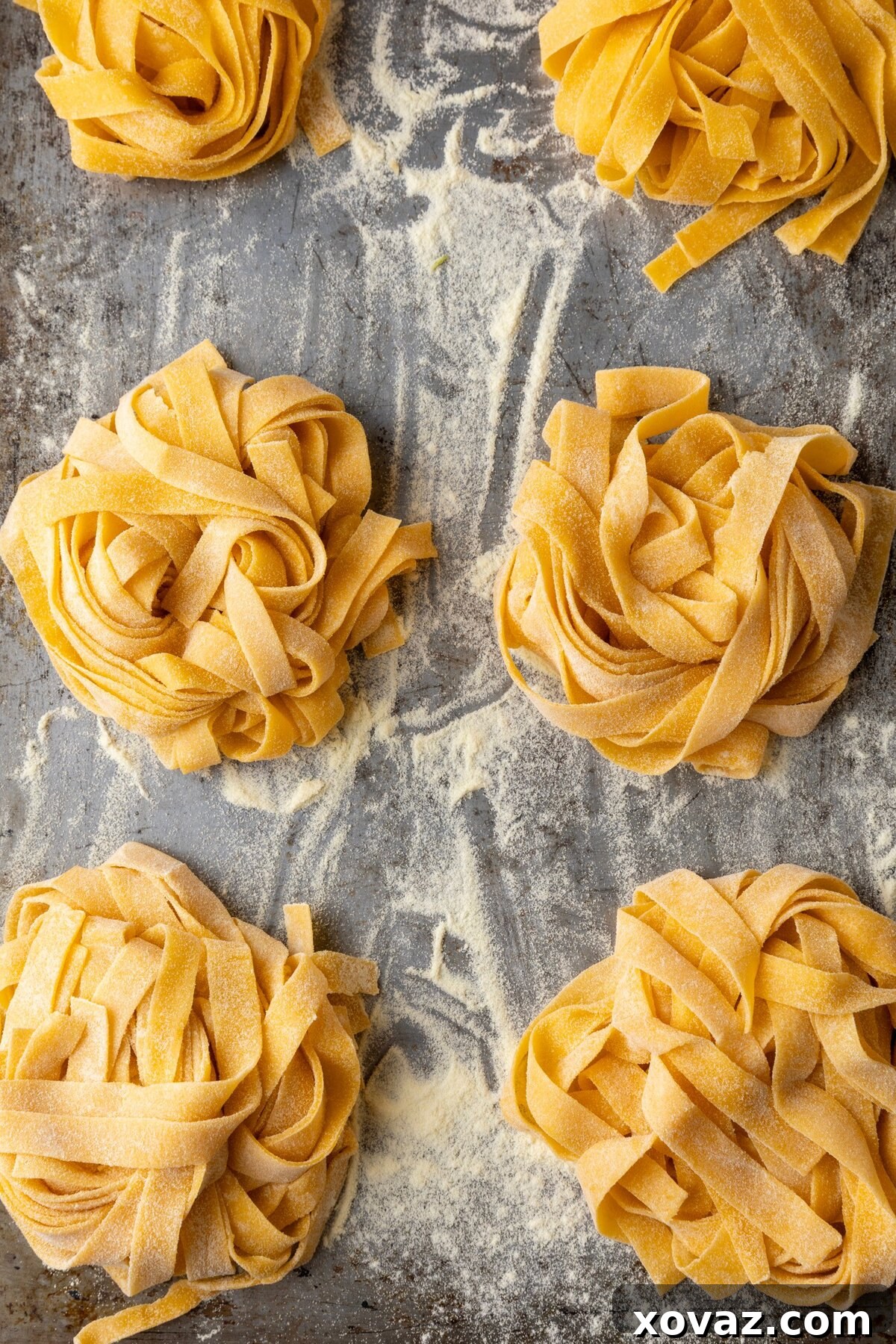
Unlock a world of culinary possibilities with a fundamental fresh pasta dough recipe. Having this simple yet transformative skill in your repertoire elevates nearly any pasta dish you imagine. From elegant lasagna sheets to rustic hand-cut pappardelle, delicate tagliatelle, classic spaghetti, hearty pici, or charming cavatelli, mastering the art of making pasta from scratch is a surprisingly straightforward journey that promises rich rewards in flavor and texture, taking your home cooking to an entirely new dimension.
The Ultimate Fresh Pasta Dough Recipe: A Culinary Game Changer
At its heart, a truly authentic fresh pasta dough recipe is a testament to the beauty of simplicity. It typically calls for just three core ingredients: good quality all-purpose flour, fine semolina flour, and fresh eggs. You might notice something conspicuously absent from this traditional formula – there’s no oil or salt added directly into the dough itself. This is not an oversight but a deliberate choice rooted in centuries of Italian culinary wisdom.
While unsalted food can often be bland, this fresh pasta is anything but. The secret to its vibrant flavor lies in the cooking process. The water used to boil your freshly made pasta should be generously salted, almost to the point of tasting like the sea. This crucial step not only seasons the pasta from within as it cooks but also enhances its natural flavors, ensuring every strand or shape is perfectly balanced and utterly delicious. The dough itself provides the perfect canvas, allowing the robust flavors of your sauce and the seasoned cooking water to truly shine, resulting in a toothsome, al dente experience that dry pasta simply cannot replicate.
This enduring, old-school recipe has stood the test of time because it is, quite simply, perfect. It consistently yields beautifully al dente pasta – firm to the bite with a satisfying chew – that can be fashioned into an endless variety of shapes and paired harmoniously with an array of sauces. Embracing this basic recipe is your first step towards becoming a pasta-making maestro, capable of impressing family and friends with dishes that taste straight out of an Italian trattoria.
Mastering Your Fresh Pasta Dough: Two Approaches to Perfection
Many years ago, I remember feeling a touch intimidated before making pasta for the very first time. I imagined a complex, delicate process that required immense skill. How wrong I was! It turns out that crafting fresh pasta dough is one of the most forgiving, intuitive, and foundational culinary arts you can learn. The process itself is wonderfully therapeutic and the results are incredibly rewarding.
When it comes to mixing your dough, you essentially have two main choices, often affectionately referred to as the “Italian Grandma” method or the “Thoroughly Modern Millie” approach. Both lead to delicious results; it simply comes down to your comfort level and preferred tools.
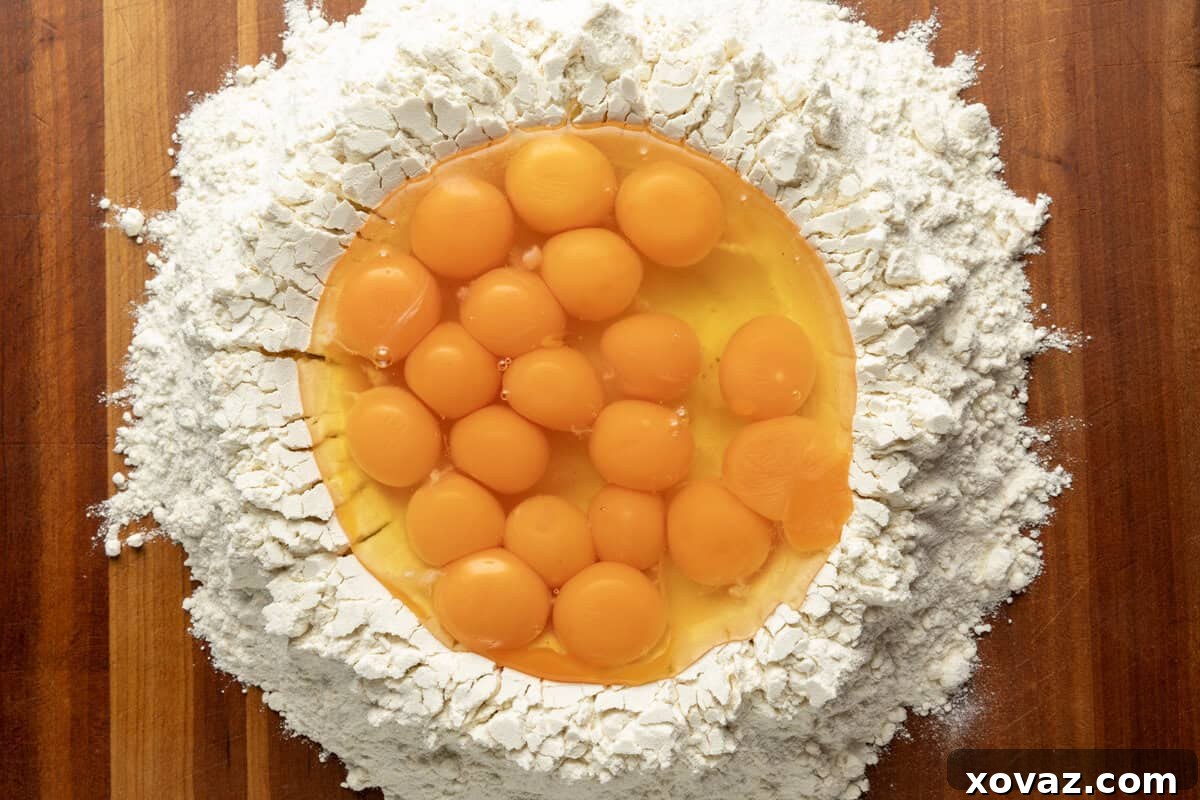
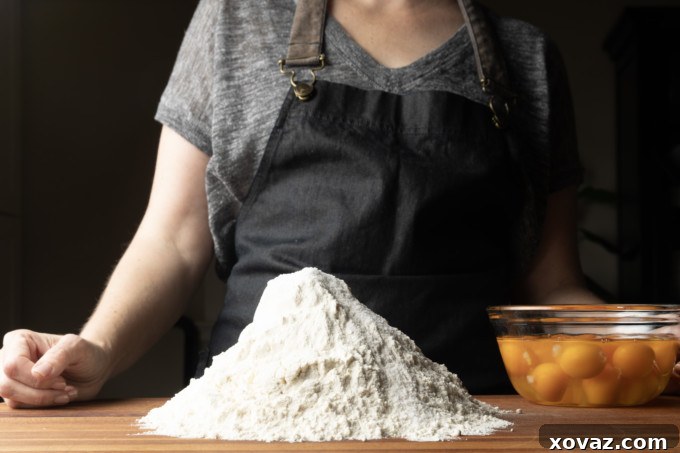
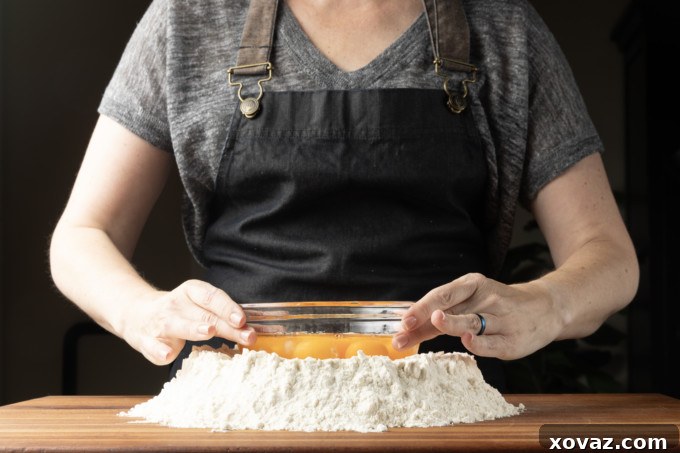
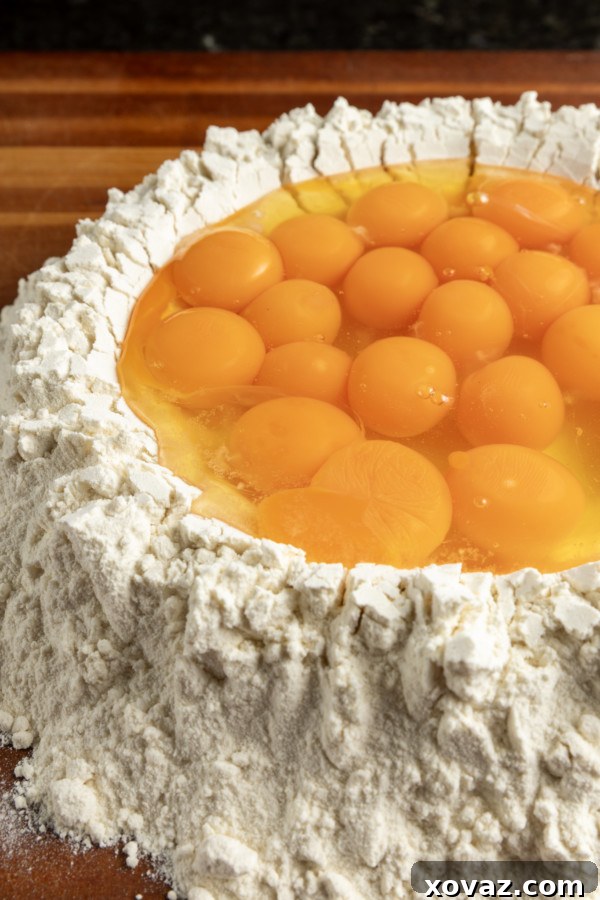
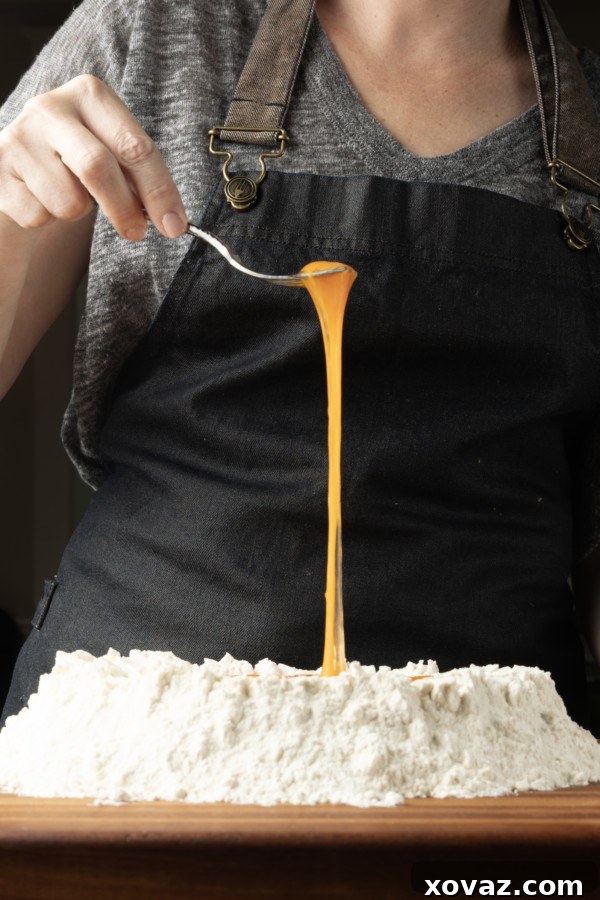
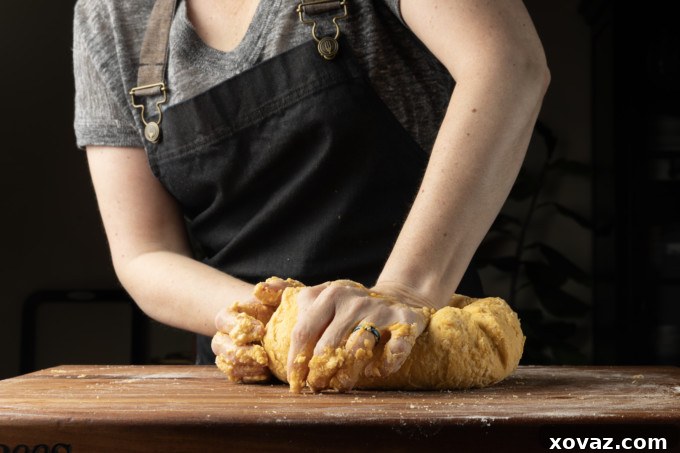
For the classic “Italian Grandma” approach, you’ll create a traditional flour well. Begin by piling your measured flours onto a clean, spacious counter or a large wooden cutting board. Using your hands or the bottom of a bowl, create a generous well in the center of the flour mound, making sure the walls are sturdy enough to contain the liquid eggs. Carefully crack your eggs directly into this well. Then, armed with a fork, gently whisk the eggs, slowly incorporating small amounts of flour from the inner rim of the well. Work patiently, gradually pulling in more flour, thickening the mixture until it forms a shaggy, wet dough. Once most of the loose flour is integrated, abandon the fork and switch to your hands. This is where the real magic happens. Knead the dough vigorously for about 8-10 minutes. Push it away from you with the heel of your hand, fold it over, give it a quarter turn, and repeat. You’re aiming for a smooth, elastic dough that is firm to the touch but still pliable, with a slight spring when poked. This kneading process is vital for developing the gluten, which gives the pasta its signature chew.
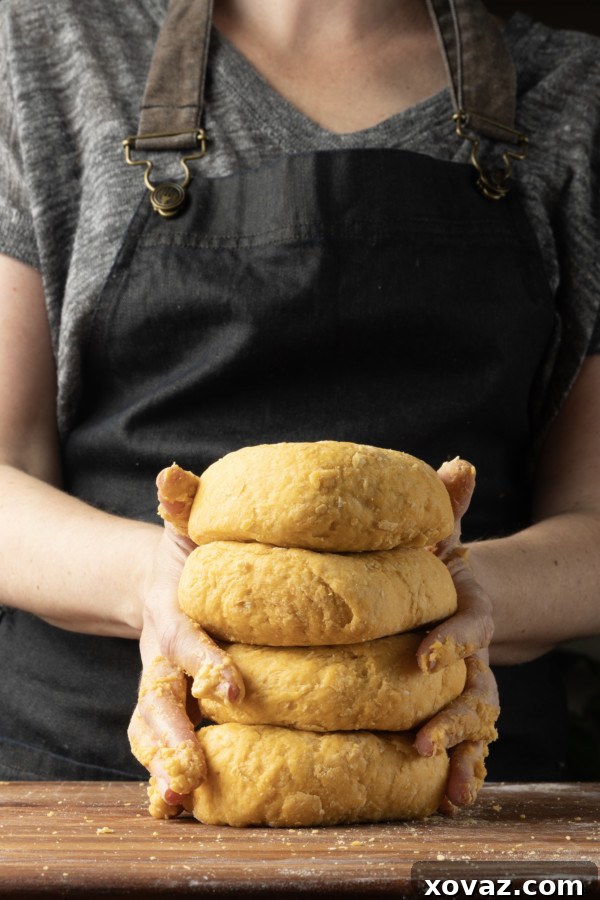
If you’re leaning more towards a “Thoroughly Modern Millie” style, or perhaps you’re simply not confident in your ability to prevent a potential egg-and-flour catastrophe on your countertop (and believe me, absolutely no one is judging!), a stand mixer fitted with a dough hook is your best friend. Combine both flours in the mixer bowl, then add the eggs. Start on a low speed to combine the ingredients, gradually increasing as the dough comes together. Let the dough hook do the hard work for about 7-9 minutes until the dough forms a smooth ball and pulls away cleanly from the sides of the bowl. Once kneaded, regardless of the method, form the dough into a ball, flatten it slightly, and wrap it tightly in plastic wrap. Allow it to rest at room temperature for at least 30 minutes. This resting period is critical; it gives the gluten a chance to relax, making the dough much easier to roll out evenly and preventing it from snapping back.
Hand-Shaped vs. Machine-Rolled: Crafting Homemade Pasta
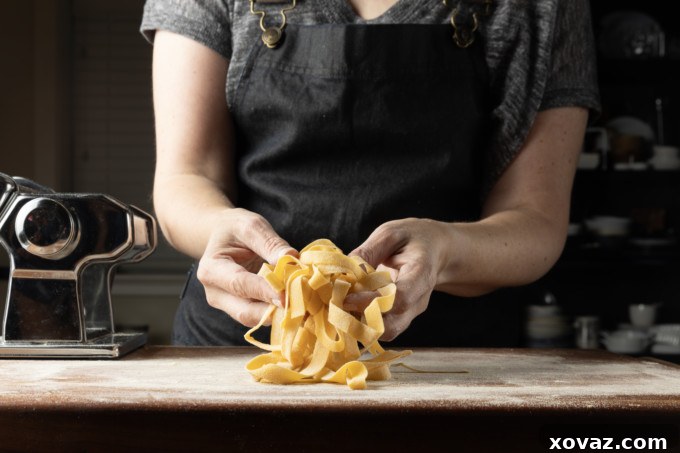
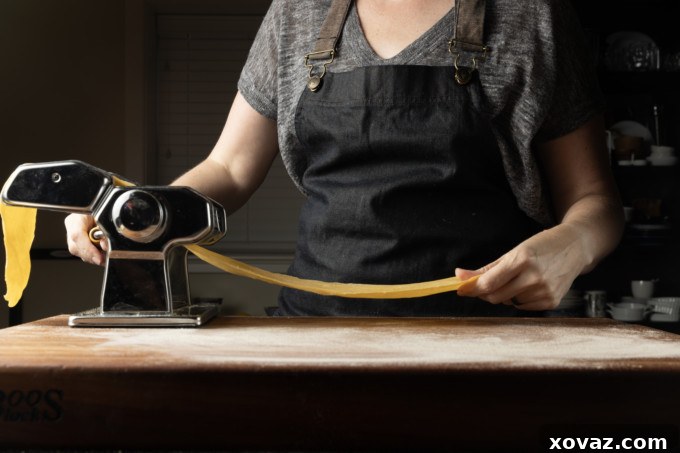
Once your dough has rested, it’s time for the exciting part: shaping your fresh pasta! You have the option of using a stand mixer pasta attachment or a classic hand-crank pasta machine. Both offer the significant advantage of achieving uniform thickness, which is key for consistent cooking. Rolling pasta through a machine is efficient and results in beautifully smooth, even sheets, perfect for delicate cuts like spaghetti, linguine, or fettuccine.
However, the beauty of homemade pasta is that a machine is absolutely not a prerequisite. You can very definitely make incredible homemade pasta with no machine at all, relying solely on your hands and a rolling pin. In fact, many beloved Italian pasta shapes were traditionally, and still are, crafted entirely by hand.
Pici, a thick, hand-rolled pasta from Tuscany, is probably one of the easiest to master without any special equipment. Simply cut off a 1-inch knob of your fresh pasta dough. On a lightly floured surface, use the palms of your hands to roll and stretch this piece into a long, rustic cord, aiming for approximately 2 feet in length with slightly tapered ends. The beauty of pici is its delightful irregularity, so don’t strive for absolute perfection. Once rolled, transfer it onto a semolina-dusted sheet pan, ensuring each piece lies in a single layer to prevent sticking. Repeat this satisfying process until you’ve transformed all your dough into these wonderful, chewy strands. Ta da – true artisan pasta!
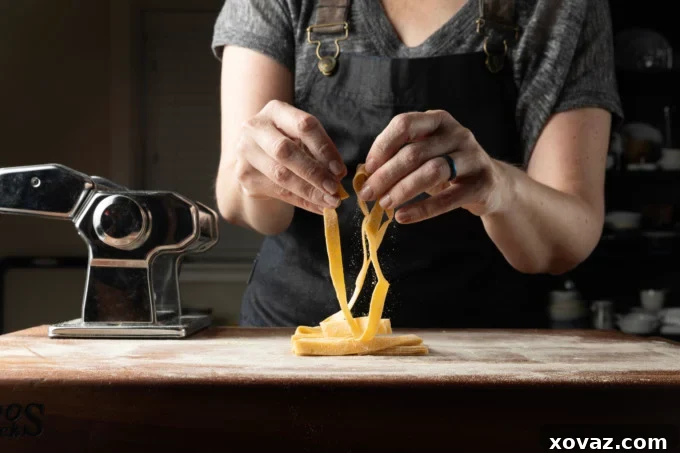
Other wonderfully easy hand-shaped pastas include orecchiette (little ears), cavatelli (little hollows), and gnocchetti sardi (small gnocchi from Sardinia), all of which involve simple techniques like pressing or dragging the dough across a textured surface or thumb. For shapes like pappardelle and tagliatelle, you’ll need to roll out the dough as thinly and uniformly as possible with a rolling pin. To assist in achieving an even thickness, you can “cheat” a little by using rolling pin spacers, which guide your rolling pin to a consistent height, ensuring perfect pasta sheets every time.
Storing Your Homemade Pasta for Future Delights
One of the many joys of making fresh pasta is the ability to prepare it ahead of time. You can store your homemade pasta in the refrigerator for up to 24 hours before cooking, or extend its life significantly by moving it to the freezer for longer-term storage. Whichever method you choose, a few key guidelines will ensure your pasta remains in optimal, delicious condition, preventing it from sticking or degrading.
Whether you plan to refrigerate or freeze your pasta, the golden rule is to generously dust it with flour. For this crucial step, I highly recommend using rice flour. Rice flour works wonders because it acts as a superior anti-sticking agent; its fine texture and lack of gluten prevent the pasta strands from clumping together or adhering to any surface. All-purpose flour, by contrast, tends to absorb moisture from the air, which can lead to gumminess – the absolute enemy of perfect pasta.
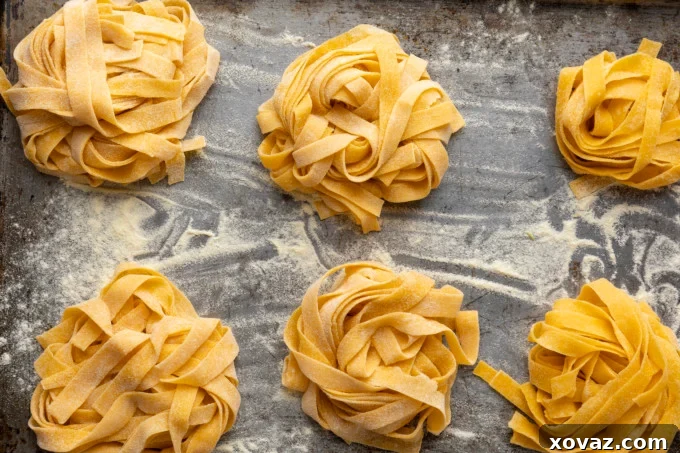
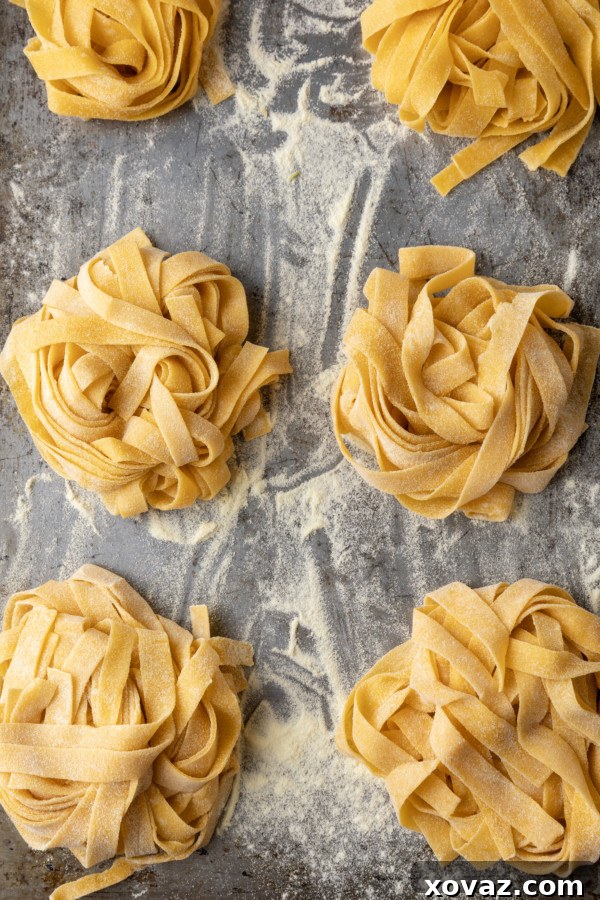
If you’re refrigerating your pasta, lightly dust a baking sheet or tray with rice flour. Gently form your freshly cut pasta into small nests, then dust these nests again with more rice flour. This double dusting creates a protective barrier. Cover the tray loosely with a clean dish towel or plastic wrap and place it in the refrigerator. The pasta will keep beautifully until you’re ready to cook it the next day.
For those times when I make a particularly massive batch of pasta – perhaps a double or triple recipe – and want to squirrel some away for effortless future meals, I follow a similar initial process but with a freezing twist. I dust a sheet pan with rice flour, create individual pasta nests, and dust them again with rice flour. Then, I carefully slide the entire pan into the freezer. Once the pasta nests have frozen solid, which usually takes about 2 to 3 hours depending on their size, I gently transfer them into zipper-top freezer bags or, for ultimate freshness, vacuum-sealed bags. I make sure to remove as much air as possible to prevent freezer burn. Labeling the bags with the date and type of pasta is a small step that pays off immensely. Stored this way, homemade pasta will remain perfectly fresh in the freezer for up to 3 months. There’s truly no feeling quite like a culinary genius when you pull out a bag of homemade pasta from the freezer for a quick, delicious weeknight dinner!
Savoring Your Creation: Fresh Pasta Recipe Ideas
The versatility of fresh pasta means you can use it in almost any dish where you’d typically use dried pasta. The primary adjustment needed is to account for its significantly quicker cooking time. Fresh pasta usually cooks in mere minutes, ensuring a delightful al dente texture almost instantly.
Around our FWF (Foodie With Family) household, we have quite a few beloved pasta dishes that are elevated by homemade fresh pasta. Frankly, nothing – and I mean *nothing* – truly beats the sublime taste of homemade spaghetti sauce. And with this incredibly easy crockpot spaghetti sauce recipe, you can enjoy it any night of the week. You’ll be absolutely amazed by the incredible aroma that fills your home as it slowly simmers to perfection!
And if you’re preparing a generous pot of that fantastic spaghetti sauce to complement your homemade pasta, you’ll definitely want to include these gluten-free meatballs. They are so succulent, savory, and possess a texture so utterly perfect that they’ll set the standard for all other meatballs you ever taste! Don’t let the “gluten-free” tag fool you; they are simply exceptional.
Creamy Spinach Sausage Pasta is a hearty, utterly crave-worthy, and refreshingly simple pasta dish that comes together in mere minutes. Add a crisp green salad, and you’ll have a memorable, satisfying dinner on the table in about 30 minutes. This dish has swiftly become a go-to, comforting cool-weather meal in our home, and I have no doubt it will quickly find a special place in yours, too!
For a lighter, yet incredibly flavorful option, try this delightful Asian Pasta Salad. It’s seriously packed with crunchy, vibrant vegetables and dressed in a deeply flavorful garlic and ginger soy vinaigrette. Serve it as a fantastic light summer meal on its own, or pair it with any number of grilled meats or fish for a more substantial plate.
Finally, for those moments when you’re deeply craving the comforting flavors of lasagna but want to skip the extensive prep work involved in assembling a full casserole, this copycat Wegman’s lasagna soup recipe is the ultimate solution. Rich with classic Italian herbs and seasonings, and featuring a generous swirl of melty cheese, this soup truly captures the authentic, hearty taste of a traditional lasagna in a bowl.
Fresh Pasta Dough Recipe
By Rebecca Lindamood
When you have a great fresh pasta dough recipe in your back pocket, you can make just about any pasta dish just that much better. Whether you’re considering hand-cut pappardelle, tagliatelle, spaghetti, pici, cavatelli, or more, learning how to make pasta from scratch brings your cooking to the next level with very little effort.
Prep Time: 20 mins
Cook Time: 5 mins
Pin Recipe
Share on Facebook
Equipment
- 1 pasta roller or rolling pin
- Kitchen scale or measuring cups
- Fork
Ingredients (Serves 4)
- 7.65 ounces (approx. 1 1/3 cups) semolina flour
- 5.65 ounces (approx. 1 1/3 cups) all-purpose flour
- 4 large eggs
Instructions
-
Making the Dough (Traditional Method): Pile both flours into a mound on a clean counter or large cutting board. Create a well in the center of the flour mound, large enough to hold the eggs. Crack the eggs into this well.
-
Use a fork to gently break up the egg yolks. Gradually begin to incorporate the surrounding flour from the inside edge of the well into the eggs. Continue mixing with the fork, drawing in more flour until the mixture becomes a shaggy, thick paste.
-
Once the flour walls are mostly incorporated, switch to using your hands. Bring the dough together and knead it firmly. Push it away from you with the heel of your hand, fold it over, and repeat. Continue kneading for 8-10 minutes until you achieve a smooth, elastic, and uniform dough. It should feel firm but pliable, bouncing back when poked.
-
Form the dough into a ball then flatten slightly, and wrap tightly with plastic wrap to prevent it from drying out. Set this aside and let it rest at room temperature for a minimum of 30 minutes, or up to an hour. This resting period is crucial as it allows the gluten to relax, making the dough easier to roll.
-
To Roll Pasta with a Machine: Securely clamp your pasta machine to a sturdy, clean surface. Generously dust both the machine and your work surface with semolina flour. Divide the rested pasta dough into 4 roughly equal pieces. Form each piece into a small ball and keep them covered with a clean towel to prevent drying while you work.
-
Take one piece of dough and flatten it slightly with your hand. Pass it through the widest setting on your pasta machine (usually setting 1). Fold the two ends of the pasta sheet towards the center, meeting in the middle, then fold it in half again like a book. Feed this folded dough back through the widest setting. Repeat this folding and rolling process about three times, dusting with additional semolina flour if it feels sticky, until the dough sheet is very smooth and rectangular.
-
Now, progressively roll the prepared dough piece through the machine, decreasing the setting one notch at a time. For optimal results, pass the dough through each setting twice before moving to the next thinner one. For example, you’d put it through the roller twice at Setting 2, twice at Setting 3, and so on, until you reach your desired thickness, typically about 1mm (Setting 6 or 7 on most machines) for most fresh pasta types.
For Lasagna Sheets:
-
Once your pasta sheets are rolled to the desired thickness (around 1mm), cut them into rectangular pieces that fit your lasagna pan. Briefly blanch these fresh sheets in generously salted boiling water for about 1 minute. This pre-cooking step, often called “par-cooking,” helps achieve a perfect texture. Immediately remove them and lay them flat on clean kitchen towels to dry before assembling your lasagna.
For Tagliatelle or Pappardelle:
-
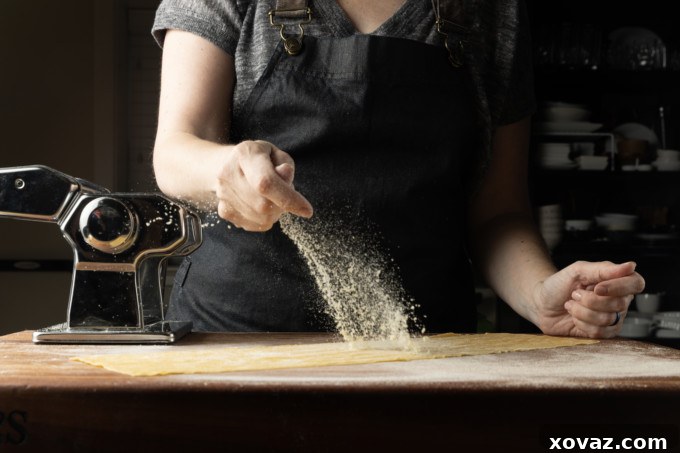
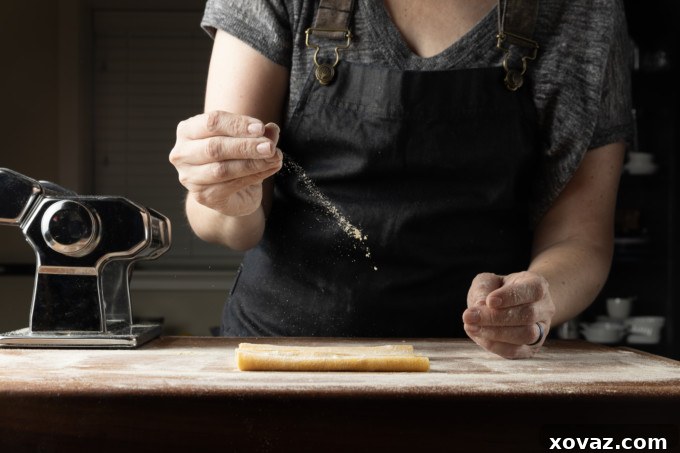
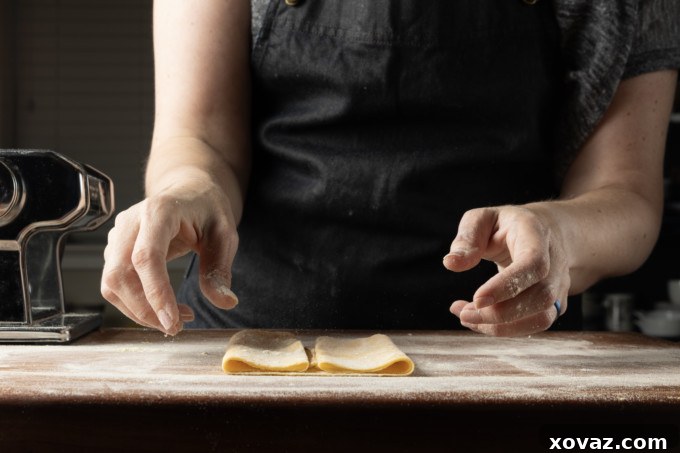
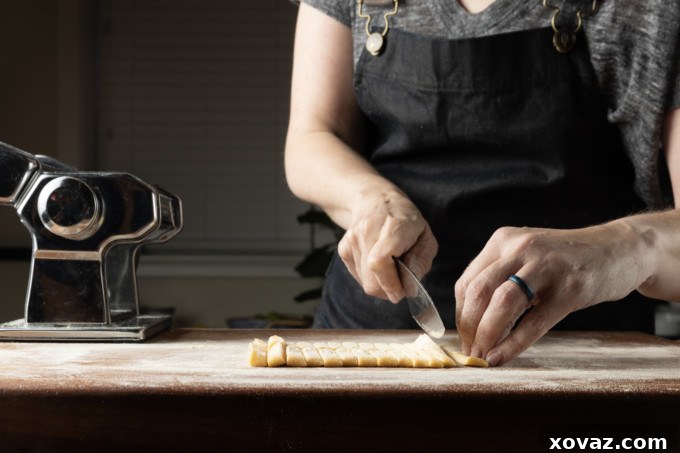
Either use the integrated cutters that come with your pasta machine, OR dust your rolled-out pasta sheet generously with semolina flour. Fold the two shorter ends of your dough sheet towards the middle so they meet, then fold the dough in half again (like a book or scroll). Use a sharp knife to cut into strips. For Pappardelle, aim for approximately 1 cm (about 3/8 inch) thick strips. For Tagliatelle, cut thinner strips, about 2/3 of a cm (about 1/4 inch) thick. Unroll the cut pasta into individual strands.
To Form Pici Without a Machine:
-
This is one of the simplest hand-shaped pastas. Cut off a 1-inch knob of your fresh pasta dough recipe. On a lightly floured surface, use the palms of your hands to roll it out into a long, thin cord, approximately 2 feet in length, with slightly tapered ends. Transfer the rolled pici onto a semolina-dusted sheet pan, ensuring they are in a single layer to prevent sticking. Repeat with the remaining dough.
To Cook Fresh Pasta:
-
Bring a large pot (at least one gallon for 4 servings) of water to a vigorous, rolling boil. Generously salt the boiling water, using 1-2 tablespoons of salt per 4 quarts of water – it should taste as salty as the sea. Carefully add your fresh pasta to the boiling water.
-
The cooking time for fresh pasta is significantly shorter than for dried pasta, and it varies based on its thickness and shape. Thin, flat pasta like tagliatelle or spaghetti will typically cook to al dente in about 2 minutes. Thicker, stubbier, or chunkier shapes like pici or cavatelli may take 3 to 5 minutes. Continuously test small pieces of pasta throughout the cooking process to achieve your preferred al dente texture. If cooking frozen homemade pasta, do not thaw it first; simply drop it directly into the boiling water and add approximately 1 minute to the usual cooking time.
Nutrition Information (per serving)
- Calories: 404kcal
- Carbohydrates: 70g
- Protein: 17g
- Fat: 5g
- Saturated Fat: 2g
- Polyunsaturated Fat: 1g
- Monounsaturated Fat: 2g
- Trans Fat: 0.02g
- Cholesterol: 164mg
- Sodium: 64mg
- Potassium: 204mg
- Fiber: 3g
- Sugar: 0.3g
- Vitamin A: 238IU
- Calcium: 40mg
- Iron: 5mg
Nutritional information is an estimate and provided to you as a courtesy. You should calculate the nutritional information with the actual ingredients used in your recipe using your preferred nutrition calculator.
Did you make this recipe?
Make sure to tag @foodiewithfam on Instagram and #hashtag it #foodiewithfamily so I can check it out!
Pin Recipe
Share on Facebook