I am delighted to partner with Pork.org to bring you this comprehensive guide on how to cook pork and choose the best cuts for your recipes. All photographs, unless otherwise noted, are my own, and all opinions expressed are, as always, solely mine.
For home cooks and culinary enthusiasts alike, one of the most frequently asked questions revolves around mastering the art of cooking pork. With such a diverse array of cuts available, it’s easy to feel overwhelmed by the choices and unsure about the best methods to achieve succulent, flavorful results every time. The truth is, there’s no single “right” way to cook all pork; each cut possesses unique characteristics that dictate its ideal preparation method and cooking duration.
Understanding these nuances is the key to unlocking pork’s full potential, transforming what can sometimes be a dry or tough meal into a tender, juicy, and unforgettable culinary experience. This guide aims to demystify pork cooking, helping you confidently select, prepare, and savor every delicious cut. Whether you’re a seasoned chef or just starting your culinary journey, these insights will empower you to create mouth-watering pork dishes with ease and precision.
Essential Tips for Buying the Best Pork at the Grocery Store
Selecting quality pork is the first step toward a delicious meal. The choices you make at the grocery store can significantly impact the final taste and texture of your dish. Here are some crucial tips to guide you in buying the best pork:
- Prioritize Deep Color: Redder is Better! When choosing fresh pork, always look for cuts with a rich, deep reddish-pink hue. This vibrant color is a primary indicator of freshness, good quality, and robust flavor. Avoid pork that appears pale, grayish, or has any discolored spots, as this can suggest it’s older or has been handled improperly. The darker and more saturated the color, the more flavorful and satisfying your cooked pork will likely be. Think of it like choosing a ripe tomato – the best ones have deep, appealing colors.
- Check for Minimal Liquid: Avoid Excess Moisture. Carefully inspect the packaging for any accumulation of liquid at the bottom of the tray, commonly referred to as “purge.” While a small amount of liquid is normal due to natural moisture loss, an excessive amount indicates that the pork may have lost a significant portion of its internal moisture content. Cuts with a lot of purge are more prone to drying out during cooking, which can result in a less tender, less juicy, and ultimately less flavorful dish. Opt for packages where the pork looks firm, has good muscle integrity, and shows very little liquid released into the packaging. This signals a higher quality cut that will retain moisture better.
- Match the Cut to Your Cooking Method: Plan Ahead for Success. This is perhaps the most critical tip for achieving perfect pork every time. Different pork cuts have distinct compositions in terms of fat, muscle fibers, and connective tissue, making them inherently suited to specific cooking techniques. For instance, a tough, collagen-rich cut like pork shoulder (often labeled pork butt) thrives with low-and-slow cooking methods such as braising, stewing, or smoking. These extended, gentle cooking times allow the tough connective tissues to break down into gelatin, resulting in unbelievably tender and succulent meat. Conversely, lean, delicate cuts like pork tenderloin or thin boneless chops are best prepared with high-heat, fast cooking methods like pan-searing, grilling, or quick roasting. These quick methods prevent the lean meat from overcooking and becoming dry or tough. Making the mistake of flash-cooking a pork shoulder or slow-cooking a tenderloin will almost certainly lead to disappointing results. Always consider your intended recipe and cooking method before selecting your pork cut. Refer to our detailed guide below to ensure you pick the perfect cut for your desired culinary creation.
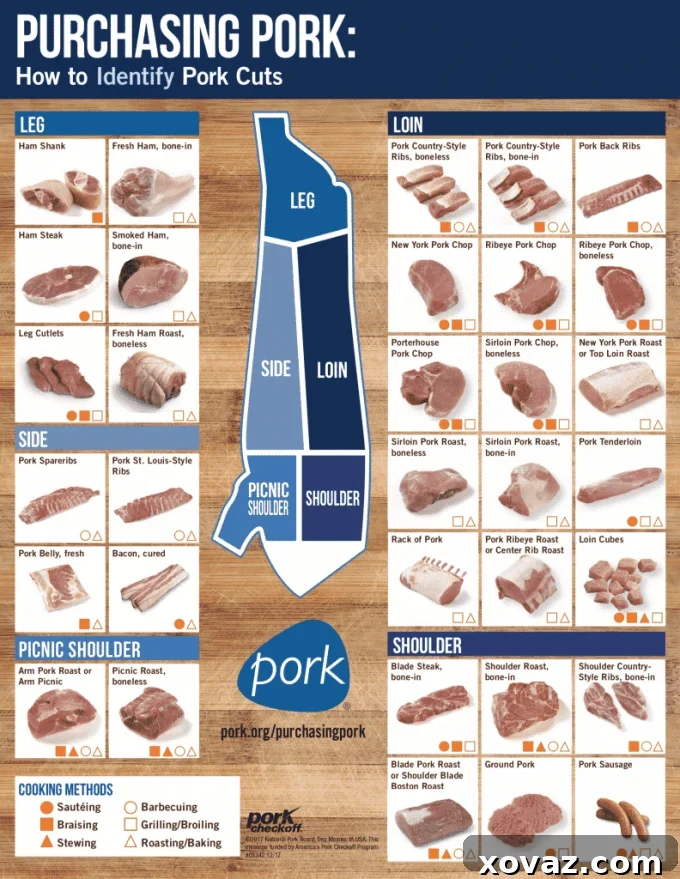
Infographic used with permission from Pork.org.
Fear not, aspiring pork chefs! The confusion ends here. I’ve curated a comprehensive How to Cook Pork Guide just for you. This guide meticulously details 10 of the most commonly available and commercially produced pork cuts, explaining precisely which cut to select for various culinary purposes and providing expert, step-by-step advice on how to cook them to absolute perfection. Get ready to elevate your pork dishes from good to extraordinary, transforming every meal into a memorable feast with confidence and flair!
Ultimate Guide: How to Cook Pork & Choose the Right Cuts for Delicious Recipes
Mastering How to Cook Bacon: Oven-Baked Perfection
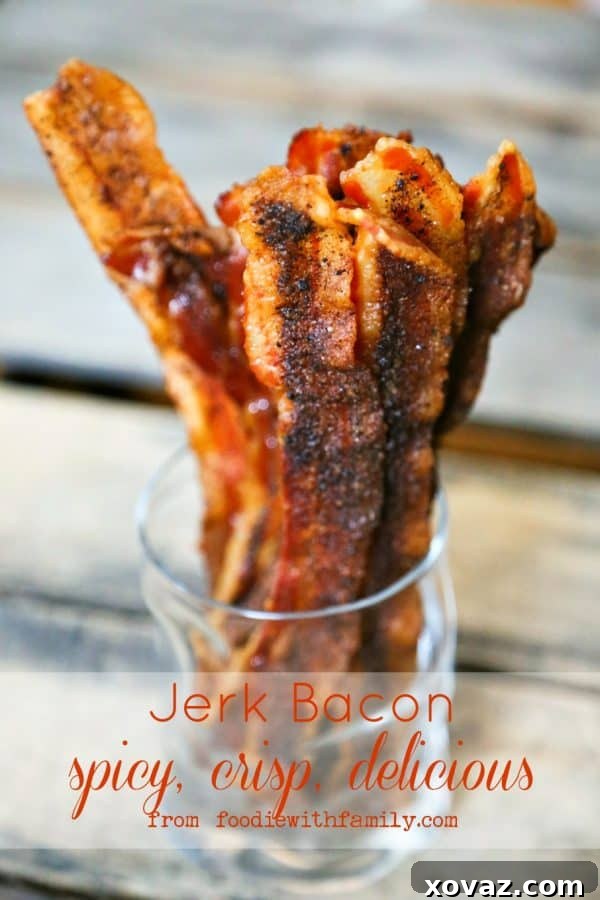
Bacon is a beloved staple in kitchens worldwide, and while every bacon enthusiast may have their tried-and-true method, I wholeheartedly advocate for oven-baking as the superior technique. Whether you favor delightfully chewy strips, perfectly crisp pieces, or that ideal sweet spot in between, the oven consistently delivers the most even and satisfying results. The two biggest advantages of baking bacon are its ability to cook a large quantity at once with minimal splatter, and the consistent, uniform cooking it provides. This makes it ideal for family breakfasts, brunch crowds, or simply meal prepping a batch for the week.
The secret to perfectly oven-baked bacon lies in starting with a cold oven. Simply lay your bacon strips in a single layer on a rimmed baking sheet, slide it into a cold oven, and then preheat your oven to 425°F (220°C). Why start cold? As the oven and bacon heat up together, the bacon fat renders gradually and evenly. This slow rendering process prevents the bacon from seizing up and curling excessively, resulting in beautifully flat, uniformly cooked strips that are crispy without being brittle, or chewy without being undercooked.
For even easier cleanup – a major bonus in any kitchen – I highly recommend lining your rimmed baking sheet with parchment paper or aluminum foil before arranging the bacon. Once cooked to your desired crispness, carefully pour the rendered bacon fat from the pan into a heat-proof jar and refrigerate it. This liquid gold is a fantastic culinary asset, perfect for greasing cornbread pans, adding incredible depth to dishes like fried apples and onions, or sautéing onions and vegetables for hearty soups such as corn chowder. If you’re venturing into specialty bacon preparations, such as maple candied bacon or Jerk Bacon, placing the bacon on a cooling rack set inside a lined baking pan allows for optimal airflow, even crisping, and easy application of glazes or seasonings.
How to Cook Pork Shoulder: Achieving Fall-Apart Tenderness
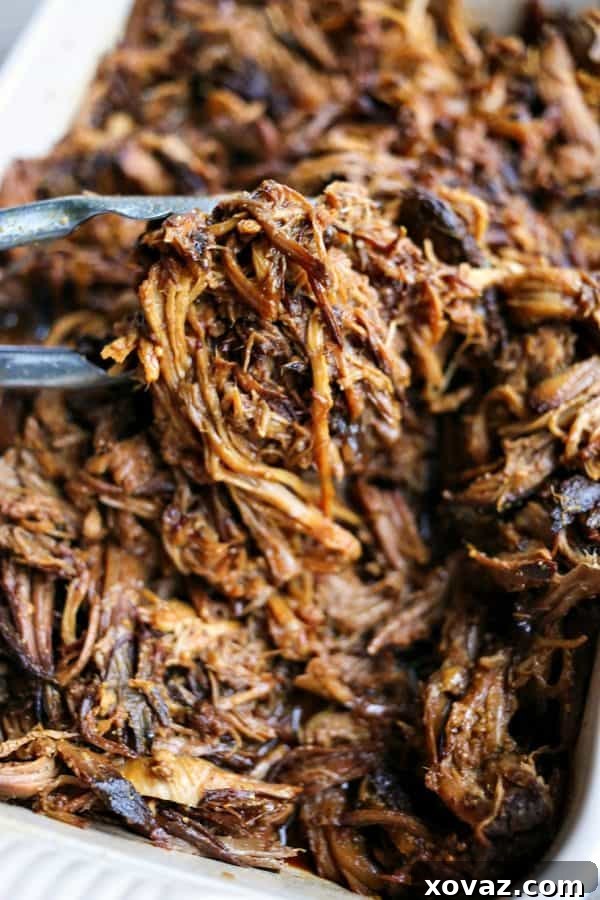
Ah, the fabulous pork shoulder! Also widely known as pork butt (despite coming from the pig’s front shoulder, not its rear), this is truly one of the most economical cuts that delivers immense flavor and incredible versatility. Its generous marbling of fat, coupled with a significant amount of tough connective tissue and collagen, makes it a prime candidate for slow cooking. When cooked correctly, it transforms into unbelievably tender, juicy, and succulent meat that practically falls apart.
Optimum Pork Shoulder Cooking Temperature: The goal for pork shoulder isn’t just safety, but textural perfection. Aim for an internal temperature of 170°F (77°C) or higher. Ideally, allow it to reach 180°-190°F (82°-88°C) during its resting period after cooking. While pork is technically considered safe to eat when cooked to 145°F (63°C)*, the magic of pork shoulder happens at these higher temperatures. At 170°F and beyond, the abundant collagen and fat within this well-marbled cut begin to render and break down into rich, flavorful gelatin. This crucial process yields that coveted fall-apart texture and maximizes its succulence. The meat should be so tender that it easily shreds with two forks or tongs. This process can take several hours, but the deep, satisfying results are always worth the wait.
Pork shoulder is perfectly suited for slow braising in low heat, making it the star of classic comfort dishes. It shines in recipes like Slow Cooker Honey Mustard Pulled Pork, sweet and savory Apple Cider Pulled Pork, authentic Cuban Pork, and flavorful stews such as Green Chile Stew. The long, gentle cooking allows all the flavors to meld beautifully and the meat to become incredibly tender, soaking up all the delicious cooking liquids. If you find yourself with a super-abundance of tender pulled pork, it’s wonderfully versatile for transforming into creative and hearty meals such as indulgent Filthy Burgers, comforting Pulled Pork Toasted Cheese Sandwiches, savory Pulled Pork Huevos Rancheros, delightful Honey Mustard Pulled Pork Sliders, satisfying Neato Frito Overstuffed Burritos, and rich Barbecue Pulled Pork Overstuffed Shells. This cut truly keeps on giving!
Cooking Bone-In Ribeye Pork Chops: Flavorful & Juicy
Bone-in ribeye pork chops, often referred to simply as pork rib chops, are a cherished centerpiece on many dinner tables, offering robust flavor and a satisfying texture that rivals a good steak. Despite their gourmet appeal, they are surprisingly straightforward to prepare and remain an economical choice, making them accessible for everyday meals or special occasions. The presence of the bone helps insulate the meat during cooking, contributing to a juicier outcome and enhancing the overall depth of flavor. These chops are perfectly suited for quick cooking methods that capitalize on their inherent tenderness and marbling.
The ideal technique for cooking bone-in ribeye pork chops involves a two-step process: first, searing them in a screaming hot skillet (cast iron works wonderfully) to develop a beautiful, caramelized crust and seal in juices. This initial sear creates incredible flavor and visual appeal. Second, finishing them in the oven ensures they cook through evenly to your desired doneness without drying out the interior. This combination locks in moisture and creates a deeply flavorful pan sauce from the fond left in the skillet. Always use a reliable meat thermometer inserted into the thickest part of the chop, avoiding the bone, for accurate temperature readings.
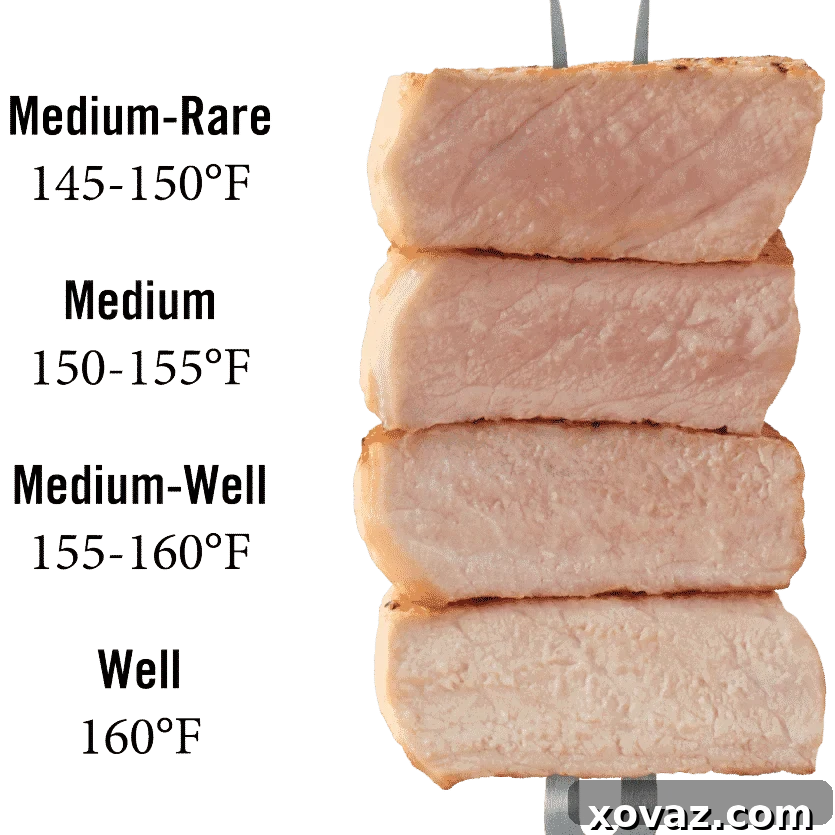
Optimum Bone-In Ribeye Pork Chop Cooking Temperature*: Remember to remove the chops from the heat a few degrees below your target temperature, as they will continue to cook during the resting period (carryover cooking).
- 145°F (63°C) for medium-rare: This will result in a slight blush of pink in the center, exceptionally juicy and tender.
- 150°F (66°C) for medium: Expect a light pink center, still very tender and moist.
- 155°F (68°C) for medium-well: The chop will have barely any pink, with a firmer but still palatable texture.
- 160°F (71°C) for well-done: The meat will be cooked through with no pink, firm in texture.
Crucially, allow the chops to rest for 3-5 minutes after cooking, tented loosely with foil. This vital step allows the muscle fibers to relax and the internal juices to redistribute evenly throughout the meat, resulting in a significantly more tender and succulent chop. With these guidelines, bone-in ribeye pork chops can be transformed into a humble weeknight meal or an elegant dish fit for any celebration, always delivering on flavor and tenderness.
How to Cook New York or Boneless Center Cut Pork Chops: Quick & Versatile
Boneless New York pork chops, frequently labeled as boneless center cut pork chops, are a go-to for busy home cooks thanks to their lean nature, quick cooking time, and incredible versatility. These chops are typically thinner and contain very little fat or connective tissue, making them an excellent choice for speedy weeknight dinners when time is of the essence. Their mild flavor profile is a huge advantage, allowing them to absorb and carry a wide array of seasonings and marinades, from simple spice rubs to complex, aromatic glazes, making them adaptable to countless cuisines.
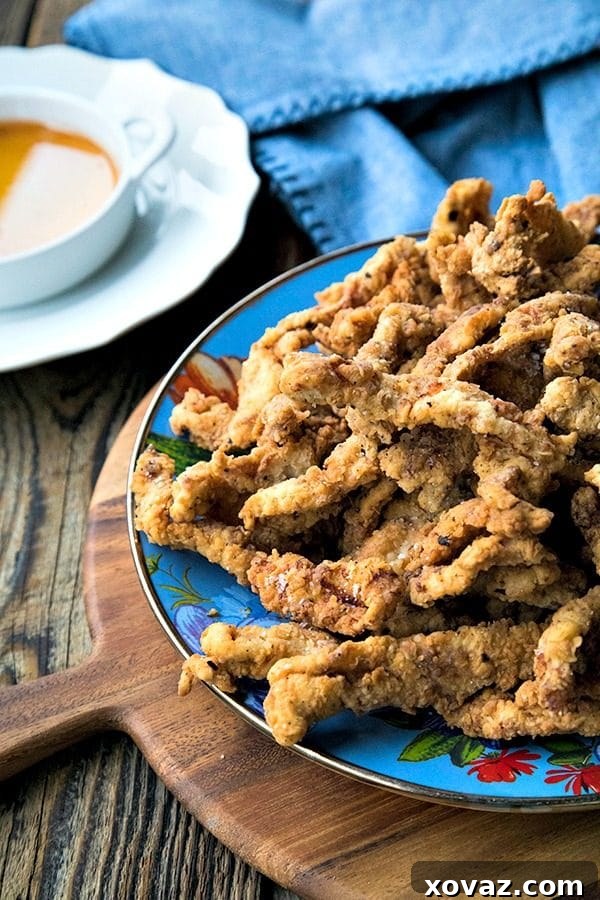
I frequently leverage the qualities of these chops to prepare my irresistible Easy Crispy Pork Tenders, also known as Pork Fries, a dish that truly showcases their ability to transform into delicious, snackable bites. Because of their lean muscle structure, boneless chops can dry out very quickly if overcooked. This makes precise temperature monitoring with a reliable meat thermometer absolutely essential for guaranteeing juicy, tender results every time.
Optimum New York Pork Chop Cooking Temperature*: As with all quick-cooking cuts, remove them from the heat just before they reach your target temperature to account for carryover cooking.
- 145°F (63°C) for medium-rare: Will have a slight pinkness in the center, very moist and tender.
- 150°F (66°C) for medium: Features a light pink center, remaining tender and juicy.
- 155°F (68°C) for medium-well: Shows only a faint hint of pink, with a firmer texture.
- 160°F (71°C) for well-done: Cooked through completely with no pink.
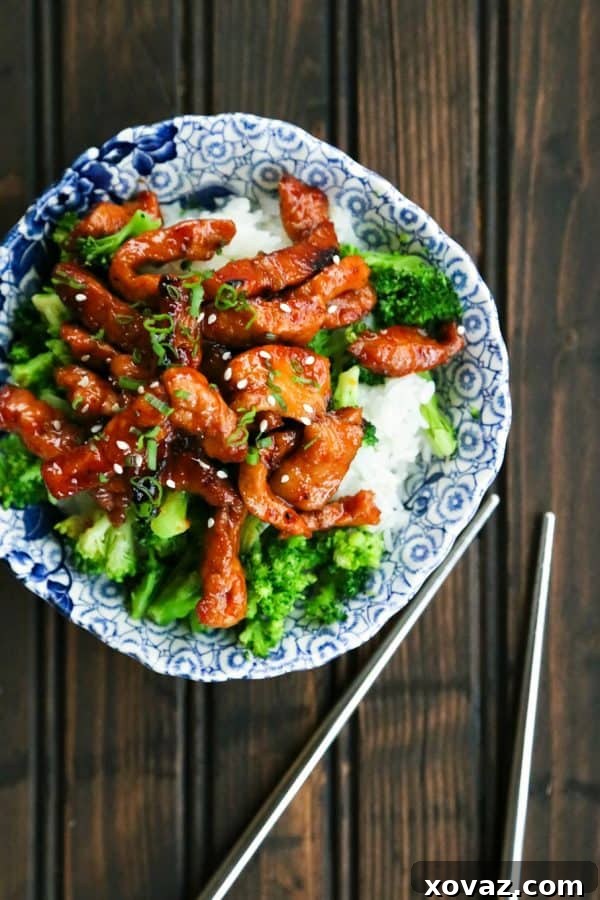
Whether you’re seasoning them simply with a classic Montreal Steak Seasoning and searing them in a pan, or quickly glazing them to create a flavorful dish like Easy Garlic Ginger Glazed Sticky Pork, these inexpensive cuts prove that delicious, gourmet-quality meals can be made swiftly and easily at home. To ensure maximum juiciness and tenderness, always remember to allow them to rest for 3-5 minutes after cooking, tented loosely with foil, before slicing and serving. This allows the internal juices to redistribute, preventing them from running out when cut.
How to Cook Pork Bone-In or Boneless Country Style Ribs: The Essence of Slow Cooking
Country style ribs, available in both bone-in and boneless varieties, offer a generous amount of tender, flavorful meat that makes them a cherished choice for hearty, comforting meals. Despite their name, these “ribs” are typically cut from the shoulder or loin, featuring considerably more meat and less bone (or no bone) compared to traditional back or spare ribs. They boast excellent marbling and a good amount of collagen, which, when cooked properly with patience, yields an incredibly succulent and melt-in-your-mouth texture that is truly unparalleled.
Optimum Country Style Ribs Cooking Temperature: For country style ribs, the goal transcends mere food safety; it’s about achieving ultimate textural perfection. Therefore, aim for an internal temperature of 170°F (77°C) or higher, continuing to cook until the meat is easily pulled apart with two forks or tongs. While 145°F (63°C)* is the technically safe minimum temperature for whole cuts, cooking these ribs to 170°F and beyond is crucial. At these higher temperatures, the abundant fat and collagen within the cut have ample time to fully render and break down into gelatin. This transformation is what creates the best flavor and that wonderfully tender, fall-apart texture that distinguishes a perfectly cooked country style rib.
I adore both boneless and bone-in country style ribs for their remarkable versatility and depth of flavor. They are absolutely exceptional in pulled pork recipes, where their rich meatiness and tender texture truly shine. Beyond barbecue, they also lend an unctuous, silky richness to slow-simmered red sauces and traditional “Sunday gravy,” enriching the flavor profile immensely and adding a luxurious mouthfeel. This is unequivocally a cut you’ll not want to hurry. The very best way to cook country style ribs is with gentle, prolonged heat – whether through braising, stewing, slow roasting, or smoking. The patience invested in low and slow cooking is always rewarded with an incredibly tender, flavorful, and deeply satisfying outcome that will have everyone asking for more.
How to Cook Pork Back Ribs or Spare Ribs: BBQ Perfection
Pork ribs, encompassing both back ribs (often called baby back ribs) and spare ribs, are quintessential barbecue fare, celebrated for their finger-licking flavor and tender meat. While both are delicious, each cut possesses distinct characteristics and, therefore, requires slightly different cooking methods to achieve their signature tenderness and flavor profile. Understanding these differences is key to barbecue perfection.
- Spare Ribs are cut from the belly of the hog, below the loin, making them larger, flatter, and meatier with more fat and bone than back ribs. They are best suited for methods that benefit from direct or indirect heat over a longer period, such as grilling, smoking, broiling, or traditional barbecuing. These methods allow the substantial fat content to render slowly, infusing the meat with incredible flavor and contributing to a succulent, juicy texture. They thrive in environments where smoke can penetrate and develop a beautiful bark.
- Back Ribs, also known as loin back ribs or baby back ribs (despite not coming from a baby pig, but from the loin section), are leaner, curve more significantly, and have a more delicate flavor. They benefit most from an initial period of slow braising in a covered pot or foil packet, which gently tenderizes the meat by breaking down collagen. After this tenderizing step, they are typically finished on a grill or under a broiler with a generous brushing of barbecue sauce to create a delicious, caramelized crust and add layers of flavor.
Optimum Ribs Cooking Temperature: For maximum tenderness and flavor, particularly where the meat easily pulls away from the bone, these cuts benefit from cooking beyond the minimum safety temperature:
- 190°F (88°C) for Back Ribs
- 180°F (82°C) for Spare Ribs
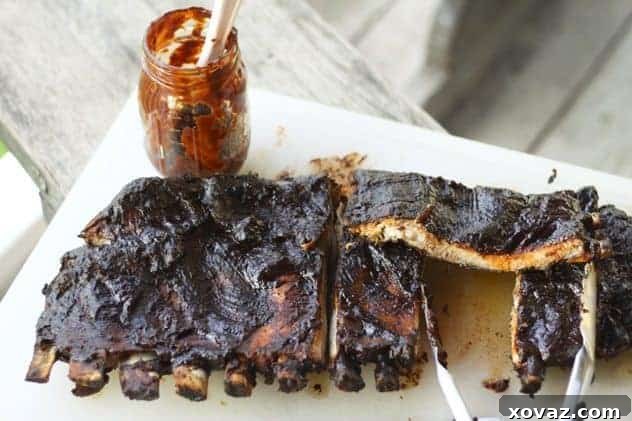
As with pork shoulder, while 145°F (63°C)* is the minimum safe internal temperature, ribs truly excel when cooked to these higher temperatures. This extended cooking time is essential, allowing the abundant fat and collagen to fully melt and break down, yielding that highly desirable “fall-off-the-bone” or “pull-away-from-the-bone” texture and a rich, savory taste. The ultimate test for perfectly cooked ribs is when you can easily wiggle the bone and pull it away from the meat with minimal resistance. For an irresistible experience that embodies true barbecue spirit, you must try these “Barbecue’ Grilled Ribs” recipe: Barbecue’ Grilled Ribs! They’re guaranteed to be a crowd-pleaser.
How to Cook Pork Tenderloin: Quick, Lean & Elegant
Pork tenderloin is widely regarded as one of the leanest and fastest-cooking cuts of pork, making it an ideal choice for elegant weeknight dinners or quick special occasion meals that don’t require hours in the kitchen. Its delicate flavor and fine, tender texture mean it truly shines with simple seasonings and rapid cooking methods. Because pork tenderloin contains very little fat, the key to perfect results is to cook it quickly and precisely to prevent it from drying out, which can happen easily if overcooked.
Thankfully, there are many “correct” and delicious ways to prepare pork tenderloin, offering flexibility for any culinary mood. Popular and highly effective methods include pan-searing, grilling, barbecuing, roasting, or broiling. Each method delivers a slightly different crust and flavor profile, but all aim to cook the tenderloin efficiently to its ideal internal temperature, preserving its natural juiciness. Due to its lean nature, always use a meat thermometer for accuracy and remove it from the heat when it’s a few degrees below your target to account for carryover cooking.
Optimum Pork Tenderloin Cooking Temperature*: For optimal tenderness and moisture, aim for these temperatures:
- 145°F (63°C) for medium-rare: This will result in a slight pink center, making it exceptionally moist and tender.
- 150°F (66°C) for medium: Expect a light pink center, still wonderfully juicy.
- 155°F (68°C) for medium-well: The tenderloin will have barely any pink, firm to the touch.
- 160°F (71°C) for well-done: Cooked through completely with no pink.
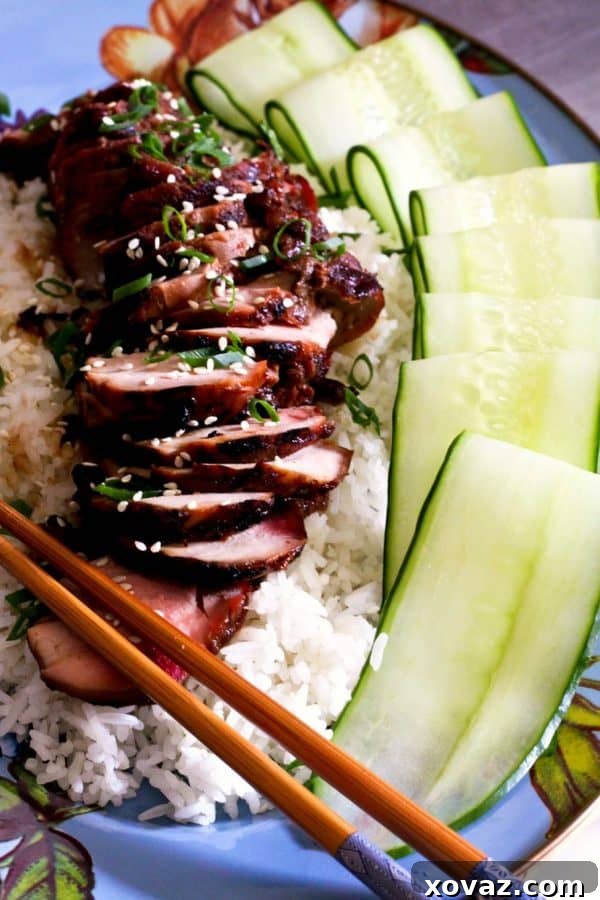
I particularly enjoy using pork tenderloin in this delightful Chinese Barbecued Pork (Char Siu) recipe, where its lean structure beautifully absorbs the sweet and savory marinade, creating a vibrant and flavorful dish. It’s equally wonderful when simply seasoned with salt, pepper, and herbs, then quickly grilled for a smoky char, or pan-seared to develop a golden-brown crust before finishing in a hot oven for an effortless yet impressive meal. Always remember to let it rest for 5-10 minutes, tented loosely with foil, before slicing. This allows the juices to redistribute, ensuring every bite is as tender and succulent as possible.
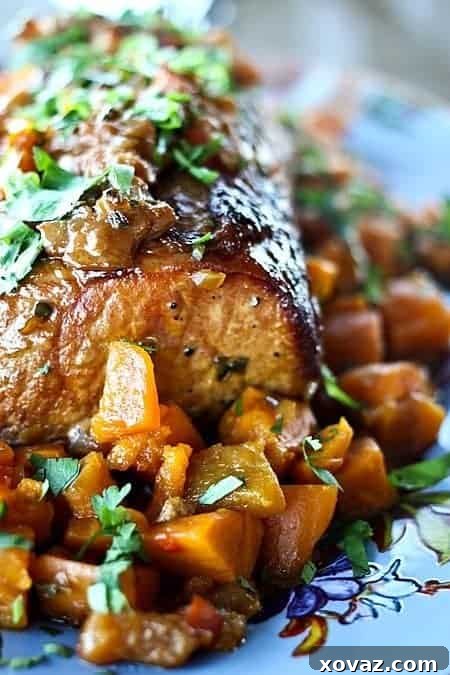
How to Cook New York Pork Roast (Center Cut Pork Loin or Roast): Effortless Elegance
The New York Pork Roast, also commonly known as a Center Cut Pork Loin or Roast, is a fantastic option for both casual family dinners and more formal entertaining guests. This cut is celebrated for being lean, naturally tender, and remarkably forgiving, making it an excellent choice for home cooks looking to create an impressive meal without excessive fuss or complex techniques. It possesses a mild, versatile flavor that pairs beautifully with a vast array of seasonings, aromatic herbs, and savory or sweet marinades, allowing for endless culinary creativity and adaptability to diverse meal plans.
To maximize its flavor and ensure optimal tenderness, do yourself a favor and prepare your New York Pork Roast by utilizing dry-heat cooking methods such as grilling, roasting, or baking. These techniques allow the exterior to develop a beautiful, flavorful crust through the Maillard reaction, while simultaneously keeping the interior moist and succulent. The larger size of a roast means it will take longer to cook than individual chops, providing more time for flavor development. Even though it’s typically thought of as a roast for dry-heat cooking, its versatility extends to slower, moist-heat cooking methods too, proving its adaptability for various recipes and occasions.
Optimum New York Pork Roast Cooking Temperature*: For juicy, tender results, monitor the internal temperature with a meat thermometer, inserted into the thickest part of the roast.
- 145°F (63°C) for medium-rare: This will show a noticeably pink center, exceptionally juicy and tender.
- 150°F (66°C) for medium: Expect a light pink throughout the center, remaining tender and moist.
- 155°F (68°C) for medium-well: The roast will have only a faint hint of pink, with a firmer texture.
- 160°F (71°C) for well-done: Cooked through completely with no pink, firm but still palatable.
A New York Pork Roast beautifully complements any number of seasonings and accompaniments, from savory Mediterranean herbs to sweet fruit glazes. I’ve even had great success “roasting” it in the slow cooker, creating wonderfully tender and flavorful dishes like Peach Salsa Pork Roast with Sweet Potatoes or the aromatic Five Spice Pork Roast. Always allow the roast to rest for at least 10-15 minutes, tented loosely with foil, after removing it from the heat and before slicing. This critical resting period allows the muscle fibers to relax and the internal juices to redistribute evenly, ensuring the meat remains incredibly tender and juicy when served.
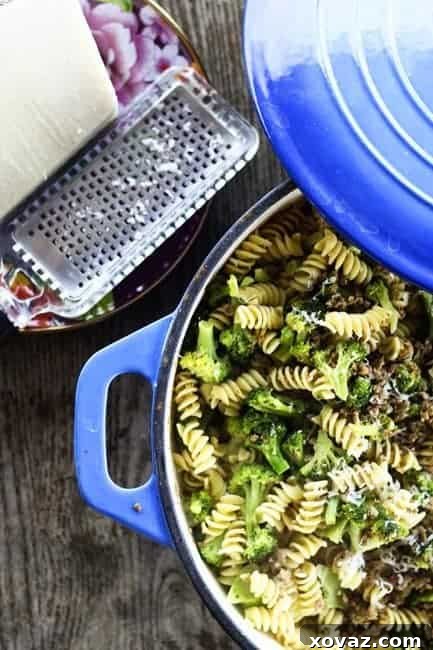
How to Cook Ground Pork: Versatile & Flavorful
Ground pork is an incredibly versatile and flavorful ingredient that can be used in countless dishes, offering a delightful alternative or complement to ground beef. It’s often leaner than some cuts of ground beef but still provides a rich taste and a pleasant, tender texture. Typically, it’s prepared by breaking it up in a pan and browning it over medium-high heat, allowing it to cook through evenly and develop a savory, caramelized crust that enhances its flavor profile. Because ground pork is not a whole primal cut and has been processed (ground), it requires cooking to a slightly higher internal temperature for optimal food safety compared to whole muscle cuts.
Optimum Ground Pork Cooking Temperature: 160°F (71°C). This specific temperature ensures any potential bacteria are eliminated, making it safe and delicious to consume. It is absolutely crucial to always use a reliable meat thermometer to verify the temperature, especially when combining ground pork with other ingredients in casseroles or meatloaves, where visual cues might be misleading. Cook until no pink remains and it crumbles easily.
Ground pork is a fantastic foundation for creating indulgent and savory taco meat, making it a key component in a hearty taco soup, or building block for various casseroles and pasta sauces. For an added dimension of tenderness, moisture, and flavor, consider substituting ground pork for about one-third of the ground beef in dishes like a classic meatloaf; it yields a wonderfully rich and moist result. It’s also an essential ingredient for traditional Asian recipes such as the spicy and aromatic Mapo Dofu, where its savory qualities truly shine and complement the tofu beautifully. Furthermore, ground pork offers the convenience of easily making your own Bulk Italian sausage from scratch, perfect for pasta dishes, pizza toppings, or breakfast patties. Don’t overlook its vital role in delectable pork dumplings, where its juicy texture and rich flavor are absolutely unparalleled and a true delight.
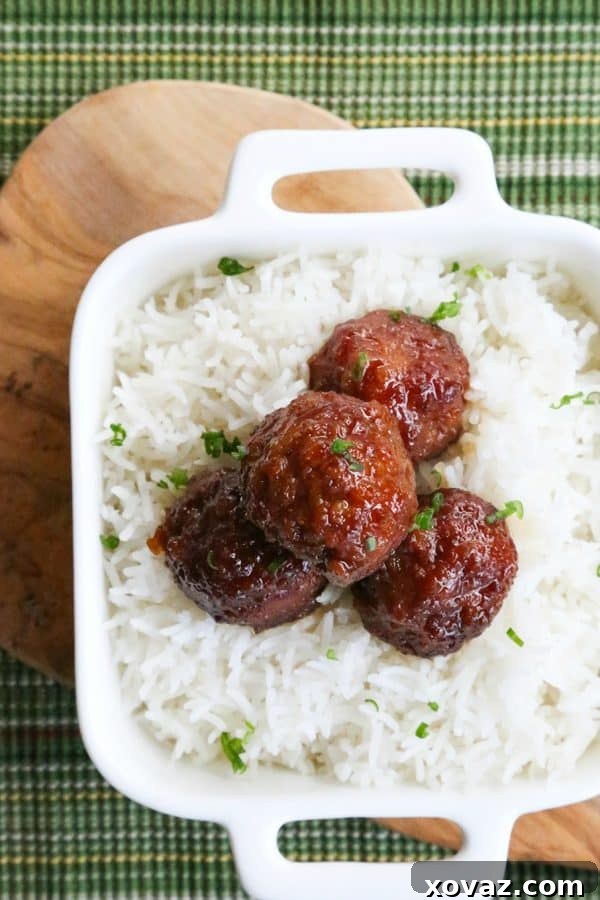
How to Cook Ham Steak: Quick Meals & Flavor Boost
Ham steaks are a true pantry hero, readily available at nearly every grocery store across the United States. These convenient cuts are typically budget-friendly, remarkably easy to cook, and consistently delicious, making them an excellent item to keep on hand for quick meals or to effortlessly boost the flavor of other dishes. Ham steaks are generally pre-cooked and often smoked, meaning they only require heating through to be enjoyed. Their firm texture and savory flavor make them incredibly versatile.
Optimum Ham Steak Cooking Temperature: 145°F (63°C)*. Although often labeled “ready-to-eat” or “fully cooked,” ham steaks and other fully cooked smoked ham roasts should always be heated to this minimum internal temperature to ensure optimum food safety and to enhance their taste and texture. This short heating period helps to caramelize the natural sugars on the surface, developing a more complex, savory, and slightly crispy exterior that truly elevates their flavor.
The versatility of ham steaks is truly impressive. They can be quickly pan-fried in a hot skillet for about 3 minutes per side, developing a beautiful golden-brown crust that adds color, flavor, and a touch of comforting happiness to any meal. This simple preparation is perfect for a fast breakfast, lunch, or light dinner. Beyond being a standalone dish, diced ham steak can be strategically stretched to flavor entire pots of soup, hearty stews, and savory bean dishes, imparting a rich, smoky depth that elevates the entire pot. Small, fried pieces are also a fantastic, savory addition to fried rice, fluffy omelets, breakfast scrambles, or quiches. If you find yourself out of bacon or simply want a different flavor profile, simply dice a ham steak, fry until crispy on the outside, and use it as a flavorful substitute for crumbled bacon in many recipes. And for a unique, old-fashioned twist, ground ham can be used as the base for savory dips, spreads, and the ever-popular Ham Balls – a delightful blend of sweet and savory that truly “rules the world” in terms of comfort food!
Click here for more detailed information on various cuts of pork, along with specific cooking methods, times, and temperatures directly from Pork.org, an excellent resource for all things pork.
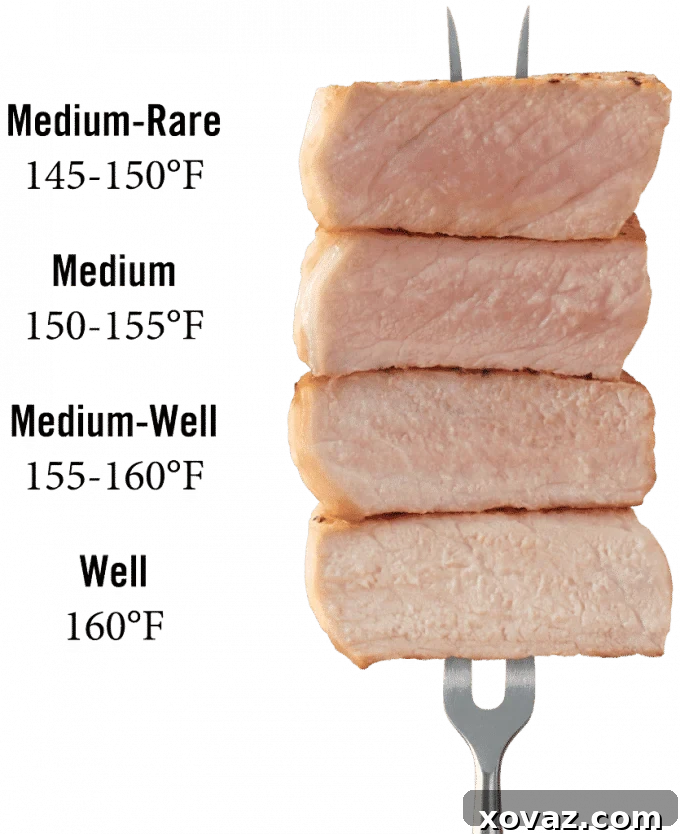
Graphic courtesy of Pork.org
Understanding the New Pork Cooking Temperature Recommendations
For many years, the standard recommendation for cooking all cuts of pork was a minimum internal temperature of 160°F (71°C). This long-standing guideline often led to pork that, while safe, could be dry and less flavorful. However, significant and remarkable advancements in agricultural practices, particularly in biosecurity measures on pig farms over the past decade, have led to a positive and scientifically supported change from the USDA. This update means that home cooks can now enjoy pork prepared in a way that truly maximizes its flavor, juiciness, and tenderness.
Today, for pure cuts of pork – specifically referring to whole muscle cuts that are not ground, have not been “enhanced” with solutions (like saline or flavoring), or come pre-seasoned – the recommended minimum internal cooking temperature is now 145°F (63°C), followed by a crucial three-minute rest period. This lower temperature allows the pork to retain significantly more of its natural moisture and internal juices, resulting in incredibly succulent, tender, and never-dry meat. The difference in taste and texture is truly remarkable; I’ve had the immense pleasure of experiencing masterfully cooked pork chops prepared to a perfect medium-rare, and it was a revelation in flavor, offering a tenderness and moistness previously thought unattainable for pork.
It is absolutely crucial for home cooks to remember that this updated 145°F cooking recommendation specifically applies only to whole muscle, unground, and un-enhanced cuts of pork. For ground pork, as well as any pork products that have been “enhanced” with solutions or come pre-seasoned (such as some commercial pork sausages), the long-standing recommendation of 160°F (71°C) still applies to ensure optimum food safety. Always use a reliable, instant-read meat thermometer inserted into the thickest part of the meat (avoiding bones) to accurately gauge the internal temperature of your pork, ensuring both safety and culinary perfection.

Photo courtesy of Pork.org
My recent opportunity to visit several pig farms with the Pork Board was an incredibly enlightening and inspiring experience. I was genuinely impressed and deeply moved by the warm, transparent, and open-book welcome we received from these dedicated farmers. Many of them represent multi-generational farming families who have not only passionately continued their ancestral enterprise but have also actively studied, invested in, and meticulously applied modern scientific research to significantly improve the life, health, and overall welfare of American pigs. Their unwavering commitment to continuous improvement, ethical practices, and sustainability was evident at every turn, showcasing a profound evolution in modern agriculture.
Each farmer I met demonstrated a profound dedication to being an exemplary neighbor, a responsible steward of their land and natural resources, and an attentive, compassionate caretaker for the pigs under their charge. Their ultimate goal is to provide high-quality, safe, and nutritious meat to as many people as possible, and they approach this mission with integrity, innovation, and advanced practices. This dedication extends to implementing sophisticated air filtration systems within barns, significantly improving air quality, and enforcing strict biosecurity protocols, such as requiring all visitors to “shower in and shower out” before entering areas with vulnerable piglets and pregnant sows. These stringent measures are highly effective in preventing the spread of illness and maintaining optimal health for the herd. They also install advanced climate control systems to ensure pigs maintain a comfortable temperature year-round, protecting them from weather extremes and minimizing environmental stress. Minimizing stress to the pigs is a paramount priority, alongside feeding optimized food sources that provide maximum nutritional benefit while simultaneously aiming for the smallest possible environmental footprint. These comprehensive and forward-thinking practices collectively ensure the health and well-being of the animals while consistently producing excellent quality pork for consumers.
*Please note that while the cooking methods described in this guide are broadly applicable to both commercially produced and privately raised pork, the specific temperature recommendations provided (especially the 145°F for whole cuts) pertain exclusively to commercially produced pork. For pork that has been raised privately without USDA oversight or inspection, the USDA continues to recommend a minimum internal cooking temperature of 160°F (71°C) for all cuts to ensure optimal food safety. Always verify the source and oversight of your pork to apply the correct temperature guideline.
Are Hormones Used in Pork Production? The Truth Behind the Labels
It’s a common sight to see “hormone-free” labels prominently displayed on certain pork products at the grocery store. This might naturally lead consumers to believe that some pork is produced with added hormones, implying a distinction in the marketplace. However, here’s a surprising and crucially important fact that often goes misunderstood: it is unequivocally illegal in the United States to inject pigs with hormones. This isn’t merely a best practice or a voluntary industry standard; it is a strict legal mandate enforced by federal regulations.
Commercial pig farming operations in the U.S. adhere to rigorous governmental regulations, and any farm found to be using added hormones would face severe penalties, including immediate suspension of operations and the inability to legally sell their pork in the United States. Therefore, those “hormone-free” labels are, in essence, redundant. They don’t indicate a superior product but rather highlight a legal requirement that all U.S. commercial pork producers must follow. You can be 100% confident that no commercially produced pork in the United States contains added hormones. This fundamental truth simplifies your choices and ensures peace of mind when selecting pork for your family.
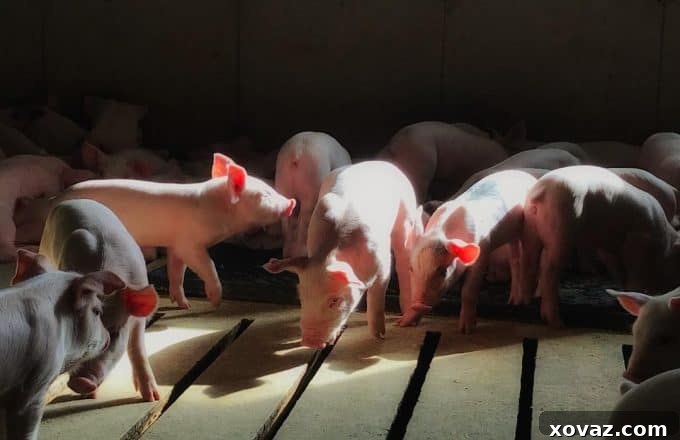
Photo by -and used with permission from- Erin Brenneman, a.k.a. @SowMomma
Are There Antibiotics in Pork? Dispelling Common Concerns
Many consumers, myself included, have previously worried about the presence of antibiotics in pork, primarily due to valid concerns about the development of antibiotic resistance in bacteria. However, during my recent farm visits and extensive discussions with farmers and veterinarians, I gained a crucial understanding that has significantly eased these concerns and clarified the reality of antibiotic use in modern pork production.
It is vital for consumers to know that the use of antibiotics in pork production is highly regulated, and it is legally prohibited for any antibiotic residues to be present in pork that is sold to consumers. This is a non-negotiable standard. If you are purchasing commercially produced pork in the United States, you can absolutely rest assured regarding this matter. This rigorous standard is maintained through a sophisticated combination of responsible farmer practices, strict veterinary oversight, and stringent governmental testing and enforcement.
Firstly, it’s important to understand that farmers do not indiscriminately or wantonly administer antibiotics. Such practices would be financially wasteful, causing unnecessary expense to the farmer, and would also cause undue stress to the pigs. Therefore, from a practical, ethical, and economic standpoint, it simply doesn’t make sense for farmers to over-use antibiotics.
However, there are legitimate and humane circumstances where antibiotics are absolutely necessary. Just as we would treat our own children or pets for illnesses like strep throat or other bacterial infections, farmers and veterinarians responsibly use antibiotics to restore sick and suffering pigs to health. When antibiotics are administered, it is done under strict veterinary guidance, following specific protocols. Veterinarians meticulously track and record every dose given to every single pig, and both the farm and the supervising vet maintain comprehensive, auditable records that follow the pig throughout its entire life cycle, from birth to processing. This meticulous record-keeping ensures accountability and traceability.
A critically important safeguard in the system is the mandatory withdrawal period. A pig cannot be processed for meat until the administered antibiotic has been completely metabolized and has entirely cleared the pig’s system. This withdrawal period is strictly enforced and varies depending on the specific antibiotic used, ensuring no antibiotic residues remain in the meat. The protections in place to prevent residues in the food supply are incredibly robust and multi-layered.
Furthermore, when pigs are processed into meat, a representative number from each herd undergoes rigorous and random testing for antibiotic residues by government inspectors. If even the slightest detectable amount of antibiotics is found in any pig’s meat, that entire batch of meat is immediately discarded and prevented from entering the food supply. More severely, the farm is then placed on a highly undesirable government list: the USDA Food Safety and Inspection Service Weekly Residue Repeat Violator List. This designation carries significant and escalating consequences. Any farm placed on this list faces exponentially increased costs for processing, extensive bureaucratic hurdles, and heightened governmental scrutiny. All meat from such a farm will be tested for a period of five years. If antibiotic residues are found again within that five-year window, the farm permanently loses the legal ability to sell their meat in the United States. These stringent measures provide a powerful incentive for compliance and collectively ensure the safety and integrity of the pork supply for consumers, allowing you to enjoy pork with confidence.