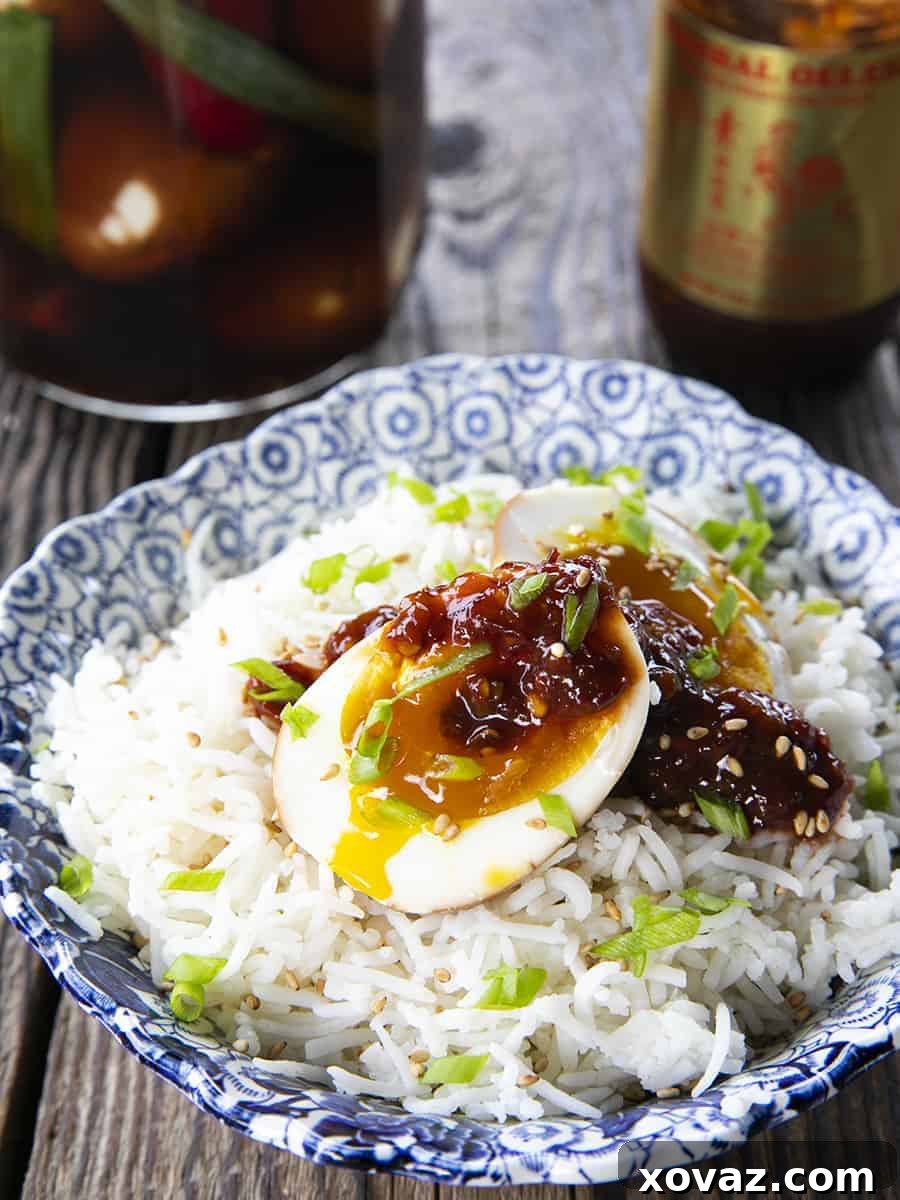
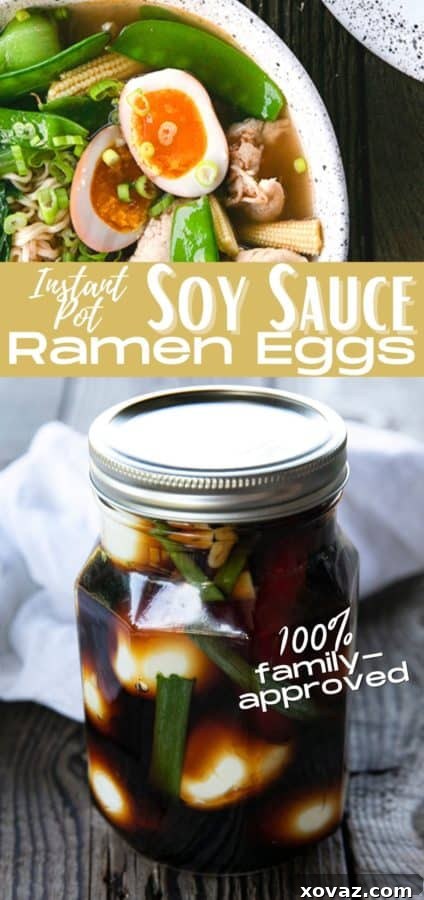
Soy Sauce Eggs, widely recognized as Ramen Eggs or Ajitama, are a culinary delight that elevate any meal. These exquisitely marinated eggs, whether soft, medium, or hard-boiled, are infused with a rich, savory-sweet, and subtly spicy mixture. Imagine the perfect harmony of soy sauce, a touch of rice vinegar, the warmth of brown sugar, fresh green onions, aromatic ginger, pungent garlic, and a hint of hot pepper. This blend transforms a simple egg into an umami-packed marvel, making them an indispensable topping for ramen, a fantastic addition to various dishes, or a satisfying snack all on their own.
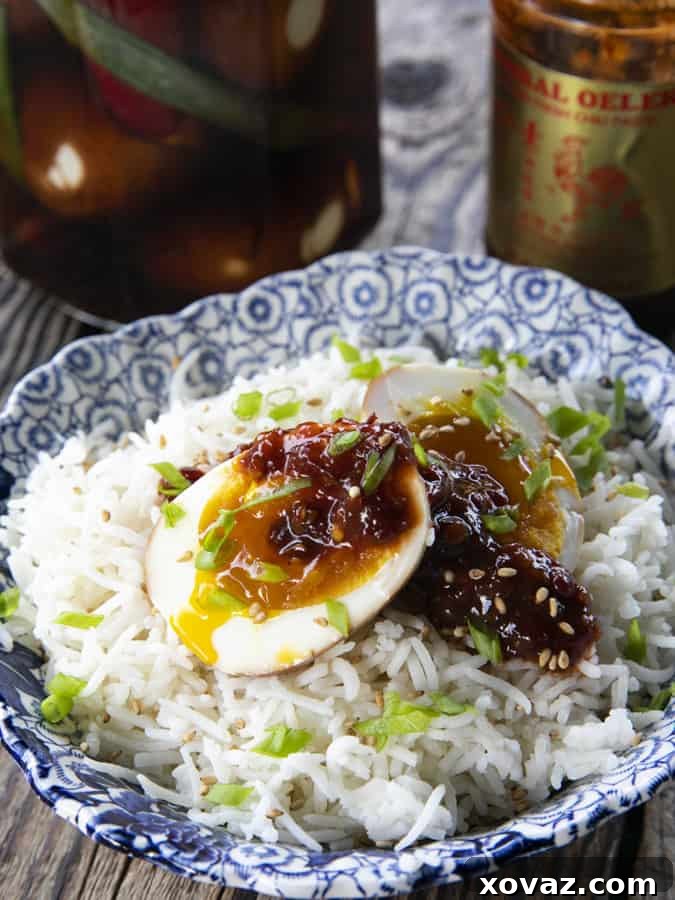
One of the most appealing aspects of these flavorful eggs is their incredible ease of preparation. They are perfect for meal prepping, as they store beautifully in the refrigerator, ready to add a burst of flavor to your next dish. While they are famously known as “Ramen Eggs,” their versatility extends far beyond a bowl of noodles. These marinated eggs prove to be a delightful enhancement to a wide array of culinary creations, making them a kitchen staple once you discover their magic.
A Culinary Legacy: The Story of Val’s Soy Sauce Eggs
My bonus mom, Val, possessed an extraordinary talent in the kitchen. She had an innate ability to take the most unassuming ingredients and, through her touch, transform them into meals that were not merely delicious but truly memorable experiences. Her cooking wasn’t just about sustenance; it was about creating moments of joy and comfort around the table.
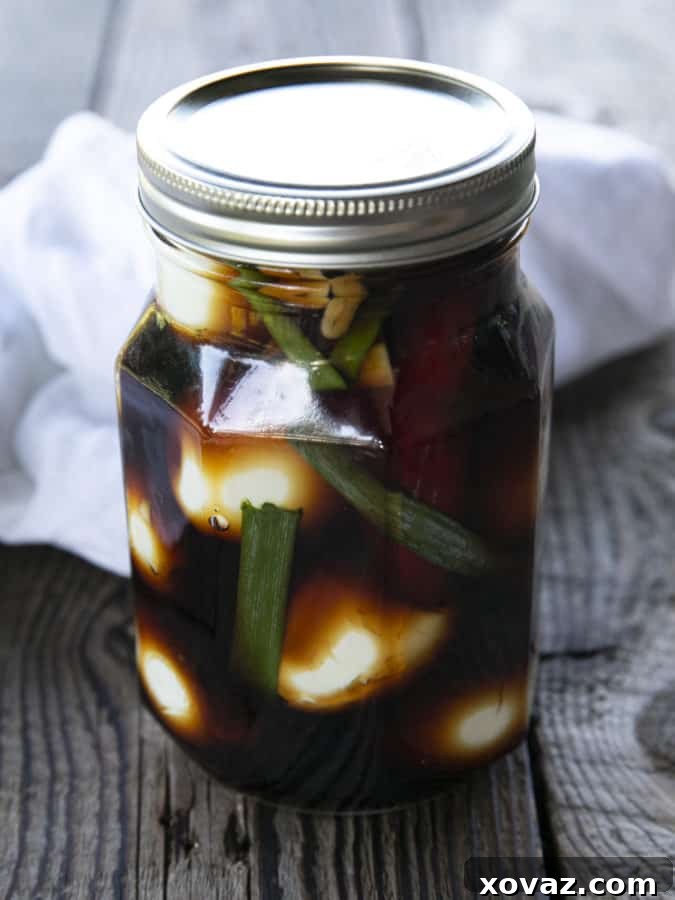
Val’s Soy Sauce Eggs stand as a perfect testament to her unique skill in turning humble comfort food into something genuinely exciting. It might seem challenging to imagine an egg being “exciting,” but Val achieved just that. Her secret lay in a simple yet profound marinade. She would gently place plain, perfectly hard-boiled eggs into a vibrant mixture of soy sauce, rice vinegar, brown sugar, garlic, ginger, and fresh green onions. Left to soak, the eggs would gradually absorb the incredible goodness offered by these aromatic ingredients, undergoing a remarkable transformation.
These ordinary eggs evolved into magnificent umami bombs. Depending on the duration they spent immersed in the flavorful brine, they could deliver anything from a delicate whisper of soy and aromatics to a powerful punch of concentrated flavor. Regardless of the intensity, they were always a welcome and cherished sight at the dinner table, promising a delicious addition to any meal.
Traditionally, Val’s Soy Sauce Eggs were often served over a warm bowl of congee (also known as jook or juk), accompanied by an assortment of other simple, yet complementary, ingredients. These might include thinly sliced green onions, tender leftover chicken, a drizzle of toasted sesame oil, and steamed broccoli. This assembly created a meal that beautifully defied modern culinary conventions, where complex dishes often dominate. Instead, Val demonstrated that familiar ingredients, even those readily available in smaller towns, could embark on a delightful international journey straight to “Comfort Land.” If you find this description hyperbolic, I challenge you to prepare a batch of Val’s Soy Sauce Eggs and experience the magic for yourself.
Mastering the Boiled Egg: Achieving Your Desired Doneness
The foundation of a great marinated egg lies in a perfectly cooked boiled egg. Achieving the ideal texture for your egg, whether it’s a soft yolk that oozes, a jammy, rich medium yolk, or a firm but tender hard-boiled yolk, is crucial before it even hits the marinade. While traditional stovetop methods work, the Instant Pot has revolutionized the process, offering consistent results and incredibly easy peeling.
Instant Pot Method: The Secret to Effortless Peeling
I personally rely on my Instant Pot countertop pressure cooker for preparing all my boiled eggs, consistently achieving my desired doneness. The pressure cooking method is a game-changer, especially for peeling. Here’s a simple guide to achieve perfect eggs, assuming you’re starting with refrigerated eggs:
- Soft Boiled Eggs (set whites, wonderfully runny yolks): Cook for 3 minutes on high pressure. Immediately perform a quick release of pressure, then transfer the eggs to an instant ice bath for at least 5 minutes.
- Medium Boiled Eggs (firmer whites, deliciously jammy and thick but not runny yolks): Cook for 4 minutes on high pressure. Follow with a quick release and then an instant ice bath for at least 5 minutes.
- Hard Boiled Eggs (firm whites, firm but not chalky yolks): Cook for 5 minutes on high pressure. Execute a quick release, followed by an instant ice bath for at least 5 minutes.
If you’ve ever struggled with peeling hard-boiled eggs, your issue might stem from either the freshness of the eggs or your cooking method. Super fresh eggs are notoriously difficult to peel. The most effective solutions are to use eggs that are at least two weeks old, or, more reliably, to use a pressure cooker like the Instant Pot. The pressure method helps separate the membrane from the egg white, making peeling a breeze.
Step-by-Step: How to Boil Eggs in Your Instant Pot
The Instant Pot makes egg boiling incredibly straightforward, leading to perfectly cooked eggs with shells that practically slide off:
- Begin by adding 1 cup of cold water to the inner pot of your pressure cooker.
- Carefully place a vegetable steamer basket or a trivet over the water.
- Arrange your fresh, refrigerated eggs in a single layer or piled high within the basket, ensuring they are not directly in the water.
- Securely fix the lid in place and set the vent to the “Sealing” position.
- Cook the eggs using the high-pressure times specified above (3 minutes for soft, 4 for medium, 5 for hard).
- Immediately after the cooking cycle completes, turn off the machine and manually release the pressure instantly by carefully moving the vent to the “Venting” position. Stand clear of the steam.
- As soon as the metal float valve drops, indicating the pressure has fully released, carefully lift the lid, directing any remaining steam away from your face.
- Using tongs or a slotted spoon, gently transfer the hot eggs into an ice water bath. Allow them to rest there for at least 5 minutes. This stops the cooking process and further aids in easy peeling.
- To peel, gently tap the fatter end of the egg, then the narrow end, and finally, carefully tap it on the counter to create cracks all around the shell. The shells should peel away effortlessly. If you’ve opted for soft-boiled eggs, remember their whites will be more delicate, so handle with extra care.
Voila! With this method, your eggs should peel like a dream, leaving you with smooth, unblemished whites ready for marination.
Unlocking Flavor: The Art of the Soy Sauce Egg Marinade
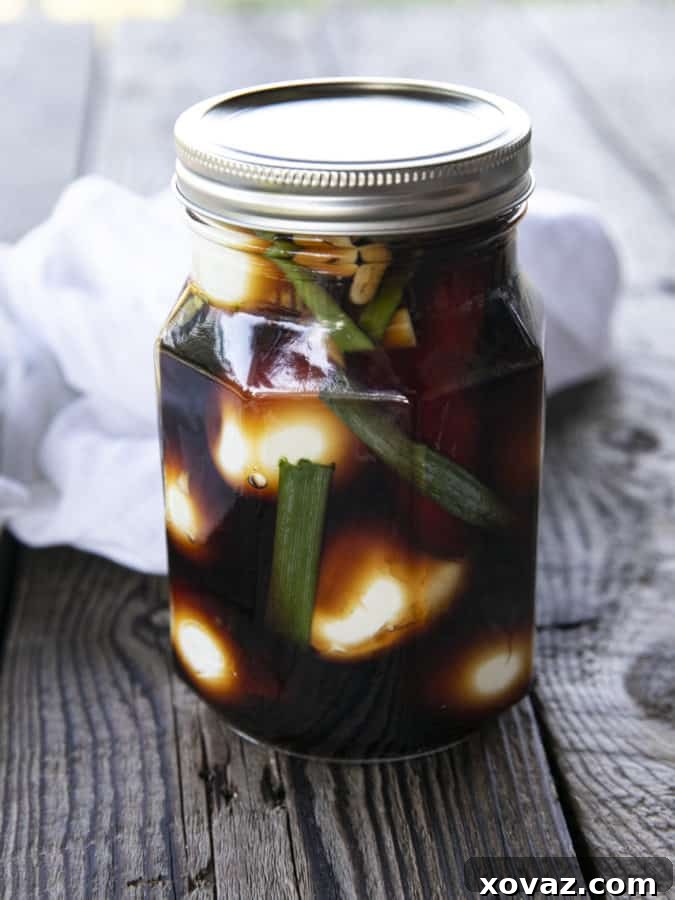
The true magic of Soy Sauce Eggs lies in their deeply flavorful marinade. This concoction is a careful balance of sweet, savory, tangy, and sometimes spicy elements, designed to penetrate the egg and transform its taste profile. Each ingredient plays a vital role:
- Brown Sugar: Provides a subtle sweetness that balances the savory soy sauce and helps in caramelization, adding depth.
- Garlic Cloves: Infuse the marinade with a pungent, aromatic warmth, a cornerstone of many Asian flavor profiles.
- Green Onions: Offer a fresh, mild oniony bite that complements the other aromatics beautifully.
- Ginger: Contributes a spicy, zesty, and slightly sweet undertone, essential for that distinctive Asian taste.
- Hot Pepper (Jalapeno, Fresno, Bird Chile): Introduces a customizable level of heat, adding a dynamic kick that awakens the palate. Adjust according to your preference.
- Soy Sauce: The primary flavor component, delivering rich umami and saltiness. I opt for low sodium soy sauce or Bragg’s Liquid Aminos to allow for better control over the overall saltiness without compromising flavor. Both work exceptionally well and provide a similar savory depth.
- Rice Vinegar: Adds a crucial tangy counterpoint, brightening the flavors and preventing the marinade from being overly rich.
- Boiling Water: Used to dissolve the sugar and help release the aromatics’ essence more quickly, creating a robust base for the marinade.
Marinating for Maximum Flavor
The duration of marination is key to controlling the flavor intensity of your Soy Sauce Eggs. You can allow them to soak for as little as 2 hours for a gentle, nuanced soy sauce flavor, or extend the marinating period up to two days for a much stronger, saltier, and more intensely flavored egg. My personal preference leans towards a longer soak, typically at least a full day, as I find eggs tend to “swallow” flavors unless the marinade is quite robust and has ample time to infuse. Even after 24 to 48 hours, I don’t find the soy sauce presence overwhelming; rather, it reaches a perfect, deeply satisfying concentration.
Val, my bonus mom, began making these delightful eggs many years ago, inspired by a recipe she encountered in a Madhur Jaffrey cookbook. Over time, she ingeniously adapted and refined the recipe, tweaking proportions and ingredients until it became uniquely hers. Building upon her foundation, I’ve made minor adjustments to Val’s recipe, primarily to satisfy my personal desire for an even more pronounced soy flavor in my eggs.
Creative Ways to Enjoy Your Homemade Soy Sauce Eggs
Once you’ve crafted your batch of perfect Soy Sauce Eggs, the culinary possibilities are endless! While they’re undeniably fantastic in ramen, their versatility allows them to shine in countless other dishes. Here are just a few of our favorite ways to serve these marinated masterpieces:
- As a Simple Snack: Enjoy them cold, at room temperature, or gently warmed, perhaps with a sprinkle of togarashi or black pepper. They are incredibly satisfying on their own.
- Traditional Congee Topping: Just as Val served them, they are exceptional over a comforting bowl of congee (jook or juk).
- Ramen & Noodle Bowls: Naturally, these ramen eggs are a perfect partner for a beautiful, big bowl of homemade Instant Pot ramen or any noodle dish.
- Salad Enhancer: Chop them up and toss them into an Asian chopped salad, or slice them over any large green salad for a boost of umami and protein.
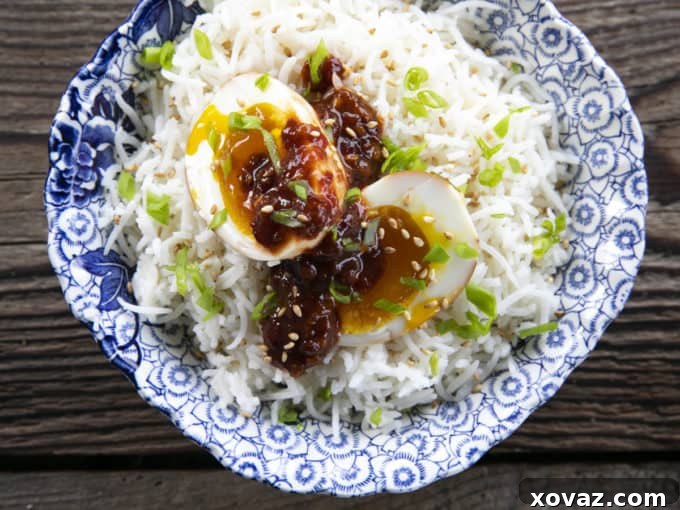
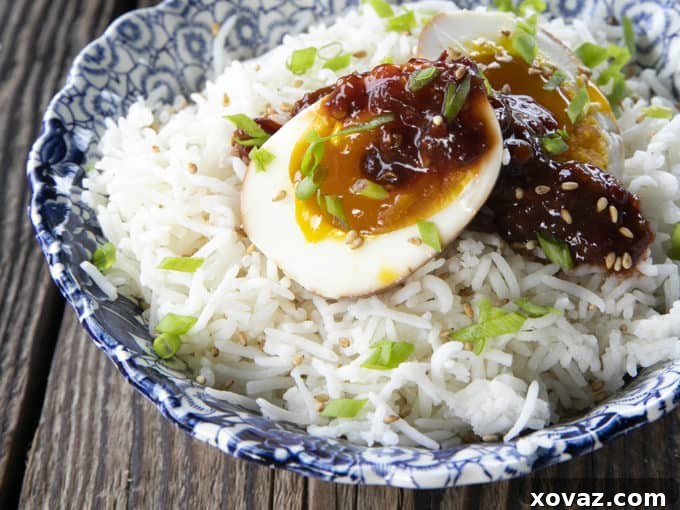
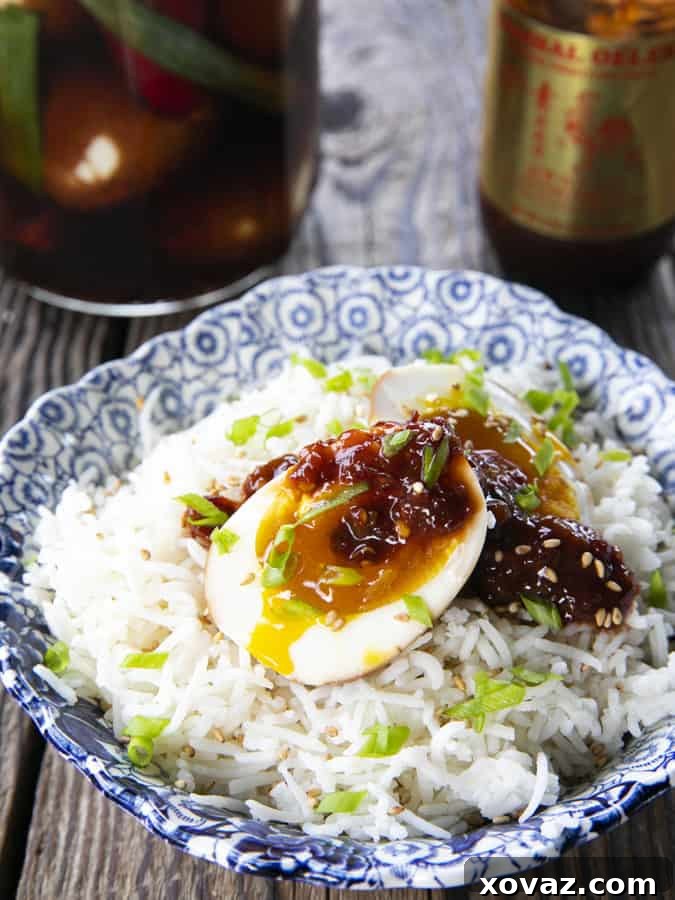
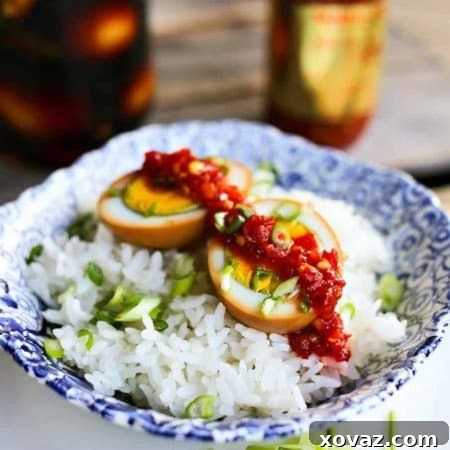
- Rice Bowls: A family favorite involves simply slicing them in half and serving them over a bed of fluffy rice. Add a dollop of sambal oelek or your preferred hot sauce, a handful of fresh green onions, and a generous serving of Asian Marinated Cucumber Salad for a quick, flavorful, and incredibly satisfying meal. This combination is our go-to for busy nights when we crave something fast yet nourishing, without the guilt of fast food.
- With Cold Beer: For the connoisseurs, you’d be hard-pressed to find a better accompaniment to a cold beer than these savory Soy Sauce Eggs. Their rich flavor pairs wonderfully.
- Light Meal Pairing: They are also tremendous served alongside Shishito Peppers for a delightful and quick light meal or appetizer.
So, how will you choose to serve your irresistible Soy Sauce Eggs? The only limit is your imagination!
Pro Tips for Perfect Soy Sauce Eggs Every Time
To ensure your Soy Sauce Eggs turn out perfectly every time, here are a few expert tips:
- Quality Ingredients: Start with fresh, high-quality eggs and good soy sauce. The better the ingredients, the better the final flavor.
- Egg Temperature: Always use refrigerated eggs when cooking in the Instant Pot for consistent timing results.
- Don’t Overcrowd: When marinating, ensure the eggs are fully submerged in the marinade. If your jar is too crowded, the eggs won’t marinate evenly. Use a wider container if needed.
- Gentle Handling: Especially with soft or medium-boiled eggs, handle them gently during peeling and marinating to prevent breakage.
- Taste and Adjust: Feel free to adjust the brown sugar or hot pepper in the marinade to suit your personal taste preferences. You can always add more spice later.
- Storage: Store marinated eggs in an airtight container with the marinade in the refrigerator for up to 3-5 days. The flavor will deepen over time.
Connect with Foodie with Family
facebook| pinterest| instagram| twitter
Val’s Soy Sauce Eggs
Soy Sauce Eggs or Ramen Eggs, as they’re sometimes known, are my favorite part of a bowl of ramen; soft, medium, or hard boiled eggs marinated in a delicious mixture of soy sauce, rice vinegar, a hint of brown sugar, green onion, ginger, garlic, and hot peppers.
Rebecca Lindamood
Cook Time: 6 mins
Ingredients
- 2 packed tablespoons brown sugar
- 4 garlic cloves, peeled and minced
- 2 green onions, trimmed and cut in half
- 1/2- inch piece of ginger, sliced thinly or smashed with a meat tenderizer to loosen up the juices
- 1/2 to 1 whole hot pepper (jalapeno, fresno, bird chile, etc… your preference), washed and thinly sliced
- 3/4 cup low sodium soy sauce
- 2 tablespoons rice vinegar
- 6 tablespoons boiling water
- 8 soft, medium, or hard boiled eggs, peeled
Instructions
- Add the brown sugar, garlic cloves, green onions, ginger, and hot pepper to a clean quart-sized jar. Pour the boiling water over the top and swirl to dissolve the sugar and release the aroma from the aromatics. Pour in the soy sauce and rice vinegar. Swirl gently. Gently place the peeled eggs into the mixture, pressing carefully to make sure they’re all submerged. Lid tightly, invert the jar a couple of times to distribute the marinade, and stash in the refrigerator. They can be enjoyed as soon as 2 hours after soaking, but for enhanced and deeper soy sauce flavor, they can be left up to 24-48 hours in the mixture.
- Serve cold, at room temperature, or gently heated. Enjoy them alone with a little sprinkling of togarashi or black pepper, or as a topping over rice, congee/juk, ramen, salad, or any other dish where an umami-packed, fragrant, soy sauce-flavored egg would be a welcome addition.
Nutrition (estimated per serving)
Calories: 187 kcal | Carbohydrates: 9g | Protein: 13g | Fat: 11g | Saturated Fat: 3g | Cholesterol: 373mg | Sodium: 160mg | Potassium: 155mg | Fiber: 1g | Sugar: 7g | Vitamin A: 599 IU | Vitamin C: 4mg | Calcium: 65mg | Iron: 1mg
Nutritional information is an estimate and provided to you as a courtesy. You should calculate the nutritional information with the actual ingredients used in your recipe using your preferred nutrition calculator.
Did you make this recipe?
Make sure to tag @foodiewithfam on Instagram and #hashtag it #foodiewithfamily so I can check it out!
Originally published May 22, 2015. Revised and republished July 2021.