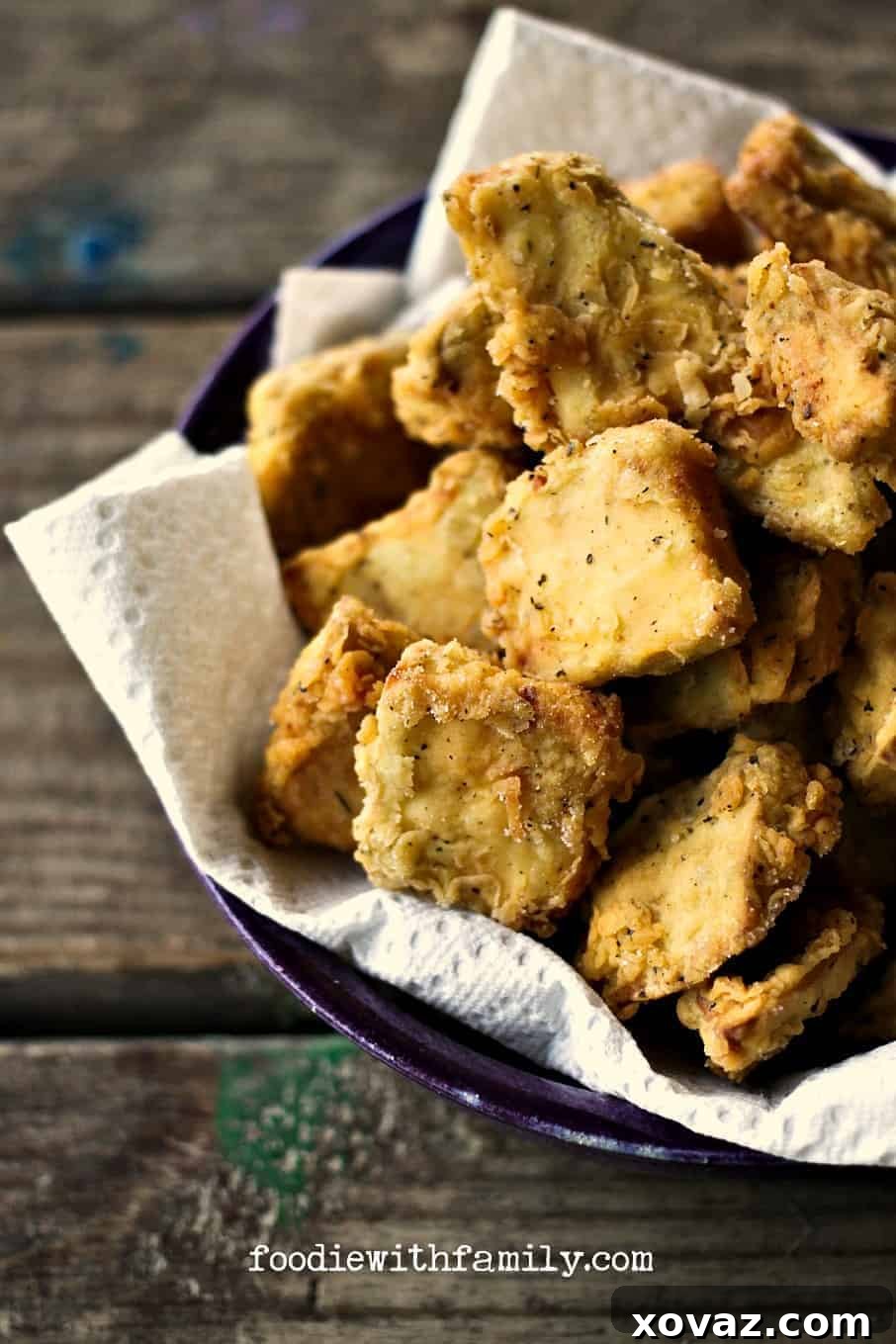
Welcome to the ultimate culinary paradox: a dish so incredibly delicious, it transforms even the staunchest eggplant skeptics into ardent admirers. We’re talking about Chicken Fried Eggplant – a revelation that promises the succulent, crispy perfection of your favorite fried chicken, but in a surprisingly delightful vegetable form. If you’ve ever dismissed eggplant as bland, rubbery, or simply not for you, prepare to have your perceptions delightfully shattered. This recipe isn’t just good; it’s a game-changer, designed to make you crave eggplant in a way you never thought possible.
My husband, whom I affectionately call my “Evil Genius” in the kitchen, possesses an extraordinary talent for cooking. Year after year, I eagerly anticipate my birthday dinner, a tradition highlighted by his legendary Extra Crispy Fried Chicken Fingers. His ability to transform simple ingredients into unforgettable meals is truly something to behold. This year, however, presented a unique challenge and an unexpected triumph.
It was my birthday, and after picking up our weekly CSA share, I returned home, two rather imposing eggplants in tow. “Well, there are two giant eggplants in our share this week,” I announced, a hint of resignation in my voice. “Should I just stew them or something later?” Before I could finish, my husband, ever the improviser, responded with enthusiasm, “The oil’s already hot! Let’s fry ’em!”
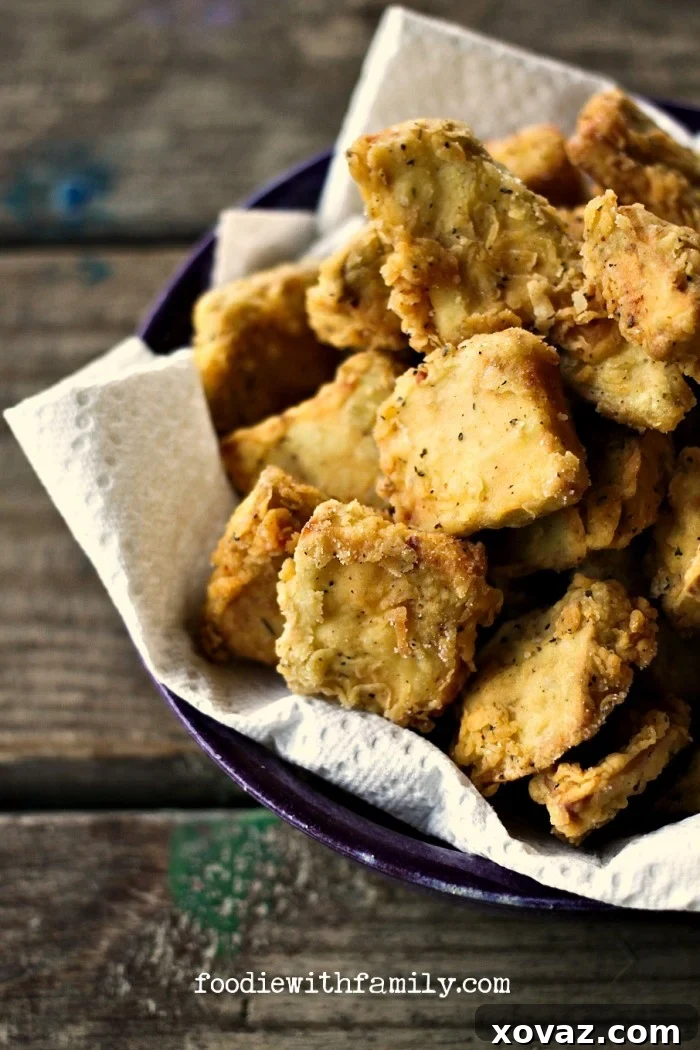
He was already in the zone, with his precise dredging station set up for our planned chicken feast: a bowl of perfectly seasoned flour beside another bowl holding a rich milk and egg mixture. Without missing a beat, he grabbed the eggplants, peeled them with practiced ease, and cut them into generous 1 1/2-inch cubes. The assembly line began: a swift toss in the seasoned flour, a quick dip in the milk and egg, back into the flour for a second coating, and finally, into the shimmering hot oil. Just about eight minutes later, those humble eggplant cubes emerged transformed: golden, incredibly crispy, and utterly perfect. The texture was akin to the most succulent fried chicken, offering a delightful chewiness encased in an irresistible crunch, with the subtle, earthy sweetness of eggplant shining through. It was a revelation, a dish that instantly moved from an experiment to a highly anticipated staple.
And here’s the crucial confession: I typically find eggplant unappealing. It’s often a textural issue for me—that spongy, sometimes slimy quality simply doesn’t “ding my chimes,” as I like to say. But this Chicken Fried Eggplant, courtesy of my brilliant Evil Genius, is nothing short of fan-flippin’-tastic. Seriously, I can’t get enough of it. This means no more cringing when I see “3 pounds of eggplant” on my CSA grab list. This means I’ve discovered a preparation that makes me actually *crave* eggplant. My husband, people, is truly exceptional in the kitchen.
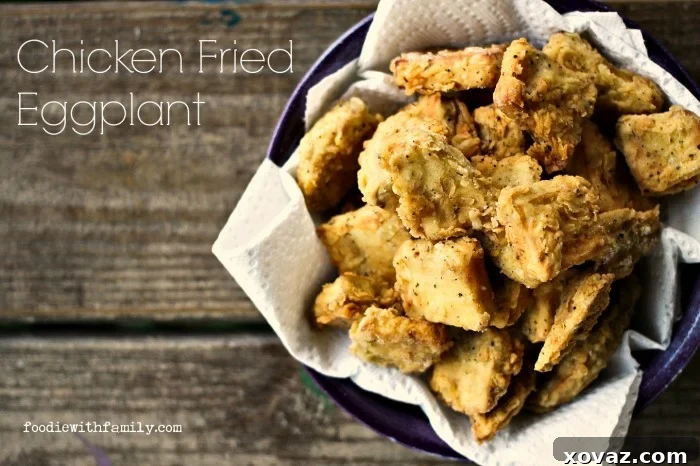
Mastering Chicken Fried Eggplant: A Step-by-Step Guide
One of the beauties of this Chicken Fried Eggplant recipe is its simplicity. My Evil Genius doesn’t believe in fussing with salting or soaking the eggplant beforehand. For this application, the only preparation you truly need is to peel the eggplant and cut it into the desired bite-sized pieces. This streamlined approach allows the natural flavor of the eggplant to shine, complemented by the crispy coating.
Essential Tools and Setup
While we swear by a deep-fryer for consistency and convenience, a deep-fryer is by no means a necessity. If you don’t have one, a high-sided, heavy-bottomed pan will work perfectly. Simply add about 2 inches of canola or peanut oil to the pan. The key to successful frying is temperature control. Use a reliable thermometer to maintain your oil at a steady 350°F (175°C). This optimal temperature ensures a golden, crispy crust without the eggplant becoming overly greasy or soggy.
Before you even begin to think about heating oil or dredging, the importance of mise en place cannot be overstated. “Mise en place” is a culinary term for having all your ingredients prepared and laid out in order of use. This organizational step is critical for a smooth and safe frying process, especially when dealing with hot oil. Peel and cut your eggplants into uniform bite-sized pieces. Set up your dredging station in a logical sequence: a pan of seasoned flour first, followed by a pan of the egg and milk mixture, and then a second pan of seasoned flour. Next to this station, have a clean plate ready to hold your breaded eggplant pieces before they hit the oil. Finally, line a plate or baking sheet with several layers of paper towels or newspaper and place it on the other side of your fryer or pan, ready to receive the freshly fried eggplant. Once everything is meticulously arranged, you’re ready to fire up your fryer or oil and begin the magic of dredging.
The Art of Dredging: Dry-Wet-Dry Explained
Dredging is a fundamental technique in frying, and understanding the “Dry-Wet-Dry” progression is key to achieving that coveted crispy crust. This isn’t just culinary jargon; there’s solid reasoning behind it. The initial dip into the dry ingredients (seasoned flour) creates a slightly tacky, uniform surface on the eggplant. This provides a perfect foundation for the wet mixture (egg and milk) to adhere properly. The wet layer then acts as a binder, ensuring the final coating of dry ingredients sticks firmly, creating the robust, crunchy exterior that makes this dish so irresistible. This triple-layer approach is what gives your Chicken Fried Eggplant its incredible texture.
Yes, your hands are going to get messy during this process – expect a charming coating of flour and egg mixture! But don’t fret; this is perfectly normal and even beneficial. That layer of “goo” on your hands actually offers a small, temporary layer of protection against the hot oil when you carefully lower the breaded eggplant into the fryer. It’s a natural shield. Once you’re done with the frying, a simple wash is all it takes to clean up.
Serving Suggestions and Variations
The versatility of Chicken Fried Eggplant extends to its serving options. My Evil Genius highly recommends pairing these golden bites with a creamy Homemade Ranch Dressing for a classic comfort food experience. For a surprising twist that perfectly balances savory with sweet, try them with brown sugar homemade pancake syrup. The sweet and salty combination is unexpectedly addictive. Alternatively, for those who enjoy a little heat and tang, a drizzle of Mae Ploy Sweet Chili Sauce offers a vibrant, spicy-sweet counterpoint. Consider experimenting with other dipping sauces like honey mustard, barbecue sauce, or even a spicy aioli to discover your favorite combination. These fried eggplant pieces also make an excellent side dish, a fun appetizer, or even the star of a vegetarian sandwich or wrap.
Chicken Fried Eggplant
A simple yet revolutionary recipe that transforms eggplant into a crispy, succulent dish akin to fried chicken, perfect for even the most discerning palates.
Ingredients
- 1 1/2 pounds eggplant, peeled and cut into bite-sized pieces
- 6-8 cups canola or peanut oil, for frying
- 1 egg
- 1 cup buttermilk or milk (buttermilk for best flavor)
- 2 cups all-purpose flour
- 1 Tablespoon Montreal Steak Seasoning (or generic version)
- 1 teaspoon kosher salt
- 1 teaspoon fresh coarse ground black pepper
- 3/4 teaspoon MSG (strictly optional; omit if you have an aversion or sensitivity)
- 1/2 teaspoon paprika
- 1/2 teaspoon garlic powder (preferably granulated garlic)
- 1/2 teaspoon onion powder (preferably granulated onion)
- Additional salt for sprinkling, after frying
Instructions
- In a large bowl, thoroughly mix together the flour, steak seasoning, salt, pepper, MSG (if using), paprika, garlic, and onion powder with a fork or whisk. Divide this seasoned flour mixture evenly between two pie plates or shallow cake pans. Line a separate pan or cooling rack with several layers of paper towels or newspaper, and set it aside.
- Pour the canola or peanut oil into a large, deep, heavy-bottomed pan (or your preferred frying apparatus like a deep-fryer) over medium to medium-high heat. When deep-frying on a stovetop, always adhere to the critical rule of thumb: “Never fill your pan more than halfway full of oil.” Remember that liquids expand when heated, and the oil level will rise further each time you add ingredients (the “Law of Displacement”). As my Evil Genius sagely advises, “You can’t argue with physics. It is or it isn’t.” Aim for an oil temperature of 350°F (175°C) if using a thermometer. If you don’t have one, test the oil by dipping the tip of a breaded eggplant piece into it; you should see many enthusiastic bubbles immediately forming around the edges.
- In a medium-sized mixing bowl, combine the egg and buttermilk. Whisk vigorously until thoroughly combined and smooth. Set this mixture aside next to your prepared flour stations.
- Now, prepare for the frying process. Arrange your dredging station, ideally on a counter near your stove, with the oil heating. The setup should be: one bowl of seasoned flour, followed by the bowl with the buttermilk/egg mixture, then the second bowl of seasoned flour, and finally, a clean plate to hold the coated eggplant. Choose one hand to handle the wet ingredients and the other for the dry ingredients, or simply use one hand for everything, accepting that it will get messy. Take one piece of eggplant at a time, drag it through the first bowl of seasoned flour, ensuring it is evenly coated, then gently shake off any excess. Next, dredge the floured eggplant piece through the egg/buttermilk mixture, letting any excess drip off. Finally, thoroughly dredge the wet, gooey piece through the second bowl of seasoned flour, making sure it is completely coated, and gently shake off any remaining loose flour. Place the fully coated eggplant piece on the clean plate. Repeat this process until you have enough breaded eggplant to fill your hot oil without overcrowding the pan.
- Carefully, using your “gooey” hand (which, as mentioned, provides some protection), gently slide each fully coated eggplant piece into the hot oil. Crucially, DO NOT THROW THE EGGPLANT INTO THE OIL; this is how dangerous burns occur. It is much safer and more effective to gently allow the eggplant to slide from your hand close to the oil’s surface. Your flour and egg-coated hand provides a protective barrier during this brief moment of contact.
- Once in the oil, gently stir the eggplant pieces with tongs to ensure even cooking. Allow them to cook for approximately 8-15 minutes, depending on the thickness of your eggplant cubes and the consistency of your oil temperature. If the eggplant begins to brown too quickly, slightly reduce the heat. The goal is a deep golden-brown crust and a tender, cooked interior.
- Using tongs or a slotted spoon, carefully transfer the hot, fried eggplant pieces to the towel-lined pan or cooling rack. Allow them to cool for at least 5 minutes before eating. Resist the urge to bite in immediately, as these delicious bites will be screaming hot and can cause burns. A brief cooling period allows them to firm up slightly and ensures a more pleasant eating experience.
- Repeat the dredging and frying process with the remaining eggplant, ensuring the oil temperature is maintained between batches.
- Just before serving, sprinkle the hot, freshly fried eggplant with additional kosher salt to enhance its flavor and crispness. Enjoy your new favorite way to eat eggplant!
Nutritional information provided is an estimate and serves as a courtesy. It’s recommended to calculate the precise nutritional information with the actual ingredients used in your recipe using your preferred nutrition calculator.
Did you make this recipe?
We’d love to see your creations! Make sure to tag @foodiewithfam on Instagram and use the hashtag #foodiewithfamily so we can check it out and share the love!
Pin Recipe
Share on Facebook
Disclosure: This post contains an Amazon affiliate link. If you click on it and make a purchase, I receive a small commission.