As a passionate home cook, I’ve come to accept that my family’s culinary preferences sometimes venture into the wonderfully eccentric. It’s a trait I’ve long recognized and even embraced. For instance, I vividly recall a collective birthday celebration for my five sons – aged ten, eight, six, four, and two – where we proudly served onigiri. While perfectly normal fare in Japan, our gathering was held in Western New York, a region perhaps less accustomed to rice balls wrapped in seaweed. Many of our friends were delighted to experience something new and unique, but I couldn’t help but notice the occasional sideways glance from a few parents and children, their eyes subtly scanning for the nearest exit.
The moment that truly stands out involved one guest who, upon asking about the “black stuff” encircling the rice ball, instinctively recoiled when I enthusiastically declared, “Toasted seaweed!” The onigiri, once held carefully, was inadvertently launched back onto the serving platter, skittering across the table. It was a clear, albeit comical, reminder that not everyone shares the same adventurous palate. And that’s perfectly fine; you can’t win them all over to the joys of nori.
This memorable incident served as a valuable lesson. Since then, I’ve become a bit more mindful, shall we say, about tailoring my culinary offerings to my audience. It’s a strategy that generally works quite well, ensuring everyone feels comfortable and excited about the food presented.
However, this past weekend, I decided to test the waters with a dish I personally adore, yet harbored secret doubts about its universal appeal. I posed a simple question on the Foodie With Family Facebook page:
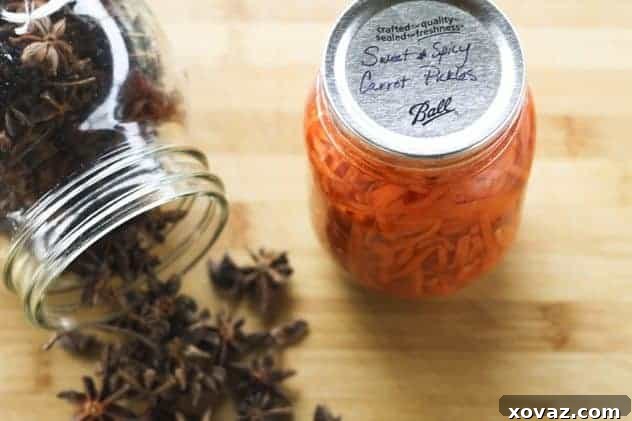
“I have a question for you all. I’m positively addicted to these sweet and spicy pickled julienned carrots I make… I put them on slacker sushi bowls, on banh mi, on other sandwiches, on salads, in homemade sushi. Are any of you out there interested in the recipe or is that too weirdo for you?”
Honestly, I fully expected the question to be met with silence – a digital tumbleweed rolling across my feed. I even questioned why I had bothered to post it in the first place. Imagine my utter astonishment when, within mere minutes, four enthusiastic responses popped up, all declaring a keen interest in the recipe. My jaw quite literally dropped. But the surprise didn’t end there. Within a few hours, twenty-four people had explicitly stated their desire for the recipe, and an additional twenty-two had liked the status update. At that point, my mouth was agape, making me feel a bit like a bewildered cod. While we frequently engage in lively discussions on Facebook, this overwhelming response was a crystal-clear sign: I need to ask you, my incredible community, more often what culinary delights you’d like me to share.
Here I was, withholding one of my absolute favorite kitchen staples, convinced it was too quirky, too niche, or simply too “weirdo” for public consumption. All this time, I could have simply asked! It’s a classic “duh” moment, isn’t it? Well, lesson learned. From now on, I promise to be more proactive in seeking your input. And just for the record, it turns out you’re all a bunch of wonderful food adventurers, and I wouldn’t have it any other way!
Discover the Versatility of Sweet and Spicy Pickled Carrots
Now, let’s delve into the practical side of things. Who wants to go to the effort of pickling something unless you know it’s going to be a star player in your kitchen? These gorgeous, vibrant orange strips are more than just a side dish; they’re a flavor-packed secret weapon. Think of them in the same league as candied jalapeños – offering that irresistible blend of sweetness, spice, and tanginess that elevates almost any meal. They bring a delightful crunch and a burst of bright flavor wherever they’re added. The beauty of these homemade pickled carrots lies in their incredible adaptability, transforming everyday meals into something extraordinary. They are an ideal way to add a sophisticated, global flair to your cooking with minimal effort.
The act of pickling, a time-honored method of food preservation, not only extends the life of vegetables but also imbues them with complex flavors. Our sweet and spicy Asian-style pickled carrots offer a fantastic balance that hits all the right notes: the subtle sweetness from sugar, the sharp tang of vinegar, and the intriguing warmth of ginger and red pepper flakes. This flavor profile makes them a versatile condiment that you’ll reach for again and again. Beyond their delicious taste, pickling also enhances the texture, leaving the carrots crisp-tender, providing a delightful contrast in many dishes.
Here are just a few inspiring ideas for incorporating these delectable pickled carrots into your culinary repertoire:
- **Elevate Your Bibimbap:** This classic Korean mixed rice dish truly benefits from the addition of sweet and spicy pickled carrots. Their vibrant flavor and satisfying crunch provide a wonderful counterpoint to the rich rice, savory meat (or tofu), and assorted vegetables, bringing an authentic and dynamic element to every spoonful.
- **Transform Slacker Sushi Bowls:** Imagine a deconstructed sushi roll in a bowl. Start with rice, drizzled with a delicious sushi dressing. Then, pile on these fantastic pickled carrots, along with your choice of protein like shrimp, tuna, or salmon, crisp cucumber cubes, creamy cream cheese (a brilliant addition we credit to Rebecca of Ezra Pound Cake and her sister!), fresh green onions, a dab of wasabi, a splash of soy sauce, crumbled nori, and a sprinkle of sesame seeds. It’s a quick, easy, and endlessly customizable meal that packs all the flavor of your favorite sushi without the fuss of rolling.
- **Upgrade Sandwiches and Wraps:** These spicy, sweet, and tender-crisp carrot sticks are an absolute game-changer for sandwiches. Whether you’re crafting an authentic homemade bánh mì, a simple turkey sandwich, or chopping them into egg, chicken, or tuna salad, they add an incredible depth of flavor and texture. They cut through richness and add a delightful zest that makes every bite memorable.
- **Jazz Up Salads:** Forget boring salads! Toss a generous handful of these pickled carrots into your next green salad. For an extra layer of crunch and Asian-inspired goodness, add a fistful of chow mein noodles before drizzling everything with a vibrant sesame vinaigrette. You’ll be amazed at how such a simple addition can completely transform your salad experience into a vibrant and exciting meal.
- **Boost Summer Rolls or Spring Rolls:** If you appreciate the fresh, light, and flavorful nature of summer and spring rolls, then these pickled carrots are a must-add ingredient. They contribute a mega punch of both flavor and texture, perfectly complementing the fresh herbs, vermicelli, and protein typically found in these delicious wraps. Their tanginess and subtle heat will make your homemade rolls truly stand out.
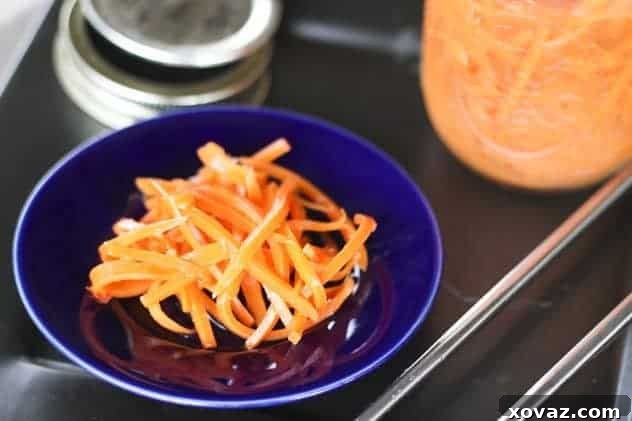
- **Simply Snack on Them:** Sometimes, the best way to enjoy these pickled carrots is all by themselves. Every now and then, I find myself reaching into the fridge for a jar, grabbing a pair of chopsticks, and simply nibbling on these delightful strips. They offer a satisfying crunch and a burst of flavor that’s perfect for a quick, wholesome, and incredibly tasty snack. It’s often exactly what I need to refresh my palate and satisfy a craving.
Important Cooking Notes for Perfect Pickled Carrots
- **Preparation of Carrots – Julienning vs. Peeling:** The recipe instructs you to julienne the carrots, which means cutting them into long, thin matchstick-sized strips. This method creates a polished look and a uniform texture that tucks neatly into dishes like sushi bowls and sandwiches. If you own a mandoline slicer, it will make this task quick and easy, yielding perfectly consistent strips. However, if you don’t have a mandoline or find julienning too time-consuming, don’t despair! You can achieve a similar effect by using a simple vegetable peeler to peel thin, long strips from the carrots. While these strips might not be as uniformly shaped as those from a mandoline, they will still taste absolutely every bit as delicious and offer a delightful texture. The key is to get them thin enough to absorb the pickling liquid effectively.
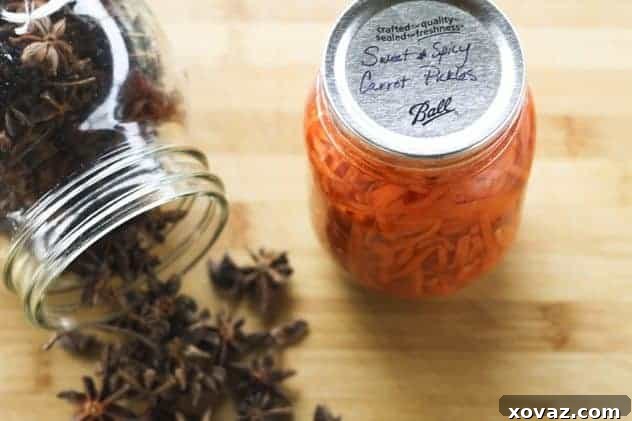
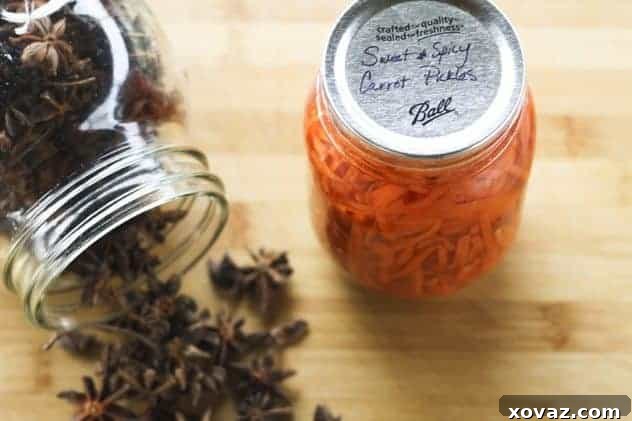
- **The Magic of Star Anise:** Please, whatever you do, do not be tempted to omit the star anise from this recipe. I understand that star anise has a distinct, strong flavor, and not everyone is a fan (my husband, for example, actively dislikes it in most contexts). However, in this particular recipe, star anise performs a culinary miracle. It imparts a unique, almost indescribable “je ne sais quoi” – a subtle depth and aromatic complexity that truly elevates the overall flavor profile of the pickled carrots. It doesn’t overpower; rather, it provides an underlying layer of warmth and spice that makes these carrots truly special. Trust me on this one; just give them a try! You might find yourself, like my husband, loving what they do here despite your usual reservations.
Sweet and Spicy Asian Style Pickled Carrots
By Rebecca Lindamood
These simple-to-make pickled carrot strips are sweet, spicy, tangy, and wonderfully crisp-tender. They offer a vibrant burst of flavor that can transform everyday meals. Perfect for enhancing sandwiches, bibimbap, sushi rice bowls, or even as a delightful snack straight from the jar, you’ll find yourself wanting to keep a continuous supply on hand!
Ingredients
- 2 pounds of peeled carrots, julienned (or use a vegetable peeler for long thin strips)
- 1 1/2 cups cider vinegar
- 1 1/2 cups water
- 1/2 cup rice vinegar
- 3 whole star anise
- 3/4 cup raw or granulated sugar
- 1 tablespoon crushed red pepper flakes
- 3 tablespoons minced fresh ginger root
- 1 clove garlic, peeled and minced
- 1 teaspoon kosher salt
Instructions
- Clean and sterilize 3 pint jars, lids, and rings. (For detailed sterilization instructions, consult reliable canning resources.)
- In a stainless steel or other non-reactive pot, combine the cider vinegar, water, rice vinegar, star anise, sugar, crushed red pepper flakes, fresh ginger root, minced garlic, and kosher salt. Bring this mixture to a boil, stirring gently until the sugar completely dissolves. Once boiling, use a slotted spoon to carefully remove the star anise pods and distribute them evenly among the sterilized jars.
- Add the prepared julienned carrot sticks to the boiling brine. Allow the liquid to return to a boil, which should take approximately 2 minutes. Immediately turn off the heat. Using tongs or a slotted spoon, divide the hot carrot sticks evenly among the jars, packing them gently to ensure all fit. Ladle the hot brine over the carrot sticks, making sure they are fully submerged. To release any trapped air bubbles, insert a sterile chopstick or knife into the jars, gently moving it around. Top up with more brine if necessary to keep the carrots covered.
- Moisten a clean paper towel with vinegar and wipe the rims of the jars thoroughly to ensure a clean sealing surface. Position a lid on top of each jar and screw on the rings to “fingertip tightness” – avoid over-tightening, as this can prevent proper sealing during processing.
- Carefully place the filled jars onto a rack within a canner. Add hot tap water to the canner, ensuring the water level covers the tops of the jars by at least one inch. Cover the pot with its lid. Bring the water to a full, rolling boil and process the jars for 10 minutes. After 10 minutes, turn off the heat, but keep the cover in place and allow the jars to rest undisturbed in the hot water for an additional 5 minutes. Following this resting period, carefully transfer the jars to a cooling rack or a towel-lined counter. Let them cool completely, undisturbed, for 24 hours.
- After 24 hours, check the seals. A properly sealed jar will have a lid that is slightly sunken in and will not “pop” up when pressed lightly with a finger. If a lid is domed or pops back when pressed, the jar did not seal correctly and should be stored in the refrigerator for immediate use.
- For jars with good seals, wipe them down, remove the rings, and label clearly. Store the jars in a cool, dark place for optimal freshness for up to one year.
Nutritional information provided is an estimate and should be calculated with the actual ingredients used in your recipe using your preferred nutrition calculator.
Did you make this recipe?
We’d love to see your creations! Tag @foodiewithfam on Instagram and use the hashtag #foodiewithfamily so we can admire your delicious results!