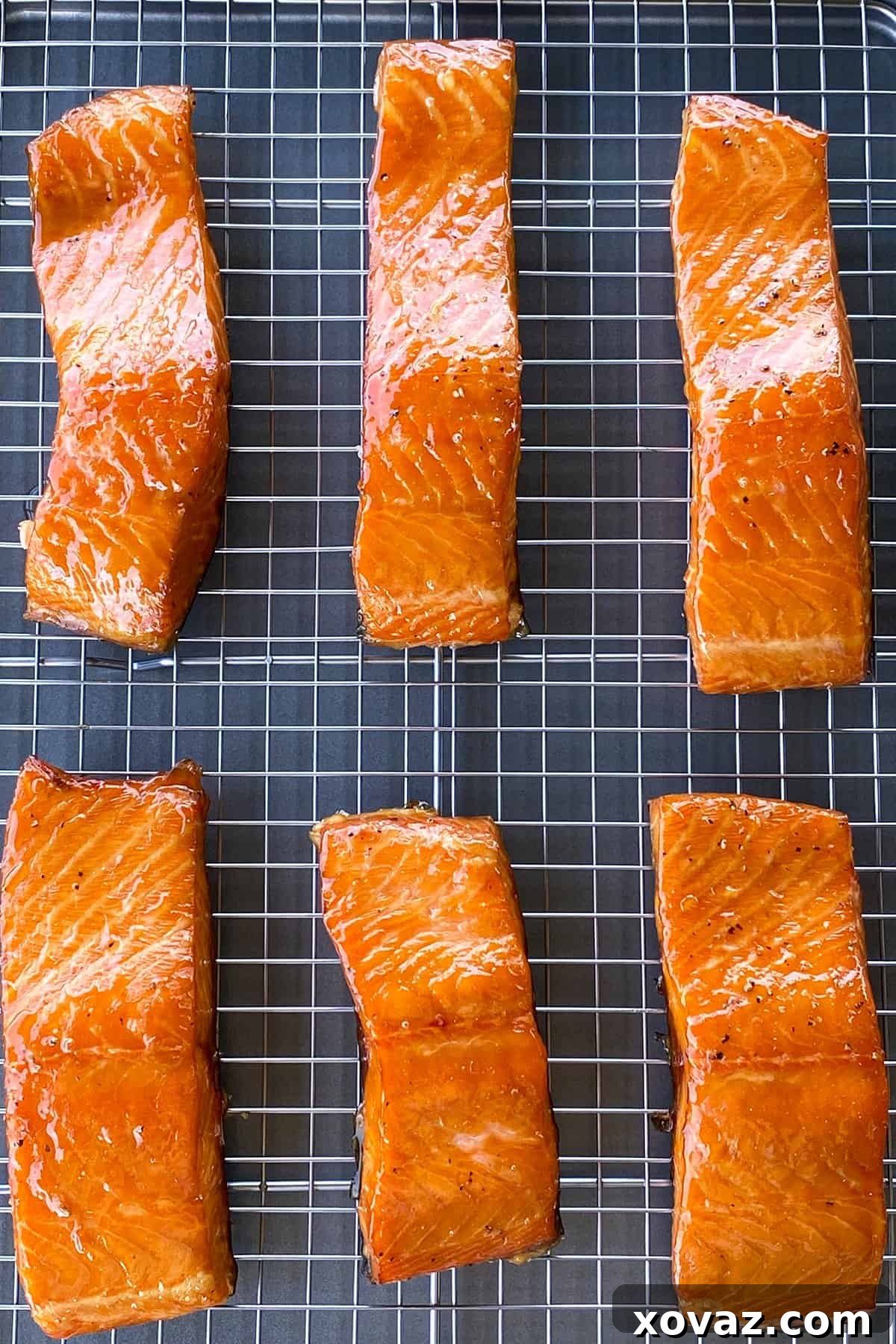
Master the Art of Homemade Smoked Salmon: Your Ultimate Guide
Embark on a culinary adventure with this definitive, step-by-step guide to smoking salmon at home. Whether you’re using freshly caught fish or a prime fillet from your local grocery store, this recipe is designed to be incredibly easy for beginners yet yields results that rival the finest gourmet smoked salmon you’ve ever tasted. Prepare to transform your kitchen into a haven of smoky perfection.
Imagine a generous slab of perfectly smoked salmon, its vibrant color and delicate flakes ready to elevate your favorite dishes. From classic cream cheese-laden bagels to innovative creations like our Smoked Salmon Pasta Salad or Smoked Salmon Cucumber Pizza, learning to smoke your own salmon opens up a world of exquisite possibilities. Get ready to impress yourself and everyone lucky enough to share in your delicious creation.
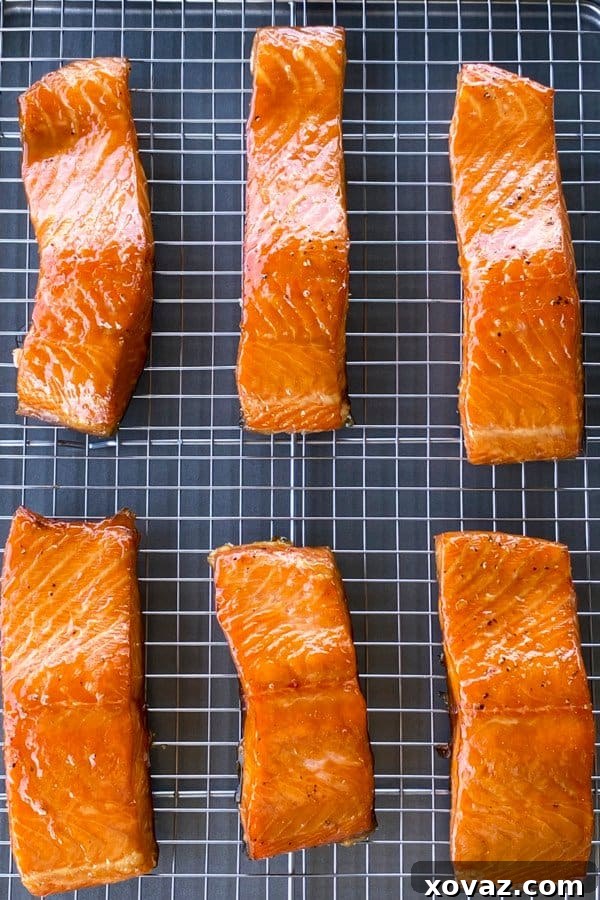
If the idea of smoking fish at home seems daunting, cast those fears aside! I’m here to demystify the process and prove that anyone can achieve incredible results. While it’s true that smoking salmon involves a few more steps than simply grilling a fillet, each stage is straightforward, and the majority of the time is hands-off, dedicated to the magic of brining in your refrigerator.
For those new to the world of home smoking, I highly recommend reading through this entire guide. Understanding the ‘why’ behind each step will empower you and ensure your success. Experienced smokers, however, can feel free to jump directly to the detailed recipe instructions.
Why Smoke Salmon at Home? The Gourmet Difference
There’s a distinct satisfaction and undeniable flavor advantage to homemade smoked salmon. Beyond the sheer joy of creating something exceptional in your own backyard, you gain complete control over the quality of ingredients, the intensity of the smoke, and the perfect balance of sweetness and saltiness. Store-bought options, while convenient, often come with a premium price tag and lack the fresh, nuanced flavor profile that only a homemade batch can deliver. Plus, think of the compliments you’ll receive!
The Journey to Perfect Smoked Salmon: An Overview
Achieving succulent, flavorful smoked salmon involves a few critical stages, each contributing to the final masterpiece. While the total process takes some time, the active preparation is minimal. Here’s a quick glance at what’s involved:
- **Prepare the Salmon:** Start by ensuring your salmon fillets are pin-bone free. If working with a large piece, portion it into manageable, roughly 3-inch wide sections.
- **Craft the Brine:** Whisk together a simple yet potent brine of water, salt, sugar, and aromatics in a suitable container.
- **Brine the Fish:** Submerge the salmon fillets in the brine and refrigerate them for 4 to 8 hours, allowing the flavors to penetrate and the texture to improve.
- **Rinse and Dry:** After brining, quickly rinse the salmon to remove excess surface salt, then pat it thoroughly dry with paper towels.
- **Form the Pellicle:** This crucial step involves air-drying the salmon in front of an electric fan for at least an hour. This creates a tacky, shiny surface that avidly absorbs smoke and seals in moisture.
- **Smoke to Perfection:** Lightly oil the skin side of the salmon and place it on your preheated smoker. Smoke slowly, brushing with maple syrup or honey, until the internal temperature reaches the desired range.
- **Cool and Store:** Transfer the finished smoked salmon to a cooling rack, brush once more, and allow it to cool completely before tightly wrapping and refrigerating or freezing.
Choosing the Right Salmon: The Foundation of Flavor
The journey to exceptional smoked salmon begins with selecting the ideal fish. The inherent high-fat content of salmon makes it a superb candidate for smoking, as it readily absorbs smoky flavors and remains moist during the cooking process. While many varieties work beautifully, a few guidelines will help you pick the best fillet:
You have a wide array of choices: King salmon, Copper River salmon, Pacific Northwest or Atlantic salmon, Sockeye salmon—whether farmed or wild, fresh or frozen. All can be excellent candidates. The most important rule of thumb is to opt for a relatively thick salmon fillet that still has its skin on. However, even these points offer some flexibility depending on your desired outcome.
If you prefer a skinless fillet, be aware that the fish is more prone to sticking to the smoker grates. In this case, diligent oiling of your grates before placing the fish is absolutely essential. Alternatively, consider using a grill basket, which provides a non-stick surface and makes handling much easier.
Should you only have access to thinner fillets, don’t despair! You can still smoke these smaller pieces successfully. The key is to monitor the internal temperature even more closely to prevent overcooking. Thinner fillets will reach their target temperature faster, so stay vigilant with your thermometer.
And what if you accidentally overcook it a bit? Don’t worry, there’s a delicious silver lining! Instead of discarding it, continue smoking it further to create incredible “salmon bacon.” This crispy, intensely smoky treat is fantastic crumbled over salads or rice bowls, offering a completely different but equally delightful experience. Instructions for making salmon bacon are included in the recipe notes below.
The Science of Brining: Unlocking Flavor and Moisture
Brining salmon is perhaps one of the simplest yet most impactful steps in the smoking process. But why is it so crucial? The answer lies in culinary science, and understanding it will elevate your salmon from good to extraordinary.
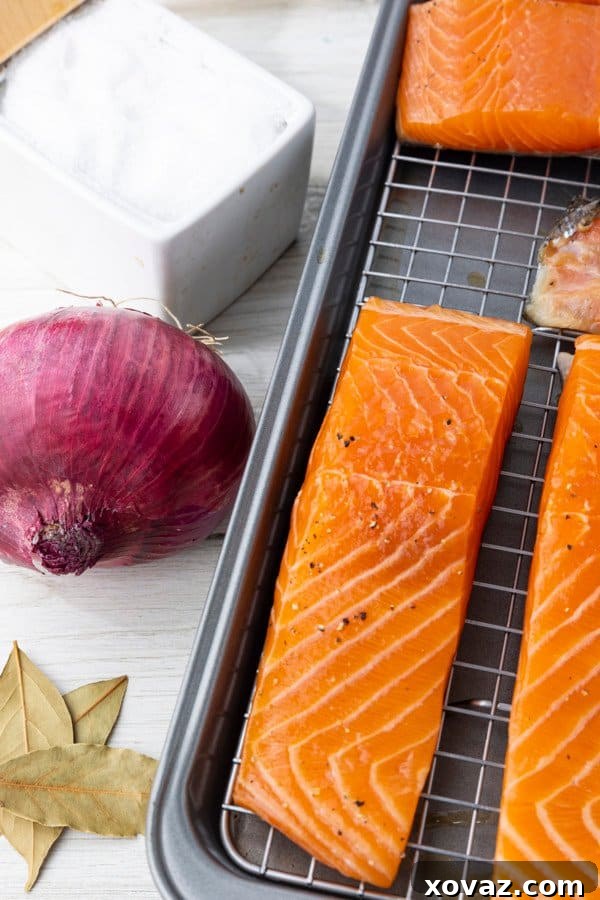
When you brine or cure salmon, you achieve two vital objectives. Firstly, the brine acts as a powerful seasoning agent, penetrating the salmon’s flesh all the way to its core. This ensures that every bite is bursting with flavor, far beyond what surface seasoning alone could accomplish. The salt, in particular, denatures the proteins, allowing the flavors of the brine to infuse deeply into the fish.
Secondly, and just as importantly, brining significantly improves the salmon’s texture and moisture retention. The salt and sugar in the brine partially dissolve muscle fibers, creating a protein gel. This gel acts like a sponge, helping the fish absorb and retain water throughout the smoking process. The sugar, being “hygroscopic,” actively attracts and binds to moisture from its environment, further contributing to the salmon’s juiciness. This not only adds a delicate sweetness but also ensures your smoked salmon remains tender and succulent, rather than dry and flaky.
In essence, brining is your secret weapon for a tastier, juicier end product. While it does require a few extra hours of patient waiting, the superior flavor and texture are undeniably worth every moment. The curing process itself is remarkably straightforward:
Simply whisk together cool water, kosher salt, and your chosen sweetener (dark brown sugar or maple syrup) until both the salt and sugar are completely dissolved. Then, stir in your desired aromatics; we typically use one sliced red onion, a tablespoon of lightly smashed black peppercorns, and occasionally a couple of fresh lemon slices for a bright citrus note. Gently slide your salmon fillets, skin side up, into the brine. Cover the container tightly with plastic wrap or a secure lid, then refrigerate for a minimum of 4 hours, or up to 8 hours for deeper flavor penetration.
For those who prefer a milder onion flavor, you can remove the onion slabs from the brine at the halfway mark. The longer the onions remain, the more pronounced their presence will be in the finished smoked salmon.
Once brining is complete, give the fish fillets a quick rinse under cold water to wash away any excess surface salt, preventing the salmon from becoming overly salty.
Developing the Perfect Pellicle: Your Salmon’s Smoky Armor
After brining and rinsing, the next critical step is to dry the salmon thoroughly. This might seem counterintuitive after you’ve worked so hard to “moisturize” it, but again, science plays a starring role here. You’ve infused the fish with wonderful seasonings, and the last thing you want is for that moisture and flavor to evaporate during smoking. To “seal” it all in, you need to develop what’s known as a pellicle.
The pellicle is a thin, glossy, lacquer-like layer that forms on the exterior of the salmon. This tacky surface is a smoke magnet, allowing the flavors from your smoker to adhere beautifully to the fish. More importantly, it acts as a protective barrier, preventing excessive moisture loss and ensuring your brined salmon stays incredibly succulent throughout the smoking process.
Achieving a perfect pellicle relies on a combination of air-flow and cooler temperatures. Here’s our foolproof method:
First, pat your rinsed fillets extensively with paper towels to remove all surface moisture. Then, arrange your brined and patted-dry salmon fillets on a wire rack set over a baking sheet. Place this setup in front of a powerful electric fan in the coolest room in your house. Yes, this sometimes means my salmon gets prime real estate in front of a fan in my air-conditioned bedroom – and it works wonders! In cooler months, any spot below 60ºF (but above freezing) with good air circulation from a fan will suffice. It’s this dynamic duo of air-flow and cool temperatures that does the trick!
There’s no need to worry about food safety during the hour or so it takes for the pellicle to form. The salt and sugar in your brine act as effective preservatives, making this a perfectly safe step. If you need to prepare ahead, you can refrigerate the sheet pan (uncovered, of course!) for up to 24 hours after your pellicle has developed. Just remember to bring the salmon out and let it sit at room temperature for about an hour before it heads to the smoker.
Selecting Your Smoker: Tools for the Task
When it comes to smoking salmon, the best advice is to utilize whatever smoker or grill you already own! The entire process becomes significantly more convenient with equipment that offers precise temperature control, such as a Traeger smoker (or any pellet grill) or an electric smoker. These devices excel at maintaining the low, consistent temperatures essential for hot smoking salmon, ideally starting around 165ºF and gradually increasing to no higher than 225ºF towards the end of the cook.
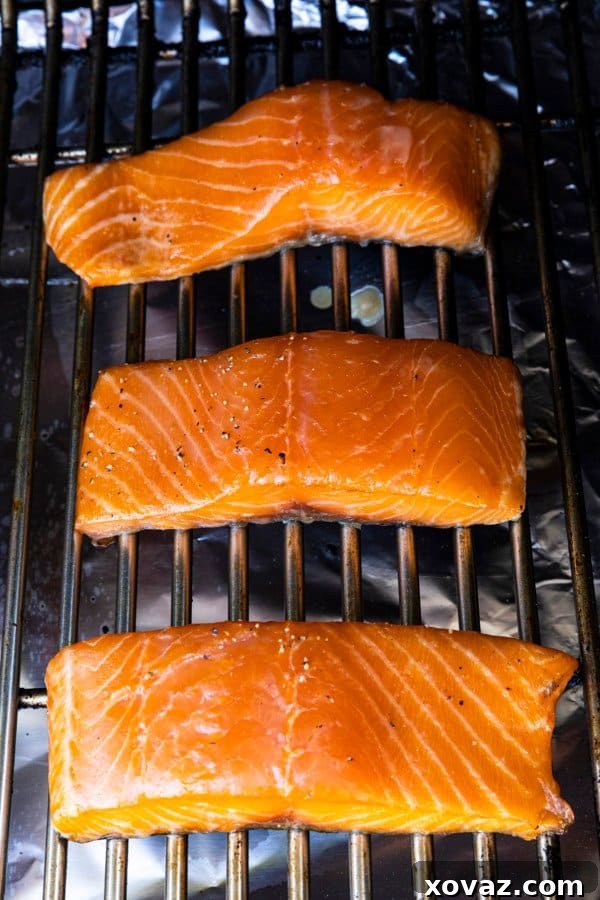
The sweet spot for the bulk of the smoking process is around 185ºF. Achieving and holding this temperature is undeniably easiest with smokers that feature digital controls or precise dial settings. These allow you to set it and, largely, forget it.
PRO TIP: Minimizing Albumin
To further enhance the appearance of your smoked salmon, I recommend positioning your fillets on your Traeger or pellet grill before it has reached its full target temperature. This allows the fish to heat up slowly and gradually with the smoker, which helps to minimize the appearance of albumin (that white, unappetizing-looking protein that sometimes surfaces during cooking).
Because we are employing a hot smoking method rather than cold smoking, you don’t necessarily need a dedicated smoker. Our hot smoked salmon recipe can be adapted for charcoal or gas grills. The main difference will be the need for more active temperature management to keep your grill within the desired low-temperature range.
If using a gas grill, you’ll need to carefully manage the burners to maintain that specific low heat. You’ll also need to incorporate a smoke box, replenishing it with wood chips periodically to ensure a continuous smoke flavor. Since smoke boxes are quite affordable, having two on hand to cycle through can be a smart move.
Regardless of your equipment, always keep a close eye on the actual temperature inside your grill or smoker. The built-in gauge might not always be perfectly accurate, especially if it hasn’t been calibrated recently.
Investing in an inexpensive oven thermometer that you can place inside the cooking chamber, or even better, a nifty probe thermometer inserted directly into the thickest part of the fish, will provide accurate readings without requiring you to constantly open the lid and release precious smoke and heat.
Mastering the Smoke: Temperature, Time, and Techniques
Smoking salmon is a “low and slow” endeavor that rewards patience. The goal is to gently cook the fish while infusing it with deep, complex smoke flavors. Here’s how to manage the process effectively:
When you first place the salmon on the smoker or grill, set your timer for one hour. The initial smoking phase should be at a consistent 165ºF. After this first hour, increase the heat to approximately 180ºF. This gradual increase helps prevent overcooking and promotes even smoking.
Generally, it takes about two hours of total smoking time to bring the salmon to an internal temperature of 130ºF. However, it’s crucial to remember that this is an estimate. Many external factors can influence the smoking duration, including the thickness and fat content of your fillets, the ambient outdoor temperature, and humidity levels. For a flakier texture, you can safely allow the internal temperature to reach closer to 140ºF without drying out the fish.
If you prefer a less intensely smoked flavor, you have the option to transfer the salmon to a pre-heated low oven after the first hour of smoking. If you choose this route, maintain your oven temperature between 185ºF and 200ºF for the remainder of the cooking time.
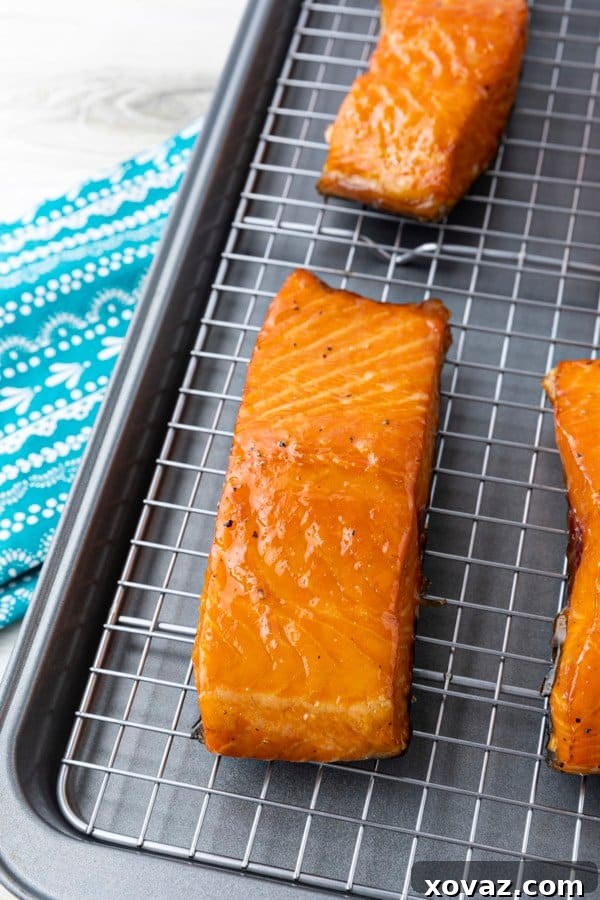
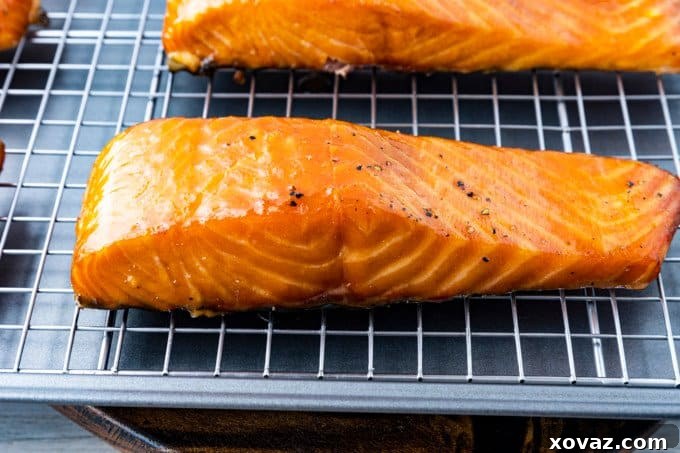
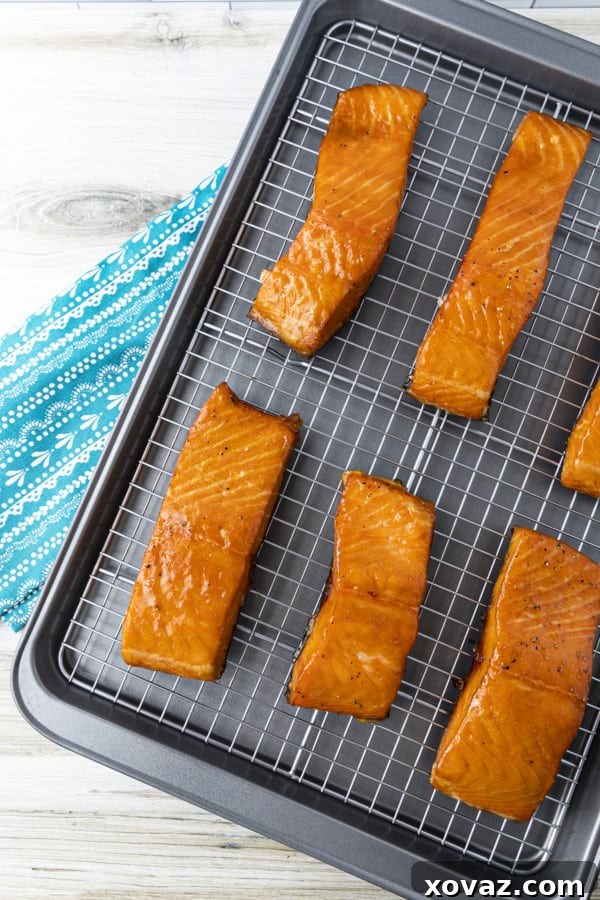
A key technique for enhancing both flavor and appearance is basting. Remember to brush your salmon fillets generously with maple syrup or honey after the first hour on the smoker or grill, and then every 60 minutes thereafter. This not only adds a lovely glaze but also contributes another layer of sweetness that beautifully complements the smoky notes.
Key Tips for Smoking Success
To ensure your smoked salmon is nothing short of perfect, keep these essential tips in mind:
-
**Understanding Albumin:** Have you ever noticed a white, cloudy substance appearing on cooked salmon? That’s albumin, a naturally occurring liquid protein in raw salmon. When exposed to heat, it coagulates into an opaque, semi-solid white mass. While completely harmless, it can look a little unappetizing and sometimes indicates the fish is cooking too aggressively, which can lead to dryness.
The long, slow, and gentle heat of our smoking method is specifically designed to minimize, if not eliminate, the visible appearance of albumin. By bringing the temperature up slowly and steadily, you reduce the chances of it surfacing. Should any stubborn albumin dare to show itself, simply swipe it away gently as you brush the fillets with maple syrup or honey during your hourly basting routine after the first uninterrupted hour of smoking.
-
**Oil the Skin, Not the Top!** I cannot stress this enough: salmon has a notorious tendency to stick to smoker grates. To prevent this, generously oil only the skin side of your salmon fillets before carefully placing them onto the grates.

Conversely, for the love of perfectly smoked fish, absolutely do not oil the top surface of the salmon! Doing so will undo all your careful work in developing that crucial pellicle layer. The pellicle is essential for smoke absorption and moisture retention; oiling it will compromise both the texture and the incredible smoky flavor of your final product.
Creative Variations: Beyond Traditional Smoked Salmon
While classic smoked salmon is a treat in itself, don’t be afraid to experiment! One popular and incredibly delicious variation is “salmon bacon.”
To make salmon bacon, simply continue smoking the salmon for a much longer period – up to 5 hours. The goal is to cook it until the salmon is quite firm to the touch and takes on a deep coral orange/brown color, appearing almost shellac-ed from the maple syrup glaze. The result is an intensely flavorful, chewy, and crispy treat that’s fantastic as a garnish or an indulgent snack.
Crumble this smoked “salmon bacon” over fresh salads, incorporate it into vibrant rice bowls, use it in sandwiches, or even add it to scrambled eggs for an unforgettable breakfast. A little goes a long way, but it truly is an extra special culinary delight!
Serving and Storage Recommendations
Once your homemade smoked salmon has cooled, the possibilities are endless! Enjoy it simply on crackers, as part of a luxurious breakfast spread with bagels and cream cheese, flaked into a pasta dish, or as a sophisticated addition to a charcuterie board. The rich, smoky flavor will elevate any meal.
To store your masterpiece, ensure the salmon is completely cool, then wrap it tightly in plastic wrap or an airtight container. It will keep beautifully in the refrigerator for up to a week. For longer storage, tightly wrap and freeze individual portions for up to a year, allowing you to enjoy your delicious homemade smoked salmon whenever a craving strikes.
The Ultimate Homemade Smoked Salmon Recipe
Crafting delicious smoked salmon at home is simpler than you think. This recipe guides you through each essential step, ensuring tender, flavorful results every time.
- Prep Time: 20 minutes
- Cook Time: 2 hours
- Yield: Approximately 40 servings (based on 5 lbs of salmon)
Equipment
- Smoker (or grill with a smoke box)
- 1 cooling rack
- 1 baking sheet
- 1 rectangular container with a tight-fitting lid (Tupperware or Gladware recommended)
- Electric fan (optional, but highly recommended for pellicle)
- Internal meat thermometer
Ingredients
Main Ingredients:
- Up to 5 lbs of fresh or thawed salmon fillets, preferably skin-on (cut crosswise into 3-inch wide pieces if starting with large fillets)
- ½ cup Maple syrup or honey, for brushing the fish as it smokes
For the Brine:
- 4 cups cool water
- 1 cup packed dark brown sugar, maple syrup, or honey
- 2 ounces kosher salt
- 1 red onion, peeled and cut into slabs
- 1 tablespoon black peppercorns, lightly smashed
- 2 bay leaves
Optional:
- 2 slices fresh lemon, about ¼-inch thick
Instructions
- **Prepare the Brine:** In a long, rectangular storage container with a tight-fitting lid, whisk together the cool water, brown sugar (or maple syrup/honey), and kosher salt until both the salt and sugar are fully dissolved.
- **Infuse the Brine:** Stir in the red onion slabs, smashed black peppercorns, and bay leaves. If using, add the lemon slices.
- **Brine the Salmon:** Gently slide the salmon fillets, skin side up, into the brine, ensuring they are fully submerged. Secure the lid tightly and refrigerate for at least 4 hours, but no longer than 8 hours.
- **Rinse and Pat Dry:** After brining, remove the salmon from the container. Quickly rinse the fillets under cold water to remove excess surface salt, then place them on a cooling rack set over a sheet pan. Pat the entire surface of the fish thoroughly dry with paper towels.
- **Form the Pellicle:** Place the sheet pan with the salmon in front of an electric fan in a relatively cool room for at least one hour, or until the surface of the fish appears shiny and feels tacky to the touch. This crucial step develops the pellicle, which helps absorb smoke and lock in moisture. At this point, you can either refrigerate the salmon (uncovered) until the following day or proceed directly to the smoker.
- **Preheat Smoker and Place Salmon:** Lightly oil the skin side of each salmon fillet. Place the fillets, skin side down, directly onto the grates of your smoker. Set your smoker’s temperature to 165ºF.
- **First Smoking Interval & Basting:** Smoke at 165ºF for 1 hour without opening the lid. After the first hour, brush the salmon generously with maple syrup or honey, then raise the smoker’s temperature to 180ºF.
- **Continue Smoking & Basting:** Continue to smoke the salmon for an additional 1 to 2 hours (for a total of 2 to 3 hours), or until the internal temperature of the salmon reaches between 130ºF and 140ºF. Brush with maple syrup or honey every 60 minutes. Use an internal meat thermometer inserted into the thickest part of the fillet to monitor temperature accurately.
- **Cool and Store:** Once the salmon reaches your desired internal temperature, carefully move the smoked fillets to a clean cooling rack. Brush once more with maple syrup or honey for a final glaze. Allow the salmon to cool completely at room temperature before wrapping it tightly in plastic wrap or placing it in an airtight container. Refrigerate for up to one week, or freeze for up to a year.
Notes
For Salmon Bacon:
If you desire a delicious salmon bacon, continue smoking the salmon for an extended period, up to 5 hours, or until the salmon is quite firm to the touch and looks shiny and deep coral orange/brown, almost “shellac-ed” from the glaze. Transfer to a cooling rack, brush once more with maple syrup or honey, and let it cool completely before wrapping tightly and refrigerating for up to a week or freezing for up to a year. Salmon bacon is excellent crumbled over salads, in rice bowls, or as a crispy snack.
Nutritional information is an estimate and provided to you as a courtesy. You should calculate the nutritional information with the actual ingredients used in your recipe using your preferred nutrition calculator.