

The Evil Genius’s Smoked Barbecue Chicken: A Masterclass in Two-Stage Grilling
There’s a certain magic that happens when an engineer steps into the kitchen, especially when that kitchen extends to the great outdoors and involves fire. My husband, a true culinary savant with a mind for precision, brings an analytical yet passionate approach to his cooking. While his kitchen vocabulary often includes terms like “matrix,” “schematic,” “equipment optimization,” and “sequence synchronization,” the universal language his food speaks is undeniably delicious. Whenever he’s inspired to craft our next meal, it’s an event I eagerly anticipate.
Just last weekend, after a trip into town for some essential lawn tractor parts, he called me with a spark of inspiration in his voice. “Hey, do you have any dinner plans tonight?” he asked, having just left the Farm & Family store. “I was thinking of grabbing some chicken and trying something new. I want to make Smoked Barbecue Chicken using a two-stage cooking process. The first stage will involve smoking it to render out some of the fat and really infuse it with that deep, smoky flavor. Then, I’ll switch it over for stage two, grilling and brushing it with sauce until it achieves perfection. What do you think?” Knowing the incredible results his methodical approach yields, my response was immediate and enthusiastic: “Sounds absolutely fantastic!”
The Engineer’s Culinary Philosophy: Precision Meets Passion
Watching him work his culinary magic is pure entertainment. He embodies a fascinating blend of characters: one part “Nutty Professor,” with seasoning salt flying like a cloud of culinary flubber, and one part “Emperor Palpatine,” as he taps his fingertips together, muttering, “Good. GOOD. It’s all going according to plan!” This meticulous attention to detail, born from his engineering background, is precisely what transforms simple ingredients into extraordinary dishes. His ability to visualize a process, understand the interaction of heat and smoke, and execute a flawless “sequence” is truly remarkable, especially when it comes to the complex art of smoked barbecue chicken.
This particular adventure in flavor showcases his innovative spirit perfectly. It’s not just about throwing chicken on a grill; it’s about a carefully calculated strategy to achieve the optimal balance of smoky tenderness and caramelized, tangy sweetness. This two-stage method is a testament to his belief that with the right “equipment” and “schematic,” you can elevate classic barbecue to an entirely new level.

The Two-Stage Process: Unveiling the Secret to Unforgettable BBQ Chicken
Stage 1: The Art of Smoking for Deep Flavor and Tenderness
The first stage of his process is where the “evil genius” truly shines. He starts with our trusty charcoal grill, carefully removing the grate on one end to create space for his chimney starter. Over the top of the chimney starter, he positions a sturdy grill basket, which acts as a holding bay for soaked wood chunks. The ingenious idea behind this setup is to strategically isolate the hot coals within the chimney, directing their heat upwards through the wood chunks. This creates a powerful, sustained plume of smoke that envelopes the chicken, slowly rendering its fat while deeply infusing every fiber with a rich, aromatic essence.
For this recipe, selecting the right wood is crucial. Hickory, mesquite, or apple wood are excellent choices, each imparting a distinct flavor profile. Hickory offers a strong, savory smoke, mesquite delivers an intense, earthy note, and apple wood provides a milder, slightly sweet fruitwood aroma. Whichever you choose, ensure the chunks are large enough not to fall through your chosen rack, and soak them in water for several minutes beforehand to ensure a slow, steady smoke rather than quick burning.
He arranged the seasoned chicken pieces on the grill rack, away from direct heat, allowing them to slowly absorb the fragrant smoke. For about two hours, the chicken smoked, gradually transforming into a beautiful golden hue, with the fat visibly beginning to render out from underneath the skin. This “low and slow” smoking phase is critical for achieving that signature tender, juicy interior and a foundational layer of smoky flavor that permeates the meat. It’s a patient process, but the payoff in depth of flavor is immeasurable.
Stage 2: Grilling to Perfection with the Signature Sauce
Once the initial smoking phase was complete, it was time for stage two: the grilling. For this, he transitioned the chicken to a low gas grill. If only one grill is available, the chicken can be temporarily removed while the charcoal grill is prepared for low direct heat. The rendered fat from the smoking process means the chicken is prone to flare-ups, so vigilance is key during this phase. He kept a close watch for about half an hour, flipping the pieces regularly to ensure even cooking and to mitigate any sudden bursts of flame.
Then began his meticulous “sequence” of sauce application. Using his father’s legendary creation, The Evil Genius Sr.’s Slathering Barbecue Sauce, he worked systematically from one end of the grill to the other, brushing each piece generously. Immediately after saucing all pieces on one side, he would flip them and restart the sequence, brushing the other side. This constant brushing and flipping continued for about 10 minutes, allowing the sauce to caramelize into a thick, sticky, tangy, and utterly perfect mahogany lacquer. This stage not only adds an incredible layer of flavor but also creates that desirable crispy, sweet, and slightly spicy crust that defines truly exceptional barbecue chicken.
The Irresistible Result: Smoky, Sticky, and Utterly Delicious
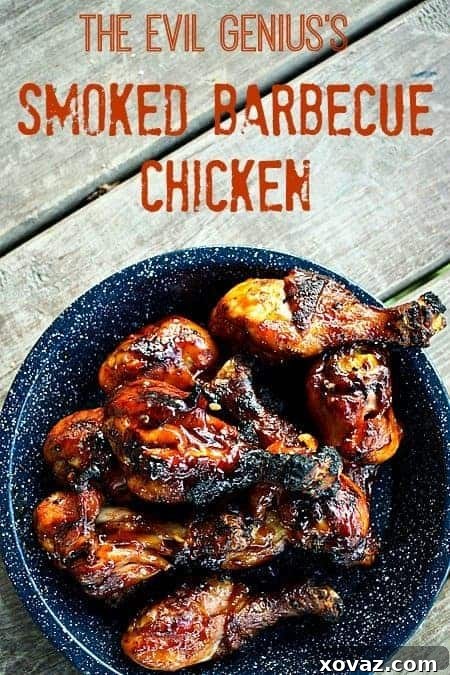
The culmination of this two-stage, engineer-approved process is nothing short of spectacular. The chicken emerges from the grill incredibly tender and moist on the inside, infused with an irresistible smokiness. The exterior boasts a perfectly sticky, tangy, sweet, and subtly spicy caramelized crust. It’s the kind of barbecue chicken that makes you want to keep eating, not just to satisfy hunger, but to prolong the delightful symphony of flavors dancing on your palate. Every bite is a testament to the meticulous planning and execution that went into its creation – a true masterpiece of “Smoked Barbecue Chicken.”
Mastering the Smoke & Grill: Essential Cook’s Notes for Success
To recreate this incredible “Two-Stage Smoked Barbecue Chicken” at home, pay close attention to these vital notes:
- Chimney Starter Handle: Always use a chimney starter with a wooden or metal handle. The last thing you want is to infuse your delicious chicken with the unappetizing aroma of melting plastic. Safety and flavor integrity are paramount.
- One Grill or Two: While we utilize both a gas and a charcoal grill for this process, it’s absolutely not a requirement. You can achieve fantastic results with just one grill. The key is to ensure your chimney starter can sit securely inside the grill while allowing the lid to close completely. This might mean temporarily removing a grill rack. Adaptability is an engineer’s strength!
- Smoking Vigilance (or lack thereof): During the smoking phase, you don’t need to hover over the chicken constantly. The low, indirect heat and steady smoke allow for a more relaxed approach. Simply make your way back to the grill every 20-30 minutes to rotate the chicken pieces. This ensures that each piece receives an equal amount of smoke and proximity to the heat source, leading to evenly smoked and tender chicken.
- Grilling Vigilance: Absolute Necessity: Once you move to the second stage of cooking—the direct grilling and saucing—your full attention is required. Because the smoking process has already rendered a significant amount of fat from the chicken, it is highly prone to flare-ups when exposed to direct flame or hot coals, even at a low setting. You must be on standby, ready to shift pieces or close the lid momentarily to control any flames. When you begin brushing on the barbecue sauce, it becomes a continuous cycle of brushing, flipping, and repeating. This intensive 10-minute sequence is crucial for building those layers of caramelized sauce, creating that enviable sticky, mahogany finish. Do not walk away during this critical phase!
By following these detailed notes, you’re well on your way to mastering the art of “Smoked Barbecue Chicken” and impressing everyone with your grilling prowess.
Choosing Your Chicken: The Foundation of Flavor
For this two-stage smoking and grilling method, the cut of chicken makes a difference. We highly recommend using bone-in, skin-on chicken thighs or drumsticks, or a combination of both. The bone helps to conduct heat slowly and evenly, contributing to a more tender and juicy interior. The skin is essential for protecting the meat during the long smoking process and provides a canvas for that glorious caramelized barbecue sauce in the grilling stage. While you can adapt this recipe for other cuts, thighs and drumsticks offer the best balance of fat, flavor, and resilience to the dual cooking temperatures.
Beyond the Recipe: Tips for BBQ Mastery
Elevating your barbecue game involves more than just following instructions; it’s about understanding the nuances of grilling. Always use a reliable meat thermometer to ensure your chicken reaches a safe internal temperature (165°F or 74°C). While the visual cues are helpful, a thermometer guarantees safety and prevents overcooking. Don’t rush the seasoning process; a good seasoning salt applied liberally and given a little time to adhere can make a significant impact. Finally, once your “Smoked Barbecue Chicken” is off the grill, allow it to rest for a few minutes before serving. This allows the juices to redistribute, resulting in an even more succulent experience.
The Evil Genius Smoked Barbecue Chicken

Rebecca Lindamood
Pin Recipe
Ingredients
Ingredients needed:
- bone-in skin-on chicken thighs or drumsticks, or a combination of both
- seasoning salt
- barbecue sauce
Equipment needed:
- chimney style charcoal starter that does NOT have a meltable handle
- lump charcoal or briquettes
- grill basket top half or a small toaster oven rack
- chunks of hickory, mesquite, or apple wood, soaked in water for several minutes (be sure the chunks are large enough that they will not fall through the rack you use)
- a large gas or charcoal grill (or both!)
Instructions
-
Sprinkle the chicken pieces moderately on all sides with seasoning salt. Set aside.
To Smoke the Chicken:
-
Set the charcoal starter to the side in an unheated grill and close the lid to be sure you can. If necessary, remove one grill rack from the grill so it can set down further into the grill and the lid can close completely. Fill the chimney starter half full with lump or briquette charcoal. Wad the underside of the chimney starter with a paper grocery bag and light it. Put it in the grill in the place you determined would be best. Let the charcoal turn glowing and white before placing the rack on top and positioning the soaked wood chunks over it.
-
Arrange the chicken pieces on the grill to the side of the chimney starter without touching it and close the grill. The smoke stack on the grill should be about 3/4 closed. Open the grill and rotate the chicken pieces every 20 minutes to ensure that each one receives equal smoke, smoking for a total of 2 hours. If you find your hardwood chunks deplete too quickly, you can add another in the process. We did not need to do so.
-
If you are lucky enough to have a separate grill, heat it to low now. If you only have the one grill, remove the chicken and heat it to low or build a bed of low coals in the grill. Place the chicken on the racks and grill for 20 minutes, flipping as necessary to stop flare-ups from the fat that rendered out while smoking. After 20 minutes, work in a sequence and brush with your favourite barbecue sauce. Immediately after brushing all the pieces, flip the chicken and begin your sequence again, brushing each piece. Continue the flip-and-brush sequence for 10 minutes, until you have a thick, sticky layer of caramelized sauce. When it reaches this stage, quickly transfer from the grill to a serving plate.
Nutritional information is an estimate and provided to you as a courtesy. You should calculate the nutritional information with the actual ingredients used in your recipe using your preferred nutrition calculator.
Did you make this recipe?
Make sure to tag @foodiewithfam on Instagram and #hashtag it #foodiewithfamily so I can check it out!
Pin Recipe
Share on Facebook