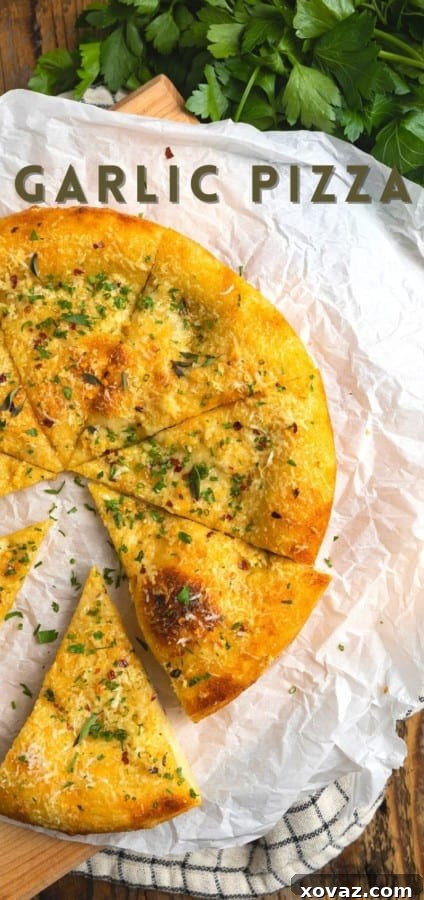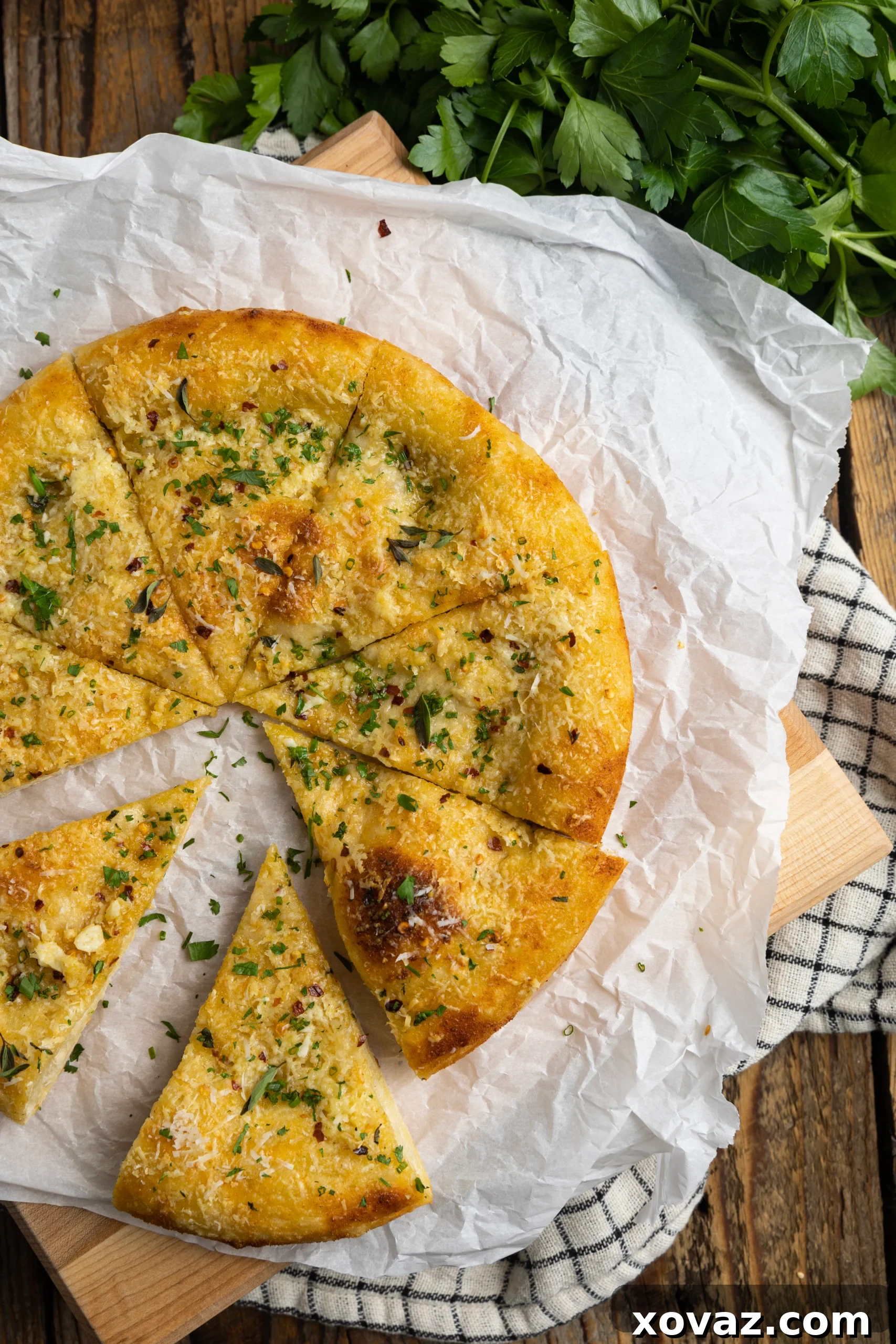
Garlic Pizza: The Ultimate Simple & Savory Delight
There are some dishes that simply transcend their humble ingredients, offering an experience far greater than the sum of their parts. Garlic Pizza is undeniably one of them. With its mesmerizing aroma, a crust that achieves the perfect balance of crispy char and satisfying chew, and a deeply savory flavor profile, this easy-to-make pizza will quickly become a beloved staple in your culinary repertoire. It’s a testament to the idea that sometimes, the simplest recipes yield the most profound deliciousness.
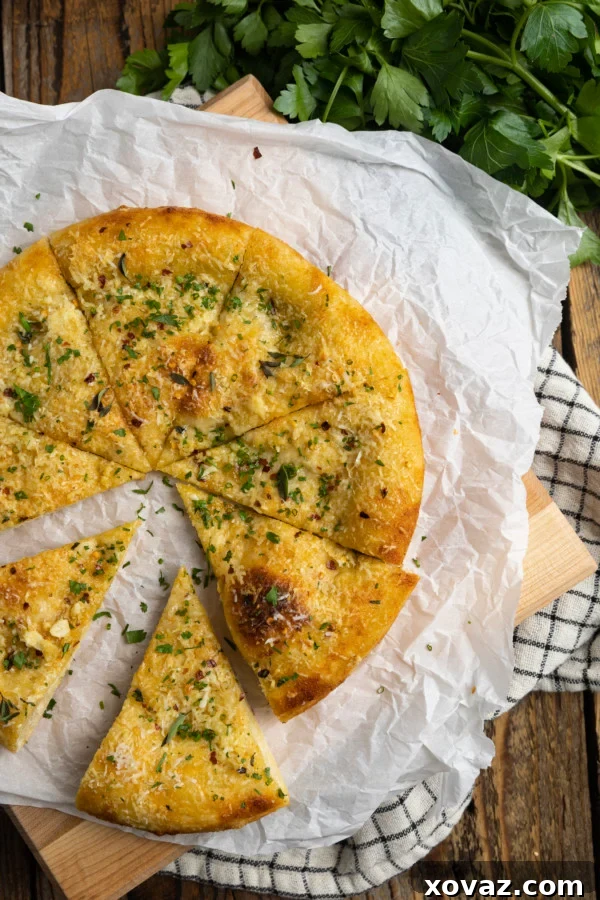
What makes garlic pizza so perfect in its simplicity? It begins with a foundational canvas of fresh pizza dough, lovingly brushed with a potent homemade garlic oil, generously adorned with freshly grated Parmesan cheese, and finished with a subtle hint of crushed red pepper flakes for a gentle warmth. This combination of textures and flavors bakes into a bubbly, chewy, and utterly irresistible creation that boasts a wonderfully crisp bottom and a beautifully browned top.
Once out of the oven, a final flourish of fresh Parmesan and a scattering of vibrant chopped herbs elevate this dish from merely delicious to truly sublime. If you’re anything like us, this is the moment you’ll likely find yourself swooning over the sheer perfection of it all. It’s a dish that feels both comforting and sophisticated, making it ideal for a casual weeknight dinner or an impressive offering for guests.
Why You’ll Love This Easy Garlic Pizza Recipe
Beyond its simple preparation and incredible taste, this garlic pizza offers a wealth of reasons to fall in love with it:
- Uncomplicated Elegance: This recipe proves that you don’t need a long list of fancy ingredients or complex techniques to create something truly spectacular. The magic lies in the quality of a few core components and the love with which they’re combined.
- Versatility Personified: While delicious enough to be a meal in itself, particularly when paired with a fresh arugula salad, this white pizza also serves as an outstanding accompaniment. Imagine it alongside a hearty lasagna soup, the rich flavors of Tuscan Braised Beef (peposo), or a comforting tortellini vegetable soup. Its neutral yet robust flavor profile complements a wide array of Italian-inspired dishes and beyond.
- Crowd-Pleaser Guaranteed: Hosting a pizza night or a potluck? This garlic pizza is a guaranteed hit. Its universal appeal, combined with its ease of preparation, makes it a stress-free option that will leave everyone asking for the recipe.
- Quick & Satisfying: From prep to plate, this pizza comes together remarkably fast, making it an excellent choice for those busy evenings when you crave something homemade and satisfying without spending hours in the kitchen.
- Naturally Vegetarian (and easily Vegan): This recipe naturally caters to vegetarian diets and can be effortlessly adapted for a vegan lifestyle with a simple cheese swap, making it inclusive for various dietary preferences.
Is it Garlic Bread or Pizza? Defining Garlic Pizza Bread
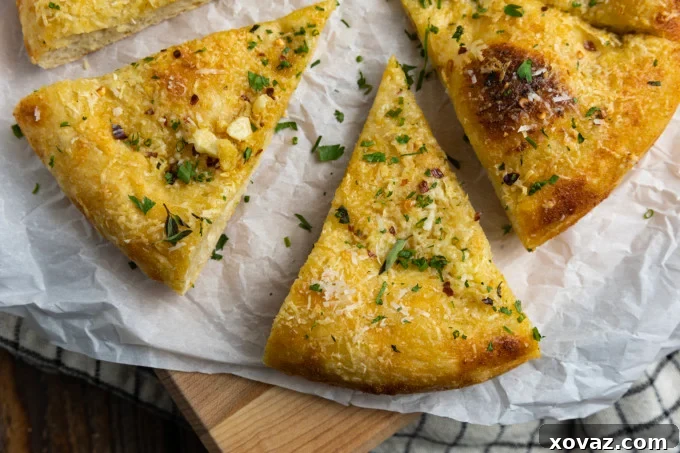
One of the delightful questions that often arises with this dish is: Is it a garlic bread recipe? Or is it pizza? The answer, delightfully, is both! This creation sits perfectly in the sweet spot between classic garlic bread and a traditional pizza, pulling the best elements from each. It’s a wonderfully flavorful garlic bread pizza, or garlic pizza bread, offering a unique texture and taste that distinguishes it from either parent dish.
Unlike a thick, bready garlic loaf, this version leverages a thin, crisp pizza crust, allowing the aromatic garlic oil and savory cheese to truly shine. It’s lighter than many traditional pizzas but boasts all the comforting flavors you’d expect from a cheesy garlic bread. This harmonious blend makes it not just a fabulous dish, but also a naturally vegetarian option, packed with flavor without the need for meat.
Let’s dive into the simple yet essential list of ingredients and equipment needed for this breezy garlic pizza recipe. We’ll also cover some easy substitutions, ensuring you can whip up this culinary gem no matter what you have on hand.
Essential Ingredients for the Perfect Garlic Pizza
The beauty of this recipe lies in its reliance on high-quality, simple ingredients. Each component plays a crucial role in building the irresistible flavor and texture.
Ingredients Overview
- Pizza Dough: The foundation of our pizza. Quality matters here!
- All-Purpose Flour: Just a dusting aid for handling the dough.
- Cornmeal or Semolina Flour: For ensuring a smooth transfer and crispy base.
- Freshly Grated Parmesan Cheese: Provides a sharp, salty, umami kick.
- Fresh Garlic Cloves: The star of the show, delivering intense aromatic flavor.
- Extra Virgin Olive Oil: The vehicle for garlic, adding richness and a wonderful texture.
- Fresh Herbs: An optional but highly recommended finishing touch for brightness.
- Optional: Crushed Red Chili Flakes: For a subtle, delightful warmth.
The Dough: Foundation of Flavor
When it comes to pizza dough, you have a wealth of convenient options! Feel empowered to use your favorite homemade pizza dough recipe if you have one you love. Alternatively, high-quality store-bought pizza dough from your local grocery store or even a fresh ball of dough purchased from your neighborhood pizzeria will work beautifully. The key is to choose a dough that can be stretched thinly and will bake up with a good texture.
A crucial recommendation: I do not advise using the pop-open cans of pre-made pizza dough for this garlic pizza. These often contain leavening agents that result in a bready, dense texture that doesn’t hold up well to the delicate nature of garlic oil and cheese. They also tend to be less budget-friendly than a good quality fresh dough from a bakery or grocery store, or making your own.
You’ll only need a small amount of all-purpose flour for dusting your counter and hands as you stretch the dough. This prevents sticking and makes the shaping process much easier. The cornmeal or semolina flour, on the other hand, serves a distinct purpose: it acts as tiny ball bearings beneath your dough. This allows the pizza to slide smoothly onto your preheated pizza stone, steel, or even a baking pan, preventing it from sticking and ensuring a perfectly crisp bottom crust.
The Garlic Oil: Heart of the Dish
The garlic oil is where the true magic happens. Using fresh garlic cloves, minced finely, and infused into good quality extra virgin olive oil is paramount. Avoid pre-minced garlic in a jar, as it often lacks the vibrant punch of fresh garlic. The olive oil not only carries the garlic flavor but also contributes to the beautiful browning and crispy texture of the crust.
Cheesy Goodness: Parmesan and Beyond
The cheese component offers a little flexibility, allowing you to tailor the flavor to your preference. While I adore this recipe made with freshly grated Parmesan cheese for its nutty, salty depth, it’s equally delicious with Romano or Asiago cheese. Romano offers a sharper, saltier kick, while Asiago provides a slightly milder, buttery flavor. Most semi-hard, Italian-style cheeses are excellent options for our garlic pizza.
However, I strongly recommend using freshly grated cheese rather than pre-shredded varieties. Pre-shredded cheeses often contain anti-caking agents that can prevent them from melting smoothly and browning beautifully in the high-heat environment of the oven. Freshly grated cheese melts into a wonderfully gooey, golden layer that adheres perfectly to the crust.
Making it Your Own: Customization Options
This recipe is inherently vegetarian, celebrating the simple yet powerful flavors of garlic and cheese. However, you can easily tweak it to suit various tastes and dietary needs:
- For the Meat Lover: If you wish to add a savory, umami depth that veers from vegetarian, consider scattering a few finely chopped anchovy fillets over the dough before baking. Their saltiness perfectly complements the garlic and cheese.
- For a Vegan Delight: Transforming this into a vegan garlic pizza is incredibly simple. Just swap out the regular Parmesan cheese for a high-quality vegan Parmesan substitute. Many excellent options are available today that melt and taste remarkably similar to their dairy counterparts.
Finishing Touches: Herbs & Spice
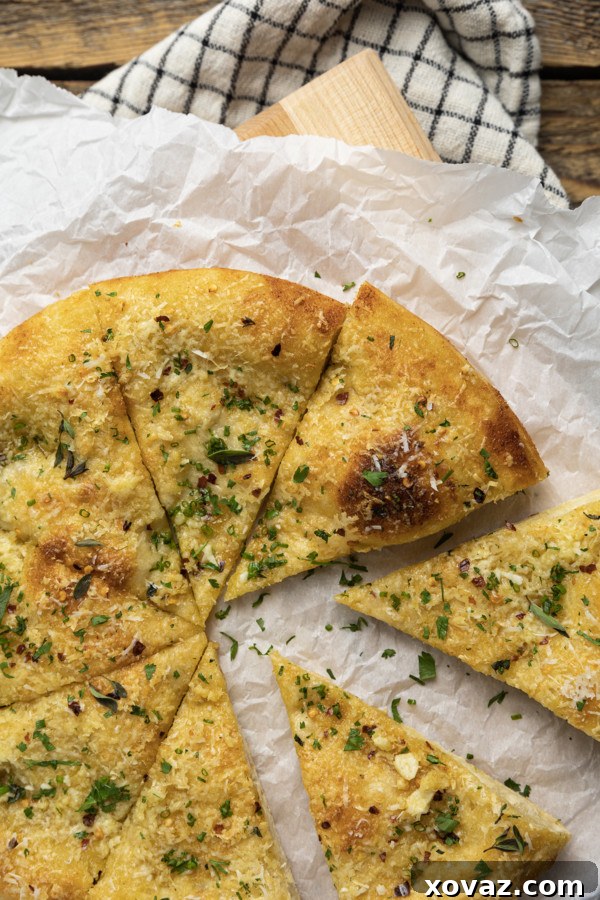
The optional addition of crushed red pepper flakes adds a subtle, pleasant warmth that enhances the savory notes without overpowering the dish. For the fresh herbs, I love to mince a mixture of whatever fresh, tender herbs I have on hand – parsley, chives, oregano, or a touch of basil work wonderfully. Sprinkling these over the finished pizza just before serving introduces a bright, fresh counterpoint to the rich garlic and cheese, truly taking our garlic pizza to the next level.
Recommended Equipment for Baking Success
Achieving that perfect crispy, chewy crust for your garlic pizza depends not just on the ingredients, but also on the right equipment and technique. Fortunately, you have options! I’ve broken down the essential tools into two categories to cater to different home kitchen setups.
Option 1: For Pizza Stone/Steel Enthusiasts
If you’re serious about home pizza making, or even if you just enjoy a really crisp crust, investing in a pizza steel or stone is highly recommended. This setup closely mimics the intense heat of a professional pizza oven.
- Standard Home Oven: The workhorse of your kitchen. Preheat it thoroughly for best results.
- Pizza Steel or Pizza Stone: These are designed to absorb and retain high heat, transferring it directly to the pizza dough, creating a super crispy bottom crust. A steel generally heats faster and retains heat more efficiently than a stone.
- Pizza Peel: Essential for safely transferring your uncooked pizza onto the hot steel/stone and removing the finished pizza from the oven. Dust it generously with cornmeal or semolina to prevent sticking.
- Cutting Board: For prepping ingredients and slicing the baked pizza.
- Cheese Grater: To ensure freshly grated cheese for optimal melting and flavor.
- Chef’s Knife: For mincing garlic and chopping herbs.
- Optional but Helpful: A Pastry Brush: Ideal for evenly applying the garlic oil to your pizza dough.
Option 2: For Standard Baking Pans
Even without specialized pizza equipment, you can still achieve a fantastic garlic pizza. A sturdy baking sheet or a dedicated pizza pan will do the trick.
- Standard Home Oven: Again, preheat it well to ensure even cooking.
- Pizza Pan or Sheet Pan: A dark, heavy-gauge pan will conduct heat best. Make sure it’s large enough for your pizza dough.
- Oven Mitts: Crucial for safely handling hot pans.
- Cutting Board: For preparation and serving.
- Cheese Grater: For fresh cheese.
- Chef’s Knife: For garlic and herbs.
- Optional but Helpful: A Pastry Brush: For even oil distribution.
Why a Pizza Steel Makes a Difference
For the ultimate in home pizza making, a pizza steel truly is worth the investment. It excels at replicating the intensely hot, conductive cooking environment of a professional wood-fired pizza oven. Steel has a higher thermal conductivity and heat capacity than stone, meaning it heats up faster and stays hotter for longer. This rapid and intense heat transfer to the pizza dough creates a phenomenon known as “oven spring,” where the crust rapidly expands and develops a beautifully airy interior with an incredibly crisp and blistered exterior.
While a pizza stone is a fantastic second-best option and a significant upgrade over just a baking sheet, it doesn’t quite match the thermal efficiency of a steel. With either a steel or a stone, a pizza peel becomes invaluable. It allows you to quickly and safely transfer your delicate, uncooked pizza onto the scorching hot surface and then retrieve your perfectly cooked creation from the oven. While you can improvise with a flat, rimless baking sheet, a dedicated peel makes the process much smoother and safer.
Step-by-Step Garlic Pizza Recipe Instructions
Creating this delicious garlic pizza is a straightforward process. Follow these steps for a perfect result every time.
Prep Work: Setting the Stage
- Prepare the Garlic Oil: In a small bowl, combine the finely minced fresh garlic cloves with the extra virgin olive oil. If using, add a pinch of crushed red pepper flakes to the mixture. Allow it to sit for a few minutes while you prepare the dough; this helps the garlic infuse into the oil, maximizing flavor.
- Preheat Your Oven: Position your oven rack in the middle or upper-middle position. Preheat your oven to a blazing 475°F (245°C). If using a pizza steel or stone, place it in the oven during preheating to ensure it reaches the optimal temperature – allow at least 30-60 minutes for it to heat thoroughly.
Dough Preparation & Topping
- Stretch the Dough: Lightly dust a clean work surface (and your hands) with all-purpose flour. Gently stretch your pizza dough ball into a rough 10-inch to 12-inch circle. The goal is a relatively thin crust.
- Prepare for Baking: If using a pizza pan or sheet pan, lightly grease it or dust it with a small amount of cornmeal or semolina flour. If using a pizza peel, generously dust it with cornmeal or semolina flour. Carefully transfer your stretched dough onto the prepared pan or peel.
- Apply Garlic & Oil: Using a fork, ‘fish’ out as much of the minced raw garlic as possible from the oil mixture and scatter it evenly over the surface of the dough. Then, brush or drizzle approximately two-thirds of the garlic-infused olive oil evenly over the crust, all the way to the edges.
- Add Cheese: Sprinkle almost all of the freshly grated Parmesan cheese over the oiled dough, reserving about 1 tablespoon for later.
Baking to Golden Perfection
- Bake the Pizza: Carefully transfer your pizza into the preheated oven. If using a baking sheet or pizza pan, simply place the pan in the oven. If using a pizza steel or stone, slide the pizza directly onto the hot surface using your pizza peel.
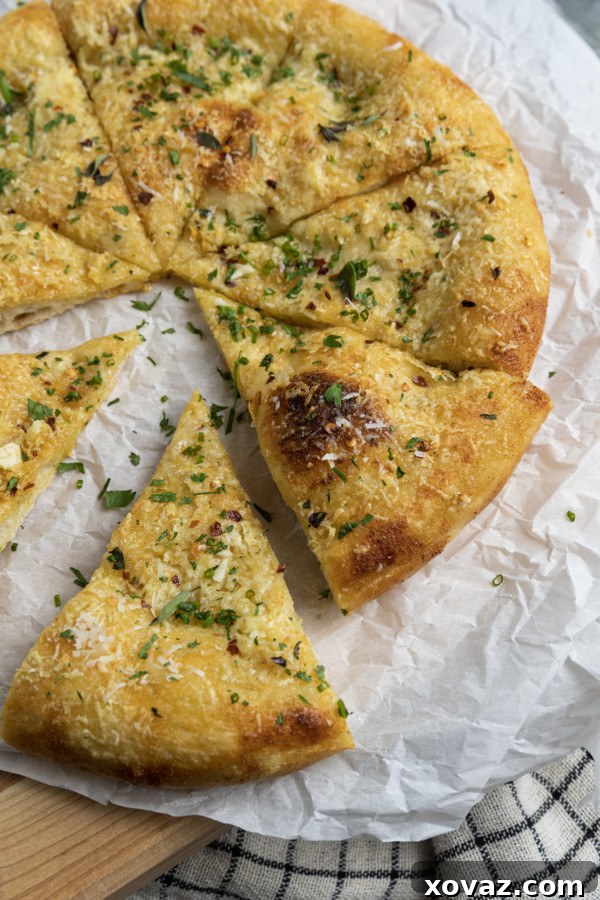
- Monitor Cooking Time: Bake until the crust is beautifully golden brown, puffed, and blistered, and the bottom is wonderfully crisp. This typically takes about 6-8 minutes when using a pizza steel or stone, or 10-12 minutes with a standard pizza pan. Keep a close eye on it, as oven temperatures can vary.
The Grand Finale: Finishing Touches
- Final Garlic & Cheese Boost: Once baked to perfection, remove the pizza from the oven. Immediately brush the hot crust with the remaining garlic oil. Then, sprinkle the reserved Parmesan cheese and any minced fresh herbs (like parsley, chives, or oregano) over the top. The residual heat will warm the herbs and melt the last bits of cheese.
- Serve & Enjoy: Allow the pizza to cool for just a minute or two before cutting it into wedges. Serve your garlic pizza hot, warm, or even cold – it’s delicious at any temperature!
Expert Tips for the Best Garlic Pizza
Achieving a truly exceptional garlic pizza is easy with a few insider tips:
- Quality Dough is Key: While you have options for your pizza dough, remember that a good quality dough makes a world of difference. Whether homemade or store-bought, ensure it’s fresh and has been properly proofed (if frozen, thaw and proof fully). Avoid canned dough for this recipe, as its texture isn’t suitable.
- Don’t Skimp on Fresh Garlic: The star of the show deserves to be fresh. Minced fresh garlic provides a much more potent and vibrant flavor than garlic powder or pre-minced jarred garlic.
- Infuse the Oil: Giving the minced garlic a few minutes to sit in the olive oil before applying it to the dough allows the flavors to meld and deepen, resulting in a more aromatic garlic oil.
- Thin Crust for Maximum Crisp: Stretch your dough as thinly as you comfortably can without tearing it. A thinner crust ensures a crispier result and allows the garlic and cheese flavors to shine without being overwhelmed by too much bread.
- Hot Oven, Hot Surface: A very hot oven (475°F / 245°C) is crucial for a quick bake and a crispy crust. If using a pizza stone or steel, ensure it’s fully preheated for at least 30-60 minutes to achieve maximum heat transfer.
- Dusting for Success: Don’t forget to generously dust your pizza peel or baking surface with cornmeal or semolina flour. This creates a non-stick layer and contributes to the coveted crispy bottom of the pizza.
- Reserve Some Goodness: Holding back a tablespoon of Parmesan and a splash of garlic oil for the very end adds a fresh burst of flavor and a beautiful sheen, elevating the finished product.
- Embrace Fresh Herbs: While optional, fresh herbs like parsley, chives, or oregano add a wonderful layer of freshness and brightness that beautifully complements the rich garlic and cheese.
Serving Suggestions and Pairings
This garlic pizza is incredibly versatile, making it suitable for a variety of occasions and pairings:
- As a Standalone Meal: For a light lunch or dinner, serve it simply alongside a vibrant, peppery arugula salad dressed with a simple vinaigrette. The freshness of the greens cuts through the richness of the pizza beautifully.
- Appetizer Extravaganza: Cut into smaller strips or squares, this garlic pizza makes an impressive appetizer for any gathering. It’s a fantastic alternative to traditional garlic bread, offering a more refined and flavorful bite.
- The Perfect Companion: This white pizza truly shines as an accompaniment to a range of hearty meals. It’s a dream pairing with classic Italian-American dishes like spaghetti and meatballs, chicken parmesan, or a robust lasagna. Its savory profile also makes it an excellent side for rich stews, braised meats like our Tuscan Braised Beef (Peposo), or comforting soups such as lasagna soup or tortellini vegetable soup.
- Brunch Bonus: Don’t underestimate its potential for brunch! It can be a savory addition to a spread, especially when paired with eggs or a frittata.
Storing and Reheating Your Garlic Pizza
While this garlic pizza is undeniably best enjoyed the day it’s made, any leftovers are still absolutely delicious and can be easily stored and reheated.
- Storage: Allow any leftover slices to cool completely to room temperature. Store them in an airtight container or wrap them tightly in aluminum foil or plastic wrap. They will keep well in the refrigerator for up to 2-3 days.
- Reheating in the Air Fryer: For the crispiest results, reheating in an air fryer is a fantastic option. Place your slices in a single layer in the air fryer basket (avoid overcrowding). Reheat at 360°F (180°C) for 2 to 3 minutes, or until heated through and crisp.
- Reheating in the Oven: To reheat in a conventional oven, wrap your slices of garlic pizza loosely in aluminum foil. Place the foil-wrapped pizza directly into a cold oven. Then, preheat the oven to 350°F (175°C). By the time the oven reaches its target temperature, your pizza will be perfectly reheated – warm throughout with a satisfyingly crisp crust. This method prevents the pizza from drying out.
- Microwave (Use with Caution): While technically possible, reheating in the microwave is generally not recommended as it can make the crust soggy. If you must use a microwave, reheat for short bursts (15-30 seconds) until warm.
Garlic Pizza Variations to Explore
Once you master the basic garlic pizza, feel free to get creative with these delightful variations:
- Roasted Garlic Pizza: Instead of raw minced garlic, use roasted garlic cloves. Roasting garlic mellows its flavor and adds a sweet, caramelized depth. Mash the roasted cloves and mix them with the olive oil before spreading on the dough.
- Cheesy Garlic Pizza Supreme: Add a layer of shredded mozzarella or a blend of Italian cheeses (provolone, fontina) underneath or on top of the Parmesan for an extra gooey, cheesy experience.
- Spicy Garlic Pizza: Increase the amount of crushed red pepper flakes in the garlic oil, or even add a drizzle of chili oil before serving for a significant kick.
- Herb Garden Pizza: Experiment with different fresh herb combinations. Rosemary and thyme can add an earthy, aromatic touch, while fresh basil added after baking is always a winner.
- Lemon Zest Brightness: For a burst of freshness, finely grate some lemon zest over the finished pizza along with the fresh herbs. The citrus note beautifully complements the garlic.
- Balsamic Glaze Drizzle: A light drizzle of good quality balsamic glaze over the warm pizza just before serving can add a lovely sweet and tangy complexity.
- Mushroom Medley: Sautéed thinly sliced mushrooms can be added to the pizza after applying the garlic oil and cheese for an earthy addition.
- Sun-Dried Tomato & Feta: For a Mediterranean twist, sprinkle some chopped sun-dried tomatoes and crumbled feta cheese over the pizza before baking.
Frequently Asked Questions (FAQs)
Here are some common questions about making garlic pizza:
Q: Can I use store-bought pizza dough?
A: Absolutely! Store-bought fresh pizza dough from your grocery store or local pizzeria works wonderfully. Just ensure it’s fresh and ready to be stretched.
Q: What if I don’t have fresh garlic?
A: While fresh garlic is highly recommended for its potent flavor, in a pinch, you could use a high-quality garlic powder. Mix about 1-2 teaspoons with the olive oil. However, the taste will not be as vibrant or authentic as with fresh garlic.
Q: Can I prepare the garlic oil ahead of time?
A: Yes, you can mix the minced garlic and olive oil a few hours in advance and store it in the refrigerator. This allows the flavors to infuse even more deeply. Bring it to room temperature before using.
Q: How do I prevent my pizza dough from sticking to the peel?
A: Generously dust your pizza peel with cornmeal or semolina flour. Work quickly when transferring the pizza to the oven. You can also give the peel a gentle shake to ensure the dough is loose before sliding it off.
Q: Can I add other toppings?
A: This recipe focuses on the pure flavor of garlic and cheese. However, you can certainly experiment with light toppings. Consider adding thinly sliced onions, roasted red peppers, or a light sprinkle of goat cheese. Be careful not to overload the pizza, as a heavy hand with toppings can make the crust soggy.
Q: Is this recipe suitable for freezing?
A: You can freeze the baked and cooled garlic pizza slices. Wrap them tightly in plastic wrap and then aluminum foil. They will keep for up to 1-2 months. Reheat from frozen in a preheated oven (350°F/175°C) until warm and crisp, about 10-15 minutes.
Q: My crust isn’t getting crispy. What am I doing wrong?
A: Several factors can affect crispiness:
- Oven Temperature: Ensure your oven is fully preheated to 475°F (245°C).
- Baking Surface: A pizza steel or stone provides the best direct heat. If using a pan, make sure it’s heavy and preheated if possible.
- Dough Thickness: A too-thick crust will be chewier, not as crispy.
- Moisture: Too much oil or cheese can inhibit crisping.
The Ultimate Garlic Pizza Recipe Card
Garlic Pizza
Author: Rebecca Lindamood
Prep Time: 10 mins
Cook Time: 15 mins
Total Time: 25 mins
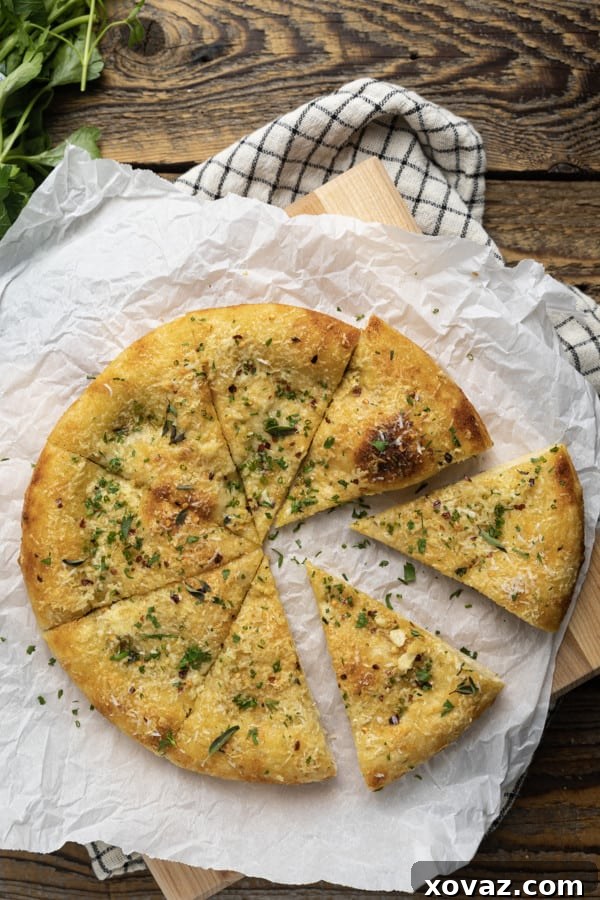
With its blistered, crispy crust and utterly irresistible aroma, Garlic Pizza is proof that the simplest things are often the best. You’ll find yourself turning to this deeply browned, super savory pizza -made from simple ingredients that you likely have on hand already- more often than you can imagine.
Garlic pizza is perfection in its simplicity. It’s just pizza dough brushed with homemade garlic oil, sprinkled with parmesan cheese, and a pinch of red pepper flakes.
Equipment
- 1 pizza steel, pizza stone, pizza pan, or half sheet pan
- 1 pizza peel (if using a stone or steel)
- Oven mitts
- 1 chef’s knife
- 1 cutting board
- 1 cheese grater
- 1 small bowl
- 1 fork
- Optional but helpful: pastry brush
Ingredients
- 1/2 pound pizza dough (see notes)
- ⅓ cup grated parmesan, romano, or asiago cheese
- ¼ cup olive oil
- 2 garlic cloves, minced
- A pinch of crushed red pepper flakes
- 1 teaspoon of minced fresh herbs like parsley, chives, oregano
Instructions
- Combine the olive oil, garlic, and crushed red pepper flakes and set aside.
- Preheat the oven to 475°F (245°C).
- Stretch the pizza dough into a roughly 10-inch circle. Transfer the dough to a pizza pan or a pizza peel dusted with cornmeal or semolina flour.
- Use a fork to fish as much of the garlic as possible from the oil and scatter it over the dough. Brush about ⅔ of the olive oil evenly over the crust.
- Sprinkle with all but about 1 tablespoon of the grated parmesan cheese.
- Transfer the crust to the oven (either on a baking sheet or onto a baking steel or stone) and bake until the crust is golden brown and the bottom is crisp, about 6-8 minutes with a steel or stone or 10-12 minutes with a pizza pan.
- Brush the crust with the remaining garlic oil and sprinkle with the reserved parmesan cheese and minced fresh herbs. Cut into wedges and serve hot, warm, or cold.
- This is best the day it is made, but can be reheated in the air fryer or a moderate oven. To reheat in the air fryer, place it in the air fryer basket and reheat at 360ºF (180°C) for 2 to 3 minutes.
- To reheat in the oven, wrap your slices of garlic pizza loosely in foil and place in a cold oven. Preheat the oven to 350ºF (175°C). By the time the oven is hot, your pizza will be perfectly reheated.
Notes
- You can use homemade pizza dough or pizza dough which has been purchased from your grocery store or favorite pizzeria. I do not recommend making this with canned pizza dough, though.
- If using frozen pizza dough, be sure it is thawed and thoroughly proofed before making your pizza with it.
Nutrition Information (Estimated per serving)
- Calories: 296 kcal
- Carbohydrates: 29g
- Protein: 7g
- Fat: 18g
- Saturated Fat: 4g
- Polyunsaturated Fat: 2g
- Monounsaturated Fat: 10g
- Cholesterol: 7mg
- Sodium: 556mg
- Potassium: 21mg
- Fiber: 1g
- Sugar: 4g
- Vitamin A: 72 IU
- Vitamin C: 0.5mg
- Calcium: 77mg
- Iron: 2mg
Nutritional information is an estimate and provided to you as a courtesy. You should calculate the nutritional information with the actual ingredients used in your recipe using your preferred nutrition calculator.
Did you make this recipe?
We’d love to see your culinary creations! Make sure to tag @foodiewithfam on Instagram and #hashtag it #foodiewithfamily so we can check it out!