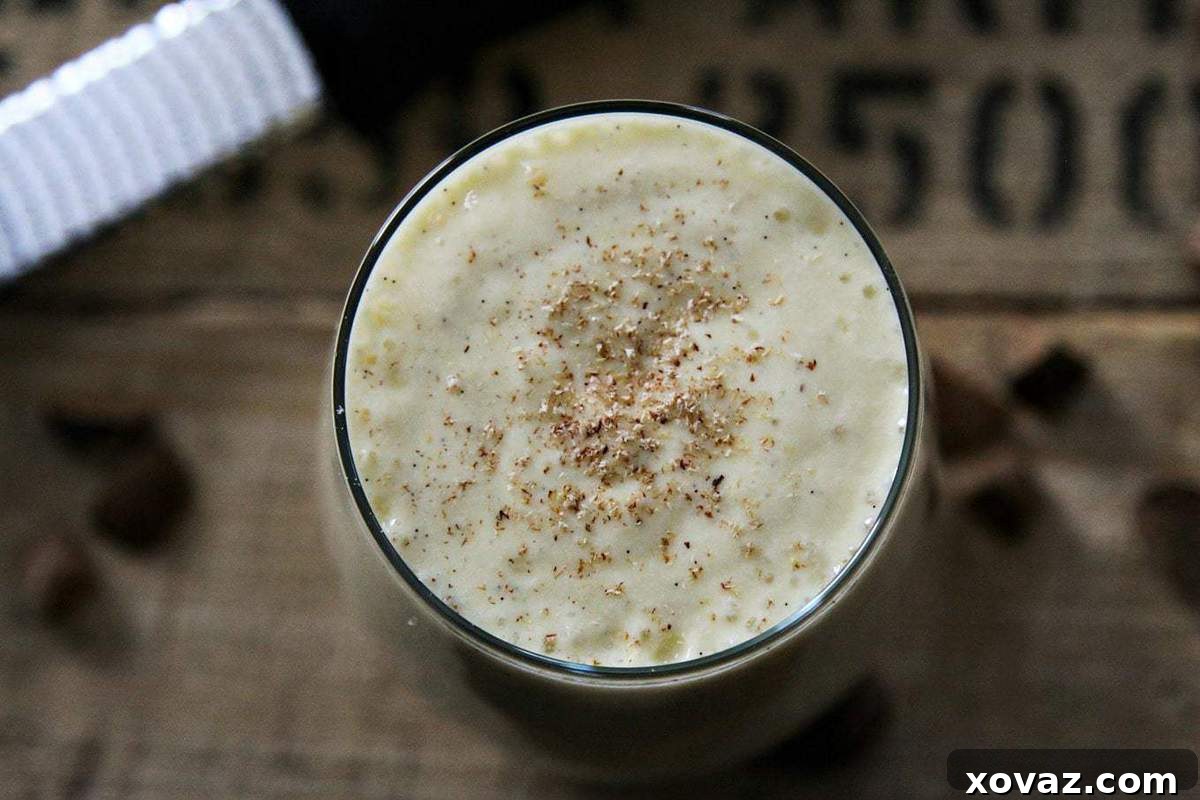
The festive season simply isn’t complete without the luxurious indulgence of eggnog. And for an eggnog experience that truly captivates the senses, nothing compares to a truly Homemade Classic Eggnog. This isn’t just a culinary preference; it’s a universally acknowledged truth among those who cherish holiday traditions. While it undeniably requires a greater investment of time and effort than merely purchasing a carton from the grocery store, the reward is so profoundly superior that once you’ve crafted your own, you’ll understand why it’s worth every moment. Imagine a beverage redolent with the warm, aromatic embrace of freshly grated nutmeg and the sweet, intoxicating perfume of real vanilla bean. Our Homemade Classic Eggnog boasts a delightful thickness, yet remains impossibly light on the palate. This unique texture is achieved by carefully preparing a delicate custard base, which is then gently folded with fluffy, whipped egg whites. The result is akin to a drinkable cloud, a luxurious symphony of flavors and textures that your guests will rave about. My husband, for instance, couldn’t stop sipping, exclaiming, “It’s so thick, yet incredibly soft and drinkable! You could almost bake this, and it would transform into a soufflé!” Such is the magic of a perfectly executed Homemade Classic Eggnog.
One of the beautiful aspects of this Homemade Classic Eggnog recipe is its inherently non-alcoholic nature, making it a wonderful, family-friendly treat suitable for all ages. However, for those who enjoy a spirited twist, you can easily elevate individual servings by stirring in a shot of dark or spiced rum, or perhaps some fine brandy for a more traditional, warming flavor. This flexibility ensures everyone can enjoy their eggnog just the way they like it.
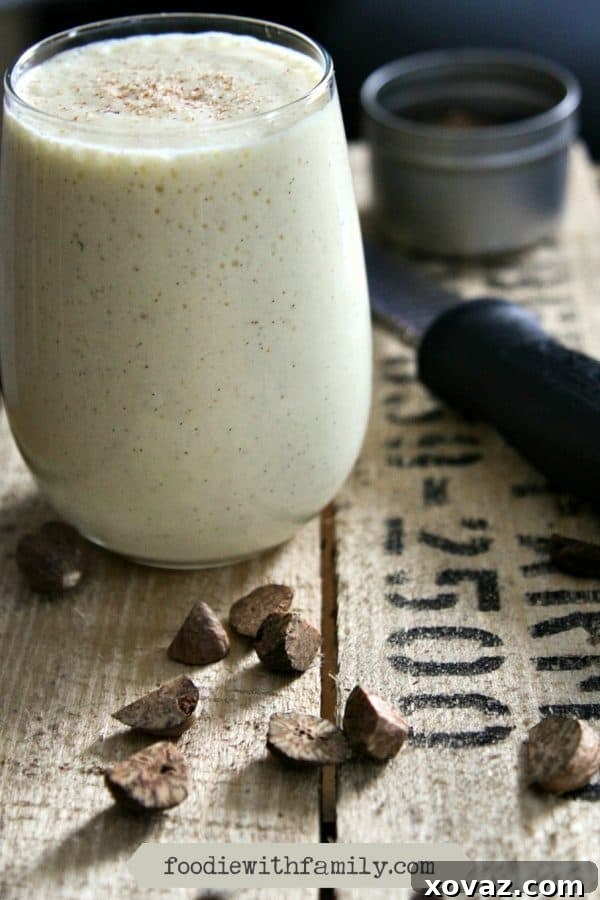
The difference between homemade and store-bought eggnog is truly remarkable. I once shared a quart of this homemade delight with my Amish friends, who promptly declared it their post-barn chore dinner. If your only experience with eggnog has been the commercially produced variety, you might find yourself bewildered. How can a beverage be simultaneously rich, light, and surprisingly filling? This extraordinary balance is a hallmark feature of authentic, Homemade Classic Eggnog. It’s a testament to the quality of ingredients and the careful preparation method that transforms simple components into a festive masterpiece.
Why Homemade Classic Eggnog is Unbeatable
Beyond the simple act of preparing a recipe, making eggnog from scratch offers a sensory experience and a superior product that mass-produced versions simply cannot replicate. Store-bought eggnogs often rely on artificial flavorings, excessive sugars, and stabilizers to achieve their texture and shelf life. In contrast, Homemade Classic Eggnog utilizes fresh, wholesome ingredients that contribute to its distinctive depth of flavor and luxurious mouthfeel. The vibrant notes of freshly grated nutmeg and the nuanced sweetness of real vanilla bean are far more potent and authentic than any extract could provide. Moreover, the careful cooking and blending process, particularly the incorporation of whipped egg whites, creates an aerated, velvety texture that is both substantial and airy, making each sip a pure delight. This personal touch not only guarantees a delicious beverage but also creates a cherished holiday memory, turning a simple drink into a meaningful part of your celebrations.
Essential Ingredients for Perfect Homemade Eggnog
The foundation of an exceptional Homemade Classic Eggnog lies in the quality of its ingredients. Each component plays a vital role in achieving that coveted rich, yet light, consistency and complex flavor profile.
- Dairy (Light Cream & Whole Milk): The combination of light cream and whole milk is crucial. Light cream offers a richness without being overly heavy, while whole milk provides a smooth, full-bodied base. If light cream is difficult to source, half-and-half can be used as a suitable substitute, though it may result in a slightly different texture. Avoid low-fat alternatives, as the fat content is essential for the creamy mouthfeel.
- Freshly Grated Nutmeg: This is non-negotiable for true Classic Eggnog. Pre-ground nutmeg lacks the intense aroma and pungent spice that fresh nutmeg provides. The difference in flavor is astounding and will undoubtedly convert you into a lifelong devotee of fresh grating. All you need are whole nutmegs and a fine grater, such as a microplane.
- Vanilla Bean: The use of a real vanilla bean, split and scraped, imparts an incomparable richness and depth of flavor that pure vanilla extract simply cannot match. While extract can be used in a pinch, the subtle floral and sweet notes from a whole bean are integral to the classic eggnog experience.
- Eggs (Yolks & Whites): Fresh, high-quality eggs are key. The yolks provide the rich, custardy base and beautiful golden hue, while the whipped whites are folded in to create that signature light and airy texture, transforming the beverage from a simple custard into a drinkable cloud.
- Sugar: Granulated sugar not only sweetens the eggnog but also plays a role in stabilizing the egg yolks during the tempering process and contributing to the overall structure of the custard.
The Art of Making Classic Eggnog: A Step-by-Step Guide
Creating Homemade Classic Eggnog involves a few careful steps, but none are overly complicated. It’s a process that has been perfected over generations, yielding consistently delicious results.
Preparing the Aromatic Dairy Base
Begin by combining the light cream, whole milk, the split and scraped vanilla bean (including its precious seeds), and the freshly grated nutmeg in a sturdy 3-quart stockpot. Place this mixture over low heat and gently bring it to a simmer, just until small bubbles begin to form around the edges. The goal is to warm the dairy thoroughly and infuse it with the incredible flavors of vanilla and nutmeg without scorching. Stir occasionally to prevent sticking and ensure even heating.
Tempering the Egg Yolks: The Key to Creamy Custard
While your dairy mixture is warming, prepare your egg yolks. In a heat-proof bowl, vigorously whisk together the six egg yolks and ¾ cup of sugar. Continue whisking until the mixture becomes noticeably lighter in color and slightly thickened. This aeration helps create a smooth custard. Once the dairy mixture reaches its gentle boil, it’s time to temper the egg yolks. This crucial step prevents the eggs from scrambling when they are combined with the hot liquid. Carefully ladle about one cup of the hot dairy mixture into the whisked egg yolks, whisking continuously and vigorously. This gradual addition slowly raises the temperature of the egg yolks. Once thoroughly incorporated, pour this warmed egg yolk mixture in a thin, steady stream back into the remaining hot dairy mixture in the stockpot, still over low heat, whisking constantly. Continue cooking and whisking until the mixture reaches 160°F. If you don’t have an instant-read thermometer (though it’s highly recommended for precision), you can test for doneness by dipping a metal spoon into the custard. If you can draw your finger across the back of the spoon and it leaves a clear path without the liquid running back in on itself, your custard is ready.
Straining, Chilling, and Whipping to Perfection
Once the custard reaches the desired temperature, immediately remove it from the heat. Strain the entire mixture through a fine-mesh sieve into a clean bowl. This step removes any tiny bits of cooked egg (just in case!) and the vanilla bean remnants, ensuring a perfectly smooth and silky base. Allow the custard to cool slightly at room temperature, then cover it tightly and refrigerate until it is completely chilled. This chilling period is absolutely vital. You cannot skip this step; adding whipped egg whites to a warm custard will cause them to scramble, creating an unappetizing texture rather than the desired lightness. While the custard chills, prepare the egg whites. In a stand mixer fitted with a whisk attachment (or using a hand mixer), whip the six egg whites until firm peaks form. The whites should be glossy and hold their shape when the whisk is lifted. Once the custard base is thoroughly chilled, gently fold the whipped egg whites into it until evenly incorporated. This folding action is what gives Homemade Classic Eggnog its iconic thick, yet impossibly light, cloud-like consistency.
Tips for Homemade Classic Eggnog Perfection
To ensure your Homemade Classic Eggnog is nothing short of spectacular, keep these expert tips in mind:
- Dairy Choice Matters: While light cream is ideal for its balanced richness, don’t fret if it’s unavailable. Half-and-half is a perfectly acceptable substitute and will still yield a delicious, creamy result. The key is to avoid anything less than whole milk for the remaining dairy, as skim or low-fat milk simply won’t provide the necessary body and flavor.
- Embrace Fresh Nutmeg: This cannot be stressed enough. Pre-ground nutmeg loses much of its aromatic potency quickly. Investing in whole nutmegs and a microplane grater is a small effort that delivers an enormous payoff in terms of fresh, vibrant spice. The difference is truly transformative and a hallmark of authentic eggnog.
- Mastering the Temper: The tempering process, where hot dairy is slowly introduced to egg yolks, might seem daunting if you’re new to custard making. However, it’s a time-honored technique for a reason. By gradually raising the egg yolks’ temperature, you prevent them from scrambling. Pour a thin stream of hot milk into the yolks while whisking vigorously to ensure smooth integration.
- Thermometer vs. Spoon Test: An instant-read thermometer is your best friend here, providing an accurate reading to ensure the custard reaches 160°F – the safe temperature for consuming eggs. If you don’t have one, the spoon test is a reliable traditional method: dip a metal spoon into the custard, pull it out, and run your finger across the back. If it leaves a clean line without the custard running back together, it’s done.
- Vanilla Bean Superiority: While pure vanilla extract can be used after straining the custard, the profound richness and complex aroma imparted by a real vanilla bean are unparalleled. Its subtle nuances contribute significantly to the authentic taste of Classic Eggnog.
- Always Strain: Even with careful tempering, straining the finished custard through a fine-mesh sieve is an essential step. It removes any potential small cooked egg bits and ensures a perfectly smooth, velvety texture. It also removes the spent vanilla bean.
- Chill Thoroughly: Do not, under any circumstances, skip chilling the custard completely before folding in the whipped egg whites. Warm custard will “melt” or scramble the delicate egg whites, ruining the light, airy texture that defines this Homemade Classic Eggnog.
- When to Add Alcohol: For adult enjoyment, add your preferred spirit (brandy, dark rum, or spiced rum) directly to individual servings just before serving. Adding alcohol to the entire batch and letting it sit for extended periods can cause the dairy and eggs to curdle, compromising the texture. If serving within an hour, a mixed batch is usually fine, but for longer storage, individual spiking is best.
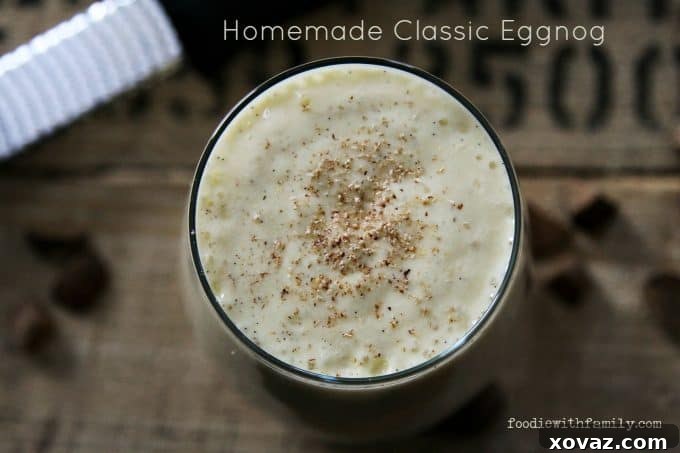
- Garnish for Impact: A final flourish of freshly grated nutmeg on top of each serving not only adds a beautiful visual appeal but also provides an extra boost of that signature spice, enhancing the overall sensory experience of your Homemade Classic Eggnog.
A Brief History of Eggnog
Eggnog, a beloved holiday beverage, boasts a rich history dating back to medieval Britain. Its origins are often traced to a drink called “posset,” a hot, milky, ale-like drink with eggs and spices. Over centuries, as dairy and rum became more accessible, particularly in the American colonies, the drink evolved into the creamy, sweet concoction we recognize today. The name “eggnog” itself is thought to derive from “egg-and-grog,” where “grog” referred to a strong rum drink, or perhaps from “noggin,” a small wooden mug used to serve drinks. Traditionally, eggnog was a drink of the wealthy, as milk, eggs, and spirits were expensive commodities. It became a symbol of prosperity and hospitality, particularly during the festive winter months. Today, Homemade Classic Eggnog continues to be a cherished tradition, connecting us to centuries of festive celebrations and the joy of sharing a special, handcrafted drink.
Homemade Classic Eggnog Recipe
Ingredients
- 1 cup light cream
- 3 cups whole milk
- 1 vanilla bean, split and scraped
- 1/4 teaspoon freshly grated nutmeg
- 6 egg yolks
- 3/4 cup sugar
- 6 egg whites
Optional but tasty:
- 1 shot brandy or rum per serving
- More freshly grated nutmeg for garnish
Instructions
- Stir together the light cream, milk, vanilla bean (including scraped contents), and nutmeg in a 3-quart stockpot. Bring just to a gentle boil over low heat, stirring occasionally.
- While the dairy mixture is coming to a boil, whisk together the egg yolks and sugar in a heat-proof bowl until lightened in color and slightly thickened. When the dairy mixture reaches a boil, use a ladle to slowly drizzle in about 1 cup of it into the egg yolk mixture, whisking vigorously the entire time. As soon as it is thoroughly incorporated, pour this tempered egg mixture in a thin stream into the remaining hot dairy mixture in the stockpot over low heat, whisking constantly. Bring the mixture to 160°F, or until it coats the back of a spoon (see “Tips for Perfection” above).
- Immediately pour the custard through a fine-mesh strainer into a clean bowl to remove any solids and the vanilla bean. Let it cool slightly at room temperature, then cover and refrigerate until completely chilled (at least 4 hours or overnight).
- Once the custard is thoroughly chilled, use a stand mixer or hand mixer to whip the egg whites to firm peaks. Gently fold the whipped egg whites into the chilled custard base until evenly incorporated, creating a light and airy consistency.
- Serve the Homemade Classic Eggnog as is, or garnish each serving with an extra sprinkle of freshly grated nutmeg and/or a shot of brandy or rum for an adult version.
Nutritional information is an estimate and provided to you as a courtesy. You should calculate the nutritional information with the actual ingredients used in your recipe using your preferred nutrition calculator.
Did you make this recipe?
We’d love to see your delicious creations! Share your photos on Instagram and tag @foodiewithfam and use the hashtag #foodiewithfamily so we can admire your Homemade Classic Eggnog!
You can also find more recipes and connect with us on Pinterest and Facebook.