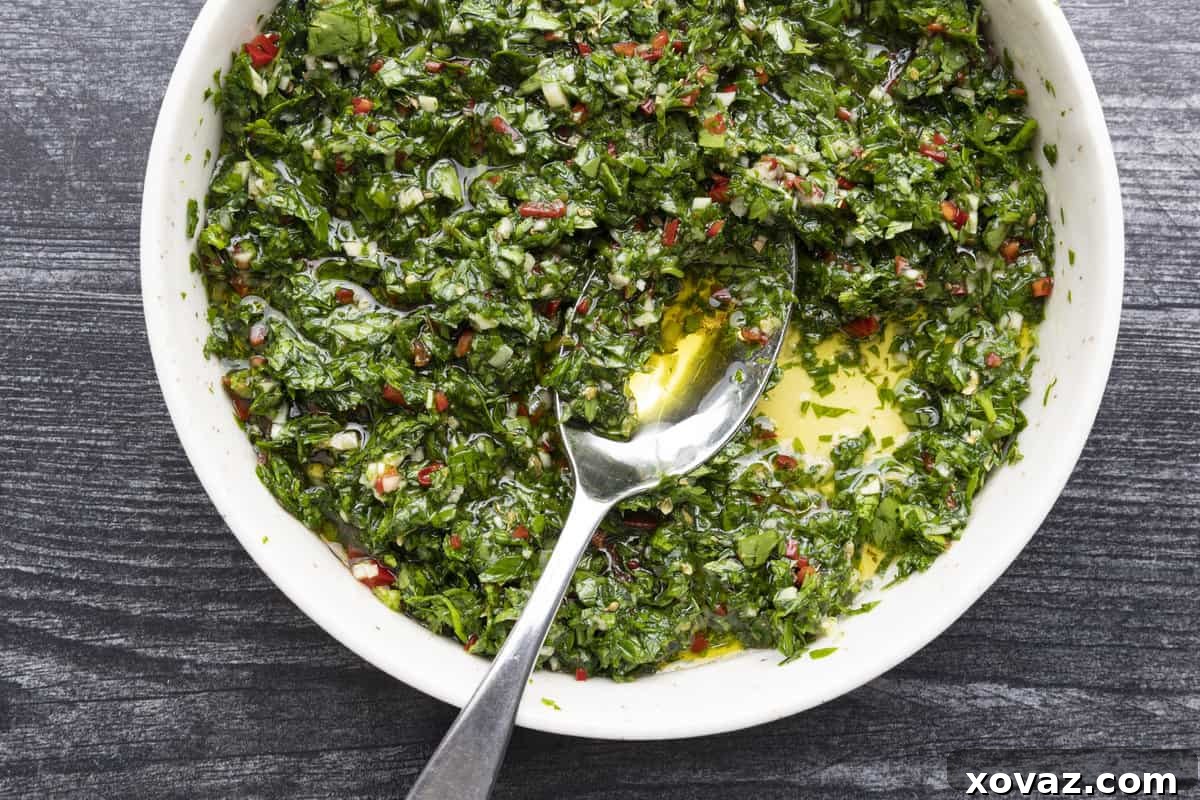
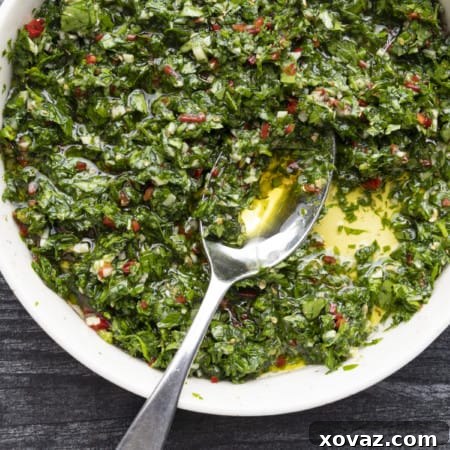
Welcome to the vibrant world of Chimichurri Sauce, a culinary cornerstone that captures the fiery passion and fresh flavors of South America, particularly revered in Argentina. This isn’t just a sauce; it’s an experience, a fresh herb concoction bursting with zest, garlic, and a hint of spice, all bathed in the rich embrace of red wine vinegar and premium extra virgin olive oil. Once you taste the authentic magic of homemade chimichurri, a staple of Argentine asados (barbecues), you’ll understand why it’s utterly irresistible and destined to become a permanent fixture in your kitchen.
So, what exactly is chimichurri? Is it a sauce? A marinade? A relish? The answer, delightfully, is all of the above and more. This versatile condiment masterfully performs each role, elevating every dish it touches from simple to spectacular. Its vibrant green hue and bold flavor profile are unmistakable, making it a standout addition to any meal.
The Undeniable Allure of Authentic Chimichurri
The true brilliance of homemade chimichurri sauce lies in the beautiful alchemy that occurs when a generous blend of fresh herbs—chiefly parsley, cilantro, and oregano—meets the assertive notes of minced garlic and red onion, a kick from fresh hot pepper, and the essential tang of red wine vinegar and high-quality extra virgin olive oil. A touch of salt and pepper rounds out this symphony of flavors, creating a condiment that is both complex and incredibly refreshing.
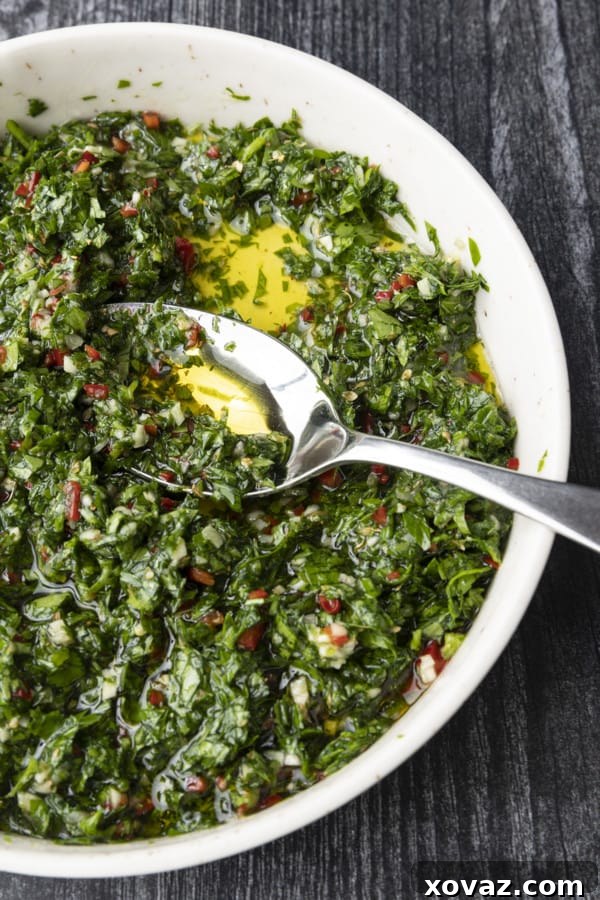
Allowing the sauce to rest at room temperature for a bit while you prepare your main course isn’t just convenient; it’s an essential step that allows the flavors to meld and deepen. Trust us, once chimichurri makes its appearance, it often steals the show. It’s truly easier to list what this authentic classic *doesn’t* pair with than what it *does*, but for the sake of tantalizing your taste buds, let’s explore its incredible versatility.
Beyond Steak: Unlocking the Versatility of Chimichurri
While grilled steak is arguably chimichurri’s most famous companion, its applications stretch far and wide. This unbelievably flavorful sauce is a game-changer for countless dishes, transforming the ordinary into the extraordinary with just a drizzle or a generous dollop.
Perfect Pairings:
- Meats: Drizzle it over virtually any cut of beef—be it a juicy ribeye, tender flank steak, or succulent skirt steak. It’s equally magnificent with grilled pork tenderloin, pork chops, sausages, or even chicken breast. Its bright acidity cuts through rich meats beautifully, enhancing their natural flavors.
- Marinade Marvel: Chimichurri isn’t just a finishing sauce; it’s an incredible marinade. Use it to infuse deep, herbaceous flavor into any of the aforementioned meats, or even for vegetarian options like portobello mushrooms, tofu, or tempeh before grilling or roasting. It tenderizes while adding a burst of flavor.
- Vegetables & Sides: Elevate your side dishes by using it as a dipping sauce for roasted or grilled potatoes, corn on the cob, asparagus, or a medley of roasted vegetables. It’s also fantastic stirred into mashed potatoes for a vibrant twist.
- Seafood: Grilled or baked fish (salmon, cod, snapper), shrimp, or scallops benefit immensely from a generous spoon of chimichurri, adding a fresh, zesty kick that complements the delicate seafood flavors.
- Beyond the Main Course:
- Spread it generously on a burger bun, or mix it into plain yogurt or sour cream for an instant, fantastic creamy dip for crudités or chips.
- It makes a killer sandwich spread, adding gourmet flair to a simple turkey or veggie sandwich.
- Don’t be afraid to put it on grilled or fried cheese for an unexpected delight.
- Use it as a vibrant, tangy salad dressing, adding a refreshing herbaceous note to any green salad.
- Even scrambled eggs or an omelet can be taken to new heights with a spoonful of chimichurri.
In essence, if it’s savory, there’s a strong chance it will be undeniably improved by a touch of chimichurri. Its versatility truly knows no bounds, making it a culinary secret weapon you’ll reach for again and again.
Crafting the Best Chimichurri Recipe
The world of chimichurri is as diverse as the people who make it, with everyone convinced their version is the “best” or the “most traditional.” Indeed, countless methods and “secret ingredients” abound. However, today, we’re sharing our tried-and-true chimichurri sauce recipe, featuring a straightforward list of accessible ingredients and essential equipment that will empower you to create your own authentic masterpiece.
While the ingredient list might appear long, rest assured that nothing is hard to source or exotic. Beyond the fresh produce, most items are likely already pantry staples in your home, making this an incredibly approachable recipe for any home cook.
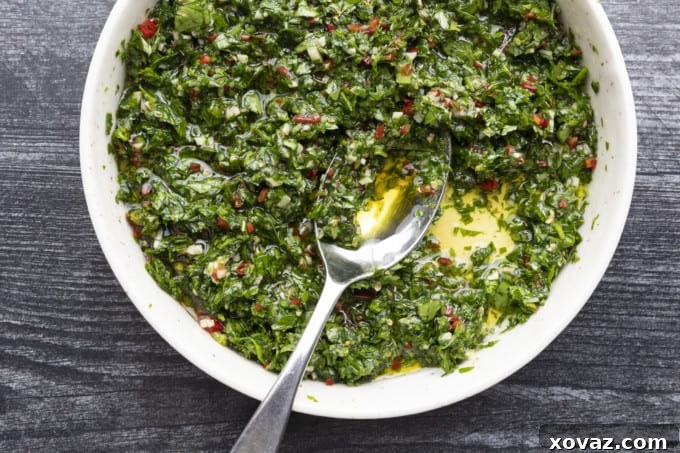
Essential Ingredients for This Authentic Recipe:
- Fresh Flat-Leaf Parsley: The cornerstone herb, offering a clean, peppery, slightly bitter note. Flat-leaf is preferred for its robust flavor over curly parsley.
- Fresh Cilantro: While some traditional recipes omit it, cilantro adds a bright, citrusy counterpoint that many find irresistible.
- Fresh Oregano: Essential for its earthy, peppery, slightly minty undertones. Fresh is always best for chimichurri.
- Fresh Garlic: The backbone of the sauce, providing a pungent, aromatic punch. Don’t be shy with it!
- Fresh Red Hot Pepper: A Fresno or jalapeño pepper adds a gentle warmth and vibrancy. Remove seeds for less heat.
- Red or White Onion: Finely diced, it adds a subtle sweetness and sharp aromatic depth.
- Red Wine Vinegar: Crucial for the characteristic tang and to balance the richness of the olive oil and herbs.
- Extra Virgin Olive Oil: Use a good quality, fruity extra virgin olive oil for the best flavor and luxurious texture.
- Salt & Pepper: To taste, enhancing all the other ingredients.
Did you notice the recurring theme? “Fresh.” The secret to truly incredible chimichurri sauce lies in the vibrant, aromatic power of fresh herbs, onions, and garlic. These ingredients are what give the sauce its incredible, layered flavor.
Equipment Needed to Make This Recipe:
- Chef’s Knife: A sharp knife is your best friend for precise chopping.
- Cutting Board: A sturdy surface is essential for safe and efficient prep.
- Measuring Cups and Spoons: For accurate ingredient ratios.
- Mixing Bowl: Large enough to comfortably combine all ingredients.
- Mixing Spoon: For stirring and combining.
The Art of Making Chimichurri: Hand-Chopping for Superior Flavor
You might notice a crucial omission from our recommended equipment list: a food processor or blender. While these can certainly chop ingredients, we strongly advocate for hand-chopping your herbs and aromatics for this chimichurri sauce recipe. This isn’t just about tradition; it’s about achieving a superior texture and nuanced flavor profile that truly sets homemade chimichurri apart.
Chimichurri is never subtle, whether made by hand or machine. However, there’s a distinct, more delicate quality to the sauce when the ingredients are finely minced by hand. The textures remain intact, providing a delightful mouthfeel, and the flavors are brighter, more distinct, yet harmoniously blended. Hand-chopping allows the garlic and onions to be less aggressively pungent and more deeply flavorful, and the herbs retain their structural integrity, contributing to a more appealing finished product.
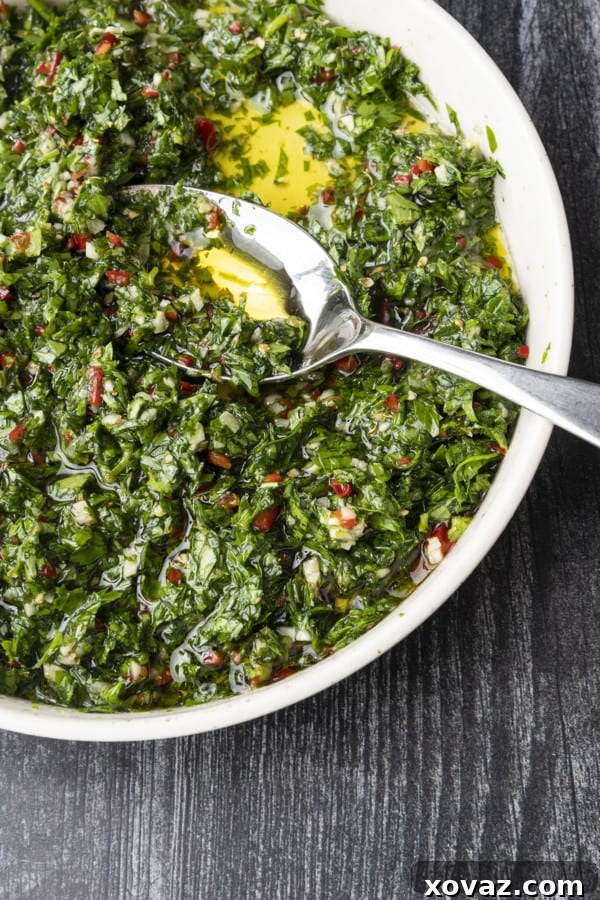
If you’re not a seasoned chef with exceptional knife skills, there’s no need to panic. Surgical precision isn’t required here. The goal is simply to mince everything quite finely, allowing all those incredible flavors to mix, mingle, and marry together into a joyous concoction. The meditative rhythm of hand-chopping can be surprisingly enjoyable, connecting you more intimately with the ingredients and the cooking process.
However, if you categorically refuse the contemplative joy of hand-chopping (and yes, that might have been a touch passive-aggressive), a blender or food processor fitted with a metal blade can be used. The key is to pulse the ingredients carefully. You want to avoid pulverizing everything into a homogenous paste. The ideal chimichurri should still have discernible bits of all its components, offering a rustic texture that’s part of its charm. Just a few short pulses will typically do the trick.
Expert Tips & FAQs for Your Chimichurri Journey
Perfecting your chimichurri is an exciting culinary adventure. Here are some frequently asked questions and expert tips to guide you, ensuring every batch you make is spectacular.
- Vinegar Varieties: While red wine vinegar is the classic and our preferred choice for its robust flavor, feel free to experiment. White wine vinegar offers a milder tang, apple cider vinegar adds a subtle fruitiness, and plain white vinegar provides a sharp, clean acidity. Be aware that each substitution will yield a slightly different chimichurri, so adjust to your preference.
- Citrus Alternatives: For a different kind of brightness, you can substitute the vinegar with fresh lime or lemon juice. This will result in a sauce with a distinct, more citrus-forward profile, departing slightly from the traditional but still delicious.
- Parsley Choices: Fresh flat-leaf parsley is highly recommended for its superior flavor. If your produce department only has curly parsley, you can use it, but note that curly parsley tends to have a slightly brassier, grassier taste.
- Spice Level Adjustments: No fresh red Fresno or jalapeño peppers on hand? No problem! You can substitute with 1/2 to 1 teaspoon of crushed red pepper flakes, depending on your desired heat level. Add them with the other aromatics to allow their flavor to infuse.
- Achieving Desired Consistency: If you prefer a thinner chimichurri sauce, perhaps for easier drizzling or as a more liquid marinade, simply stir in additional extra virgin olive oil and a splash more red wine vinegar, one tablespoon at a time, until it reaches your preferred consistency.
- Storage and Shelf Life: You absolutely do not need to consume all your chimichurri the day you make it. In fact, its flavors often deepen and improve after a few hours of resting. Store any unused sauce in an airtight container with a tightly fitting lid in the refrigerator. For optimal freshness and flavor, it’s best consumed within 3 to 5 days of preparation. Beyond that, while it may still be safe, the vibrant flavors will begin to diminish.
Authentic Chimichurri Sauce Recipe
Chimichurri Sauce Recipe
Recipe by Rebecca Lindamood
Pin Recipe
Share on Facebook
This Argentinian style chimichurri sauce recipe is one of the most versatile and flavorful sauces around. Traditionally served with grilled steak and sausages, this fresh herb and garlic sauce is also incredible with chicken, fish, vegetables, meatballs, potatoes, and so much more!
Multi-purpose Chimichurri sauce also makes a killer marinade! Make a large batch, marinate half of your meat, fish or vegetables, and serve the other half with the finished dish!
Equipment
-
1 chef’s knife
-
1 cutting board
-
1 mixing bowl
-
1 mixing spoon
Ingredients
- 3 to 6 cloves garlic (minced or pressed, to taste)
- ½ red onion (or white or sweet onion) (peeled and finely diced)
- 1 fresno pepper (or jalapeño, stem and seeds removed, finely diced, see notes)
- ¼ cup red wine vinegar
- 1 teaspoon kosher salt
- 1 ¾ cups fresh flat leaf parsley (firmly packed, roughly chopped)
- ½ cup fresh cilantro (firmly packed, roughly chopped)
- ¼ cup fresh oregano leaves (roughly chopped, see notes)
- ½ to ¾ cups extra virgin olive oil
Instructions
-
In a mixing bowl, toss together the minced garlic, finely diced onion, chopped pepper, red wine vinegar, and kosher salt. Let this mixture stand for 10 minutes while you finely chop your fresh parsley, cilantro, and oregano.
-
Once chopped, stir the parsley, cilantro, and oregano into the garlic-onion mixture. Add in ½ cup of your extra virgin olive oil.
-
If you desire a thinner sauce, stir in more olive oil, one tablespoon at a time, until the desired consistency is achieved.
-
This chimichurri sauce can be served immediately, but its flavors are greatly enhanced by resting for at least one hour in the refrigerator, tightly covered, before serving. Store any leftovers in a canning jar or other tightly covered container in the refrigerator for up to 5 days, though it is best enjoyed within 3 days for peak freshness.
Notes
If fresh red Fresno or jalapeño peppers are not accessible, you can substitute with between 1/2 teaspoon and 1 teaspoon of crushed red pepper flakes, adjusted according to your heat preference.
Nutrition
Carbohydrates: 4g
Protein: 1g
Fat: 18g
Saturated Fat: 3g
Polyunsaturated Fat: 2g
Monounsaturated Fat: 13g
Sodium: 400mg
Potassium: 158mg
Fiber: 2g
Sugar: 1g
Vitamin A: 1624IU
Vitamin C: 28mg
Calcium: 63mg
Iron: 2mg
Nutritional information is an estimate and provided to you as a courtesy. You should calculate the nutritional information with the actual ingredients used in your recipe using your preferred nutrition calculator.
Did you make this recipe?
Make sure to tag @foodiewithfam on Instagram and #hashtag it #foodiewithfamily so I can check it out!
Pin Recipe
Share on Facebook
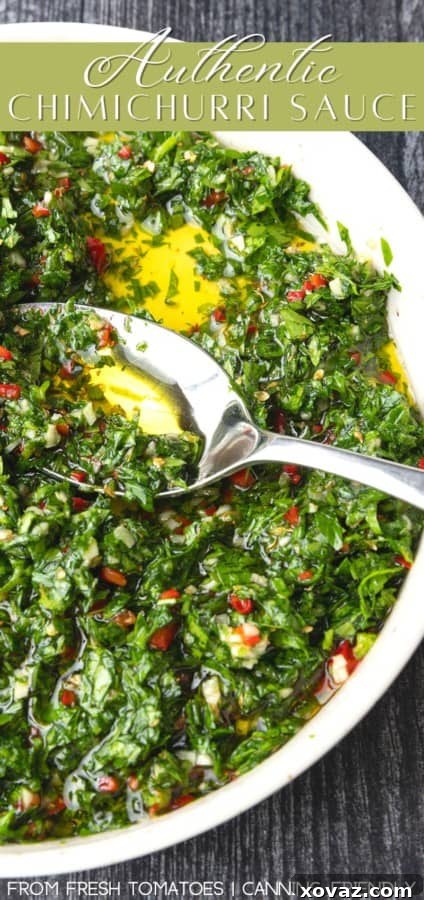
Embrace the vibrant flavors of Argentina with this authentic chimichurri sauce. Whether you’re grilling, roasting, or simply looking to add a burst of fresh flavor to your meals, this versatile herb sauce is sure to impress. It’s simple to make, incredibly delicious, and a truly unforgettable addition to your culinary repertoire. Enjoy the journey of bringing these bold, fresh flavors to your table!