DIY Homemade Body Wash & Hand Soap: A Natural, Cost-Effective Solution for Your Home
Life in a bustling household, complete with energetic children, a busy partner, and a lively collection of pets, often comes with its unique set of challenges. One common struggle many of us face is maintaining a consistently fresh and clean environment, especially when active lifestyles lead to a certain… distinctive aroma. While we cherish every member of our family – human and animal alike – it’s fair to admit that the cumulative scent can sometimes be a bit overwhelming!
Consider a typical scenario: one of my boys, whom we affectionately (and anonymously) refer to as ‘Stanky Hank,’ was dispatched to the shower. After what felt like a sufficient amount of time, he emerged, dripping wet, yet still bearing visible traces of the day’s adventures on his hands, knees, and arms. The ensuing conversation went something like this:
Me: “You were in there for ten minutes. How are your hands, feet, arms, and knees still covered in dirt stains?”
Stanky Hank: “Oh, I was supposed to get rid of those?”
If I told you this was more the norm than an isolated incident, would you be surprised? The constant need for effective cleaning solutions, especially for personal hygiene, became a recurring theme in our home. This ongoing quest for cleanliness eventually led me to explore the wonderful world of homemade body care products.
For years, I’ve harbored a deep appreciation for high-quality, triple-milled French castile soaps. For those unfamiliar with this artisanal delight, castile soap is traditionally made with olive oil, making it exceptionally gentle and nourishing for the skin. The ‘triple-milled’ process ensures a dense, long-lasting bar with a luxurious lather. My personal obsession frequently gravitates towards the exquisite offerings from Pre de Provence. These substantial bars, available in an array of captivating scents like Coconut, Rose, Linden, Sage, Mint Leaf, Honey Almond Lavender, and my absolute favorite, Green Tea, are truly unparalleled. Their exquisite fragrances make me wish I could carry one with me everywhere to enhance life’s little moments.
However, despite my profound love for these beautiful bar soaps, my ‘menfolk’ (my five sons and handyman husband) had a clear preference: liquid. They favored liquid body wash over bar soap in the shower and liquid hand soap at the sink. This presented a dilemma. While I adored my fragrant bars, I needed a practical solution that everyone would happily use – a solution that could effectively tackle the daily grime and keep everyone smelling fresh, without breaking the bank or introducing harsh chemicals.
The Journey to Homemade Solutions
This wasn’t my first foray into DIY household products. I’ve previously shared my successful recipes for a super cheap and mega-effective homemade laundry detergent and allergy-friendly unbelievably easy homemade air fresheners. My passion for creating beautifully scented, effective, and economical solutions for our home runs deep. So, when I stumbled upon a simple recipe for homemade liquid soap on Pinterest, I knew I had to try it immediately. The time for a new project was now!
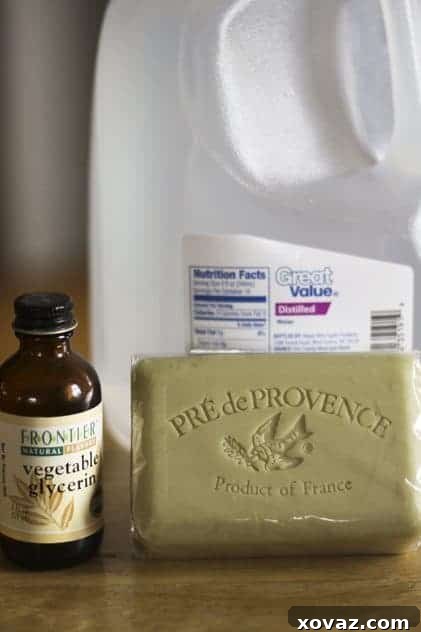
Thanks to a delightful collection of lovely smelling bar soaps and a ready supply of vegetable glycerin (a byproduct from my earlier Grand Marnier making endeavors), the only major ingredient I needed to acquire was a gallon of distilled water. This might seem like a small detail, but it’s an important one. We opted for boiled distilled water to significantly reduce any potential microbial growth in the finished soap. Distilled water is free of minerals (a blessing for those with hard water like ours), but bringing it to a boil ensures that any lingering bacteria are eliminated. After all, nobody wants a petri dish masquerading as soap!
The beauty of this recipe lies in its sheer simplicity. It calls for just three core ingredients. That’s right, THREE! This minimal ingredient list makes it incredibly accessible, even for beginners in the world of DIY home products.
Choosing Your Soap: Key Considerations for the Best Results
Given the brevity of the ingredient list, the quality and type of bar soap you choose become paramount. Here are three crucial pieces of advice to guide your selection:
- Select a Scent You Truly Love: The aroma of your chosen bar soap will intensify significantly once it’s converted into liquid form. Therefore, it’s essential to pick a bar whose scent you genuinely adore. While my beloved Pre de Provence Green Tea is a fantastic choice, any high-quality castile soap with a fragrance you love will work wonderfully.
- Opt for Non-Lotion Soap: This is a critical point. Soaps containing added lotions or moisturizers can interfere with the liquid soap’s ability to set properly, often resulting in a thinner, less stable consistency. Stick to pure soap bars for the best outcome.
- Don’t Be Swayed by Color: While the bar soap itself might be vibrant, your finished liquid soap will almost universally transform into a beautiful, pearlescent shade of white. The color of the original bar will not transfer to the final product, so focus on scent and quality instead.
The Transformation Process: From Bar to Liquid
Once you’ve assembled your ingredients, the process is straightforward. After preparing the mixture, it needs to rest overnight to allow the soap to set and thicken. This resting period is vital for achieving the desired consistency, and I have two important tips based on my experience:
- Avoid Absorbent Lids: Do not use a lid that can absorb odors, such as certain types of plastic or porous materials. The soap’s fragrance is strong during the setting process, and your lid will permanently carry that scent.
- Don’t Panic at the Solid State: When you check on your soap the next day, it will likely appear (and feel) like a solid, jelly-like mass. This is completely normal! Do not be alarmed; it will loosen up significantly with a little agitation.
Initially, when I peeked under my now permanently scented lid, I was greeted by what looked like a giant disc of soap jello. My first attempts with a whisk helped break it down slightly, but it was still a bit too chunky for our family’s preference. Since I’d (humorously) divested myself of a hand mixer years ago (a story involving mashed potatoes and a well-intentioned husband), I turned to a more traditional, and infinitely more charming, solution.
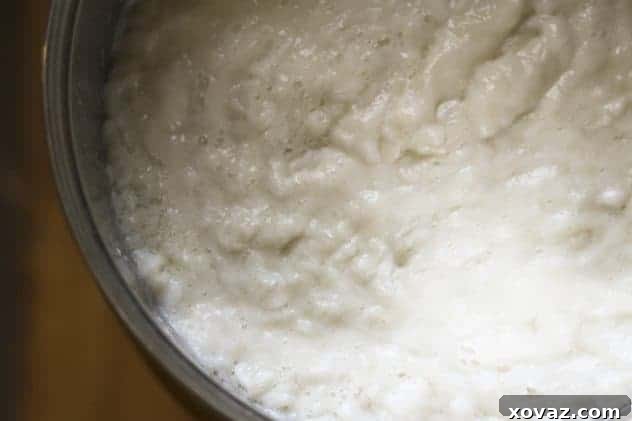
I enlisted the help of my energetic six-year-old, armed with a trusty set of egg beaters. A six-year-old, it turns out, is an incredibly handy and enthusiastic assistant for such tasks!
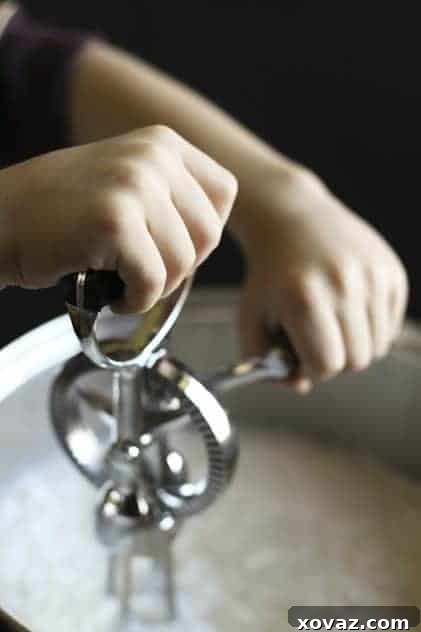
While a hand mixer would undoubtedly speed up the process, the combination of egg beaters and a motivated child proved equally effective, albeit with a slightly longer timeframe. The goal is to achieve a smooth, consistent liquid. If, after mixing, your soap remains too thick, you can gently reheat it, add a small amount of additional distilled water, stir it in, and then allow it to cool again to test the viscosity. Repeat until you reach your ideal consistency.

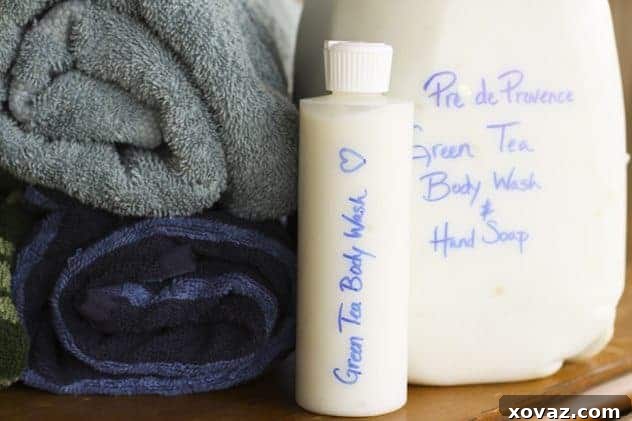
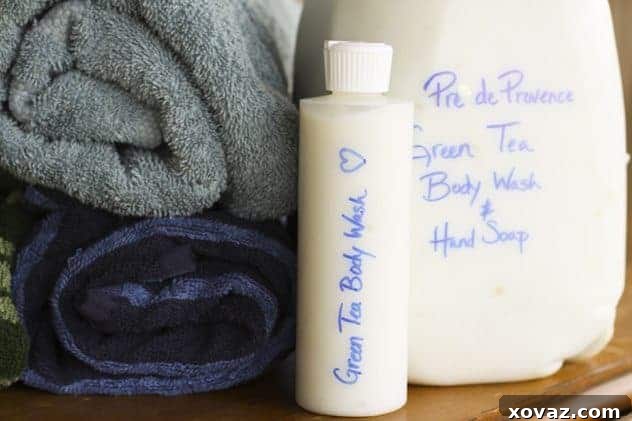
Once happy with the consistency (which, for us, had a delightful, slightly stringy quality that doesn’t impact performance but takes a moment to get used to if you’re accustomed to commercial soaps), my now lovely-smelling assistant and I carefully ladled the liquid soap back into the empty gallon jug that had originally held the distilled water. We quickly realized we had a generous yield, enough to fill not only the gallon jug but also an empty liquid hand soap dispenser and a mid-sized body wash container. This recipe truly provides an impressive volume of product!
The Irresistible Benefits: Cost, Scent, and Satisfaction
Let’s talk numbers, because the cost-effectiveness of this homemade soap is truly compelling:
- A gallon of distilled water: approximately $0.69
- One bar of Pre de Provence Green Tea Soap: approximately $6.69 (prices may vary depending on brand and location)
- Two tablespoons of vegetable glycerin: approximately $0.75
- Total cost for approximately 1.25 gallons of soap: $8.13
To put that into perspective, for just over eight dollars, we produced significantly more body wash and hand soap than you could typically buy for that price in a store, especially for high-quality, gentle options. The financial savings are substantial, making this an incredibly smart choice for any budget-conscious household.
But beyond the economics, the results are truly priceless. My family, even the discerning ‘super sniffer’ husband (whose nose is incredibly sensitive to artificial fragrances), absolutely loves it. If this soap were overwhelmingly perfumey, he wouldn’t go near it. Whether it’s the inherently mild and wonderfully masculine scent of the Pre de Provence Green Tea or the natural dilution process, the fragrance is pleasant, clean, and not at all overpowering. The best part? My guys now smell genuinely good. So good, in fact, that I’ve been caught sniffing them repeatedly – much to their playful protests! For me, that’s a whole new and entirely delightful reason to swoon.
This simple DIY liquid soap recipe offers a fantastic alternative to store-bought products. It’s gentle on the skin, customizable, and incredibly economical. It reduces waste, allows you to control ingredients, and ensures your family smells wonderfully fresh and clean. Give it a try, and you might just find your new favorite household staple!
Recipe and method gently adapted from The Farmer’s Nest.
Homemade Liquid Body Wash & Hand Soap Recipe
Ingredients:
- 1 (8 ounce) bar of high-quality castile soap (e.g., Pre de Provence, Dr. Bronner’s, Kirk’s Original Coco Castile)
- 1 gallon distilled water
- 2 tablespoons vegetable glycerine
Equipment You’ll Need:
- Large non-reactive pot (stainless steel or glass)
- Metal box grater
- Whisk or egg beaters (a hand mixer can be used for faster results)
- Funnel
- Empty gallon jug or other clean, empty soap dispensers for storage
Instructions:
- Prepare the Water: Pour the gallon of distilled water into your large non-reactive pot. Bring the water to a rolling boil over medium-high heat.
- Grate the Soap: While the water is heating, carefully grate the entire bar of castile soap using a metal box grater. Fine shavings will dissolve faster.
- Dissolve Soap and Glycerine: Once the water is boiling, reduce the heat to low. Add the grated soap shavings and the 2 tablespoons of vegetable glycerine to the hot water. Stir frequently with a whisk until all the soap shavings are completely dissolved and the mixture is smooth. This may take several minutes.
- Rest and Set: Remove the pot from the heat. Cover it tightly with a non-absorbent lid and let the mixture rest undisturbed overnight, or for a minimum of 8 hours. During this time, the soap will cool and thicken considerably, often forming a solid or jelly-like mass.
- Achieve Desired Consistency: After the resting period, uncover the pot. The soap will be thick. Use an egg beater, a whisk, or a hand mixer to break up the solid mass and whisk it until it becomes smooth and reaches your desired liquid consistency. Be patient, as this can take some time.
- Troubleshooting Thickness: If the soap is too solid or thick for your liking after mixing, return the pot to low heat. Add a small amount of additional distilled water (start with 1/4 to 1/2 cup), stir it in thoroughly, and then remove from heat and let it cool again to test the consistency. Repeat this process as needed until you achieve the viscosity you prefer.
- Bottle and Store: Place a funnel into your clean, empty distilled water jug or other soap dispensers. Carefully ladle the homemade liquid soap into the containers. Fill any extra soap into smaller hand soap bottles or jars with tight-fitting lids.
- Usage: Use your homemade body wash and hand soap just as you would any commercial liquid soap.
- Storage: Store unused soap in a cool, dark place. For maximum longevity, especially if you’re concerned about microbial growth, you can store it in the refrigerator.