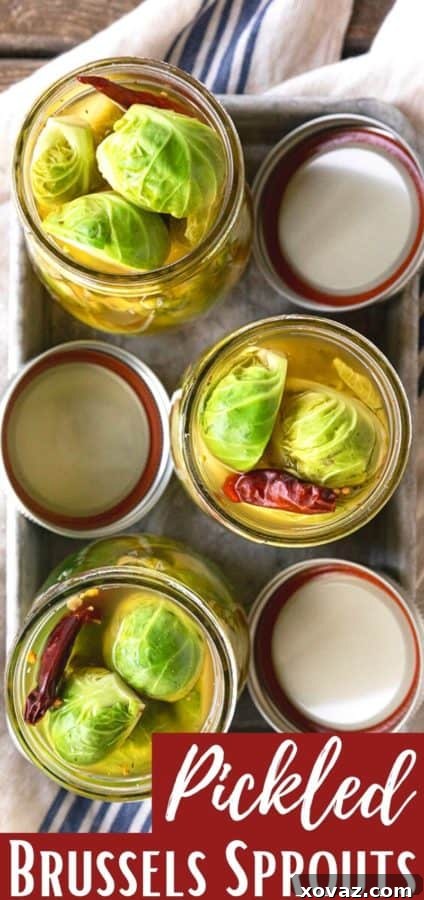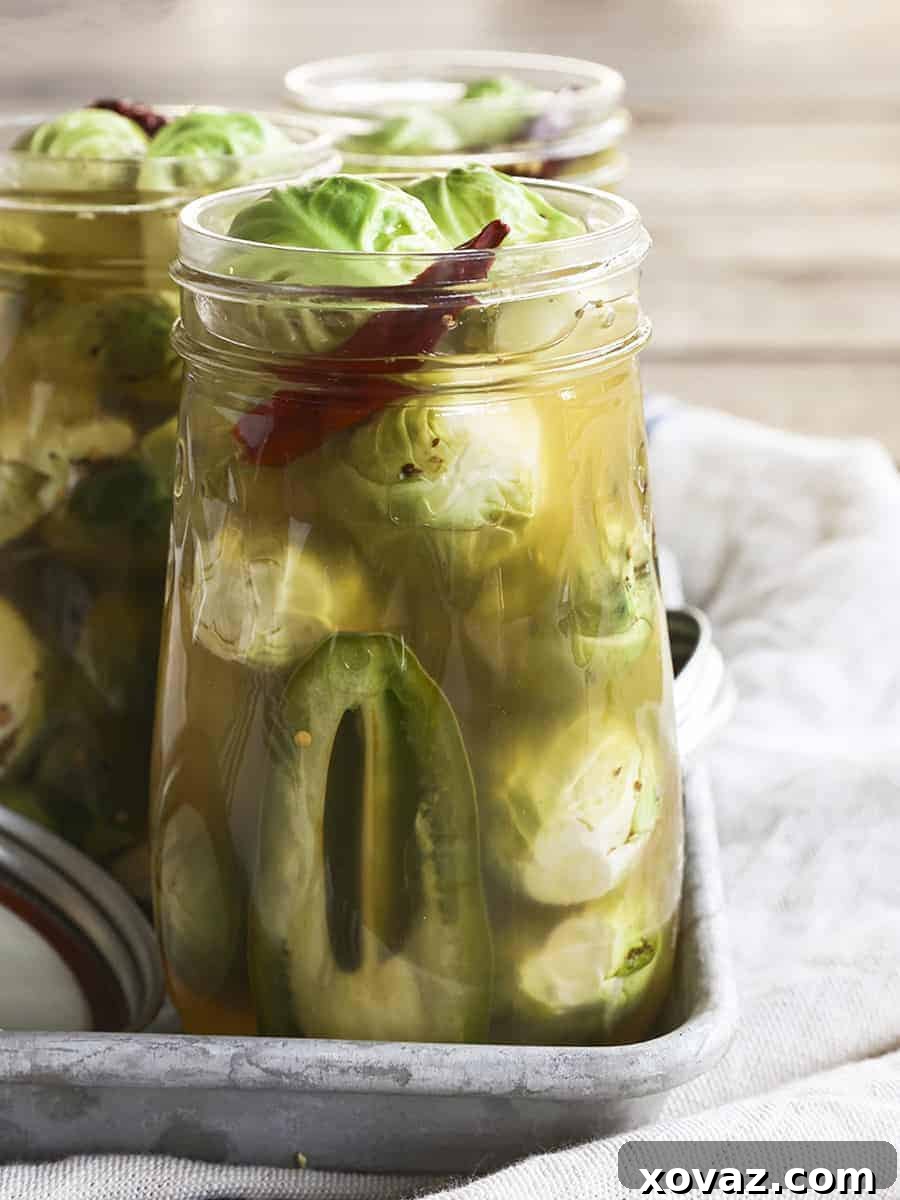
Embark on a culinary adventure with Pickled Brussels Sprouts – those wonderfully garlicky, tangy, and crisp-tender green gems that promise to tantalize your taste buds. Far from just a side dish, these vibrant pickled orbs are an explosion of flavor, perfect for elevating a simple snack, gracing an elaborate charcuterie board, or adding a zesty kick to your favorite Bloody Mary. While the idea of pickling Brussels sprouts might initially raise an eyebrow, rest assured, any skepticism vanishes with the very first delightful bite.
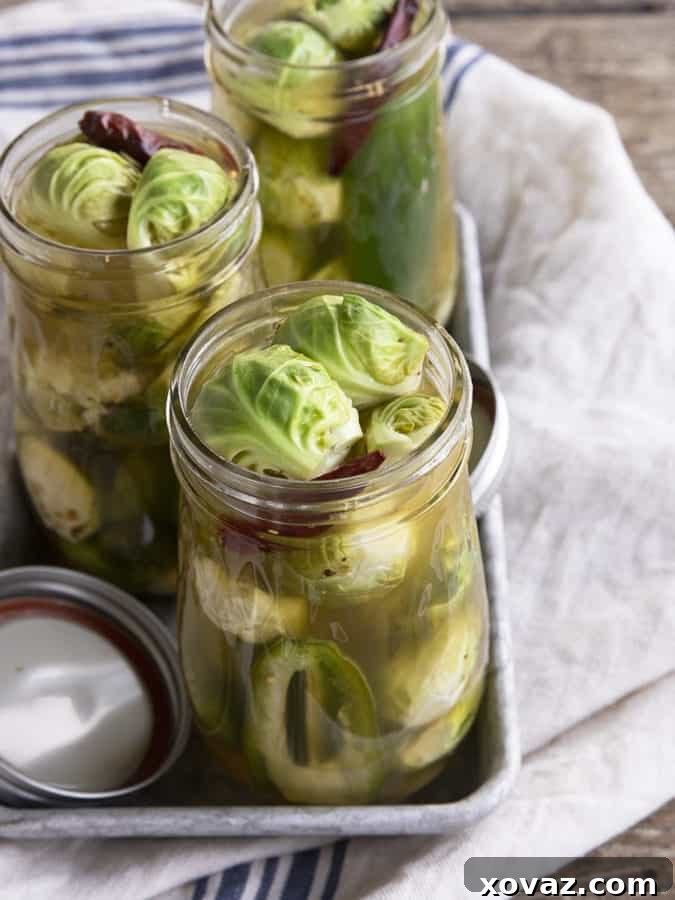
The journey to these delightful pickled Brussels sprouts began unexpectedly. A while back, a thoughtful reader shared a brilliant tip: utilizing leftover candied jalapeño syrup to craft sweet and spicy pickled Brussels sprouts. While that sweet and spicy version is still in the works, a recent abundance of eight pounds of fresh Brussels sprouts from my Misfits Market box prompted an immediate craving for a different kind of pickle – one that delivers a satisfying, palate-puckering tang. Fuelled by a deep, enduring love for intensely flavored pickles, I set out to create these garlicky, tangy, and subtly spicy Pickled Brussels Sprouts. The result was so incredibly delicious, I simply had to share the recipe with fellow pickle enthusiasts.
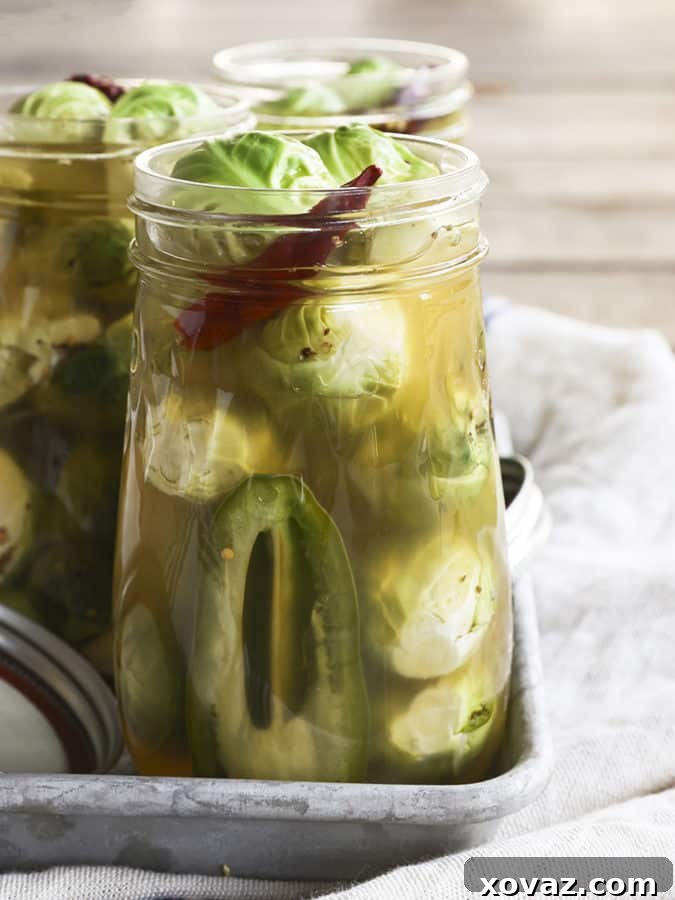
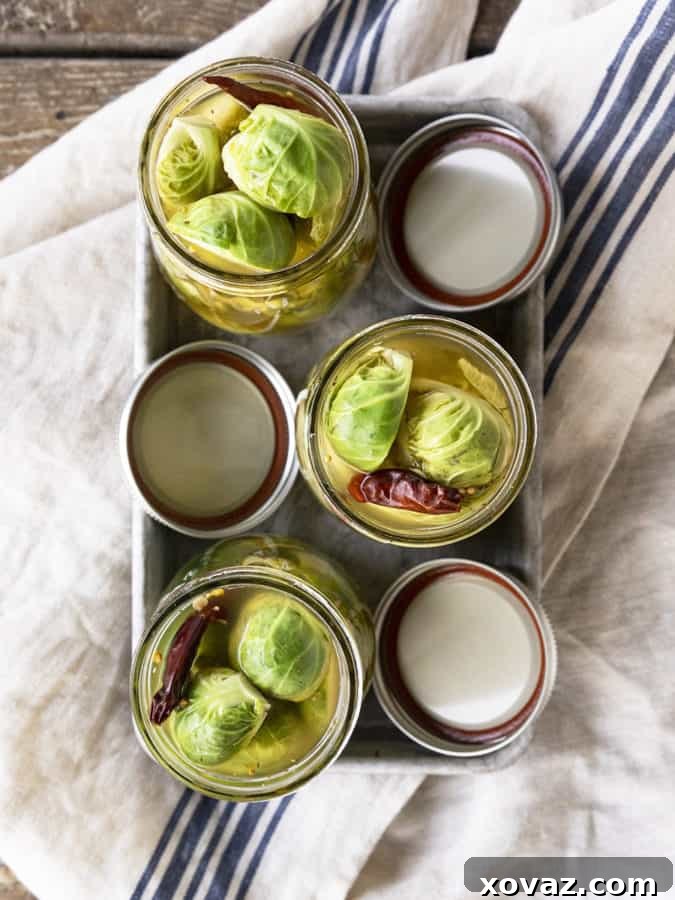
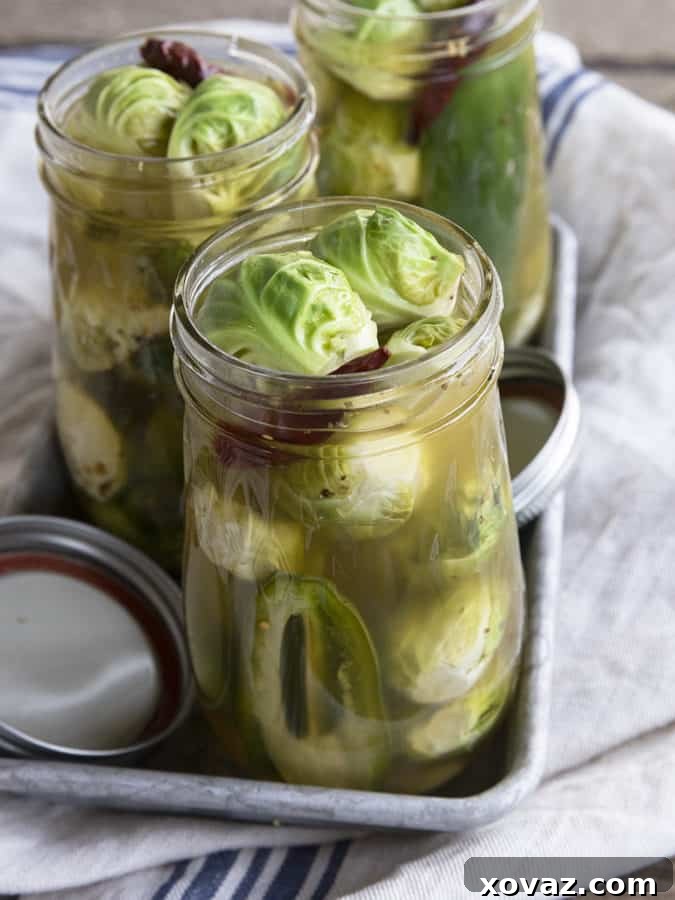
Admittedly, these pickled beauties might not win any beauty contests with their humble, muted green hue, a natural outcome of the pickling process. However, their unparalleled texture and robust flavor are truly what keep you reaching for more. Interestingly, my sister holds a different view on their aesthetics; her immediate reaction upon seeing the jars was, “They’re so PRETTY!” proving that beauty, especially in the world of pickles, is truly in the eye of the beholder.
The Art of Pickling Vegetables: A Comprehensive Guide
It’s no secret that we are passionate about pickles here at Foodie with Family. Our kitchen has been a hub of pickling experiments, resulting in a diverse collection of tutorials ranging from crunchy Pickled Green Beans (Dilly Beans) and zesty Pickled Green Cherry Tomatoes, to vibrant Quick Pickled Red Onions. We’ve even ventured into the sweet and savory with Russian Pickled Cherries, aromatic Pickled Ginger (Gari), classic Homemade Garlic Dill Pickles, refreshing Refrigerator Pickled Salad (Bread and Butter Style), and tantalizing Sweet and Spicy Asian Style Pickled Carrots. Each vegetable, with its unique characteristics, often requires a tailored approach to pickling. Thankfully, Brussels sprouts are among the most forgiving and straightforward vegetables to pickle, making them an excellent choice for both novice and experienced picklers.
Selecting and Preparing Your Brussels Sprouts
The golden rule for all pickling projects, including our beloved Brussels sprouts, is simple: the fresher the vegetable, the superior your pickles will be. Opt for firm, bright green Brussels sprouts without any signs of bruising or wilting. Produce that has seen better days will invariably result in softer pickles, and let’s be honest, who prefers a soft, mushy pickle? Always choose the freshest possible ingredients for that signature crisp-tender texture.
Proper preparation is key. Begin by thoroughly washing your Brussels sprouts under cold running water. Next, carefully trim off any dry or discolored areas from the stems. Remove any loose or damaged outer leaves that easily fall away from the sprout. If you have particularly large Brussels sprouts, cutting them in half from pole to pole (top to bottom) ensures they pickle more evenly and absorb the flavorful brine more efficiently. This also makes them easier to pack into your jars and more convenient to eat.
Crafting the Perfect Pickling Brine
When it comes to the pickling brine, vinegar is the star, and you have a couple of excellent choices, each offering a slightly different flavor profile and visual outcome. My personal preference for these pickled Brussels sprouts is Apple Cider Vinegar. Its mild, slightly fruity acidity complements the earthy notes of the sprouts beautifully, resulting in a more mellow and nuanced tang. Visually, apple cider vinegar tends to produce a pickle with a pleasing, muted green color.
Alternatively, if you desire a sharper, more pronounced tang and a brighter, more vibrant green pickle, white distilled vinegar is an excellent option. Both types of vinegar yield delicious results, so the choice ultimately comes down to your personal taste preference and aesthetic goals. Ensure you use a high-quality vinegar for the best flavor. The salt you choose also matters; Morton’s Kosher Salt is recommended for its pure flavor and consistent grain size, which is important for accurate measurements in brining.
Customizing the Spice Level
These pickled Brussels sprouts feature a harmonious blend of two types of peppers, contributing a wonderful depth of flavor without overwhelming heat. The combination of fresh jalapeños and dried Sichuan Chinese peppers creates a complex profile that is surprisingly mild. In fact, my 11-year-old niece, who is famously averse to spicy foods, absolutely adored them! This mildness makes them accessible to a wide range of palates.
For those with a very sensitive palate or who prefer no heat at all, you can easily omit either the fresh jalapeños or the dried Sichuan Chinese peppers. If, however, you’re looking to turn up the heat, a simple substitution can transform these into a spicier treat. Replace the Sichuan pepper in each jar with a dried arbol chile pepper. Arbol chiles offer a clean, sharp heat that will give your pickled Brussels sprouts an extra fiery kick. Experiment to find your perfect balance of flavor and spice.
Can I Pickle Frozen Vegetables?
In short, no, and there’s a scientific reason why. The best pickles, including pickled Brussels sprouts, are always made with fresh, in-season vegetables. Attempting a pickling project with frozen vegetables is generally a recipe for disappointment, as it almost invariably leads to soft, unappeappetizing pickles.
The damage, unfortunately, occurs before you even begin the pickling process. When vegetables are frozen, the water content within their cells expands, causing the cell walls to break down. This structural compromise means the vegetable will never regain its original crispness, even after thawing. While this change in texture is perfectly acceptable and often desirable for vegetables intended for cooking in soups, stews, or stir-fries, it’s entirely counterproductive for pickling. When you subsequently pour boiling brine over these already compromised vegetables and then subject them to further heat processing in a canning bath, you essentially triple-cook them. The result is a flaccid, mushy pickle with an unpleasant texture. Therefore, for optimal crispness and flavor in your pickled Brussels sprouts or any other pickled vegetable, always use fresh produce.
Can I Can Pickled Brussels Sprouts for Long-Term Storage?
Absolutely! This recipe is specifically designed to be safely canned, allowing you to enjoy your delicious pickled Brussels sprouts for an extended period, stored conveniently on your pantry shelves. Canning is a fantastic way to preserve the bounty of the season and have homemade goodness at your fingertips year-round.
If the idea of canning feels daunting, or if you’re a newcomer to the world of food preservation, don’t fret! There’s a simple workaround for enjoying these pickles without the full canning process. You can prepare the Brussels sprouts and brine, pack them into jars, and pour the hot brine over them. After wiping the rims and securing the lids, simply allow the jars to cool to room temperature before transferring them to your refrigerator. These “refrigerator pickles” will be ready to eat sooner and will last for several weeks in the fridge. For those ready to conquer their canning fears and delve into the rewarding world of home preservation, I highly recommend picking up a copy of my canning cookbook, “Not Your Mama’s Canning Book: Modern Canned Goods and What to Make with Them.” It’s packed with approachable recipes and tips designed to make canning less intimidating and more enjoyable. I promise, it’s not as scary as it seems!
Pickled Brussels Sprouts Recipe
Yields: 8-10 pint jars | Prep time: 30 minutes | Cook time: 20 minutes
Equipment
- 8 to 10 pint jars
- New canning lids and bands
- Large canning pot with rack
- Jar lifter
- Funnel (optional, but helpful)
Ingredients
For the Brussels Sprouts and Brine:
- 4 pounds fresh Brussels sprouts, whole
- 6 cups apple cider vinegar (or white distilled vinegar)
- 4 cups water
- ½ cup Morton’s Kosher Salt (ensure it’s not iodized)
Per Pint Jar:
- 4 cloves garlic, peeled
- ½ of a fresh jalapeño pepper, sliced (optional, adjust to taste)
- 1 dried Sichuan Chinese pepper (optional, or substitute with a dried arbol chile pepper for more heat)
- ¼ teaspoon dried dill seed
- ¼ teaspoon celery seed
- ⅛ teaspoon coriander seed
Instructions
- **Prepare Jars:** Wash 8 to 10 pint jars thoroughly. You can sterilize them by running them through a dishwasher cycle or simmering them in hot water. Keep them warm until ready to fill. Prepare new two-piece canning lids according to manufacturer’s instructions (often by simmering in hot water).
- **Add Spices to Jars:** In each warm pint jar, place 4 peeled garlic cloves, half a sliced jalapeño (if using), one dried pepper (Sichuan or arbol, if using), ¼ teaspoon dried dill seed, ¼ teaspoon celery seed, and ⅛ teaspoon coriander seed. Set the prepared jars aside.
- **Prepare Brussels Sprouts:** Wash the Brussels sprouts well. Trim off any dry stem ends and remove any loose or damaged outer leaves. If the Brussels sprouts are large, cut them in half lengthwise from pole to pole. Pack the raw, prepared sprouts tightly but not overly dense into each jar, leaving approximately ½ inch of headspace at the top.
- **Prepare Brine:** In a large non-reactive pot, combine the apple cider vinegar, water, and Morton’s Kosher Salt. Bring the mixture to a rolling boil over high heat, stirring to ensure the salt is fully dissolved.
- **Fill Jars with Brine:** Carefully ladle the hot brine over the Brussels sprouts in each jar. Ensure the sprouts are fully submerged. Leave ¼-inch of headspace between the top of the brine/sprouts and the rim of the jar.
- **Seal Jars:** Wipe the rims of each jar clean with a paper towel moistened with a bit of vinegar to remove any residue. Center a prepared lid on each jar, then screw on the bands until they are “fingertip tight” (snug but not overtightened).
- **Process Jars (Water Bath Canning):** Place the filled and sealed jars into a canning pot fitted with a rack. Ensure the jars are covered by at least 2 inches of boiling water. Place the lid on the canner.
- **Boil and Cool:** Once the water in the canner returns to a full, rolling boil, set a timer for 10 minutes. After 10 minutes, turn off the heat and carefully remove the canner lid. Allow the jars to stand undisturbed in the hot water for an additional 5 minutes to help equalize the temperature and ensure a good seal.
- **Final Cooling and Storage:** Using a jar lifter, carefully transfer the hot jars to a cooling rack or a towel-lined counter. Leave the jars to rest, undisturbed, for 24 hours. During this time, you should hear the “ping” sound as the lids seal. After 24 hours, check the seals by pressing on the center of each lid; if it doesn’t flex, the jar is sealed. Remove the rings, wipe the jars clean, label them with the contents and date, and store them in a cool, dark place.
- **Curing Time:** For the best flavor, allow the pickled Brussels sprouts to rest for at least 2 weeks before opening. This curing period allows the flavors to meld and develop fully. Once opened, a jar of pickled Brussels sprouts should be stored in the refrigerator and will typically last for about 2 weeks.
Nutrition (Estimated per serving)
- Calories: 48 kcal
- Carbohydrates: 1g
- Protein: 4g
- Fat: 3g
- Saturated Fat: 1g
- Polyunsaturated Fat: 1g
- Monounsaturated Fat: 1g
- Trans Fat: 1g
- Cholesterol: 105mg
- Sodium: 927mg
- Potassium: 65mg
- Fiber: 1g
- Sugar: 1g
- Vitamin A: 179 IU
- Vitamin C: 2mg
- Calcium: 21mg
- Iron: 1mg
Nutritional information is an estimate and provided to you as a courtesy. You should calculate the nutritional information with the actual ingredients used in your recipe using your preferred nutrition calculator.
Serving Suggestions and Enjoyment
Once your Pickled Brussels Sprouts have properly cured, a world of delicious possibilities awaits! Beyond the obvious joy of eating them straight from the jar as a zesty snack, they are incredibly versatile. Add them to a vibrant charcuterie or cheese board for a burst of tangy flavor that cuts through richer elements. Chop them up and add to green salads or grain bowls for an unexpected crunch and zing. They make a phenomenal garnish for cocktails, especially a savory Bloody Mary or a dirty martini, lending a unique twist. Consider them alongside roasted meats, sandwiches, or even as a flavorful component in potato salad. Their bright, piquant taste offers a refreshing counterpoint to many dishes.
Don’t forget to capture your culinary creations! If you whip up a batch of these fantastic Pickled Brussels Sprouts, be sure to tag @foodiewithfam on Instagram and use the hashtag #foodiewithfamily. I’d love to see your delicious results and celebrate your pickling success!